Crystals.com
Petrified Wood
Authentic natural minerals, thoughtfully sourced and individually photographed.

Petrified Wood — Ancient Trees Turned to Stone
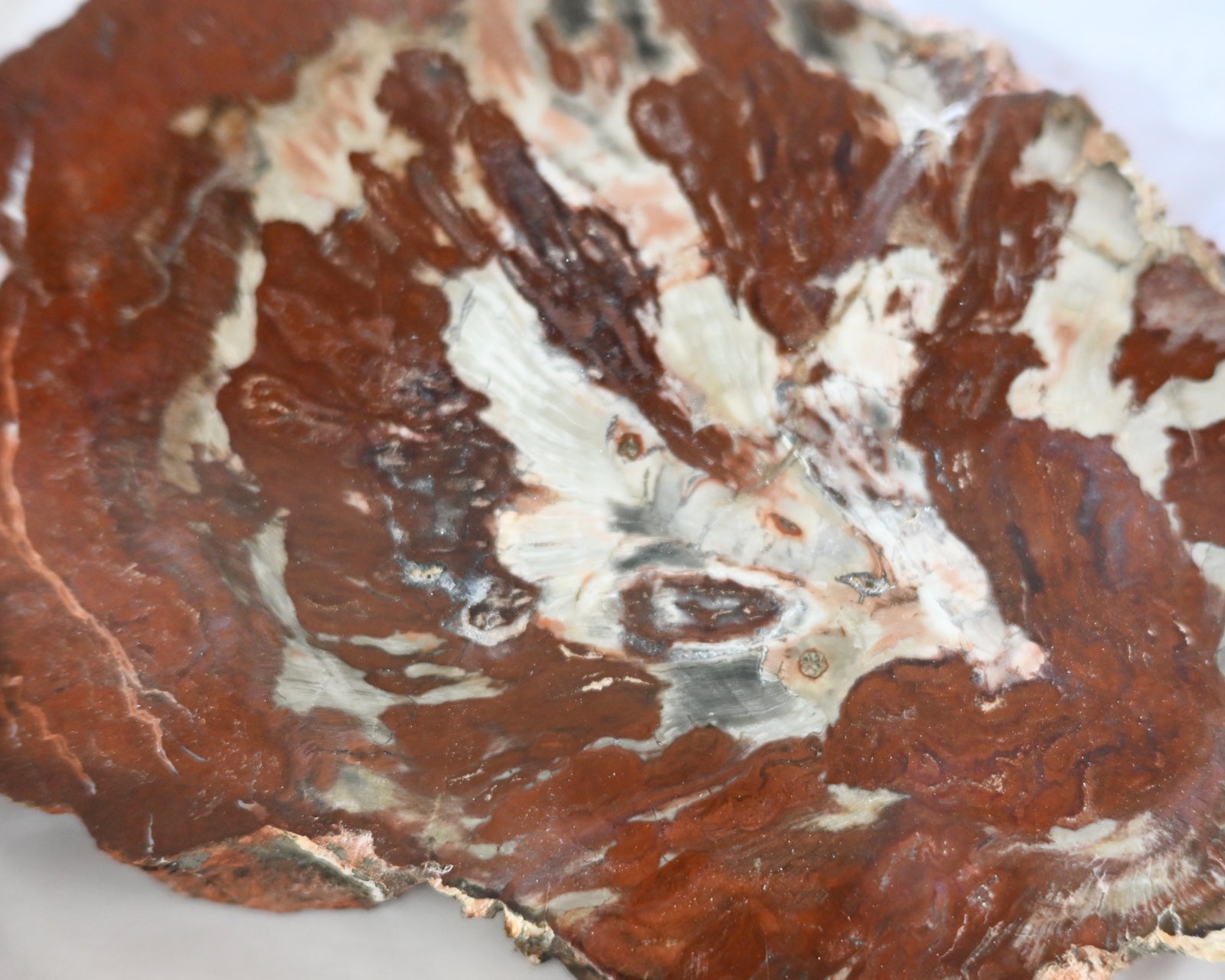
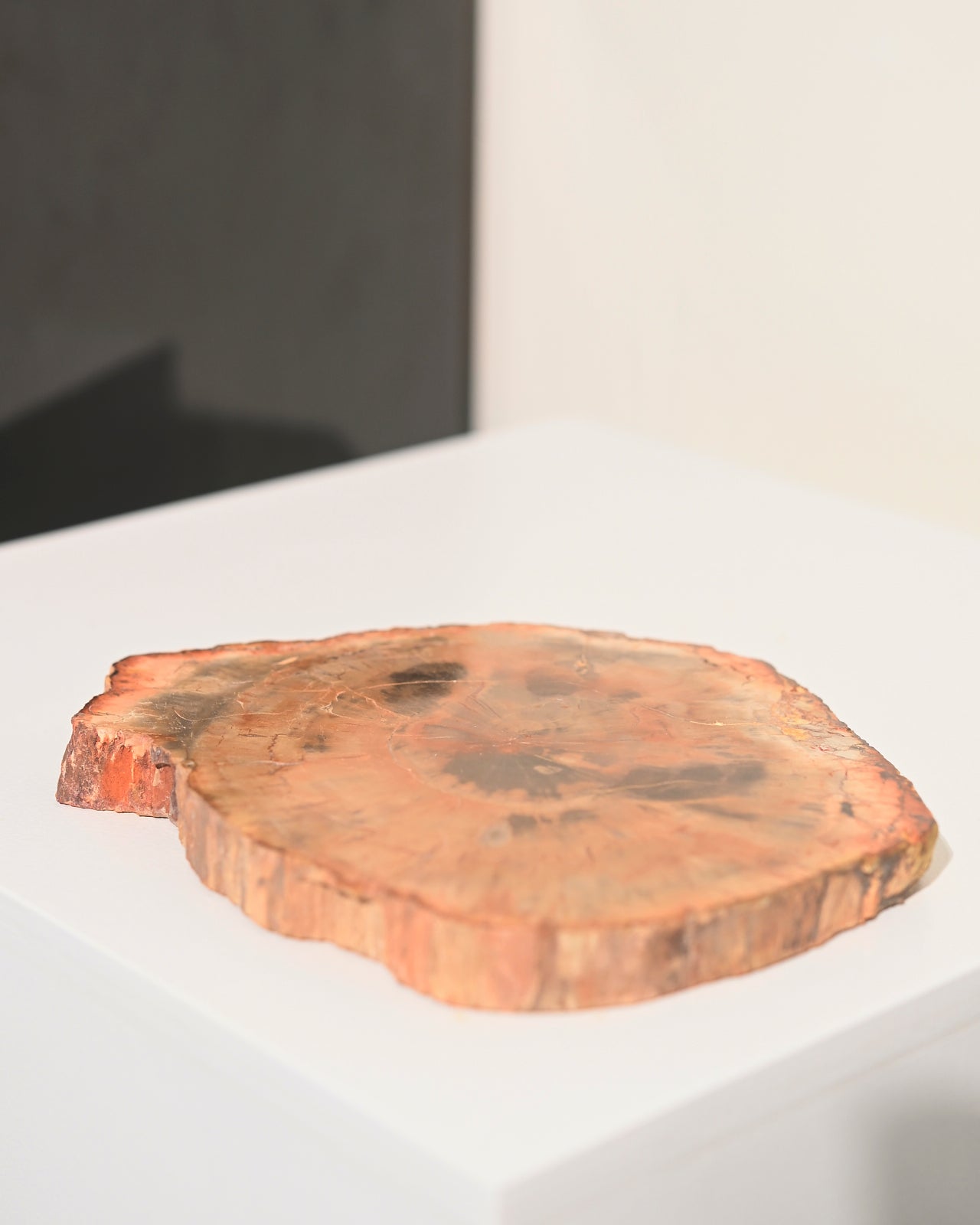
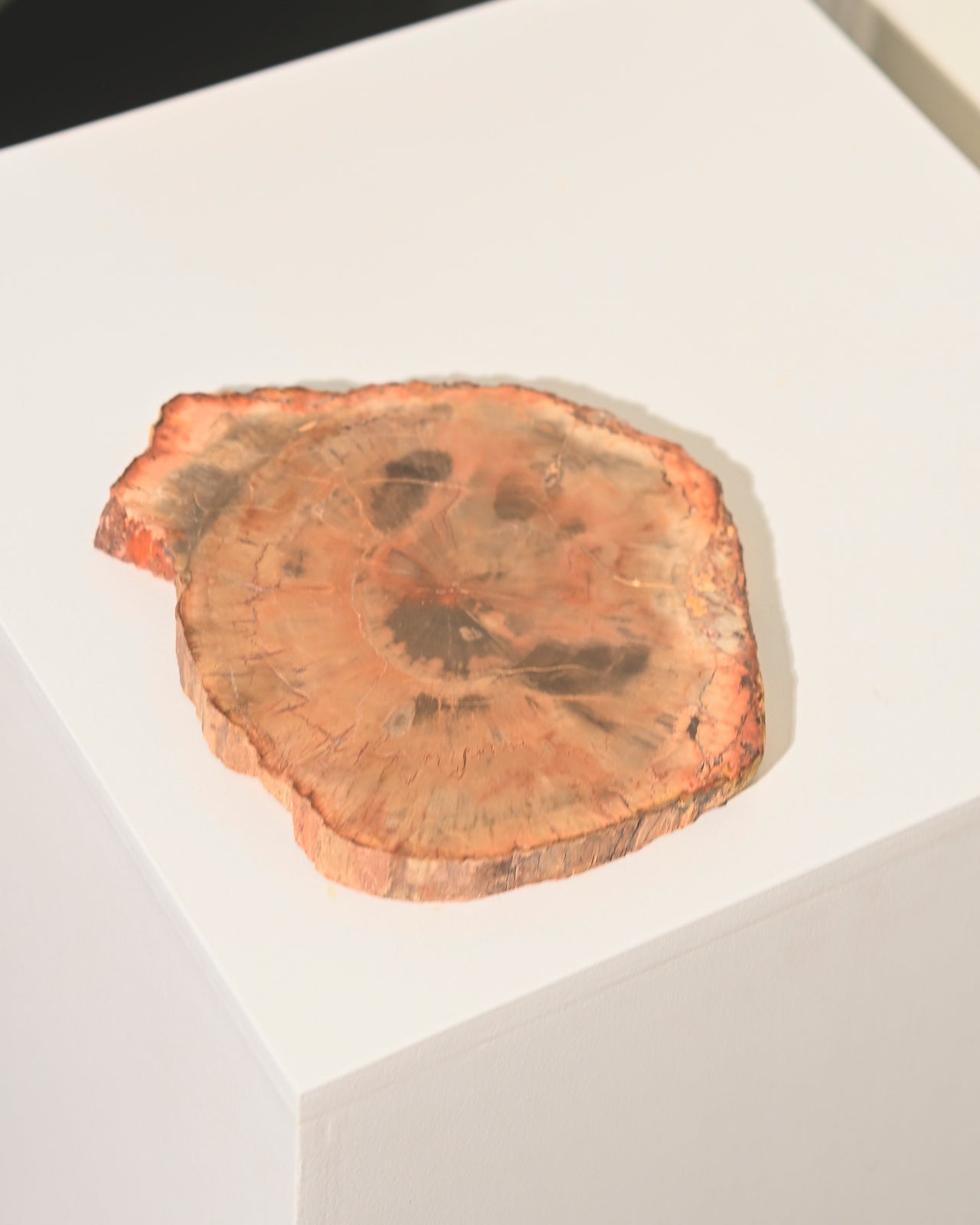
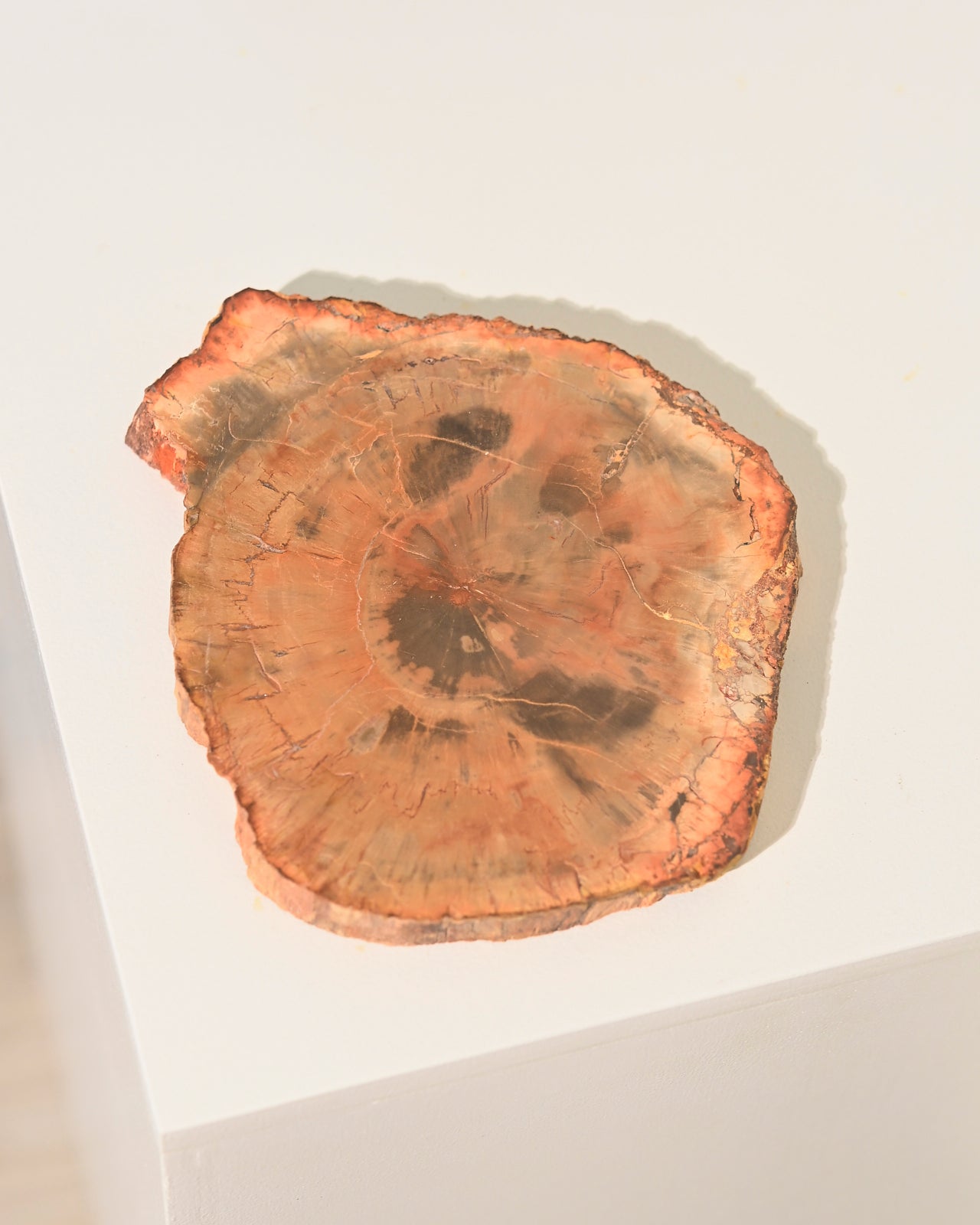
Petrified wood is fossilized wood where the original organic material has been replaced by minerals — most commonly silica (agate, chalcedony, or opal), but sometimes calcite, pyrite, or other minerals. The process, called permineralization, happens when fallen trees are buried in volcanic ash or sediment before they can decay. Mineral-rich groundwater infiltrates the wood cell by cell, replacing the organic matter while preserving the original cellular structure, growth rings, bark texture, and even insect bore holes in extraordinary detail.
The best-known petrified wood comes from the Chinle Formation of Arizona (home to Petrified Forest National Park), where 225-million-year-old Triassic trees were replaced by vivid jasper and agate in reds, yellows, and purples. Madagascar produces exceptional pieces with intense reds and golds. Indonesia yields massive trunks with beautiful chatoyant silicification. Other significant sources include Brazil, Argentina, and the Pacific Northwest. Each piece is a genuine fossil — a physical record of a tree that lived millions of years ago, preserved down to its grain pattern.
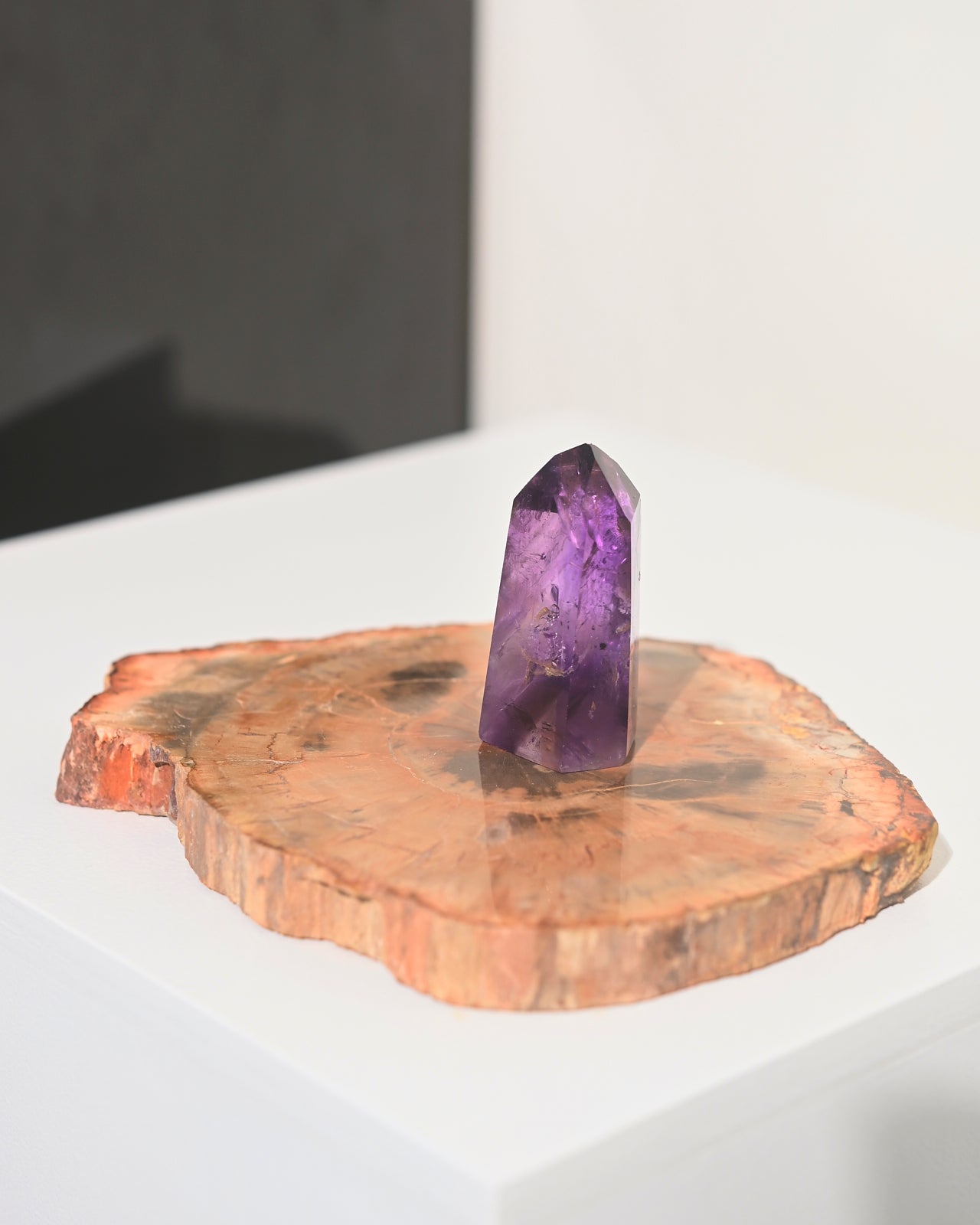
Petrified wood makes a striking display piece or functional object (polished slabs work as platters, bookends, or tabletops). Browse our platters and slices for polished display pieces, or explore brown crystals and agate specimens for related earth-toned minerals. See our Collector's Edition for museum-quality pieces. Take the crystal quiz for a personalized recommendation. Free US shipping on orders over $150.
Frequently Asked Questions
What is petrified wood?
Petrified wood is fossilized wood in which the original organic material has been replaced by minerals through a process called permineralization. Over millions of years, silica-rich groundwater infiltrates buried wood and replaces the organic cells with agate, chalcedony, quartz, or opal, preserving the original structure — including growth rings, bark, and cell detail — in stone.
How old is petrified wood?
Most petrified wood ranges from 20 million to over 200 million years old, depending on the deposit. Arizona's Petrified Forest specimens date to the Late Triassic period (~225 million years ago). Madagascar and Indonesian specimens are typically younger, ranging from 20 to 70 million years. The age depends on when the original trees were buried and the local geological history.
Why is petrified wood different colors?
The colors in petrified wood come from trace minerals present during fossilization. Iron oxides produce reds, oranges, and yellows. Manganese creates pinks and purples. Chromium and copper contribute greens. Pure silica replacement without trace metals results in white, gray, or clear agate. Different mineral combinations during different stages of replacement can create multicolored banding within a single piece.
How do I care for petrified wood?
Petrified wood is essentially agate or quartz (Mohs 6.5–7), so it is very durable for display or everyday use as a decorative object. Clean with warm water and mild soap. It can handle normal humidity and light exposure without damage. Polished surfaces can be maintained with a soft cloth. It is one of the most low-maintenance specimens in any collection.
Is it legal to collect petrified wood?
It depends on the location. Collecting petrified wood from national parks and monuments (like Petrified Forest National Park) is strictly prohibited and carries significant fines. On private land with permission, or from designated collecting areas on BLM land, collecting small amounts for personal use is typically allowed. All petrified wood sold by Crystals.com is legally and ethically sourced.



Let customers speak for us
As advertised, the pieces are amazing and beautiful. The first place I go to shop for crystals and stones online.
Another amazing piece. It's beautifully balancing and intuitive.

This necklace is amazing and just the right piece for healing and transformation.

Shopping was easy to navigate. I received my shipment in a reasonable time.
A beautiful bracelet to add to my loving collection.

Not only is this necklace beautiful, I feel calmer when I wear it. LOVE IT
Stunning piece of rock!

Incredible specimen! Lovely for the collection

Beautiful crystals!The quality is excellent, with gorgeous color and natural details. Very happy with my purchase and would definitely recommend!

Beautiful crystals! The quality is excellent, with gorgeous color and natural details. Very happy with my purchase and would definitely recommend!

I have ordered a lot of pieces from here and they are beautiful and always arrive as described and packed and shipped fast. Always very satisfied with my purchases and appreciate buying from Brittany and her business.
Beautiful piece! Incredible quality and shipped perfectly!

Great quality and I loved the information cards.
Great quality and I loved the information card it came with.

I have purchased several pieces from Crystals.com and keep coming back for more. :) This is my second amethyst piece. The color of the amethyst is a deep purple. Great craftsmanship!!

A Sanctuary of Natural Beauty
Every crystal here was discovered by hand, selected with intuition, and photographed in its true light.
One-of-a-Kind. Forever Pieces.
Let the Universe Decide


