Crystal Encyclopedia
Pyrite
PYE-right

Known since antiquity; historically mistaken for gold and used in early fire-starting tools.
Quick Learn
What is Pyrite used for?
Pyrite is commonly used for abundance, protection, confidence.
Can Pyrite go in water?
Pyrite is rated: Not safe.Use dry cleansing methods instead.
What chakra is Pyrite?
Pyrite resonates with the Solar Plexus chakra.
Scientific Data
Metaphysical Properties
"I stand firm and confident."
Geological Profile
An iron sulfide mineral forming cubic and pyritohedral crystals
Care & Cleansing
Avoid water and humidity; store dry; clean with a soft cloth
Sound only
Historical Use
Known since antiquity; historically mistaken for gold and used in early fire-starting tools.
Recommended Uses
Explore More
Keep Discovering
Continue your crystal journey with these related specimens.
Shop Pyrite

Pyrite Cluster
$16.00

Pyrite Palm Stone
$20.00
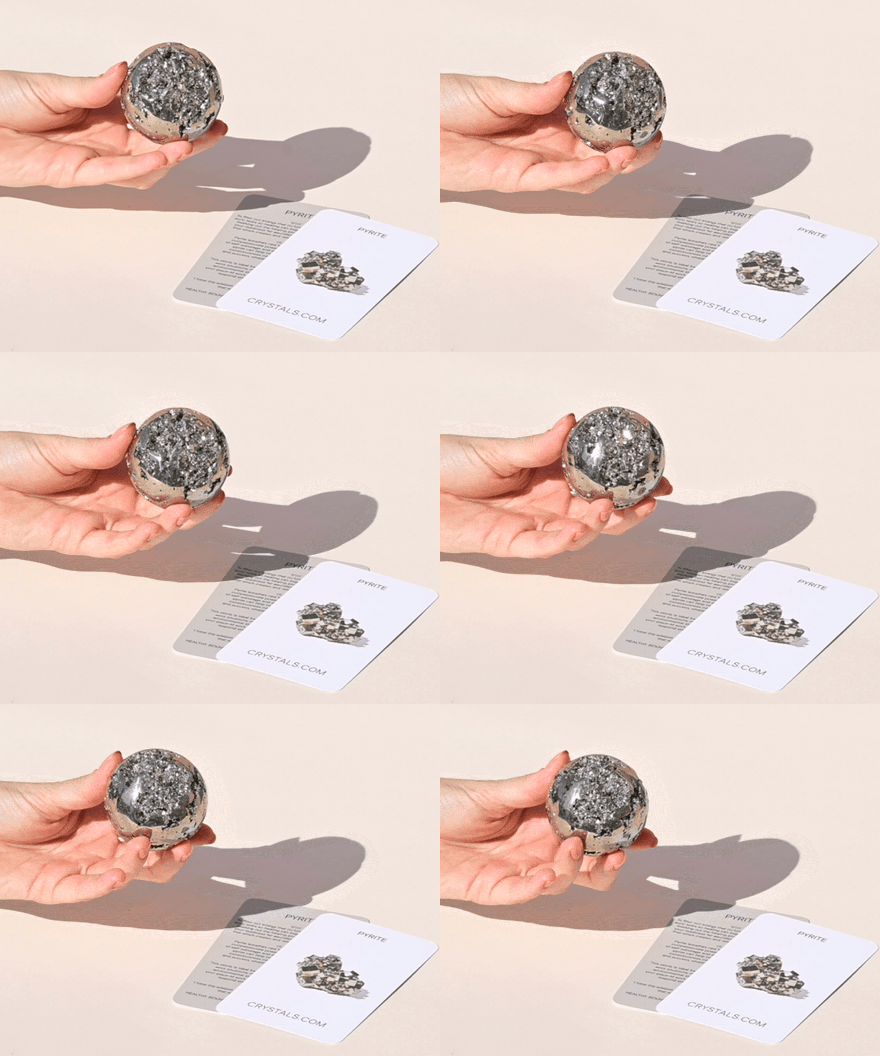
Pyrite Sphere
$72.00

Pyrite Tower
$48.00
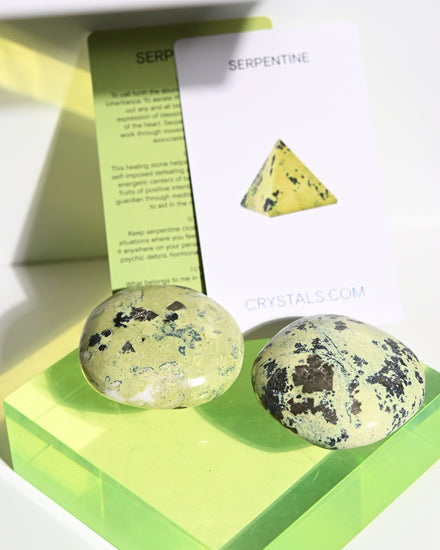
Serpentine w/ Pyrite Palm Stone
$24.00
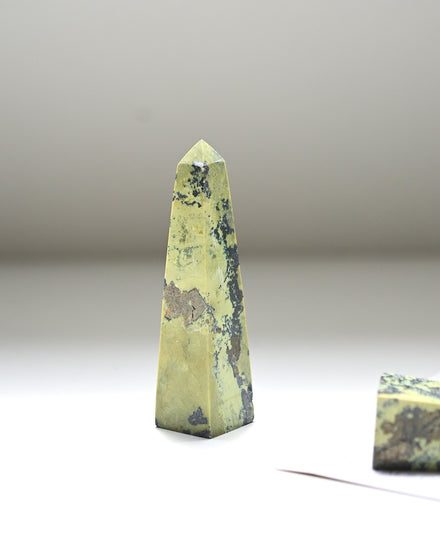
Serpentine w Pyrite Obelisk 4 inch
$32.00
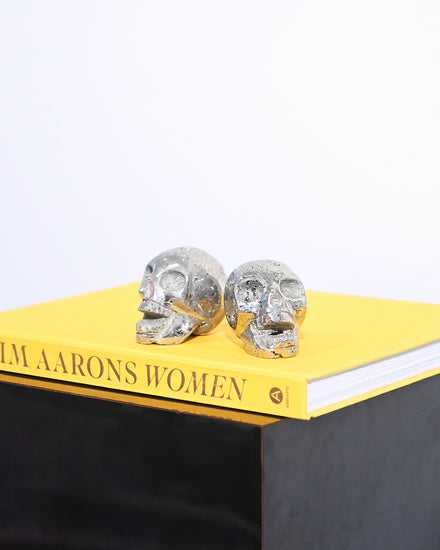
Pyrite Skull
$77.00
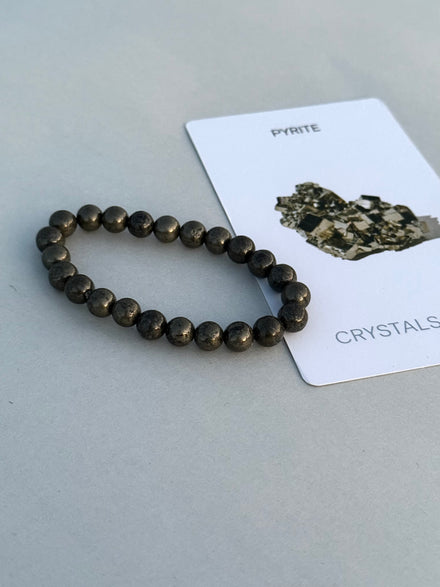
Pyrite Bracelet
$34.00
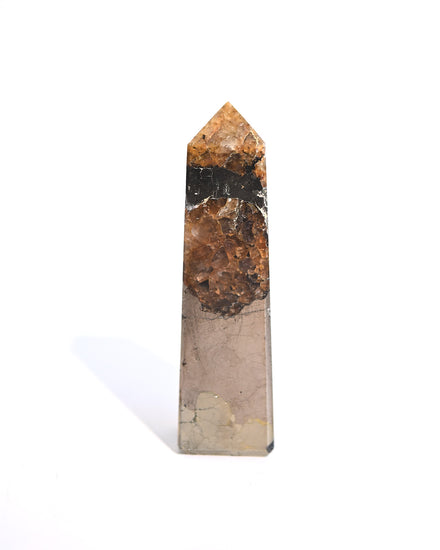
Golden Healer Quartz Tower with Pyrite
$60.00
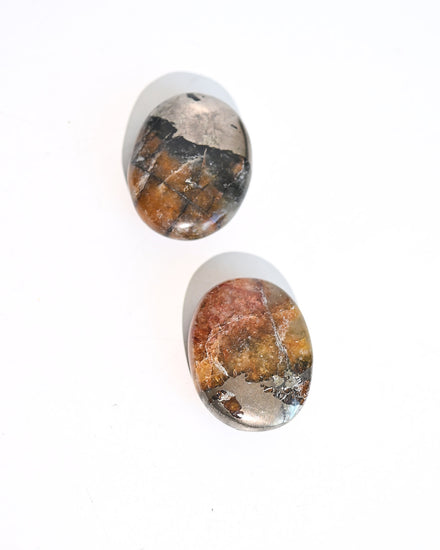
Golden Healer Quartz with Pyrite Palm Stones
$28.00

Shungite with Pyrite Rough Specimen
$28.00
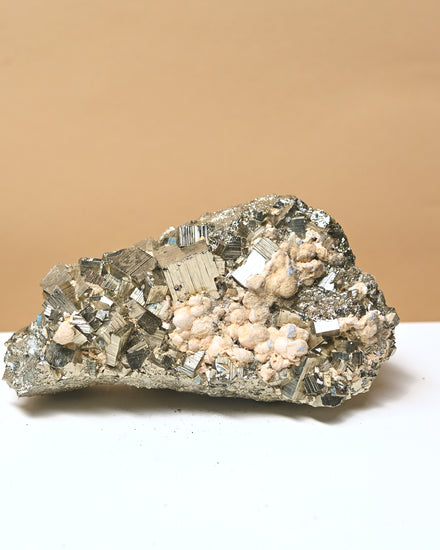
Pyrite with Botryoidal Calcite 4lbs
$180.00

