Shop Crystals for This Energy
Free shipping on orders over $150
There is a reason museum curators place mineral specimens alongside ancient sculptures and contemporary art. Natural crystals are geological objects shaped over millions of years — no two alike, no factory that can replicate them. When you bring a large amethyst cathedral or a sculptural smoky quartz (Smoky Quartz Palm Stone) point into your home, you are introducing something genuinely irreplaceable. That is an interior design proposition no manufactured object can match.
This guide is a practical, room-by-room resource for incorporating natural stone into your living spaces — written for people who care about beautiful interiors first, and appreciate the geological story behind each piece second. Whether you are styling a downtown loft or a coastal retreat, the principles here will help you choose, place, and live with crystals the way a designer would.
Why Natural Crystals Make Exceptional Home Decor
Walk into any well-designed home and you will notice that the most compelling rooms share one quality: layered texture. Smooth plaster, rough linen, polished wood — the eye moves because the surfaces change. Crystals are texture amplified. A rough druzy base transitions into glittering violet amethyst points. A selenite tower is simultaneously matte and luminous, catching light differently at every hour of the day.

One-of-a-kind by definition. Mass production cannot touch natural stone. The amethyst geode in your living room grew in a volcanic cavity in southern Brazil over roughly 100 million years. Its color zoning, its point formation, its phantom inclusions — these are unique to that single specimen. You are not buying a design object. You are acquiring a record of geological time.
Conversation pieces with genuine substance. Decorative objects that hold up to scrutiny are rare. When a guest asks about the large citrine (Natural Citrine Tower) cluster on your sideboard, you have a real story to tell — about the mine it came from, the way heat and pressure created that golden color, why no two citrine clusters are the same. That kind of depth is the hallmark of a curated, thoughtful interior.
Organic geometry. Interior design trends cycle endlessly through curved versus angular, organic versus structured. Crystals hold both at once. A quartz point is geometric in its symmetry but entirely organic in its formation. This means natural stone works across styles — Scandinavian minimalism, warm maximalism, coastal organic, urban industrial.
Investment value. Museum-grade mineral specimens appreciate. Collector-quality amethyst cathedrals and rare citrine geodes from depleted deposits are finite objects. The finest specimens command serious prices at auction and at international gem shows. Even entry-level decorative crystals hold their value far better than most mass-market home accessories.
Room-by-Room Crystal Styling Guide
The Entryway: First Impressions in Stone
The entryway is the home's handshake — the first thing visitors experience and the last thing you see before leaving. It deserves a crystal that makes a statement without competing with coats, keys, and the general chaos of arrival.
Black tourmaline is a natural choice here. Its deep, striated black surface is architecturally striking — it reads as sculpture before anything else. A substantial raw chunk or a polished tower on a console table creates a strong visual anchor. Black tourmaline's dramatic coloration works especially well against light walls, natural linen, and warm oak tones.
Selenite towers bring a completely different energy to the entryway — pale, almost translucent, with a silky fibrous texture that catches light beautifully. A tall selenite tower (14 to 20 inches) functions like a small architectural column. In a narrow hallway, a single tower on a pedestal or shelf can make the space feel more considered and intentional than almost any other accent.
For entryways with console tables, consider pairing one large specimen with a tray of smaller polished stones — a composition that creates visual interest at multiple scales. Keep the palette tight: black tourmaline with grey river stones, or selenite with pale quartz points and white pottery.
The Living Room: Statement Pieces and Curated Clusters
The living room is where crystals can do their most dramatic work. Scale up here without hesitation — a large room can accommodate a truly spectacular specimen that would overwhelm a smaller space.
Amethyst geodes as statement pieces. An amethyst geode — particularly a cathedral-style piece standing 24 inches or taller — functions as furniture-scale art. Place it in a corner, on a low platform, or flanking a fireplace. The deep violet interior creates a focal point that works with neutrals (letting the color stand alone) and complements jewel-toned interiors (navy, forest green, terracotta). The grey exterior of most Brazilian amethyst geodes is itself beautiful — rough, earthy, and grounding.
Crystal clusters on coffee tables. A coffee table is one of the best surfaces for crystal styling because it is viewed from all angles and at close range. A large quartz cluster, an amethyst druzy specimen, or a flat slab of polished agate serves as both art object and conversation starter. Stack books beneath it to vary the height, or let it sit directly on a tray with smaller stones arranged around it.
Shelf styling. On bookshelves and built-ins, crystals add dimension between books. Resist the urge to overcrowd — one or two well-chosen specimens per shelf zone is more powerful than a collection scattered everywhere. A single large smoky quartz point between a stack of art books reads as intentional curation. A shelf overwhelmed with small tumbled stones reads as clutter.
Explore our full geode collection for living room statement pieces.
The Bedroom: Nightstand and Dresser Styling
Bedroom crystal styling is about restraint and beauty. The bedroom should feel calm and considered — this is not the space for dramatic oversized specimens or complex compositions. Opt for pieces that are visually serene and genuinely beautiful at close range, since nightstand objects are seen in intimate detail.
Rose quartz (Rose Quartz Tower) is one of the most aesthetically versatile bedroom stones. The range of pink — from the palest blush to a saturated dusty rose — works with virtually every bedroom palette. A smooth, substantial rose quartz sphere on a small wooden or brass stand is classically elegant. A raw chunk of high-quality rose quartz with good color saturation is more contemporary and textural. Both work well paired with soft linen, warm wood, and simple ceramics.
Amethyst points and clusters are equally at home in the bedroom. Their purple tones complement grey, whi
te, navy, and warm neutrals. A single amethyst tower on a nightstand is graphic and refined. A small amethyst cluster tucked between books or candles on a dresser adds just enough visual interest without demanding attention.
On dressers and vanities, flat polished slabs of agate or labradorite make excellent jewelry display surfaces — functional and beautiful. A labradorite slab catching light next to a perfume bottle is a composition worth having.
The Bathroom: Spa-Worthy Mineral Accents
The bathroom offers a specific design opportunity: the spa aesthetic. Natural stone already dominates bathroom design through tile, counters, and fixtures — crystals extend that language into the decorative layer.
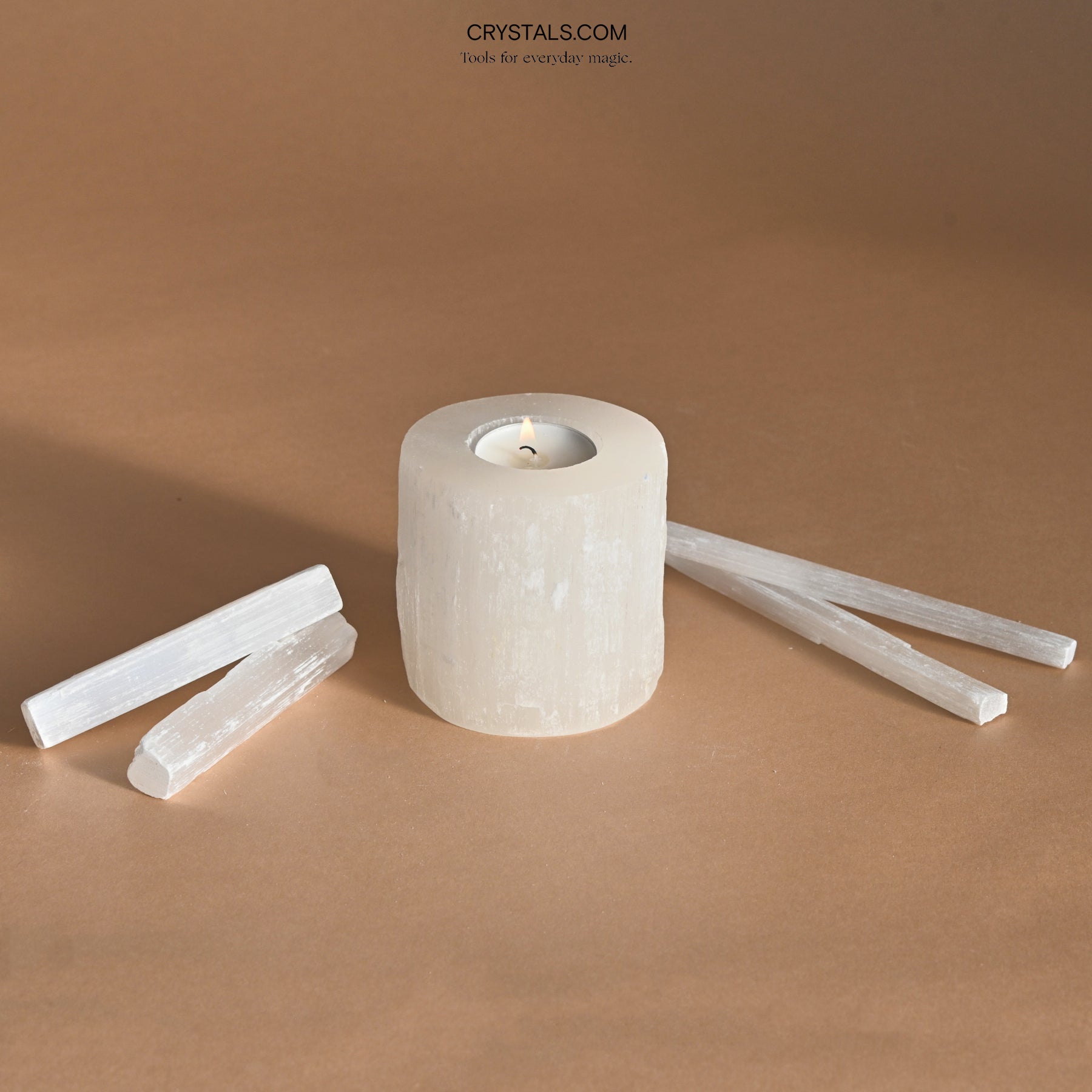
Selenite is the quintessential bathroom crystal from a visual standpoint. Its pale, almost-white surface and silky texture read as clean and luxurious. A selenite bar or flat plate on a vanity or tub surround is a study in quiet elegance. Note that selenite is water-soluble — keep it away from direct water contact and wipe it dry if it gets splashed.
Clear quartz points and towers work beautifully in bathrooms with marble, white subway tile, or light stone. Their transparency plays with reflective bathroom surfaces in interesting ways — catching light from windows or sconces and creating small prismatic effects. A grouping of three clear quartz points of varying heights on a marble counter is simple, refined, and deeply photogenic.
For the bath tray aesthetic, arrange a small quartz tower, a smooth river stone, and a beeswax candle in a wooden or marble tray beside the tub. The composition should look effortless — three objects maximum, varying heights, balanced weight.
The Home Office: Beautiful Desk Accessories
The home office is often the most neglected room in terms of intentional styling, yet it is where many people spend the majority of their waking hours. Natural crystals on a desk are desk accessories that happen to also be geological specimens — functional beauty at its most straightforward.
Citrine has one of the most striking color ranges in the mineral world — from pale champagne to deep amber-cognac. A citrine cluster or point on a desk catches light differently throughout the day as the sun moves, providing a kind of living quality that no manufactured object can replicate. Its warm golden tones work particularly well with warm-toned wood desks and brass hardware.
Pyrite is one of the most underused crystals in interior design. Its metallic, brass-like luster is genuinely striking — a pyrite cube or cluster on a desk reads as both geological specimen and sculptural object. It pairs exceptionally well with dark leather, matte black, and aged brass accessories. A pyrite specimen next to a leather-bound notebook is a desk composition that rewards close inspection.
Fluorite offers the most varied color palette of any crystal — purple, green, blue, clear, and banded combinations of all of the above. A banded purple-green fluorite specimen is visually complex in the best way, providing something to look at during moments of pause or thought. Fluorite's transparency means it glows when backlit, making it ideal near windows.
Use a polished agate slice or a flat quartz slab as a resting place for your phone or as a small catch-all for items you normally scatter across your desk. Function and beauty, combined.
The Dining Room: Centerpieces and Bookend Styling
The dining table is the social center of the home — the place where the composition receives the most extended attention from the most people. Crystal styling here should be considered and not overly busy. One strong centerpiece beats a cluttered tablescape every time.
Crystal centerpieces. A long dining table can support a runner of natural stones — alternating geode halves, polished spheres of varying sizes, and a central large specimen. Keep heights low enough to allow conversation across the table. An agate geode half laid flat is particularly effective: the flat side sits stably, the druzy interior faces upward, and the exterior can be left rough for textural contrast.
Geode bookends on a sideboard. Matching geode halves make natural bookends for a sideboard — they hold art books, add serious visual weight, and are objectively beautiful objects. The matched pair format is satisfying to the eye in the way bilateral symmetry always is. Look for matched amethyst, quartz, or calcite geode pairs where both halves are well-formed.
On sideboards and credenzas, consider a single very large specimen — an amethyst cathedral, a large smoky quartz cluster — flanked by candles. Let the crystal be the hero. Resist the urge to add too many companion objects.
The Kitchen: Subtle Stone Accents
Kitchens are working spaces, and crystal styling here should be practical and unobtrusive. The goal is to add warmth and texture without creating obstacles or collecting grease.
Himalayan salt lamps are genuinely functional kitchen accents — the warm amber glow is flattering in the kitchen's typically harsh overhead lighting, and the rough salt crystal exterior is visually interesting in a way that no lamp shade is. Place one on a counter away from the stove and water sources.
Decorative bowls of tumbled stones. Small polished stones in a ceramic or wooden bowl on the counter or a kitchen island add organic texture without requiring much care. Choose stones that are water-safe and easy to wipe down — polished quartz, agate, and jasper are all practical choices. The bowl of stones reads as intentional styling without being precious or fragile.
Open kitchen shelving is an ideal location for smaller crystal specimens arranged between pottery, books, and plants. The mix of organic materials — wood, ceramic, stone, living green — is one of the most consistently successful shelf styling approaches.
Styling Tips from Interior Designers

The most common mistake in crystal styling is going too small. A 4-inch amethyst cluster disappears in a room — it reads as clutter rather than decor. Scale up. A large floor-standing amethyst geode, a desk-dominating citrine cluster, a coffee table-sized quartz specimen — these command the attention they deserve and read as genuine design choices rather than afterthoughts.
The rule of thumb used by many designers: the largest crystal in a room should be larger than you think you need, and smaller specimens should be used as supporting players rather than the main event. One large specimen beats five small ones in almost every context.
For shelves, small clusters and points are appropriate — but size them to the shelf. A 3-inch cluster on a deep 12-inch shelf needs companions to avoid looking lost.
Color Coordination
Crystals carry strong color. Work with your room's existing palette rather than against it. Some approaches that consistently succeed:
- Neutral rooms (white, grey, beige): Almost any crystal works. Amethyst provides color contrast; clear quartz and selenite extend the neutral palette; smoky quartz adds warmth.
- Warm rooms (terracotta, rust, ochre): Citrine and amber calcite amplify the warmth. Desert rose selenite and honey calcite are particularly harmonious.
- Cool rooms (navy, grey-blue, forest green): Amethyst is a natural companion to cool palettes. Aquamarine, blue calcite, and labradorite extend the range.
- Dark rooms (charcoal, black, deep walnut): Clear quartz and selenite provide contrast. Pyrite's metallic gleam reads as jewelry-grade luxury against dark backgrounds.
Lighting and Crystal Interaction
Light transforms crystals in ways that no other decorative material quite matches. Understanding how your crystals interact with your home's light is one of the most underappreciated aspects of crystal styling.
Natural light: Place transparent and translucent crystals — clear quartz, fluorite, amethyst, calcite — where they will receive window light. The effect of morning sun through an amethyst cluster is genuinely spectacular. South and west-facing windows provide the most dramatic light.
Ambient and accent lighting: Uplighting a large floor specimen from below creates dramatic shadow play and brings out the depth of color in amethyst and smoky quartz. A small spotlight aimed at a large crystal cluster on a shelf creates a gallery-worthy presentation.
Candlelight: Nothing surpasses candlelight for crystal displays. The moving flame animates reflective surfaces — pyrite, labradorite, optical calcite — in ways that are impossible to replicate with fixed artificial light. A crystal composition photographed or viewed by candlelight invariably looks extraordinary.
Grouping: The Rule of Odd Numbers and Varied Heights
Classic design composition principles apply fully to crystal styling. Groups of odd numbers — three, five, seven objects — read as more dynamic and natural than even-numbered groupings. Vary the heights within a group: one tall tower, one medium cluster, one low flat piece creates a skyline silhouette that the eye finds satisfying.
Mix textures deliberately. Pair rough raw specimens with polished pieces. Set a druzy geode beside a smooth sphere. Place a jagged raw crystal point next to a tumbled stone. The contrast between textures is what makes a composition feel curated rather than accumulated.

If you are ready to invest in a true statement piece — something that anchors a room the way a significant artwork does — these are the specimens worth considering.
Amethyst Cathedrals
The gold standard of decorative crystal. A cathedral-style amethyst geode — with its towering arch form and dense purple interior — is instantly recognizable as a significant object. Quality ranges from entry-level (pale color, smaller size) to museum-grade (deep saturated violet, large size, exceptional point formation). For interior design purposes, prioritize color depth and overall scale. A 30-to-50-pound cathedral standing 24 to 36 inches tall makes a room-defining statement. Shop amethyst.
Citrine Geodes
Natural citrine geodes — as opposed to heat-treated amethyst sold as citrine — are considerably rarer and command higher prices. The warm golden-amber interior reads like concentrated sunlight. Citrine geodes work beautifully in rooms with warm tones and wood, and are among the most striking crystal objects you can display. Browse our home decor collection.
Smoky Quartz Points
Large natural smoky quartz points — particularly those with good transparency and a deep cognac-brown coloration — are sculptural objects of quiet power. Their color works with virtually every interior palette, and their geometric form (the classic hexagonal quartz crystal habit) is architecturally satisfying in a way that more chaotic cluster forms are not. A large smoky quartz point on a marble base or a brass stand is an object that rewards daily attention.
Crystal Care and Display
Natural crystals are geological materials — they have been forming and surviving for millions of years. With basic care, your display pieces will remain beautiful indefinitely.
Dust regularly. Crystal clusters, with their intricate point formations, accumulate dust in the crevices between points. A soft artist's paintbrush or a compressed air canister is ideal for dusting cluster specimens without disturbing or scratching the points. For smooth polished pieces, a soft microfiber cloth is sufficient.
Avoid direct prolonged sunlight for certain stones. Amethyst can fade with sustained direct sunlight exposure — its color comes from trace iron, and UV light can bleach it over years. This does not mean keeping amethyst in the dark, but positioning it where it receives indirect or filtered light rather than direct all-day sun is prudent for high-value specimens. Rose quartz is similarly light-sensitive.
Water caution. Many crystals are safe to handle and display without water exposure concerns. However, selenite (water-soluble), malachite (toxic when wet), and pyrite (can oxidize) should be kept dry. For general display purposes, simply avoid placing water-sensitive crystals near water sources or in very humid rooms without good ventilation.
Stable display. Large, top-heavy specimens — tall amethyst towers, large quartz points — should be placed on stable, level surfaces away from high-traffic areas where they might be knocked. For floor specimens, a purpose-made wooden or acrylic base provides both stability and an elevated, gallery-style presentation.
For more display inspiration, read our guide on how to display large crystals.
Budget Guide: From Accessible to Collector-Grade
Crystal home decor spans an enormous price range, which is part of what makes it accessible at every stage of building a collection. Here is a practical breakdown.
| Budget Range | What You Get | Best For |
|---|---|---|
| Under $50 | Small tumbled stones, selenite sticks, small quartz points, agate slices | Bathroom trays, desk accents, shelf companions, kitchen bowls |
| $50 – $200 | Medium amethyst clusters, selenite towers 10–14", rose quartz spheres, citrine points | Nightstands, bookshelves, coffee table companions, entryway consoles |
| $200 – $600 | Large amethyst clusters, substantial quartz points, pyrite specimens, fluorite slabs | Coffee tables, sideboards, desk centerpieces, living room shelves |
| $600 – $2,000+ | Amethyst cathedrals, large citrine geodes, collector-grade smoky quartz, museum specimens | Floor statement pieces, fireplace surrounds, room-anchoring focal points |
Free shipping on all orders over $150. Explore the full home decor collection to find pieces at every price point.
Discover Your Human Design
Crystals amplify energy — but do you know your unique energy type? Human Design reveals how you're wired to make decisions, work, and rest. It's the owner's manual you were born with.
Explore Human DesignFrequently Asked Questions
What is the best large crystal for home decor?
Amethyst geodes are the most versatile large crystal for interior use. Their purple color works with nearly every palette, their scale options range from tabletop to floor-standing, and the grey exterior contrasts beautifully with the sparkling interior. For warmer interiors, a citrine geode is equally stunning. If you prefer a more neutral statement, a large smoky quartz cluster or point works across virtually every style.
How do I style crystals on a coffee table?
Choose one anchor specimen — a quartz cluster, agate geode half, or amethyst piece — and build around it with two or three smaller companions. Keep the composition low enough to talk across. Place everything on a tray to contain the grouping and make it feel intentional. Odd-number groupings (3 or 5 objects) are more dynamic than even-numbered ones. Vary heights with stacked books or a wooden riser beneath the anchor piece.
Can crystals fade in sunlight?
Some crystals are sensitive to prolonged direct UV exposure. Amethyst and rose quartz are the most commonly faded — their color derives from trace iron and manganese that can be altered by ultraviolet light over extended periods. This typically takes years of sustained, direct sun exposure rather than normal ambient light. To preserve color in high-value specimens, position them in indirect or filtered light rather than a south-facing windowsill with all-day direct sun.
What crystals work best in a home office?
From a purely aesthetic standpoint, citrine (warm golden color, complex faceting), pyrite (metallic luster, unique cubic crystal habit), and fluorite (extraordinary color range, transparency) are the most visually interesting desk crystals. Labradorite, with its dramatic iridescent flash, is also exceptional as a desk object — it changes completely depending on the angle of light and your position relative to it, providing visual interest that never becomes repetitive.
How much should I spend on a decorative crystal?
It depends entirely on the role you want it to play. For supporting pieces — shelf accents, bathroom trays, desk companions — beautiful specimens are available under $50. For a proper statement piece that anchors a living room or entryway, budget $200 to $800 for something genuinely impressive. Collector-grade specimens — large, high-color amethyst cathedrals, rare natural citrine geodes — start around $1,000 and are genuine investments that tend to appreciate over time. Shop our home decor collection for options across every price point.
Do I need a lot of crystals to make an impact, or can one piece do it?
One well-chosen, properly scaled piece is almost always more powerful than many small ones. A single large amethyst cathedral in a corner says more about a room than a dozen small clusters scattered around it. Start with one significant statement piece and add companions gradually as you develop your eye. The most common mistake is buying many small crystals before committing to one large anchor — reverse the order for better results.
Get 10% Off Your First Order
Plus early access to new arrivals, collector drops, and crystal guides. Join 15,000+ crystal lovers.