Crystals.com
Pink Opal
Authentic natural minerals, thoughtfully sourced and individually photographed.

Pink Opal Crystals
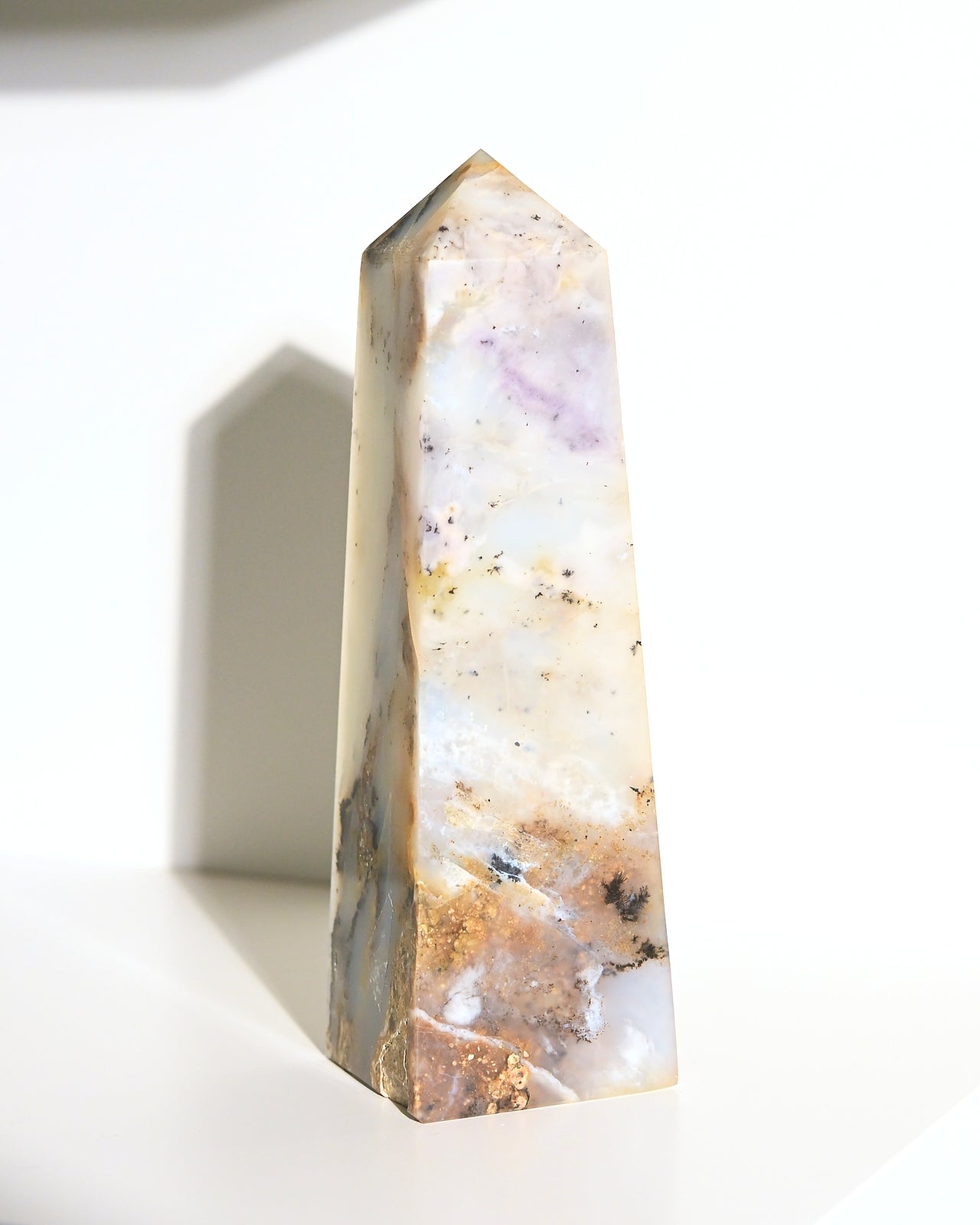
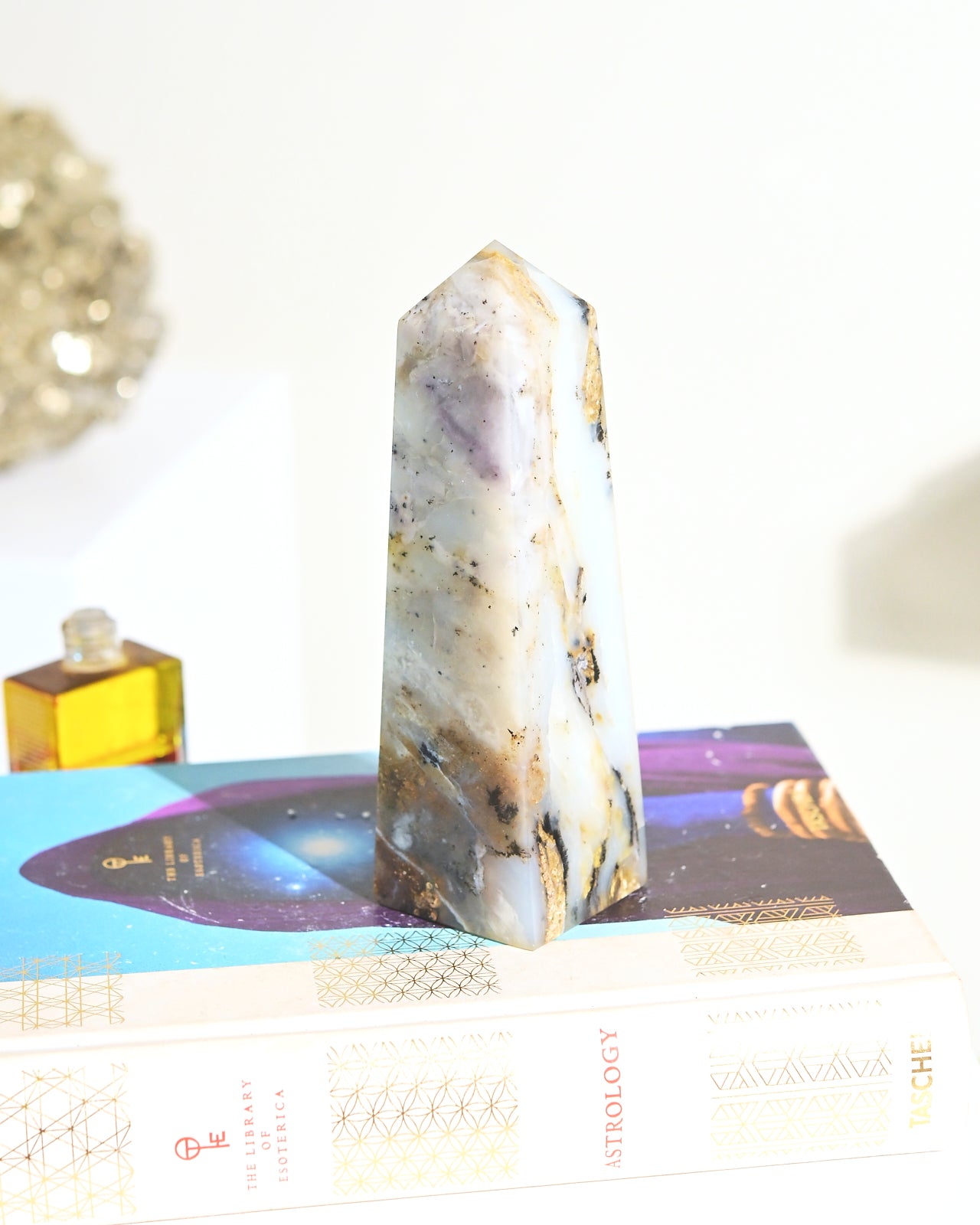
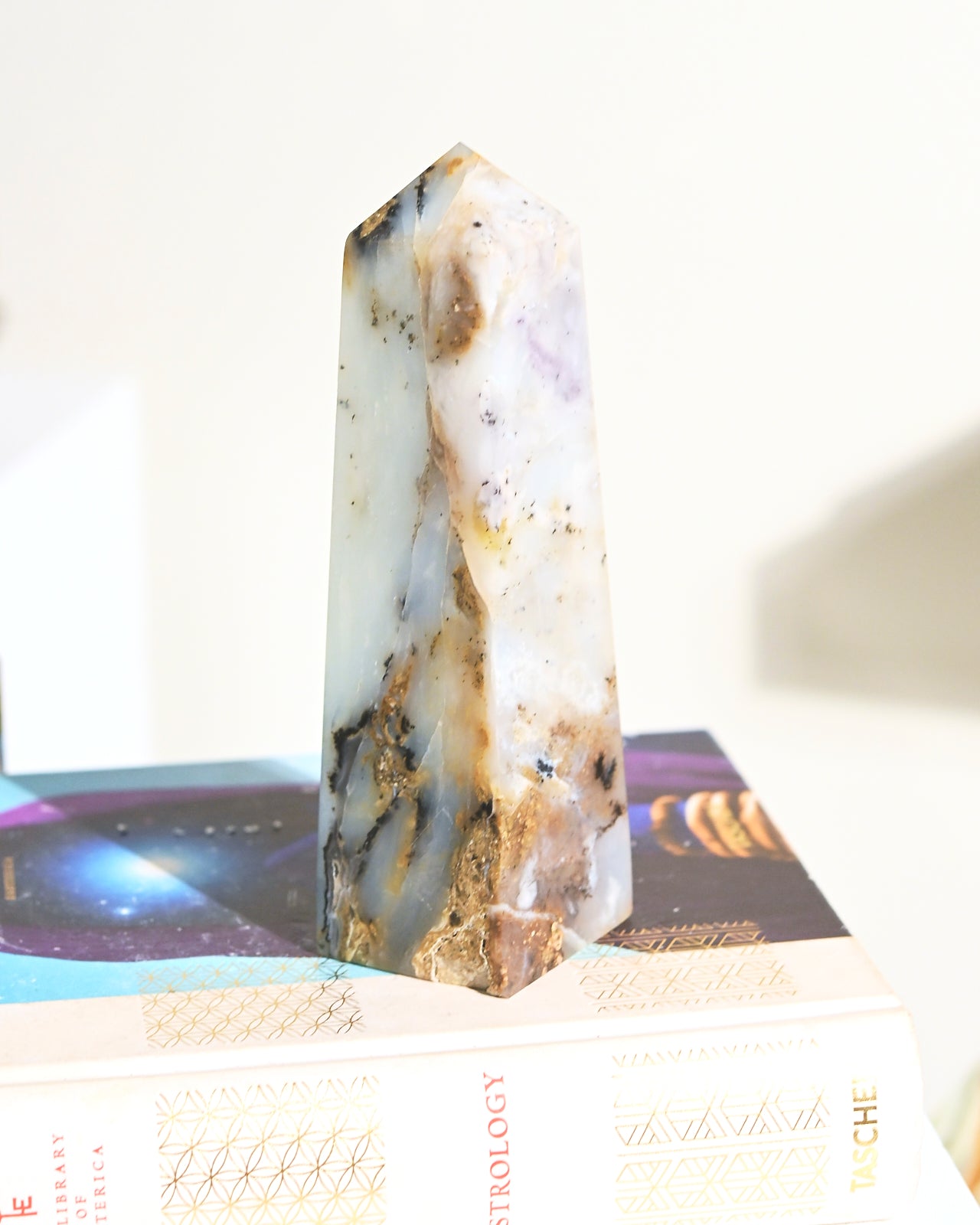
Pink Opal is a hydrated silica mineraloid with the formula SiO₂·nH₂O. Unlike precious opal, pink opal is classified as "common opal" — it does not display play-of-color but instead features a beautiful opaque-to-translucent body in shades of blush, rose, and bubblegum pink. It is amorphous (lacking a crystal structure), registers 5.5–6 on the Mohs hardness scale, and is sourced almost exclusively from the Andes Mountains of Peru, where it is considered the national stone.
Peruvian pink opal forms in volcanic host rock and gets its color from trace inclusions of organic compounds called quinones, as well as from palygorskite, a fibrous clay mineral. The Incas are believed to have valued pink opal, and it has been mined in Peru for centuries. Among collectors, pink opal is prized for its soft, candy-like color palette and its excellent ability to take a smooth polish. Higher-quality material is more uniformly colored and free of matrix inclusions, though many collectors appreciate the natural patterning that matrix provides.
Our pink opal collection includes tumbled stones, palm stones, polished spheres, hearts, freeforms, bracelets, and raw specimens. Browse related stones in our Opal collection, or explore similar soft-toned minerals like Rose Quartz and Rhodonite. For travel-friendly pieces, see our Palm Stones and Tumbled Stones collections. Free shipping on orders over $150.
Frequently Asked Questions
What is pink opal?
Pink opal is a variety of common opal found primarily in Peru. It is an amorphous hydrated silica mineraloid that lacks the play-of-color seen in precious opal, instead displaying a solid opaque-to-translucent pink body color ranging from soft blush to vivid bubblegum.
What gives pink opal its color?
The pink color comes from trace inclusions of quinones (organic compounds) and palygorskite, a fibrous clay mineral, within the silica matrix. The exact shade depends on the concentration and distribution of these inclusions.
Where does pink opal come from?
Nearly all gem-quality pink opal comes from the Andes Mountains of Peru, where it forms in volcanic host rock. Peru considers it a national stone. Minor deposits exist in Australia and Mexico, but Peruvian material dominates the market.
How hard is pink opal?
Pink opal registers 5.5–6 on the Mohs hardness scale, making it suitable for jewelry and polished display pieces but softer than quartz varieties. It should be stored separately from harder stones to avoid scratching.
What is the difference between pink opal and rose quartz?
Pink opal is an amorphous silica mineraloid (no crystal structure), while rose quartz is crystalline silicon dioxide. Pink opal is typically more opaque with a creamier texture, while rose quartz is translucent with a glassy luster. They are chemically related but structurally distinct minerals.


Let customers speak for us
As advertised, the pieces are amazing and beautiful. The first place I go to shop for crystals and stones online.
Another amazing piece. It's beautifully balancing and intuitive.

This necklace is amazing and just the right piece for healing and transformation.

Shopping was easy to navigate. I received my shipment in a reasonable time.
A beautiful bracelet to add to my loving collection.

Not only is this necklace beautiful, I feel calmer when I wear it. LOVE IT
Stunning piece of rock!

Incredible specimen! Lovely for the collection

Beautiful crystals!The quality is excellent, with gorgeous color and natural details. Very happy with my purchase and would definitely recommend!

Beautiful crystals! The quality is excellent, with gorgeous color and natural details. Very happy with my purchase and would definitely recommend!

I have ordered a lot of pieces from here and they are beautiful and always arrive as described and packed and shipped fast. Always very satisfied with my purchases and appreciate buying from Brittany and her business.
Beautiful piece! Incredible quality and shipped perfectly!

Great quality and I loved the information cards.
Great quality and I loved the information card it came with.

I have purchased several pieces from Crystals.com and keep coming back for more. :) This is my second amethyst piece. The color of the amethyst is a deep purple. Great craftsmanship!!

A Sanctuary of Natural Beauty
Every crystal here was discovered by hand, selected with intuition, and photographed in its true light.
One-of-a-Kind. Forever Pieces.
Let the Universe Decide


