Crystals.com
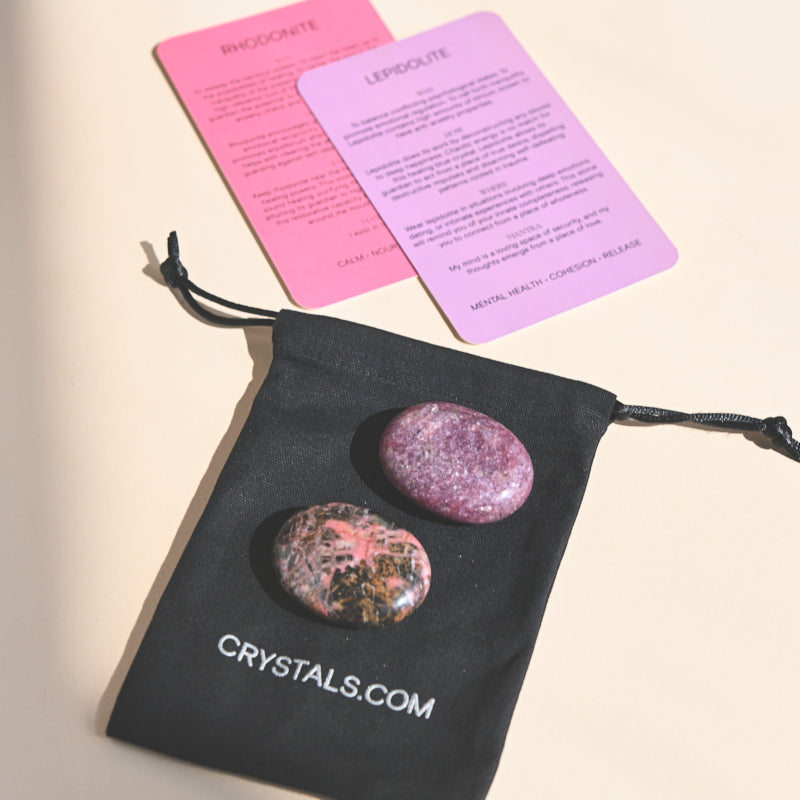
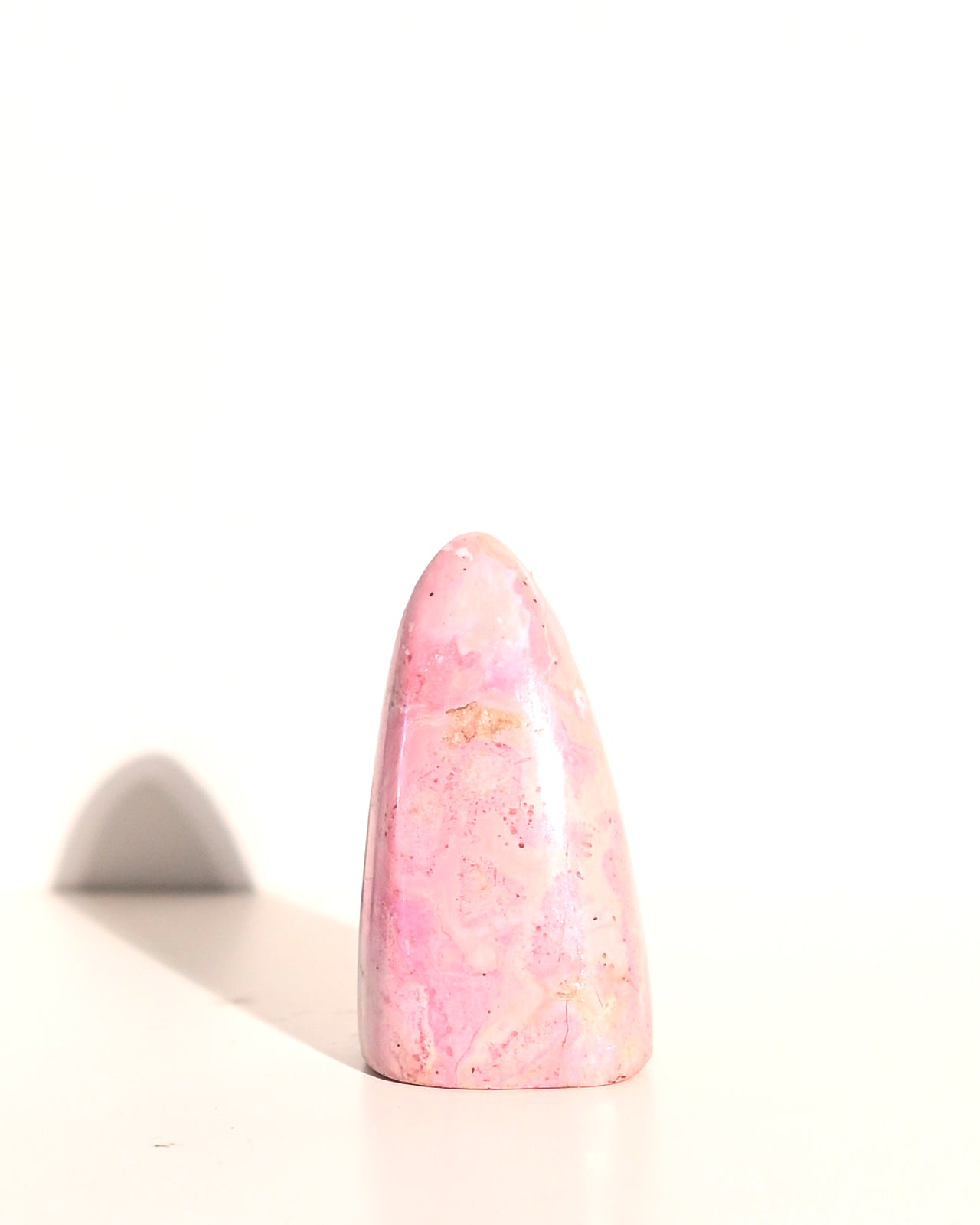
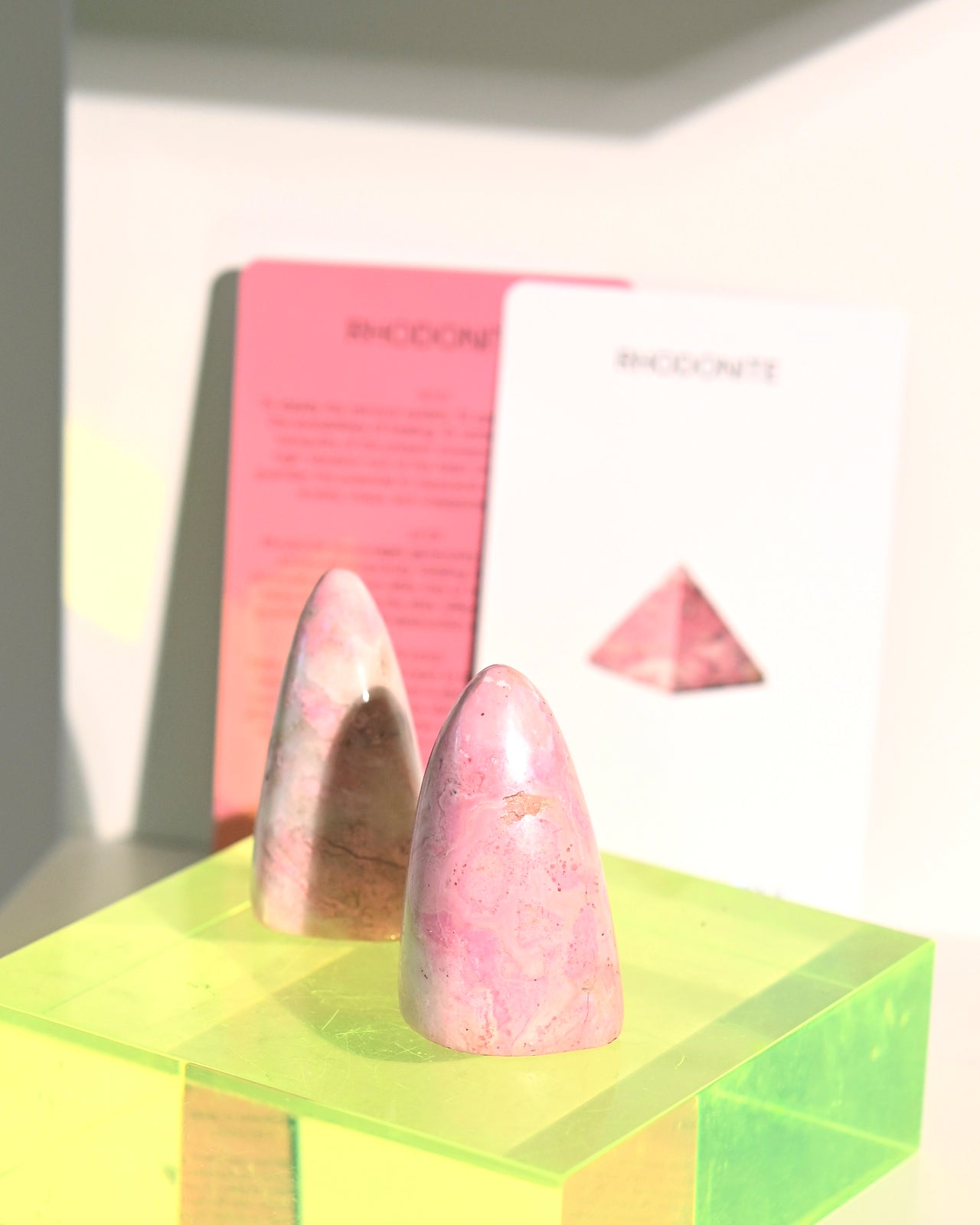
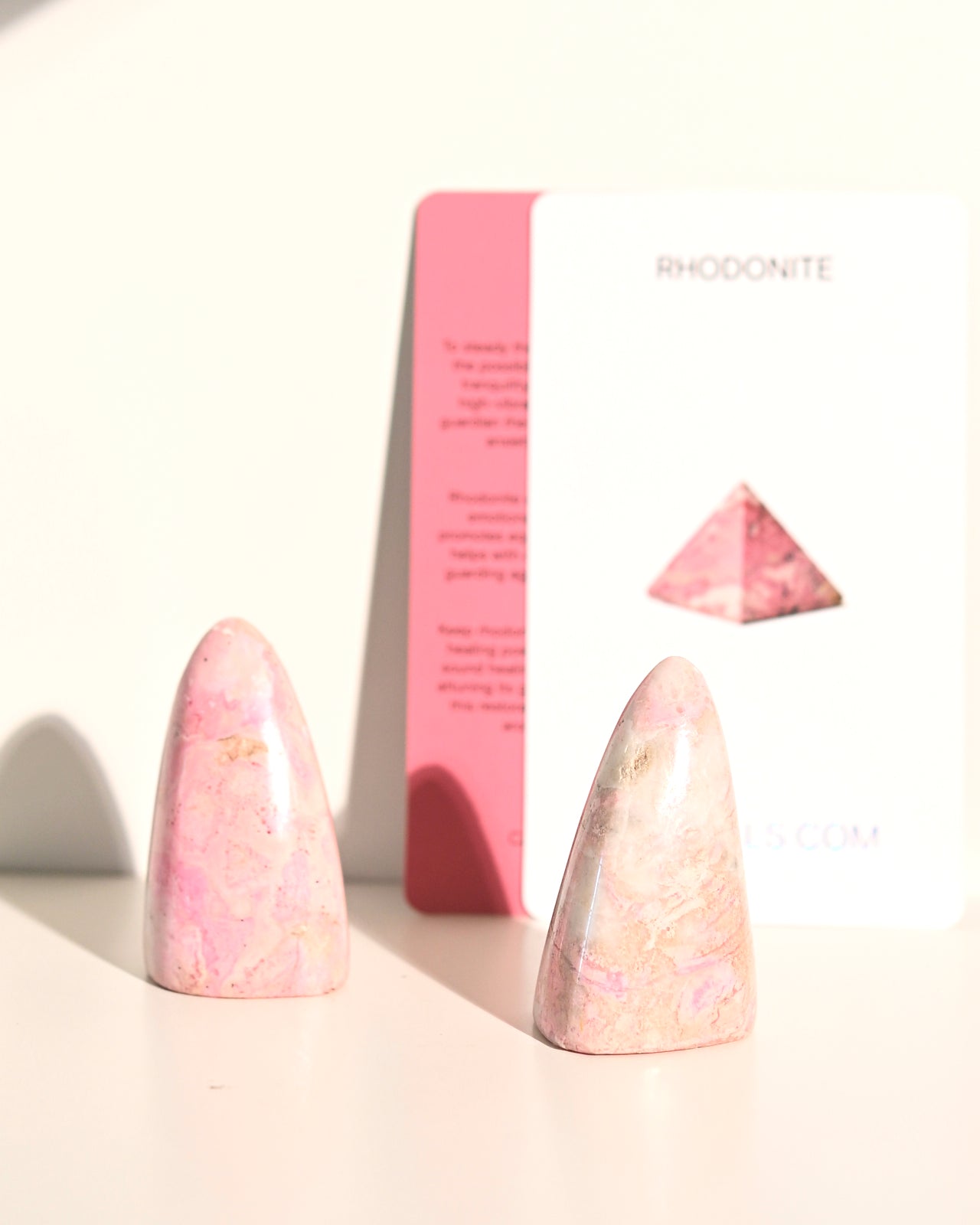
Rhodonite Crystal
Authentic natural minerals, thoughtfully sourced and individually photographed.

Rhodonite Crystals
Rhodonite is a manganese inosilicate mineral with the formula (Mn,Fe,Mg,Ca)SiO₃, crystallizing in the triclinic system. It is immediately recognizable by its rosy pink body color contrasted with striking black veins and patches of manganese oxide. Rhodonite registers 5.5–6.5 on the Mohs hardness scale. Major deposits are found in Russia, Australia, Brazil, Peru, Sweden, and the United States.
In Imperial Russia, rhodonite was considered a national treasure — used to carve massive ornamental objects, including the sarcophagus of Empress Maria Alexandrovna. The Ural Mountains produced some of the finest rhodonite ever quarried. Collectors value rhodonite for the interplay between warm pink tones and bold manganese oxide patterning. Transparent, gem-quality rhodonite crystals from Broken Hill, Australia, are among the most prized specimens in the mineral world.
Available forms include tumbled stones, palm stones, polished spheres, hearts, bracelets, and raw specimens. For other pink minerals, see our rose quartz and pink amethyst collections. Compare with garnet for deeper reds. Browse crystal jewelry for rhodonite pendants. Free shipping on orders $150+.
Frequently Asked Questions
What is rhodonite?
Rhodonite is a manganese silicate mineral known for its distinctive pink color with black manganese oxide veining. The name comes from the Greek rhodon meaning rose. It rates 5.5–6.5 on the Mohs scale.
What causes the black veins in rhodonite?
The black veining is manganese oxide (primarily pyrolusite) that forms along fractures and grain boundaries through natural weathering and oxidation. The contrast between pink rhodonite and black manganese oxide is what makes each piece unique.
What is the difference between rhodonite and rhodochrosite?
Both are pink manganese minerals, but rhodonite is a manganese silicate (Mohs 5.5–6.5) that appears opaque pink with black veining, while rhodochrosite is a manganese carbonate (Mohs 3.5–4) that forms in banded pink and white layers. Rhodochrosite is softer and can be transparent in gem-quality specimens.
Where does rhodonite come from?
Russia (Ural Mountains, historically the finest), Australia (Broken Hill, gem-quality crystals), Brazil, Peru, Madagascar, Sweden, and the United States (Massachusetts). Russian rhodonite was used for Imperial carvings and architectural decoration.
Is rhodonite good for jewelry?
Yes. At Mohs 5.5–6.5, rhodonite is suitable for pendants, earrings, bracelets, and carefully worn rings. Its pink-and-black pattern makes excellent cabochons. Clean with warm soapy water and a soft brush.



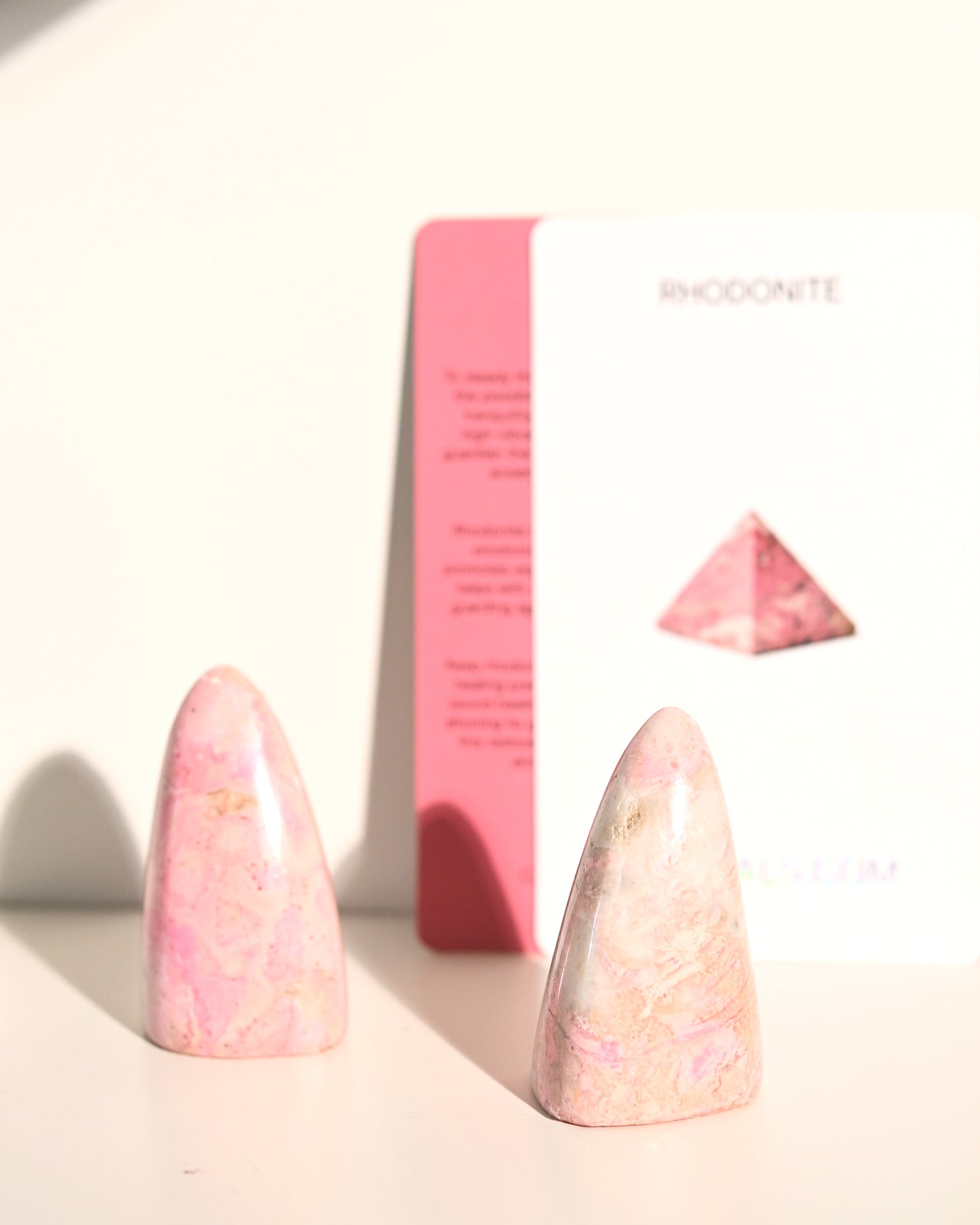
Know your crystal
Rhodonite Crystal
Rhodonite is a manganese silicate named from the Greek rhodon — rose. Its pink body is cut through with black veins of manganese oxide, each pattern one of a kind. The finest historical material came from Russia's Ural Mountains, where it was carved for the tsars.
Let customers speak for us
Great
Nice sparkle, and I always very much appreciate that crystals.com stud earrings have notches on the post to keep the backing from sliding off.

Beautiful stone, love the color, shape, and size. If I can, I might remove it from the earring wire and put a stud earring from crystals.com thru it to create my own custom earring, because the angle isn't right for my ear for the stone to show.

Super pretty stone - color, shape, and size. Pairs beautifully with other necklaces I've purchased from crystals.com.

This was a great product! Authentic, and smooth and has a nice energy about it! I bought two more!

great item

I’m in love with the malachite! Just beautiful. I purchased the tigers eye for my friend who is going through some health issues.

Love my crystals.. everything is always great. Obsessed with my new amethyst
This a beautiful piece of Pyrite.

Very lovely. I am very happy with it.

Love it

Very pretty crystals very solid piece nice display

My faborite, the bix is beautiful

Smells so good

this - 🤩✨✨ BLEW my mind. absolutely stunning!!! the feel and the color is just everything i feel so boujee when i wear it 🧑🩰🦋 definitely has been a daily “must wear” bracelet of mine. the quality is insane!! the best quality ive seen/felt on a crystal bracelet i was beyond happy i was able to snag this when i did 🥰 truly a DREAM and the photos dont do it justice!

A Sanctuary of Natural Beauty
Every crystal here was discovered by hand, selected with intuition, and photographed in its true light.
One-of-a-Kind. Forever Pieces.
Let the Universe Decide


