Crystals.com
Serpentine
Authentic natural minerals, thoughtfully sourced and individually photographed.

Serpentine Crystals
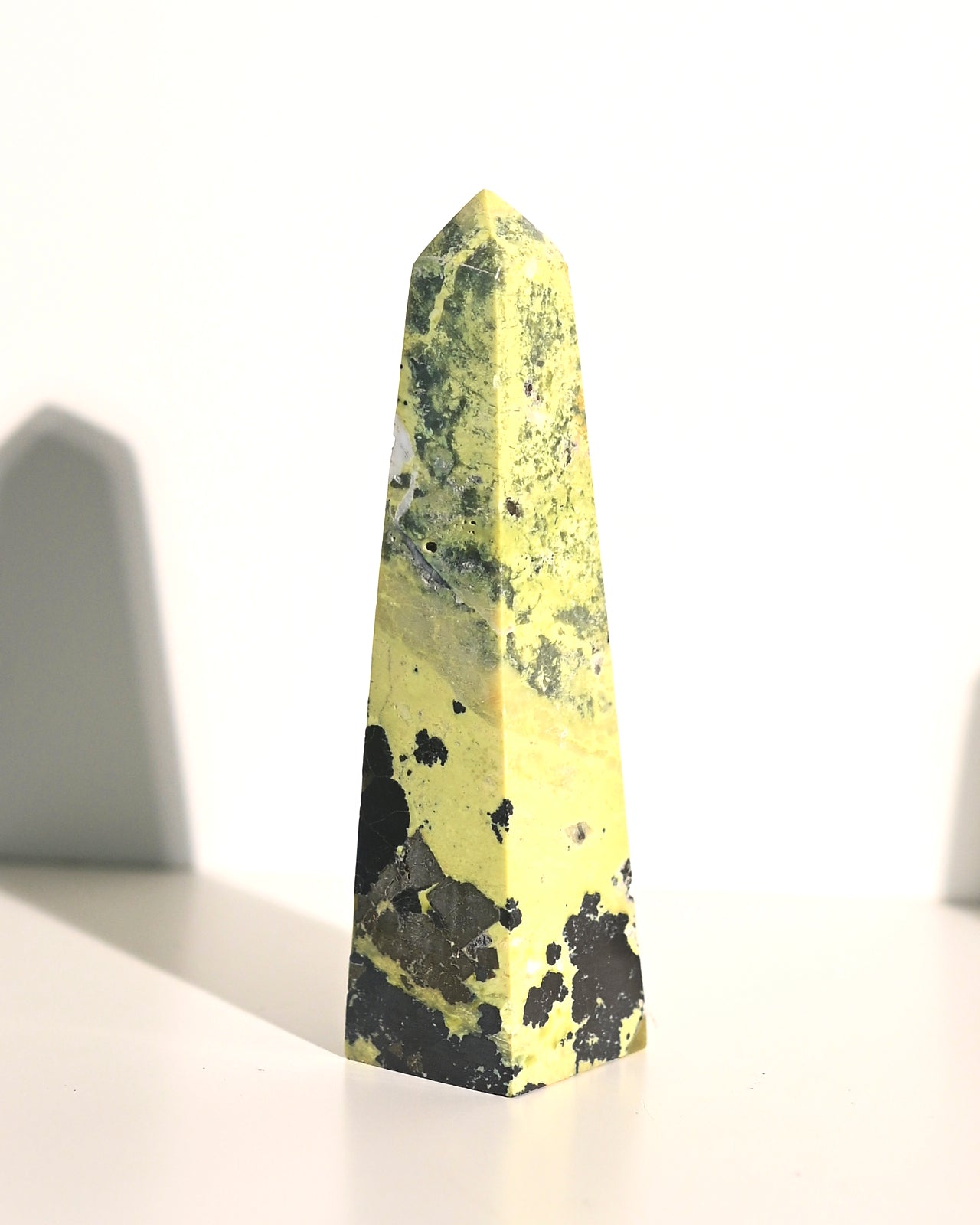
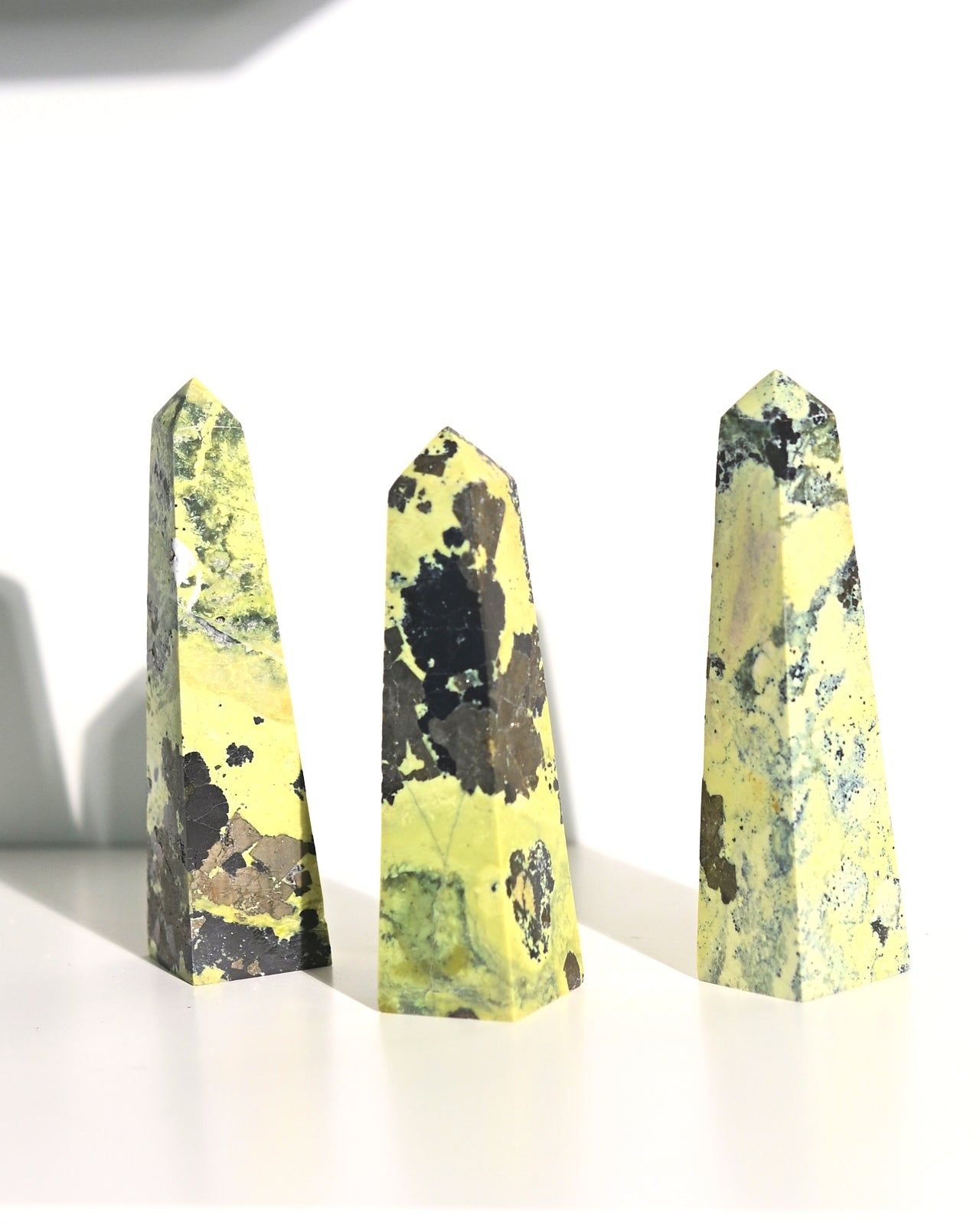
Serpentine refers to a group of magnesium silicate minerals (Mg3Si2O5(OH)4) with a characteristic waxy-to-greasy luster and a color palette ranging from olive and forest green to yellow-green and nearly black. The group includes antigorite, lizardite, and chrysotile — all sharing serpentine's distinctive texture. Hardness varies from 3 to 6 on the Mohs scale. Significant deposits occur in China, Afghanistan, New Zealand, the United States, and throughout the Alps.
The name comes from Latin serpentinus, meaning "resembling a serpent" — a reference to the mottled, snakeskin-like patterning common in many specimens. The Maori of New Zealand have a long tradition of carving tangiwai, a translucent serpentine variety, into pendants and ceremonial objects. In European history, serpentine was widely used for architectural cladding and interior decoration.
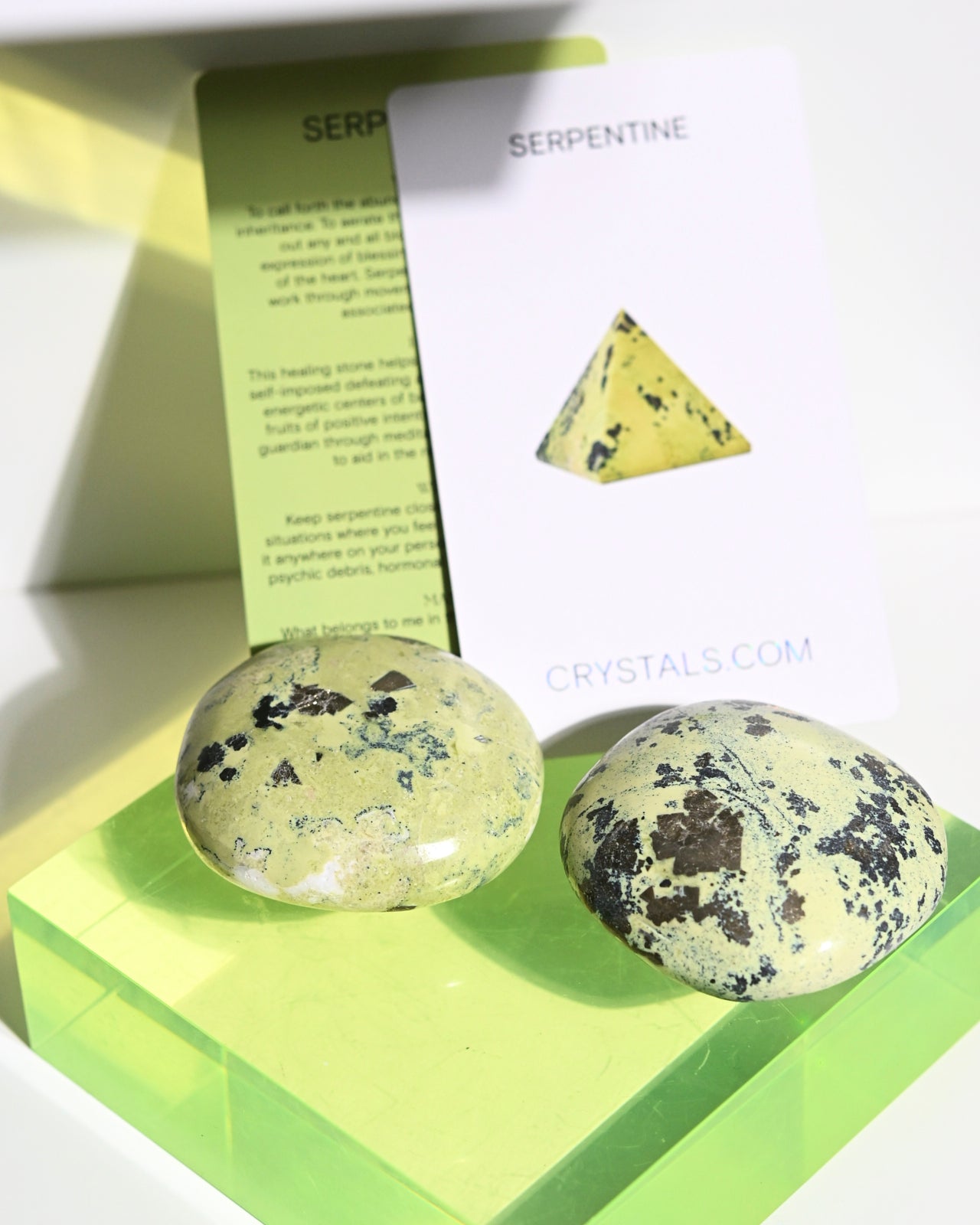
This collection features polished freeforms, towers, tumbled stones, palm stones, raw specimens, and bracelets. Serpentine's rich green tones pair well with malachite, green aventurine, and jade. Free shipping on all U.S. orders over $150.
Frequently Asked Questions
What is serpentine?
Serpentine is a group of magnesium silicate minerals with a waxy luster and green coloration. The three main species are antigorite, lizardite, and chrysotile. Mohs hardness ranges from 3-6 depending on the variety. It forms through the metamorphism of iron- and magnesium-rich rocks like peridotite and dunite.
Is serpentine the same as jade?
No. Serpentine and jade (nephrite and jadeite) are different minerals, though serpentine is sometimes marketed as "new jade" or "olive jade" due to its similar green color. True jade is significantly harder (Mohs 6-7) and denser. Serpentine has a waxier luster and typically a more olive or yellowish-green tone compared to jade's deeper, richer green.
Where does serpentine come from?
Major sources include China, Afghanistan, New Zealand, the western United States, Italy, and the Alps. New Zealand serpentine (tangiwai) is culturally significant in Maori carving traditions. Italian serpentine was historically quarried for architectural use throughout Europe.
How do I care for serpentine?
Serpentine is relatively soft (Mohs 3-6), so store it separately from harder minerals. Clean with a soft damp cloth — avoid harsh chemicals. The waxy surface can dull over time but is easily refreshed with a light polish. Handle raw specimens with care, as softer varieties may flake.
What does serpentine look like?
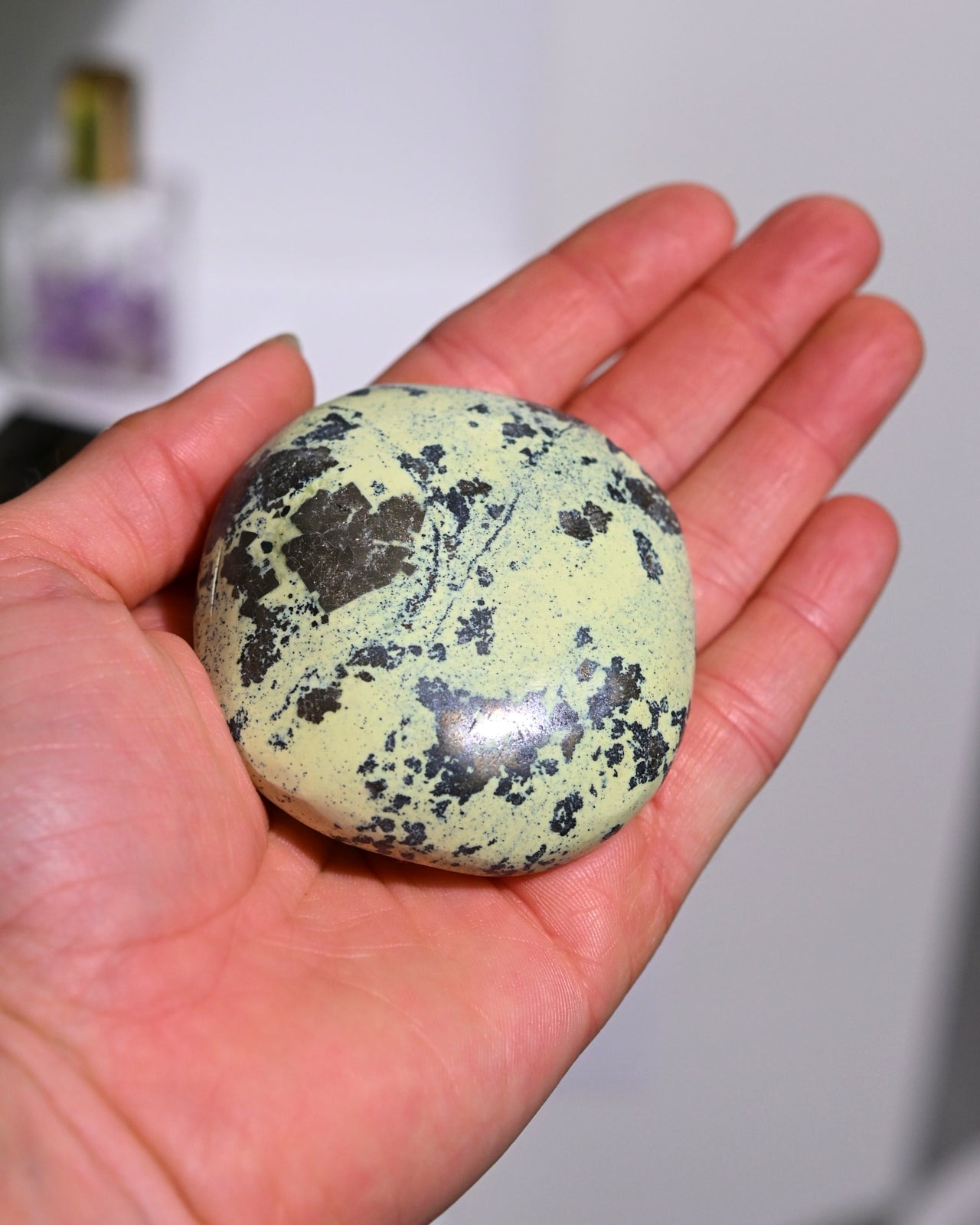
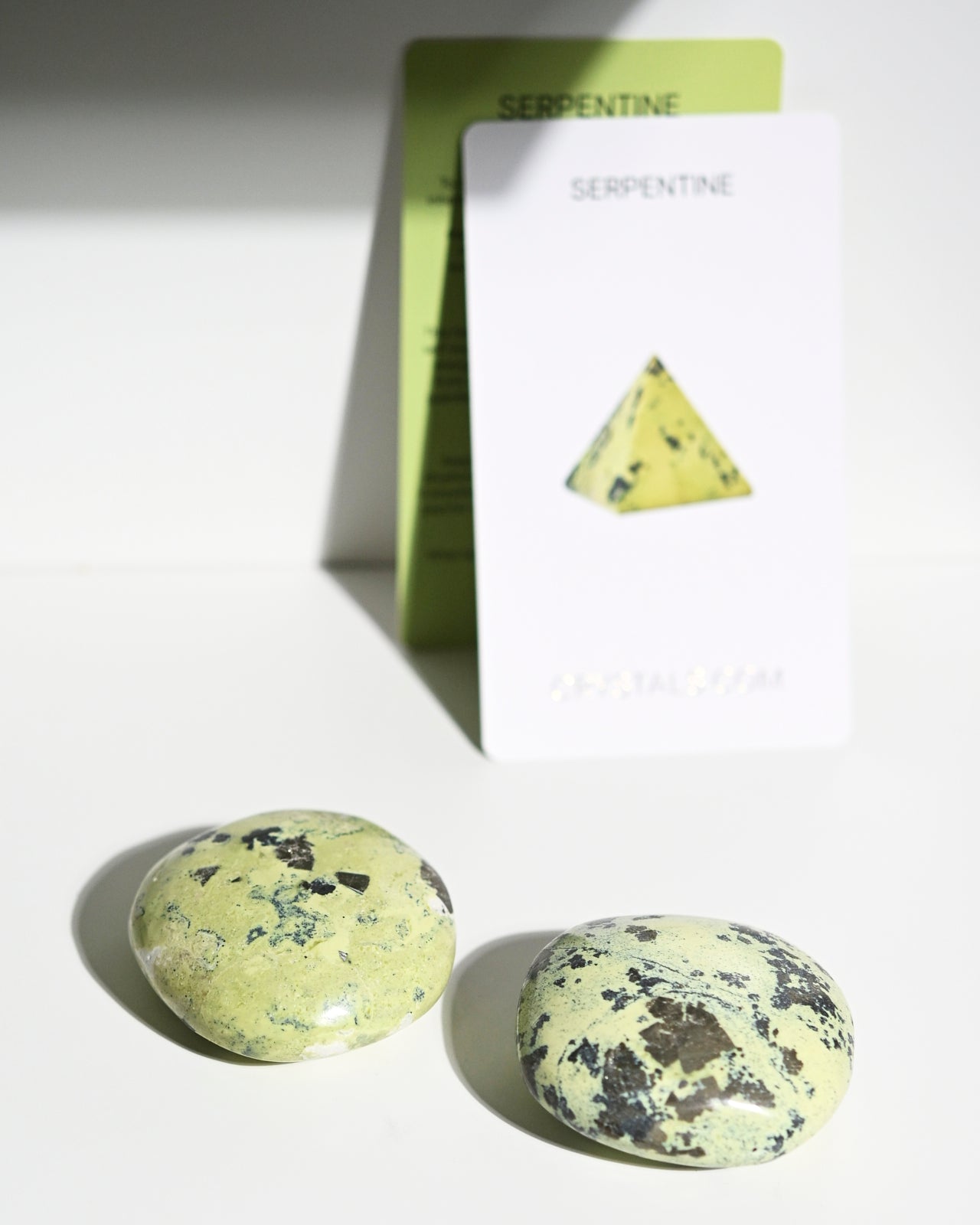
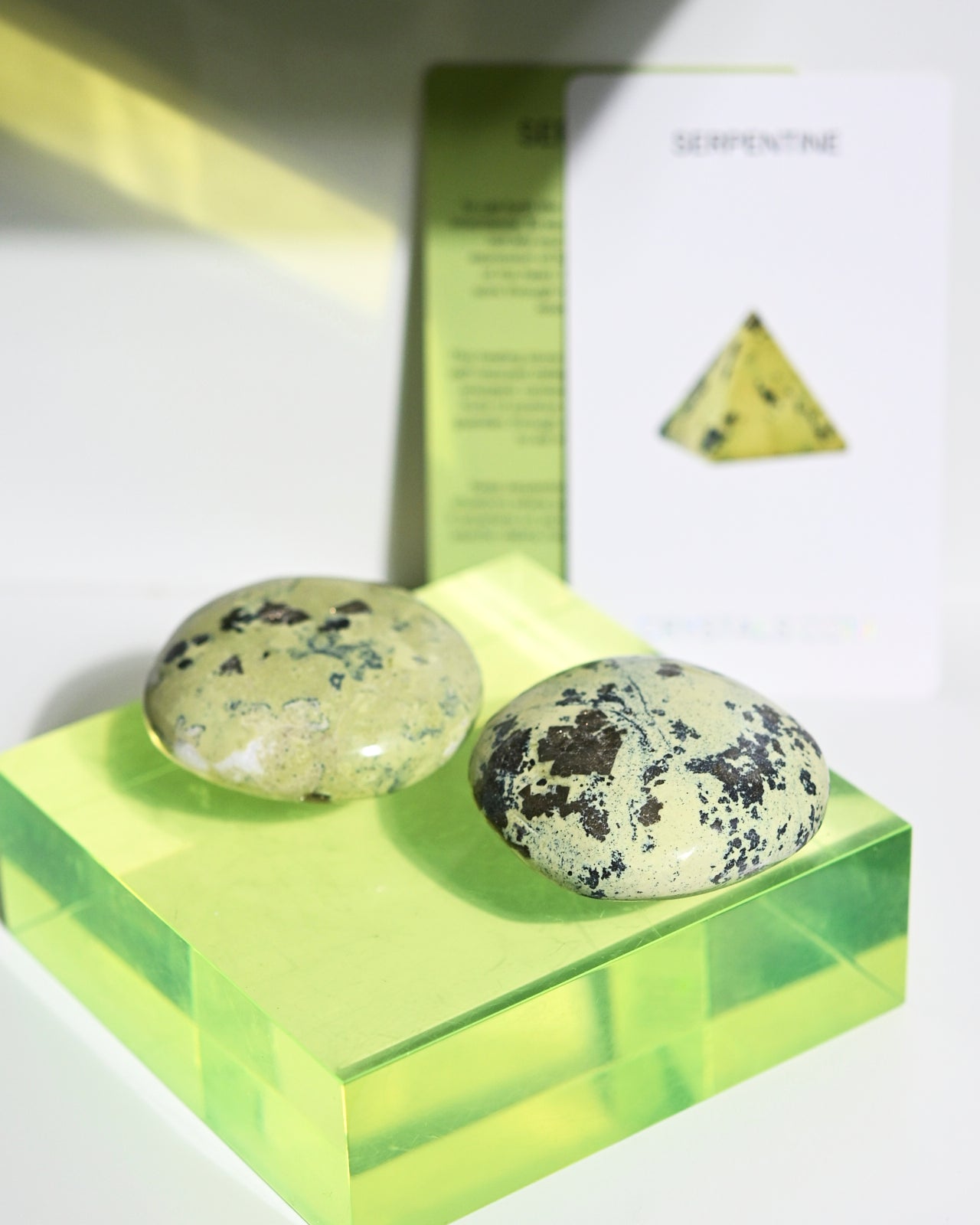
Serpentine ranges from olive green to forest green to nearly black, often with mottled or banded patterning that resembles snakeskin (hence the name). Some varieties are translucent when cut thin. The surface has a distinctive waxy-to-greasy luster that distinguishes it from most other green minerals.




Let customers speak for us
I have ordered a lot of pieces from here and they are beautiful and always arrive as described and packed and shipped fast. Always very satisfied with my purchases and appreciate buying from Brittany and her business.
Beautiful piece! Incredible quality and shipped perfectly!

Great quality and I loved the information cards.
Great quality and I loved the information card it came with.

I have purchased several pieces from Crystals.com and keep coming back for more. :) This is my second amethyst piece. The color of the amethyst is a deep purple. Great craftsmanship!!

The smaller bead size was even more beautiful!
Really pretty!

Beautiful! The size of each rock is perfect!

Beautiful piece. Just as described

Amazing looks better in person

I love it but it could have been a little bigger

Enjoyed and appreciated by person who received it. The three types of stones look amazing together too!

Very reputable online and they did not disappoint!
Absolutely stunning!

Absolutely stunning!

A Sanctuary of Natural Beauty
Every crystal here was discovered by hand, selected with intuition, and photographed in its true light.
One-of-a-Kind. Forever Pieces.
Let the Universe Decide


