Crystals.com
GRAPE AGATE
Authentic natural minerals, thoughtfully sourced and individually photographed.

Grape Agate Crystals
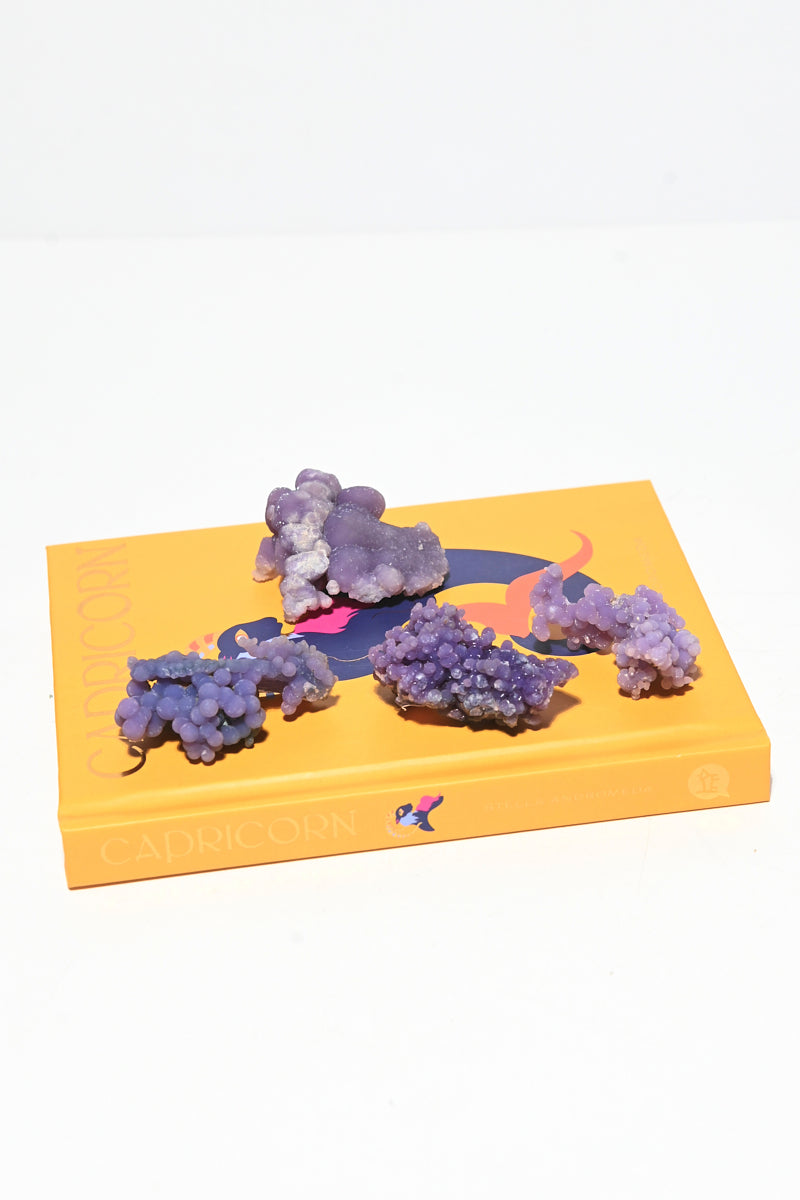
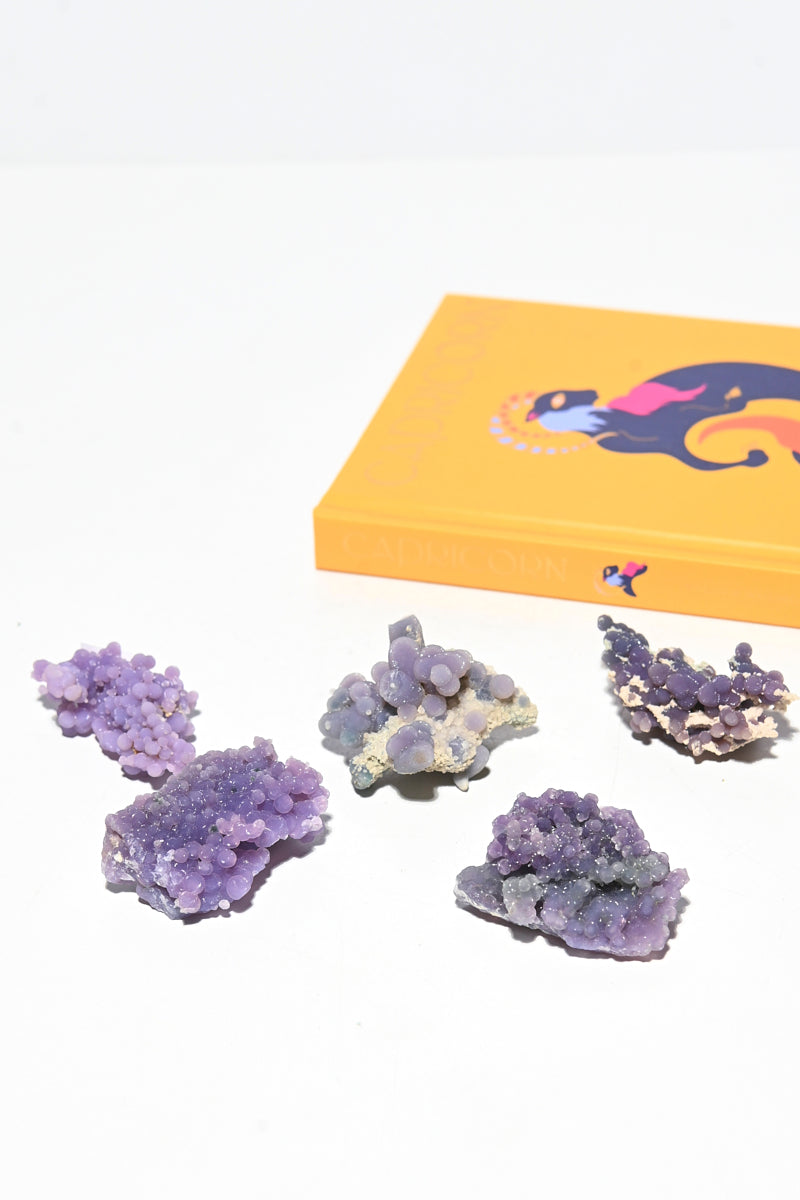
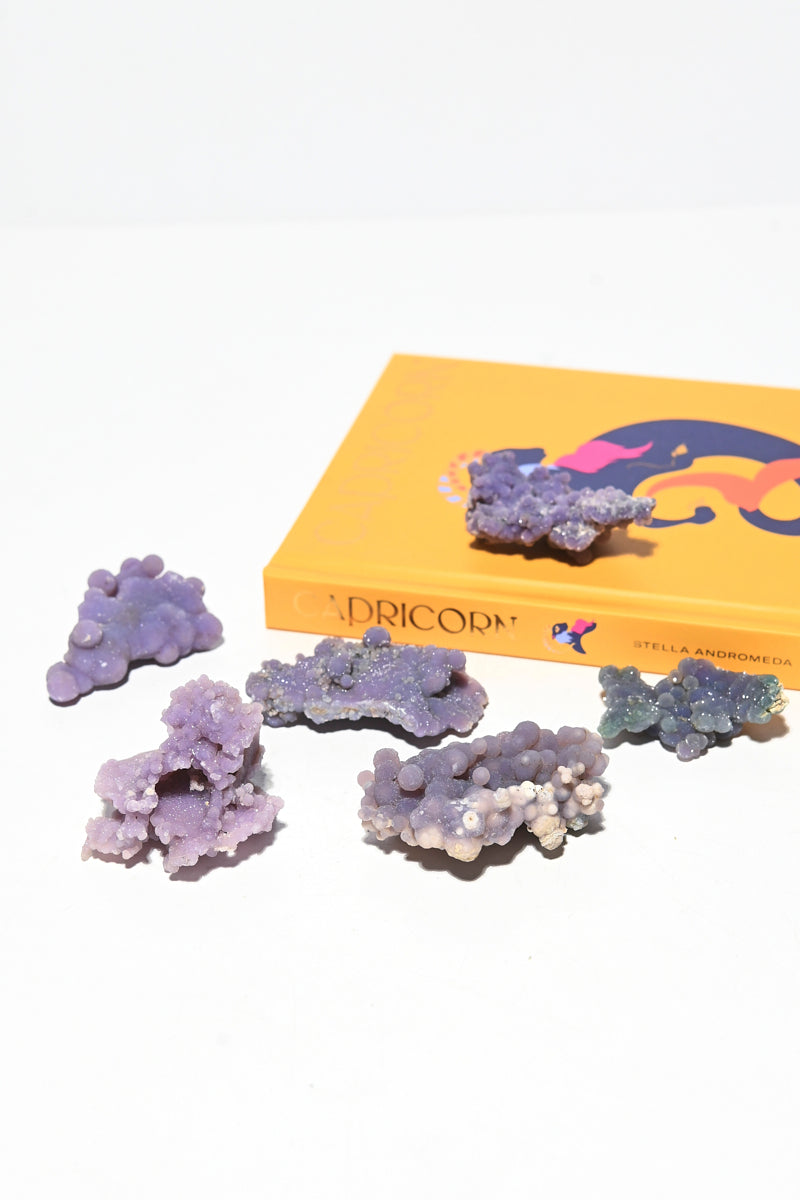
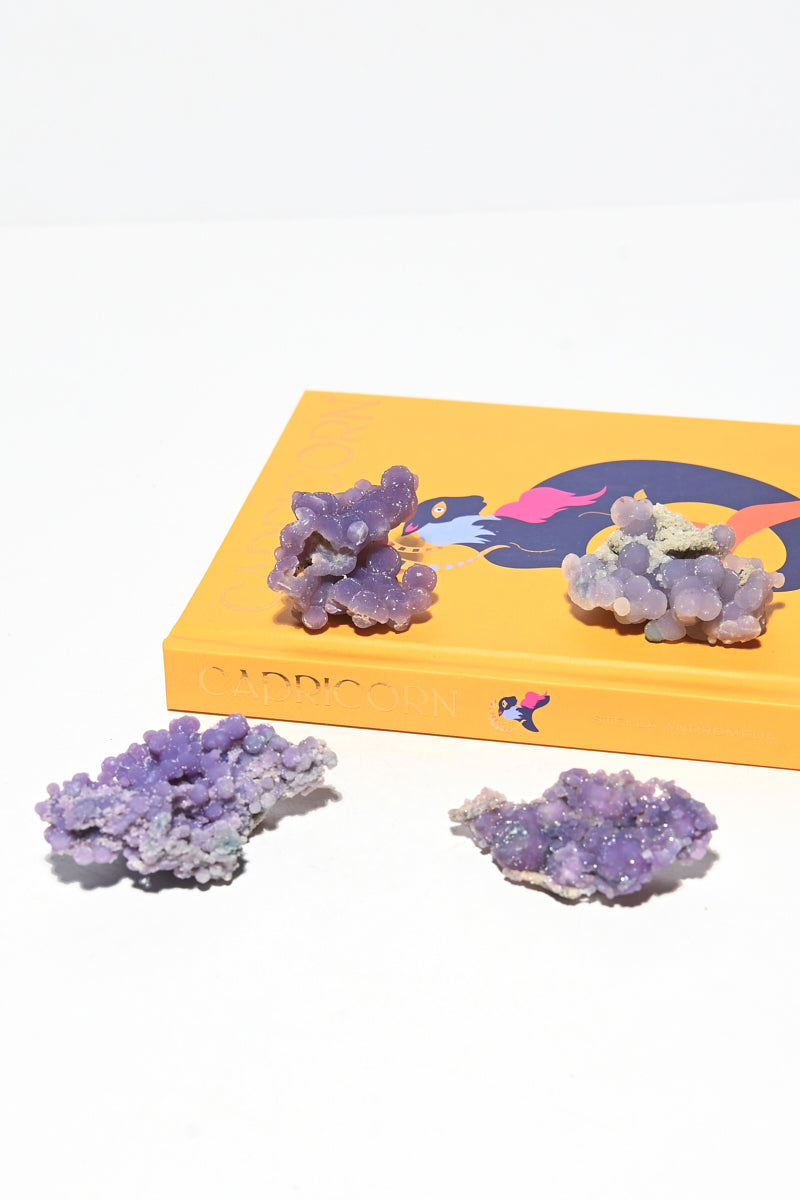
Grape agate — more accurately called botryoidal purple chalcedony — is a formation of tiny spherical silica globules clustered together in shapes that resemble bunches of grapes. Each individual sphere is a concentric growth of microcrystalline quartz (chalcedony, SiO₂) that nucleated around a central point, building outward layer by layer. The purple coloring comes from trace iron and manganese inclusions within the silica structure.
Nearly all gem-quality grape agate on the market comes from the Mamuju area of West Sulawesi, Indonesia, where it forms in vesicles (gas cavities) within volcanic andesite rock. The deposits were first commercially available around 2015–2016 and quickly became one of the most popular collector minerals of the decade. Colors range from deep royal purple to pale lavender, with some specimens showing green, blue, or white zones where mineral chemistry varies.
What makes grape agate exceptional is its botryoidal habit — the same growth pattern seen in malachite, hematite, and goethite, but expressed here in translucent purple chalcedony. When backlit, the finest specimens glow with an almost grape-juice translucency. Collectors prize specimens with tight, uniform spheres, deep color saturation, and minimal matrix attachment.
Explore related varieties in our Agate collection, or browse other purple minerals like Amethyst and Lepidolite. For more collector-grade specimens, see our Rough Crystals and Crystal Clusters collections. Free shipping on orders over $150.
Frequently Asked Questions
What is grape agate?
Grape agate is botryoidal purple chalcedony — clusters of tiny silica spheres that form in volcanic rock cavities. The grape-like appearance comes from the botryoidal (globular) crystal habit, and the purple color comes from trace iron and manganese inclusions.
Where does grape agate come from?
Nearly all gem-quality grape agate comes from the Mamuju area of West Sulawesi, Indonesia. The deposits were first commercially available around 2015–2016. It forms in vesicles within volcanic andesite rock.
Is grape agate actually an agate?
Technically, no. True agate displays banding, while grape agate is unbanded botryoidal chalcedony. The name "grape agate" is a trade name that stuck because of the grape-like cluster formation. Mineralogically, it is more accurately called botryoidal purple chalcedony.
Why are some grape agate specimens green or blue?
Color variations occur due to differences in trace mineral chemistry during formation. Purple comes from manganese and iron, green from celadonite or chlorite inclusions, and blue-white from pure chalcedony with minimal trace elements. Multi-colored specimens are especially prized by collectors.
How hard is grape agate?
Grape agate is chalcedony, so it rates 6.5–7 on the Mohs hardness scale — durable enough for display and handling. The individual spheres are solid but can be fragile at their attachment points to matrix, so handle specimens with care.

Let customers speak for us
The smaller bead size was even more beautiful!
Really pretty!

Beautiful! The size of each rock is perfect!

Beautiful piece. Just as described

Amazing looks better in person

I love it but it could have been a little bigger

Enjoyed and appreciated by person who received it. The three types of stones look amazing together too!

Very reputable online and they did not disappoint!
Absolutely stunning!

Absolutely stunning!

Absolutely stunning!

Absolutely stunning!

Absolutely stunning!

Absolutely stunning!

Absolutely stunning!

A Sanctuary of Natural Beauty
Every crystal here was discovered by hand, selected with intuition, and photographed in its true light.
One-of-a-Kind. Forever Pieces.
Let the Universe Decide


