Best Crystals for Your Bedroom
Creating a restful bedroom sanctuary begins with the right crystalline energy. Amethyst (Amethyst Geode), selenite (Selenite Cleansing Wand), lepidolite, and howlite are the premier crystals for promoting deep sleep, calming anxiety, and establishing the tranquil environment your mind and body crave at the end of each day. Whether you place them on your nightstand, slip them beneath your pillow, or position them as focal points above your bed, these carefully selected specimens work synergistically with your body's natural sleep rhythms to deepen rest and encourage vivid, meaningful dreams.
The Premier Sleep Crystals
Amethyst: The Sanctuary Stone
Amethyst stands unrivaled as the bedroom essential. This violet-hued quartz variety has been treasured for centuries as a gateway to deeper sleep and spiritual clarity. Its gentle, high-frequency vibration creates an energetic container that quiets racing thoughts—particularly valuable for those who struggle with insomnia driven by overthinking or stress.

For maximum bedroom impact, position an amethyst geode or cluster on your nightstand at eye level, allowing its serene purple tones to become the last thing you see before sleep. Alternatively, place a polished amethyst palm stone beneath your pillow or on your bedside table. The larger the specimen, the greater its energetic reach—a 4-6 inch geode will establish calm throughout an entire master bedroom, while a 8-10 inch cathedral or cluster becomes a sculptural statement piece that elevates your bedroom's aesthetic while serving as a subtle sleep aid.
Explore our curated selection of bedroom amethyst geodes, clusters, and polished specimens at our amethyst collection.

Selenite: The Luminous Clarifier
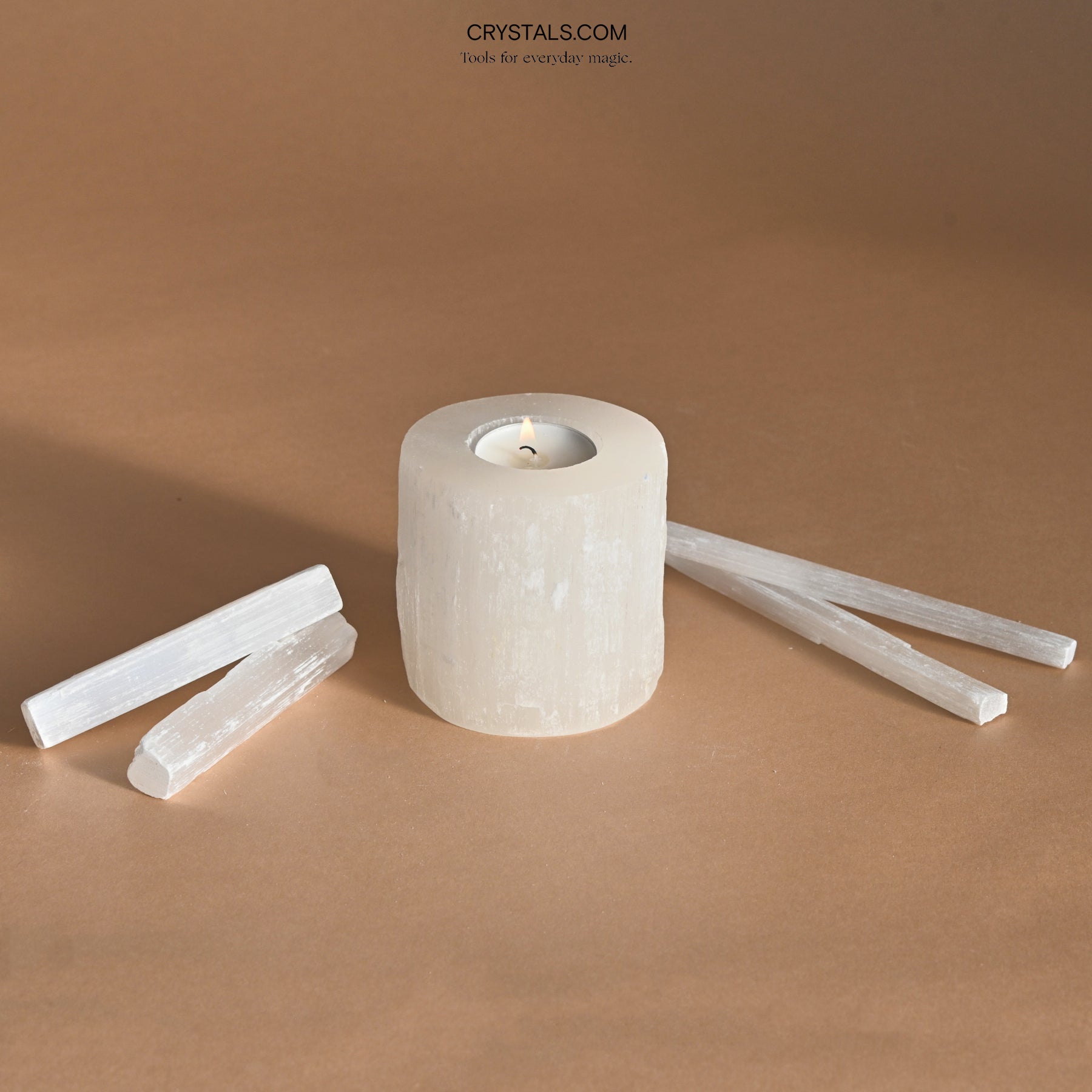
Where amethyst calms the emotional body, selenite cleanses and clarifies the mental plane. Its pearlescent, almost ethereal appearance mirrors its energetic signature—it brings a pristine, clarifying quality to consciousness. Selenite's transparency and light-enhancing properties make it particularly valuable for clearing mental clutter before sleep, dissolving intrusive thoughts, and facilitating lucid dreaming.

Selenite's delicate structure requires mindful placement. Position a selenite wand or palm stone on your nightstand—its smooth, cool surface invites touch, making it an ideal worry stone when anxiety spikes before bed. A selenite lamp in soft, warm tones creates ambient lighting that supports melatonin production while bathing your bedroom in the stone's clarifying energy. Never place selenite in the shower or bathroom, as it's water-soluble and will degrade; the bedroom's dry environment preserves its integrity for years.
Browse our selenite wands, lamps, and polished pieces at our selenite collection.
Lepidolite: The Lithium-Rich Soother
Lepidolite is nature's most direct sleep aid. This lavender-to-lilac quartz contains lithium—the same mineral used in pharmaceutical sleep aids—but offers the gentle, whole-system support of a natural stone. Its earthy, slightly heavier vibration settles anxious energy without inducing grogginess; users report waking genuinely rested rather than sedated.

Lepidolite works best in direct contact or close proximity. Sleep with a raw lepidolite specimen on your nightstand, or tuck a polished piece into your pillowcase. Its soft, powdery texture makes it particularly soothing to touch during moments of pre-sleep anxiety. A 2-3 inch specimen is ideal—large enough to establish energy without dominating your sleep space.
Discover lepidolite clusters and specimens in our lepidolite collection.
Howlite: The Consciousness Bridge
Howlite, with its distinctive white matrix veined in grey, offers a gentler entry point for those new to crystal sleep support. It works as a consciousness bridge—calming enough for overactive minds, yet gentle enough for sensitive sleepers. Howlite is particularly valuable for those experiencing night terrors, nightmares, or erratic sleep patterns; it helps establish rhythm and predictability in the sleep cycle.

Polished howlite spheres or egg-shaped stones feel delightful held in the hand during wind-down rituals. Keep one on your nightstand for moments of pre-sleep anxiety, or place a small tumbled howlite beneath your pillow. Howlite's cool, smooth surface and neutral aesthetic integrate seamlessly into any bedroom design.
Explore howlite and other gentle sleep stones at our howlite collection.
Strategic Bedroom Placement: Design Meets Energy
The Nightstand Foundation
Your nightstand is the primary placement zone. Here, position 2-3 complementary crystals: perhaps a larger amethyst geode as the statement piece, flanked by a selenite wand and a polished lepidolite stone. This tri-stone arrangement creates a complete energetic approach to sleep—amethyst for deep rest, selenite for clarity and lucid dreams, lepidolite for direct sleep support. Ensure they're arranged at eye level so their visual presence becomes part of your wind-down ritual.
Under-Pillow Placement
Placing crystals directly under your pillow creates intimate, nightly contact with their vibrations. This works best with smaller (under 2 inch) polished pieces to maintain comfort. Rotate your under-pillow crystals monthly—two weeks of lepidolite for acute sleep challenges, followed by two weeks of howlite for gentle maintenance. Many crystal devotees create a small silk pouch to hold multiple tumbled stones under the pillow, allowing several energies to work in concert.
Above-the-Bed Placement
For a more dramatic installation, mount a large amethyst geode or selenite cluster on the wall directly above your bed's headboard. This becomes a focal point—visually stunning while establishing the bedroom's energetic tone. A 6-10 inch piece creates maximum impact without overwhelming a standard bedroom. This placement requires no interaction; the crystal works passively as you sleep, its energy permeating the space.
Opposite-the-Bed Placement
Position a beautiful clear quartz or amethyst specimen on a dresser or shelf opposite your bed—visible as you lie down and as you wake. This creates a gentle visual anchor that psychologically reinforces your intention to sleep well. The stone becomes a symbolic marker: the moment you see it upon closing your eyes and opening them, your mind registers the bedroom's purpose.
Crystals for Couples: Shared Sleep Sanctuaries
Couples benefit from thoughtful crystal pairing. A shared nightstand arrangement might feature a larger amethyst geode (representing unified calm), with rose quartz (Rose Quartz Tower) on either side (for emotional openness and connection). Alternatively, position one amethyst geode in the room's center, allowing its energy field to encompass both sleepers equally.
Rose quartz pairs beautifully with sleep crystals for couples seeking to deepen intimacy and emotional security alongside restful slumber. Place a pair of rose quartz palm stones—one on each nightstand—to maintain individual calm while the shared amethyst above the bed reinforces unity.
Explore rose quartz and combined sleep collections at our rose quartz collection.
Master Bedroom Statement Pieces
For those with larger master suites, substantial crystal installations elevate the space to luxury resort status. A 12-18 inch amethyst cathedral or geode becomes sculptural art—worthy of display on a bedroom console, in a nook, or as a dramatic bedside placement. These larger specimens create an energetic field that encompasses the entire room, working passively while you sleep.

Pair a large amethyst with strategically placed selenite lamps or clear quartz points to create intentional energy flows throughout the space. This approach combines aesthetic sophistication with energetic layering—each piece serving both visual and vibrational purposes.
Browse our luxury bedroom crystal statements and large specimens at our geode and cathedral collection.
Seasonal Bedroom Crystal Rotations
As seasons shift, consider rotating your crystal arrangement to align with seasonal energy. Winter calls for deeper amethyst and lepidolite support as daylight wanes and sleep debt accumulates. Spring invites lighter selenite and clear quartz energies to support earlier wake times. Summer benefits from gentler howlite rotations. Autumn returns to grounding amethyst as nights lengthen.
This seasonal dance keeps your crystal practice fresh, prevents energetic stagnation, and aligns your sleep support with your body's natural circadian adjustments.
Crystal Maintenance for Sleep Spaces
Your bedroom crystals deserve regular cleansing to maintain their energetic potency. Monthly, place them in indirect moonlight (ideally full moon exposure) or rinse them in cool running water—with the exception of selenite and lepidolite, which are water-sensitive and should be cleared through smoke, sound, or moonlight alone.
Many practitioners set a monthly intention with their bedroom crystals, holding each one and consciously restating their sleep goals. This reinforces the psychological anchor while refreshing the energetic container.
Related Reading
Expand your crystal knowledge with these complementary guides:
- Crystals for Your Meditation Space — Deepen your spiritual practice with the perfect meditation crystals
- Best Crystals by Color — Understand how crystal colors influence their energetic properties
- How to Style Large Crystals — Design principles for incorporating statement pieces throughout your home
- Crystal Specimen Grading Guide — Learn how to evaluate crystal quality and authenticity
- Shop Crystal Home Decor
Frequently Asked Questions
Can I sleep with multiple crystals under my pillow?
Yes, but practice mindfulness about quantity and weight. Create a small silk pouch with 3-4 tumbled stones (lepidolite, howlite, and amethyst work beautifully together) rather than placing loose stones directly under your pillow. This prevents discomfort while allowing synergistic energy work. Some people find multiple stones too stimulating; start with one and add gradually.
How large should my bedroom geode be?
For a standard bedroom (roughly 200-300 square feet), a 4-6 inch geode or cluster establishes noticeable energy without overwhelming the space. For master suites or very large rooms, 8-12 inches is ideal. The general rule: the stone should be proportionally visible from your bed, anchoring your attention as you wind down.

Will selenite and water-sensitive stones degrade in a humid bedroom?
Yes. If your bedroom tends toward humidity (adjacent to bathrooms, in damp climates), avoid selenite, lepidolite, and other delicate stones unless you can keep them in a glass enclosure or very dry area like a dresser top far from moisture sources. Amethyst, howlite, rose quartz, and clear quartz are more moisture-resilient.
Should I point crystal clusters toward me or away from me?
Crystal points direct energy along their axis. For sleep work, a point directed upward toward your heart/head space (such as a point toward your pillow from your nightstand) is most supportive. Alternately, point downward toward the earth for grounding, calming sleep rather than stimulating sleep. Experiment with both and notice which promotes better rest.
How often should I cleanse my sleep crystals?
Monthly is ideal—ideally during the full moon. If you're using them for acute sleep challenges (insomnia recovery), consider weekly cleansing. If they're part of a stable, healthy sleep routine, monthly maintenance suffices. Trust your intuition; if a stone feels energetically "heavy" or stale, it's time for cleansing.
Can I use crystal lamps in the bedroom if I sleep with blackout curtains?
Absolutely. A selenite or amethyst lamp on very low brightness creates ambient energy and gentle light for wind-down rituals without disrupting your blackout-curtain sleep environment. Many people use the lamp during their pre-sleep 30 minutes, then ensure it's off or dimmed to nearly nothing before actual sleep. This creates a ritual transition signal—"lamp on means wind-down time beginning."
✦ Discover Your Human Design
Your spiritual journey goes deeper than numbers. Human Design reveals your unique energetic blueprint — how you're designed to make decisions, interact with others, and move through the world. It combines astrology, the I Ching, Kabbalah, and the chakra system into one powerful framework.
Explore our full Crystal Encyclopedia — meanings, healing properties, and chakra connections for 280+ crystals.
Not Sure Which Crystal Is Right for You?
Take our 60-second crystal quiz and get a personalized recommendation based on what you need right now.
Take the Crystal QuizGet 10% Off Your First Order
Plus early access to new arrivals, collector drops, and crystal guides. Join 15,000+ crystal lovers.
More Crystal Placement Guides
Free shipping on orders over $150