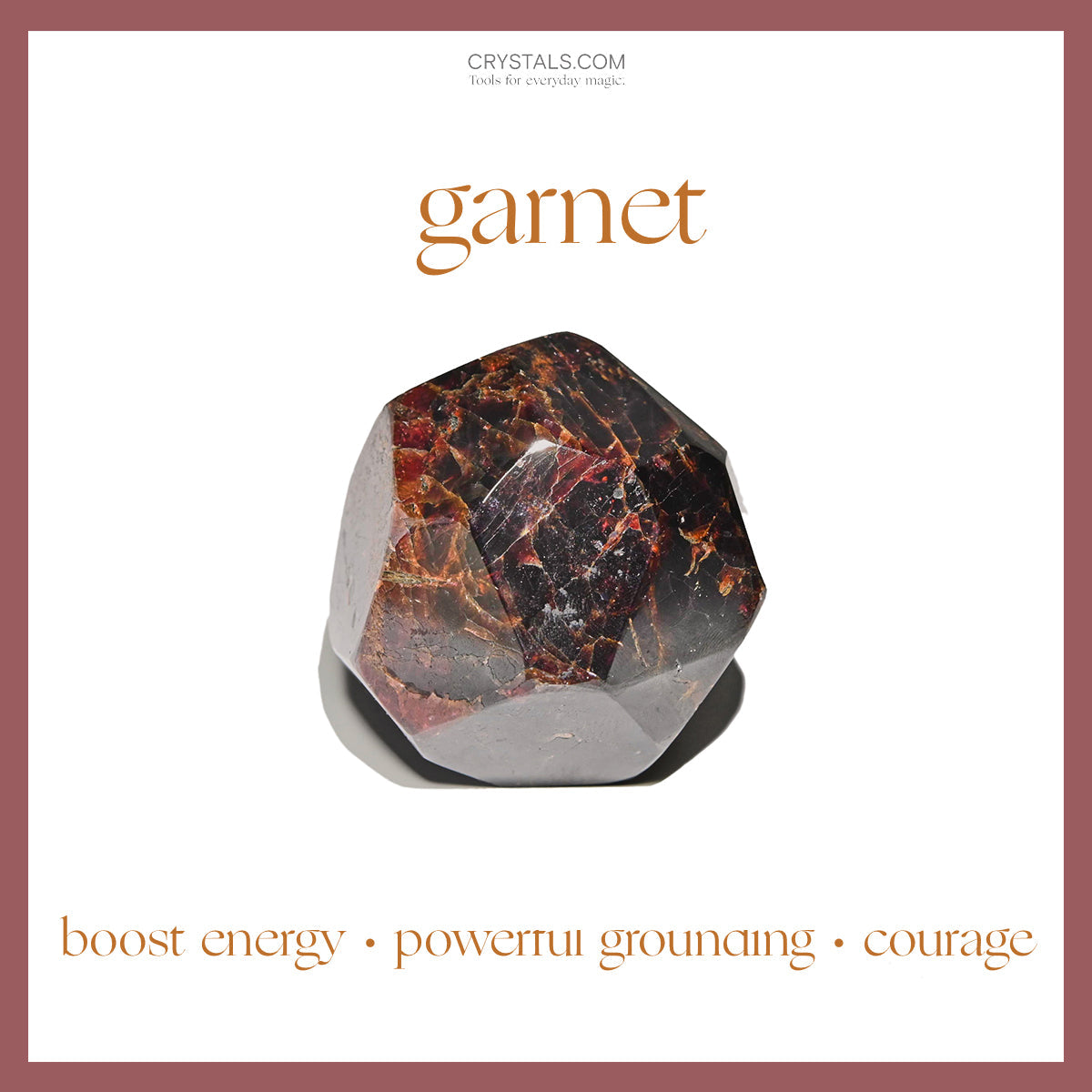
Garnet isn't one mineral — it's an entire family. The garnet group includes over 20 species sharing a common crystal structure but varying wildly in color, from deep red almandine to electric green tsavorite to orange-pink malaia. January's birthstone is far more complex and fascinating than most people realize.
The Garnet Family
Garnets are nesosilicates with the general formula X₃Y₂(SiO₄)₃. The X and Y positions can be filled by different elements, creating the family's remarkable color range. The six main species are:
Almandine — Deep red to reddish-brown. The most common garnet, colored by iron and aluminum. This is the "classic" garnet most people picture.
Pyrope — Blood red. The name comes from the Greek "pyropos" (fiery-eyed). Bohemian pyrope garnets from the Czech Republic were fashionable in Victorian jewelry.
Spessartine — Orange to reddish-orange. Mandarin garnets from Namibia and Nigeria produce an electrifying orange that rivals any gemstone for vibrancy.
Grossular — Colorless to green to orange. The tsavorite variety (chrome-green grossular) from East Africa is one of the world's most beautiful green gemstones.
Andradite — Yellow-green to black. The demantoid variety has a brilliance and fire exceeding diamond, making it the most valuable garnet per carat.
Uvarovite — Emerald green. Occurs only as small crystals on matrix — rarely large enough to facet, but stunning as mineral specimens.

Garnet Through History
Garnets have been used in jewelry for over 5,000 years. Egyptian pharaohs wore garnet necklaces. Roman signet rings were carved from garnet. Anglo-Saxon cloisonné jewelry featured thin slices of almandine garnet set in gold cells.
In the Middle Ages, garnets were believed to protect travelers and prevent nightmares. Crusaders carried garnet talismans for safe passage. This association with protection and safe journeys persists in crystal traditions today.
Collecting Garnet
For mineral collectors, garnets offer extraordinary variety in a single family:
• Almandine on mica schist — Classic collector's specimens featuring dark red dodecahedral crystals on sparkly matrix. Alaska, India, and Austria produce fine examples.
• Grossular from Jeffrey Mine, Quebec — Pink to orange crystals on matrix. A classic North American locality.
• Spessartine from China — Bright orange crystals on smoky quartz. Some of the most photogenic garnet specimens in the mineral world.
• Melanite (black andradite) — Lustrous black crystals. Dramatic and underappreciated.

Garnet Care & Display
Garnets are relatively durable (6.5-7.5 on the Mohs scale) and stable in most environments. They can be displayed anywhere without concern about light sensitivity or moisture damage. Clean with warm water and a soft brush. Avoid ultrasonic cleaners for garnets with visible inclusions, as vibrations can cause fracturing along internal stress points.
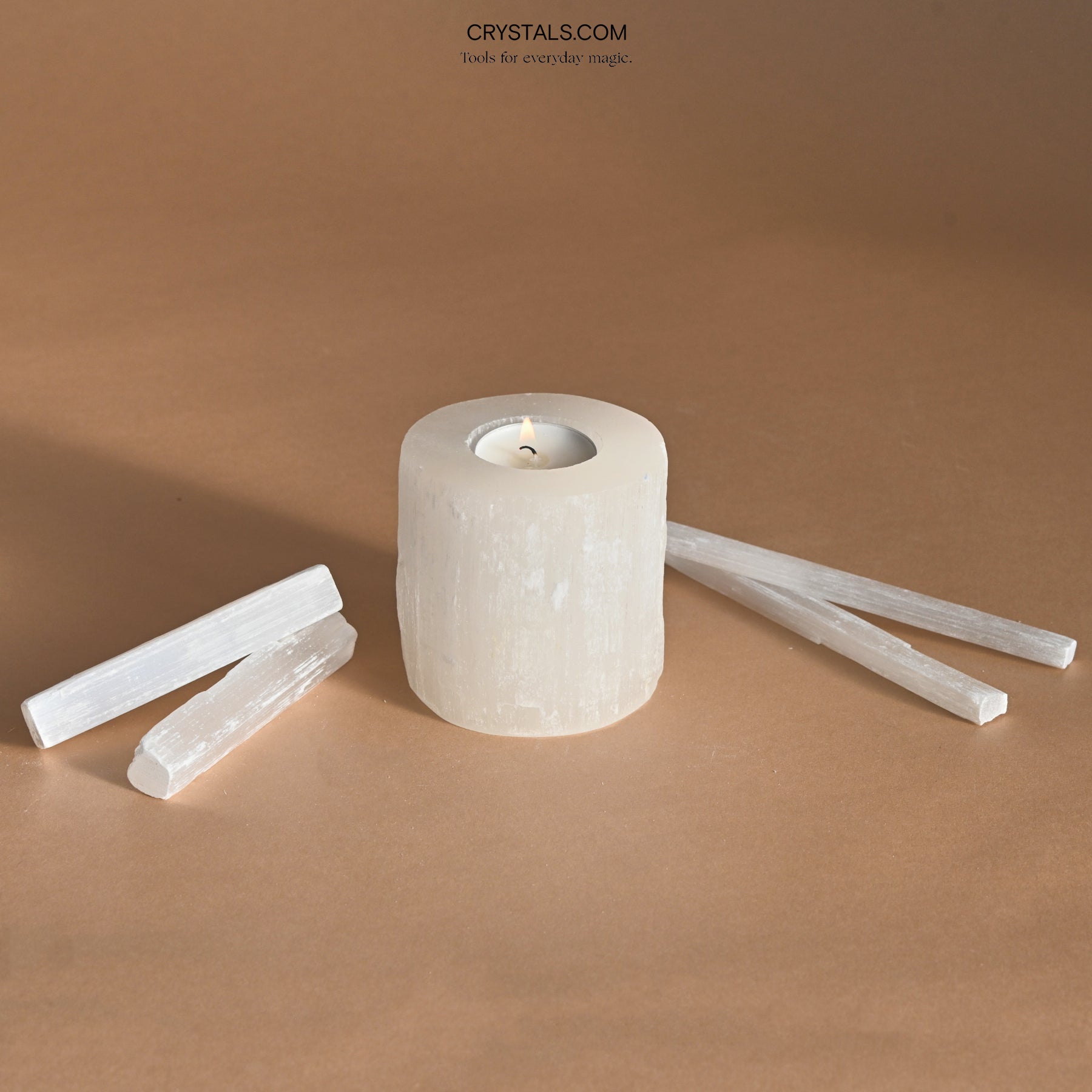
For display, garnet's deep reds pair beautifully with gold, brass, and warm wood tones. A garnet specimen on a golden selenite plate creates a rich, jewel-toned vignette. Combine with amethyst (purple) and citrine (gold) for a regal three-stone display.

Shop garnet and other January crystals in our full collection. Free shipping on orders over $150.
Discover Your Human Design
Crystals amplify energy — but do you know your unique energy type? Human Design reveals how you're wired to make decisions, work, and rest.
Explore Human DesignHow Garnets Form
Garnets form primarily through metamorphism, the process where existing rocks are transformed by heat and pressure deep within the earth's crust. When shale or mudstone is subjected to temperatures between 400-800°C and high pressure, the aluminum, iron, and silica in the original rock reorganize into garnet crystals.
This is why garnets are considered index minerals in geology. The specific garnet species present in a metamorphic rock tells geologists the temperature and pressure conditions it experienced, making garnets invaluable for mapping the earth's geological history. Almandine forms at moderate temperatures and pressures, while pyrope requires the extreme conditions found in the upper mantle, often brought to the surface by kimberlite pipes (the same volcanic conduits that deliver diamonds).
Some garnets form through contact metamorphism, where magma intrudes into limestone. This process creates the grossular variety, including the spectacular green tsavorite and orange hessonite. Andradite garnets, including the legendary demantoid, form in serpentinite rocks through a process called metasomatism.
Notable Garnet Localities Around the World
Wrangell, Alaska (USA) — Produces large almandine crystals up to several inches across, embedded in mica schist. The Stikine River area yields fine collector specimens.
Merelani Hills, Tanzania — The same geological region that produces tanzanite also yields fine tsavorite (green grossular garnet). These deposits formed ~585 million years ago during the Pan-African orogeny.
Ural Mountains, Russia — The type locality for demantoid garnet. Russian demantoid is distinguished by "horsetail" inclusions of chrysotile asbestos, which are considered a feature, not a flaw, and actually increase value.
Loliondo, Tanzania — Produces deep red pyrope-almandine garnets that rival rhodolite for color. A relatively recent discovery that has produced museum-quality specimens.
Erongo Region, Namibia — Source of vivid mandarin-orange spessartine garnets that command premium prices in the gem market.
How to Identify Authentic Garnet
Garnets have several diagnostic properties that help distinguish them from imitations:
- Crystal habit: Garnets naturally form as dodecahedrons (12-sided shapes) or trapezohedrons (24-sided shapes), never as prismatic crystals. If you see a garnet-colored crystal with a prismatic shape, it is likely a different mineral.
- No cleavage: Garnets fracture conchoidally (like glass) rather than splitting along flat planes. This lack of cleavage is a key identifier.
- Hardness: At 6.5-7.5 on the Mohs scale, garnet scratches glass easily but is scratched by topaz or corundum.
- Magnetism: Many garnets, particularly almandine and andradite, are noticeably attracted to a strong rare-earth magnet due to their iron content. This simple test can quickly confirm identity.
- Specific gravity: Garnets are denser than most similar-looking stones, feeling noticeably heavy for their size.
Browse our garnet collection for authentic specimens sourced directly from trusted mining partners worldwide.
Garnet in Jewelry: A Buyer's Guide
Garnet's range of colors and excellent durability (6.5-7.5 Mohs) make it one of the most versatile gemstones for jewelry. Understanding the different varieties helps you choose wisely.
Garnet Varieties by Color and Value
Red garnets (almandine, pyrope, rhodolite) are the most widely available and affordable. Rhodolite, a pyrope-almandine blend displaying a distinctive purplish-pink, is the most popular jewelry garnet due to its attractive color and relative abundance. Prices range from $10-100 per carat for commercial quality.
Green garnets represent the premium end of the market. Tsavorite (green grossular) from East Africa rivals emerald in color intensity, with the advantage of greater brilliance and no oil treatments. Demantoid (green andradite) from Russia or Namibia has fire exceeding diamond. These varieties can command $500-$5,000+ per carat for fine specimens.
Orange garnets include spessartine, sometimes called mandarin garnet when displaying a vivid, pure orange. Fine mandarin garnets from Namibia can reach $200-$1,000 per carat. Hessonite, the orange-brown variety of grossular, offers a more affordable warm-toned option.
Color-change garnets shift from green or blue-green in daylight to purplish-red under incandescent light. These rare specimens, usually pyrope-spessartine blends from East Africa, are highly collectible and can exceed $1,000 per carat.
Garnet vs. Other Red Gemstones
Garnet is often compared to ruby, but they are completely different minerals. Ruby is corundum (aluminum oxide, Mohs 9), while garnet is a silicate (Mohs 6.5-7.5). Garnet typically has a more brownish or orangish red compared to ruby's pure red with blue undertones. However, top-quality rhodolite and Mozambique garnet can closely approach ruby's color at a fraction of the price. Garnet also has higher refractive index than many people expect, giving well-cut stones excellent brilliance.
The simple magnet test distinguishes garnet from all other common red gemstones: almandine and rhodolite garnets are attracted to a strong rare-earth magnet, while ruby, red tourmaline, and red spinel are not.
Pairing Garnet with Other Crystals
Garnet's deep red pairs beautifully with complementary and analogous colors. For a warm vignette, combine garnet with citrine (gold) and carnelian (orange) for a fire-toned trio. For dramatic contrast, pair garnet with labradorite (blue flash) or amethyst (purple). For a monochromatic display, combine garnets of different species: almandine (dark red), rhodolite (pink-purple), and spessartine (orange) showcase the family's remarkable color range in a single grouping.
Frequently Asked Questions About Garnet
Is garnet always red?
No. While red is the most familiar color, the garnet family spans virtually every color except blue. Green tsavorite, orange spessartine, yellow mali garnet, black melanite, and even color-change varieties exist. The garnet group is one of the most chromatically diverse mineral families on earth, making it a rewarding focus for collectors.
How can I tell if my garnet is natural?
Natural garnets typically show minor inclusions when examined under magnification. Completely flawless red garnets are more likely to be glass imitations. The magnet test is quick and reliable: hold a strong rare-earth magnet near your garnet. Natural almandine and rhodolite garnets are attracted to the magnet due to their iron content, while glass and most synthetic imitations are not.
Can garnet go in water?
Yes. Garnet is Mohs 6.5-7.5 with no water solubility, making it safe for brief water cleansing. Avoid prolonged soaking, as this can potentially affect inclusions in some specimens. Warm soapy water with a soft brush is the recommended cleaning method for all garnet varieties.
What is the most valuable garnet?
Demantoid garnet (green andradite) with "horsetail" chrysotile inclusions from Russia commands the highest per-carat prices, sometimes exceeding $10,000/carat for fine specimens. Tsavorite, color-change garnets, and fine Mahenge-type spessartine also reach premium price levels.
Get 10% Off Your First Order
Plus early access to new arrivals, collector drops, and crystal guides. Join 15,000+ crystal lovers.
Discover Your Crystal Match
Select your sign and get personalized crystal recommendations delivered to your inbox.