Shop Black Tourmaline (Black Tourmaline Rough)
Free shipping on orders over $150
Black Tourmaline: The Complete Guide to Protection, EMF, and Entryway Placement
There is a mineral that has sat at the threshold of human dwellings for centuries — long before anyone had language for what it was doing there. Black tourmaline, known in the mineralogy world as schorl, is the most common member of the tourmaline group, and yet its presence in a room is anything but ordinary. Dense, striated, and deeply black, it carries the geological weight of its formation — born under extreme pressure in pegmatite veins and hydrothermal environments — and that pressure, in the language of crystal collectors and interior designers alike, translates to an almost architectural quality of stillness. This is not a decorative accent. It is a foundation stone.

What Is Black Tourmaline? Geology and Formation
Schorl is a sodium iron aluminum borosilicate — a mouthful that speaks to its complex chemistry and its affinity for iron-rich pegmatite environments. It forms in long, prismatic crystals with a distinctly striated surface, those parallel grooves running the length of the column like a fingerprint unique to the tourmaline family. Brazil is the world's most prolific source, particularly the state of Minas Gerais, though fine specimens also emerge from Pakistan, Madagascar, Namibia, and the United States (Maine and Connecticut have historic mining districts).
What makes schorl mineralogically interesting — and practically useful in the collector world — is its piezoelectric and pyroelectric properties. According to the Mineralogical Society of America, tourmaline generates an electric charge when placed under mechanical stress or when heated. This is not metaphysics — it is physics. These properties are exploited industrially in pressure-sensing devices and, historically, in the tobacco industry where tourmaline was used to neutralize static charge. That same electrical sensitivity is why tourmaline sits at the intersection of science and the more intuitive language of energy work.
For collectors, the most prized specimens are those where black tourmaline grows in matrix with clear or smoky quartz (Smoky Quartz Palm Stone) — dramatic contrasts of dark and light that read as genuinely sculptural. Browse our tourmaline collection to see current inventory, and explore the full Crystal Index 101 for deeper mineralogical profiles of every stone in our library.
The Protection Properties of Black Tourmaline
If rose quartz (Rose Quartz Tower) is the crystal of openness, black tourmaline is its opposite: the crystal of boundary. In traditional and contemporary energy work alike, schorl is considered the preeminent protection crystal — a stone that absorbs, deflects, and transmutes negative energies before they enter a space or a person's field.
This reputation is ancient. In medieval Europe, black tourmaline was used to deflect spells and ill will. In African and South American shamanic traditions, dark stones placed at the perimeter of a space were understood to hold the boundary. Contemporary feng shui practitioners consistently place black tourmaline at the front door — a tradition that aligns perfectly with its geological character: something formed under pressure, dense and impermeable, designed to hold.
Astrologically, black tourmaline resonates most strongly with Scorpio (Black Obsidian Palm Stone) and Capricorn — signs associated with depth, endurance, and the understanding that protection is not the same as fear. It works on the root chakra (Muladhara), the energy center located at the base of the spine, which governs our sense of safety, groundedness, and physical security. When the root chakra is open and stable, anxiety decreases; we feel held by the world rather than threatened by it. Black tourmaline, in this framework, is less a shield than a foundation — it doesn't close you off, it anchors you.
Not sure which crystal is calling to you? Take our crystal quiz to find your match, or explore your chakra profile to understand which energy centers you're currently working with.

Black Tourmaline and EMF Protection
The conversation around black tourmaline and EMF (electromagnetic field) protection is one of the most nuanced in the crystal world — and one that deserves an honest treatment.
First, the science: schorl's piezoelectric properties mean it genuinely interacts with electromagnetic fields in measurable ways. The American Mineralogist has documented tourmaline's dielectric properties at length. Whether a single rough specimen in your home office can measurably shield you from router signals or phone radiation at the levels tested in peer-reviewed settings is a different, more complex question — and responsible crystal retailers don't make clinical health claims.
What the evidence does support is more subtle: that working with black tourmaline in environments of high electromagnetic activity — home offices, tech-heavy studios, server rooms — creates a kind of intentional relationship with the space. The practice of placement, of choosing where a stone sits and why, cultivates awareness of your environment. For many people, that awareness — that act of caring for the space you inhabit — produces measurable reductions in stress and a greater sense of agency.
For home office placement specifically, a piece of raw black tourmaline near your computer or beside your router is both an aesthetically compelling object and a daily reminder that you are in relationship with your space. Pair it with shungite, another mineral with documented EMF-relevant properties, for a considered, layered approach. Both belong in the home décor collection of anyone who spends significant time at a screen.
How to Place Black Tourmaline in Your Entryway
The entryway is the lungs of a home — the place where energy enters, where first impressions form, where the transition between the external world and the private world happens. In virtually every traditional placement system — feng shui, Vastu Shastra, European folk practice — the threshold is treated as a sacred site requiring intentional curation.
Black tourmaline belongs at the entryway for several reasons:
- Grounding arrival: After navigating the sensory and social overwhelm of the outside world, crossing a threshold anchored by black tourmaline creates a visceral shift. The stone's density is felt before it is seen.
- Energetic filtering: In feng shui terms, the front door corresponds to the Kan area — career, life path, and how we move through the world. Stones with protective properties placed here are understood to screen what enters with you.
- Aesthetic weight: A substantial piece of raw black tourmaline in quartz, placed on a console table or in the corner of an entryway, functions as a sculptural anchor — the kind of object that makes a room feel considered rather than decorated.
For entryway placement, size matters: choose a specimen substantial enough to hold its own in a space — a piece that weighs at least a pound, ideally two or more. A tower form works elegantly on a narrow console; a rough matrix specimen reads better on a wider surface or directly on the floor beside a door. Our crystal towers and rough crystals collections both include pieces scaled for statement placement.
Interior designers working with client homes often specify black tourmaline as a functional design element in the entryway — a piece that does the double work of grounding the space aesthetically and energetically. If you work in design and source minerals for client projects, our trade program offers curated access and professional pricing.

Styling Black Tourmaline in Your Home
Black tourmaline is one of the most versatile minerals for interior styling precisely because it refuses easy categorization. It is dark but not heavy; rough but not rustic; grounded but not earthy in the conventional, terracotta-and-jute sense. It works in minimalist interiors as a strong counterpoint to pale surfaces. It works in maximalist collections where its structural striations hold their own against the visual noise. It works in dark interiors where its blackness reads as depth rather than weight.
Pairing principles:
- Black tourmaline in white quartz matrix with bleached oak and linen — Scandinavian contrast
- Raw schorl clusters alongside matte black ceramics and concrete — industrial-mineral
- Black tourmaline towers flanking a fireplace with bronze objects — formal, architectural
- A large rough specimen on a stack of design books on the living room coffee table — the editorial gesture
For home décor applications beyond the entryway, consider the bedroom windowsill (where it works as an overnight grounding piece), the home office desk, and the corner of a meditation or reading space. Our collectors edition features exceptional large-format specimens suited to significant interior moments.
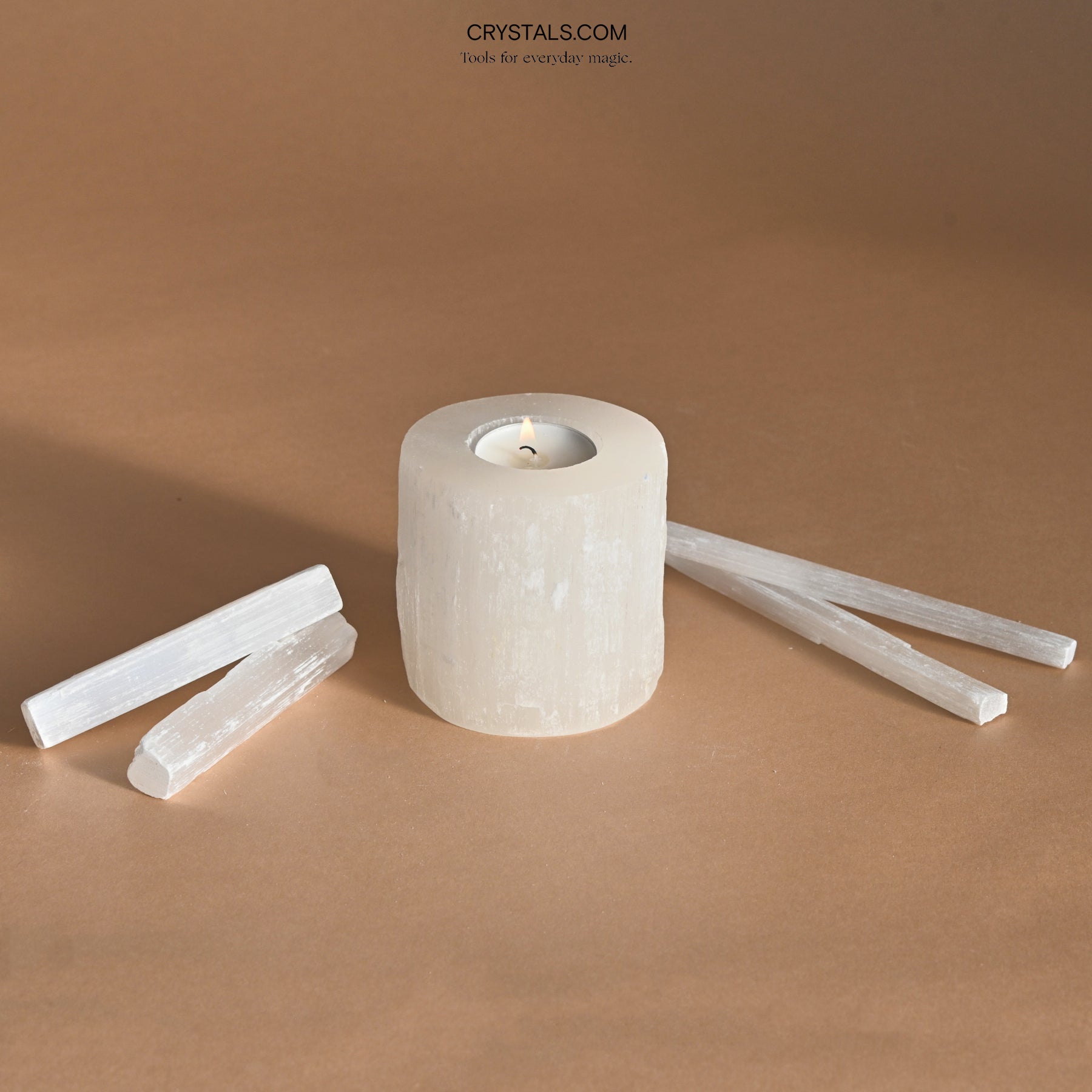
Black tourmaline also pairs beautifully with lighter protective stones: healing crystal companions like selenite (Selenite Cleansing Wand) (which brings luminosity), clear quartz (which amplifies), and smoky quartz (which shares its grounding quality but in a warmer, translucent register). The interplay of dark and light in a curated collection is one of the great pleasures of serious mineral collecting.
Choosing Your Black Tourmaline: Forms, Quality, and What to Look For
Black tourmaline is available in multiple forms, each suited to different uses and aesthetics:
- Raw/rough specimens: The most naturalistic form, showing the crystal's striations and growth patterns intact. Particularly beautiful when the tourmaline grows in matrix with quartz. Best for sculptural display. See rough crystals.
- Towers (points): Polished into a column with a pointed tip, towers are the most architectural form — strong verticality, clean lines. Ideal for shelves and desks. See crystal towers.
- Tumbled: Smooth, pocket-sized pieces. Less visually dramatic but useful for carrying or placing in smaller spaces. See tumbled crystals.
- In matrix: Where black tourmaline grows with quartz or mica — these are the collector's choice, commanding higher prices and exceptional aesthetic impact.
Quality indicators for black tourmaline include the depth and consistency of the black color (some specimens are brownish-black rather than true jet — neither is wrong, but they read differently in a space), the clarity of the striations, and for matrix pieces, the contrast and drama of the crystal growth pattern. Brazilian specimens from reputable dealers remain the benchmark.
As with all crystals, ethical sourcing matters. Ask your supplier about mine provenance, worker conditions, and whether the piece has been responsibly extracted. At Crystals.com, every specimen is sourced with full chain-of-custody awareness. Browse our latest arrivals to see what's currently available.

Caring for Your Black Tourmaline
Black tourmaline is one of the hardier minerals in the collector's toolkit — it registers a 7 to 7.5 on the Mohs hardness scale, making it resistant to scratching and durable in most environments. A few care notes:
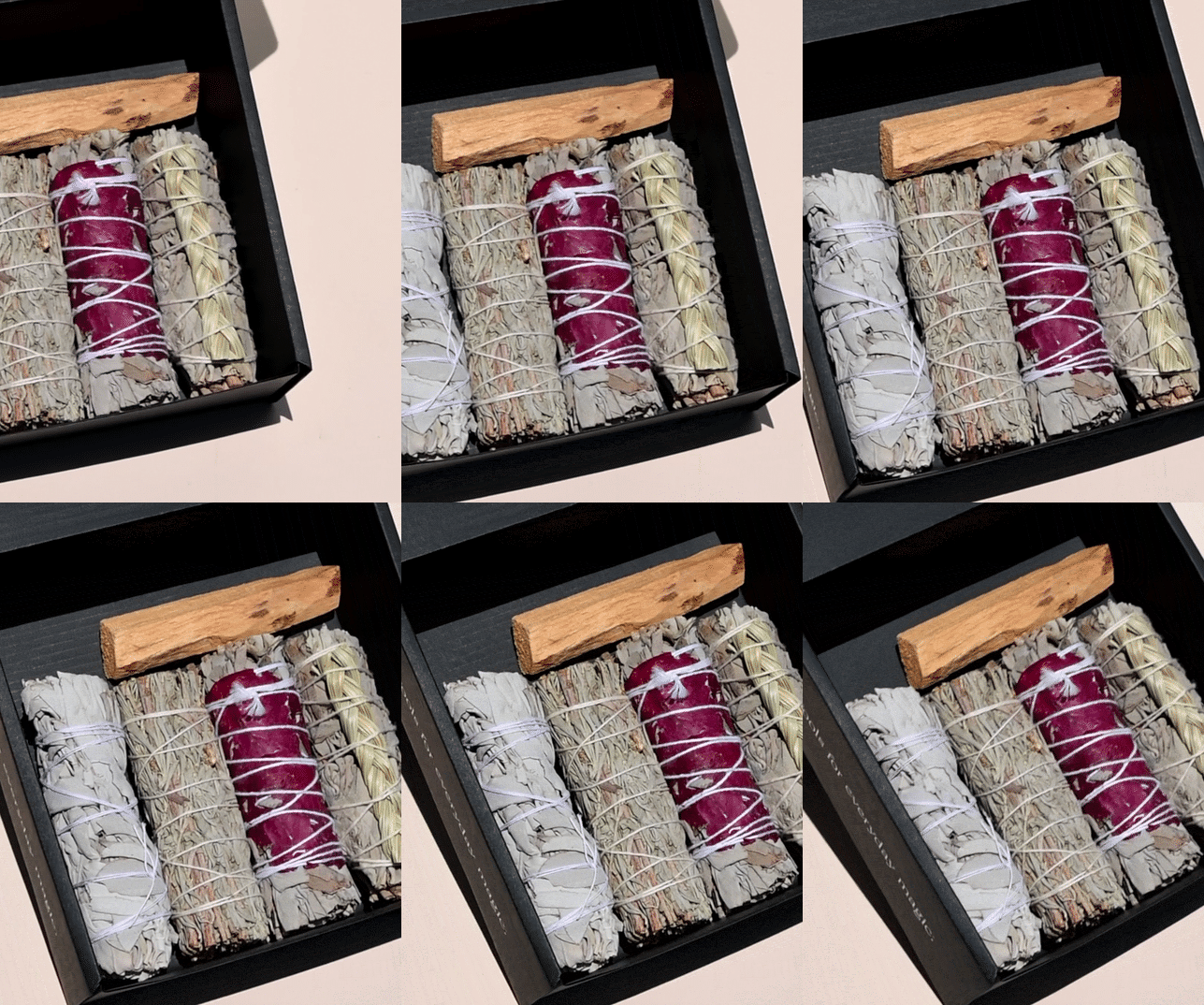
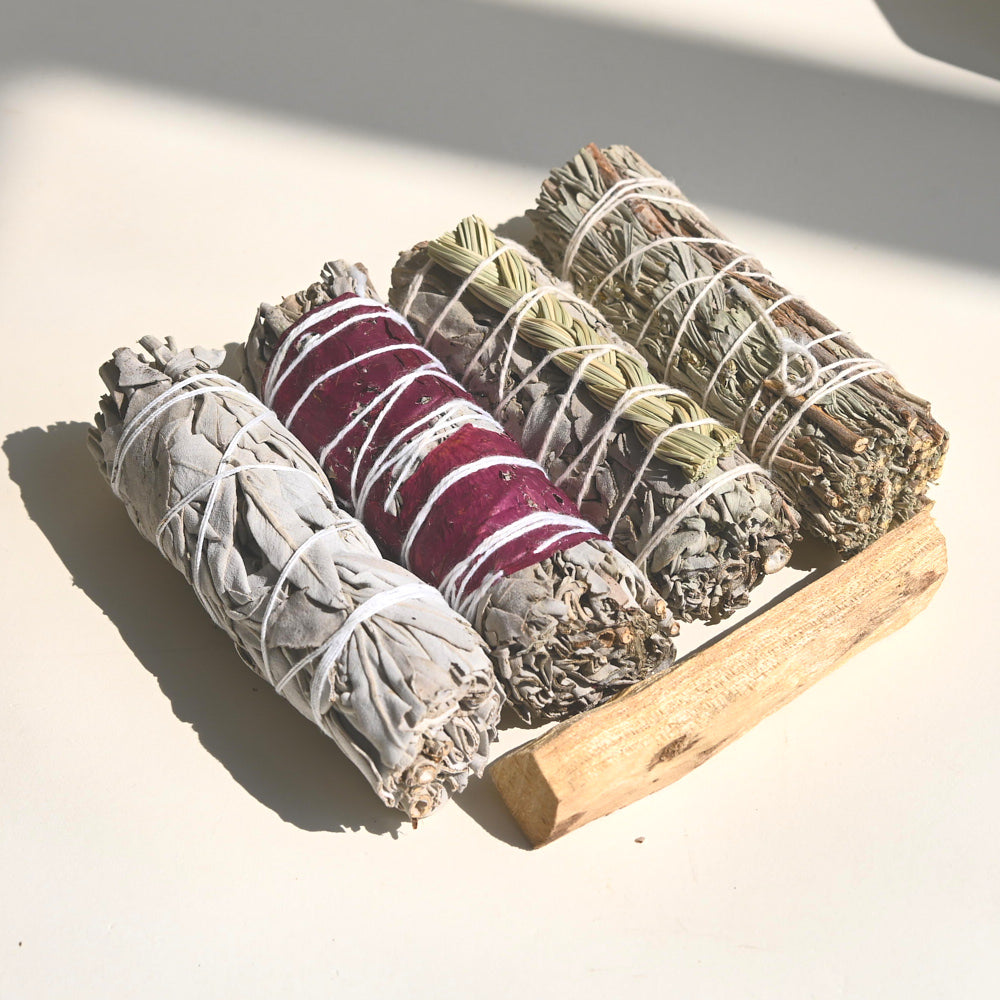
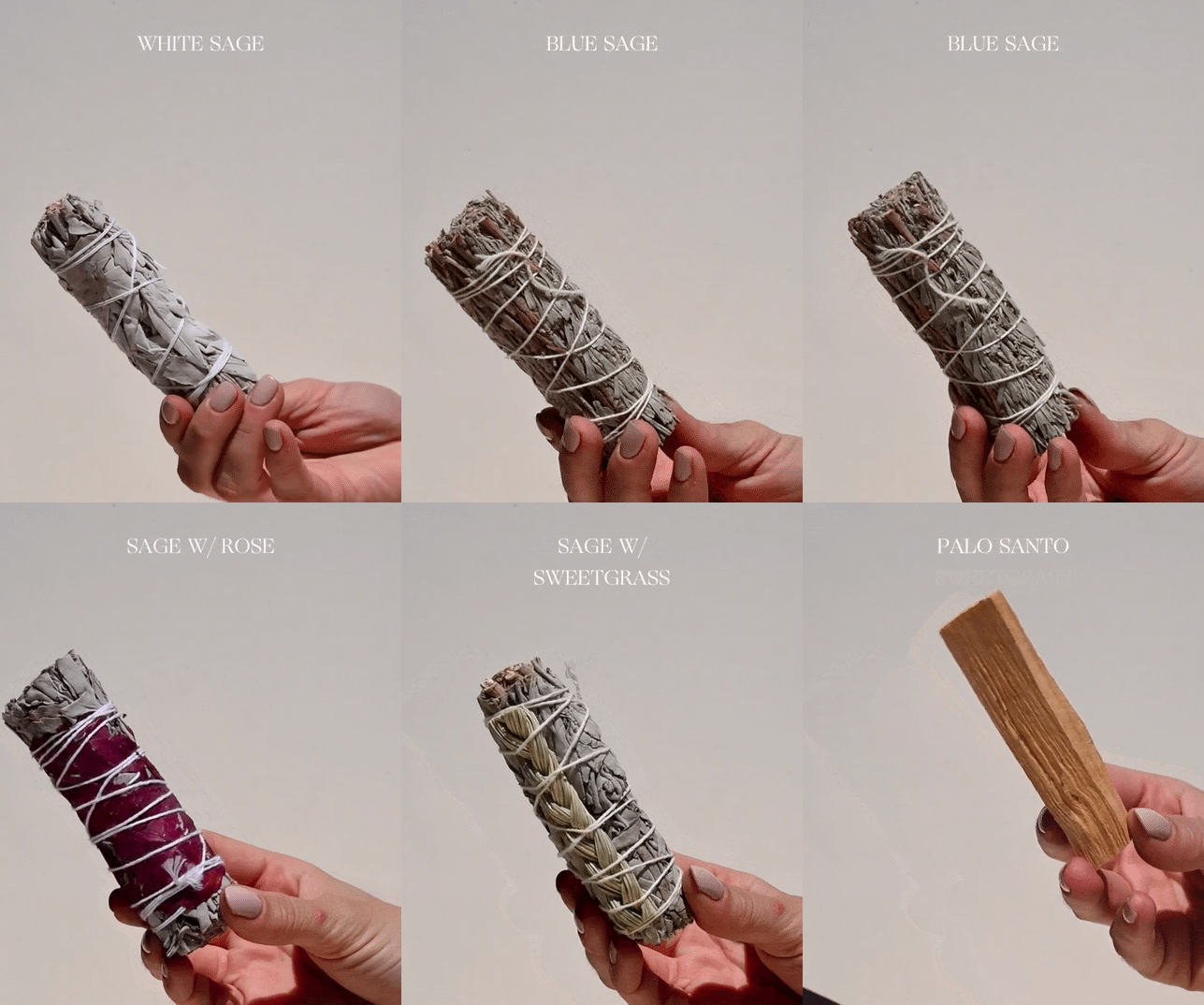
- Cleansing: Monthly cleansing is recommended for stones in active use, particularly those placed at entryways where they are understood to be absorbing environmental energy continuously. Preferred methods: smudging with palo santo or sage, placing in moonlight overnight, or briefly running under cool water (tourmaline is water-safe, though prolonged immersion is not recommended).
- Sunlight: Unlike some minerals, black tourmaline will not fade in sunlight — its color is structural rather than pigmentary. However, direct intense sun over years can affect the quartz matrix in combination specimens.
- Storage: Store separately from softer minerals. Black tourmaline can scratch selenite, calcite, and other softer stones.
- Handling: The striations on raw tourmaline can feel sharp at their edges — handle large raw specimens with care, and keep them secure on surfaces where they cannot be knocked onto delicate flooring.
Frequently Asked Questions About Black Tourmaline
What does black tourmaline do?
Black tourmaline (schorl) is primarily associated with protection, grounding, and energetic boundary-setting. It is placed at entryways, in home offices near electronics, and in any space where a sense of stability and protection is desired. Mineralogically, its piezoelectric properties mean it genuinely interacts with electromagnetic fields. It works on the root chakra and is associated with a grounded, secure sense of self.
Where should I place black tourmaline in my home?
The most traditional and effective placement is at the front door or entryway — either on a console table, on the floor beside the door, or in each corner of the entrance hall. Secondary placements include beside computers and routers (for its relationship to EMF), in the bedroom for grounding during sleep, and in any room where the energy feels unsettled or draining.
Can black tourmaline go in water?
Yes, briefly. Black tourmaline is water-safe and can be rinsed under cool running water as a cleansing method. However, extended soaking is not recommended, particularly for specimens in matrix (the quartz or mica host rock can be more susceptible to mineral leaching over time).
How do I know if my black tourmaline is real?
Authentic black tourmaline will show distinct parallel striations along the length of the crystal — these cannot be convincingly faked on polished pieces and are extremely difficult to replicate in rough form. It will also feel notably heavier than glass or dyed quartz of similar size. The color is a deep, genuine black (not reflective like obsidian or translucent like smoky quartz). When in doubt, buy from verified dealers with clear sourcing documentation.
What crystals pair well with black tourmaline?
For a protection-focused combination: shungite (also known for EMF properties), obsidian (volcanic glass, another boundary stone), and black tourmaline together create a powerful protection grid. For a balanced pairing that combines protection with clarity and light: black tourmaline with selenite or clear quartz. For grounding with warmth: black tourmaline alongside smoky quartz and tiger's eye. See our Crystal Index for full compatibility guides.
Is black tourmaline the same as tourmalinated quartz?
No — though they are closely related. Tourmalinated quartz is clear or milky quartz with needle-like inclusions of black tourmaline running through it. It is one of the most visually striking natural crystal formations, combining tourmaline's protective properties with quartz's amplifying energy. True black tourmaline is a solid schorl crystal rather than an inclusion within another mineral.
How often should I cleanse black tourmaline?
Stones placed at entryways or near high-traffic electromagnetic environments (home offices, server areas) benefit from monthly cleansing at minimum. Smudging with palo santo is the gentlest method — hold the stone in the smoke for 30 to 60 seconds, setting a clear intention for reset. Full moon placement is a longer, deeper cleanse suited to quarterly use.
What zodiac signs benefit most from black tourmaline?
Scorpio and Capricorn are most associated with black tourmaline — both signs carry deep reserves of inner strength but can benefit from external grounding support. That said, any sign navigating a high-stress period, a significant life transition, or a sense of energetic vulnerability will find black tourmaline useful. Take our crystal quiz to find your personal mineral match.
The Foundation Stone
Black tourmaline is not a crystal that announces itself. It does not flash or shimmer; it does not seduce with color. What it offers is something rarer in contemporary interiors saturated with decorative intention: genuine weight. A piece of black tourmaline in your entryway does what all the best design objects do — it changes the quality of attention in a room. You step through your door and something is different. The threshold holds.
Whether you are drawn to schorl for its geological character, its EMF associations, its role in traditional protection practice, or simply because you want something dark and striated and undeniably present on your console table — the stone rewards that attention. Explore our current black tourmaline inventory, or visit our Crystal Index to continue your research into the mineral world's most compelling specimens.
Join the Inner Circle
New arrivals, crystal guides, and collector insights delivered weekly.
Watch In Motion — Crystal Films & Photography →
Discover Your Human Design
Crystals amplify energy — but do you know your unique energy type? Human Design reveals how you're wired to make decisions, work, and rest. It's the owner's manual you were born with.
Explore Human DesignGet 10% Off Your First Order
Plus early access to new arrivals, collector drops, and crystal guides. Join 15,000+ crystal lovers.