Shop Crystals for This Energy
Free shipping on orders over $150
Best Crystals for Your Yoga Studio
A thoughtfully designed yoga studio integrates crystals as subtle energetic anchors that support practice without distraction, amplify the specific intention of your teaching lineage, and create a sanctuary where students arrive already primed for presence and transformation. The most effective studio crystal applications align with chakra theory and classical yoga philosophy, placing specimens strategically to correspond with energy centers, movement patterns, and the spatial flow of classes. Whether you teach vinyasa flow, yin restoration, kundalini meditation, or trauma-informed restorative yoga, crystal selection can deepen student experience and distinguish your studio’s energetic signature.
Crystals and Chakra Alignment: The Energetic Architecture of Yoga
Yoga’s chakra system—the seven primary energy centers running along the spine—offers a sophisticated framework for crystal selection and placement. Each chakra corresponds to specific colors, frequencies, and mineral expressions. Root chakra work with red garnet, black tourmaline, and hematite creates grounding and safety; sacral chakra practices with carnelian and orange tourmaline enhance creative flow and pleasure; solar plexus activation uses citrine and golden tourmaline to strengthen will and personal power; heart-centered work incorporates rose quartz (Rose Quartz Tower), green tourmaline, and watermelon tourmaline; throat chakra expression with blue kyanite and aquamarine supports authentic communication; third eye intuition deepens with amethyst, lepidolite, and clear quartz; crown chakra connection reaches toward white selenite (Selenite Cleansing Wand), clear quartz points, and high-vibration amethyst.

Rather than placing one crystal per chakra throughout the room (which can feel cluttered and contradictory), most yoga teachers choose 2-3 primary crystals that reflect their studio’s overall energetic intention. A vinyasa flow studio might anchor with citrine (building will and radiance) in the main practice area; a restorative yin studio might feature rose quartz and selenite (softening and releasing); a kundalini focused space might emphasize amethyst (enhancing spiritual connection and meditation depth).
Studio Placement Strategy: Entrance, Practice Space, and Altar
Entrance and Threshold: Welcome students into your studio with intentionality by placing crystals at the entry point. A 3–5 pound rose quartz or clear quartz cluster invites heart opening and clarity; black tourmaline or smoky quartz (Smoky Quartz Palm Stone) at the threshold energetically “clears” the transition between outside and sacred practice space. Some studios place a small amethyst or lepidolite piece with information about removing shoes, setting intentions, and honoring the space. This small touchpoint shapes the entire experience.
Practice Space Placement: The main practice area benefits from a central or slightly offset focal point—often the front of the room where you teach, or a corner visible from most mats. A 5–10 pound amethyst geode, citrine cluster, or clear quartz cathedral functions as an energetic anchor without demanding constant attention. Position it at eye level when students are standing (not so low that it reads as a floor obstacle, not so high that it feels removed from practice). Ensure the crystal is stable and won’t tip if someone adjusts alignment near it. Some teachers place specimens on floating shelves 5–7 feet up, creating visual interest without physical proximity.
Altar or Meditation Space: If your studio has a dedicated meditation corner or altar, this is where to invest in your most beautiful or meaningful specimens. A 5–15 pound amethyst cathedral or clear quartz point serves as a meditation anchor; rose quartz or tourmaline specimens support heart-centered or metta practice; selenite towers or lepidolite geodes deepen contemplative states. Include other altar elements (candles, flowers, incense, images of teachers or deities you honor) but let the crystal be the mineral anchor—stable, eternal, grounding.
Crystal-Infused Yoga Practices: Integrating Minerals into Teaching
Beyond static placement, crystals can be actively integrated into your teaching in ways that deepen student experience. Some approaches:

Opening Circle Specimens: Place small crystals (1–2 ounces) in the center of your circle during opening meditation—rose quartz for heart openers, amethyst for intuition and release, clear quartz for clarity. Students can place their hand on the crystal briefly during opening, consciously connecting intention to the mineral’s properties. This micro-ritual takes 20 seconds but signals to the nervous system that this practice is intentional and grounded.
Altar Layouts for Class Themes: Change your altar’s crystal focus based on class theme. Restorative classes feature rose quartz, selenite, and lepidolite; energizing morning classes emphasize citrine and golden tourmaline; yin classes explore deep amethyst and smoky quartz; kundalini sessions showcase amethyst and clear quartz points. Create a simple visual or written system so regular students notice and discuss the shifts, building crystal literacy over time.
Personal Practice Crystals: Offer small tumbled stones (25–75 cents wholesale) that students can place at the top of their mat, hold in child’s pose, or take home. This creates a tangible souvenir of practice and a way for students to extend the session’s energetic support into daily life. Sell these in your studio shop or offer small “practice companion” collections tied to monthly themes.
Crystal-Assisted Savasana: During final relaxation pose, some teachers place a small specimen on the heart center or hold one visible above the class. Students report that this gentle visual anchor supports deeper surrender and access to the body’s natural relaxation response. Ensure the crystal is light enough that it’s never uncomfortable and used only with student consent (many lineages avoid placing objects on students).
Crystals for Different Yoga Styles
Vinyasa Flow & Power Yoga: These active, breath-driven practices benefit from crystals that support will, radiance, and clear intention. Citrine clusters ($80–$300) positioned in the practice area amplify the energizing and empowering qualities of flow. Clear quartz points ($40–$150) align with the precision and clarity these practices demand. Tourmaline specimens, particularly golden tourmaline or tourmaline mixed with quartz, support sustained focus and energetic coherence through challenging sequences.

Yin & Restorative Yoga: Slow, long-hold practices call for gentle, softening crystals that support the parasympathetic activation yin and restorative classes cultivate. Rose quartz ($60–$200), with its association with heart softness and self-compassion, is nearly essential for these styles. Lepidolite ($30–$150) and pink tourmaline provide gentle lithium-rich mineral support for emotional release. Selenite ($25–$100) brings crystalline stillness and clarity to deep holds, and smoky quartz ($50–$200) helps students release tension held in the body. A single rose quartz and selenite combination creates a powerfully supportive energetic environment for yin practice.
Kundalini Yoga: This mantra and chakra-focused tradition pairs beautifully with amethyst and clear quartz, minerals that align with kundalini’s emphasis on crown chakra activation and spiritual awakening. A 5–10 pound amethyst geode ($150–$500) is nearly archetypal in kundalini spaces. Consider also aventurine (heart and self-love), fluorite (mental clarity and protection), and tourmaline specimens that support energetic grounding as kundalini energy activates. Some kundalini teachers create altar arrangements that support the specific mudras and mantras of their sequences.
Hatha & Alignment-Based Yoga: Precise, detail-oriented practices benefit from clear quartz (clarity and structure), tourmaline (grounding and coherence), and smoky quartz (protective and stabilizing). A large clear quartz point positioned where students can reference alignment serves almost as a “witness” to precision and presence. Some alignment teachers place small tourmaline or quartz specimens at the four corners of the practice space to define the energetic container.
Teacher Recommendations: How Experienced Yoga Teachers Select Crystals
Experienced yoga teachers often approach crystal selection intuitively, feeling into which specimens resonate with their lineage, their students’ collective needs, and their own energetic constitution. Some practical wisdom from teachers across traditions:
- Start with one piece, not many. An over-crystaled studio can feel cluttered and conflicting. One beautiful 5-pound amethyst cathedral or rose quartz cluster creates more coherence than five small pieces scattered throughout the room.
- Choose specimens that you love visually. Your own aesthetic response to a crystal is valid data. If you’re drawn to a particular piece, it likely resonates with your students at a subtle level too.
- Connect mineral choice to your lineage. If you study from a particular teacher or tradition, research their crystal practices. Some lineages have specific recommendations; honoring these deepens your teaching integrity.
- Rotate seasonally if your practice style or focus shifts. Summer power yoga might feature citrine and clear quartz; winter restorative focus might call for rose quartz and amethyst. This keeps the energy fresh and honors natural cycles.
- Trust your students’ feedback. When students notice and discuss your crystals, listen. If they consistently gravitate toward a particular corner or ask about a specimen, that feedback is valuable.
- Invest in quality over quantity. A single high-quality, substantial specimen ($300–$600) creates more impact than multiple lower-quality pieces. Students sense the difference between authentic minerals and generic “crystal shop” inventory.
Studio Owner’s Buying Guide: Sourcing the Right Crystals
Opening or expanding a yoga studio involves dozens of design decisions; crystal selection matters less than some but contributes meaningfully to the overall energetic and aesthetic integrity. Here’s how to approach it systematically:
Step 1: Define Your Studio’s Energetic Identity — Before purchasing crystals, clarify what you want your studio to feel like. Are you creating a sanctuary for trauma-informed release and softness? A laboratory for precision and alignment mastery? A temple for spiritual awakening? A community gathering space? This clarity guides crystal selection. A trauma-informed studio might prioritize black tourmaline and rose quartz for safety and gentleness; a precision alignment studio might feature clear quartz and tourmaline for clarity and grounding; a kundalini space might emphasize amethyst and clear quartz for spiritual activation.
Step 2: Select 1-3 Primary Specimens — Rather than trying to incorporate all chakras and all crystal colors, choose the 2-3 specimens that best reflect your studio’s intention and your personal aesthetic. Budget $200–$600 for a high-quality 5-10 pound specimen, $400–$1,500 for a larger focal point piece. This focused approach creates coherence rather than clutter.
Step 3: Choose Your Secondary Pieces Thoughtfully — Once your main piece is installed, add complementary specimens that support rather than compete. If your primary focus is a large rose quartz, secondary pieces might include smaller rose quartz specimens, tourmaline for grounding, or selenite for clarity. Keep the palette simple: 2-3 dominant minerals is plenty.
Step 4: Plan for Seasonal Refresh — Budget for small accent pieces ($30–$100) that you rotate seasonally or based on class theme evolution. This keeps the studio energy dynamic and gives you permission to experiment without overcommitting to permanent installations.
Step 5: Include Care into Your Operations Plan — Assign someone on your team to clean crystals monthly (soft brush, distilled water, minimal disturbance) and inspect them for stability and cleanliness. This ongoing attention signals to students that the space is cared for and that crystals matter—not just present for decoration but honored as part of studio culture.
Crystal Grids for Group Energy & Class Cohesion
A crystal grid—a geometric arrangement of stones around a central focus—amplifies group intention and creates what practitioners describe as an “energetic container” for shared practice. While crystal grids are traditionally personal (small desktop arrangements), they can be scaled up for group yoga practice.

Simple Group Grid Setup: Place five tumbled stones (or small 1–2 pound pieces) at the four corners of your practice space plus one in the center, all the same mineral or a complementary color palette. Rose quartz at center with smaller rose quartz or pink tourmaline at corners creates a container for heart-opening practice; amethyst center with clear quartz or tourmaline at corners supports meditation and spiritual deepening. This takes 30 seconds to arrange but subtly shifts the energetic field for group practice.
Intention-Specific Grids: For special events, workshops, or intensive practices, create a more deliberate grid pattern. Arrange 13 stones (or 7, 9, 11—odd numbers carry vibrational significance) in a geometric pattern around your meditation focus. Students notice and participate in the intentionality, even if they don’t fully understand crystal grid theory. Some teachers invite students to bring a small stone to add to the collective grid, creating co-created energetic support.
Grid Maintenance: Keep the grid simple and well-defined so students don’t accidentally kick or step on stones. Photograph the arrangement so you can recreate it consistently, and refresh it monthly by removing and cleansing each stone individually.
Selenite for Space Cleansing Between Classes
Selenite—a transparent gypsum mineral prized for its clarity and energetic “lightness”—serves a specific function in multi-class studio environments: space clearing and energetic reset between sessions. Unlike physical cleaning (which removes dust and debris), energetic clearing resets the energetic field so each class arrives to a fresh container regardless of the previous class’s emotional intensity.

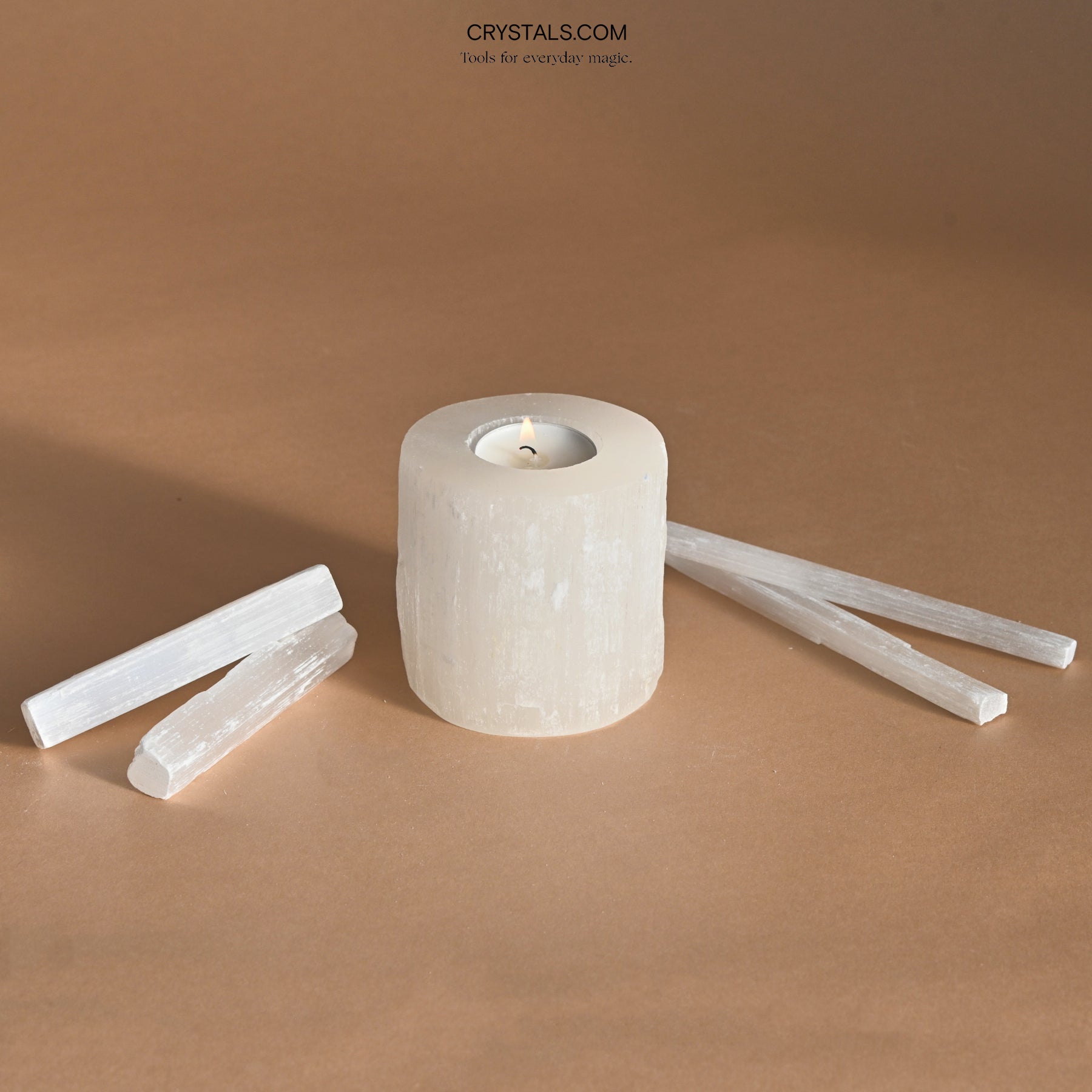
Selenite Stick Method: Keep a 3–4 inch selenite wand ($15–$30) at your front desk or altar. Between classes, wave it through the space (above the practice area, through hallways, around the studio perimeter) with conscious intention to release the previous class’s energy and prepare for the next one. This takes 2–3 minutes but many teachers and students notice the palpable energetic shift. Selenite’s crystalline structure works at a subtle level to “illuminate” and clarify the space.
Selenite Cluster in the Studio: Position a 2–5 pound selenite cluster in a corner or on a shelf; its ongoing presence supports consistent space clearing without requiring ritual action. Some teachers freshen this piece monthly by leaving it in moonlight overnight or under running water.
Important Note on Selenite and Humidity: Selenite is soft and sensitive to moisture. In humid climates or if your studio tends toward dampness, use selenite cautiously and in protected areas (elevated shelves, away from water-related activities). Clear quartz or tourmaline may be more practical for very humid environments; both support space clearing and durability.
Creating Your Studio’s Crystal Story
The most successful yoga studio crystal installations aren’t generic but deeply connected to the space’s particular energy, lineage, and community. Your crystal choices are a form of teaching—students absorb that you’ve selected these minerals with intention, and many begin asking questions, developing crystal literacy, and extending their yoga practice into mineral awareness.
Build your studio’s crystal story gradually. Start with one or two beautiful, substantial specimens that truly resonate with you. Allow the space to settle with those pieces for a few months before adding more. Listen to what your students notice and attract. Over time, your studio develops a mineral signature that becomes part of its identity—the place where the rose quartz gently opens hearts, the studio where deep amethyst supports meditation, the sanctuary where black tourmaline and selenite create safe container for healing work.
Explore our amethyst geodes, rose quartz, clear quartz, selenite, and tourmaline collections to discover specimens that speak to your studio’s unique essence. For personalized recommendations based on your teaching lineage and studio vision, contact our crystal specialists.
Related Reading
Deepen your crystal knowledge with these complementary guides:
- Crystals for Your Meditation Space — Create sacred meditation environments with intentional mineral placement
- How to Style Large Crystals — Design principles for showcasing statement pieces in studio settings
- Best Crystals by Color — Understand how crystal colors influence their energetic properties
- Interior Designer’s Guide to Crystals — Professional strategies for studio design integration
Frequently Asked Questions
What size crystal should I choose for a yoga studio practice space?
A 5–10 pound specimen creates visible impact without overwhelming the space. Smaller pieces (2–5 pounds) work for cozy intimate studios; larger installations (15–25+ pounds) suit spacious studios or commercial properties. The guideline: positioned at normal eye level during standing poses, the crystal should be noticeable from anywhere in the room without demanding constant attention. A 7-pound piece is often the “Goldilocks” size for most studios.
Can I use the same crystal for multiple yoga styles if I teach different classes?
Yes. While specific minerals align with particular practices, a high-quality multi-purpose crystal like amethyst or clear quartz works beautifully across all styles. Amethyst supports meditation and intuition whether you’re teaching kundalini, restorative, or gentle hatha; clear quartz amplifies intention in any context. If you teach multiple styles in the same space, choose a versatile piece rather than constantly rotating specimens.
How do I know if a crystal’s energetic properties are actually real or just placebo?
This is a valid question many students and teachers ask. The honest answer: the boundary between “placebo” and “real” is philosophically blurry. Crystals have documented effects on light, energy, and electromagnetic fields at measurable scales. Beyond that, whether their subtle effects operate through quantum mechanisms, psychological openness, or something else is still an active question. What’s clear is that intention, attention, and presence—all deepened by crystal awareness—genuinely shift practice. If a crystal helps you arrive more fully to your practice, that effect is real in the ways that matter most.
Should I place crystals where students might touch them during class?
Generally, keep specimens positioned safely so they won’t be disturbed during active practice. Elevated shelves, corners, or the front of the room work better than floor level or directly in the flow path. This protects the crystal and prevents the distraction of someone accidentally bumping it. If you want students to engage tactilely with crystals, offer small tumbled stones or dedicated hand-held pieces, separate from your static installation.
How often should I cleanse or “reset” my studio crystals?
Monthly is a good rhythm. Use gentle methods: moonlight (leave overnight on a window sill), running water (distilled water if possible—tap water can leave mineral deposits), or sound (singing bowl or bell held above the piece). Some teachers use selenite specifically for clearing the space energetically. There’s no “right” frequency; monthly checks are practical and keep the space and stones feeling fresh.
Can crystals support healing or trauma work in a yoga context?
Crystals can be part of a holistic approach to trauma-informed practice, but they’re not a substitute for evidence-based trauma therapy. In a yoga context, crystals support an environment of safety, grounding, and intentionality that can enhance therapeutic work. Rose quartz and tourmaline are particularly valued in trauma-sensitive spaces for their associations with safety and heart opening. If you’re teaching trauma-informed classes, crystals are best integrated alongside breathing practices, somatic awareness, and professional coordination with licensed therapists.
✦ Discover Your Human Design
Your spiritual journey goes deeper than numbers. Human Design reveals your unique energetic blueprint — how you're designed to make decisions, interact with others, and move through the world. It combines astrology, the I Ching, Kabbalah, and the chakra system into one powerful framework.
Explore our full Crystal Encyclopedia — meanings, healing properties, and chakra connections for 280+ crystals.
Not Sure Which Crystal Is Right for You?
Take our 60-second crystal quiz and get a personalized recommendation based on what you need right now.
Take the Crystal QuizGet 10% Off Your First Order
Plus early access to new arrivals, collector drops, and crystal guides. Join 15,000+ crystal lovers.