Shop Crystals for This Energy
Free shipping on orders over $150
Garnet Crystal: The Complete Collector's Guide
Most people know garnet as a deep red gemstone — the January birthstone, the velvet-dark gem set in Victorian mourning rings and medieval sword pommels alike. But that singular image undersells one of mineralogy's most dramatically diverse families. Garnet is not a single mineral but a group of silicate species that spans the entire color spectrum, from the blood-red almandine found in the mountains of India to the chrome-green tsavorite of East Africa to the rare blue color-change garnets that shift from teal to purple in candlelight. What unites them is crystal structure and chemistry — what distinguishes them is everything else.

What Is Garnet? Mineral Family & Geology
Garnet belongs to the nesosilicate class of minerals — a group characterized by independent silicate tetrahedra held together by metallic ions. The six main species are almandine (iron-aluminum), pyrope (magnesium-aluminum), spessartine (manganese-aluminum), grossular (calcium-aluminum), andradite (calcium-iron), and uvarovite (calcium-chromium). Most garnet on the market is actually a solid solution between two or more of these end-members, which is why a single specimen can display properties intermediate between species.
The word garnet derives from the Latin granatum — pomegranate — in reference to the rounded, seed-like crystals that form in metamorphic rocks. Garnet grows slowly, under intense heat and pressure, in the contact zones where tectonic plates collide or magma intrudes into host rock. It is a mineral that carries geological memory: each crystal is a record of the conditions under which it formed, sometimes spanning millions of years of Earth history. You can explore the full geological context for every major mineral in our Crystal Index 101.
The Mohs hardness of garnet ranges from 6.5 to 7.5 depending on species — hard enough for everyday wear in jewelry, durable enough for display, and used industrially as an abrasive in everything from waterjet cutting to sandpaper. The Gemological Institute of America's garnet research confirms that garnet's combination of hardness, luster, and color variety makes it among the most commercially significant gemstone groups in the world.
The Garnet Spectrum: Varieties Worth Knowing
Almandine is the most common garnet — the deep, slightly violet-tinged red that defines the classic garnet look. Mined heavily in India, Brazil, and Sri Lanka, almandine is the workhorse of the garnet family and the species most often sold as polished forms, rough specimens, and tumbled stones. Its deep color and vitreous luster make it an excellent choice for bold interior styling.
Pyrope runs blood-red with minimal violet, prized in antique jewelry for its vivid saturation. The finest pyropes come from Bohemia (Czech Republic) and were the signature gemstone of Art Nouveau and Victorian-era pieces. Rhodolite garnet — a pyrope-almandine mix — is one of the most commercially desirable varieties: raspberry-pink to violet-red, almost fluorescent in sunlight.
Spessartine, also called spessartite, ranges from orange-yellow to deep mandarin. Rare, vivid spessartines from Namibia and Nigeria are among the most coveted collector garnets — a well-crystallized spessartine cluster can command prices comparable to fine aquamarine. The mandarin orange color is caused by manganese, and the best specimens display an almost incandescent warmth.
Tsavorite — a green grossular garnet from Kenya and Tanzania — was discovered in 1967 and has been gaining collector momentum ever since. Colored by vanadium and chromium, the finest tsavorite rivals emerald in intensity while outperforming it in brilliance. It is rarer than emerald and far less commercially mined, making significant specimens genuine collector acquisitions. The Smithsonian's gem and mineral gallery holds several exceptional tsavorite specimens that illustrate this variety's extraordinary optical quality.
Demantoid andradite — bright emerald-green, caused by chromium — produces higher dispersion (fire) than diamond. Named for its "diamond-like" brilliance in Dutch, demantoid was the gem of Russian imperial jewelry in the 19th century, favored by Fabergé. Specimens with the characteristic "horsetail" inclusions of chrysotile fibers are especially prized by collectors.
Uvarovite forms as tiny, brilliant emerald-green crystals on chromite matrix and almost never grows large enough to facet. Its appeal is entirely in the specimen — a slab of dark matrix studded with micro-crystals like living velvet. Uvarovite from the Urals and Finland is one of the great collector minerals precisely because it cannot be transformed re and matrix" style="max-width: 100%; height: auto; border-radius: 4px;">
Garnet as a Collector Mineral: What to Look For
Garnet is unusual among collector minerals in that the most valuable specimens often prioritize one characteristic above all others: the quality of the individual crystals. A garnet matrix specimen is evaluated first on crystal habit — the perfection of the dodecahedral or trapezohedral form. Well-terminated crystals, free of damage and showing complete geometric development, command premiums over broken or partially formed specimens of the same size.
For red almandine, the ideal is a cluster of large, sharp-faceted crystals in a contrasting matrix — mica schist (silvery) or quartz (white) provide the best visual contrast. Indian almandine-mica schist specimens, some reaching fist size, are the standard of the collector market. Sri Lankan almandines tend toward finer individual crystals with greater luster.
For spessartine, look for the Loliondo material from Tanzania or the Namibian "mandarin garnets" — both represent the orange end of the spectrum at its most vivid. Matrix specimens showing spessartine on quartz are especially desirable, as the warm orange against white quartz creates a striking compositional contrast.
For green varieties, provenance matters enormously. A labeled tsavorite from Merelani Hills, Tanzania, or a demantoid with a documented Russian or Namibian origin will hold value and command collector attention in ways that unlabeled material cannot. If you are investing in high-value garnet specimens, always ask for documentation of locality. For more guidance on acquiring fine mineral specimens, explore our Collector's Edition.
Garnet Properties: Energy, Intention & Traditional Use
Across cultures and centuries, garnet has been associated with vitality, protection, and the deepening of commitment. Ancient Egyptian craftsmen set it in gold pectorals. Roman warriors carried carved garnet intaglios as talismans. Medieval alchemists associated red garnet with the fire element and used it in preparations meant to "warm" cold constitutions. In Indian Ayurvedic traditions, garnet — particularly hessonite garnet (gomed) — is associated with the planet Rahu and worn to stabilize the mind and counteract confusion.
In contemporary crystal practice, garnet is primarily connected to the root chakra — the energetic foundation that governs physical vitality, stability, and a sense of security in the material world. Red and dark garnets, by their color resonance and geological density, are considered grounding stones: minerals that draw diffuse energy back into the body and anchor intention in physical reality. Green garnets — tsavorite, demantoid, uvarovite — are increasingly associated with the heart chakra, offering the vitality-restoration properties of garnet alongside the opening quality of green.
If you're exploring how garnet might fit within your personal practice, take our crystal quiz to discover which stones resonate most with your current intentions. You can also explore your chakra profile to understand which energy centers are calling for support.
Garnet is the traditional birthstone for January, and one of the few birthstones whose association predates the standardized lists — it appears in early Jewish, Christian, and Islamic gemological traditions as the gem of the new year and of deep winter. As a gift for January birthdays,  atement mineral specimen dark red crystalline inclusions in matrix displayed on surface" style="max-width: 100%; height: auto; border-radius: 4px;">
Styling Garnet in Interiors
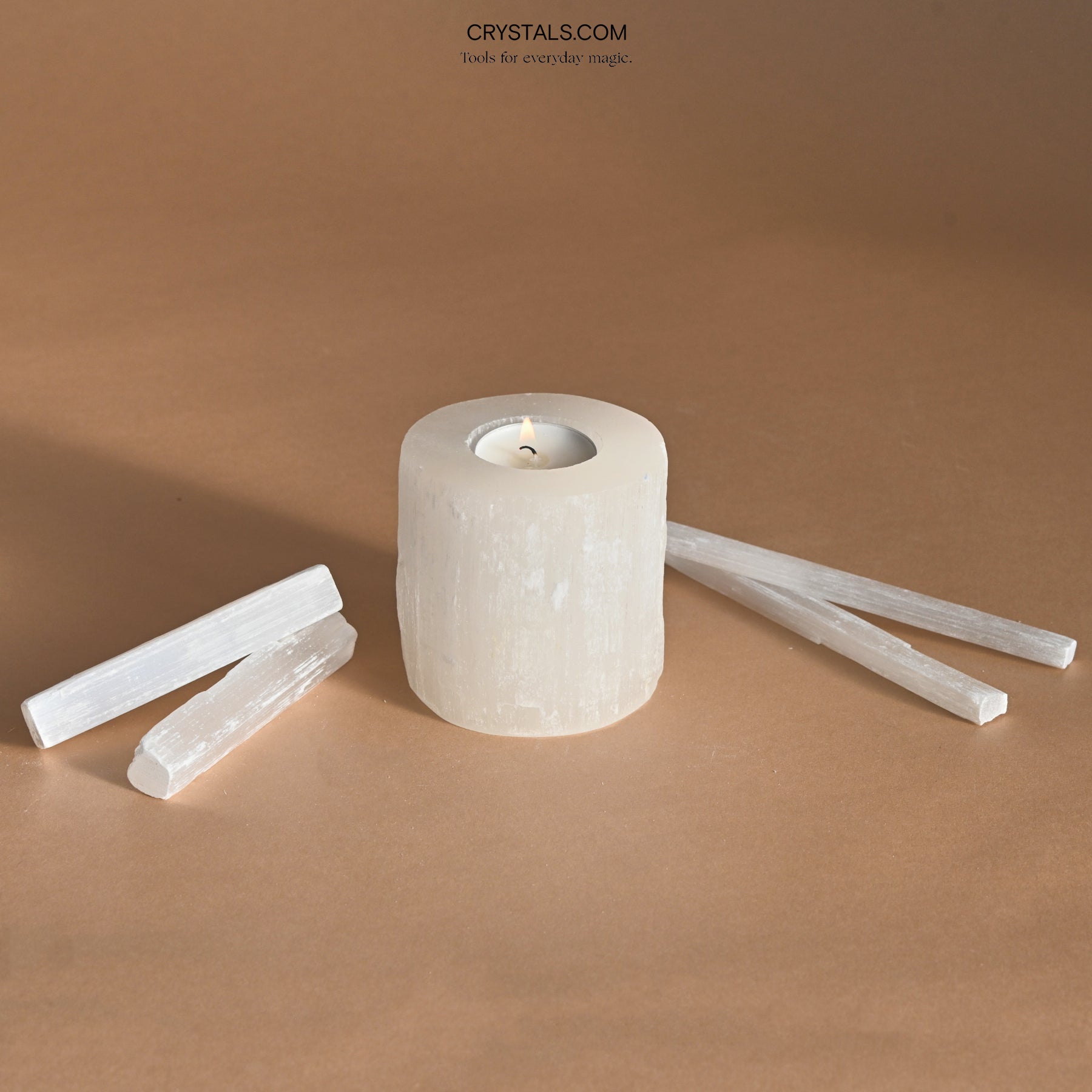
Garnet's appeal in interior design lies in its density of color and the geological drama of its crystal structure. Unlike crystals that glow or project (selenite (Selenite Cleansing Wand), celestite, clear quartz), garnet absorbs light, creating depth rather than brightness. This makes it a fundamentally different visual proposition — a counterweight, an anchor, a mineral that commands rather than illuminates.
Large garnet matrix specimens work exceptionally well in rooms built around warm neutrals: terracotta, ochre, warm white, aged wood. The deep wine-red of almandine functions as a chromatic anchor in the way a dark oil painting might — giving the room a point of visual authority. In minimalist settings, a single significant garnet piece functions as the room's geological jewel: one large crystal on a plinth or stone surface can carry an entire tableau.
For maximalist interiors, garnet combines beautifully with pyrite (Pyrite Cluster) (golden warmth), labradorite (Labradorite Palm Stone) (iridescent cool), and black tourmaline (structural contrast). A grouping that moves from garnet through citrine to clear quartz creates a warm-to-neutral gradient that is visually cohesive without feeling designed. Our Home Decor collection includes styling ideas for mineral displays at every scale.
Interior designers working with clients on meaningful, investment-quality mineral decor will find garnet among the most versatile stones to recommend: it holds visual weight without overpowering, it pairs with both warm and cool palettes, and it carries a historical depth that resonates with clients interested in provenance and material authenticity. Our Trade Program offers dedicated resources, professional pricing, and curatorial support for designers working with fine mineral specimens.
Garnet & the Zodiac: Capricorn, Aquarius & Beyond
Garnet's primary zodiac association is with Capricorn (December 22 – January 19), where it functions as both the traditional birthstone and a mineral that reflects Capricorn's elemental qualities: earth-rooted, ambitious, deeply disciplined, and capable of extraordinary endurance under pressure — exactly the conditions under which garnet forms. A Capricorn drawn to garnet is instinctively drawn to a stone that mirrors their own geology.
Aquarius (January 20 – February 18), which shares the January window, often resonates with garnet's rarer varieties — particularly the color-change and green garnets — which align with Aquarius's attraction to the unusual, the innovative, and the visually unexpected. Aries, ruled by Mars and drawn to vitality and fire, finds a natural affinity with pyrope and spessartine garnets — the most energetically intense end of the spectrum. Leo, drawn to warmth, richness, and the dramatic, often connects with deep almandine displayed as statement specimens. Scorpio, drawn to depth, intensity, and the minerals that carry history, tends to be drawn to antique-quality garnet with provenance — the gem of medieval talisman culture resonates with Scorpionic depth.
Garnet Forms: Raw, Polished & Sculptural
Garnet appears in several forms across the mineral market, each with a distinct aesthetic logic.
Rough specimens are the collector's preferred form — matrix pieces showing garnet in its natural geological context, crystals growing from host rock as they formed. The appeal is scientific and aesthetic simultaneously: you are seeing the mineral as it exists, not as human hands have shaped it. For anyone building a serious mineral collection, rough garnet matrix specimens are the most meaningful starting point.
Tumbled garnet — smooth, rounded, highly polished — reveals the interior color most fully and is the most tactile form of the stone. Tumbled almandine shows the full depth of the red without the competing textures of matrix. These are excellent entry points for those new to garnet.
Polished freeforms and sculptural cuts allow the crystal's density and luster to show at their best. A polished garnet freeform, shaped to reveal the depth of color while maintaining a sense of natural movement, bridges the gap between raw specimen and design object. These are the garnet pieces most suited to interior styling — they carry geological authority while functioning as considered objects rather than raw minerals.
Garnet spheres are rare because the mineral rarely forms in masses large enough to cut into significant spheres; when they exist, they command prices that reflect that rarity. Browse all available forms in our new arrivals and the Collector's Edition for the most significant current pieces.

Caring for Your Garnet
Garnet's hardness (6.5–7.5 Mohs) makes it among the more durable display minerals. It will not fade in light, will not release toxins, and does not require the careful handling that softer or chemically complex minerals demand. However, a few care principles will keep specimens at their best.
Dust regularly with a soft brush — a clean paintbrush or dedicated mineral-dusting brush works well. For polished garnet pieces, occasional cleaning with lukewarm water and a drop of dish soap, followed by thorough drying, will restore luster. Avoid ultrasonic cleaners for pieces that show fractures or inclusions, as vibration can extend existing cracks.
Store matrix specimens where they will not be knocked or subjected to sudden impact — despite their hardness, sharp crystal terminations can chip when struck against other hard surfaces. Individual specimens displayed on fabric-covered stands or natural stone surfaces will be both safer and more visually elevated than stones sitting directly on glass or hard surfaces.
Garnet does not require energetic cleansing in the way that softer, more porous minerals might — its geological density means it carries its own energetic stability. That said, many collectors and practitioners enjoy placing garnet in moonlight during the full moon as a ritual reset, connecting the stone with lunar cycles while simply allowing the visual pleasure of seeing garnet in low light.
Frequently Asked Questions About Garnet
Is garnet only red?
No — garnet occurs in virtually every color except blue (though rare blue color-change garnets do exist). The most common varieties are red (almandine, pyrope, rhodolite), orange (spessartine), green (tsavorite, demantoid, uvarovite), and golden-brown (hessonite). The spectrum is wide enough that garnet is one of the few gemstone groups that spans nearly the full color wheel.
What is the rarest type of garnet?
Color-change garnets that shift between green and red or blue and purple in different light sources are among the rarest. Demantoid andradite with horsetail inclusions, fine tsavorite above 3 carats, and large, well-crystallized uvarovite matrix specimens are also considered rare by collector standards. Significant spessartine from Loliondo, Tanzania, commands high prices due to color quality and limited supply.
What zodiac sign is garnet associated with?
Garnet's primary association is with Capricorn as the January birthstone. It also resonates with Aquarius (sharing the January window), Aries (Mars-ruled, fire energy), Leo (warmth, richness), and Scorpio (depth, historical resonance). See our Capricorn crystals collection for the full garnet range most associated with this sign.
Which chakra does garnet support?
Red and dark garnets are primarily associated with the root chakra (Muladhara) — governing physical vitality, grounding, and material stability. Green varieties (tsavorite, demantoid, uvarovite) are associated with the heart chakra, carrying garnet's energizing quality into emotional and relational domains. Take our chakra quiz to identify which energy center most needs support right now.
How do I tell natural garnet from synthetic or imitation?
Genuine garnet is denser than glass imitations — a real garnet feels heavy for its size. Look for natural inclusions: garnet typically contains needle-like rutile inclusions, growth features, or fractures that glass does not replicate. Synthetic garnets (YAG, gadolinium gallium garnet) are flawlessly clean; nature-made garnets almost never are. When in doubt, purchase from a trusted source with clear provenance. Read our full authentication guidance in our Crystal Index 101.
Can garnet get wet?
Yes — garnet is water-safe. Unlike selenite, halite, or pyrite, garnet is chemically stable in water and will not dissolve, rust, or degrade from brief contact. For cleaning, lukewarm water with mild soap is appropriate. Extended soaking is not recommended for matrix specimens, as the host rock may be more water-sensitive than the garnet crystals themselves.
What is the difference between garnet and ruby?
Both are red, both are used in jewelry, and they are frequently confused — but they are entirely different minerals. Ruby is corundum (aluminum oxide, Mohs 9), while garnet is a silicate (Mohs 6.5–7.5). Garnet typically shows a warmer, more violet-tinged red with vitreous luster; ruby shows a cooler, cleaner red with slightly higher brilliance. Price points differ dramatically: fine ruby is among the most expensive gemstones on earth, while fine garnet remains accessible even at collector quality.
Is garnet good for gifting?
Garnet is an excellent gift for January birthdays, second wedding anniversaries (the traditional gemstone gift for year two), and anyone drawn to warm-toned, deeply colored minerals. Its historical resonance — worn by warriors, alchemists, royals, and lovers across millennia — gives it a depth of meaning that more commercially mainstream stones lack. Browse our curated selections and take the crystal quiz to find the right match.
The Garnet That Suits You
The range within garnet is wide enough that there is almost certainly a variety — and a form — that speaks directly to your eye and your intention. From deep wine-red almandine matrix specimens suited to bold interior statements, to rare orange spessartine collectors' pieces, to the startling green of tsavorite that rivals any gemstone on earth for sheer chromatic intensity, garnet rewards attention and rewards depth of knowledge.
Explore our current new garnet arrivals, browse the full range in our Collector's Edition, and add context to your collection with our Crystal Index 101. For collectors and interior designers interested 879_800x800.jpg?v=1771333645" alt="garnet crystal mineral specimen close-up showing deep red garnet crystal faces with natural matrix detail and angular geometry" style="max-width: 100%; height: auto; border-radius: 4px;">
✦ Discover Your Human Design
Your spiritual journey goes deeper than numbers. Human Design reveals your unique energetic blueprint — how you're designed to make decisions, interact with others, and move through the world. It combines astrology, the I Ching, Kabbalah, and the chakra system into one powerful framework.
Explore our full Crystal Encyclopedia — meanings, healing properties, and chakra connections for 280+ crystals.
Get 10% Off Your First Order
Plus early access to new arrivals, collector drops, and crystal guides. Join 15,000+ crystal lovers.
Discover Your Crystal Match
Select your sign and get personalized crystal recommendations delivered to your inbox.