


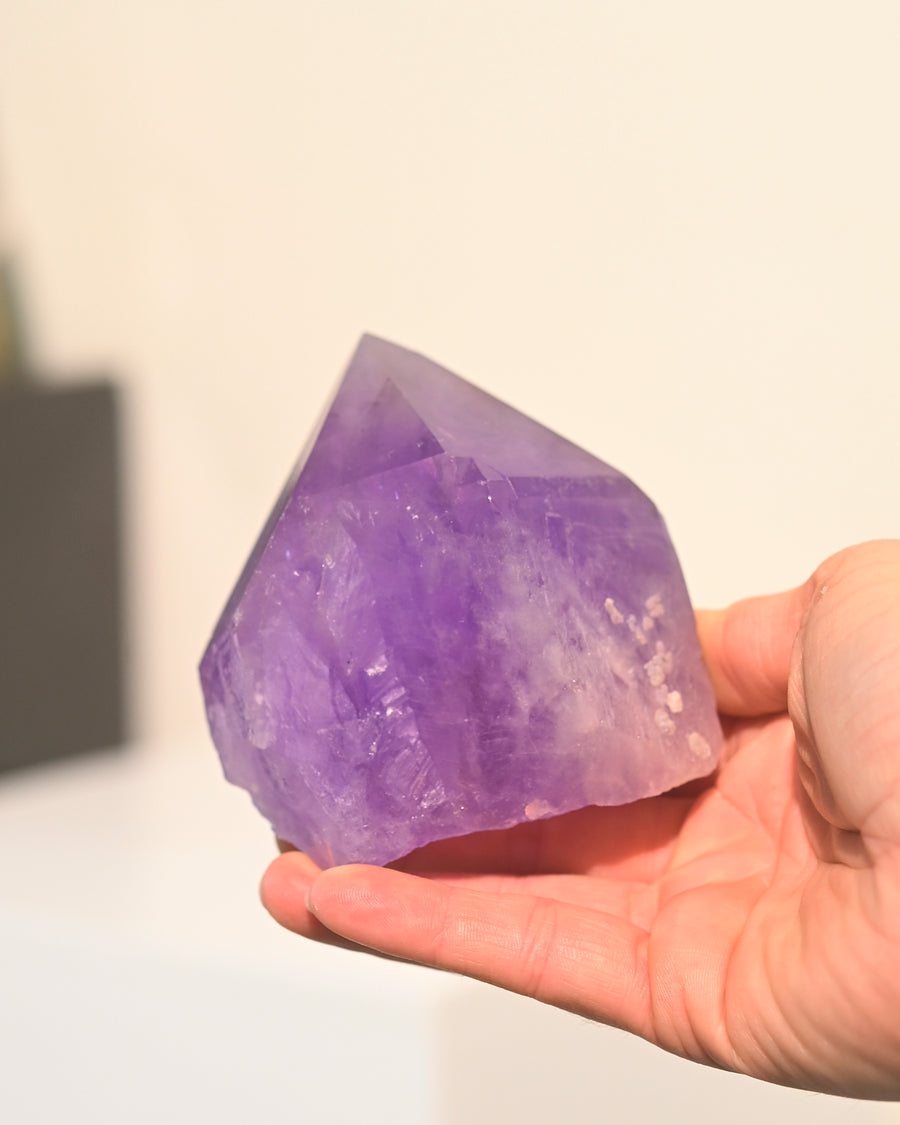

Rough Bolivian Amethyst Point
$48
Discover the Journey
High-altitude color, rare geology, and the world’s main commercial source of natural ametrine.
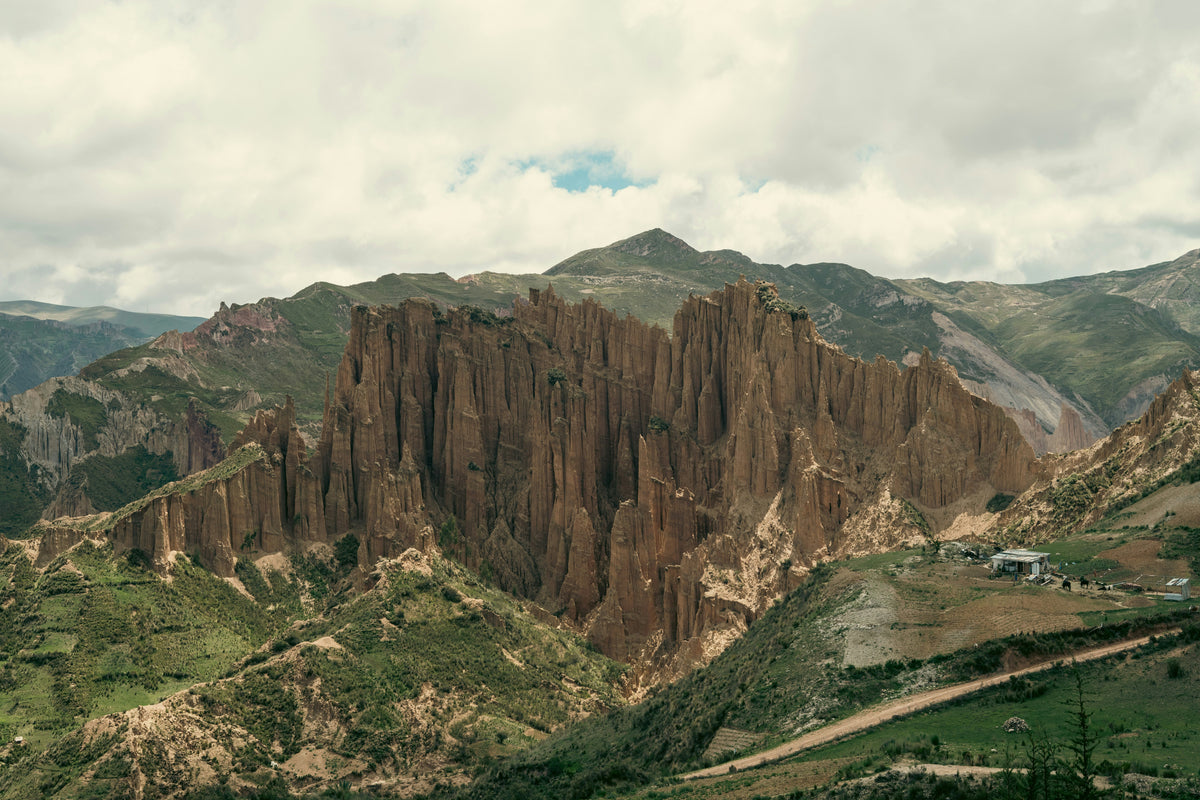

South America
From the tropical lowlands of Santa Cruz to the stark salt flats of Uyuni, Bolivia is home to singular mineral stories, most famously ametrine, a natural blend of amethyst and citrine formed in one quartz crystal.
Shop by origin

1 piece
Hand-selected, mostly direct from small family-run mines and suppliers I have worked with for years.
Each piece is photographed in natural light to honor its true texture.
Packed by hand here and out in 1 to 3 business days.
Bolivia is the world's only commercial source of natural ametrine, a quartz variety where amethyst and citrine occur together in a single crystal, with purple and golden zones meeting in sharp geometric boundaries. It comes from the Anahi Mine in eastern Bolivia. Legend links the mine to the 1600s; it was rediscovered in the 1960s and its ametrine reached the market in the 1970s. The mine is located in the Pantanal wetlands region near the Brazilian border.
The Anahi Mine also produces amethyst and citrine. The country's complex geology, spanning the Andes mountains, the Altiplano plateau, and ancient Precambrian shield rock, creates diverse mineralogical environments. Hand-selected, mostly direct from small family-run mines and suppliers I have worked with for years.
Browse all origin collections: Brazil · Peru · Morocco · Explore All Origins →. Free shipping on orders over $150.
Ametrine is a natural quartz variety that combines amethyst (purple) and citrine (golden) in a single crystal. The two colors come from iron taken up differently in different growth zones of the same crystal. Bolivia's Anahi Mine is the world's only commercial source.
The Anahi Mine is located in the Pantanal wetlands of eastern Bolivia, near the Brazilian border. Legend dates it to the 1600s. It was rediscovered in the 1960s, its ametrine reached the market in the 1970s, and it remains the world's only commercial source of natural ametrine.
Yes. The Anahi Mine produces amethyst and citrine as well as ametrine. Brazil produces far more amethyst by volume.
Mining regions

Anahí Mine · Santa Cruz
Bolivia’s signature, ametrine, comes from the Anahí Mine in the La Gaiba district near the Brazilian border. Purple amethyst and golden citrine grow together in sharply zoned quartz, a natural pattern created by changes in iron oxidation during crystal growth. Most fine ametrine on the market traces back here.
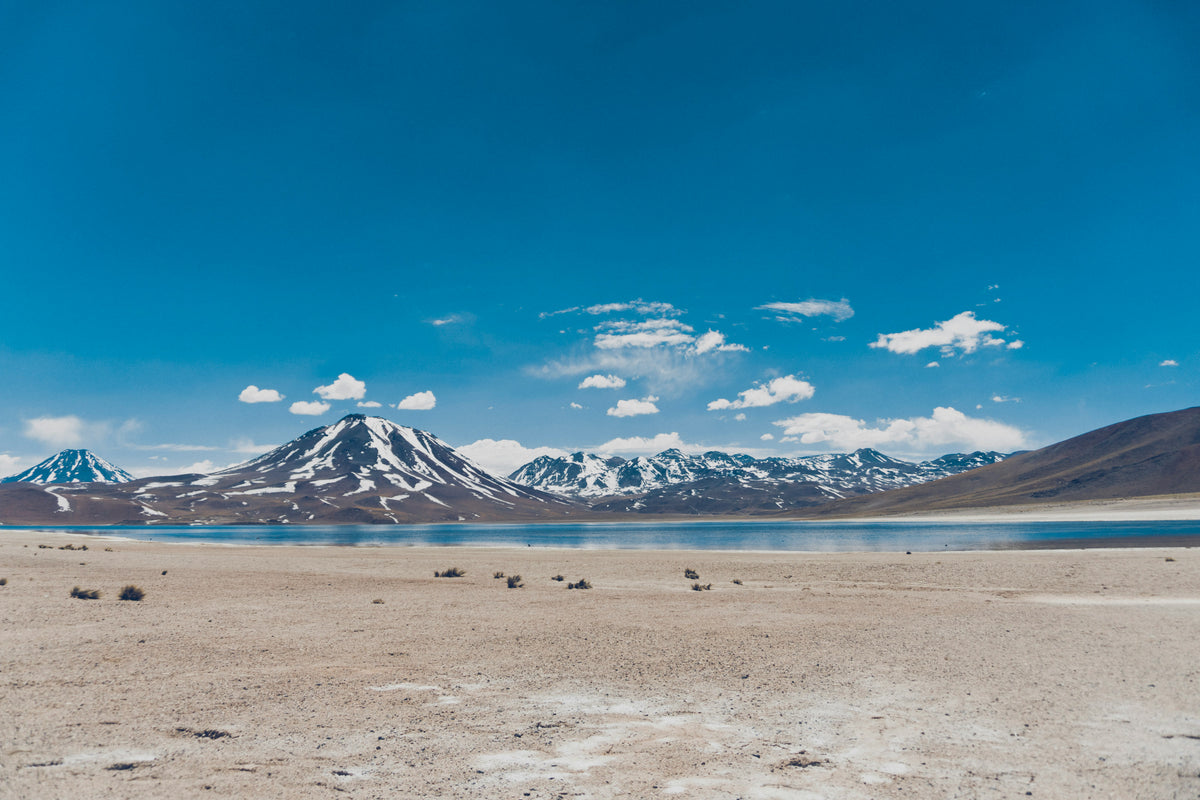
Uyuni Salt Flats · Potosí
The Salar de Uyuni in Potosí is the largest salt flat on Earth. Its salt crust and surrounding deposits produce halite and gypsum formations.
| Mineral | Formula | Mohs hardness |
|---|---|---|
| Ametrine | SiO₂ | 7 |
| Citrine | SiO₂ | 7 |
| Amethyst | SiO₂ | 7 |
| Tourmaline | Borosilicate group | 7 to 7.5 |
Hardness is on the Mohs scale, where 10 is diamond.
Hand-selected, mostly direct from small family-run mines and suppliers I have worked with for years.
It’s naturally bi-colored quartz, amethyst and citrine in one crystal, with crisp zoning. Most fine ametrine on the market comes from the Anahí Mine in Santa Cruz.
Natural ametrine shows distinct zones of purple and gold rather than one even color, and that zoning is what I look for.
You’ll also see amethyst, smoky quartz, clear quartz, and halite and gypsum formations from Uyuni. I choose pieces for clarity, form, and presence.
Founder’s Note
Every crystal begins as an encounter shaped by time and human touch. I personally source each piece, working closely with miners and artisans who handle them with care.
As a photographer and lifelong lover of design, I’m drawn to light, color, and form, the same elements that make crystals feel like natural works of art. Each piece is photographed in natural light to honor its true texture and energy, a quiet balance of beauty, material, and meaning.
Brittany Roughton
Founder & Curator, Crystals.com
Request personal sourcingEvery sourcing region on one interactive map.
Open the mapCan't choose?
Tell it what you need. It picks one piece for you, in stock right now.
Sorry, looks like we don't have enough of this product.

Buy It With
$10.00 USD

