Sleep is one of the most restorative things you can do for your body and mind. If winding down has been harder than it should be, the stones on this list are worth keeping close — on your nightstand, under your pillow, or worked into a quiet evening ritual.
Why Crystals and Sleep Go Together
Certain crystals have been used for centuries in sleep and relaxation traditions across cultures. While crystals are not a medical treatment, many people find that intentional placement of specific stones shifts the energy of their bedroom into something quieter and more conducive to rest. The act of choosing a stone, placing it with intention, and creating a calming bedtime ritual can itself become a powerful sleep anchor.
From a practical standpoint, crystals that are associated with the nervous system, stress relief, and mental quieting tend to be most effective for sleep support. The eight stones below represent the most consistently recommended by crystal practitioners for this purpose.
The 8 Best Crystals for Sleep
1. Amethyst — The Classic Bedside Stone
Amethyst is perhaps the most iconic sleep crystal for good reason. Its violet hue is associated with the crown and third eye chakras, and it has long been used to quiet an overactive mind. If you tend to lie awake running through tomorrow's to-do list, amethyst is worth placing on your nightstand or tucking under your pillow.
Its calming, introspective energy helps create the mental shift from alert to receptive — exactly what the body needs to transition into deep sleep.

Amethyst Bracelet — PEACE
Wear it through your evening wind-down, then rest it on your nightstand.
Shop Amethyst — $342. Lepidolite — The Anxiety-Dissolving Stone
Lepidolite is a lithium-bearing mica mineral, and its natural lithium content is often cited as the reason it feels so distinctly calming to hold. For those whose sleep struggles are tied to anxiety or an inability to switch off emotionally, lepidolite is frequently the most recommended stone by crystal practitioners.
Its soft lavender-to-dusty-rose color is gentle in the bedroom, and it works well placed directly on the chest or heart area during an evening meditation before bed. Read more about lepidolite in our full Lepidolite guide.
3. Howlite — Stillness in Stone Form
Howlite is white, calm, and almost deliberately quiet in appearance. It is one of the most recommended stones for insomnia specifically, and for good reason — its energy is understood to slow the racing mind and encourage a meditative state. Unlike more stimulating white stones (such as clear quartz), howlite's energy is decidedly yin: receptive, cool, and still.
Try holding a piece of tumbled howlite in your hand as you settle into bed and breathe slowly. Many people report falling asleep with it in their palm.
4. Moonstone — For Restless Sleepers
Moonstone carries the fluid, cyclical energy of the moon itself. It is particularly supportive for people whose sleep patterns are erratic — those who wake frequently through the night, have vivid or disturbing dreams, or whose sleep quality shifts with the lunar cycle. Moonstone is also associated with intuitive dreaming and can be a meaningful stone for those who want to work with their dreams more consciously.
Rainbow Moonstone, with its pearlescent flash, is especially beautiful on a nightstand and pairs well with selenite for a calming bedroom grid.

Rainbow Moonstone Bracelet
Natural rainbow moonstone beads — wear it or place it on your nightstand.
Shop Moonstone — $365. Selenite — The Room Cleanser
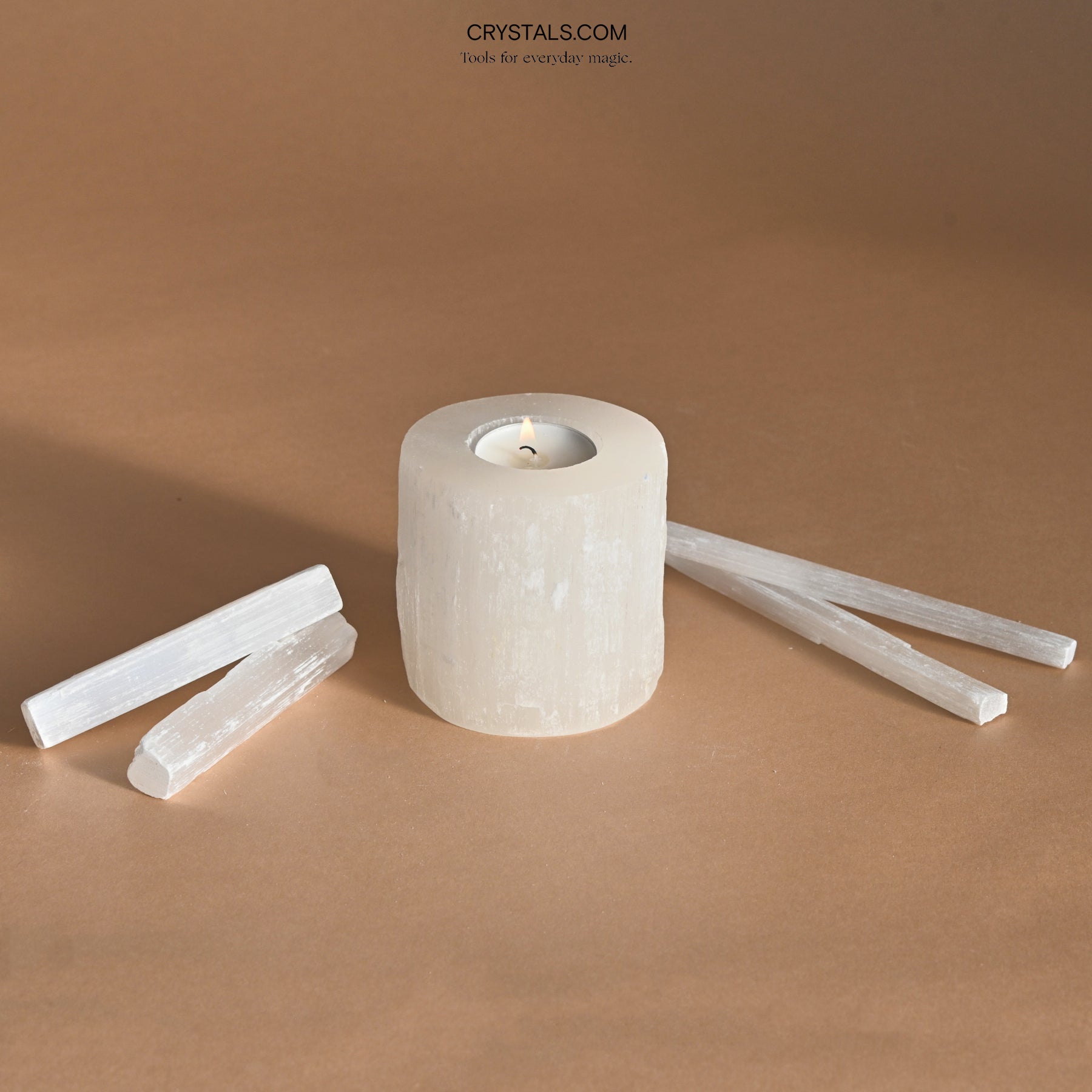
Selenite does not just support your personal energy — it actively works on the energy of the space around it. A selenite tower or wand placed in the bedroom helps clear residual stress, electronic interference, and the accumulated energy of the day from the room itself. This makes it an excellent stone to use alongside others in your sleep practice.
Selenite does not need to be cleansed and should not be placed in water. Set it on a windowsill or nightstand and let it work continuously. Learn more in our full selenite guide.


6. Smoky Quartz — For Stress-Driven Insomnia
If the root of your sleep struggles is stress — the body holding physical tension even when the mind wants to rest — smoky quartz is the stone to reach for. It is a powerful grounder that draws excess, anxious energy down through the body and into the earth. Many people find it easier to physically relax when smoky quartz is nearby, particularly when placed at the foot of the bed or held during a body-scan relaxation.
Its dark, translucent brown color is beautiful in a bedroom, and it pairs especially well with amethyst for a calming nightstand pairing. Explore its full range of uses in our Smoky Quartz guide.
7. Celestite — For Deep, Peaceful Dreaming
Celestite's soft blue color and delicate crystal clusters carry a distinctly ethereal, high-vibrational energy. It is most associated with peace, angel connection, and deeply restful states of consciousness. For people who struggle to feel truly safe or at ease in their bodies at night, celestite creates a sense of spiritual protection and calm that many find profoundly sleep-inducing.
Celestite clusters are particularly beautiful in the bedroom and work well placed on a dresser or high shelf rather than directly on the nightstand. Note that celestite fades in direct sunlight, so keep it away from sunny windows.
8. Black Tourmaline — The Protector
For some people, the barrier to sleep is a felt sense of unease or vulnerability — the difficulty of letting the guard fully down. Black tourmaline is the most recommended stone for energetic protection, and placing it at the corners of the bed or near the bedroom door creates a sense of grounded, protected space. When you feel safe, sleep comes more easily.
It also works to absorb electromagnetic field (EMF) energy from electronics nearby, making it a practical addition to any bedroom with charging devices or screens.

Black Tourmaline Bracelet — GROUND + PROTECT
Wear it through the evening, then place it at your bedside as a protective anchor.
Shop Black Tourmaline — $40
How to Use Crystals for Sleep
Placement and intention matter more than quantity. You do not need all eight stones — start with one or two that resonate, and build from there as you develop your own sleep ritual.
Under the Pillow
Smooth tumbled stones work best here — amethyst, howlite, lepidolite, or moonstone are all good choices. If you find the physical presence of a stone under your pillow distracting, try placing it inside your pillowcase, near the edge, or under the mattress beneath your head.
Nightstand Placement
Your nightstand is the most natural home for sleep crystals. A small cluster or tower of amethyst, a selenite wand, and a piece of lepidolite make a beautiful, intentional trio. The goal is to create a calm visual anchor that signals to your nervous system that this is a place of rest.
Crystal Grid Layouts
A simple grid around the bed — four black tourmaline pieces at the corners — creates a protective boundary that many people find genuinely helpful for deep sleep. You can add selenite along the window ledge and amethyst at the head of the bed to complete a layered practice.
Evening Meditation
Hold one or two stones during a 5-10 minute wind-down meditation before bed. Lepidolite, moonstone, and celestite are particularly effective in hand during breathwork or body-scan practices. This is one of the simplest ways to build a consistent sleep ritual with crystals, and free-shipping crystal bracelets make it easy to have something on hand every evening. Free shipping on orders over $150.
Crystals to Avoid in the Bedroom
Not every crystal belongs near your bed. High-energy, activating stones can be stimulating to your energy field in ways that compete with sleep. Consider keeping these out of the bedroom, or at minimum off the nightstand:
- Citrine — bright, solar energy that activates and energizes. Great for the office, not for the bedroom.
- Carnelian — a fire stone with strong creative and physical energy. Stimulating rather than calming.
- Red Jasper — grounding but energizing; better for morning rituals.
- Clear Quartz — amplifies energy in all directions, which is powerful but not restful. Can intensify dreams or make sleep more shallow for sensitive people.
- Malachite — a deeply transformative stone that can bring up subconscious material — better for daytime work.
If you love any of these stones, simply move them to another room at night rather than removing them from your practice entirely.
Building a Crystal Sleep Ritual
The most effective crystal sleep practices are consistent and intentional. A simple framework that works well:
- Set your space — make the bedroom feel intentional. Dim lights 30-60 minutes before bed.
- Place your stones — set out your sleep crystals with a quiet intention. Even a simple thought like "I'm ready to rest" is enough.
- Hold a stone during wind-down — keep one crystal in your hand as you read, stretch, or breathe before sleep.
- Let it go — place the stone on your nightstand or under your pillow as you settle in. You don't need to think about it further.
For deeper guidance on where to place crystals throughout your home — not just the bedroom — see our full crystal feng shui guide. And if you want to explore what the bedroom specifically calls for, our best crystals for the bedroom article goes deeper on room setup and decor.
Not sure which sleep crystal is right for you?
Take our quick crystal quiz and get a personalized recommendation based on what you're actually going through right now.
Take the Crystal QuizFrequently Asked Questions
What is the best crystal to put under your pillow for sleep?
Amethyst, howlite, and lepidolite are the three most commonly recommended crystals to place under the pillow. Howlite is particularly well suited because of its very gentle, slow energy that encourages mental stillness. Use a smooth tumbled stone rather than a raw cluster for comfort.
Can crystals help with insomnia?
Crystals are not a medical treatment for insomnia. That said, many people find that creating an intentional bedtime ritual with calming stones — especially howlite, lepidolite, amethyst, and selenite — supports better sleep quality as part of a broader wind-down practice. The ritual itself has real value for the nervous system.
Where should I place crystals in the bedroom for sleep?
The nightstand is the most practical and effective placement for most sleep crystals. Black tourmaline works well at the corners of the bed or near the door for protection. Selenite is effective on a windowsill or dresser to cleanse the room's energy. Under the pillow works well for smooth tumbled pieces of amethyst, howlite, or moonstone.
Which crystals should I avoid in the bedroom?
Avoid high-energy, activating crystals near the bed: citrine, carnelian, red jasper, and clear quartz are the most commonly cited. These stones tend to stimulate rather than calm the energy field, which can make it harder to settle into sleep — especially for people who are sensitive to crystal energy.
How many crystals should I use for sleep?
Start with one. A single amethyst or howlite tumble on your nightstand is more than enough to begin a sleep crystal practice. Adding more stones over time as you learn what resonates with your body is a much better approach than overwhelming your space with many stones at once.
Do I need to cleanse my sleep crystals?
Yes — sleep crystals in particular benefit from regular cleansing, as they absorb the stress and mental energy of the night. Moonlight cleansing (setting them on a windowsill on a full moon) works well for most sleep stones. Selenite self-cleanses and also cleanses other stones placed near it. See our full moon cleansing guide for step-by-step instructions.