Crystals and Botanicals: Building Sensory Vignettes at Home
Interior Styling • Sensory Design • Home Decor
The most compelling interiors engage more than the eye. They have a smell, a texture, a quality of light, a temperature. The combination of minerals with botanical elements, plants, dried flowers, wood, and essential oils, creates a sensory completeness that purely visual styling cannot achieve.
This is not mysticism. It is design. The same principle that makes a hotel lobby memorable, the arrangement of materials and scents that signals luxury or ease or warmth, applies at domestic scale. A cluster of eucalyptus stems in a ceramic vessel beside a selenite tower and a diffuser carrying a wood-and-herb oil blend is a coherent sensory statement. Each element reinforces the others.
What follows is a room-by-room guide to pairing specific minerals with botanical elements and scent profiles, with practical notes on arrangement and styling. The goal is a home that feels like a place someone considered, not just decorated.
The Design Logic of Sensory Pairing
Before getting into specific pairings, it is worth understanding why this approach works from a design standpoint. Interior designers call the thoughtful arrangement of objects on a surface a "vignette." A successful vignette has three qualities: it tells a coherent visual story, it varies in height and texture, and it creates a clear hierarchy, a dominant object, a supporting object, and a detail.
When you add a scent element to a vignette, a diffuser, a candle, a sprig of dried botanicals, you extend that story into another sensory register. The visual and olfactory experiences reinforce each other: a mineral that looks cool and architectural reads differently when paired with a warm, resinous scent than it does beside something green and fresh. These are aesthetic decisions, not metaphysical ones, and they are worth making consciously.
One practical note: essential oil diffusers should never be placed in direct contact with mineral specimens. The mist produced by ultrasonic diffusers, which is technically water, can damage soft minerals like selenite and howlite over time, and can cloud the surface of polished specimens. Keep the diffuser adjacent to but not touching the mineral display, with enough distance that the mist disperses before reaching the stones.
Selenite + Eucalyptus: The Spa Vignette
This is one of the most immediately recognizable pairings in contemporary interior design, because it appears in virtually every high-end spa and wellness space. The reason it works is coherent: both selenite and eucalyptus are white-green, both are architecturally vertical (selenite in its tower form, eucalyptus in its stems), and both have a quality of lightness, selenite optically, eucalyptus in its scent and visual character.

To build this vignette, start with a white marble or light travertine tray as the base. Place a tall selenite tower toward the back of the tray, off-center. Add a small ceramic vessel with 3 to 5 eucalyptus stems to the left or right, lower in height than the selenite. Place a single smaller selenite wand or a small selenite pyramid in front, creating the third point in the composition. A diffuser running eucalyptus or peppermint oil at low intensity completes the setup.
This vignette works in a bathroom, a bedroom corner, or on a spa-style bathroom shelf. It works because every element reinforces the same aesthetic: clean, light, mineral, botanical. Nothing competes with anything else.
Amethyst + Lavender: The Bedroom Pairing
The visual logic here is direct: amethyst and lavender occupy nearly the same range of the visible spectrum, both in the blue-violet register. Pairing them creates a tonal composition where the color is harmonious across both organic and mineral form. A raw amethyst cluster beside a small bundle of dried lavender, a purple linen ribbon, a candle in amber or violet, creates a bedroom vignette that is immediately cohesive.

From a mineralogical standpoint, amethyst's color comes from trace iron within the quartz lattice, altered by natural irradiation during the crystal's formation in silica-rich volcanic voids. The chemistry is unrelated to lavender's linalool, which is the primary aromatic compound giving lavender its characteristic scent. But visually and atmospherically, they occupy the same register, and that coherence is what makes the pairing effective.
For the bedroom nightstand: a medium amethyst tower (4 to 5 inches) as the hero, a small dried lavender bundle tied with raw linen twine beside it, and a white ceramic candle holder in front. The diffuser, if you use one, should carry a lavender or lavender-chamomile blend at very low intensity; bedrooms benefit from subtlety in scent.
Black Tourmaline + Cypress or Cedar: The Study Vignette
A home office or study benefits from minerals and scents that feel grounding and focused. Black tourmaline's dark, striated columns are visually powerful: they command the space around them and create the feeling of a serious, considered environment. Paired with woody, resinous botanical elements, cedar branches, cypress sprigs, or a diffuser blend of cedarwood and vetiver, the result is a workspace that smells and looks like a room where important things happen.

Black tourmaline is a boron silicate mineral, and its deep color comes from iron within the trigonal crystal structure. Its piezoelectric and pyroelectric properties, the ability to generate an electrical charge under pressure or temperature change, make it genuinely one of the most physically interesting minerals available in the gem trade. It deserves to be in a room where ideas are produced.
Rose Quartz + Palo Santo or Sandalwood: The Soft Living Room
Rose quartz, silicon dioxide colored pale pink by trace amounts of titanium, manganese, or iron within the crystal structure, is one of the most versatile minerals for residential display. Its color is soft enough to work with nearly any palette, its translucency catches light without demanding it, and it is available in large clusters and towers that work at living room scale.

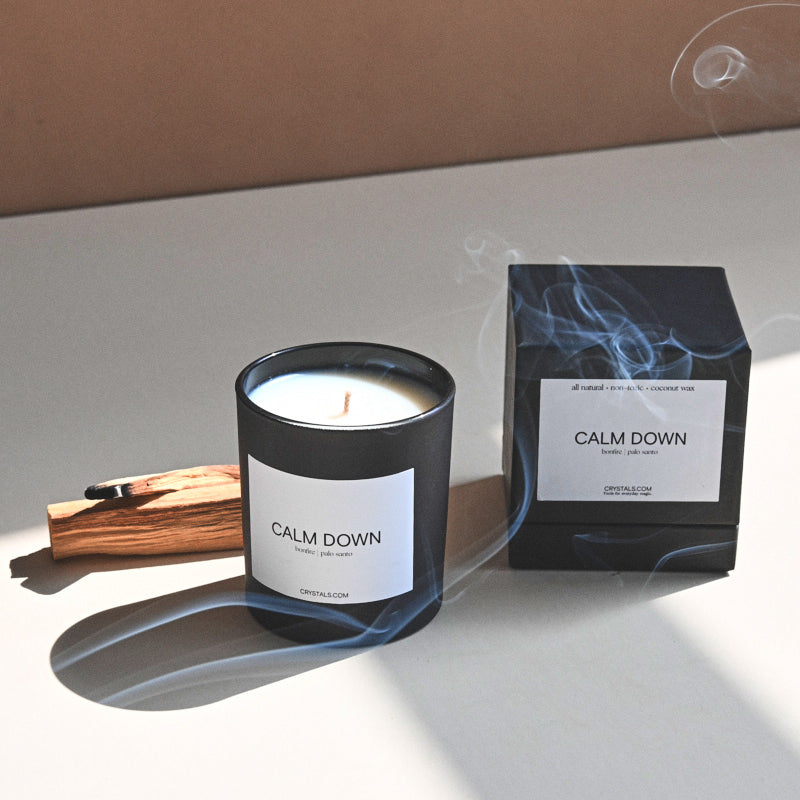
In a living room, rose quartz pairs beautifully with warm, slightly sweet woody scents: palo santo, sandalwood, or amber. The combination creates a warmth that feels welcoming and rich, the olfactory equivalent of the visual quality that rose quartz brings to a space.
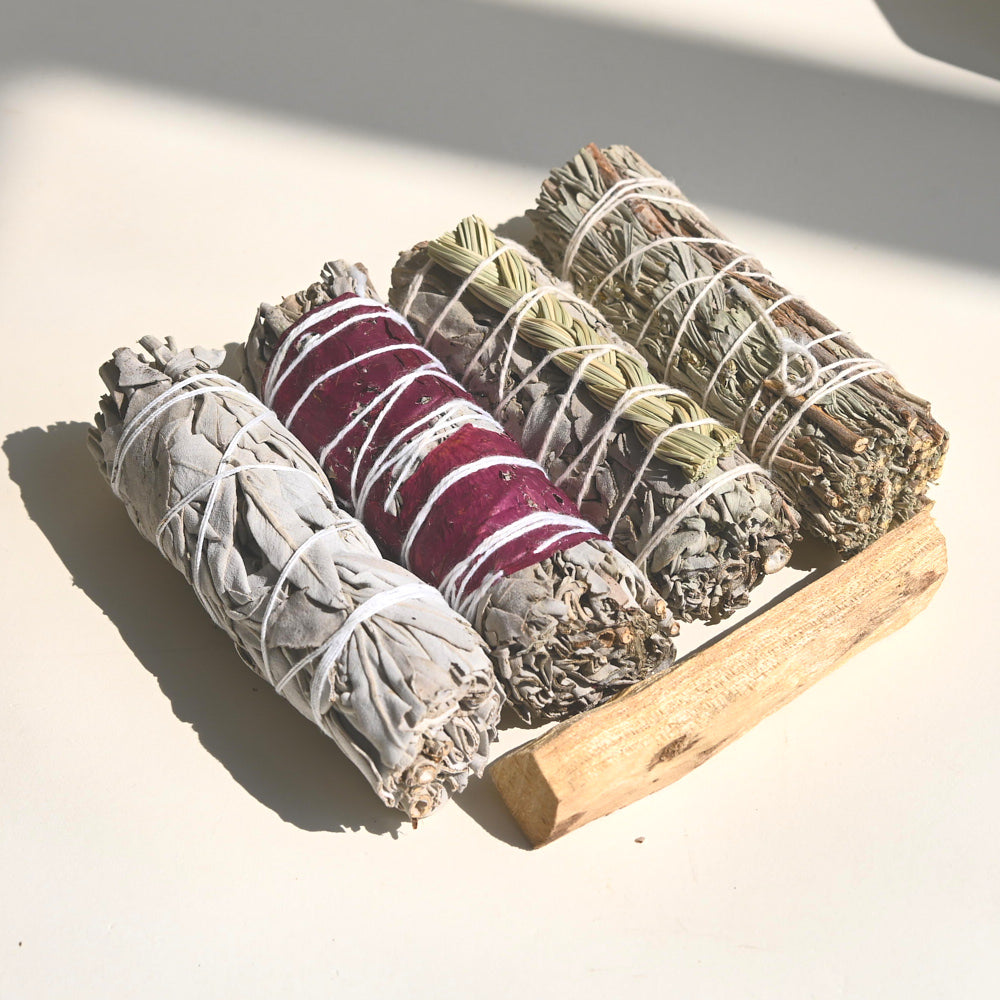
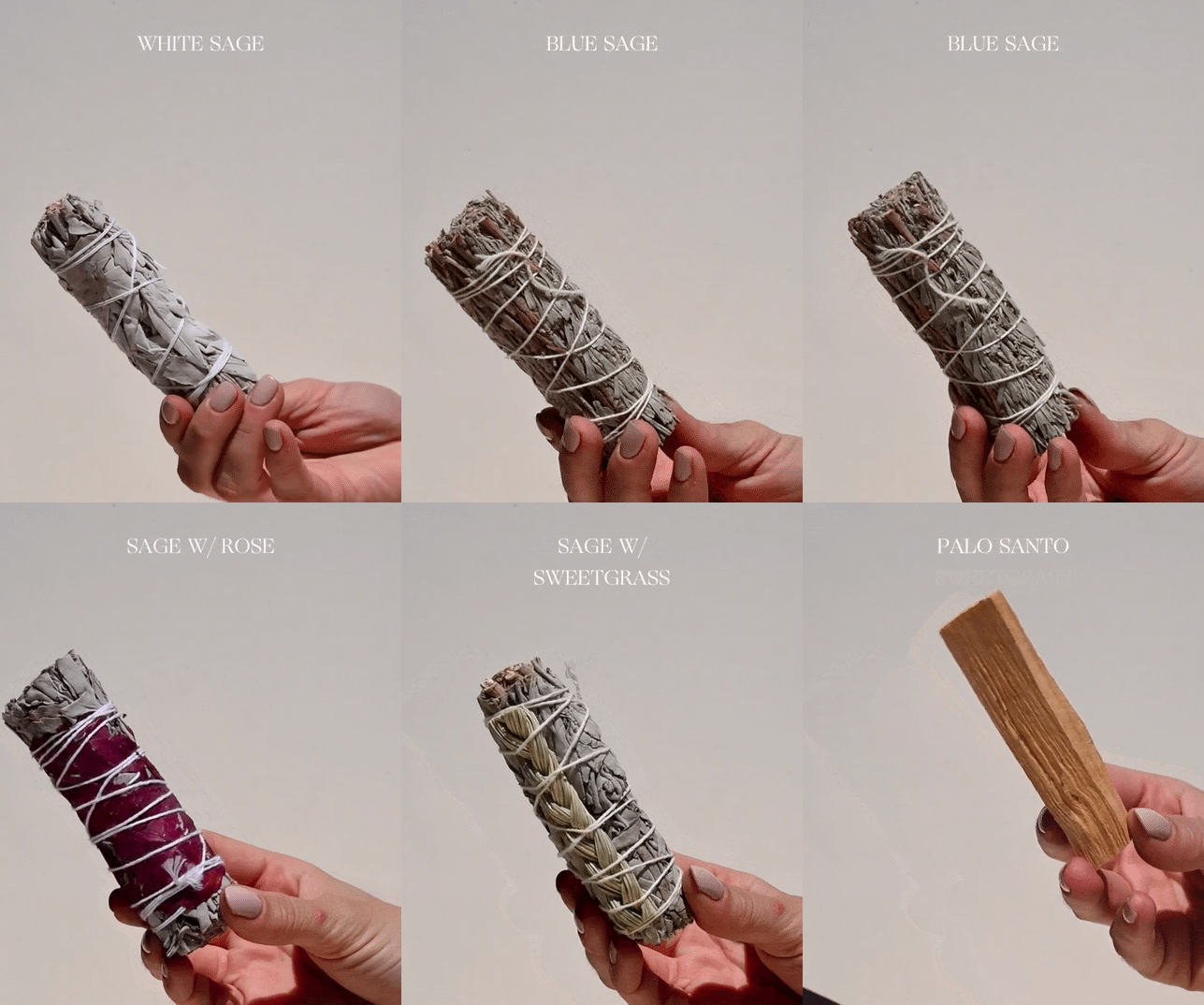
One vignette that works consistently: a large rose quartz cluster (6 inches or larger) on a light wood or marble tray, with a palo santo holder and a few unlit sticks of palo santo wood beside it, a small succulent or dried palm leaf for vertical contrast, and a warm-white candle in an amber glass. Everything is warm in tone, nothing is harsh, and the scent is activated only when the palo santo is burned, making it an event rather than a constant.
For more on how to select and care for rose quartz and other quartz varieties, including information on color stability and water safety, see our crystal care guide. And for a full room-by-room display guide, read The Art of Styling Crystals in Your Home.
Discover Your Human Design
Crystals amplify energy — but do you know your unique energy type? Human Design reveals how you're wired to make decisions, work, and rest.
Explore Human DesignGet 10% Off Your First Order
Plus early access to new arrivals, collector drops, and crystal guides. Join 15,000+ crystal lovers.