How to Cleanse & Charge Crystals: The Complete Safety Guide

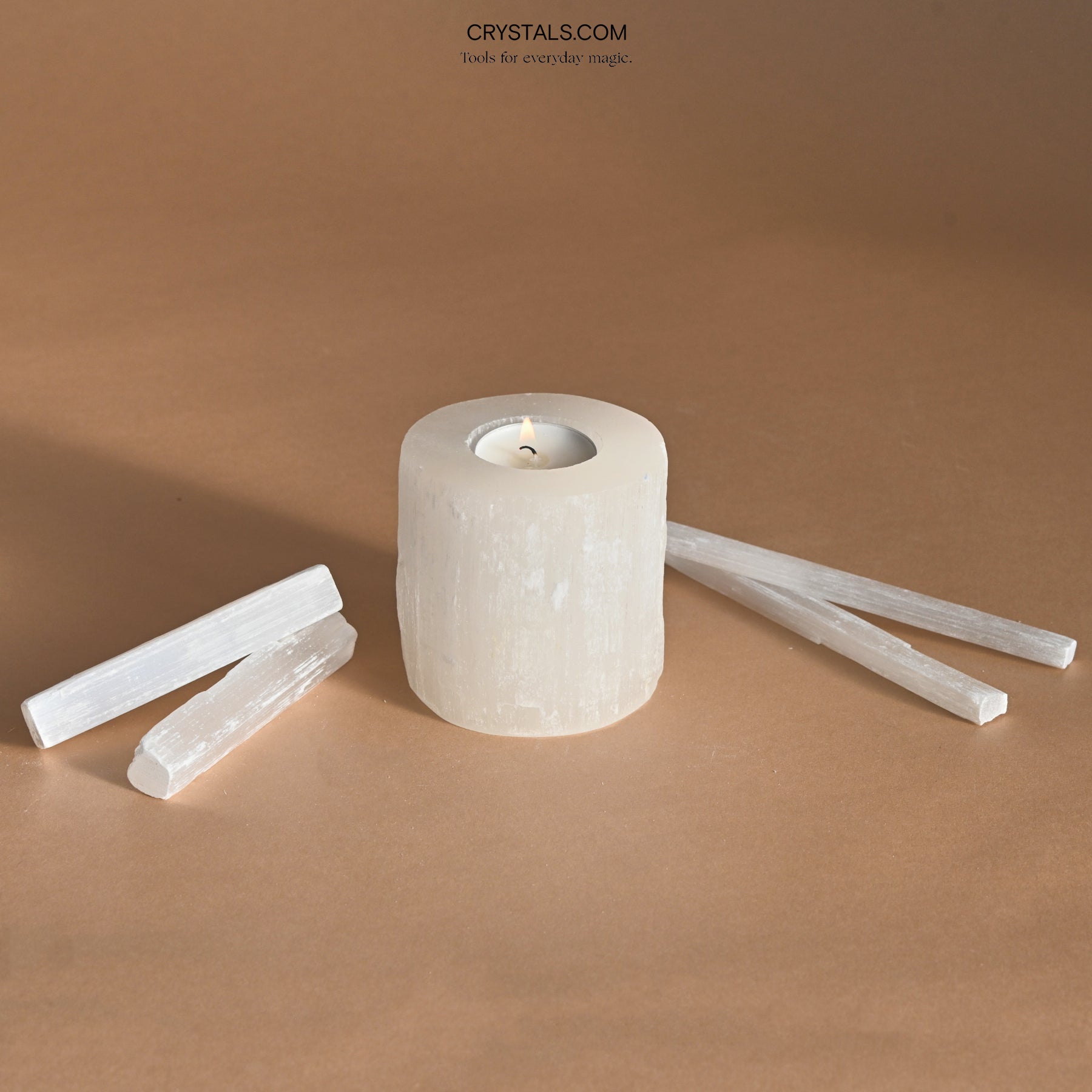
Selenite cleansing wand — how to cleanse and charge crystals guide by Crystals.com
Crystal Care Guide

How to Cleanse & Charge Crystals: Every Method Explained (With a Safety Guide)

The honest, mineralogist-friendly guide to every cleansing and charging method. What is tradition, what is practical care, and which stones can handle what.

What "Cleansing" and "Charging" Actually Mean

If you search "how to cleanse crystals," you will find two very different conversations happening at the same time. One is about ritual. The other is about mineral care. Both are completely valid, and this guide covers both honestly.

The Cultural Tradition

For thousands of years, cultures around the world have treated crystals, stones, and gems as objects that carry symbolic energy. Cleansing, in this context, means resetting a stone's symbolic association. You are clearing whatever intention, memory, or experience you associate with that crystal and starting fresh. Charging means imbuing the stone with a new intention or amplified purpose.

This is a deeply personal practice. It is not something that can be measured in a lab, and it does not need to be. Ritual objects carry meaning because we give them meaning. A rosary is not chemically different from any other string of beads, but that does not make it meaningless to the person holding it.

The Practical Care

Minerals collect dust. They get oily from handling. Certain specimens develop a surface film over time. Physically cleaning your crystals is genuine mineral maintenance, the same kind museums perform. This is not mystical. It is housekeeping for rocks.

The problem is that some cleaning methods can damage certain stones. Selenite dissolves in water. Amethyst fades in sunlight. Pyrite rusts when wet. The most important part of "cleansing" your crystals is knowing which methods are safe for which minerals.

Our approach in this guide: For every method below, we give you the tradition (what practitioners believe it does) and the practical care consideration (what it actually does to the mineral). Use whichever lens works for you. Use both. The only non-negotiable is the safety information.

7 Crystal Cleansing Methods

Each method below includes the ritual tradition, the practical reality, and which stones to keep away from it.

Method 01

Running Water

The tradition: Holding a crystal under cool running water, ideally from a natural stream, is believed to wash away stored negativity. The flow of water is said to carry the unwanted energy downstream and return the stone to a neutral state. Many practitioners use this method when a stone feels "heavy" or after using it in an emotionally intense session.

The practical reality: Running water is genuinely effective at removing dust, skin oils, and light surface grime. For hard, non-porous stones, a rinse under the tap is the simplest physical cleaning method. Lukewarm water and a soft cloth are all you need.

Safety:

  • Safe for stones Mohs 6 and above: quartz varieties (amethyst, citrine, rose quartz, smoky quartz, clear quartz), tourmaline, garnet, jasper, tiger's eye, agate
  • Brief rinse OK for Mohs 5-6.5: moonstone, labradorite, obsidian. Dry immediately.
  • Never use water on: selenite (it dissolves, it is literally gypsum), malachite (can release copper compounds), calcite (acid-soluble and soft), fluorite (can crack with temperature change), pyrite (rusts), desert rose, halite
Mineralogist's note: Selenite is a crystalline form of gypsum with a Mohs hardness of only 2. It is water-soluble. Even brief contact with running water can etch the surface and dull its characteristic silky luster. If you own selenite, never submerge it. If it gets dusty, wipe it gently with a dry microfiber cloth.
Method 02

Selenite Plate or Charging Bar

The tradition: Selenite is widely considered a "self-cleansing" crystal that can also cleanse other stones placed on top of it or beside it. The practice involves laying your crystals on a selenite plate, bowl, or bar for several hours or overnight. Practitioners say selenite radiates a purifying frequency that resets surrounding stones without ever needing cleansing itself.

The practical reality: Selenite does not emit measurable energy that could affect another mineral's structure. However, the practice is completely harmless to all stones involved. Selenite is soft (Mohs 2), so the only caution is the reverse direction: heavier, harder stones placed roughly on selenite can scratch the selenite's surface. Handle gently.

Safety: Safe for all crystals. This is one of the most universally recommended methods precisely because it involves no water, no sunlight, and no physical contact with anything abrasive. If you are ever unsure about a stone, placing it on selenite is always a safe default.

Method 03

Moonlight

The tradition: Placing crystals under the light of the full moon is one of the most popular cleansing rituals. The practice is often timed to the lunar cycle, with the full moon considered the most potent time for energetic reset. Many practitioners set their entire collection on a windowsill or outdoors on the night of the full moon and bring them in at sunrise.

The practical reality: Moonlight is reflected sunlight, but at an intensity roughly 400,000 times weaker than direct sun. It carries no UV risk that could fade photosensitive stones. It will not heat, dissolve, scratch, or otherwise affect any mineral. From a practical standpoint, moonlight bathing is the equivalent of leaving your crystals on the nightstand. It is perfectly safe.

Safety: Safe for every crystal, without exception. This is the single most universally safe method for all minerals, including selenite, fluorite, malachite, and every stone on the "fragile" list.

Tip: If you place crystals outdoors, bring them in before sunrise to avoid morning dew (water exposure) and direct sunlight. If you are in a humid climate, a covered porch or a windowsill inside the glass is perfectly fine. The tradition does not require direct moonlight exposure.
Method 04

Sound (Singing Bowl, Bell, Tuning Fork)

The tradition: Sound cleansing uses the vibrations from a singing bowl, bell, tuning fork, or even a chant to clear the energy field around crystals. The idea is that sustained sound at a consistent frequency washes over the stones and breaks up stagnant energy patterns. Tibetan singing bowls and crystal singing bowls are the most commonly used tools.

The practical reality: Sound waves are mechanical vibrations that travel through air. At the volumes produced by singing bowls, these vibrations are far too low-energy to alter a mineral's crystalline structure. Sound cleansing is harmless to every stone. The practice can also be genuinely calming for the person doing it, which is its own form of value.

Safety: Safe for all crystals. No mineral is damaged by ambient sound. You can use this method for your entire collection at once.

Method 05

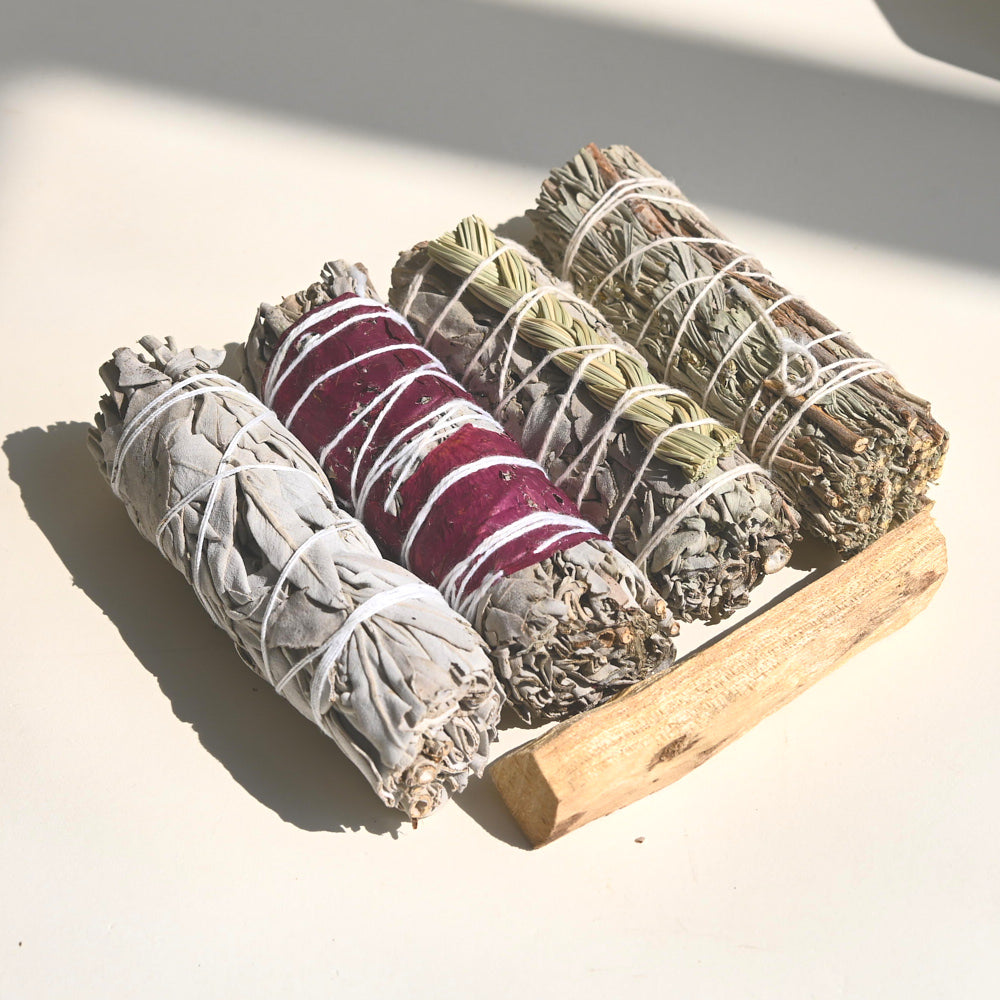
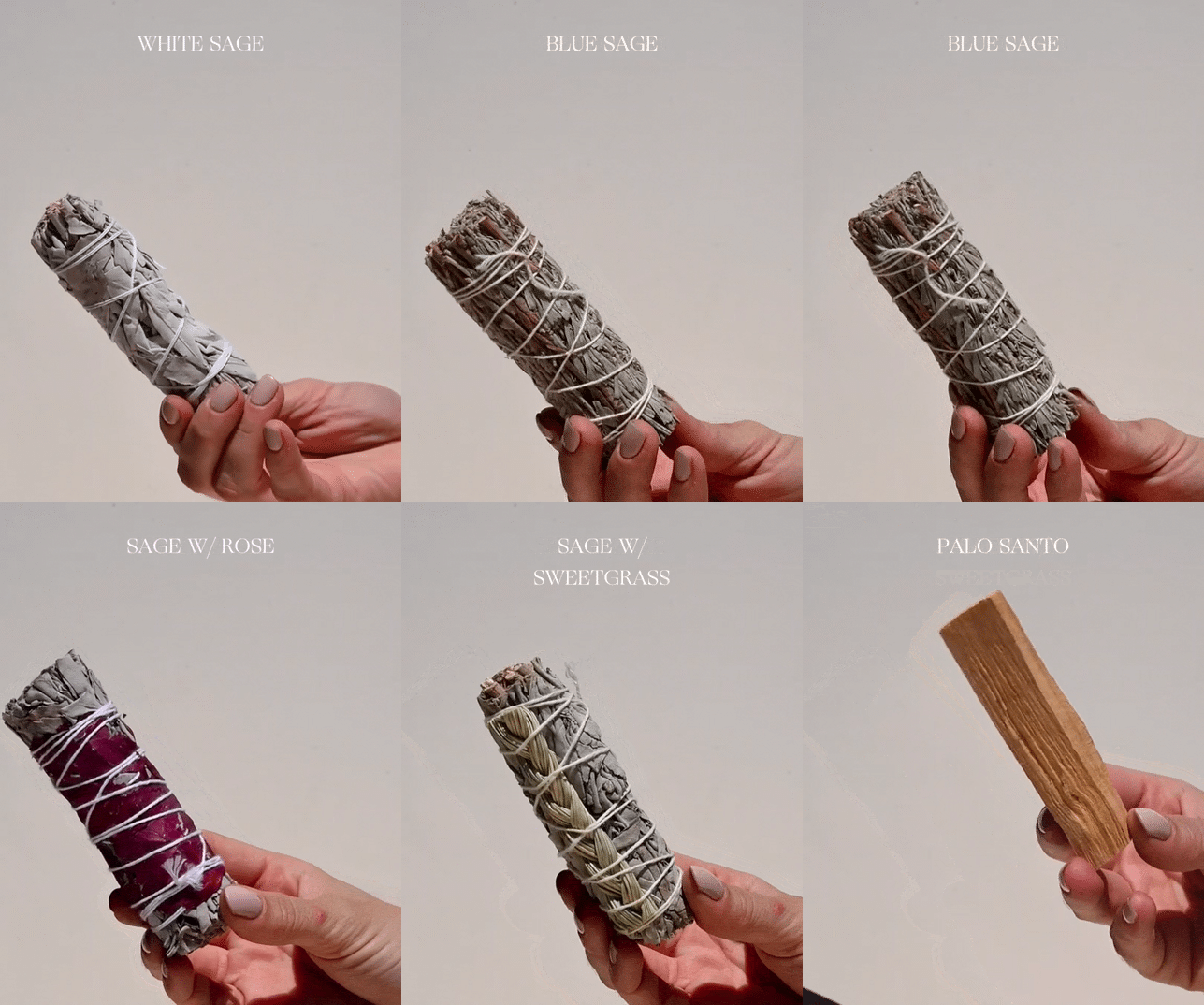
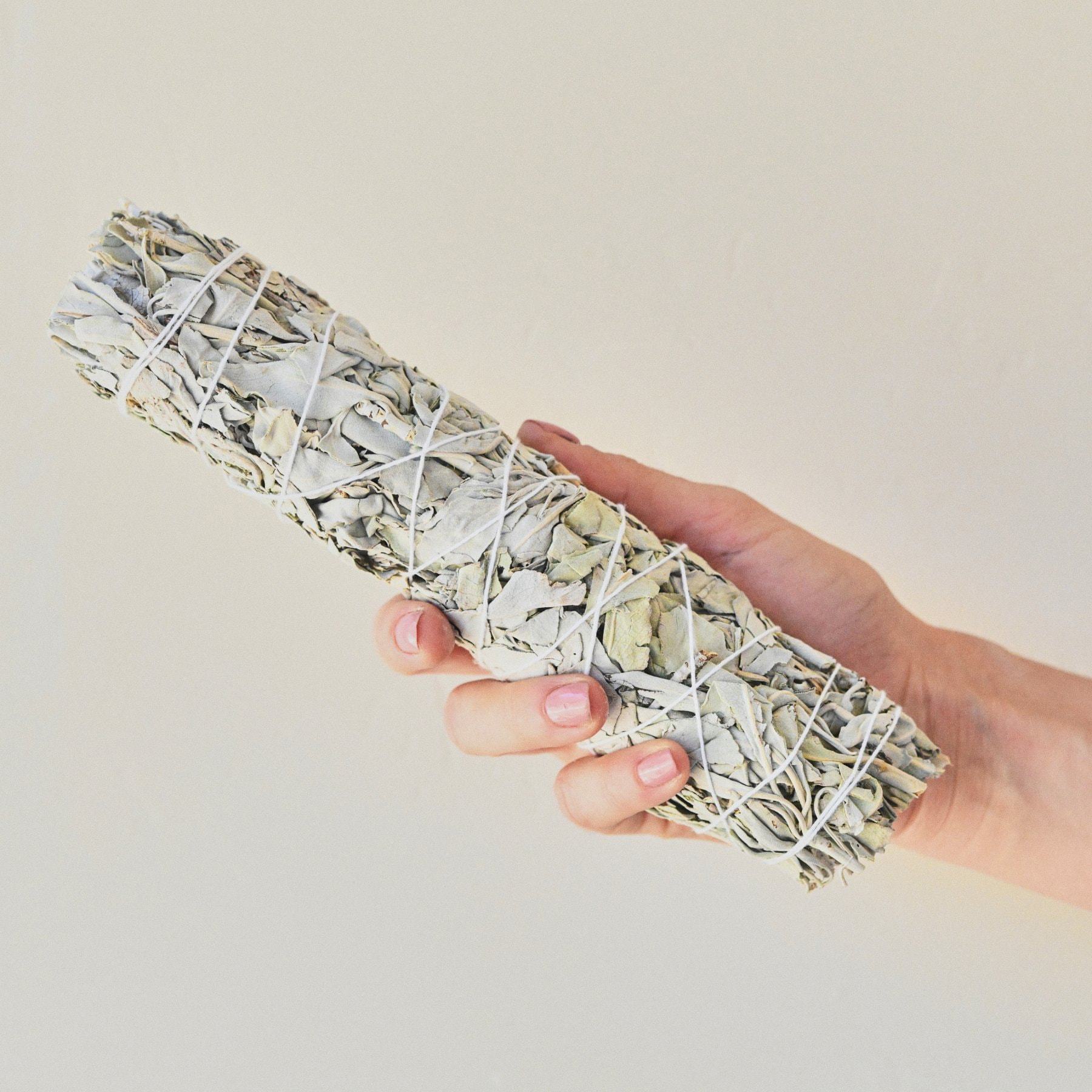
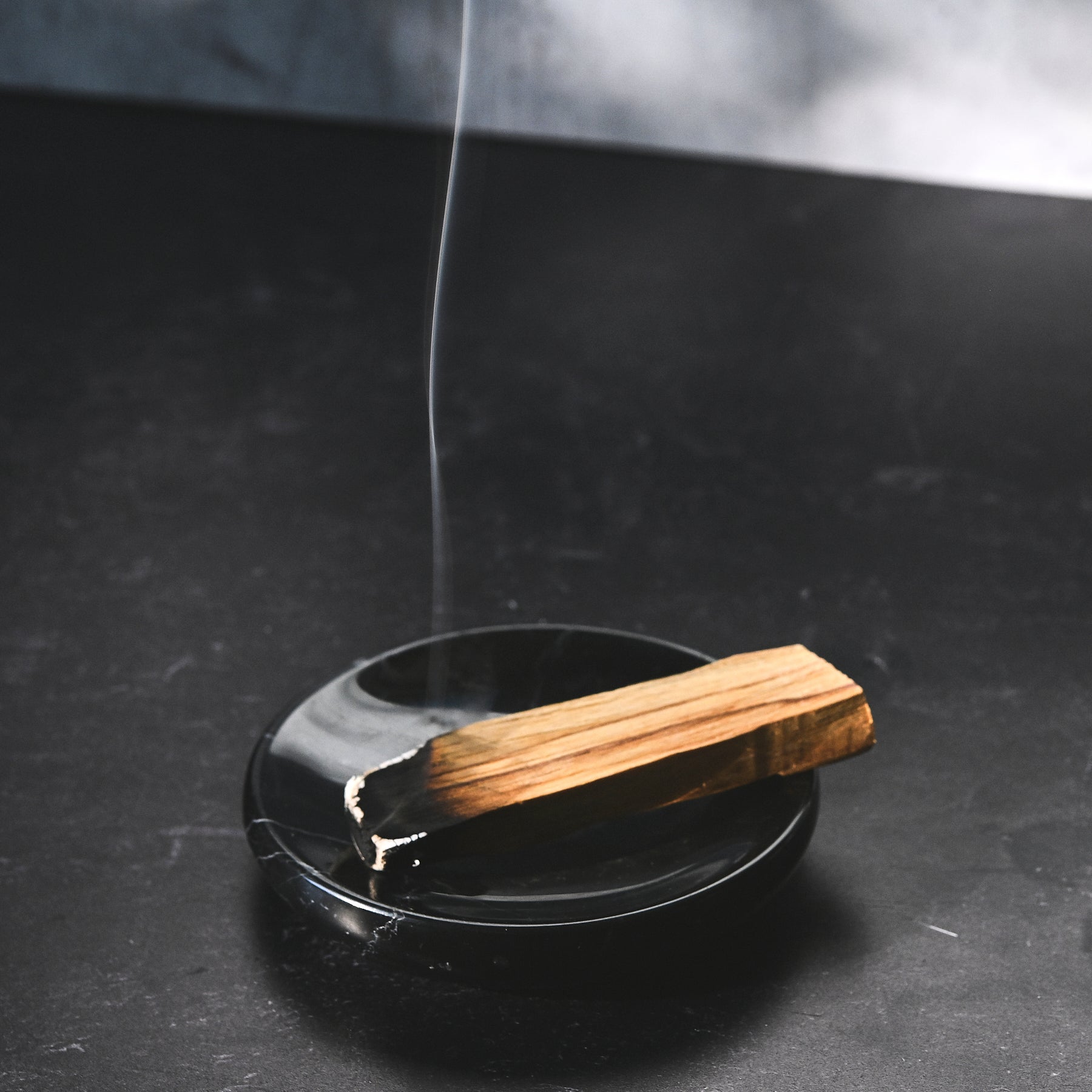
Smoke (Sage, Palo Santo, Cedar)

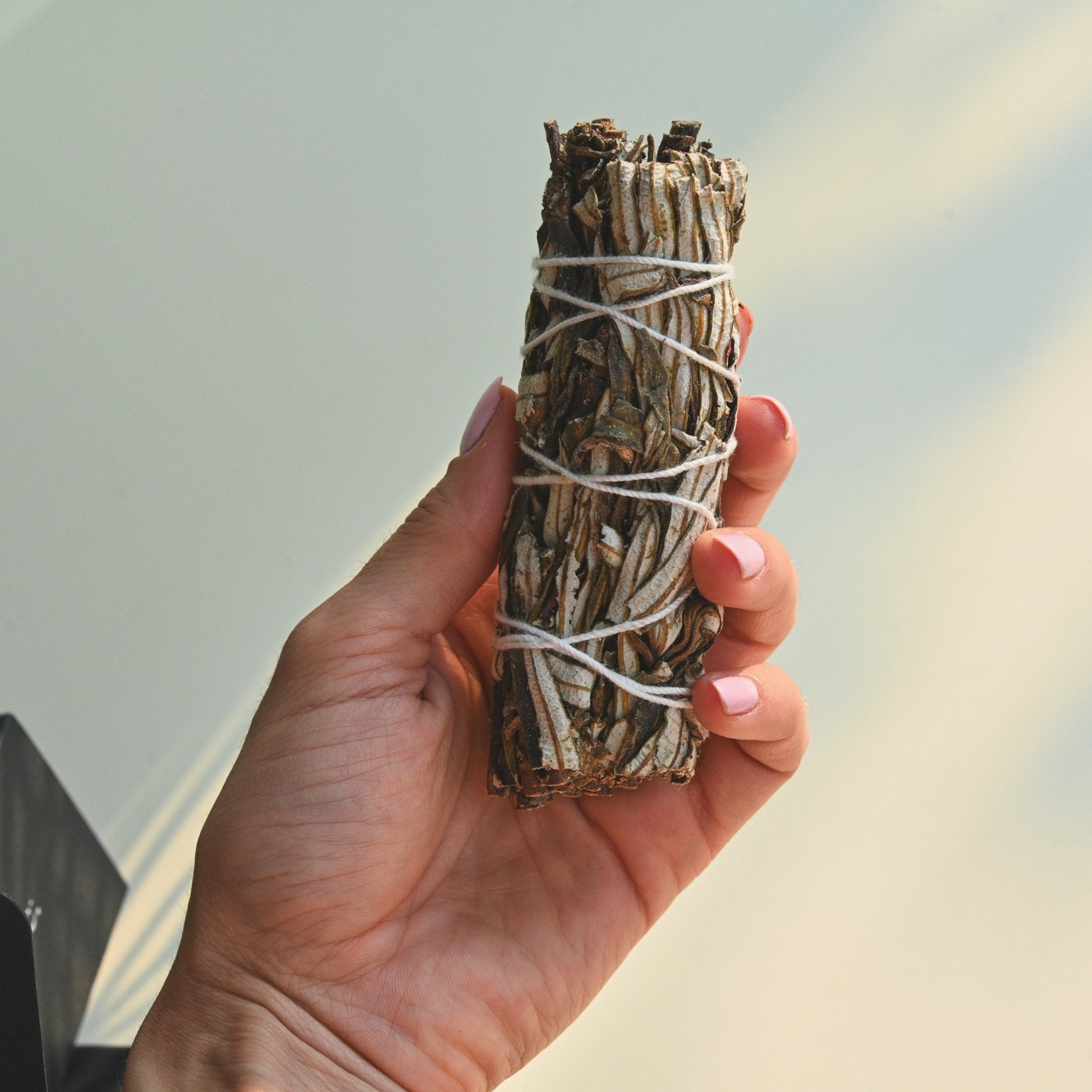
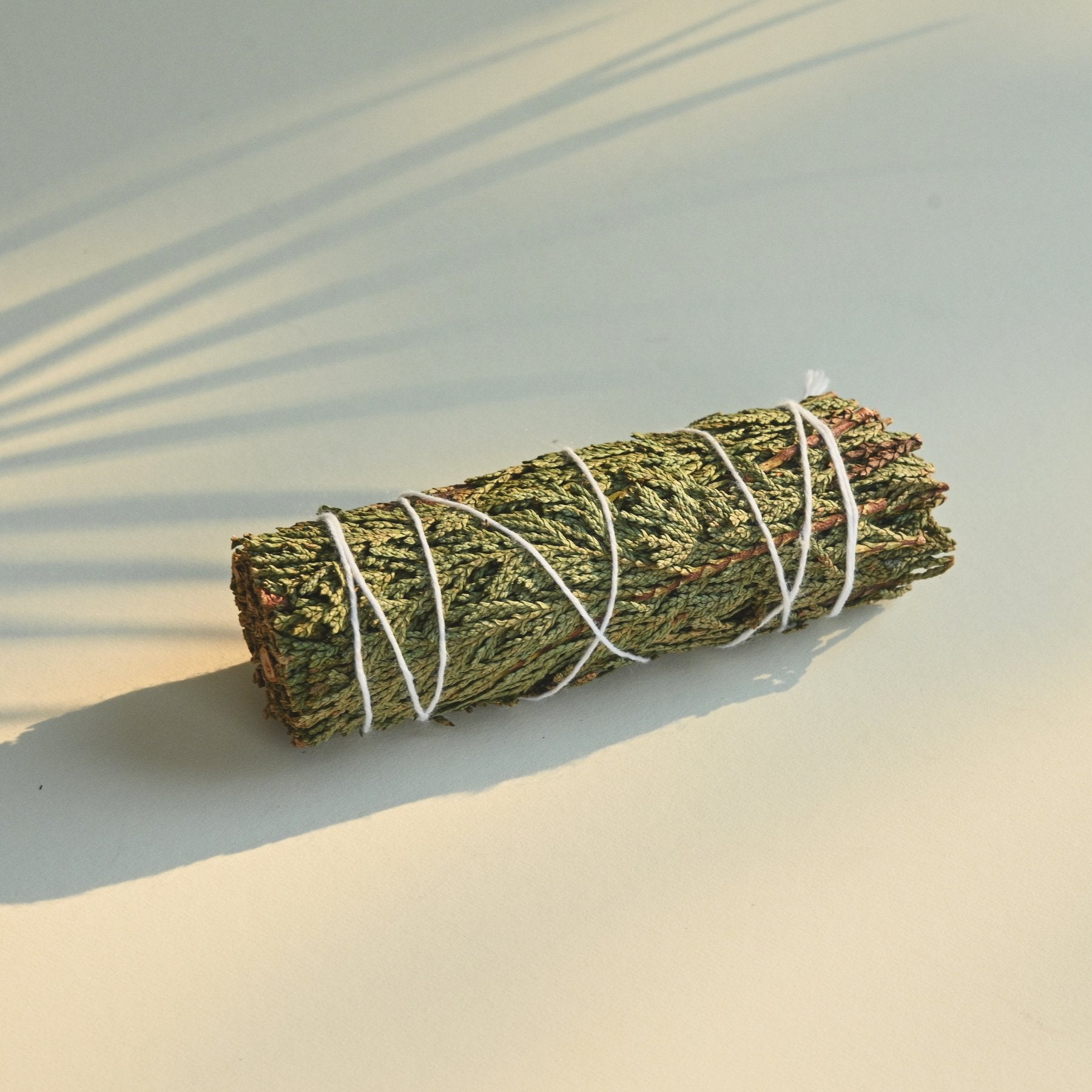
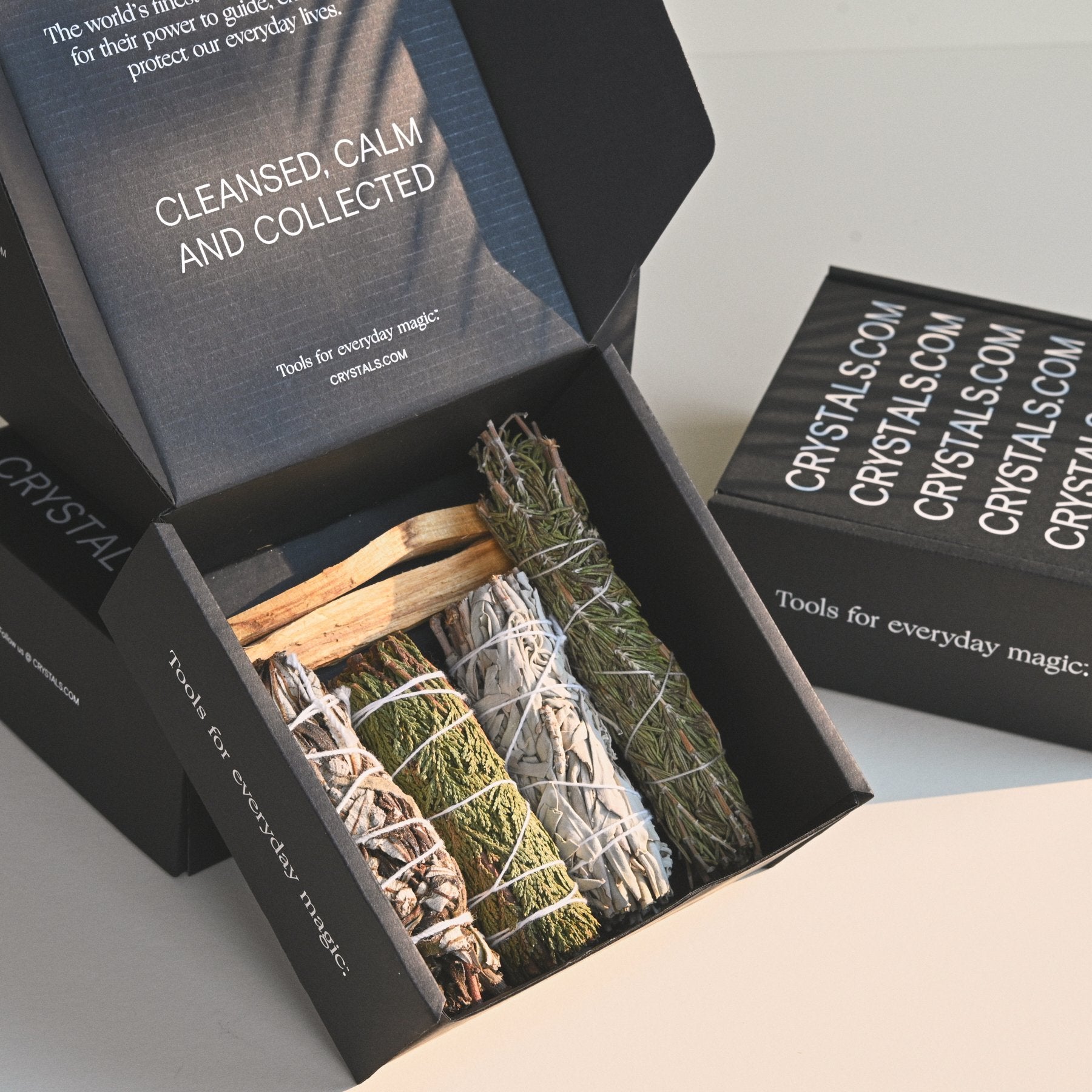
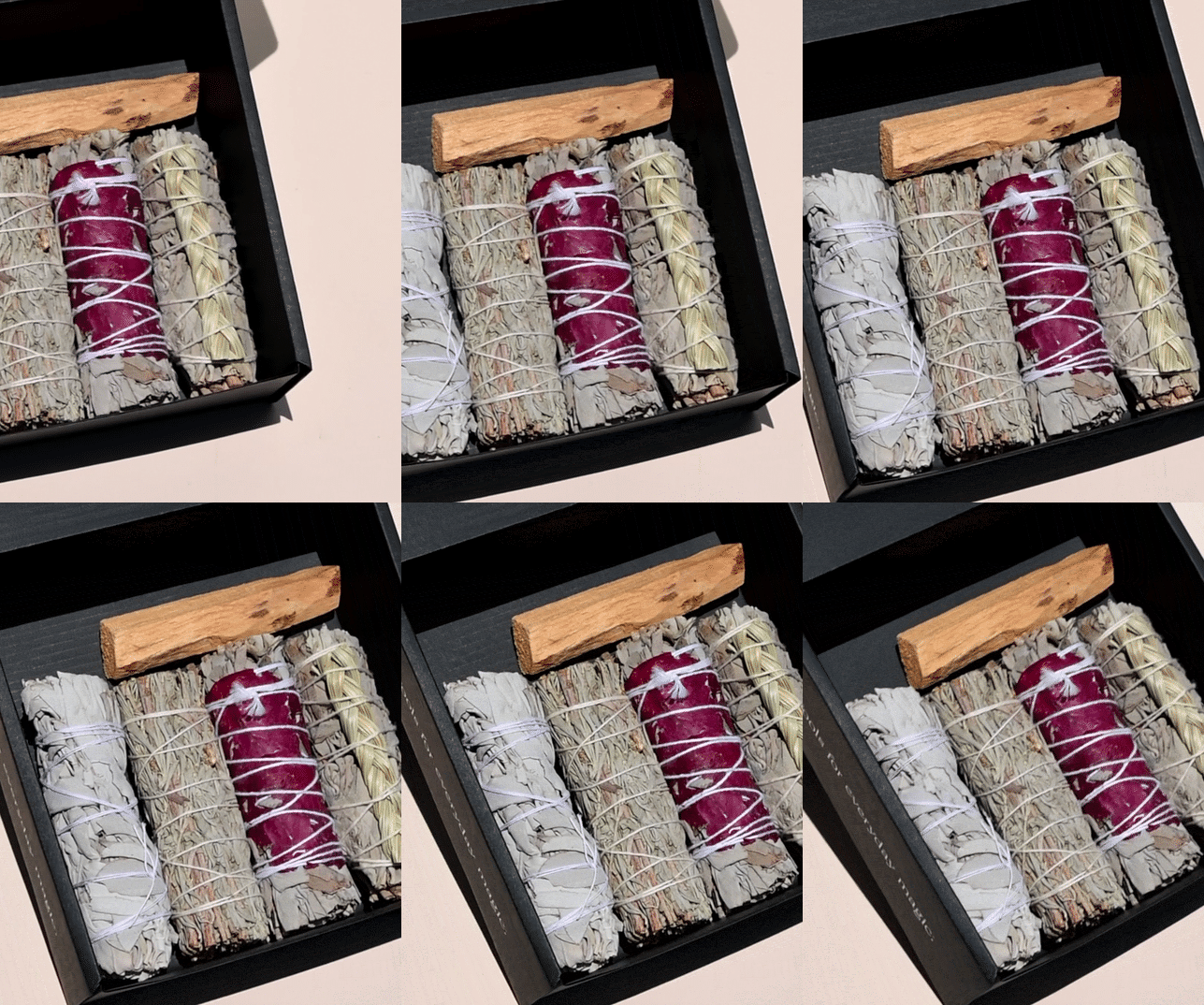
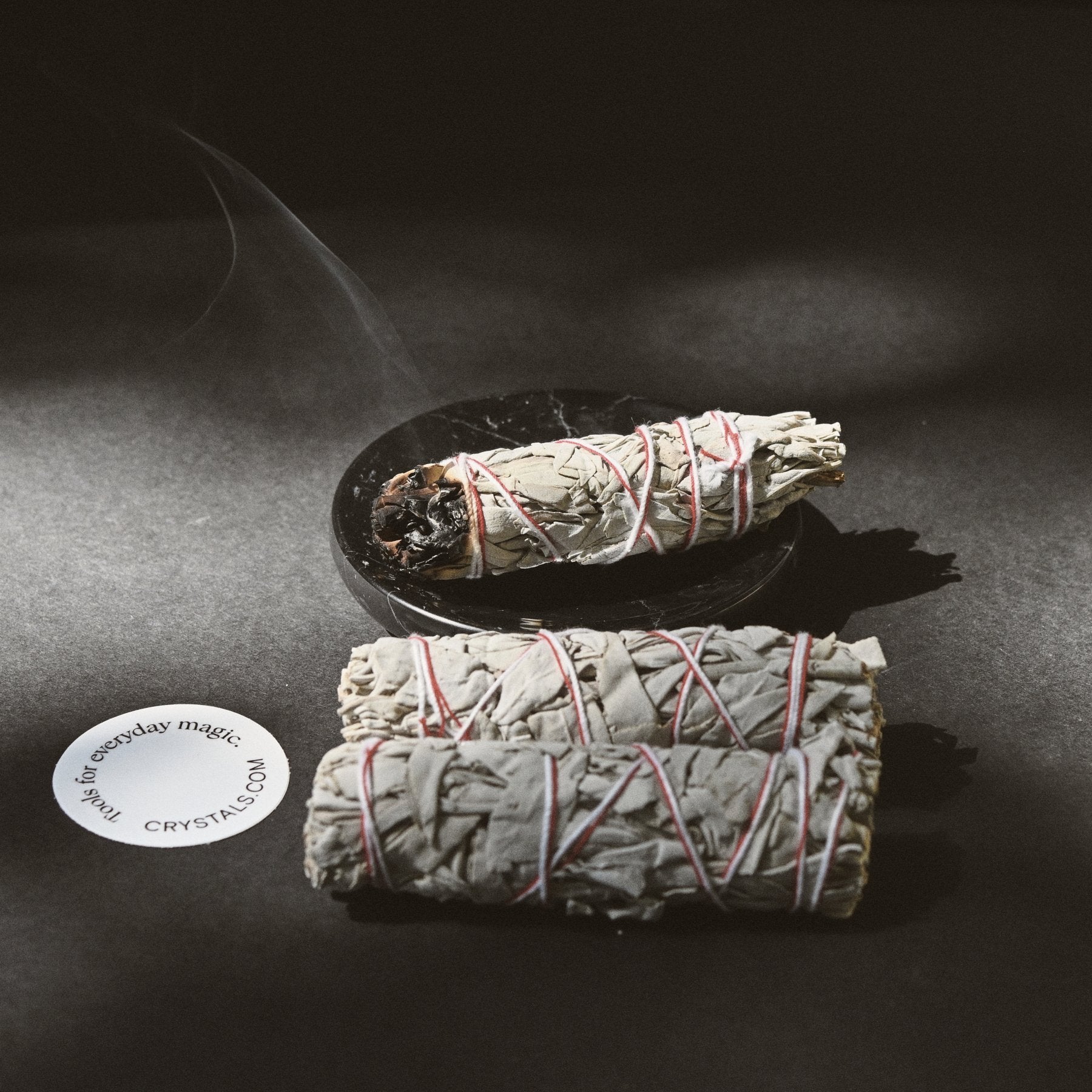
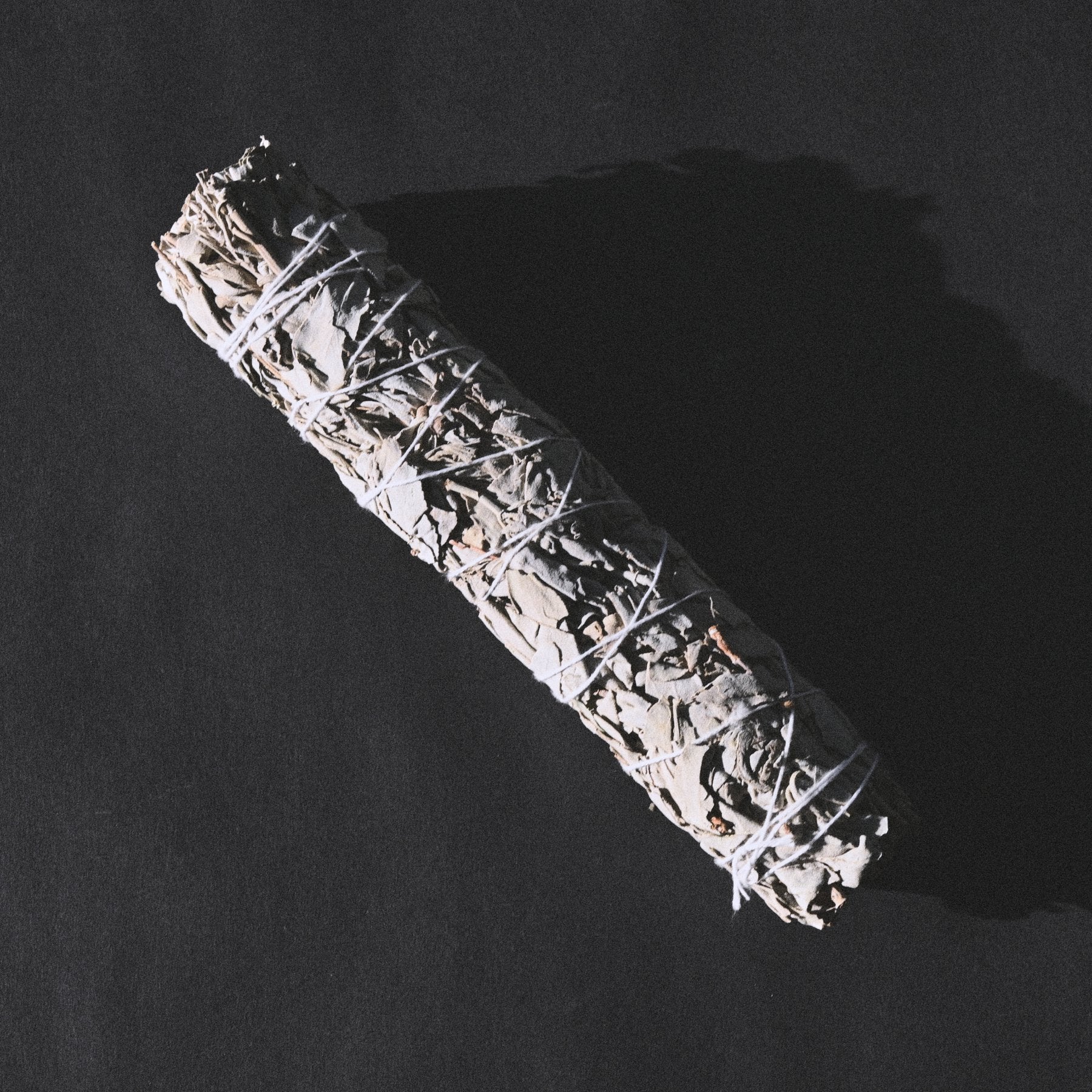
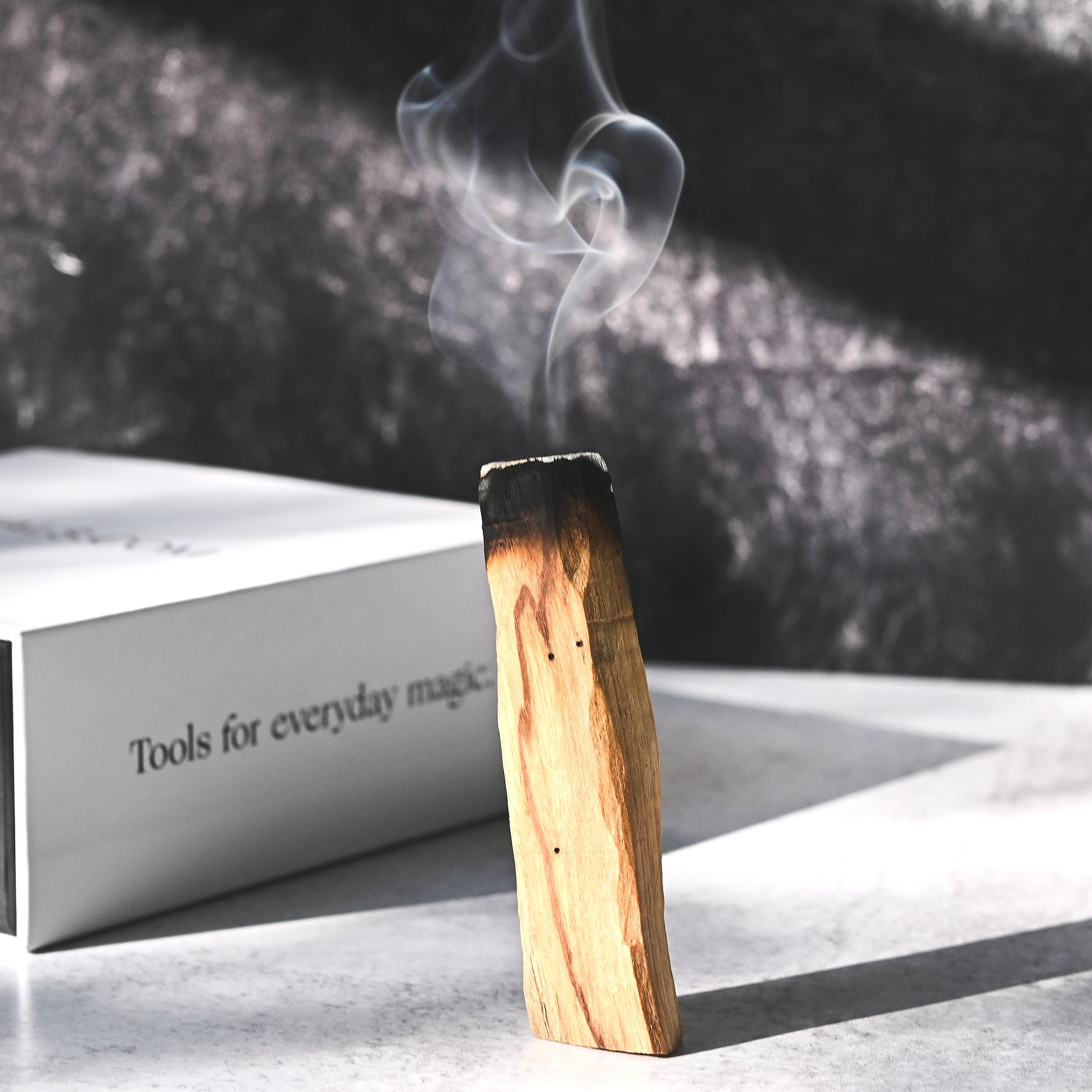
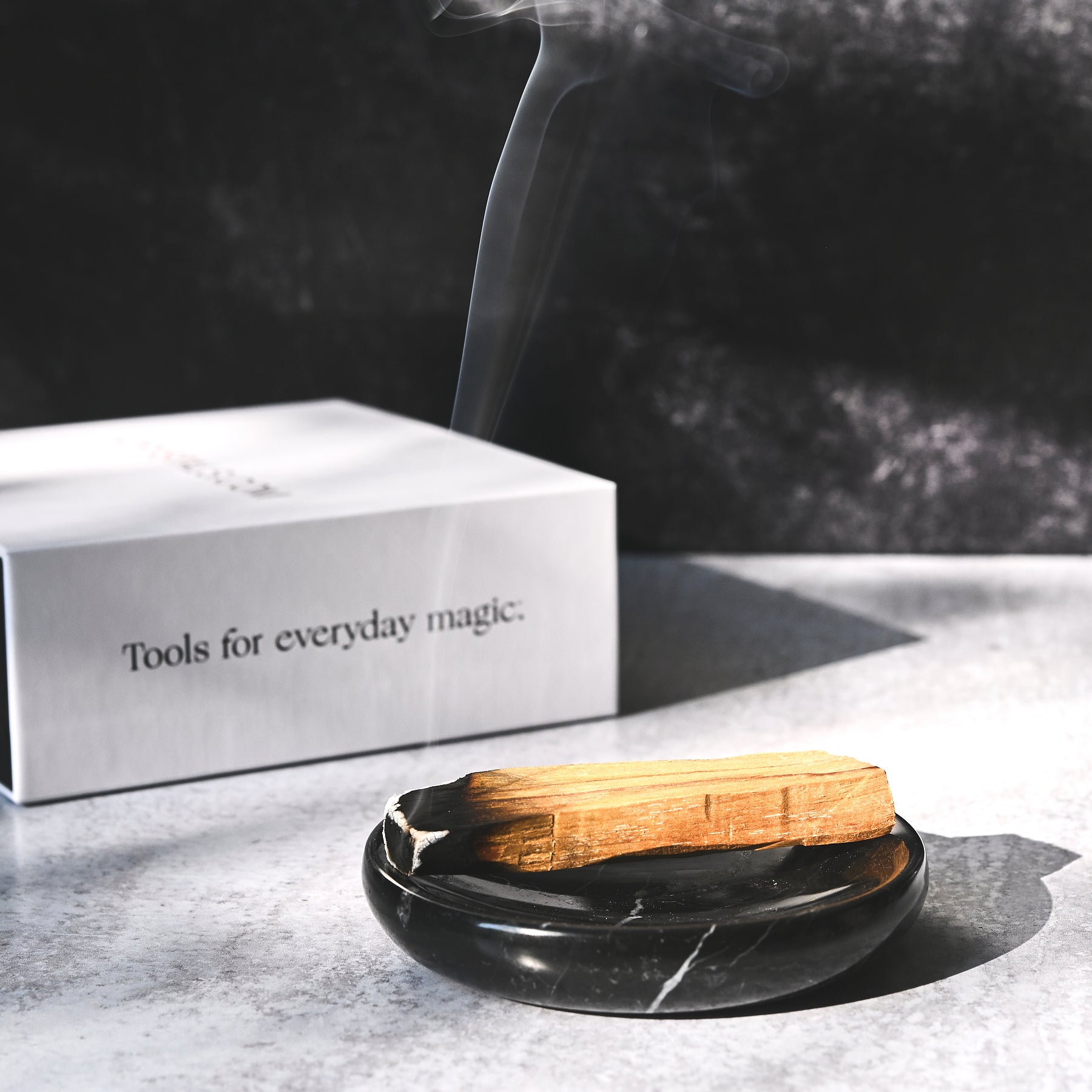
The tradition: Smoke cleansing, sometimes called "smudging," involves passing crystals through the smoke of burning herbs. White sage, palo santo, cedar, and sweetgrass are the most commonly used. The smoke is believed to attach to negative energy and carry it away as it dissipates. This practice has roots in many indigenous cultures worldwide, and the specific plants used carry cultural significance in their communities of origin.

The practical reality: Smoke will not damage crystals. However, prolonged, repeated exposure can leave a faint residue on highly polished surfaces or inside porous stones. If you notice this, a gentle wipe with a dry cloth resolves it.

Safety: Safe for all crystals. Be mindful of fire safety and ventilation when burning herbs indoors.

A note on cultural sensitivity: "Smudging" with white sage is a specific ceremonial practice sacred to certain Indigenous nations. If you are not from a tradition that uses these ceremonies, consider using the general term "smoke cleansing" and sourcing your herbs ethically. Cedar, rosemary, lavender, and garden sage are widely available alternatives that do not carry the same cultural specificity.
Method 06

Earth Burial

The tradition: Burying crystals in the earth, typically overnight or for up to three days, is believed to return them to their origin and allow the earth to absorb and neutralize stored energy. Some practitioners bury stones in their garden, in a houseplant pot, or at the base of a tree they feel connected to.

The practical reality: Soil contains moisture, organic acids, and microorganisms. For hard, non-porous stones (Mohs 7+), this is generally fine. For softer or porous minerals, soil burial can cause staining, etching, or moisture damage. If you practice earth burial, wrap the stone in a natural cloth to reduce direct soil contact.

Safety:

  • Safe: Quartz family, jasper, agate, tourmaline, garnet (Mohs 7+)
  • Avoid burying: Selenite, calcite, fluorite, malachite, pyrite, opal, turquoise, lapis lazuli (porous or water-sensitive)
Method 07

Salt (Dry Salt or Saltwater)

The tradition: Salt is one of the oldest purification symbols in human history, used across nearly every culture. The practice involves burying crystals in a bowl of sea salt, Himalayan pink salt, or placing them in saltwater. Salt is believed to be deeply absorptive, drawing out and neutralizing negative energy. After use, the salt is typically discarded rather than reused.

The practical reality: This is the cleansing method that causes the most damage to crystals, and we want to be direct about that. Salt is abrasive. Even dry sea salt can scratch any stone softer than Mohs 7. Saltwater is worse: it can corrode metallic minerals, penetrate micro-fractures and expand when dry (causing cracking), etch polished surfaces, and accelerate oxidation on iron-bearing stones like pyrite and hematite.

Safety:

  • Dry salt, briefly: Only for Mohs 7+ stones: clear quartz, amethyst, jasper, agate. Even then, do not leave them buried for more than a few hours.
  • Saltwater: We do not recommend saltwater immersion for any specimen-quality crystal. The risk of damage is high and the cleaning benefit over plain water is negligible.
  • Never use salt on: Selenite, calcite, fluorite, malachite, pyrite, opal, turquoise, labradorite, moonstone, lapis lazuli, hematite, or any stone with visible fractures
If you already used saltwater: Rinse the stone immediately with plain lukewarm water (if the stone is water-safe), then dry thoroughly with a soft cloth. Inspect for dulling or surface etching. The damage from salt is cumulative, so stopping now prevents further deterioration.

4 Crystal Charging Methods

In the ritual framework, "charging" is distinct from "cleansing." Cleansing removes. Charging adds. You are setting a fresh intention, amplifying the stone's purpose, or simply reconnecting with it. Here are the most common methods.

Charging 01

Sunlight

The tradition: Sunlight charging is considered one of the most powerful methods. Practitioners place their crystals in direct sunlight, typically for a few hours during the morning, to infuse them with solar energy. Sunrise is considered especially potent in many traditions.

The practical reality: This is the method that requires the most caution. Ultraviolet radiation from the sun causes irreversible color fading in many minerals. The vibrant purple of your amethyst, the blush of your rose quartz, the golden hue of your natural citrine: all of these colors are produced by specific atomic-level defects in the crystal lattice. UV light literally rearranges those defects. The color loss is permanent. No amount of moonlight, intention, or re-cleansing will bring it back.

Stones That Fade in Sunlight
  • Amethyst - Fades to pale gray or cloudy white. One of the most UV-sensitive common crystals.
  • Rose quartz - Loses its pink color, can turn nearly white.
  • Citrine (natural) - Natural citrine is rare and its color is particularly vulnerable. Read our citrine guide for more.
  • Smoky quartz - The smoky color is radiation-induced and UV-reversible.
  • Fluorite - Many fluorite colors are unstable under UV exposure.
  • Kunzite - Extremely photosensitive. Can fade dramatically even with indirect sunlight over time.
  • Ametrine - Both the amethyst and citrine zones are vulnerable.
  • Spirit quartz - Same mechanism as amethyst.

Sun-safe stones: Jasper (all varieties), black tourmaline, carnelian, red garnet, obsidian, howlite, most opaque dark-colored stones. If a stone's color comes from its fundamental chemical composition rather than lattice defects, it is generally UV-stable.

Our recommendation: If you want to sun-charge, limit exposure to 30 minutes of early morning light (lower UV intensity) and only use confirmed sun-safe stones. Better yet, use moonlight. You get the same ritual experience with zero risk.
Charging 02

Moonlight

The tradition: Moonlight charging is the most universally practiced crystal ritual. The full moon is considered the peak time, with many practitioners leaving stones on a windowsill or outdoors from sunset to sunrise. Some traditions assign specific intentions to different moon phases: the new moon for setting intentions, the full moon for amplification, the waning moon for release.

The practical reality: As noted in the cleansing section, moonlight is reflected sunlight at roughly 1/400,000th the intensity. It poses absolutely no risk to any mineral. If you enjoy the ritual of moonlight charging, do it freely and with every stone in your collection. There is no crystal on earth that moonlight can damage.

Safety: Universally safe. The only practical risk is outdoor exposure to dew or rain, so bring stones in before morning or keep them behind glass. See our winter solstice crystals guide for seasonal moon rituals.

Charging 03

Selenite or Quartz Cluster

The tradition: Larger crystals, especially selenite plates and clear quartz clusters, are believed to amplify and charge smaller stones placed on or near them. A selenite charging plate is a staple in many crystal collections for this reason. Clear quartz is considered a "universal amplifier" in metaphysical practice.

The practical reality: Crystals do not transfer energy to other crystals in a way that would alter their properties. But this method is completely safe, requires no consumables, and gives your collection a beautiful display arrangement. A selenite plate with a few tumbled stones on it is visually stunning and does no harm whatsoever.

Safety: Safe for all stones. Just remember that selenite (Mohs 2) scratches easily, so do not drag harder stones across its surface.

Charging 04

Earth (Grounding)

The tradition: Placing crystals directly on soil, in a garden, or at the base of a tree is believed to reconnect them with the earth's natural energy field. This is often described as "grounding" the stone and is considered both cleansing and charging simultaneously. The earth is seen as a source of steady, stabilizing energy.

The practical reality: Direct soil contact means moisture exposure, organic acids, and potential staining. Same safety rules as the earth burial cleansing method. Stick to hard stones (Mohs 7+), or place a cloth barrier between the stone and the soil.


The Crystal Safety Guide

This is the most important section of this entire article. Bookmark it. Screenshot it. Refer to it before you clean any crystal. The damage from wrong methods is often permanent.

Water Safety by Mohs Hardness

Category Mohs Hardness Stones Water?
Safe 7+ Clear quartz, amethyst, rose quartz, citrine, smoky quartz, jasper (all), agate, carnelian, tiger's eye, tourmaline, garnet Yes. Rinse freely. Dry with soft cloth.
Caution 5 - 6.5 Moonstone, labradorite, obsidian, apatite, rhodonite, sodalite Brief rinse OK. Do not soak. Dry immediately.
Never Below 5 or water-reactive Selenite (dissolves), malachite (copper release), calcite, fluorite, pyrite (rusts), desert rose, halite (dissolves), angelite, lepidolite, turquoise, kyanite (along cleavage) No water. Dry cloth or compressed air only.

Sunlight Safety

Category Stones Sunlight?
Safe Jasper (all varieties), black tourmaline, carnelian, red garnet, obsidian, howlite, onyx, hematite, black kyanite, lava stone Yes. These colors are chemically stable.
Limited Clear quartz, moonstone, labradorite, tiger's eye Brief sun OK (under 1 hour). Minimal color risk but prolonged heat can stress fractures.
Fades Amethyst, rose quartz, citrine (natural), smoky quartz, fluorite, kunzite, ametrine, spirit quartz, celestite, opal, aquamarine No direct sunlight. Color loss is permanent and irreversible. Display away from windows.
The Universal Safe Methods

When In Doubt, Use These

These methods are safe for every crystal, every mineral, every specimen, regardless of hardness, composition, or porosity:

  • Moonlight - Zero UV risk. Zero moisture risk (indoors). Works for every stone.
  • Selenite plate - No physical or chemical interaction. Safe for all.
  • Sound cleansing - Vibrations from singing bowls or bells. Harmless to every mineral.
  • Smoke - Brief exposure to sage, cedar, or palo santo smoke. No mineral risk.
  • Dry microfiber cloth - The simplest physical cleaning method. Works on everything.

How Often Should You Cleanse Your Crystals?

There is no scientific answer to this question, and anyone who gives you a specific number (weekly, monthly, after every use) is sharing their personal practice, not a universal rule. Here is what we suggest:

Physical Cleaning: Monthly

If you display your crystals openly, they collect dust, skin oils from handling, and ambient grime. A monthly wipe-down with a dry or slightly damp microfiber cloth is good mineral care. For water-safe stones, a gentle rinse under lukewarm water once a month keeps them looking their best. This is the same care a mineral museum applies to its display specimens.

For stones in a closed display case or stored in cloth pouches, cleaning a few times a year is sufficient.

Ritual Cleansing: Whenever It Feels Right

If your crystal practice is ritual-based, cleanse when your intuition tells you to. Common trigger points people use:

  • When you first bring a new crystal home
  • After using a stone during a difficult emotional period
  • After someone else has handled your crystals
  • On the full moon (a natural monthly rhythm)
  • At the start of a new season or personal chapter
  • When a stone simply does not "feel" the same to you

There is no wrong frequency. The practice is yours. The only thing we ask is that you use a safe method for the specific stone. Check the safety table above before choosing your approach.


Tools for Cleansing & Charging

If you want a dedicated cleansing and charging setup, selenite is the most practical foundation. It is universally safe, requires no consumables, and serves double duty as a beautiful display piece.

Why selenite is ideal for this: It is affordable, widely available in large flat forms (plates, bars, bowls), and its soft satin-spar surface will not scratch any stone you place on it. Just remember that selenite itself is delicate. Handle it gently, keep it dry, and store it away from direct sunlight for best longevity.

Frequently Asked Questions

Can I cleanse all my crystals at the same time?

Yes, as long as you use a method that is safe for every stone in the group. Moonlight, sound, and smoke are all universally safe. If you want to use water, separate out any water-sensitive stones first (selenite, malachite, calcite, fluorite, pyrite). A good practice is to group your crystals by hardness so you always know which methods apply.

Do I need to cleanse crystals before using them for the first time?

From a practical standpoint, yes. Crystals have been handled by miners, dealers, shippers, and warehouse staff before reaching you. A gentle physical cleaning removes dust and oils. From a ritual standpoint, many practitioners consider it important to clear any associations the stone may carry from its journey. Either way, a quick cleanse when you first receive a crystal is reasonable care.

Can I put amethyst in sunlight?

We strongly recommend against it. Amethyst gets its purple color from iron impurities and natural irradiation within the crystal lattice. Ultraviolet light reverses this process, causing the color to fade permanently. Even a few hours of strong direct sun can visibly lighten amethyst. Display it away from south-facing windows and never leave it outdoors during the day. Use moonlight or selenite for charging instead.

Is selenite really self-cleansing?

In the metaphysical tradition, selenite is considered one of the few minerals that does not accumulate negative energy and therefore never needs cleansing itself. From a mineralogical perspective, no crystal is "self-cleansing" in a measurable way. Practically speaking, selenite does need occasional dusting like any display piece. Just use a dry, soft cloth. Never water.

Can I use tap water to cleanse crystals?

For water-safe stones (Mohs 7+), tap water is perfectly fine. Some practitioners prefer natural spring water or filtered water, but from a mineral-care perspective, standard tap water will clean your quartz just as effectively. Avoid hot water, as sudden temperature changes can stress fractures in some stones. Lukewarm or cool tap water with a gentle wipe is all you need.

What happens if I accidentally put selenite in water?

Selenite is a form of gypsum and is water-soluble. A brief accidental splash will not destroy it, but the surface may become slightly rough or cloudy. Extended soaking (hours) can cause visible dissolution, pitting, and structural weakening. If your selenite got briefly wet, dry it immediately and thoroughly with a soft cloth. Inspect it for surface changes. The stone is still usable, but repeated water exposure will degrade it over time.

Does the full moon actually matter, or can I use any moon phase?

From a physical standpoint, moonlight is moonlight regardless of the phase. The full moon is brighter, but even at peak brightness, moonlight is far too faint to affect any mineral. The emphasis on the full moon is entirely traditional and symbolic. If the full moon ritual resonates with you, honor it. If you prefer a new moon or waning crescent for your practice, that works too. The stones do not know the difference. Your intention might.

Can crystals break from the wrong cleansing method?

Yes. The most common scenario is thermal shock: placing a cold stone in hot water (or vice versa) can cause fractures, especially in minerals with perfect cleavage like fluorite. Salt can penetrate existing micro-cracks and expand as it crystallizes, widening the fracture. Water can dissolve water-soluble minerals outright. The damage is usually gradual and cumulative rather than instant, which makes it easy to miss until it is too late. When in doubt, stick to the universal safe methods: moonlight, selenite, sound, or a dry cloth.


Find Your Crystal

Not sure where to start? Our quiz matches you with stones based on what you are actually drawn to, not what the internet tells you to buy.

Take the Crystal Quiz
Join the Inner Circle

Get Crystal Guides in Your Inbox

New arrivals, sourcing stories, and guides like this one. No spam. Unsubscribe anytime.

Free shipping on orders over $150. Take the Crystal Quiz

You're In

Check your inbox for a welcome from Crystals.com.

💎

Crystal Quiz

Think you know your crystals? Test your knowledge, build your streak, and challenge your friends.

Play Now