Shop Crystals for This Energy
Free shipping on orders over $150
Winter Solstice Crystals 2026: The 7 Best Stones for the Longest Night
The winter solstice falls on December 21, 2026. These are the seven minerals with the deepest historical connections to midwinter traditions — and the science behind each stone.
The winter solstice marks the shortest day and longest night of the year. For thousands of years, civilizations from Scandinavia to China have observed this turning point with rituals centered on light, reflection, and renewal. Crystals and gemstones have been part of these traditions for as long as humans have collected them.
This is not a list of stones that "have winter energy." Every crystal recommended here has a documented cultural history tied to midwinter practices, solstice traditions, or the specific symbolic themes of the season — darkness, light returning, grounding, and introspection.
The 7 Winter Solstice Crystals
2026 Winter Solstice
Date: Sunday, December 21, 2026
Time: 3:50 PM EST (20:50 UTC)
What happens: The Earth's North Pole reaches its maximum tilt away from the Sun. The Northern Hemisphere receives the fewest hours of daylight. After this moment, days begin to lengthen again.
Historical names: Yule (Norse/Germanic), Saturnalia (Roman), Dongzhi (Chinese), Shab-e Yalda (Persian), Inti Raymi (Incan)
Why Crystals and the Winter Solstice
The connection between minerals and midwinter dates back millennia. Neolithic monuments like Newgrange in Ireland (built around 3200 BCE) were aligned to catch the solstice sunrise — and archaeologists have found quartz and other mineral offerings inside these structures.
The Romans exchanged gemstones during Saturnalia. Norse cultures valued amber and garnet during Yule. In Chinese Dongzhi tradition, jade objects were presented as symbols of renewal.
The common thread is not mysticism — it is symbolism. During the darkest time of year, humans reach for objects that represent light, warmth, protection, and the return of the sun. Crystals, with their natural capacity to refract light and their connection to the deep earth, have filled that role across cultures.
The 7 Best Crystals for Winter Solstice 2026
1. Selenite (Selenite Cleansing Wand) — The Light Bearer
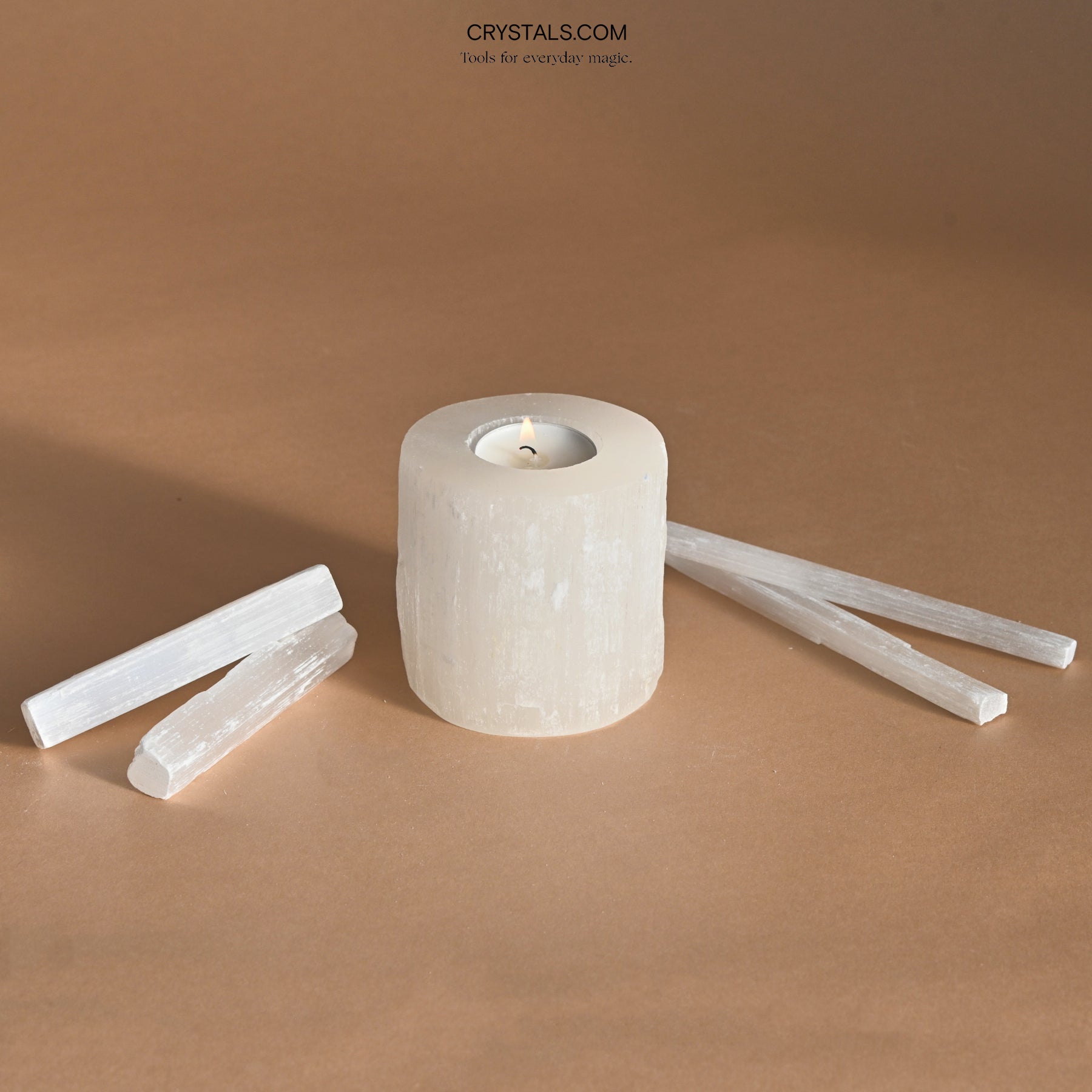
Named after Selene, the Greek goddess of the moon, selenite is a variety of gypsum that produces a distinctive pearly luminescence. Its connection to the winter solstice is direct: selenite literally glows when light passes through it, making it a natural symbol for the return of light during the darkest night.
Ancient Greeks placed selenite in windows to catch moonlight during winter. The stone's translucency creates a soft, warm glow that makes it a natural centerpiece for solstice gatherings. A selenite wand or candle holder on a mantelpiece during the longest night is a tradition that predates most modern crystal practices.
Important care note: Selenite is Mohs 2, extremely soft and water-soluble. Never submerge in water. Handle with dry hands. Keep away from humid environments.


Browse: All Selenite
2. Smoky Quartz (Smoky Quartz Palm Stone) — The Grounding Stone
Smoky quartz gets its brown-to-black color from natural irradiation of aluminum impurities in silicon dioxide. It is one of the few naturally dark transparent gemstones, and its earth tones connect it visually and symbolically to the deep winter landscape.
Scotland's national gem is smoky quartz (known as "cairngorm" after the Cairngorm Mountains), and it has been worn in traditional Highland dress during Hogmanay — the Scottish New Year celebration closely tied to the winter solstice. The Druids also considered smoky quartz sacred to the winter months.
Mineralogically, smoky quartz is durable (Mohs 7), safe in water, and resistant to fading — a practical daily stone for winter.


Browse: All Smoky Quartz | Grounding Collection
3. Garnet — The Midwinter Gem
Garnet is the January birthstone, placing it squarely in the heart of winter. But its connection to the season goes much deeper. The word "garnet" comes from the Latin "granatum" (pomegranate), and the pomegranate is one of the oldest winter solstice symbols — central to the Greek myth of Persephone's descent into the underworld, which the ancients used to explain the seasons.
Norse warriors carried garnet into battle and were buried with it. Medieval Europeans exchanged garnets as midwinter gifts, believing the stone's deep red glow held residual sunlight. Bohemian garnet jewelry became a signature Christmas gift tradition in 18th-century Central Europe — a tradition that persists today.
Garnet is also remarkably durable. At Mohs 6.5-7.5, it handles daily winter wear without concern.


4. Labradorite — The Northern Lights Stone
Labradorite displays a phenomenon called labradorescence: as light enters the stone, it refracts between internal layers of feldspar, producing flashes of blue, gold, green, and violet. The effect is strikingly similar to the aurora borealis — the northern lights that are most visible during the long winter nights around the solstice.
The stone was first formally described in 1770 from specimens found in Labrador, Canada — Inuit territory. According to Inuit oral tradition, the northern lights were once trapped in rocks along the coast, and a warrior struck them free with his spear, but some of the light remained frozen in the stone. This is legend, not science, but it explains why labradorite has been associated with winter light traditions for centuries.
The optical effect is real physics: thin lamellae within the feldspar crystal create interference patterns that selectively reflect certain wavelengths, producing that signature flash.


Browse: All Labradorite
5. Black Tourmaline (Black Tourmaline Rough) — Protection Through the Dark
Black tourmaline (schorl) is a boron silicate mineral with a measurable piezoelectric property — it generates an electrical charge under pressure. It is the most abundant tourmaline species, comprising roughly 95% of all tourmaline found in nature.
Black stones have been carried as protective talismans during the dark months across nearly every culture. Roman soldiers carried black tourmaline. Medieval miners wore it to protect against "earth spirits" underground during the short winter working days. The practical reality: dark minerals are among the most common in the earth's crust, so they were readily available for everyday use.
At Mohs 7-7.5, black tourmaline is one of the most durable stones for winter bracelet wear — resistant to scratching, unaffected by cold temperatures, and stable in any light condition.

Browse: Protection Crystals | Grounding Collection
6. Clear Quartz — The Amplifier
Clear quartz is pure silicon dioxide with no significant trace element coloring. Its transparency and ability to refract light into prismatic spectrums made it one of the first minerals humans associated with light and clarity. The word "crystal" itself comes from the Greek "krustallos" — meaning ice. The ancients believed quartz was water frozen so deeply it could never melt.
At Newgrange — the 5,200-year-old passage tomb in Ireland aligned to the winter solstice sunrise — the facade was decorated with white quartz stones. When the solstice sun entered the passage and struck these quartz surfaces, the entire chamber would illuminate. This was not accidental; it was engineered.
Clear quartz's piezoelectric property (shared with tourmaline) means it generates a measurable electrical charge under mechanical stress. This is the same property that makes quartz the oscillator in modern watches and electronics.

Browse: All Clear Quartz
7. Amethyst — Stillness & Reflection
Amethyst is quartz colored purple by iron impurities in an Fe4+ oxidation state, activated by natural irradiation. The name comes from the Greek "amethystos" — "not intoxicated" — reflecting an ancient belief that the stone promoted clear-headedness.
The winter solstice has been observed as a time for introspection across virtually every culture that marks it. The longest night invites stillness. Amethyst has been associated with contemplation and mental clarity since at least the Roman period (it also features in our guide to calming crystals for anxiety) — Pliny the Elder wrote about it, and Catholic bishops wore amethyst rings to symbolize spiritual sobriety.
Amethyst is sensitive to prolonged UV exposure (it can fade), so the short winter days are actually ideal for displaying amethyst pieces near windows. Less sun means less risk of color degradation.
Browse: All Amethyst | Calm Collection
How to Use Crystals for the Winter Solstice
There is no single correct way to incorporate crystals into a solstice observance. These are some traditions and practices that have historical roots:
Create a Light Altar
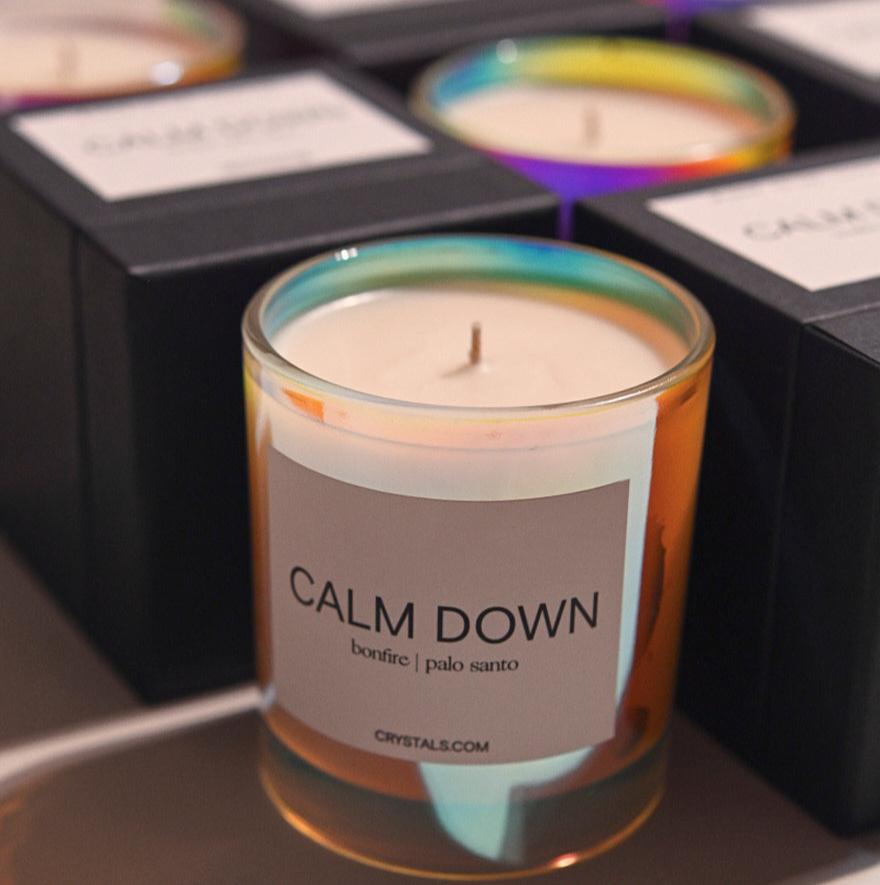
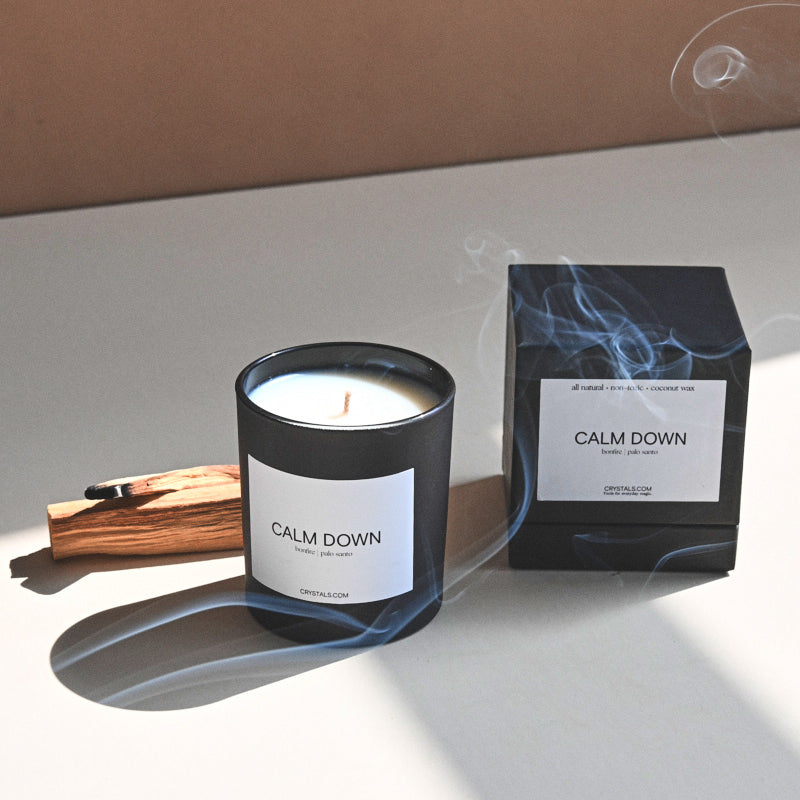
The simplest solstice tradition: arrange crystals around a candle. A selenite candle holder with clear quartz points radiating outward creates a centerpiece that catches and refracts candlelight. This is a modern version of a practice documented in Scandinavian Yule celebrations for centuries.
Wear a Stone Through the Longest Night
The tradition of wearing a stone from sundown to sunrise on the solstice appears in multiple European folk traditions. A garnet bracelet or labradorite bracelet worn through the night and into the first sunrise is a simple, personal observance.
Gift a Stone
Exchanging gemstones during the winter solstice predates Christmas gift-giving by millennia. The Romans exchanged gems during Saturnalia. A natural crystal — sourced, real, and documented — carries more meaning than most things wrapped in paper. Free shipping on orders over $150.
Set Intentions for the Returning Light
Many solstice practitioners use the turning point of the year to set intentions. Writing them down and placing the paper beneath a crystal is a common modern practice rooted in older traditions of making pledges at Yule. Smoky quartz palm stones are a tactile companion for this kind of quiet work.
A Note on Winter Crystal Care
Cold Weather Considerations
- Temperature shock: Avoid taking crystals from a warm interior to freezing outdoor temperatures rapidly. Sudden thermal change can fracture quartz-family minerals along existing internal inclusions.
- Selenite and moisture: Winter humidity from indoor heating is generally low, which is ideal for selenite. But avoid placing selenite near humidifiers or in bathrooms.
- Amethyst and winter windows: The short daylight hours of winter make it safer to display amethyst near windows than during summer. Less UV exposure means less risk of color degradation.
- Bracelet care: Cold weather makes elastic slightly stiffer. Give stretch-cord bracelets a moment to warm to skin temperature before stretching them on. This extends the cord's life.
Frequently Asked Questions
What are the best crystals for the winter solstice?
The seven stones with the deepest historical connections to midwinter traditions: Selenite (light and purification), Smoky Quartz (grounding), Garnet (midwinter gem and January birthstone), Labradorite (northern lights connection), Black Tourmaline (protection), Clear Quartz (light amplification), and Amethyst (reflection and stillness).
When is the winter solstice 2026?
The 2026 winter solstice occurs on Sunday, December 21, 2026, at 3:50 PM EST (20:50 UTC). It is the shortest day and longest night of the year in the Northern Hemisphere.
What is the spiritual meaning of the winter solstice?
Across cultures — Norse Yule, Roman Saturnalia, Chinese Dongzhi, Persian Shab-e Yalda, Incan Inti Raymi — the winter solstice represents the triumph of light over darkness and the beginning of the sun's return. It is observed as a time for introspection, intention-setting, community gathering, and gift-giving. These traditions predate any single religion.
How do you cleanse crystals for the winter solstice?
For water-safe stones (Mohs 7+: quartz, tourmaline, garnet), a brief rinse under running water is sufficient. For selenite (Mohs 2, water-soluble), use a soft dry cloth or place it on a bed of dried sage or cedar. The long winter night itself is traditionally used for overnight moonlight clearing — no risk of UV fading. For a full breakdown of every method, see our complete crystal cleansing guide.
Can I charge crystals during the winter solstice?
Many practitioners use the solstice for this purpose. The traditional method is to place crystals in moonlight overnight on the solstice eve. This carries no risk of UV damage (unlike sun exposure) and aligns with the cultural significance of the longest night. The morning sunrise on December 22 — the first sunrise of lengthening days — is another traditional charging moment.
What is a winter solstice crystal grid?
A crystal grid is a geometric arrangement of stones, typically with a central stone surrounded by supporting stones in a pattern. For the solstice, common arrangements place selenite or clear quartz at center, with garnet, smoky quartz, and black tourmaline at the outer points. The practice is modern, but the use of geometric mineral arrangements in ritual spaces is documented in Neolithic sites.
What stones are associated with Capricorn season?
The winter solstice marks the beginning of Capricorn season (December 22 – January 19). Traditional Capricorn stones include Garnet (January birthstone), Black Onyx, and Smoky Quartz — all grounding, earthy minerals that reflect the Capricorn archetype. Browse: Capricorn Crystals
What are good crystal gifts for the holidays?
The most universally appreciated crystal gifts: Selenite Wands (from $6), Smoky Quartz Palm Stones ($20), Labradorite Bracelets ($34), and Garnet Bracelets ($34). Every piece ships with a Collector's Info Card. Free shipping over $150.
Discover Your Human Design
Crystals amplify energy — but do you know your unique energy type? Human Design reveals how you're wired to make decisions, work, and rest. It's the owner's manual you were born with.
Explore Human DesignGet 10% Off Your First Order
Plus early access to new arrivals, collector drops, and crystal guides. Join 15,000+ crystal lovers.
Get Crystal Guides in Your Inbox
New arrivals, sourcing stories, and guides like this one. No spam. Unsubscribe anytime.
You're In
Check your inbox for a welcome from Crystals.com.