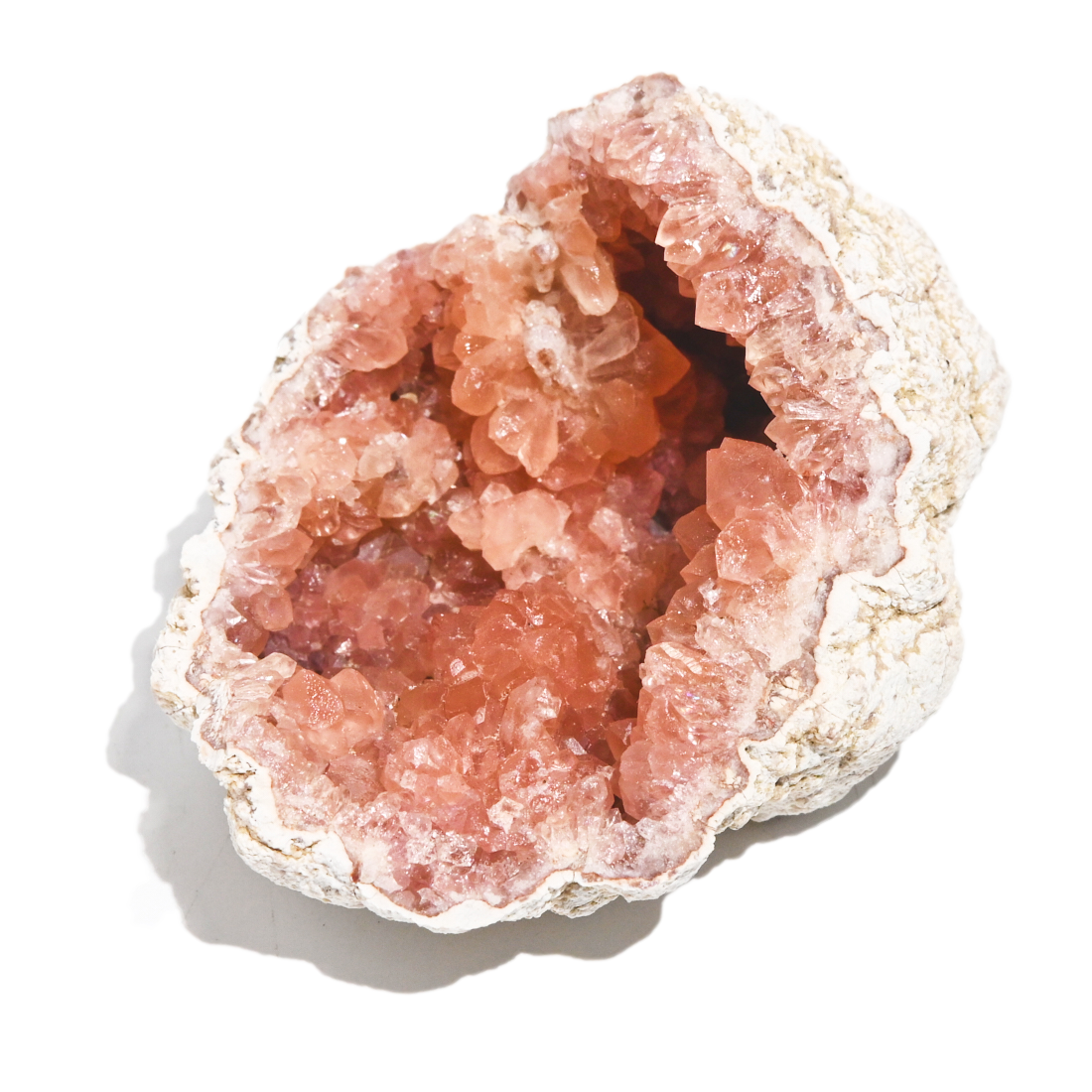
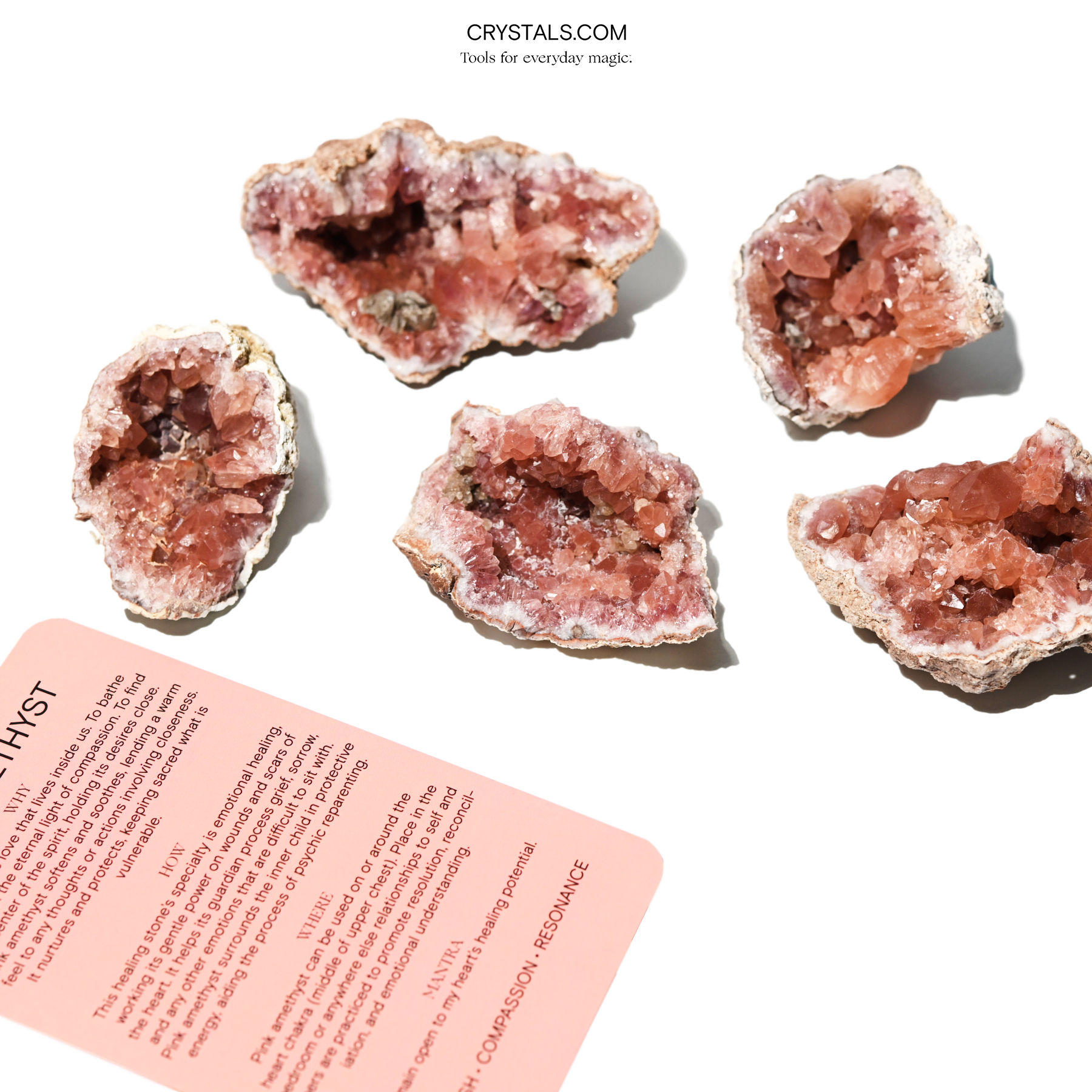
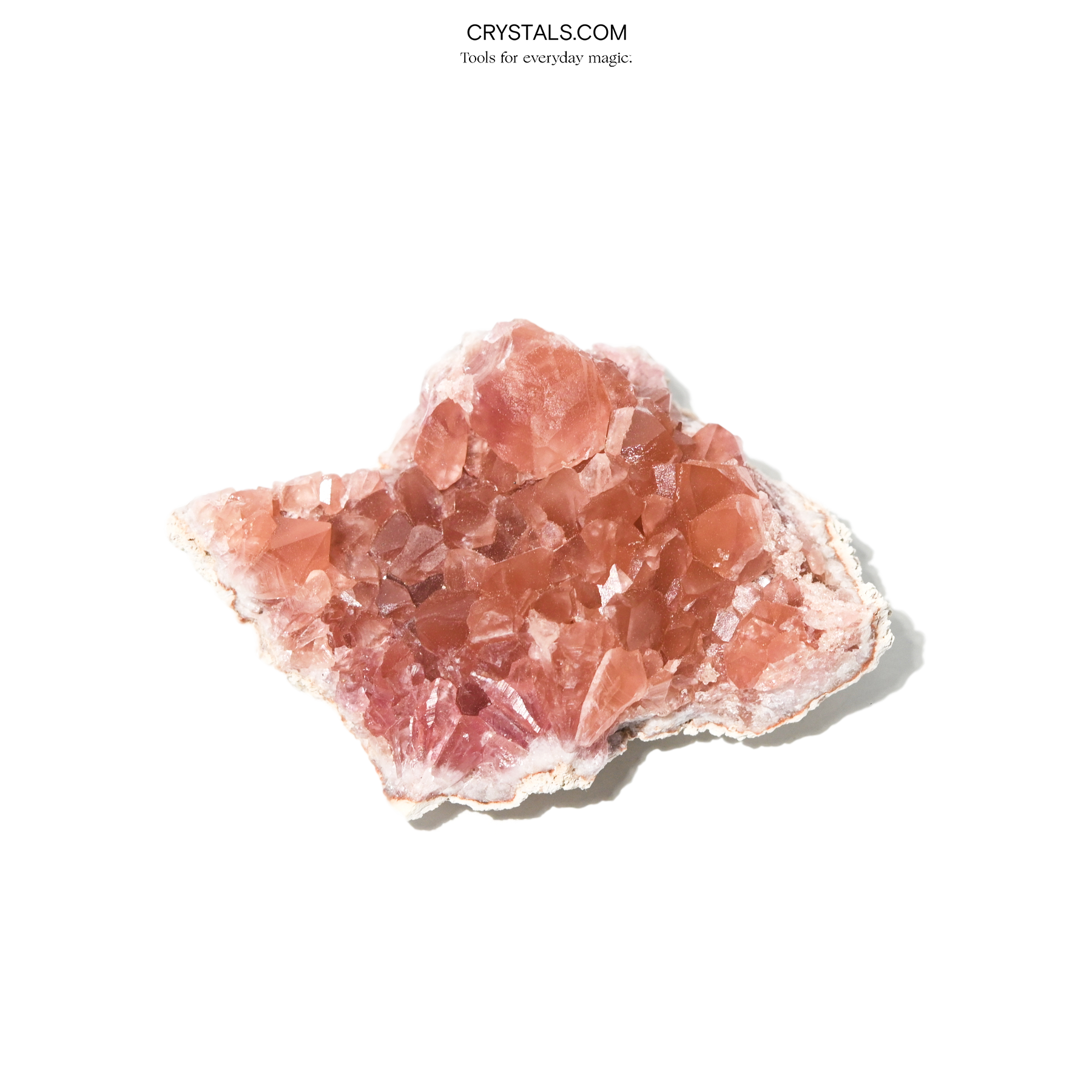
The difference between a crystal collection that looks curated and one that looks cluttered comes down to three things: scale, placement, and restraint. Here is how designers approach crystal styling — and how you can apply the same principles at home.
The Scale Principle
One large specimen always makes a stronger statement than five small ones. This is the most common mistake in crystal decorating: accumulating many small pieces instead of investing in one commanding focal point.
A 12-inch amethyst cathedral on a console table creates a conversation piece. Five small amethyst clusters on the same table creates visual noise. When budgeting for crystal decor, it is almost always better to save for one significant piece than to buy several smaller ones.
This principle extends beyond individual surfaces. In a room, designate one crystal as the anchor — the largest, most visually compelling piece — and let everything else play a supporting role. A floor-standing amethyst geode anchors the room, while a small selenite tower on a nearby shelf quietly complements it without competing for attention.

Size Guide by Space
Bedside table: 3 to 5 inches. Intimate scale. Selenite towers, small rose quartz spheres.
Bookshelf: 4 to 8 inches. Must hold its own among books and objects. Geodes, clusters, crystal points.
Console or entryway: 8 to 15 inches. Statement scale. Cathedrals, large geodes, sculptural specimens.
Floor placement: 15 inches and up. Architectural scale. Large amethyst cathedrals, selenite logs, oversized geodes.
The Placement Principle: Where Light Meets Stone
Crystals are fundamentally about light. Their surfaces refract, reflect, and absorb light in ways that change throughout the day. This makes placement relative to light sources the single most important factor in crystal styling. A spectacular specimen placed in a dark corner will look dull. The same piece positioned where morning sun catches it becomes the most dynamic object in the room.
Translucent crystals like selenite, rose quartz, and citrine glow when backlit. Position them between a light source and the viewer for maximum effect — a selenite tower in front of a window, or a rose quartz sphere on a console table facing a west-facing window that catches the golden hour. Opaque crystals like labradorite need side lighting to activate their flash, so position a small accent lamp to the side rather than above.

For crystals with internal formations — like the druzy cavity inside an amethyst geode or the included needles in tourmalated quartz — overhead lighting or a directional downlight reveals details that flat ambient light hides. Professional designers often install small picture lights or LED strips specifically to illuminate a crystal display.
The Restraint Principle: Curated, Not Collected
A designer's approach to crystals is fundamentally different from a collector's approach. Collectors want to display everything they own. Designers select only the pieces that serve the room's overall vision and store the rest. This restraint is what separates a crystal-styled interior from a crystal shop.
Here are the restraint rules professional designers follow:
One crystal per surface. One specimen per table, shelf, or countertop. If you group multiple crystals together, treat the group as a single composition — they should be intentionally arranged, not randomly accumulated.
Limit your color palette. Choose crystals that share a cohesive color story. An all-neutral palette (selenite, clear quartz, smoky quartz) feels serene. A warm palette (citrine, carnelian, amber calcite) feels energized. Mixing every color in the spectrum feels chaotic.
Leave breathing room. Crystals need negative space around them to be appreciated as individual objects. Crowding crystals together diminishes the impact of each piece. Give every crystal at least 6 inches of clear space on all sides.
Rotate your collection. Display four or five crystals at a time and rotate seasonally. This keeps your space feeling fresh and gives each piece its moment to shine.
Room-by-Room Luxury Crystal Styling Guide
The Living Room
The living room is where your most impressive crystal belongs. This is the room guests see first and spend the most time in, so invest in a statement piece that anchors the space. Amethyst cathedrals, large labradorite freeforms, and oversized citrine clusters all work beautifully as living room anchors. Place your statement crystal on a console table, mantel, or low bookshelf where it catches both natural and artificial light.

The Bedroom
Bedrooms call for softer, more calming crystals. Rose quartz, selenite, and amethyst are the top choices for bedrooms. Keep the scale intimate — a 3 to 5 inch piece on a nightstand, or a medium sphere on a dresser. The bedroom is not the place for a floor-standing cathedral. Opt for polished forms like spheres, palm stones, and towers that feel smooth, gentle, and intentional next to soft textiles and warm lighting.
The Entryway
The entryway sets the tone for the entire home. A crystal in the entryway communicates taste, intention, and a connection to the natural world before a guest even sits down. Black tourmaline near the door is a classic designer placement for its grounding, protective energy. For pure visual impact, a polished labradorite slab or an amethyst geode on the entry console is hard to beat.

The Bathroom
Crystals transform a bathroom from functional to spa-like. Selenite bowls on a vanity, a rose quartz sphere beside the tub, or a small amethyst cluster on a shelf near the bath — these details elevate everyday routines into something that feels luxurious and intentional. Choose water-resistant crystals for areas near the sink or shower: quartz varieties, amethyst, and citrine all handle humidity well. Note that selenite is water-soluble and should be kept dry.
The Home Office
A home office benefits from crystals that promote focus and clarity. Citrine for creativity and abundance, fluorite for mental clarity, and clear quartz for amplification are popular designer choices. A single crystal on your desk also adds organic texture to what is often the most utilitarian room in the house, and it makes a polished, interesting background element on video calls.

The Dining Room
Dining rooms are often overlooked in crystal styling, but they are actually one of the most rewarding rooms to work with. A crystal centerpiece replaces the traditional floral arrangement with something permanent, striking, and conversation-starting. A citrine cluster on a wooden board, a rose quartz slab used as a cheese platter base, or a pair of small geodes flanking a candle arrangement all elevate the dining experience. Choose crystals that complement your tableware and table surface — warm-toned crystals for wood tables, cool-toned crystals for marble or glass.
Color Theory for Crystal Interiors
Understanding basic color theory transforms crystal styling from guesswork into intentional design. Crystals naturally span the entire color spectrum, and choosing the right hues for your space is no different from choosing paint colors or textiles. Here are the palettes that professional designers return to most often:
The Neutral Palette: Selenite, clear quartz, smoky quartz, and white calcite. This palette creates a sense of calm sophistication. It works in Scandinavian, minimalist, and Japanese-inspired interiors where restraint is the guiding principle.
The Warm Palette: Citrine, carnelian, amber calcite, and honey calcite. These golden and orange tones bring warmth, energy, and richness to a room. Pair with brass hardware, warm wood tones, and cream textiles for a cohesive sun-drenched aesthetic.
The Cool Jewel Palette: Amethyst, fluorite, labradorite, and celestite. Deep purples, shifting blues, and cool greens create a moody, luxurious atmosphere. This palette works beautifully in bedrooms, libraries, and intimate sitting rooms with dark walls and rich upholstery.
The Earth Palette: Smoky quartz, red jasper, petrified wood, and moss agate. Browns, rusts, and forest greens ground a space and create a strong connection to the natural world. This palette anchors rustic, organic, and biophilic design schemes.
Caring for Display Crystals
Crystals displayed in the home accumulate dust just like any other surface object. A gentle dusting with a soft, dry microfiber cloth every week keeps specimens looking their best. For deeper cleaning, most quartz varieties (amethyst, citrine, rose quartz, smoky quartz, clear quartz) can be rinsed briefly under lukewarm water and dried immediately. Avoid water on selenite, malachite, pyrite, and any specimen with exposed metallic inclusions. Never use chemical cleaners, as they can damage crystal surfaces and alter their natural luster.
Direct sunlight is another consideration. While many crystals look spectacular in natural light, prolonged direct sunlight can fade some specimens over time. Amethyst, rose quartz, citrine, and fluorite are all susceptible to fading with extended UV exposure. If your crystal sits in a sun-drenched window, rotate its position periodically or move it to indirect light after a few months.

Investing in Quality Over Quantity
Luxury crystal styling is ultimately about curation. The most beautiful crystal interiors are not the ones with the most crystals — they are the ones where every piece was chosen with intention, placed with care, and given the space and light to be fully appreciated. Start with one exceptional piece that resonates with you, place it thoughtfully, and build from there.
When sourcing crystals for interior design, prioritize authenticity and visual quality. The color saturation, surface texture, formation structure, and overall shape of a crystal all contribute to its visual impact in a room. Work with a trusted source that hand-selects specimens specifically for their aesthetic qualities — the same way you would source art for your walls.
Ready to Style Your Space?
Every crystal in our collection is hand-selected for visual quality, authenticity, and interior styling potential.
Browse the Collection