The Art of Styling Crystals in Your Home
Interior Design • Crystal Styling • Home Decor
Minerals are among the most beautiful objects that exist. They are the earth's architecture, built over millions of years under conditions of heat and pressure that are genuinely difficult to comprehend. The question of how to display them is not a small one. Get it right and they transform a room. Get it wrong and they look like a collection of rocks on a shelf.
The principles that govern great mineral display are the same principles that govern great interior design: scale, contrast, grouping, light, and restraint. These are not abstract concepts. They are specific, learnable decisions that determine whether your crystals look curated or cluttered.
This guide covers those principles in detail, then moves room by room through the home, with specific recommendations for which minerals work where and how to arrange them.
The Fundamentals: Scale, Contrast, and the Rule of Three
Scale Is Everything
The single most common mistake in crystal styling is choosing specimens that are too small for the surface they occupy. A 2-inch tumbled stone on a large coffee table is invisible. It sits there looking like something that fell out of a pocket. The minimum size for a coffee table centerpiece specimen is 4 to 6 inches. For a bookshelf hero piece, 3 to 4 inches. For a nightstand, 2 to 3 inches is appropriate because the scale of the surface is smaller.
When in doubt, go larger. A single impressive specimen is worth far more visually than a collection of small ones. It is the difference between a room that looks styled and a room that looks like a gift shop.
Contrast Creates Interest
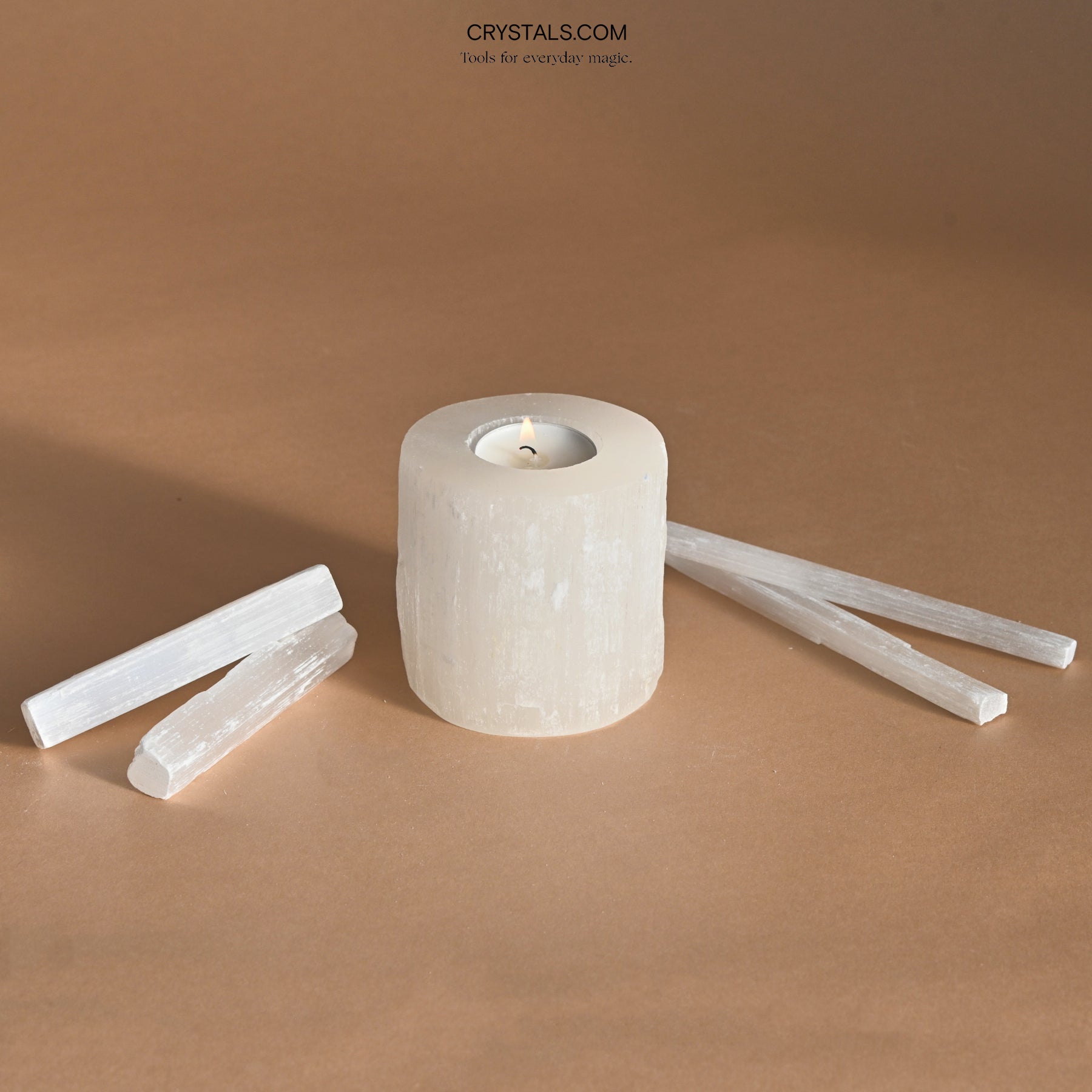
Minerals look best when they are displayed in contrast to their environment. A white selenite (Selenite Cleansing Wand) tower on a white shelf disappears. The same tower on a dark wood shelf becomes a focal point. A raw black tourmaline column on a pale marble tray reads as dramatically intentional. Think about the surface, the wall behind it, and the other objects nearby. Your crystal should stand out from all of them in at least one dimension: color, texture, or form.
The Rule of Three (and When to Break It)
Interior designers use the rule of three as a starting point: odd numbers of objects create more visual interest than even numbers. A grouping of three minerals, varying in height and form, reads as a composition. A grouping of two reads as a pair. A grouping of four reads as a set. Three is often the right number for a nightstand, a bookshelf section, or a bathroom counter. On a large coffee table or console, five or seven can work if the objects vary enough in character. One is always appropriate when the specimen is large enough to carry the surface alone.

Lighting: The Underrated Variable
Light changes everything about how a mineral appears. The same specimen can look completely different under morning east light, afternoon south light, and warm artificial light. Understanding how to use light to your advantage is the skill that separates great mineral display from mediocre display.
Translucent minerals want directional light. Selenite, fluorite, rose quartz (Rose Quartz Tower), and amethyst (Amethyst Geode) all reveal their internal structure and glow when light passes through them from behind or from the side. Place these on or near a windowsill where daylight will backlight them, or use an LED strip or spotlight positioned to illuminate from behind. A selenite tower in front of a window on a sunny afternoon looks lit from within.
Opaque minerals want raking light. Black tourmaline, obsidian (Black Obsidian Palm Stone), and carnelian show their texture and depth best when light comes from the side at a low angle, raking across the surface and catching the striations and inclusions that make each specimen unique. A spotlight or directional table lamp positioned at a 45-degree angle to an opaque specimen will reveal far more than ambient room lighting.
Iridescent minerals want movement. Labradorite and moonstone display their optical phenomena, labradorescence and adularescence respectively, only when the angle of observation relative to the light source changes. These minerals belong on surfaces where people move around them: coffee tables, console tables, and dining table centerpieces. A static display position will often catch a labradorite at its worst angle.
Avoid fluorescent light with all minerals. The cool, flat quality of fluorescent light flattens color and eliminates the optical depth that makes minerals beautiful. Warm LED (2700K to 3000K) is almost always the right choice for residential mineral display.
Room by Room
The Entry
The entry is where a home makes its first impression. The mineral display here should be bold enough to register immediately but not so decorative that it reads as fussy. One rule applies above all others in the entry: edit to one statement piece or one tight grouping on the console, and let everything else be empty. A large raw amethyst cluster on an entry table communicates collector's sensibility instantly. A raw tourmaline column in a ceramic vessel beside a bowl for keys says the same thing.

The Living Room
The living room accommodates the largest and most diverse groupings. The coffee table is the prime real estate: a mineral vignette here will be seen from every seat in the room and should hold up to scrutiny from multiple angles. A large selenite slab as a base, with a rose quartz cluster and a labradorite freeform resting on it, creates a composition that works from any angle. Floating shelves offer secondary display opportunities: a specimen at each end of a shelf, with books filling the middle, is cleaner than minerals scattered throughout.
The Bedroom
The bedroom calls for restraint and softness. Amethyst, selenite, rose quartz, and moonstone all belong here, both visually and in terms of the quality they bring to the space. The nightstand display should be minimal: one or two pieces maximum. The dresser can accommodate a small grouping, but the bedroom is not the place for dramatic dark minerals like obsidian or black tourmaline, which read as too intense for a rest environment.
The Bathroom
The bathroom is the room most people overlook as a mineral display space, and it is one of the most rewarding. A single beautiful specimen on the edge of the tub or on a bathroom shelf transforms a utilitarian space into something spa-like. The key restriction is humidity: soft minerals like selenite and howlite are damaged by prolonged humidity. Stick to hard, non-porous minerals here: quartz varieties, labradorite, obsidian, carnelian. Rose quartz is particularly beautiful in a bathroom context, its pale pink tones reading as luxurious against white tile.

Bases, Trays, and Stands: Elevating the Display
A mineral sitting directly on a surface, with nothing beneath it, looks like something you set down and forgot. A mineral on a tray, a stand, or a pedestal looks displayed. This single intervention, adding a base, is the most effective upgrade you can make to an existing mineral arrangement.
Brass and gold stands work with warm-toned minerals: citrine (Natural Citrine Tower), carnelian, amber, golden calcite. They create a jewelry-case quality that reads as curated and luxurious.
Raw slate or stone slabs ground dark minerals: tourmaline, obsidian, smoky quartz. The mineral-on-mineral composition feels naturalistic and collected.
White marble trays are the most versatile base option. They work with nearly any mineral and add a clean, architectural quality that suits modern interiors.
Natural wood rounds or vessels work best with raw specimens: tourmaline columns in a ceramic vessel, a rough amethyst cluster on a wooden disc. The combination of raw crystal and natural material creates a cohesive organic aesthetic.
For more on integrating crystals with botanical elements and sensory design, read our guide to crystals and botanicals. And for room-specific recommendations based on the protective properties of specific minerals, see our protection crystal guide.
Discover Your Human Design
Crystals amplify energy — but do you know your unique energy type? Human Design reveals how you're wired to make decisions, work, and rest.
Explore Human DesignGet 10% Off Your First Order
Plus early access to new arrivals, collector drops, and crystal guides. Join 15,000+ crystal lovers.
Shop Crystals for This Energy
Free shipping on orders over $150