Top 5 Crystals Every Interior Designer Swears By
Crystals have moved from niche spiritual shops into the mainstream design world — and for good reason. Today's top interior designers are incorporating crystals into their projects not just as beautiful decorative objects but as intentional design elements that shift the energy and atmosphere of a space. A well-placed crystal can anchor a room's energy, serve as a conversation-starting focal point, and bring a natural, organic element that complements both modern and traditional aesthetics.
The growing intersection of interior design and natural minerals is not a passing trend. Museums, luxury hotels, and high-end residential projects around the world are featuring geological specimens as permanent design elements. Designers at events like Alcova in Milan and Design Miami have showcased crystal-forward interiors that treat minerals as sculptural art. The reason is simple: no two crystals are alike, so every piece brings a completely unique visual texture to a space that manufactured decor cannot replicate.
Here are the five crystals that interior designers reach for most often, and a detailed guide on how to use them in your own space.
 (Amethyst Geode)
1. Amethyst Geode — The Statement Piece
Nothing makes a bigger design impact than a large amethyst geode or cathedral. These dramatic formations range from coffee-table-sized clusters to floor-standing specimens over four feet tall. Designers love them because the deep purple crystals catch light beautifully, create instant visual drama, and bring a calming energy that makes rooms feel like sanctuaries.
Amethyst geodes form over millions of years inside volcanic rock. As mineral-rich water seeps into gas cavities, silica deposits slowly crystallize into the distinctive hexagonal points that define amethyst. The purple color comes from trace amounts of iron and natural irradiation within the earth. Brazilian and Uruguayan amethyst tend to produce the deepest, most saturated purple tones that designers favor for high-impact installations.
Design Placement Guide for Amethyst
Living Room: Place a cathedral-sized amethyst geode beside a fireplace or on a console table where it catches natural light. The crystals sparkle and shift color throughout the day as the light changes.
Entryway: A medium geode on an entry console creates an immediate impression. It tells guests something about the homeowner before they even sit down.
Bedroom: Amethyst is associated with calm, restful energy. A smaller cluster on a nightstand or dresser adds both beauty and atmosphere.
Home Office: Designers place amethyst in workspaces to encourage clarity and focused thinking. The purple tones also photograph exceptionally well for anyone who works from home on video calls.

2. Citrine (Natural Citrine Tower) Cluster — The Warm Glow
Citrine's warm golden tones bring instant warmth to any color palette. Designers use citrine clusters and towers to add a touch of sunshine to neutral spaces, complement warm-toned interiors, and create a focal point that radiates optimistic, abundant energy. Citrine works especially well in home offices, dining rooms, and kitchens — spaces associated with productivity, nourishment, and gathering.
What makes citrine particularly versatile in design is its range of tones. Natural citrine ranges from pale champagne to deep amber, which means it can complement everything from Scandinavian minimalism to rich, layered maximalist interiors. Designers often pair citrine with warm metals like brass and gold for a cohesive, sun-drenched aesthetic.
Design Placement Guide for Citrine
Dining Room: A citrine cluster as a centerpiece brings a golden glow to dinner parties and everyday meals alike.
Home Office: Citrine is known as the stone of abundance and creativity. A citrine point on your desk adds warmth and visual interest to your workspace.
Kitchen: Citrine's warm tones complement wood cabinetry and copper fixtures. Place a cluster on open shelving for an organic accent.
Bookshelf: Small citrine points and clusters serve as natural bookends or shelf accents among curated objects.

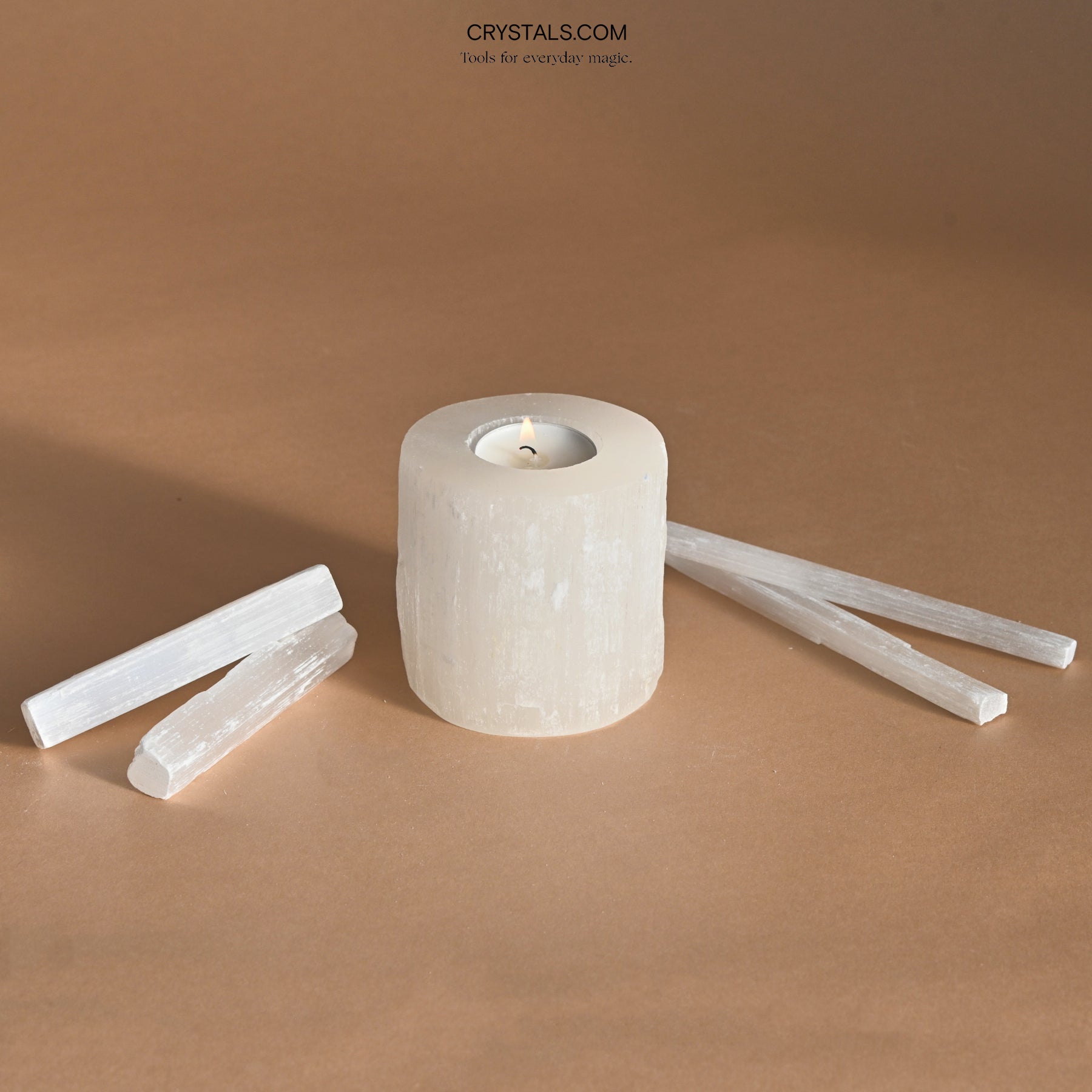
3. Selenite (Selenite Cleansing Wand) Tower — The Ethereal Accent
Selenite is a designer's secret weapon. Its translucent white surface has a luminous, almost otherworldly quality that brings immediate serenity to any room. Selenite towers, slabs, and bowls are among the most versatile crystal forms for interior design because their neutral color palette works with virtually any aesthetic, from coastal to contemporary.
Named after Selene, the Greek goddess of the moon, selenite is a form of gypsum that forms in evaporite deposits. Its distinctive pearlescent sheen, called chatoyancy, makes it glow when backlit — a property designers exploit by placing selenite near windows or light sources. Selenite towers are particularly popular because their clean, vertical lines complement modern architectural interiors while their natural texture keeps the look from feeling sterile.
Design Placement Guide for Selenite
Bathroom: Selenite bowls on a vanity create a spa-like atmosphere. Note: selenite is water-soluble, so keep it away from direct water contact.
Bedroom: A pair of selenite towers on matching nightstands creates symmetry and a calming, lunar glow.
Window Sill: Selenite catches and diffuses natural light beautifully. Line a windowsill with selenite pieces for an ethereal light display.
Meditation Space: Selenite's clean energy makes it a natural fit for dedicated wellness or meditation areas in the home.

4. Labradorite (Labradorite Palm Stone) — The Color Shifter
Labradorite is the stone that stops people mid-sentence. Its signature optical effect — called labradorescence — produces flashes of blue, green, gold, and sometimes violet that shift as you move around the piece. For designers, this creates an interactive visual element that no painting, sculpture, or manufactured object can replicate. A polished labradorite slab or freeform specimen literally changes appearance throughout the day depending on the viewer's angle and the light source.
Labradorite was first documented in 1770 on Paul Island in Labrador, Canada — hence the name. The stone is a type of feldspar, and the iridescent color play happens because of light refracting between thin layers of different mineral compositions within the stone. Madagascar currently produces some of the most spectacular specimens for the interior design market, with intense blue and gold flash being the most sought-after.
Design Placement Guide for Labradorite
Coffee Table: A polished labradorite freeform on a coffee table invites touch and interaction. Guests will pick it up and turn it to catch the flash.
Console Table: A tall labradorite freeform makes a sculptural statement in an entryway, especially when lit from the side.
Art Wall: Some designers mount polished labradorite slabs on walls alongside framed art for a mixed-media gallery effect.
Desk: A labradorite palm stone or small freeform makes a visually striking desk accessory that doubles as a conversation piece during meetings.

5. Rose Quartz (Rose Quartz Tower) — The Soft Luxury
Rose quartz brings a softness that balances harder, more angular design elements. Its pink hue ranges from barely-there blush to deep strawberry, making it incredibly versatile across different design palettes. Rose quartz towers, spheres, and slabs are staples in bedrooms, bathrooms, and living rooms where designers want to introduce warmth without the intensity of a saturated color.
Rose quartz gets its color from trace amounts of titanium, iron, or manganese within the silicon dioxide crystal structure. The finest specimens come from Brazil and Madagascar, where massive formations produce the large, gem-quality pieces that designers covet. The stone's translucency means it responds beautifully to both natural and ambient lighting, appearing almost to glow from within when backlit.
Design Placement Guide for Rose Quartz
Bedroom: Rose quartz is the definitive bedroom crystal. A large sphere or tower on a dresser or nightstand sets a romantic, serene tone.
Bathroom: Rose quartz bowls and trays bring spa energy to a bathroom vanity. Use them to hold small items like rings and hair accessories.
Living Room: A rose quartz slab as a decorative tray on a coffee table adds soft color and natural texture. Layer it with candles and books for a styled vignette.
Nursery: Rose quartz is a popular choice for children's rooms and nurseries because of its gentle, soothing color and energy.

How to Style Crystals Like a Professional Designer
Knowing which crystals to use is only half the equation. How you display them determines whether your space looks curated or cluttered. Here are the styling principles that professional interior designers follow when incorporating crystals into their projects.
The Rule of One Statement Piece
The most common mistake in crystal decorating is accumulating too many small pieces on a single surface. Designers follow a simple rule: one large, commanding specimen will always make a stronger visual impact than five small ones. When budgeting for crystal decor, it is almost always better to invest in one significant piece than to buy several smaller ones.
Scale to the Room
Match the size of your crystal to the scale of the space and furniture it sits on. A 3-inch crystal on a massive dining table gets lost. A 15-inch geode on a small bedside table overwhelms. Designers typically follow this sizing framework:
Bedside table: 3 to 5 inches. Intimate scale. Selenite towers, small rose quartz spheres.
Bookshelf: 4 to 8 inches. Must hold its own among books and objects. Geodes, clusters, crystal points.
Console or entryway: 8 to 15 inches. Statement scale. Cathedrals, large geodes, sculptural specimens.
Floor placement: 15 inches and up. Architectural scale. Large amethyst cathedrals, selenite logs, oversized geodes.
Light Is Everything
Crystals are fundamentally about how they interact with light. Designers always consider the light source when placing a crystal. A translucent selenite tower placed in front of a window becomes a glowing lantern. An amethyst geode positioned where afternoon sun hits it directly creates a shifting light display across the wall behind it. Even opaque stones like labradorite need directional light to activate their flash. If you are placing a crystal in a dark corner, consider adding a small accent light behind or beside it to bring the piece to life.
Color Coordination
Crystals should be chosen with the room's existing color palette in mind. A deep purple amethyst in a room with cool gray tones creates a sophisticated, jewel-box effect. Warm citrine in a room with cream, camel, and brass creates a sun-drenched, cohesive warmth. Rose quartz in a room with soft neutrals and blush tones feels intentional and harmonious. Avoid placing crystals that clash with the room's palette — even a beautiful crystal looks out of place if its color fights the surrounding scheme.

Why Designers Are Choosing Natural Crystals Over Manufactured Decor
There is a broader shift happening in interior design that explains why crystals have become so central to high-end projects. After years of mass-produced, homogeneous decor, designers and homeowners alike are craving objects with provenance, geological history, and genuine uniqueness. A crystal that formed over millions of years deep in the earth carries a story that a factory-made decorative object simply cannot match.
This shift is also driven by a growing interest in biophilic design — the practice of incorporating natural elements into built environments to promote wellbeing. Studies have shown that natural materials in interior spaces reduce stress, improve mood, and increase perceived quality of life. Crystals fit perfectly into this framework: they are organic, textural, and visually dynamic in a way that resonates with our innate attraction to the natural world.
Leading designers also appreciate that crystals age beautifully. Unlike trend-driven decor pieces that feel dated within a few seasons, a quality crystal specimen holds its visual appeal and even appreciates in value over time. This makes crystals not just a design choice but a long-term investment in your space.
Start Your Crystal-Designed Space
Explore our curated collection of designer-grade crystals, hand-selected for interior styling.
Shop Home Decor CrystalsShop Crystals for This Energy
Free shipping on orders over $150