Crystals.com
Purple Crystals
Authentic natural minerals, thoughtfully sourced and individually photographed.

Purple crystals get their color from trace elements and structural properties unique to each mineral species. Amethyst owes its violet to iron impurities and natural gamma irradiation within quartz. Lepidolite is colored by lithium and manganese in its mica structure. Charoite, found only in Siberia's Murun Massif, gets its swirling purple from a complex silicate chemistry that exists nowhere else on Earth. These are not dyed, coated, or enhanced — the color is the geology.
Shop by Stone
Types of Purple Crystals
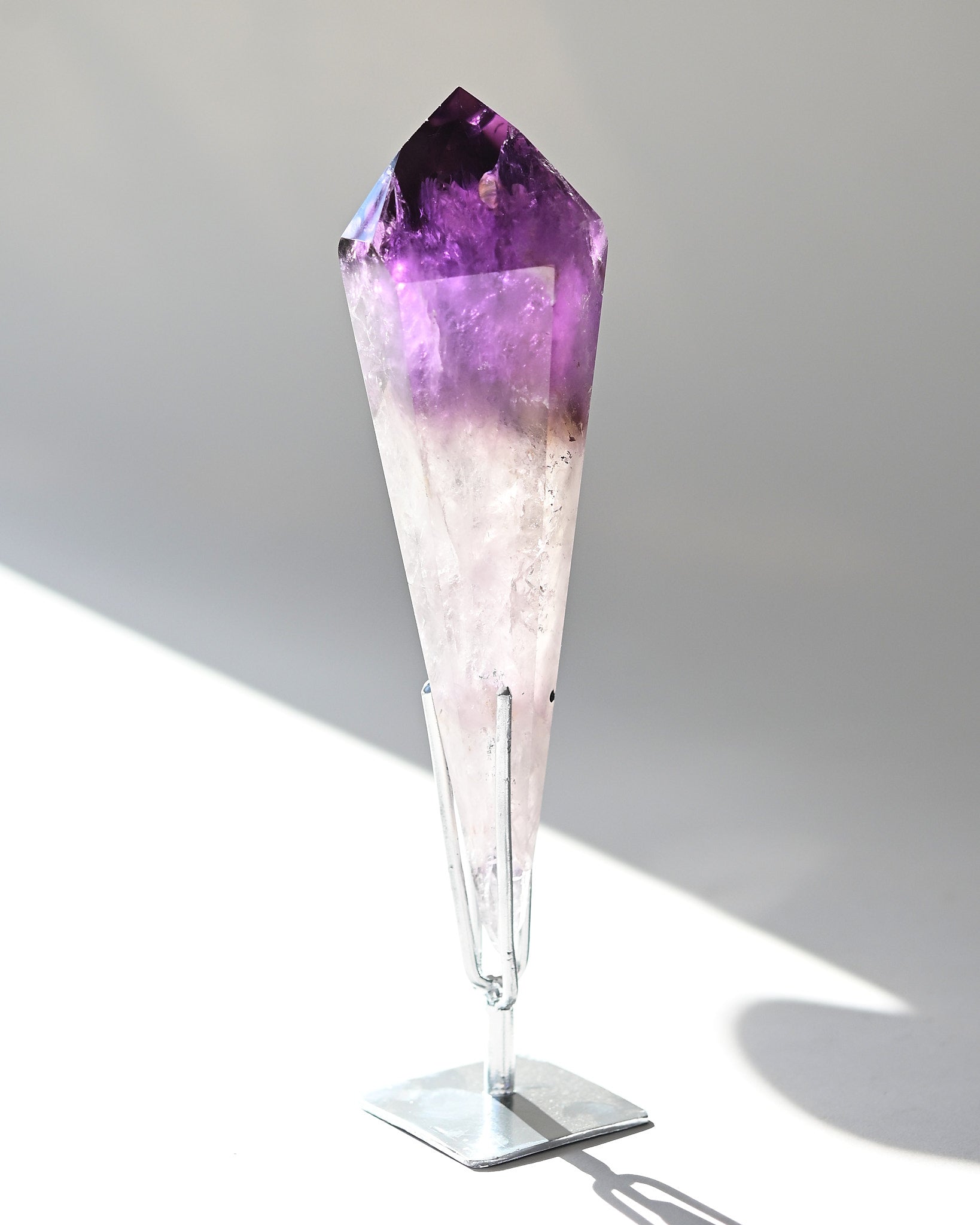
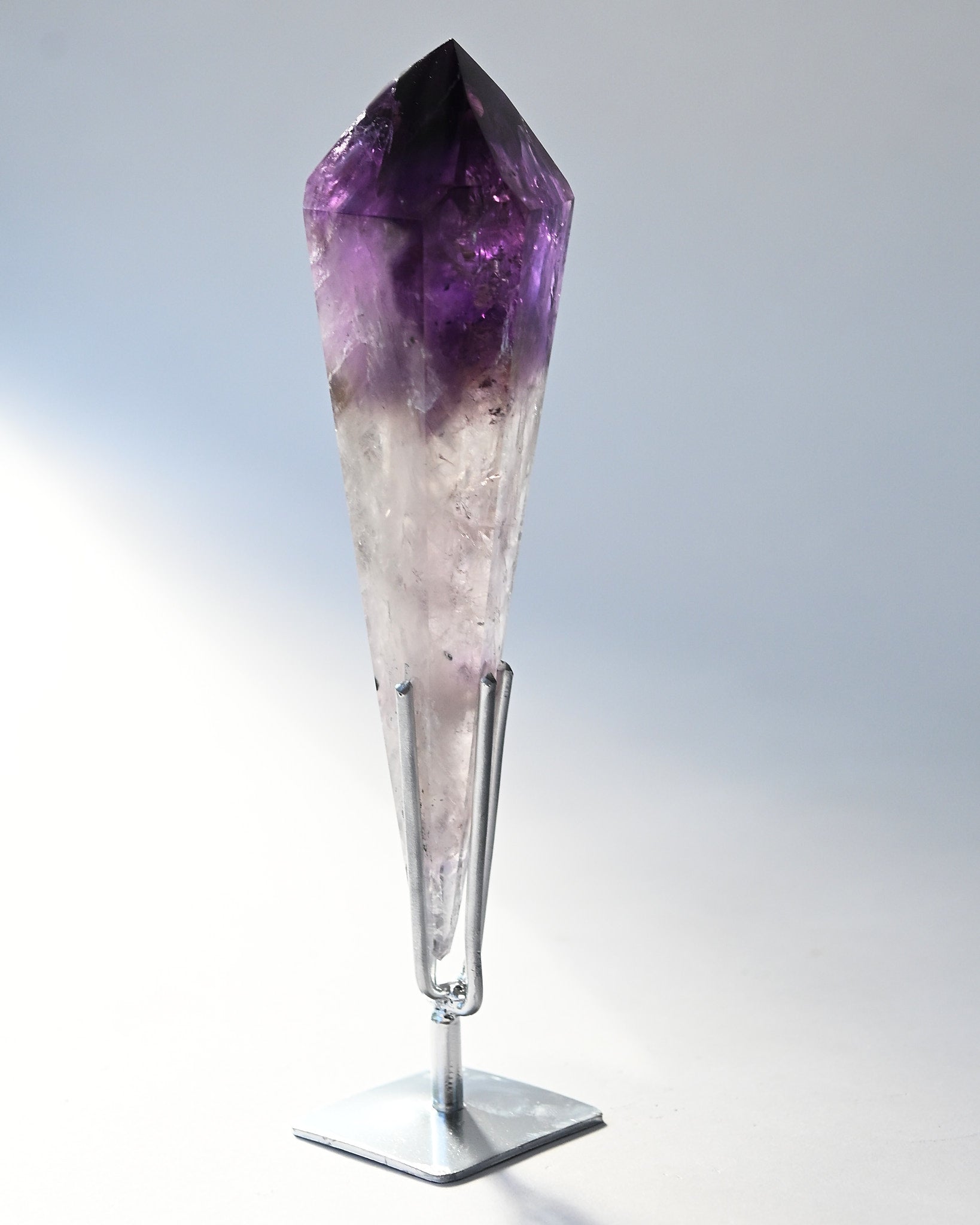
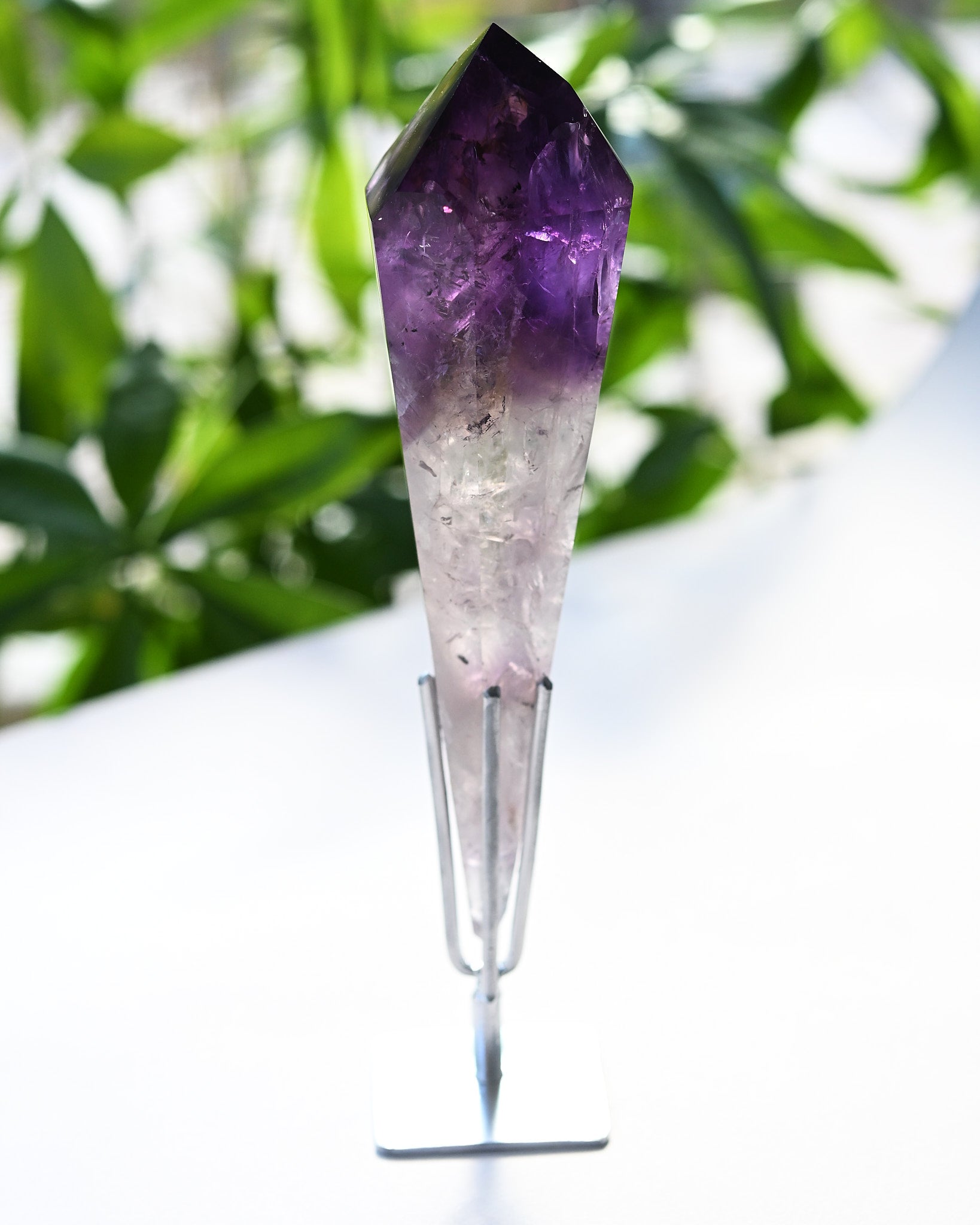
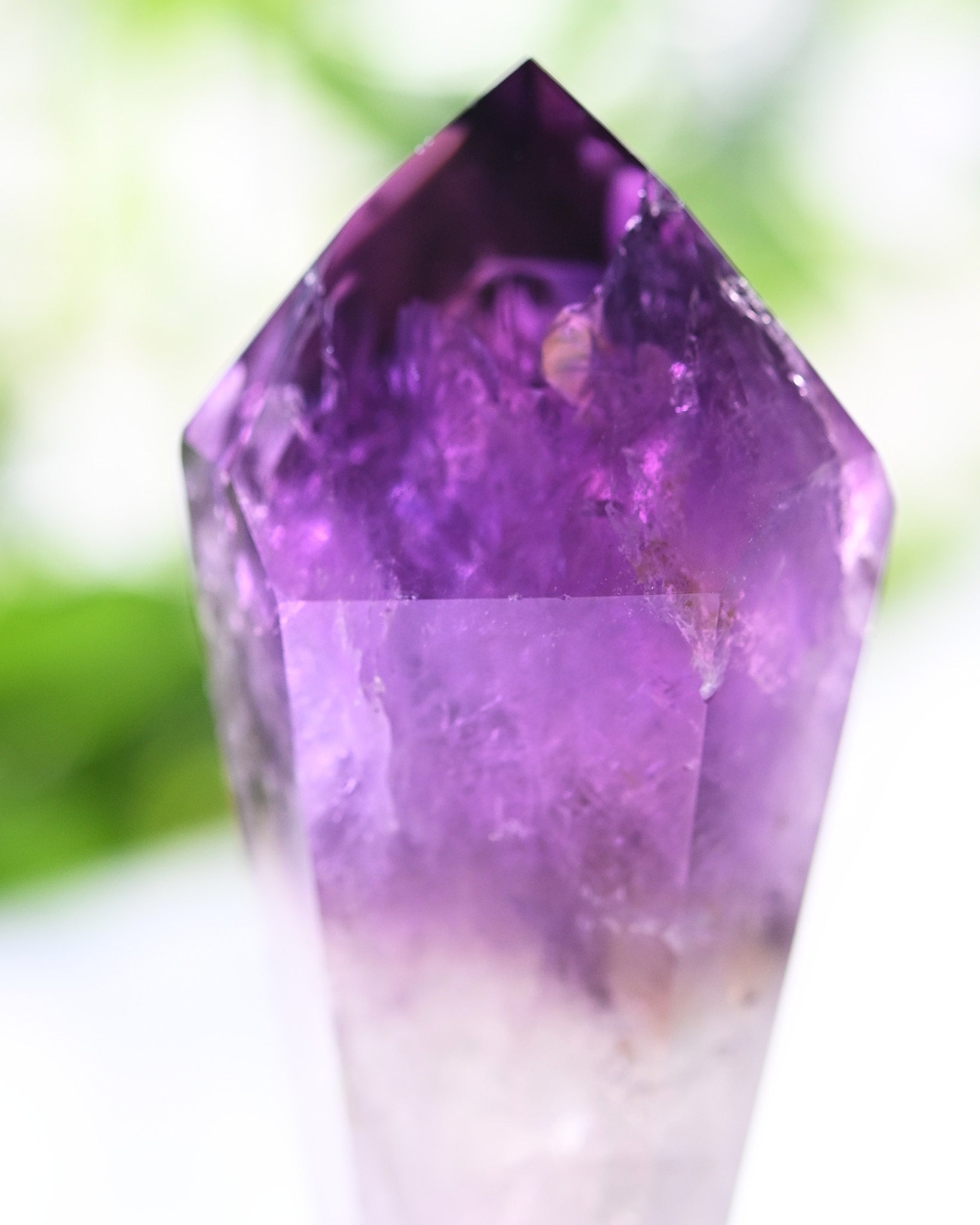
Amethyst — The most recognized purple crystal in the world. A variety of quartz (SiO₂) colored by iron (Fe³⁺) and natural gamma irradiation. Mohs hardness 7. Found in Brazil, Uruguay, Zambia, and Madagascar. Ranges from pale lilac to deep grape depending on iron concentration. Our amethyst collection includes clusters, towers, spheres, and amethyst bracelets.
Lepidolite — A lithium-bearing mica with a soft lavender to violet color and natural shimmer from microscopic mica plates. Mohs hardness 2.5–3. One of the highest natural sources of lithium in the mineral kingdom. Found in Brazil and Madagascar. Available as palm stones and lepidolite bracelets.
Charoite — A rare purple silicate found exclusively along the Chara River in Siberia, Russia. Mohs hardness 5–6. Recognized by its distinctive swirling, fibrous patterns in lavender to deep violet. One of the few minerals found at only one location on Earth. Browse our charoite spheres and charoite bangles.
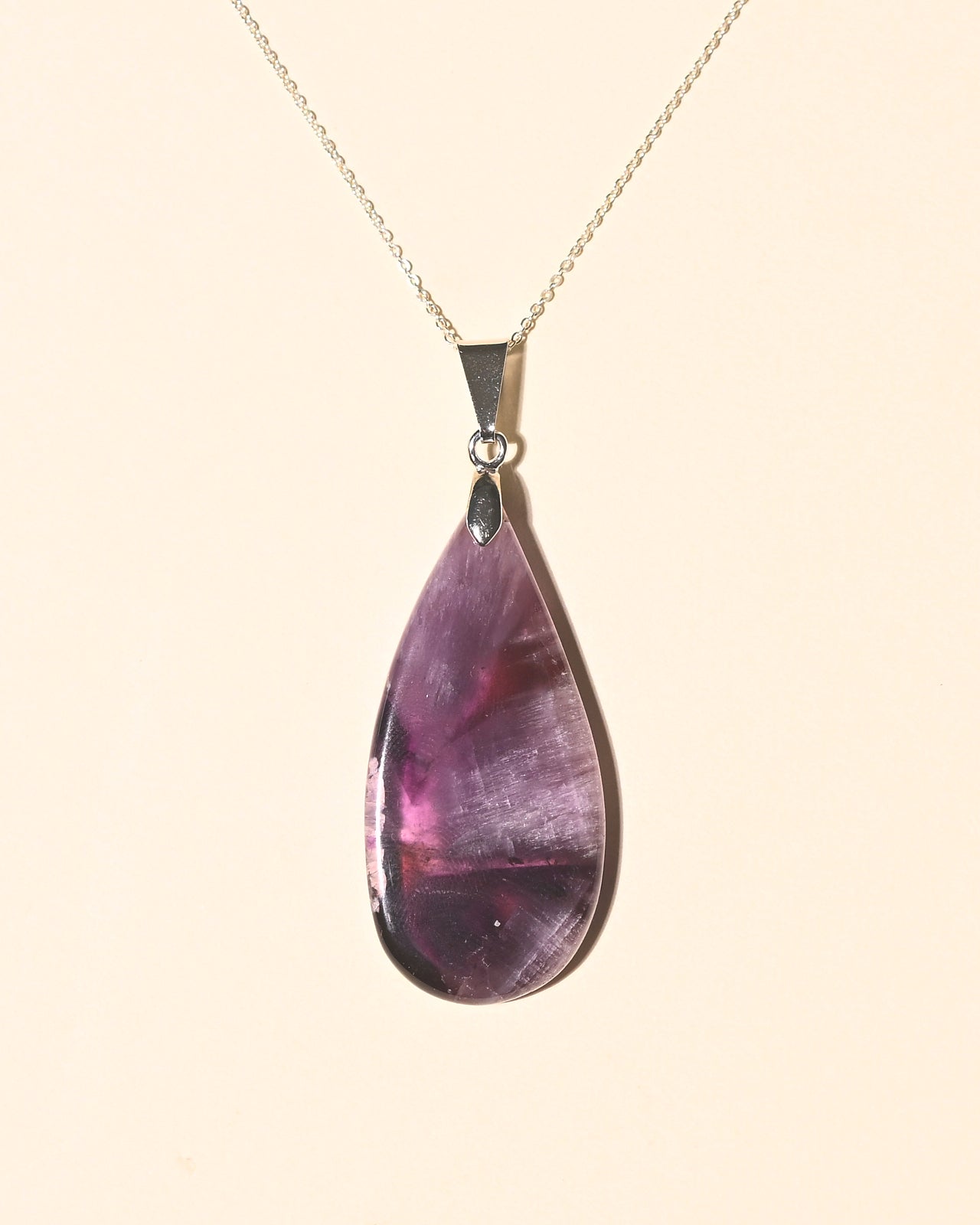
Fluorite — Calcium fluoride (CaF₂) that forms in cubic crystals, often with purple, green, and blue banding. Mohs hardness 4. The purple variety gets its color from exposure to radiation during formation. Shop fluorite towers and slabs and fluorite bracelets.
Pink Amethyst — A recently marketed variety from Patagonia, Argentina. Lighter and warmer than traditional amethyst, with hematite inclusions creating its pink-to-mauve color. Shop pink amethyst geodes and specimens.
How to Choose Purple Crystals
For everyday wear and handling, choose purple stones with a Mohs hardness of 7 or above — amethyst is the clear winner. For display pieces and shelf specimens, softer stones like lepidolite (2.5–3) and fluorite (4) are perfectly fine and often more visually striking. Charoite sits at 5–6, suitable for jewelry with proper settings.
Color intensity varies by specimen. Deeper purple amethyst typically commands higher prices, but pale lilac pieces can be equally beautiful. Charoite's value comes from pattern complexity rather than pure color depth. Many collectors build entire displays around the purple spectrum, pairing deep amethyst geodes with lighter lepidolite and translucent fluorite for contrast.
Shop Purple Crystal Jewelry
Not sure which stone is right for you? Take our crystal quiz or browse by intention: calming crystals, protection crystals, or healing crystals. Also explore our other crystal jewelry and crystal necklaces.
Free US shipping on orders over $150. Every crystal ships from our Florida studio, individually wrapped and photographed.
Frequently Asked Questions
What is the most popular purple crystal?
Amethyst. It is the most abundant and widely available purple mineral, found on every inhabited continent. Its Mohs 7 hardness makes it practical for jewelry and daily handling, and its price range (from $15 clusters to $500+ collector geodes) makes it accessible at every level.
Are purple crystals natural or dyed?
All purple crystals at Crystals.com are natural and untreated. Amethyst gets its color from iron impurities and natural irradiation. Lepidolite is colored by lithium. Charoite by its unique silicate chemistry. We do not sell dyed, heat-treated, or color-enhanced stones.
What is the rarest purple crystal?
Charoite is among the rarest — it forms at only one location on Earth, along the Chara River in Siberia. Sugilite, found primarily in South Africa, is another rare purple mineral. Both are significantly less common than amethyst.
What purple crystals are good for anxiety?
Amethyst and lepidolite are the two purple stones most associated with calming energy. Lepidolite naturally contains lithium, the same element used in mood-stabilizing medications. Both are popular choices for stress relief and are available as wearable bracelets and palm stones. See our full calming crystals collection.
Why is amethyst purple?
Amethyst is purple because of trace amounts of iron (Fe³⁺) within its silicon dioxide crystal lattice combined with natural gamma irradiation from surrounding rock over millions of years. This irradiation displaces electrons in the iron ions, creating color centers that absorb yellow-green light and transmit violet wavelengths.











Let customers speak for us
Shopping was easy to navigate. I received my shipment in a reasonable time.
A beautiful bracelet to add to my loving collection.

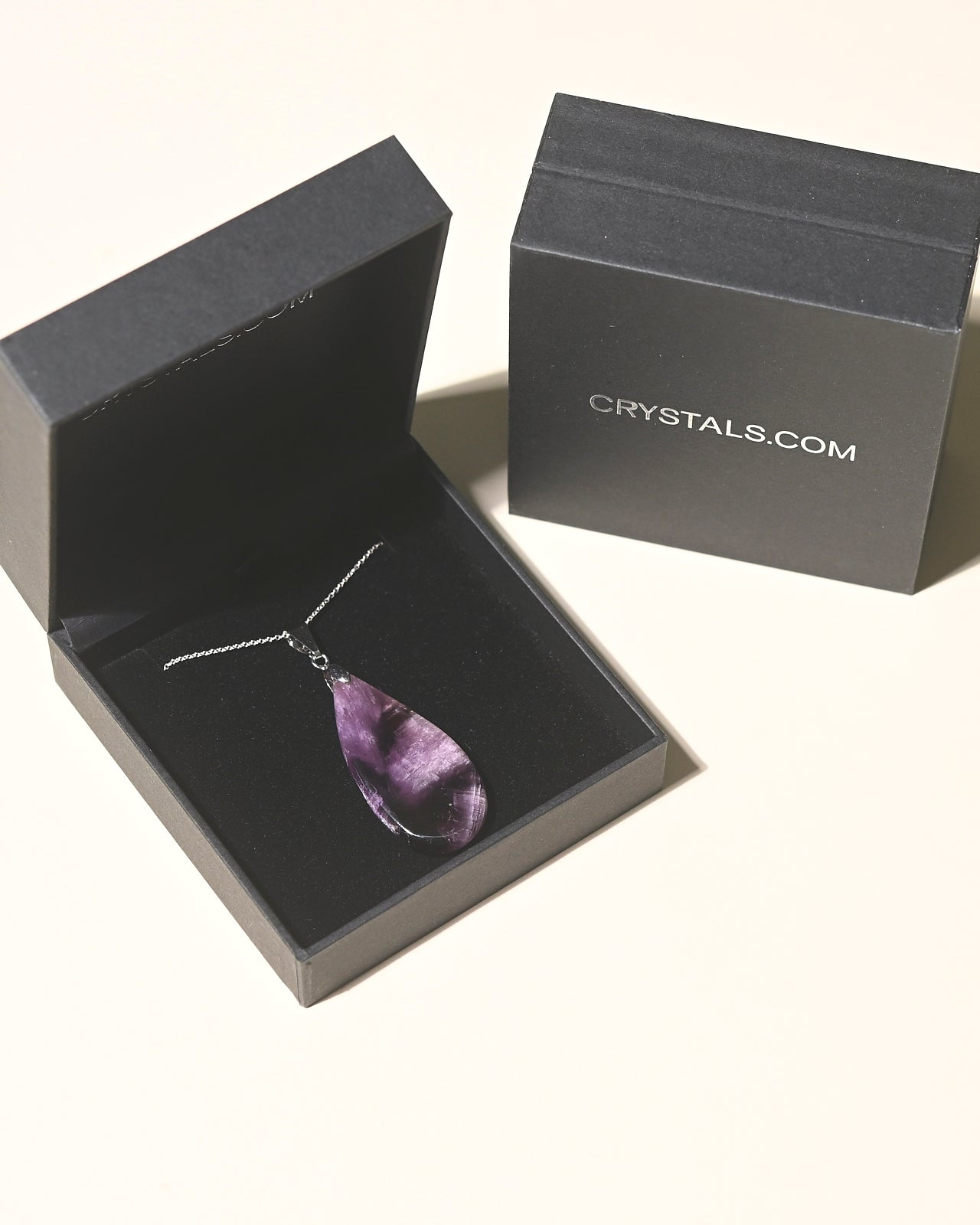
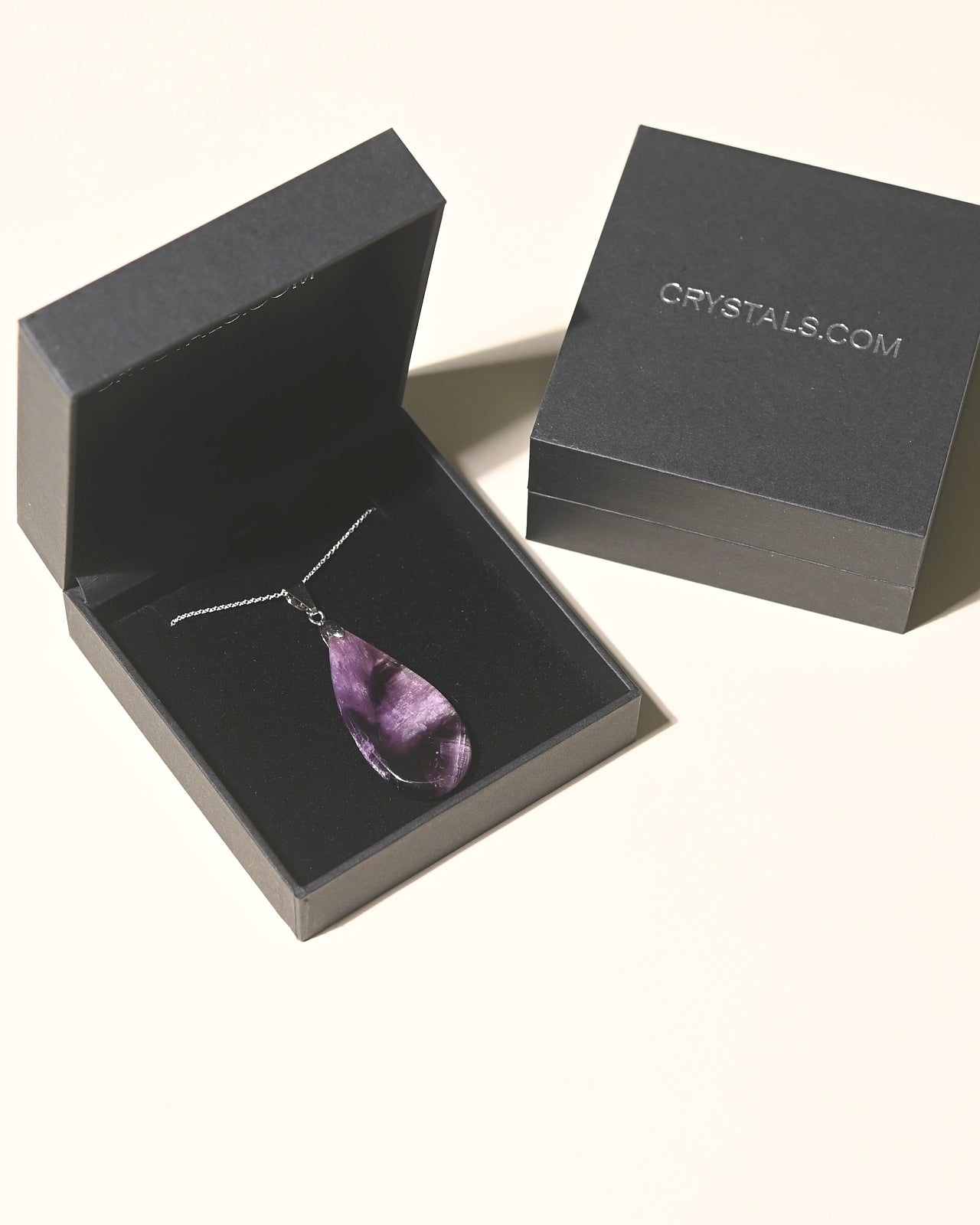
Not only is this necklace beautiful, I feel calmer when I wear it. LOVE IT

Stunning piece of rock!

Incredible specimen! Lovely for the collection

Beautiful crystals!The quality is excellent, with gorgeous color and natural details. Very happy with my purchase and would definitely recommend!

Beautiful crystals! The quality is excellent, with gorgeous color and natural details. Very happy with my purchase and would definitely recommend!

I have ordered a lot of pieces from here and they are beautiful and always arrive as described and packed and shipped fast. Always very satisfied with my purchases and appreciate buying from Brittany and her business.
Beautiful piece! Incredible quality and shipped perfectly!

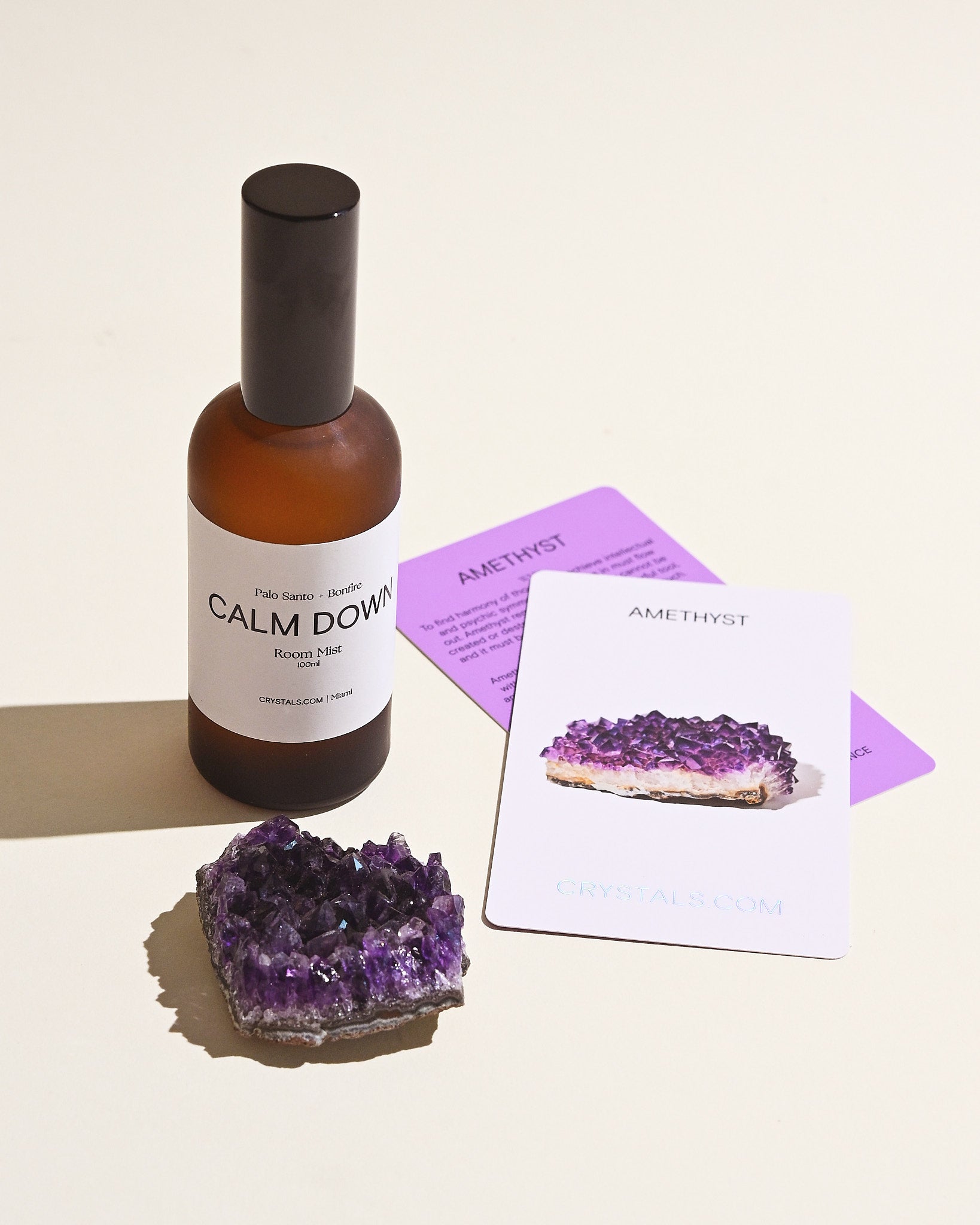
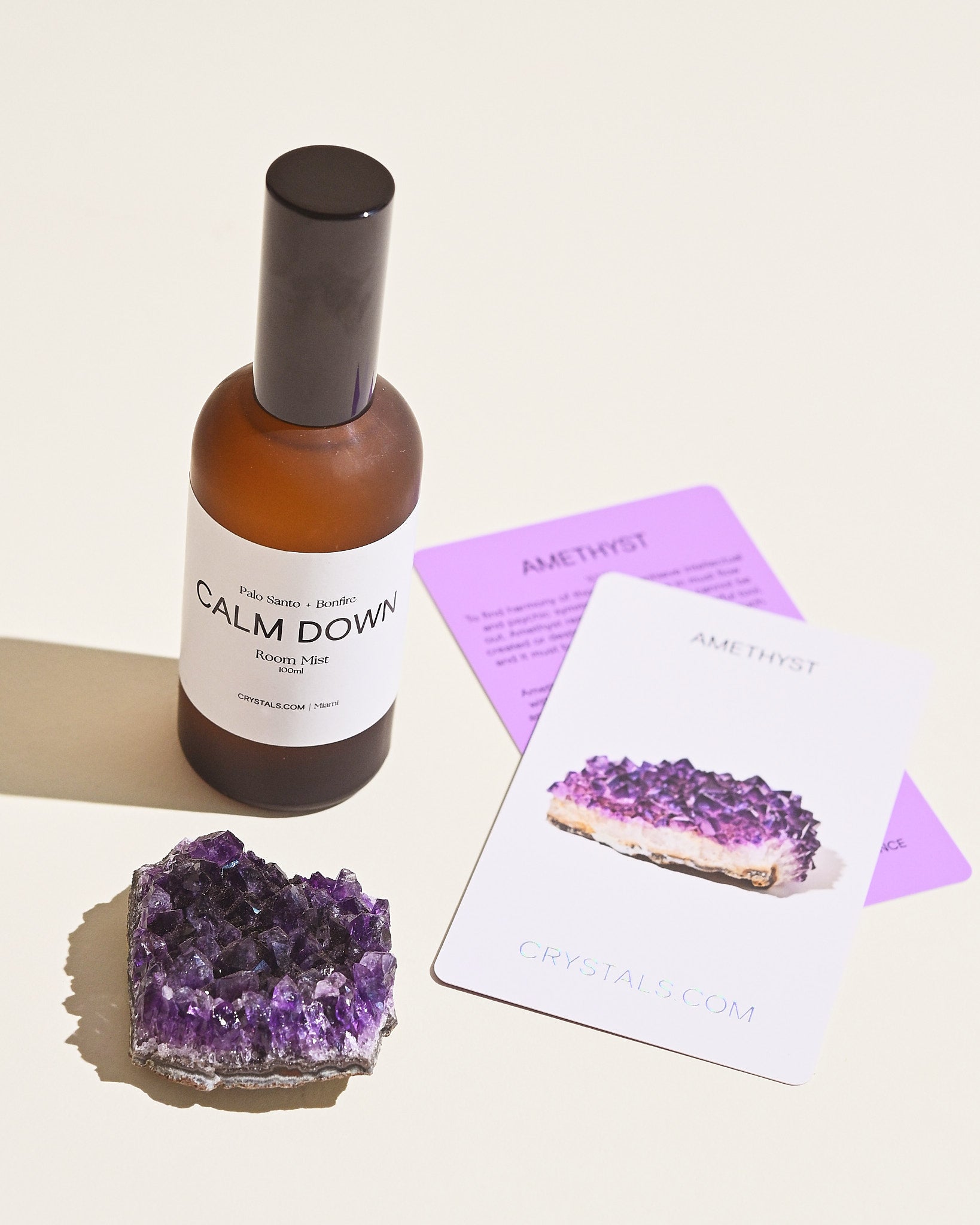
Great quality and I loved the information cards.
Great quality and I loved the information card it came with.

I have purchased several pieces from Crystals.com and keep coming back for more. :) This is my second amethyst piece. The color of the amethyst is a deep purple. Great craftsmanship!!

The smaller bead size was even more beautiful!
Really pretty!

Beautiful! The size of each rock is perfect!

A Sanctuary of Natural Beauty
Every crystal here was discovered by hand, selected with intuition, and photographed in its true light.
One-of-a-Kind. Forever Pieces.
Let the Universe Decide


