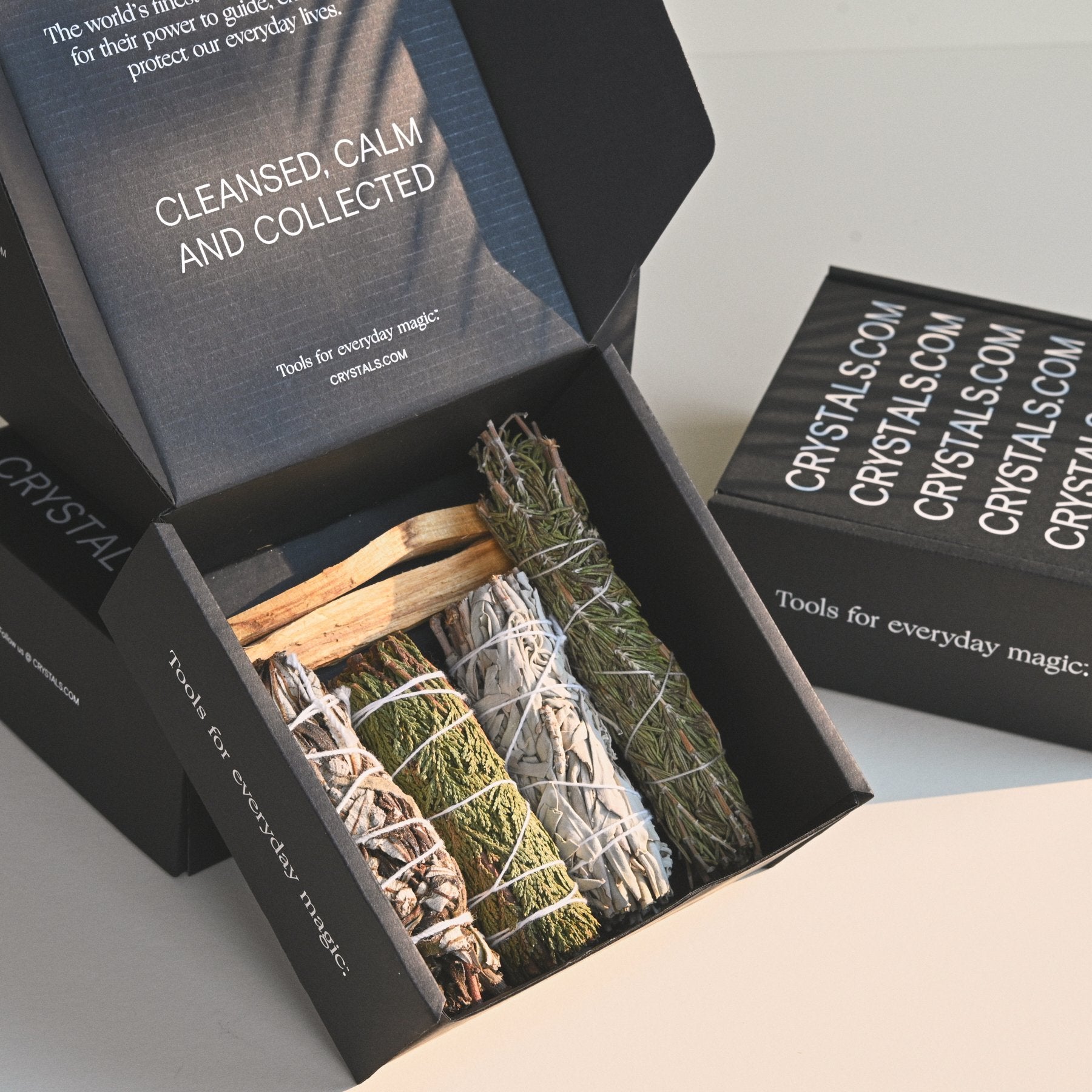
There's a reason the world's most considered interiors feel different the moment you walk in. It's not just the furniture or the light. It's the air itself — curated, intentional, alive.
Smudging — the practice of burning dried herbs and botanicals to cleanse a space — has been part of human ritual for thousands of years, spanning cultures from ancient Egypt to indigenous North America. Today, it's experiencing a renaissance in design-forward homes, not as a trend, but as a foundational practice for maintaining what we call atmospheric integrity: the invisible quality that makes a space feel right.
What Is Atmospheric Integrity?
Every room accumulates energy. Foot traffic, emotional conversations, seasonal shifts, even the arrival of new furniture — each leaves a residue. Atmospheric integrity is the practice of actively maintaining the energetic clarity of your space, much the way you'd maintain air quality, temperature, or acoustics.
Think of it as interior design's invisible layer. You invest in lighting design, sound insulation, and temperature control. Atmospheric integrity addresses the one dimension most people overlook: the felt quality of the air itself.
The Botanicals: What to Burn and Why
White Sage
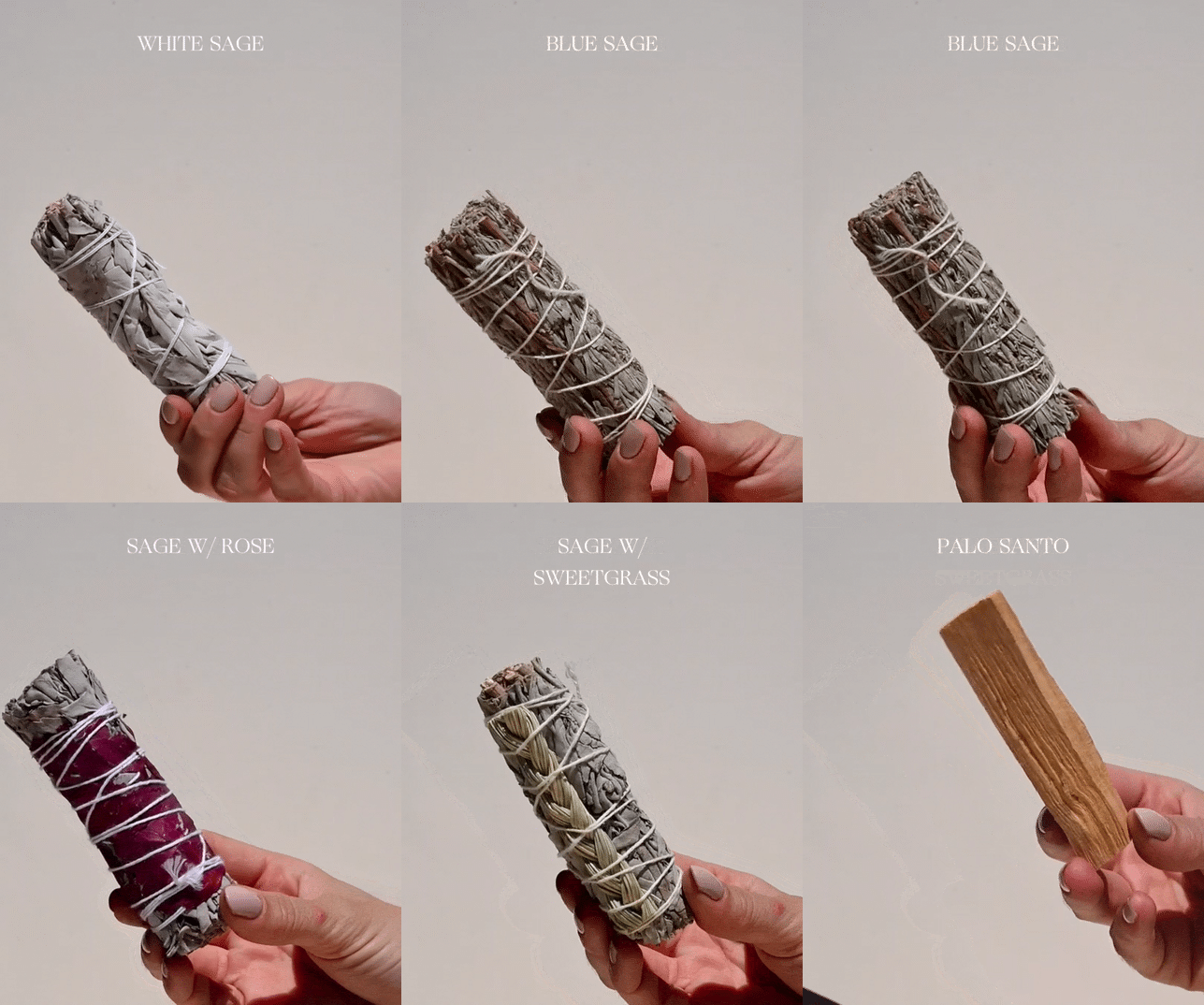
The most well-known smudging herb, white sage (Salvia apiana) produces a dense, aromatic smoke with antimicrobial properties. A 2007 study published in the Journal of Ethnopharmacology found that medicinal smoke reduced airborne bacteria by 94% within one hour. White sage is ideal for deep cleansing — after construction, a move, or a significant life change.

Palo Santo
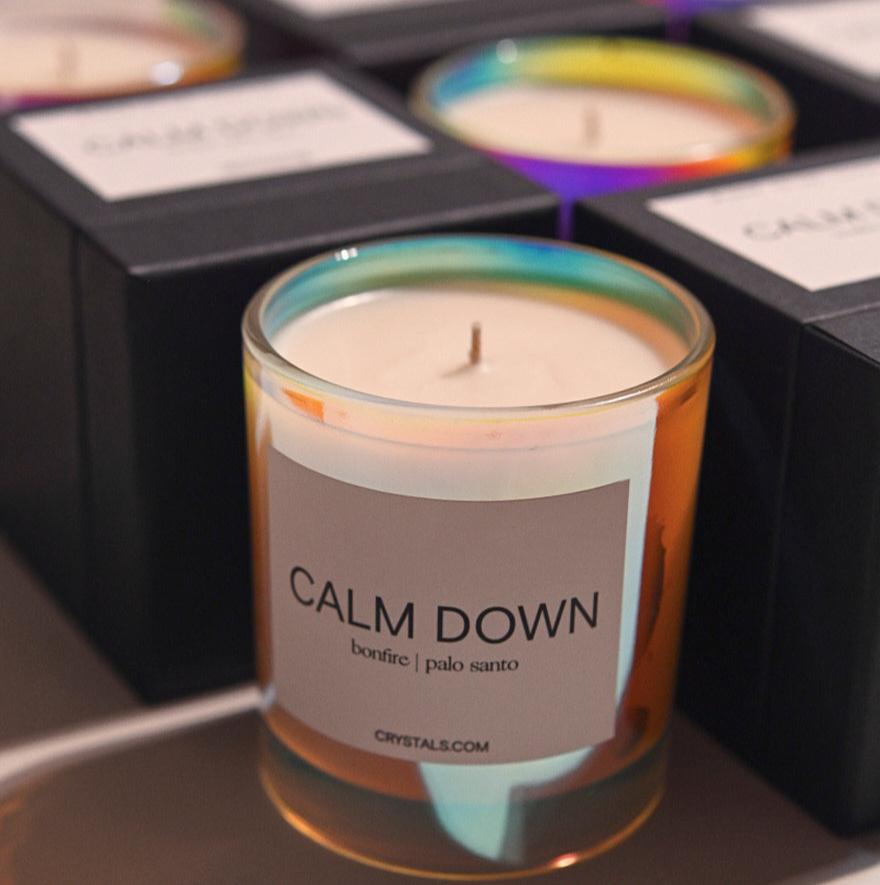
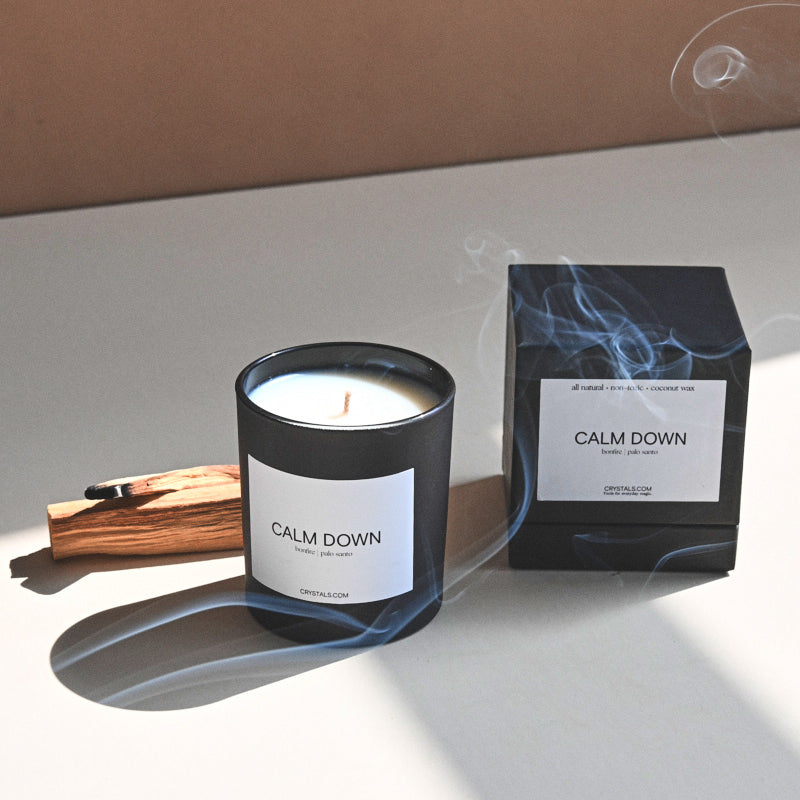
Palo Santo (Bursera graveolens) offers a lighter, citrus-forward smoke that's less about clearing and more about inviting. Its chemical compound d-limonene has documented mood-elevating properties. Sustainably harvested Palo Santo comes only from naturally fallen trees that have cured for 4-10 years — the aging process is what creates its distinctive resinous scent.
Cedar
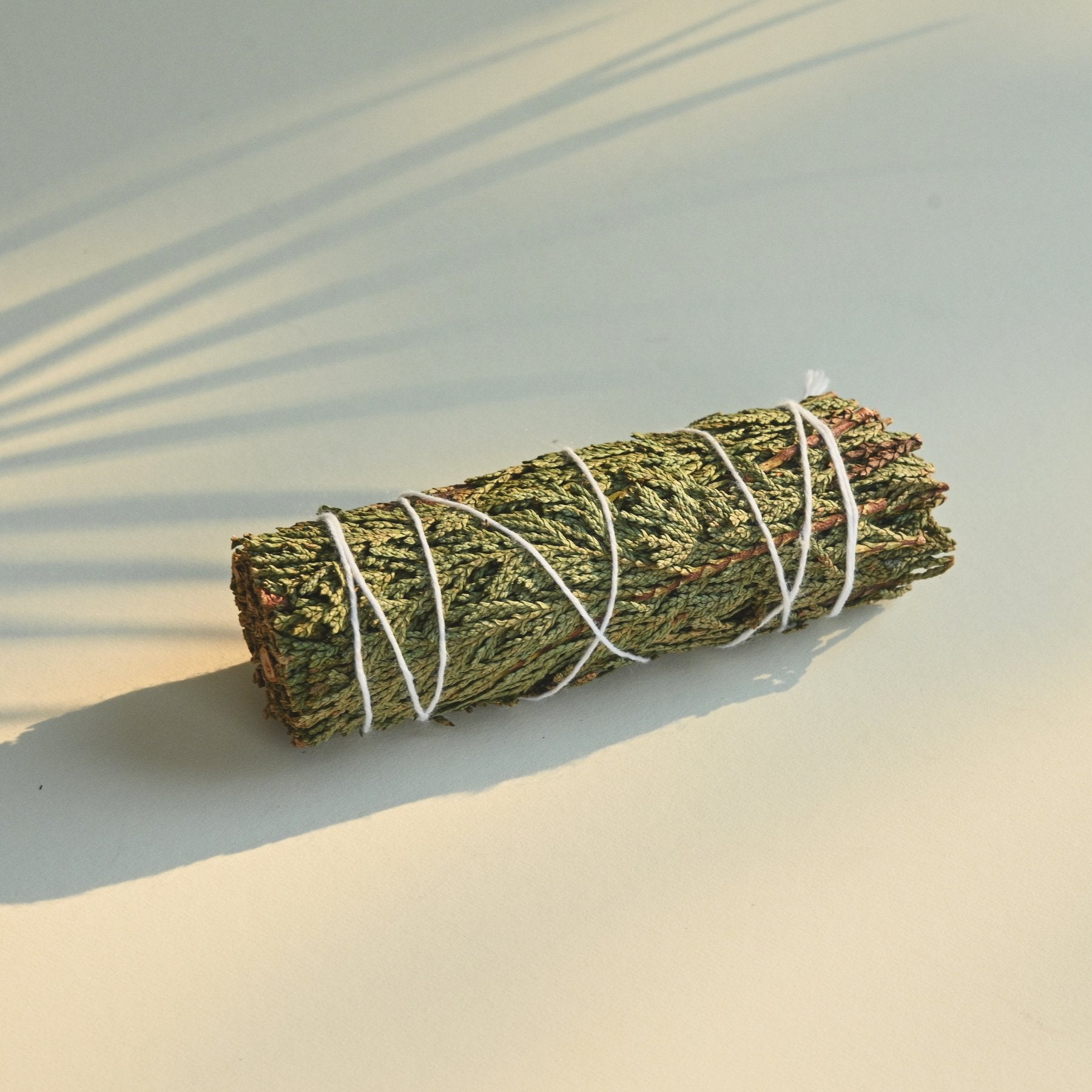
Cedar smoke carries a warm, grounding quality that makes it ideal for spaces where you want to establish permanence and protection. It's particularly effective in entryways, home offices, and bedrooms. The slow-burning, woody smoke creates a baseline warmth that lingers for hours.
Rosemary
Often overlooked, dried rosemary produces a sharp, clarifying smoke perfect for kitchen spaces and creative studios. Its bright, herbaceous quality cuts through stagnation without the heaviness of sage.
The Crystals That Amplify Smudging
Pairing smudging with the right crystals creates a layered cleansing practice. Here's what works and why:

Best Pairings
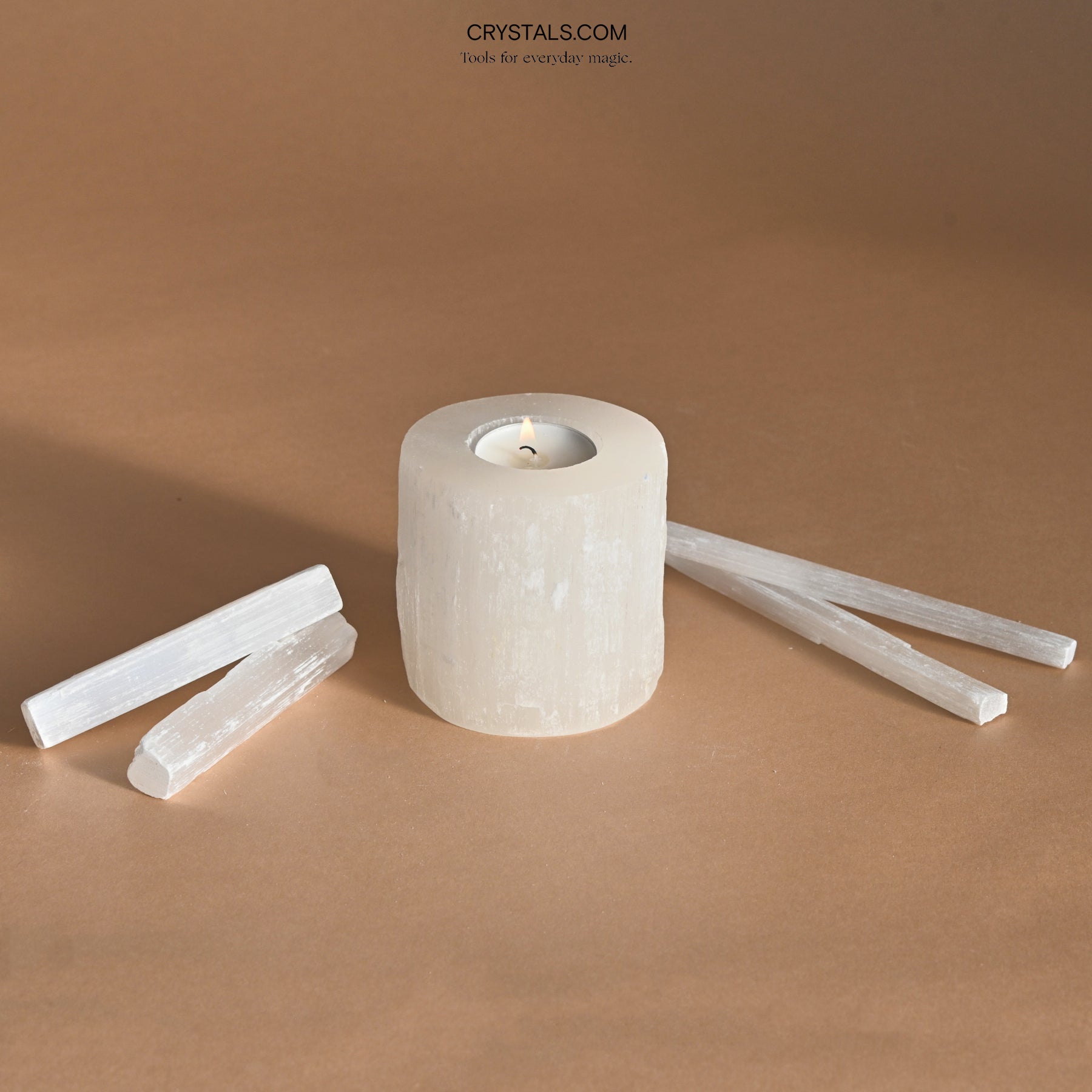
• Selenite (Selenite Cleansing Wand) — Place a selenite tower or plate near your smudging area. Selenite is self-cleansing and amplifies the clearing effect throughout the room.
• Black Tourmaline — Position at room corners or entry points. After smudging clears the space, black tourmaline (Black Tourmaline Rough) helps maintain that clarity by absorbing electromagnetic and environmental stress.
• Clear Quartz — Known as the master amplifier, clear quartz placed in the center of a room magnifies whatever intention you set during your smudging practice.
• Amethyst (Amethyst Geode) — Ideal for bedrooms and meditation spaces. Amethyst's calming frequency pairs beautifully with lavender or sage smoke.
How to Smudge: A Step-by-Step Guide
1. Open windows and doors. You need airflow. Smudging isn't about filling a room with smoke — it's about moving stagnant air out and inviting fresh energy in.

2. Set your intention. Before lighting anything, take a moment to articulate what you want to clear and what you want to invite in. This isn't spiritual theater — it's focus.
3. Light your herb bundle. Hold the flame to the tip for 20-30 seconds, then blow it out so it smolders. You want smoke, not fire.
4. Move counterclockwise. Start at your front door and move through each room counterclockwise, paying special attention to corners, closets, and any area that feels heavy or stagnant.
5. Use a fireproof vessel. An abalone shell is traditional, but any heat-safe ceramic dish works. Catch the ash as you go.

6. Close the practice. Return to where you started. Extinguish your bundle in sand. Place your crystals in their designated positions throughout the space.
When to Smudge
Smudging isn't a daily practice for most people. Think of it as a reset button. Key moments include:
• Moving into a new home or office
• After hosting guests or large gatherings
• Seasonal transitions (especially spring and fall equinox)
• After illness, conflict, or emotional upheaval
• When a room simply doesn't feel right
• Before displaying new crystal specimens in your space
Building Your Smudging Kit
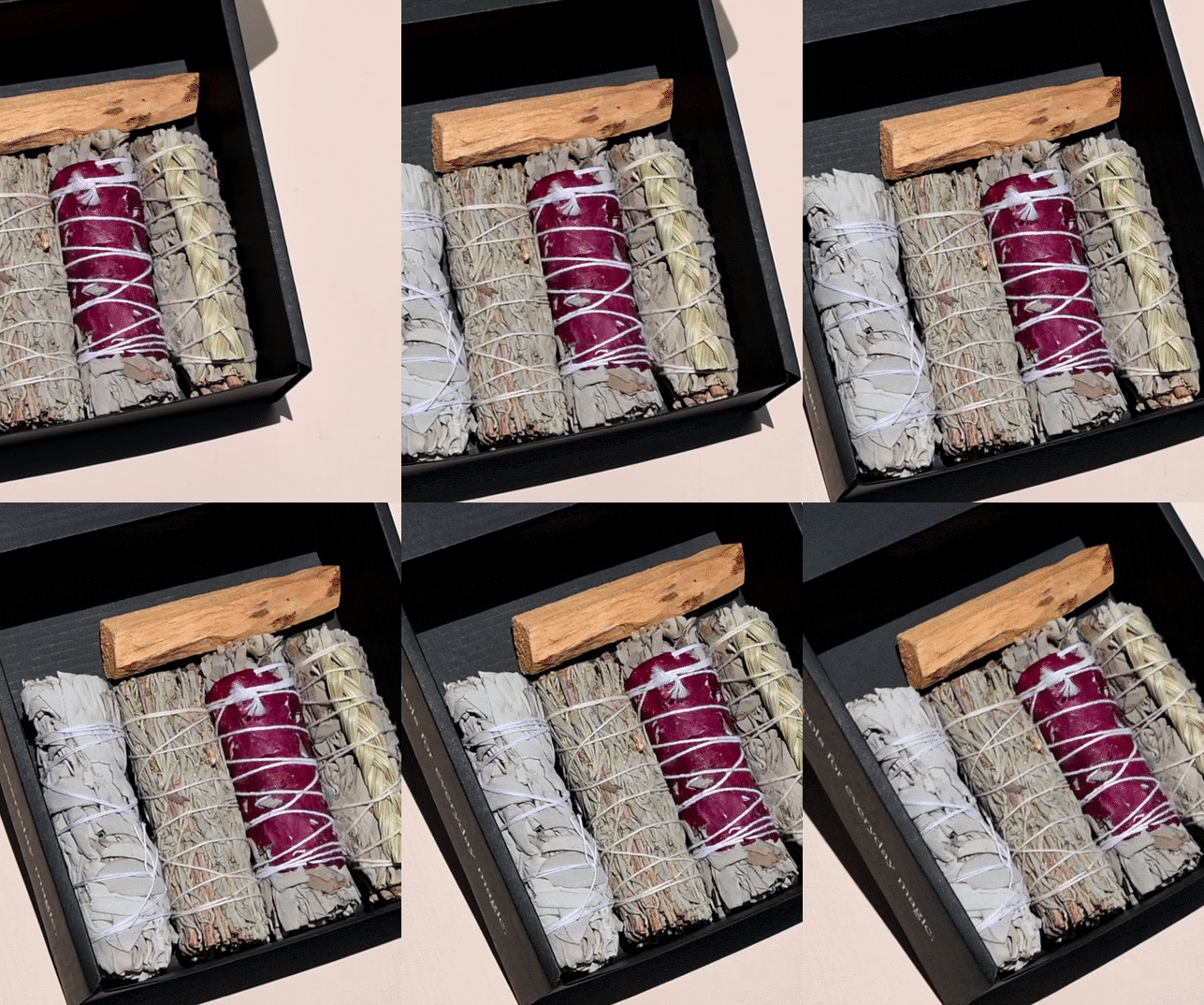
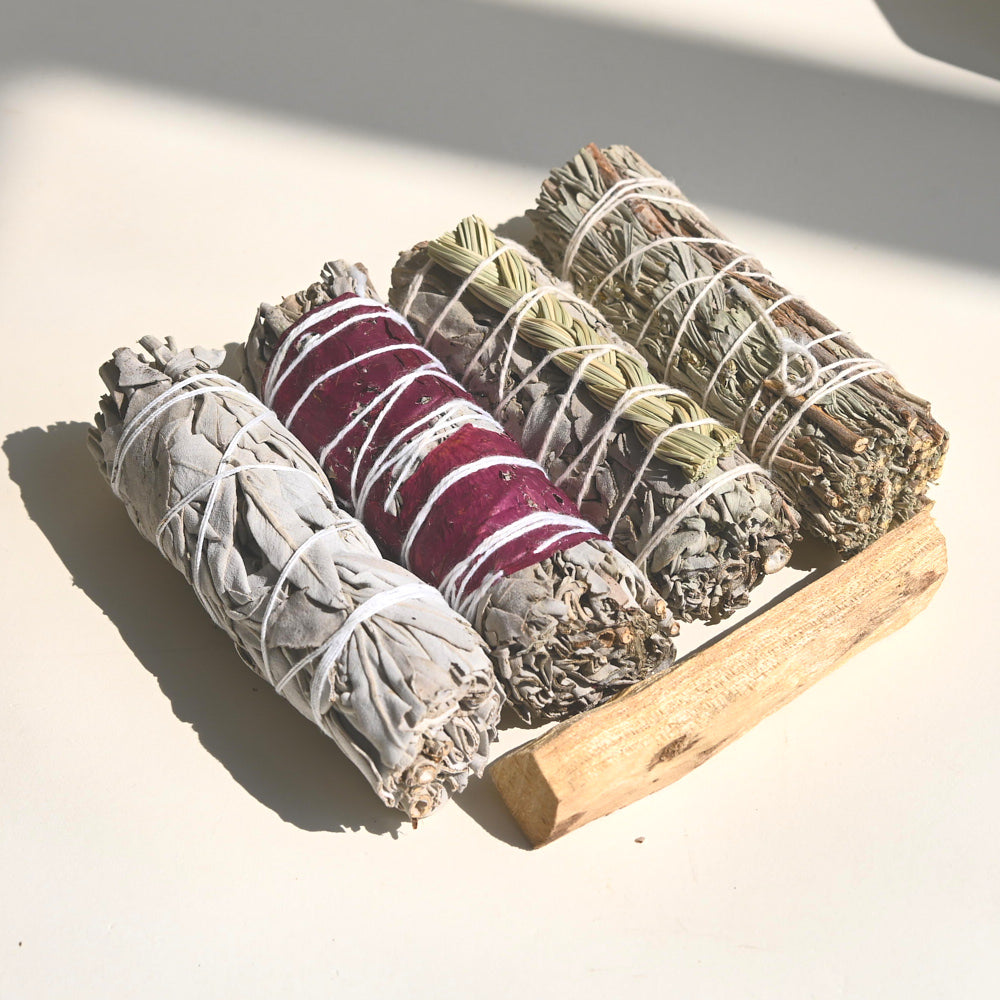
A complete smudging practice doesn't require much. Start with a white sage bundle, a Palo Santo stick, a fireproof dish, and a selenite charging plate. Add a black tourmaline piece for each major entrypoint in your home, and a clear quartz point for your primary living area.
Free shipping on orders over $150 means you can build your complete atmospheric toolkit in a single order.

The Chemistry of Smoke Cleansing
Beyond the cultural and spiritual dimensions of smudging, there is genuine chemistry at work. White sage (Salvia apiana) contains camphor, eucalyptol, and alpha-pinene, all of which have documented antimicrobial and anti-inflammatory properties. When burned, these compounds are released as volatile organic compounds that interact with airborne bacteria and particulate matter.
A 2007 study published in the Journal of Ethnopharmacology examined the effects of burning a mixture of medicinal herbs in a closed room. The researchers found that within one hour, airborne bacterial counts were reduced by 94%, and many pathogenic bacteria remained absent even 30 days later in the room that had remained closed. While this study used a specific herbal blend rather than pure sage, it provides scientific context for the antimicrobial effects of medicinal smoke.
Palo Santo's active compound, d-limonene, is classified as a monoterpene with documented anxiolytic (anti-anxiety) properties. A 2013 study in the journal Behavioural Brain Research found that limonene inhalation reduced anxiety markers in animal models. While human studies are limited, the mood-elevating effects of Palo Santo smoke are consistent with limonene's known pharmacological profile. Explore our full smoke cleanse collection to build your aromatic toolkit.
Frequency of Practice
How often you smudge depends on the energetic demands of your space. A home with high foot traffic, frequent guests, or ongoing renovation may benefit from weekly sage cleansing. A quiet studio or meditation space may only need monthly attention. The key indicator is your own perception: when a space stops feeling 'right,' that subtle discomfort is often the first signal that atmospheric maintenance is needed.
Between full smudging sessions, quick Palo Santo burns can refresh a space in 2-3 minutes. Keep a stick and a fireproof dish on a shelf near your primary living area for spontaneous use. Pair with a selenite charging plate to maintain clarity between sessions.
Creating a Smudging Station
A dedicated smudging station elevates the practice from casual ritual to intentional design element. Select a heat-resistant surface: a marble tray, ceramic dish, or stone plate. Arrange your sage bundles, Palo Santo sticks, and matches alongside a selenite wand for post-cleansing energy maintenance and a clear quartz point for intention amplification. For a complete guide to crystal placement in your home, see our crystals for every room guide.
Beyond Sage: Alternative Cleansing Methods
While white sage is the most commonly known smudging material, it is not the only option and in many cases is not the most appropriate one. Palo santo, harvested from naturally fallen branches of the Bursera graveolens tree, produces a warm, citrusy smoke that is less dense than sage. Cedar and sweetgrass are traditional in many North American indigenous practices. Rosemary, lavender, and mugwort are European alternatives with long cleansing traditions.
Sound cleansing is an entirely smoke-free alternative. Singing bowls, tuning forks, bells, and even hand clapping can shift the energy of a space. Selenite wands are popular for energetic cleansing without any smoke at all. Simply passing a selenite wand through a space or around a crystal is a quiet, apartment-friendly method.
For crystals specifically, running water, moonlight, and burial in dry salt or earth are all traditional cleansing methods. Different stones respond best to different methods. Porous stones like selenite and malachite should never be submerged in water. Hard, non-porous stones like quartz and amethyst can handle gentle rinsing. For detailed care instructions by mineral type, explore our Crystal Archive.
Creating a Smoke-Cleansing Ritual Space
Dedicate a specific area for your cleansing practice. A heat-safe ceramic dish or abalone shell to hold your smudge materials, a selenite charging plate for your crystals, and a small collection of your preferred herbs or resins stored in airtight containers. Keeping these items together in a designated spot removes friction from the practice. When everything is accessible, you are more likely to cleanse regularly rather than waiting until your space feels overwhelmed. A well-maintained cleansing station also serves as a visual anchor for mindfulness throughout the day.
Discover Your Human Design
Crystals amplify energy — but do you know your unique energy type? Human Design reveals how you're wired to make decisions, work, and rest. It's the owner's manual you were born with.
Explore Human DesignGet 10% Off Your First Order
Plus early access to new arrivals, collector drops, and crystal guides. Join 15,000+ crystal lovers.