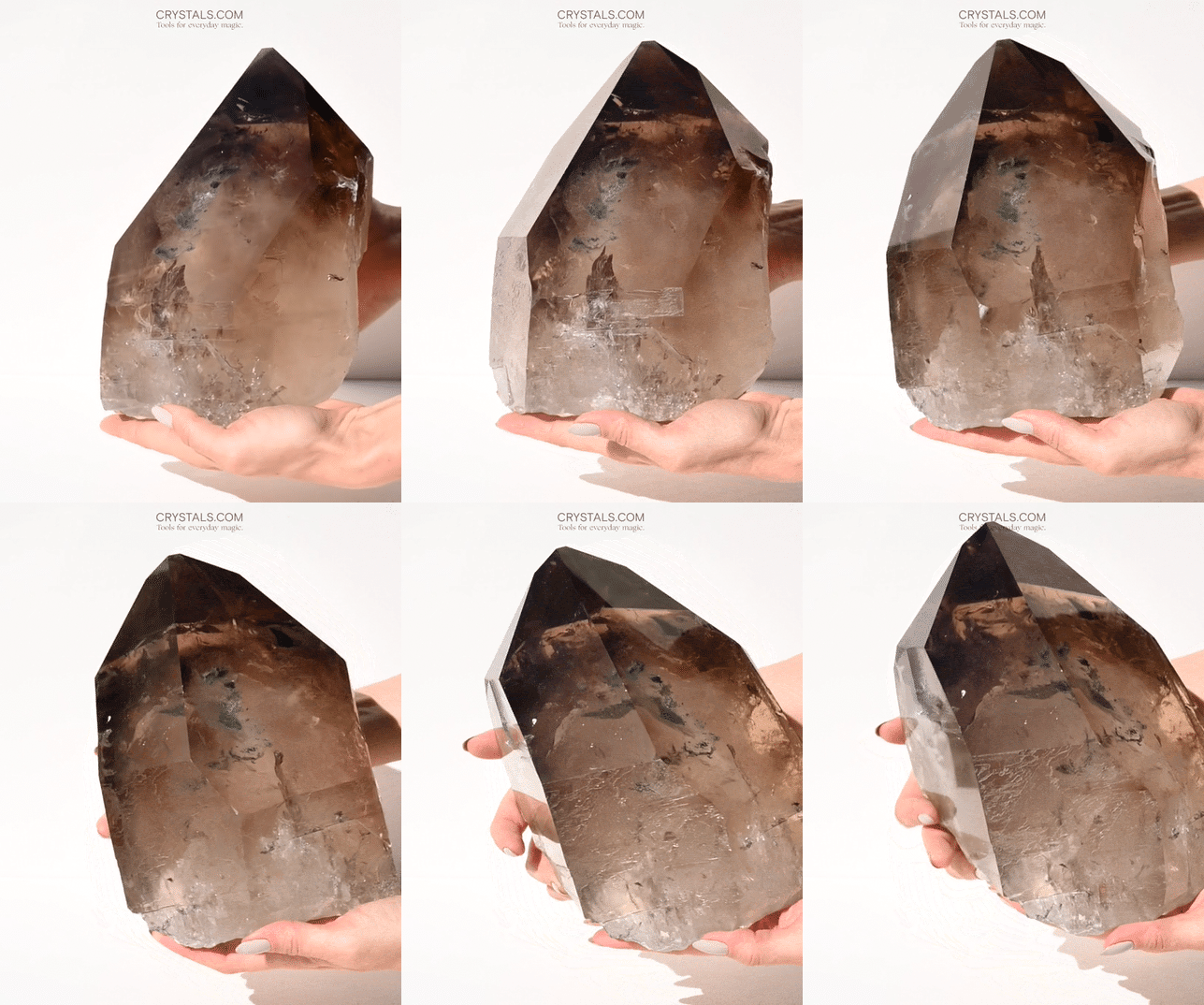
Smoky Quartz: Mineralogy, Localities, and How to Choose a Specimen Worth Keeping
From Swiss Alpine glaciers to the mountains of Colorado, smoky quartz is one of Earth's most geologically fascinating gems. Here's everything a collector should know.

Smoky Quartz Point — Shop Now
What Smoky Quartz Actually Is
Smoky quartz is silicon dioxide (SiO2) -- the same base mineral as clear quartz, amethyst, and citrine. What sets it apart is its color: a rich, translucent brown ranging from pale champagne to near-black. That color isn't a surface coating or an impurity in the traditional sense. It's the result of natural ionizing radiation acting on microscopic aluminum atoms trapped within the crystal lattice.
Here's what happens at the atomic level. When quartz grows, trace amounts of aluminum can substitute for silicon atoms within the crystal structure. On their own, these aluminum atoms are colorless. But when exposed to natural gamma radiation from surrounding granite or uranium-bearing rock over millions of years, the aluminum atoms capture electrons from the lattice, forming what mineralogists call "color centers." These color centers absorb visible light in a way that produces the characteristic smoky brown hue.
The depth of color directly correlates to the intensity and duration of radiation exposure. A pale champagne-toned specimen likely received lower doses or shorter exposure. Deeply saturated chocolate-brown or near-black specimens -- sometimes called morion -- absorbed significantly more. Specimens that are nearly opaque black are most often found in high-radiation geological environments, particularly in granitic pegmatites.
One important detail for collectors: the color can be reversed. Heat above approximately 300-400 degrees Celsius will bleach smoky quartz back to colorless. Some commercially available smoky quartz has been artificially irradiated to intensify color. Naturally irradiated specimens from high-quality localities are distinguishable by their origin documentation and the specific quality of their color -- natural smoky quartz tends toward warmer brown tones, while artificially irradiated stones can appear grayish or almost greenish-brown.
Notable Localities Around the World
Smoky quartz is found on every continent, but certain localities produce specimens with distinctive character that serious collectors actively seek out.
Swiss Alps. The Alps have been producing extraordinary smoky quartz for centuries. Swiss Alpine specimens are celebrated for their exceptional clarity, precise terminations, and the golden-brown warmth of their color. The crystals form in fissures and cavities within the granitic basement rock, and they often appear in clusters with feldspar, chlorite, and sometimes adularia. Swiss examples were historically called "smoky topaz" by jewelers -- an entirely inaccurate but commercially convenient misnomer that persisted for generations. The finest Swiss specimens command significant collector prices today.
Brazil. The world's largest producer by volume, Brazil supplies the bulk of smoky quartz seen in the gem trade. The Minas Gerais region in particular yields large, well-formed crystals, often in enormous sizes that are rarely seen from other localities. Brazilian smoky quartz tends toward darker, more saturated tones. Many of the carving-quality smoky quartz spheres, towers, and decorative objects on the market originate here.
Pikes Peak, Colorado. Colorado smoky quartz has a devoted collector following. The Pikes Peak granite produced exceptional specimens -- often associated with amazonite, a vivid blue-green feldspar -- that have a warm, honey-brown tone. The contrast between smoky quartz and blue-green amazonite makes for some of the most aesthetically striking combination specimens in mineralogy. The locality is largely collected out today, making antique Colorado specimens increasingly desirable.
Scotland. Scotland has claimed smoky quartz as its national gem, calling it "cairngorm" after the Cairngorm Mountains where significant deposits were found. Scottish cairngorms were prized in 18th and 19th century jewelry, particularly set into kilt pins and sgian-dubhs. Authentic Scottish cairngorm specimens are now rare; most material sold as cairngorm today originates in Brazil or elsewhere.

Amethyst Point -- a natural pairing with smoky quartz in any collection. Shop Now
What to Look for When Buying Smoky Quartz
Not all smoky quartz is created equal. These are the factors that separate a forgettable specimen from one you'll keep for decades.
Color quality. Natural smoky quartz should have a warm, even, translucent tone -- you should be able to see light passing through the crystal even at its darkest points. Very dark specimens that appear completely opaque lose some of their visual interest. Look for specimens where light interaction is still visible. Be cautious of specimens with a flat, cold gray tone, which can indicate artificial irradiation.
Termination quality. The apex of a quartz crystal -- where the faces meet to form a point -- is called the termination. Sharp, undamaged terminations on natural points are a significant quality marker. Chips, dings, or repolished terminations all reduce the specimen's value and authenticity.
Inclusions and phantoms. Internal features can dramatically increase a specimen's interest and value. Ghost-like "phantom" formations -- where an inner crystal outline is visible within the main crystal -- indicate growth interruptions where the crystal paused, collected mineral deposits on its surface, then resumed growing. These are beautiful and entirely natural. Rutile inclusions (fine gold needles), chlorite veils, and fluid inclusions all add character worth seeking.
Matrix and association. Crystals still attached to their original host rock (matrix) are generally more scientifically significant and often more valuable than loose crystals. Association with other minerals -- amazonite, feldspar, fluorite, chlorite -- adds geological context and visual variety.
Locality documentation. This matters more than many buyers realize. A smoky quartz crystal with credible documentation of its origin from the Swiss Alps or Pikes Peak is worth meaningfully more than an identical-looking specimen with unknown provenance. Reputable dealers document locality; be skeptical of anyone who can't tell you where a specimen came from.
Pairing Smoky Quartz in Home Design
Smoky quartz is one of the most versatile minerals for interior display precisely because its warm brown-gray tones are inherently neutral. It doesn't clash -- it anchors.
In warm, earthy interiors -- think terracotta, linen, walnut wood -- a large smoky quartz cluster or tower reads as an organic extension of the palette. The mineral's translucency means it interacts beautifully with natural light, shifting in tone from cool morning to golden afternoon. Position clusters near a window and watch the crystal come alive at different hours.
For contemporary or minimalist spaces, a single well-formed smoky quartz point on a simple marble or concrete surface creates a striking focal object without visual clutter. The geometry of a natural crystal termination is precise and architectural in a way that complements clean lines.
Pairing smoky quartz with other minerals creates collector vignettes that read as curated rather than decorative. Natural pairings include:
- Clear quartz for tonal contrast and light amplification
- Amethyst for color contrast -- the purple-brown combination has geological logic, as both are SiO2
- Pyrite clusters for metallic warmth against the smoky brown
- Amazonite or labradorite for a blue-green contrast that mirrors natural geological associations
- Black tourmaline for a monochromatic deep palette

Serpentine Pyramid with Pyrite -- pairs beautifully with smoky quartz in a mineral vignette. Shop Now
Display and Care
Smoky quartz is relatively durable at Mohs 7, meaning it will resist most household scratching from dust and handling. However, its color is sensitive to prolonged intense heat and ultraviolet light exposure. Extended placement in direct, harsh sunlight -- particularly in south-facing windows that concentrate UV through glass -- can cause gradual fading over years. Display in bright ambient light is fine; sustained direct sun exposure is worth avoiding for specimens you care about long-term.
Cleaning is straightforward: a soft dry cloth or a slightly damp cloth is sufficient for dust and fingerprints. Avoid ultrasonic cleaners, harsh chemicals, and dramatic temperature changes. Natural crystal faces are glass-hard but can chip if knocked against hard surfaces, so display locations with low traffic risk are ideal for fine specimens.
For clusters and matrix specimens with irregular surfaces, a soft artist's brush works well to remove dust from crevices. If you need to clean more thoroughly, plain room-temperature water and a soft brush are safe. Let specimens air dry completely before returning them to display.
Smoky quartz stores well wrapped in acid-free tissue in a box or cabinet. For valuable specimens, individual compartments prevent crystals from contacting each other and causing surface damage.
Explore more on the blog: Crystal Guides and Collector Resources
Discover Your Human Design
Crystals amplify energy -- but do you know your unique energy type? Human Design reveals how you're wired to make decisions, work, and rest.
Explore Human DesignGet 10% Off Your First Order
Plus early access to new arrivals, collector drops, and crystal guides. Join 15,000+ crystal lovers.