Shop Crystals for This Energy
Free shipping on orders over $150
Sapphire has been the stone of royalty, wisdom, and divine favor for over 2,500 years. From King Solomon's seal ring to Princess Diana's engagement ring (now Kate Middleton's), sapphire has adorned the powerful, the wise, and the deeply devoted.
What Is Sapphire?
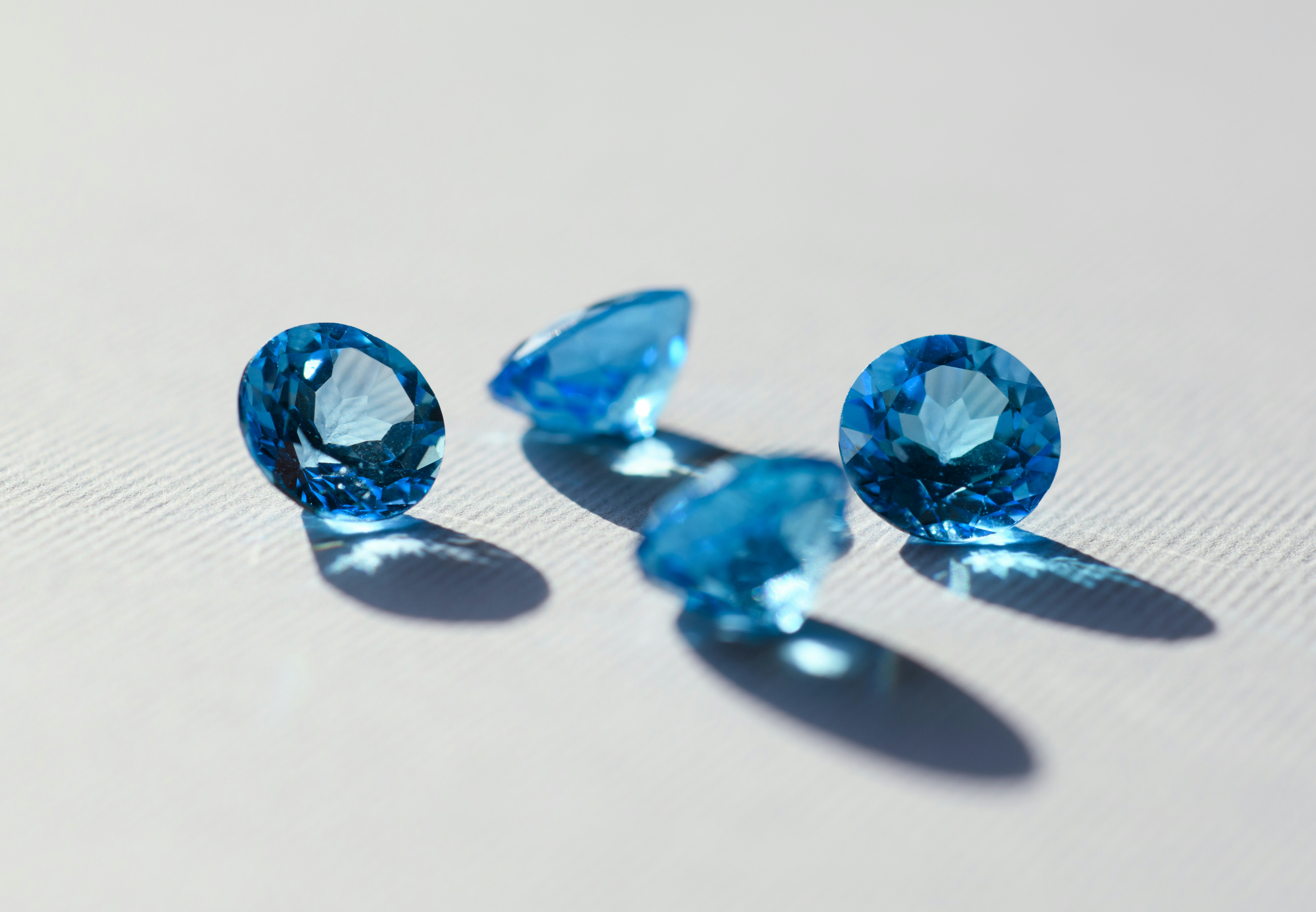
Sapphire is the gem variety of the mineral corundum (aluminum oxide, Al₂O₃) — the same mineral family as ruby. In fact, sapphire and ruby are identical except for their coloring trace elements. Ruby gets its red from chromium; sapphire gets its blue from iron and titanium. All other colors of gem corundum are technically sapphires: pink, yellow, green, orange, purple, and colorless.
Corundum is the second-hardest natural mineral (9 on the Mohs scale, after diamond at 10), making sapphire exceptionally durable for jewelry and virtually maintenance-free as a collection piece.

The Colors of Sapphire
Blue — The classic. Kashmir sapphires (from the disputed India-Pakistan border region) are considered the finest ever mined: a velvety, "cornflower" blue with a slight haziness that scatters light internally. Kashmir mining ceased in the early 1900s, making these stones extraordinarily rare and valuable. Today, Sri Lanka (Ceylon) and Madagascar are the primary sources of fine blue sapphire.
Padparadscha — A rare pinkish-orange sapphire named from the Sinhalese word for lotus blossom. Genuine padparadscha sapphires from Sri Lanka are among the most valuable colored gemstones, with fine stones exceeding $30,000 per carat.
Star sapphire — Contains needle-like inclusions of rutile that create a six-rayed star effect (asterism) when the stone is cut as a cabochon. The Star of India (563 carats, American Museum of Natural History) is the most famous example.
Fancy sapphires — Yellow, pink, orange, green, and purple sapphires offer the hardness and brilliance of corundum in every color of the rainbow. Montana produces distinctive blue-green and teal sapphires popular in contemporary jewelry design.
Sapphire in Crystal Collections
While most sapphires are collected as faceted gemstones, rough corundum crystals make striking mineral specimens. Ruby-in-zoisite from Tanzania shows vivid red corundum crystals embedded in green zoisite matrix — one of the most colorful mineral combinations in nature.
For September-born crystal lovers who want to honor their birth month with display specimens, consider these corundum-related options:
• Rough sapphire crystals on matrix from Madagascar or Sri Lanka
• Ruby-in-zoisite — polished or raw, always dramatic
• Star sapphire cabochons — display under a single point light source to see the star

Crystal Alternatives for September
If sapphire is outside your budget, several crystals share its blue frequency and associations with wisdom and clarity:
• Lapis Lazuli (Lapis Lazuli Bracelet) — Deep blue with gold pyrite (Pyrite Cluster) flecks. Associated with truth, wisdom, and inner knowing since ancient Egypt.
• Sodalite — Rich blue with white veining. Supports analytical thinking and articulate communication.
• Labradorite — While not blue in body color, labradorite's iridescent flash often shows brilliant blues that rival sapphire for visual drama.
![[png]](https://cdn.shopify.com/s/files/1/0252/6845/3410/products/lapiz-sphere-1.9-_260-4.2in-21229.jpg?v=1762527892)
Shop September crystals in our full collection. Free shipping on orders over $150.
Discover Your Human Design
Crystals amplify energy — but do you know your unique energy type? Human Design reveals how you're wired to make decisions, work, and rest.
Explore Human DesignSapphire Mineralogy: Inside the Crystal
Sapphire and ruby are both varieties of the mineral corundum — aluminum oxide (Al2O3) — the second hardest natural mineral after diamond (Mohs hardness 9). Pure corundum is colorless. What creates sapphire's famous blue is the presence of trace amounts of titanium (Ti4+) and iron (Fe2+) in the crystal lattice. When these two elements sit adjacent to each other in the corundum structure, an intervalence charge transfer occurs — an electron jumps between the iron and titanium atoms, absorbing orange and yellow wavelengths of light and transmitting blue.
This mechanism means that sapphire's blue is not caused by a single element (unlike ruby's red, which comes solely from chromium). The interplay between two elements makes sapphire's color chemistry more complex and explains why sapphire blue varies more than ruby red — the ratio of titanium to iron, along with their exact positions in the crystal lattice, produces everything from pale cornflower to deep midnight blue.
Fancy Sapphires: Beyond Blue
While blue sapphire gets the most attention, corundum occurs in virtually every color except red (which is classified as ruby by convention). These non-blue sapphires are called "fancy sapphires" and include:
- Padparadscha: A rare pink-orange variety named after the Sinhalese word for lotus blossom. Genuine padparadscha sapphires, primarily from Sri Lanka, are among the most valuable colored gemstones in the world.
- Yellow sapphire: Colored by iron (Fe3+) alone. Major sources include Sri Lanka, Madagascar, and Australia.
- Pink sapphire: Colored by trace chromium — the same element that makes ruby red, but in smaller concentrations. The boundary between pink sapphire and ruby is debated in the gem trade.
- Green sapphire: Colored by iron, often with a blue or yellow secondary hue. Australian sapphires frequently appear green due to high iron content.
- Star sapphire: Contains needle-like inclusions of the mineral rutile (TiO2) arranged in three intersecting sets at 60-degree angles. When cut as a cabochon, these inclusions create a six-rayed star effect called asterism.
World's Great Sapphire Localities
Kashmir, India
Kashmir sapphires, discovered in the 1880s in the Zanskar Range of the Himalayas at over 14,000 feet elevation, are considered the finest blue sapphires ever found. Their characteristic "velvety" or "sleepy" appearance comes from microscopic rutile silk inclusions that scatter light within the stone, creating a soft, luminous blue unlike any other source. The original deposit was largely exhausted by the early 1900s, making Kashmir sapphires exceptionally valuable at auction — individual stones have sold for over $6 million per carat.
Myanmar (Burma)
The Mogok Valley in central Myanmar has produced exceptional sapphires for centuries. Burmese sapphires tend toward a rich, saturated "royal blue" with a slightly violet secondary hue. The Mogok tract also produces some of the world's finest rubies, spinels, and other gemstones — it is arguably the most mineralogically significant gem-bearing region on Earth.
Sri Lanka (Ceylon)
Sri Lanka has been a sapphire source for over 2,000 years. The island's gem gravels produce sapphires in every color, including the prized padparadscha. Sri Lankan sapphires tend toward lighter, brighter tones than Kashmir or Burmese stones, and the country's gem trade is one of the oldest continuously operating in the world.
Madagascar
Since significant deposits were discovered in the late 1990s, Madagascar has become one of the world's largest sapphire producers. The Ilakaka deposit, discovered in 1998, triggered one of the largest gem rushes in modern history, transforming a remote village into a mining boomtown virtually overnight.
How to Identify Natural vs. Synthetic Sapphire
Synthetic sapphire (created in laboratories since 1902 using the Verneuil flame-fusion process) is chemically identical to natural sapphire. Distinguishing them requires examining inclusions under magnification: natural sapphires contain mineral inclusions, growth zoning, and rutile silk. Synthetic sapphires show curved growth lines (striae) and gas bubbles. A qualified gemologist with proper equipment can reliably distinguish natural from synthetic.
Caring for Sapphire
Sapphire's exceptional hardness (9 on the Mohs scale) makes it one of the most durable gemstones for everyday wear. It can be safely cleaned with warm soapy water and a soft brush. Ultrasonic cleaners are generally safe for untreated sapphires but should be avoided for heat-treated or fracture-filled stones. Store sapphires separately from softer gemstones to prevent scratching — while sapphire is extremely scratch-resistant, it can scratch almost anything else in your jewelry box.
Explore our sapphire collection and crystal jewelry for September birthstone gifts. Browse our full birthstone guide to find the perfect stone for any birth month. Free shipping on orders over $150.
Sapphire in Culture and History
Sapphire's cultural significance spans virtually every major civilization. In ancient Persia, it was believed that the Earth rested on a giant sapphire whose reflection gave the sky its blue color. Medieval Europeans believed sapphires cured eye diseases and preserved chastity. The Roman Catholic Church adopted sapphire as the stone of ecclesiastical authority — cardinals wore sapphire rings on their right hands, and the faithful kissed the stone when greeting a cardinal.
The most famous sapphire in modern history is the 12-carat oval Ceylon sapphire in the British Royal engagement ring — originally purchased by Prince Charles for Lady Diana Spencer in 1981 for approximately $37,000 (valued today at over $500,000). The ring broke royal protocol by being selected from a jeweler's catalog rather than custom-commissioned, and it has since become the world's most recognized piece of sapphire jewelry.
In the gem trade, the most valued sapphire color is described as "cornflower blue" — a medium-toned, highly saturated blue with violet secondary hues and a velvety quality caused by fine, evenly distributed silk inclusions. This ideal is most consistently achieved by Kashmir sapphires, making them the standard against which all other blue sapphires are measured.
Heat Treatment and Enhancement: What Buyers Should Know
An estimated 90-95% of sapphires on the commercial market have been heat-treated to improve color and clarity. This is a centuries-old practice — Sri Lankan gem miners have heated sapphires in charcoal fires since at least the first century CE. Modern heat treatment uses controlled furnaces at temperatures between 1,200-1,800 degrees Celsius to dissolve silk inclusions (improving clarity) and modify iron-titanium charge transfer (enhancing blue color).
Heat treatment is universally accepted in the gem trade and does not significantly affect a sapphire's value at most quality levels. However, unheated sapphires with fine natural color command significant premiums — sometimes 50-200% more than equivalent heated stones — because they represent the mineral's beauty as nature created it, without human intervention.
Less accepted treatments include beryllium diffusion (which adds beryllium to create or enhance color in the outer layers of the stone) and fracture filling (which fills surface-reaching fractures with lead glass to improve apparent clarity). These treatments must be disclosed by law and significantly reduce a sapphire's value.
When purchasing sapphires, ask whether the stone has been treated and what treatment was applied. Reputable sellers disclose this information freely. For important purchases, request a laboratory report from a recognized gemological laboratory (GIA, SSEF, or Gubelin).
Get 10% Off Your First Order
Plus early access to new arrivals, collector drops, and crystal guides. Join 15,000+ crystal lovers.
Related Guides
Discover Your Crystal Match
Select your sign and get personalized crystal recommendations delivered to your inbox.