There is something quietly radical about slipping a stone into your carry-on. Long before GPS, international terminals, and noise-cancelling headphones, travelers carried crystals. Roman sailors tucked Aquamarine under the bow. Medieval pilgrims wore Moonstone amulets sewn into their cloaks. West African merchants kept Black Tourmaline in their trade pouches. The ritual predates every modern convenience — and for good reason. Travel is, at its core, a state of transition. You leave the familiar, cross thresholds, arrive somewhere new. Crystals have always been humanity's way of staying anchored through that passage.
This guide covers the 10 best crystals for travel — what makes each one worth carrying, how to pack them safely, how to build simple rituals around them, and which stone pairs with which kind of trip. Whether you're a frequent flyer, a first-time solo traveler, or someone who finds airports existentially disorienting, there's a stone in this list for you.
Why Travelers Have Always Carried Crystals
The tradition of carrying protective stones during travel is documented across virtually every ancient culture. In ancient Egypt, lapis lazuli and carnelian were placed in travel amulets to protect against misfortune on long journeys along the Nile. In China, jade was the traveler's constant companion — carved into pendants and worn close to the body. Greek and Roman soldiers carried bloodstone into battle as a grounding talisman. The common thread: transition zones — roads, rivers, seas, borders — were understood as liminal spaces where a person was temporarily between worlds and therefore more vulnerable to disruption.

Modern travel introduces its own specific stressors that ancient travelers never faced: recycled cabin air, jet lag across multiple time zones, the low-grade anxiety of airports, sleeping in unfamiliar beds, navigating foreign environments alone. The minerals themselves haven't changed. The human nervous system — with its deep need for grounding, continuity, and ritual — hasn't changed much either.
Practically speaking, travel crystals serve three purposes. First, they function as tactile anchors — a smooth stone in your pocket gives your hands something to do during turbulence or a delayed gate announcement, which interrupts the stress response cycle. Second, they serve as ritual objects that mark the beginning and end of a journey, giving travel psychological structure. Third, they are aesthetic objects — a beautifully sourced piece of Labradorite or a tumbled Moonstone is simply a pleasure to carry and look at, which is itself a form of grounding.
The 10 Best Crystals for Travel
1. Black Tourmaline — The Protection Stone
If you carry only one crystal when you travel, most experienced collectors would tell you to make it Black Tourmaline. This dense, striated silicate mineral has one of the longest histories of use as a protective stone across cultures. In medieval Europe it was called "Schorl" and was placed at the entrances of homes to block negative forces. In South American shamanic traditions, it was used during vision journeys as a grounding anchor.
For modern travelers, Black Tourmaline is particularly relevant on long-haul flights. The stone is naturally pyroelectric and piezoelectric — it generates a weak electrical charge under heat and pressure — which has made it historically associated with electromagnetic environments. Many frequent flyers keep a piece in their laptop bag or jacket pocket specifically for long-haul flights through areas with high cabin radiation exposure.
It's also one of the most aesthetically satisfying stones to handle — the striated black surface has a quiet authority to it. Shop our Black Tourmaline collection — we carry raw specimens, tumbled pieces, and wearable pendants.
2. Amethyst — For Calm Arrivals and Deep Sleep
Amethyst is the purple variety of quartz and one of the most widely used crystals in the world. Its name derives from the ancient Greek word amethystos — meaning "not intoxicated." Greek and Roman travelers drank from Amethyst-carved goblets and kept the stone on their persons during journeys, believing it promoted clear thinking and balanced judgment — both obviously useful when navigating unfamiliar places.
For contemporary travelers, Amethyst is most valued for two specific travel problems: jet lag and hotel-room sleep. Crossing time zones disrupts the body's circadian rhythm in ways that can compound over days. Placing an Amethyst on your nightstand in a hotel room or tucking a small tumbled piece under your pillow is a ritual many collectors swear by for resetting their sleep quality in unfamiliar environments.
A small tumbled Amethyst also travels exceptionally well — it's hard enough (Mohs 7) not to scratch easily, and its weight and smooth purple surface make it a grounding object to hold during turbulence or in a chaotic terminal. Browse our Amethyst collection — from raw clusters to polished travel-sized pieces.
3. Moonstone — The Ancient Traveler's Stone
Few stones have as explicit a historical association with travel as Moonstone. The Romans believed it was formed from solidified moonlight and that it provided protection to nighttime travelers. In India — where some of the finest Moonstone specimens in the world are sourced from Tamil Nadu and Orissa — it has been considered a sacred stone for travelers for thousands of years. It was commonly set into the saddlebags of pilgrims making journeys to holy sites.
The stone's visual phenomenon — called adularescence, the billowing blue-white glow that seems to float beneath the surface — makes it one of the most distinctive and beautiful minerals to carry. It's a feldspar mineral composed of orthoclase and albite layers that diffract light in a way that changes as you move the stone.
For travel, Moonstone is particularly associated with sea crossings, nighttime journeys, and any travel involving intuitive decision-making — a stone for the traveler who follows their gut rather than the itinerary.
4. Malachite — Historically Known as the Traveler's Stone
Malachite has been called "the traveler's stone" since antiquity and may have the strongest historical claim to that title of any mineral on this list. Ancient Egyptians mined it in the Sinai Peninsula and used it in amulets worn during travel. Russian tsars used it to line the columns of their palaces — they called it "the peacock stone" — and aristocratic travelers of the 18th century commonly had it set into traveling boxes and compasses.
Its swirling bands of emerald and forest green — caused by its copper carbonate hydroxide composition — make it one of the most visually dramatic stones to own. No two pieces look alike. The banded patterns are essentially geological fingerprints.
Note: Malachite should be kept as a polished specimen for travel rather than raw — raw Malachite is slightly toxic when its dust is inhaled, and handling a polished piece is perfectly safe. It's associated with transformation, which makes it particularly resonant for anyone traveling through a significant life transition.
5. Smoky Quartz — For Travel Anxiety and Grounding
For anyone who finds airports genuinely stressful — and statistically, that's most people — Smoky Quartz is the stone. Its deep gray-to-brown translucent color comes from natural irradiation of silicon dioxide during formation, typically over millions of years deep underground. The Scottish Highlanders revered it so deeply they made it the national gemstone of Scotland, setting it into the handles of dirks and broadswords.
From a collector's perspective, it's one of the most underrated crystals in terms of visual presence. Large natural Smoky Quartz points from Brazil or the Swiss Alps are extraordinary specimens — but for travel purposes, a tumbled piece the size of your thumb is ideal. Hold it in your hand during boarding, during turbulence, during any transit moment that triggers your nervous system.
Smoky Quartz is also a stone for processing — for moving through, rather than around, difficult emotions. That makes it well-suited for any travel that involves endings or arrivals with complicated feelings attached. Explore our Smoky Quartz collection.
6. Aquamarine — The Sailor's Talisman
The name says it all: aqua marina — water of the sea. Aquamarine is a blue-green variety of beryl and has been the sailor's stone since ancient Rome. Roman sailors carried it into the Mediterranean believing it was formed in the treasure chests of mermaids and that it would protect them from storms and sea sickness. Greek navigators used it to predict weather. In the Middle Ages, it was considered so powerful for travel protection that it was called "the sailors' gemstone."
Its icy blue clarity — caused by trace amounts of iron within the beryl crystal structure — is among the most striking of any gemstone. Fine specimens from Brazil, Pakistan, and Mozambique rival fine aquamarine in sheer visual elegance.
Aquamarine is ideal for any ocean or coastal travel — cruise ships, island holidays, beach destinations — but its association with courage makes it an equally good companion for any journey that requires stepping into the unknown.
7. Labradorite — For the Adventure Traveler
Labradorite is a stone of contradictions, which is exactly why it's so well-suited for travel. Its surface appears dark and unremarkable until light hits it at the right angle — and then it erupts in blues, greens, golds, and purples that seem to come from inside the stone. This optical effect, called labradorescence, is caused by light scattering between twinned crystal layers.
The Inuit peoples of Labrador (where the stone was first recorded by European mineralogists in 1770, though indigenous peoples had used it for millennia) called it a piece of the Northern Lights fallen to earth. Scandinavian legend held that the Aurora Borealis was trapped within it.
For the traveler who is looking for synchronicities — meaningful coincidences, unexpected encounters, the feeling
that a trip is unfolding exactly as it should — Labradorite is the stone. It's associated with magic in the sense of paying close attention to what's actually happening around you.
8. Yellow Jasper — Confidence in New Places
Yellow Jasper is one of the oldest known gemstones used by human beings — Jasper artifacts have been found at prehistoric sites across Europe, Africa, and the Middle East dating back more than 200,000 years. It's an opaque form of chalcedony colored by iron inclusions, and its warm golden-yellow tones have made it a stone associated with solar energy, confidence, and decisiveness across many cultures.
For travelers, Yellow Jasper addresses one of the most common psychological experiences of arriving somewhere new: that slight disorientation, the momentary loss of confidence that comes from not yet knowing how to read a place. It's warm, grounding, and physically one of the more satisfying stones to hold — dense and smooth with a matte surface.
It's a particularly good choice for solo travelers, first-time international travelers, or anyone heading somewhere significantly outside their cultural comfort zone.
9. Shungite — EMF Protection on Long Flights
Shungite is one of the most scientifically unusual minerals in the world. Found almost exclusively in the Karelia region of Russia near Lake Onega, it's a Precambrian carbon-rich stone estimated to be approximately 2 billion years old — making it one of the oldest minerals on earth. What makes it scientifically distinctive is its carbon structure: it contains fullerenes (also called Buckyballs), a hollow carbon molecule first discovered in a laboratory in 1985. Shungite is the only known natural mineral to contain them.
For long-haul air travel, Shungite has developed a dedicated following among frequent flyers. Aircraft cabins expose passengers to higher levels of cosmic radiation than at ground level, and many travelers who spend significant time in the air carry a piece of Elite Shungite — the rarest variety, with the highest carbon content — in their cabin bag. For a deeper exploration of the science, see our guide: Shungite and EMF Protection — What the Research Shows.
Visually, Elite Shungite is a matte silver-black with a metallic luster that sets it apart from any other mineral. It's a collector's stone as much as a travel stone.
10. Clear Quartz — The Universal Travel Companion
Clear Quartz is the most abundant mineral on earth and arguably the most used across all crystal traditions worldwide. Silicon dioxide in its purest form — colorless, transparent, hard (Mohs 7), and piezoelectric — it has been found in ancient burial sites on every inhabited continent. The word "crystal" itself derives from the Greek krystallos, meaning ice, because early Greeks believed Clear Quartz was permanently frozen water.
Its value for travel is its versatility. Clear Quartz is classically described as an amplifier — it works with your current intention and enhances whatever energy is present. Traveling for rest? Set a rest intention with your quartz. Traveling for inspiration? It supports that too. It doesn't have a single fixed "job" the way Black Tourmaline or Aquamarine do.
A single terminated Clear Quartz point is one of the most beautiful objects to have on a hotel desk or windowsill. It catches light magnificently and serves as a daily visual reset wherever you are.
How to Pack Crystals for Travel
Crystals are more durable than people often assume, but a few packing practices will protect both your stones and your other belongings.
Carry-On vs. Checked Luggage
Always pack crystals in your carry-on when flying. Checked bags are subjected to significant pressure changes, rough handling, and temperature extremes in the cargo hold. Crystals with natural cleavage planes — Calcite, Selenite, Fluorite — can fracture under these conditions. More practically: these are objects you want with you during the journey, not stored away beneath the plane.
Wrapping and Protection
Wrap each stone individually in either a small piece of cloth — silk, velvet, or cotton all work well — or place it in a small drawstring pouch. This prevents stones from knocking against each other (harder stones like Quartz can scratch softer ones like Calcite or Selenite) and keeps them from scratching your phone screen, sunglasses, or anything else in your bag. A small zippered fabric pouch that fits 3-5 tumbled stones is the ideal travel format.
TSA and Airport Security
Crystals and mineral specimens are not restricted by TSA or international security agencies. You can carry them through X-ray screening without issue. Large raw specimens with sharp terminations — particularly large Quartz points — may occasionally be pulled for secondary inspection simply because of their unusual silhouette on an X-ray screen, so if you're traveling with a significant raw specimen, keep it easily accessible in your bag. Tumbled and polished pieces pass through without any notice.
International Travel Considerations
Some countries have strict import regulations around geological specimens, particularly if they appear to be archaeological artifacts. Commercially purchased crystals with receipts are generally fine. If you're traveling with rare or significant mineral specimens worth over a certain value, check the customs regulations of your destination country. When in doubt, a receipt or certificate of purchase from a reputable dealer eliminates any ambiguity.
Simple Travel Crystal Rituals
The most effective ritual is the one you will actually do consistently. Here are a few that travel well.
The Departure Ritual
Before leaving home, hold your selected travel stones for a moment. Think — specifically — about what you want from this trip. Not a list, just one clear thing. Safety. Rest. Openness. A specific experience you're hoping for. Place the stones in your bag consciously rather than absentmindedly. The act of deliberate placement is the ritual. It takes thirty seconds and marks the psychological beginning of the journey.
Hotel Room Reset

Morning Intention Practice
Each morning of a trip, pick up whichever stone feels right before you leave the hotel. Hold it for a moment. Think about one thing you want from today. Put it in your pocket. That's it. The point is not the stone — the point is the thirty-second pause that creates intentionality before the day begins. The stone is the anchor for that practice.
The Return Cleanse
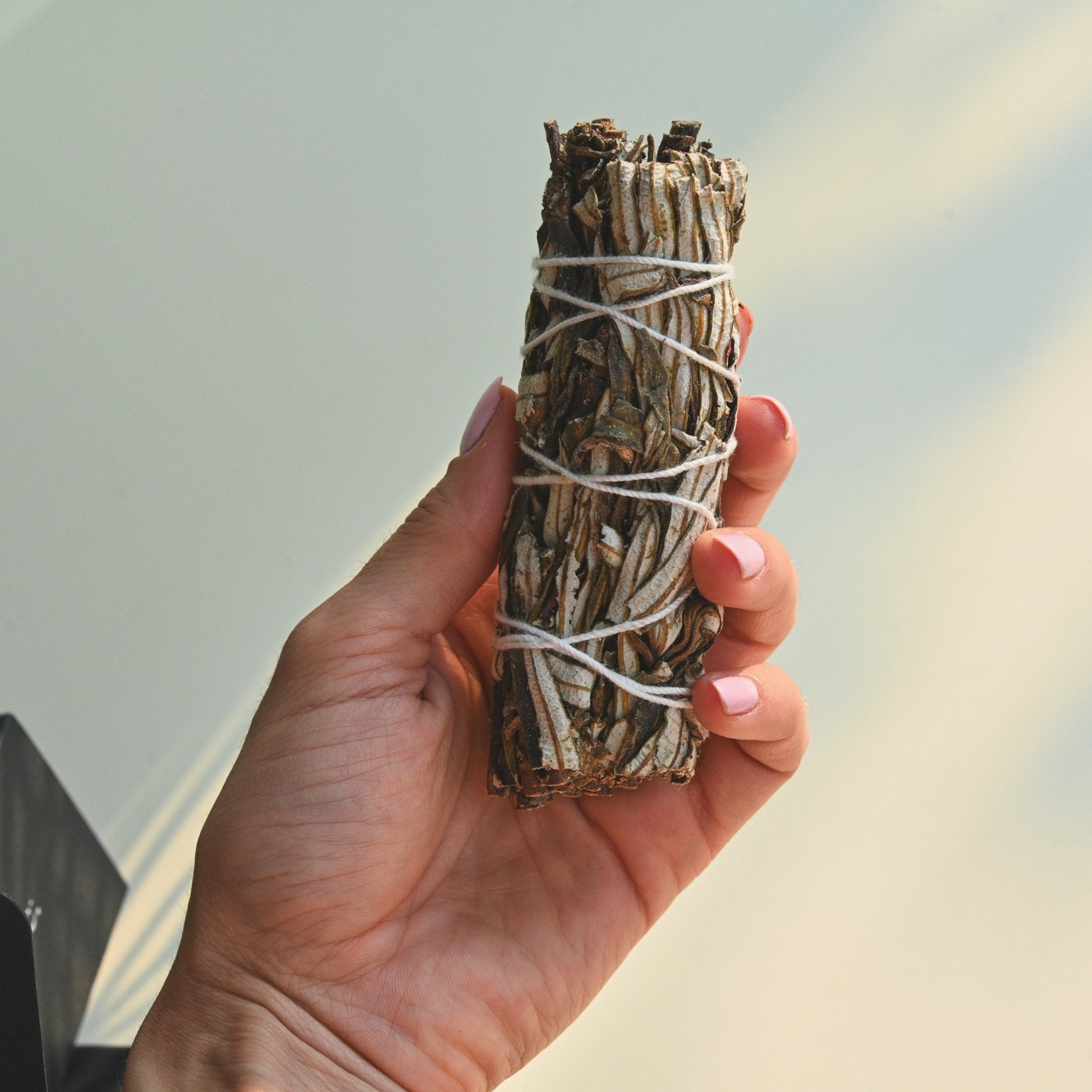
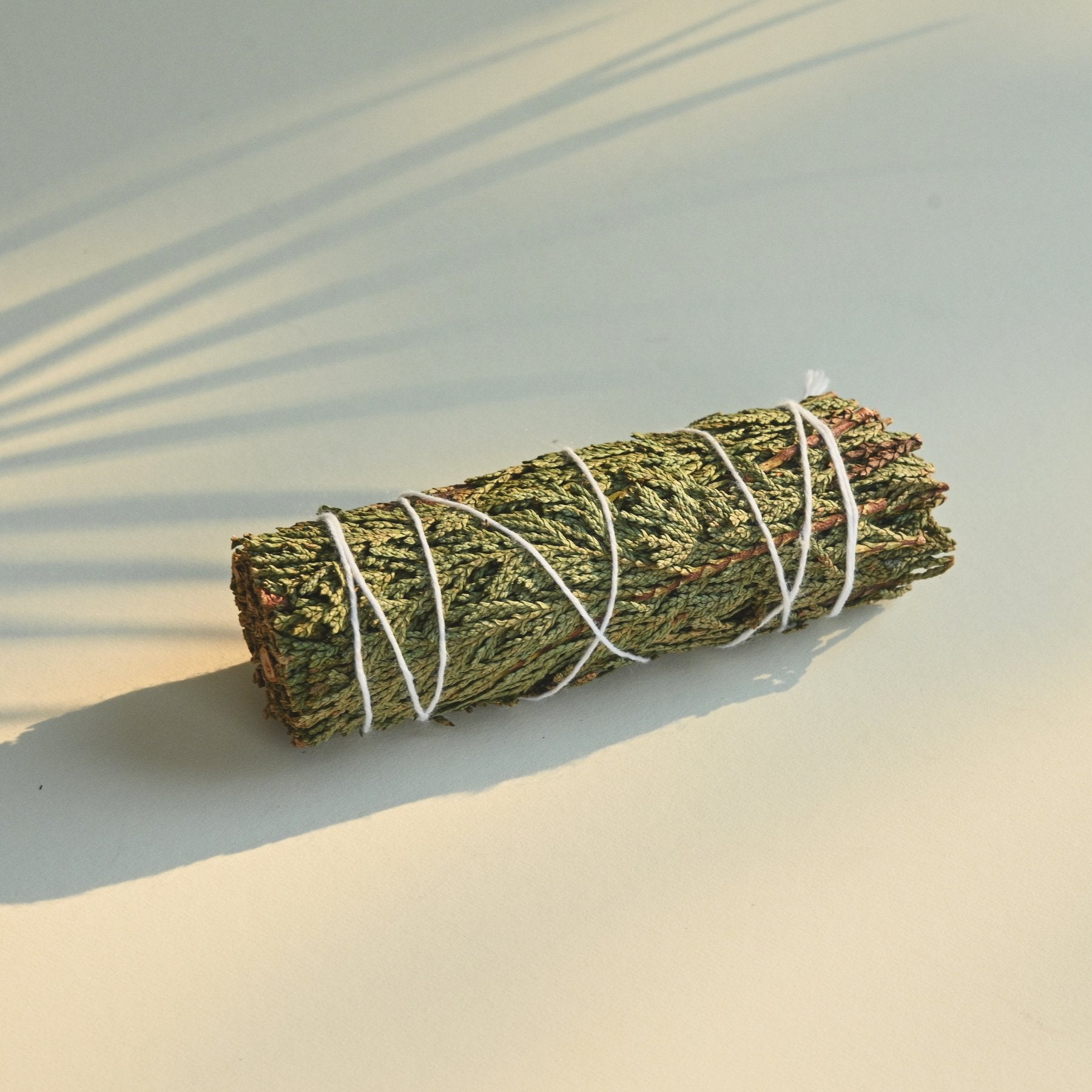
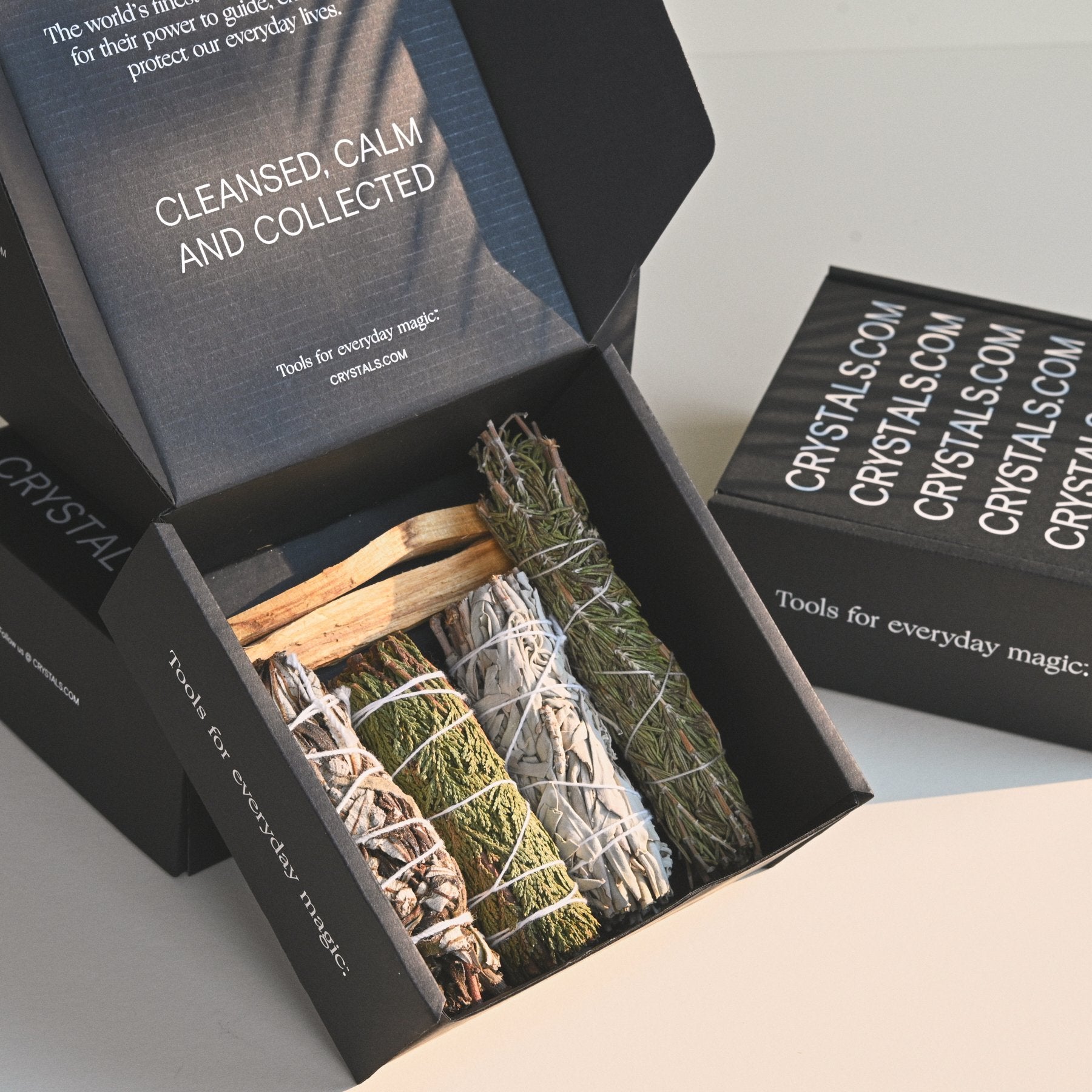
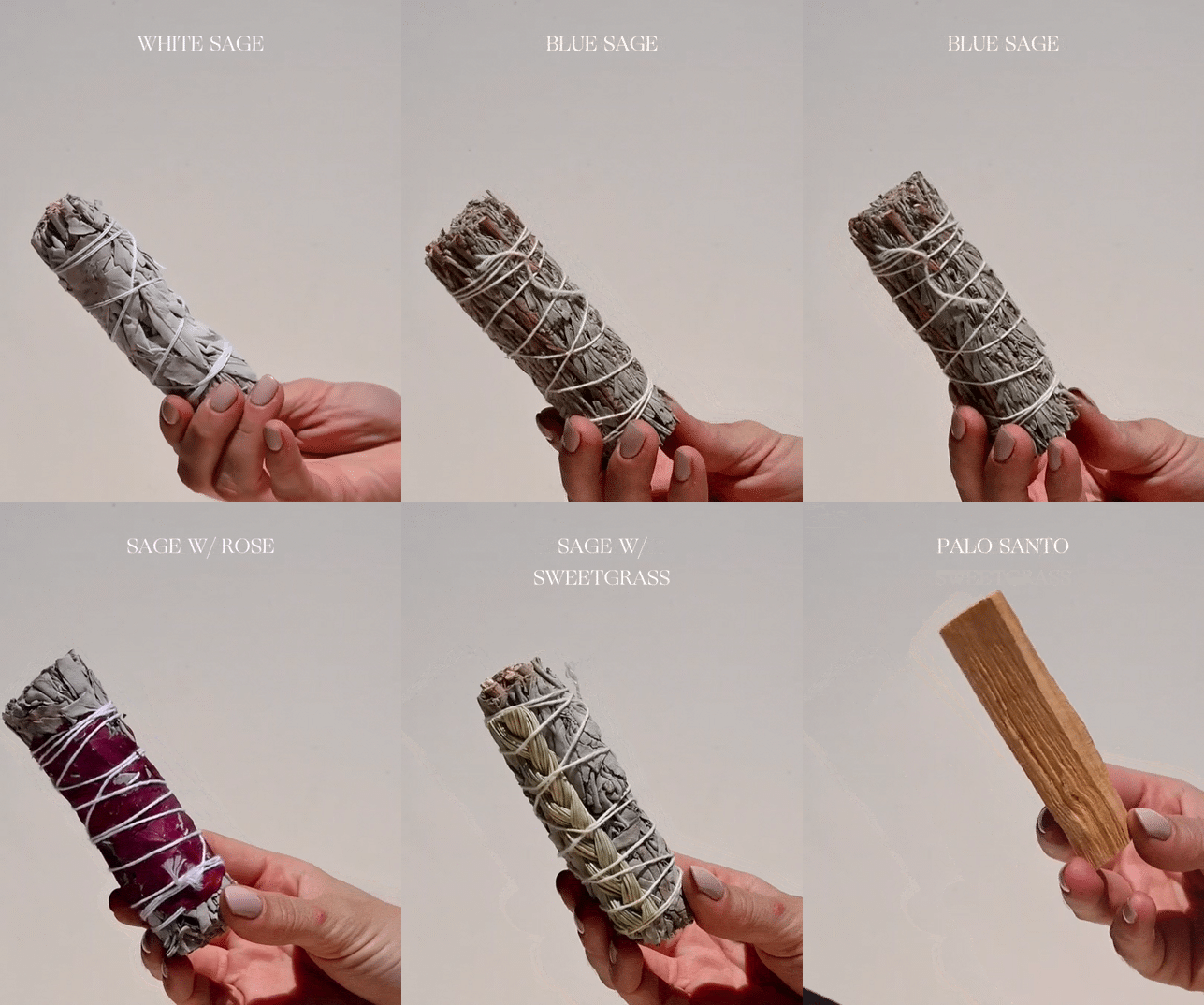
When you return home, give your travel crystals a cleanse before storing or using them again. Options: place them in sunlight or moonlight for a few hours, bury them briefly in dry earth or sea salt, or smudge them with sage or palo santo smoke. This closes the energetic loop of the journey and resets the stones for next time.
Best Crystal Jewelry for Travel
If carrying loose stones feels impractical, crystal jewelry is often the more elegant solution. A well-chosen piece keeps your stone in constant contact with your body throughout the journey without requiring you to manage a separate pouch.
Bracelets are the most practical travel format. A Black Tourmaline beaded bracelet, a Moonstone bracelet, or a Labradorite strand can be worn throughout a flight without any inconvenience. They don't set off metal detectors. They're comfortable to sleep in. They're visible on your wrist in a way that serves as a continuous visual reminder of your intention.
Pendants and necklaces work particularly well for stones you want close to your body during transit. An Aquamarine pendant for an ocean voyage, a Smoky Quartz pendant for a stressful journey, a Moonstone set in sterling silver worn throughout a road trip.
Rings work for smaller stones and add a layer of intentionality to the way your hands interact with the world as you travel — shaking hands with strangers, handling new currencies, touching new textures.
If you're new to crystal jewelry and want a starting point, our guide to Best Crystals for Beginners covers the foundational pieces worth building a collection around.
Crystals by Travel Type
Different journeys call for different stones. Here's how to match your mineral companions to your mode of travel.
| Travel Type | Primary Stone | Supporting Stone | Why It Works |
|---|---|---|---|
| Beach / Ocean | Aquamarine | Moonstone | Water energy, tidal rhythm, coastal calm |
| Mountain / Hiking | Smoky Quartz | Black Tourmaline | Earth grounding, stability on terrain, protection in remote areas |
| City / Cultural | Labradorite | Yellow Jasper | Noticing synchronicities, navigating dense environments, confidence |
| Road Trip | Malachite | Clear Quartz | Classic traveler's stone for vehicle journeys, adaptability to each day |
| Long-Haul Flight | Shungite | Amethyst | EMF environment, jet lag recovery, sleep quality on arrival |
| Solo / First-Time International | Black Tourmaline | Yellow Jasper | Protection confidence, grounding in unfamiliar cultural environments |
Build Your Travel Crystal Kit
Not sure where to start? A well-rounded 3-stone travel kit covers most bases:
- Black Tourmaline — Protection and grounding on the journey itself
- Amethyst — Calm arrivals, quality sleep, mental clarity in new places
- Labradorite or Clear Quartz — Open to whatever the destination has to offer
All orders over $150 ship free. Each stone is hand-selected from verified sources.
Frequently Asked Questions
Can I bring crystals on a plane?
Yes. Crystals and mineral specimens are not restricted by TSA or most international airport security agencies. Tumbled stones and polished pieces pass through X-ray machines without issue. Large raw specimens with sharp points may occasionally be flagged for visual inspection, so keep significant raw pieces easily accessible if you're traveling with them. Pack crystals in your carry-on rather than checked luggage to protect them from pressure changes and rough handling.

Smoky Quartz is the most commonly recommended stone specifically for flight anxiety because of its grounding, stabilizing properties. Its smooth, dense surface makes it particularly effective as a tactile anchor — something for your hands to engage with during turbulence or stressful moments. Black Tourmaline is a strong secondary choice, particularly if your anxiety is focused on general protection and safety rather than just the sensation of flying.
How many crystals should I travel with?
Three is the practical maximum for most travelers — one protection stone, one grounding stone, and one that's specific to the nature of the trip. More than that and you're managing a collection rather than using tools. If you're new to traveling with crystals, start with one: a tumbled Black Tourmaline or a small Amethyst. Build from there based on what you notice.
What is the best crystal for jet lag?
Amethyst has the longest historical association with sleep regulation and mental clarity during disrupted sleep cycles. Place a tumbled Amethyst on your nightstand in your hotel room and keep one in your pocket during your first day in a new time zone. Many frequent flyers also report that Moonstone helps with the body's adjustment to new rhythms, particularly when traveling eastward (which most people find harder than westward travel).
What is the historically recognized traveler's stone?
Malachite has perhaps the strongest documented historical claim to the title of "traveler's stone," with documented use in Egyptian travel amulets, medieval European travel boxes, and Russian aristocratic traveling sets. Moonstone is a close second, having been specifically used as a protective stone for journeys across Roman, Indian, and Mesoamerican cultures. Aquamarine holds the equivalent title specifically for sea travel.
Do I need to cleanse my crystals after traveling?
Most collectors find it worthwhile to cleanse travel crystals after a significant journey — airports, hotels, and transit spaces expose stones to high volumes of people and energy. Simple methods: place them in sunlight for a few hours, leave them on a windowsill in moonlight overnight, or briefly bury them in dry sea salt. Selenite charging plates are also an elegant and easy solution for regular travelers — lay your stones on the plate when you return home and leave them overnight.
Discover Your Human Design
Crystals amplify energy — but do you know your unique energy type? Human Design reveals how you're wired to make decisions, work, and rest. It's the owner's manual you were born with.
Explore Human DesignGet 10% Off Your First Order
Plus early access to new arrivals, collector drops, and crystal guides. Join 15,000+ crystal lovers.