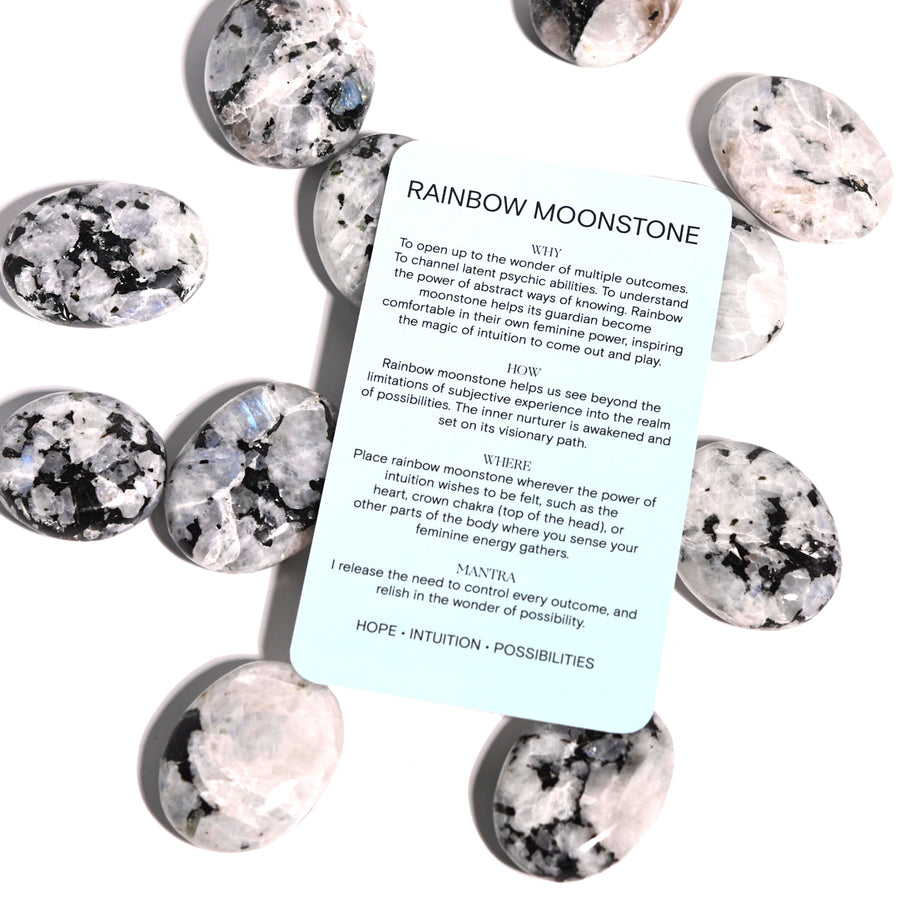

Rainbow Moonstone Palm Stone
$26
New beginnings
A feldspar whose layers scatter light into a glow that moves as you tilt it. Sourced from India, Sri Lanka and Madagascar, and chosen for that sheen.
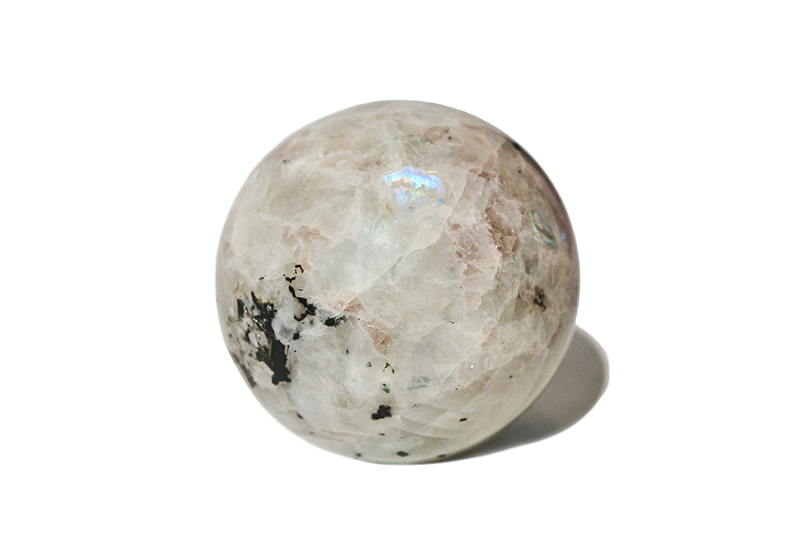
17 pieces



 Sold

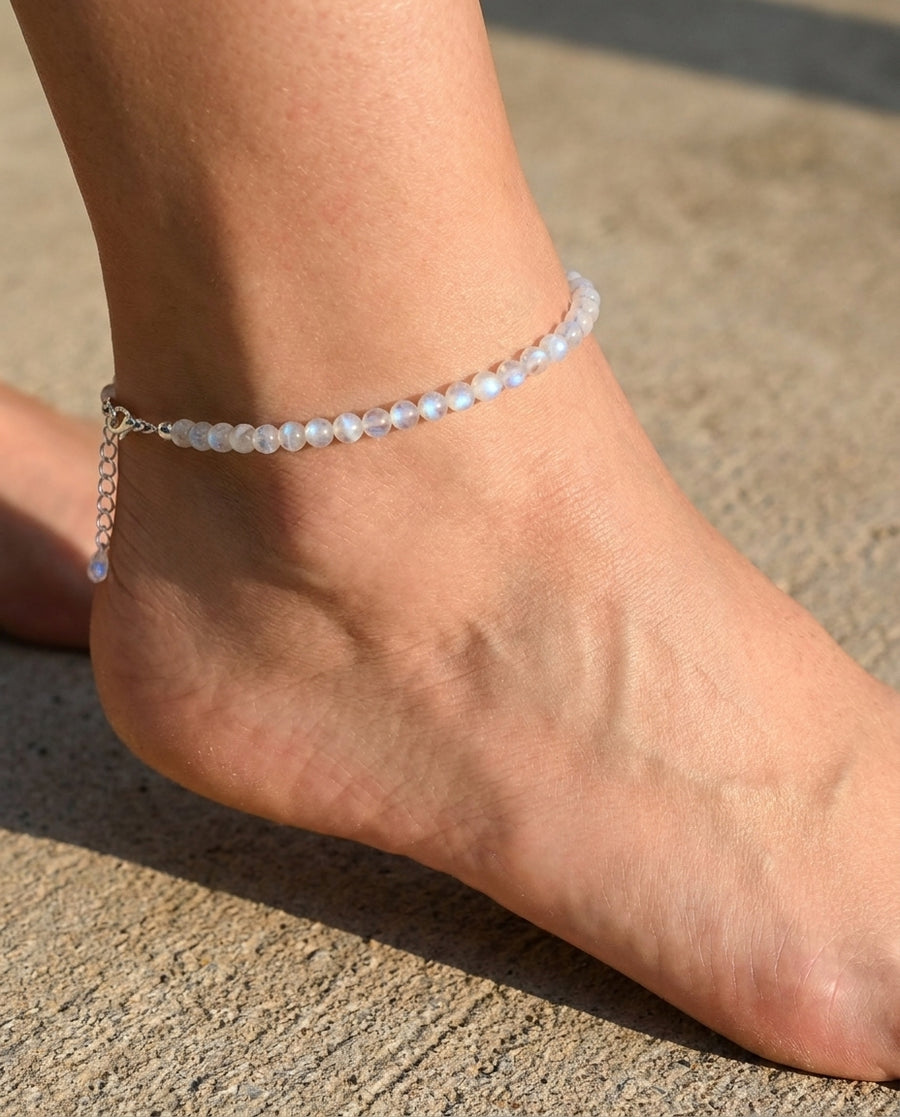

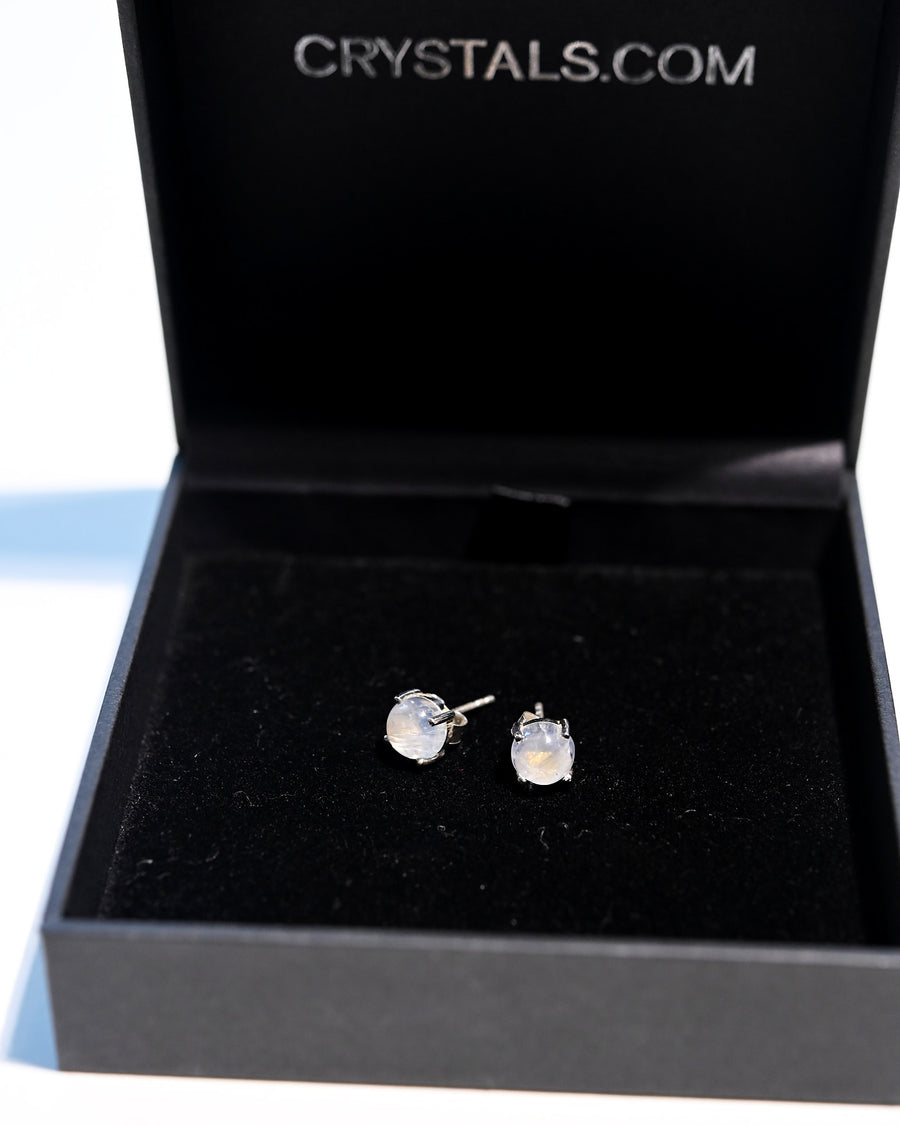


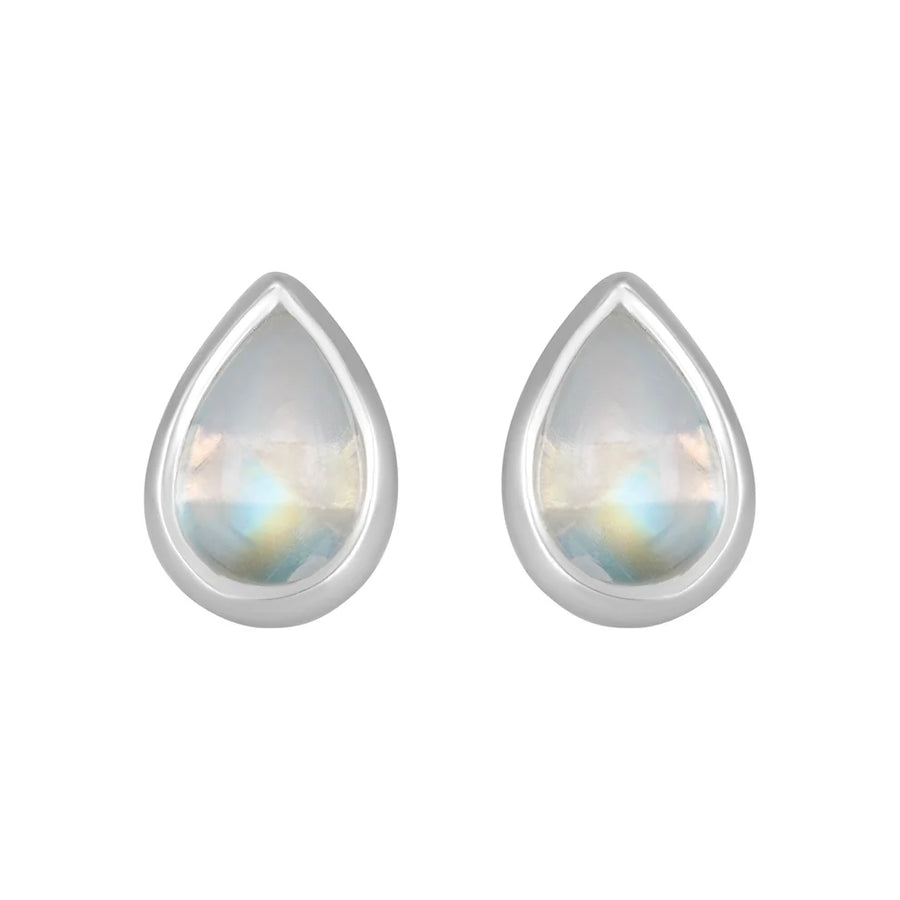


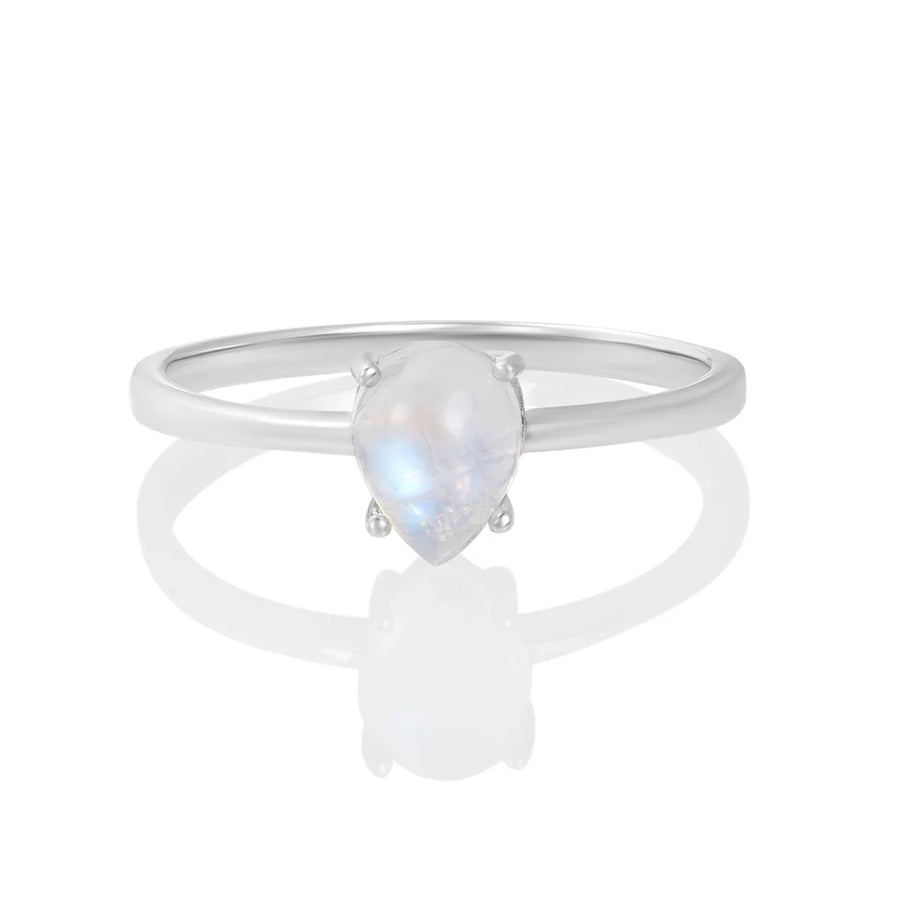

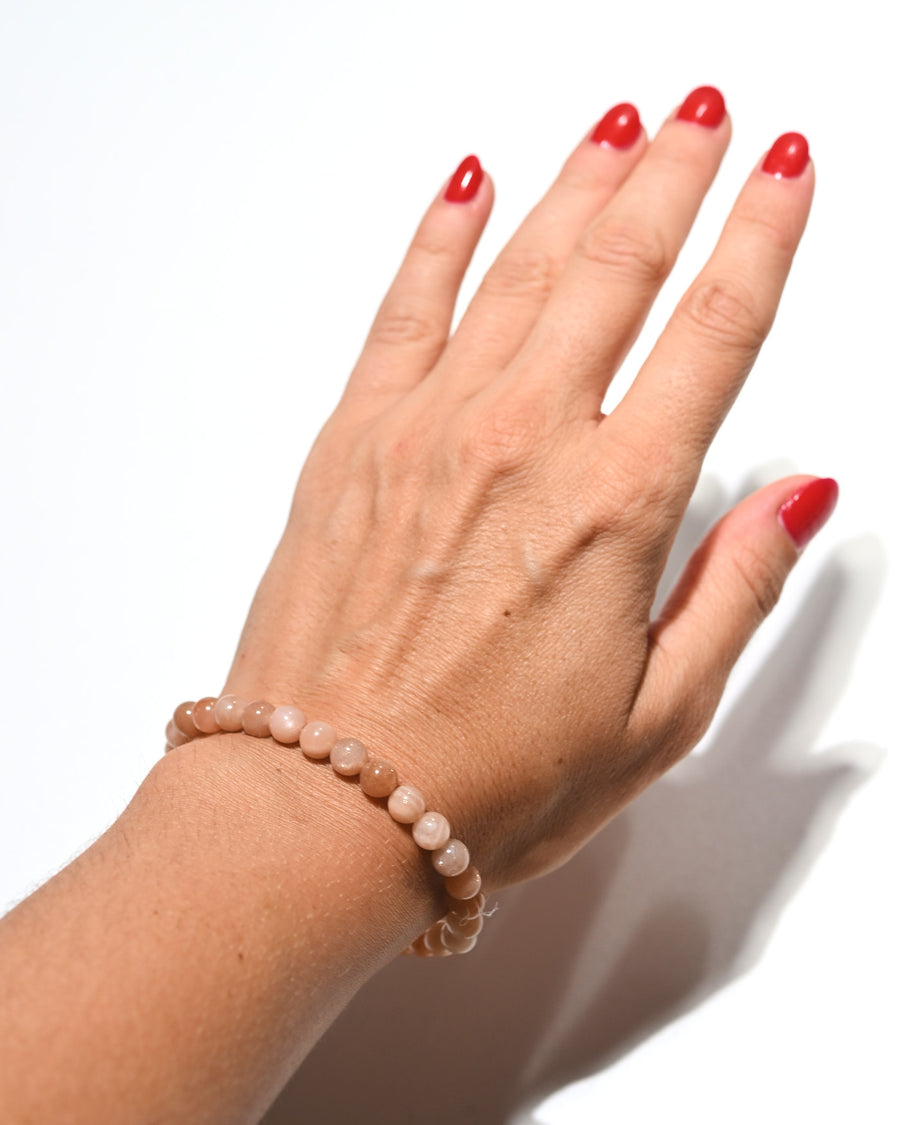


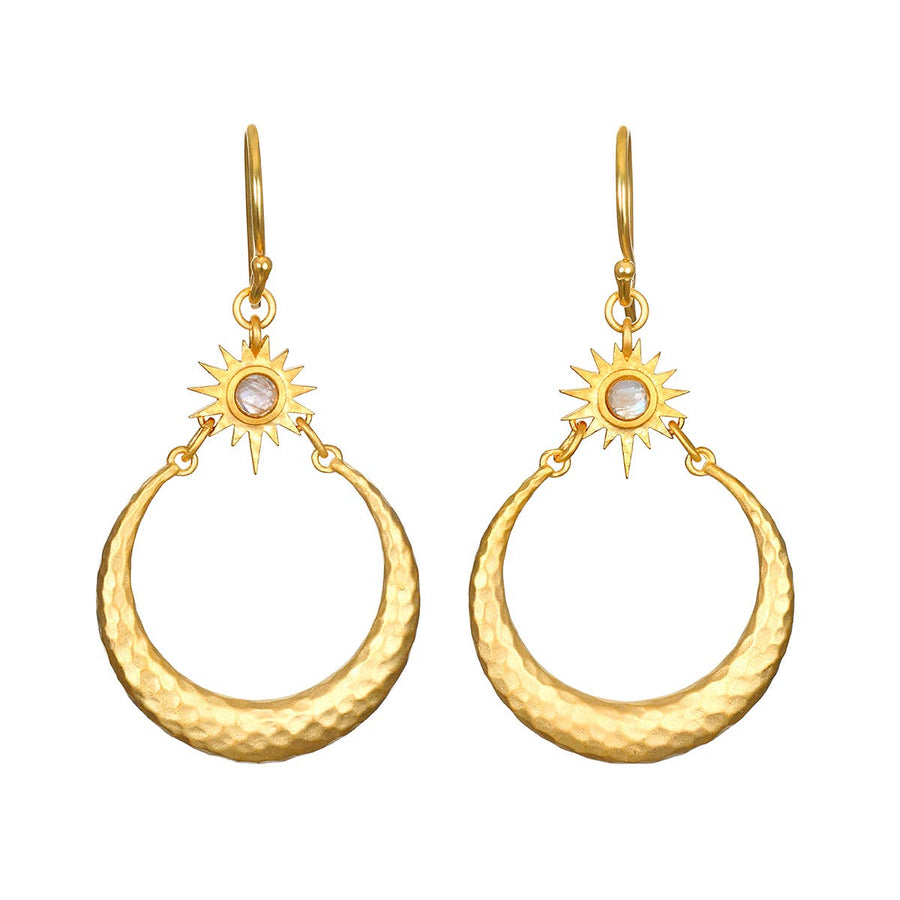


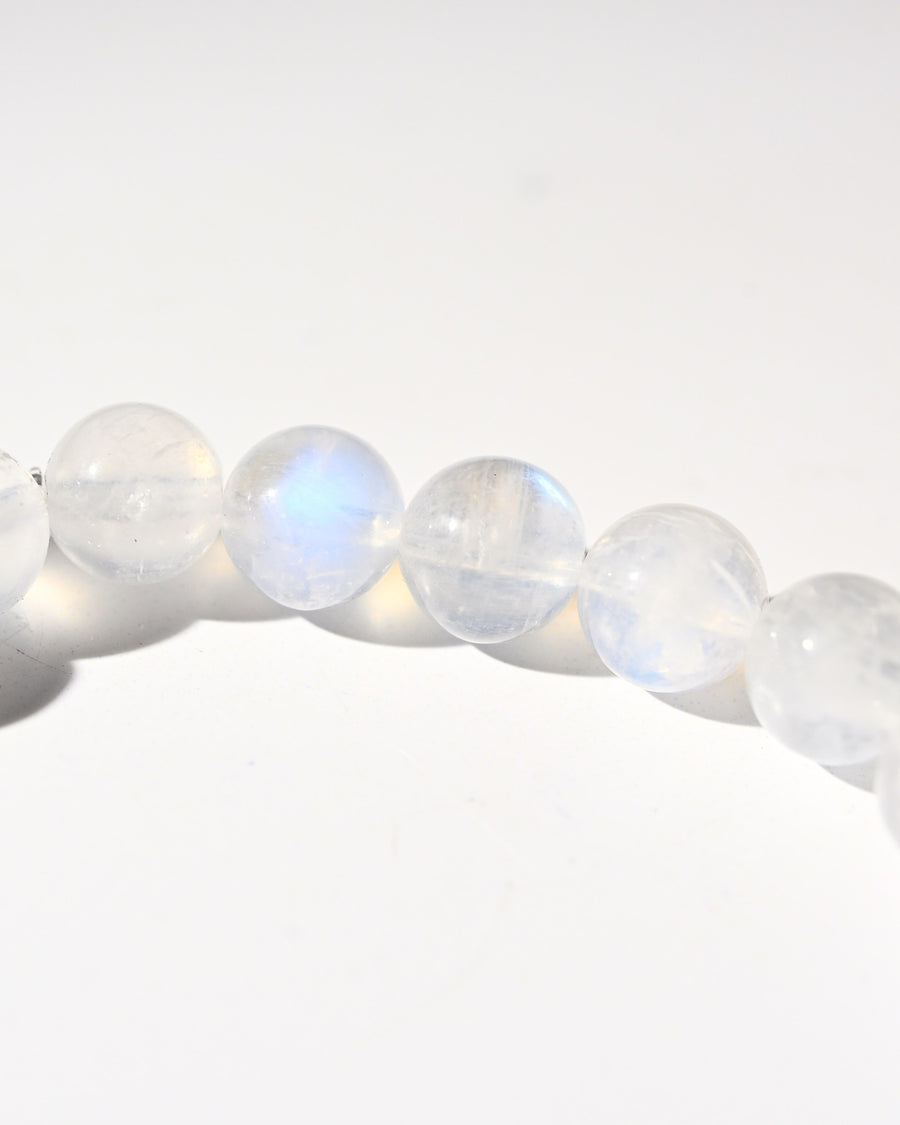
Adularescence. Alternating layers of orthoclase and albite feldspar scatter light inside the stone, so the sheen moves as you turn it. It is the test for a real piece.
India, Sri Lanka and Madagascar, the three regions that produce the finest material. Never dyed, never coated.
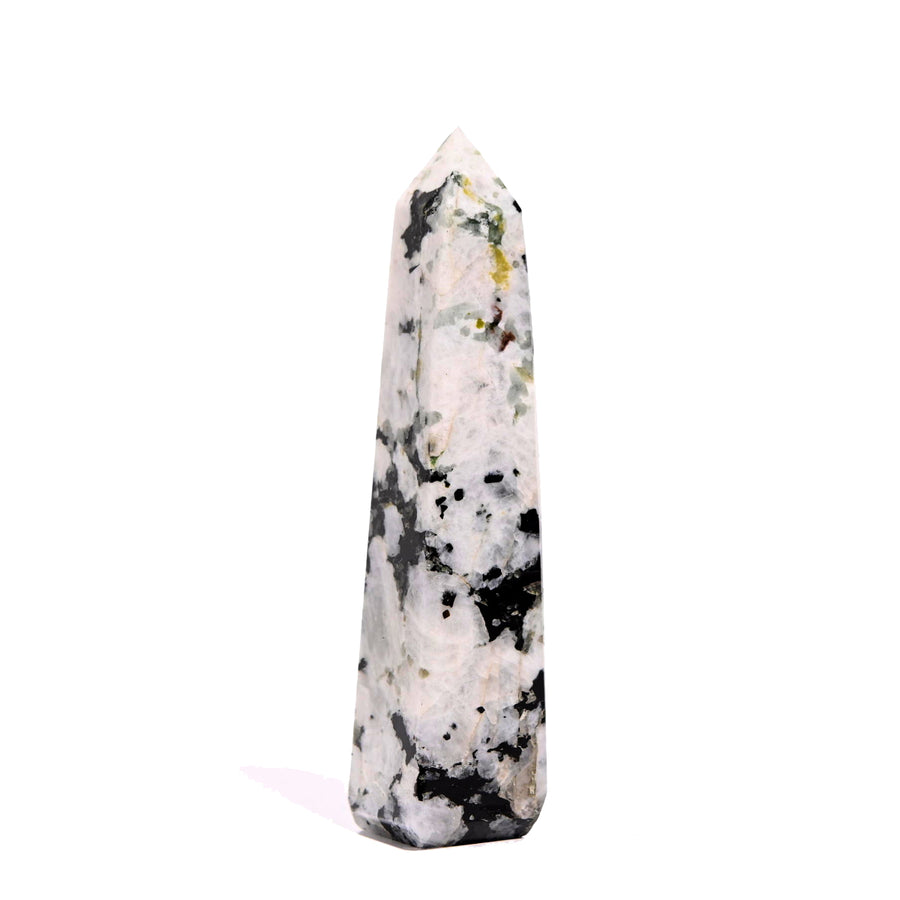
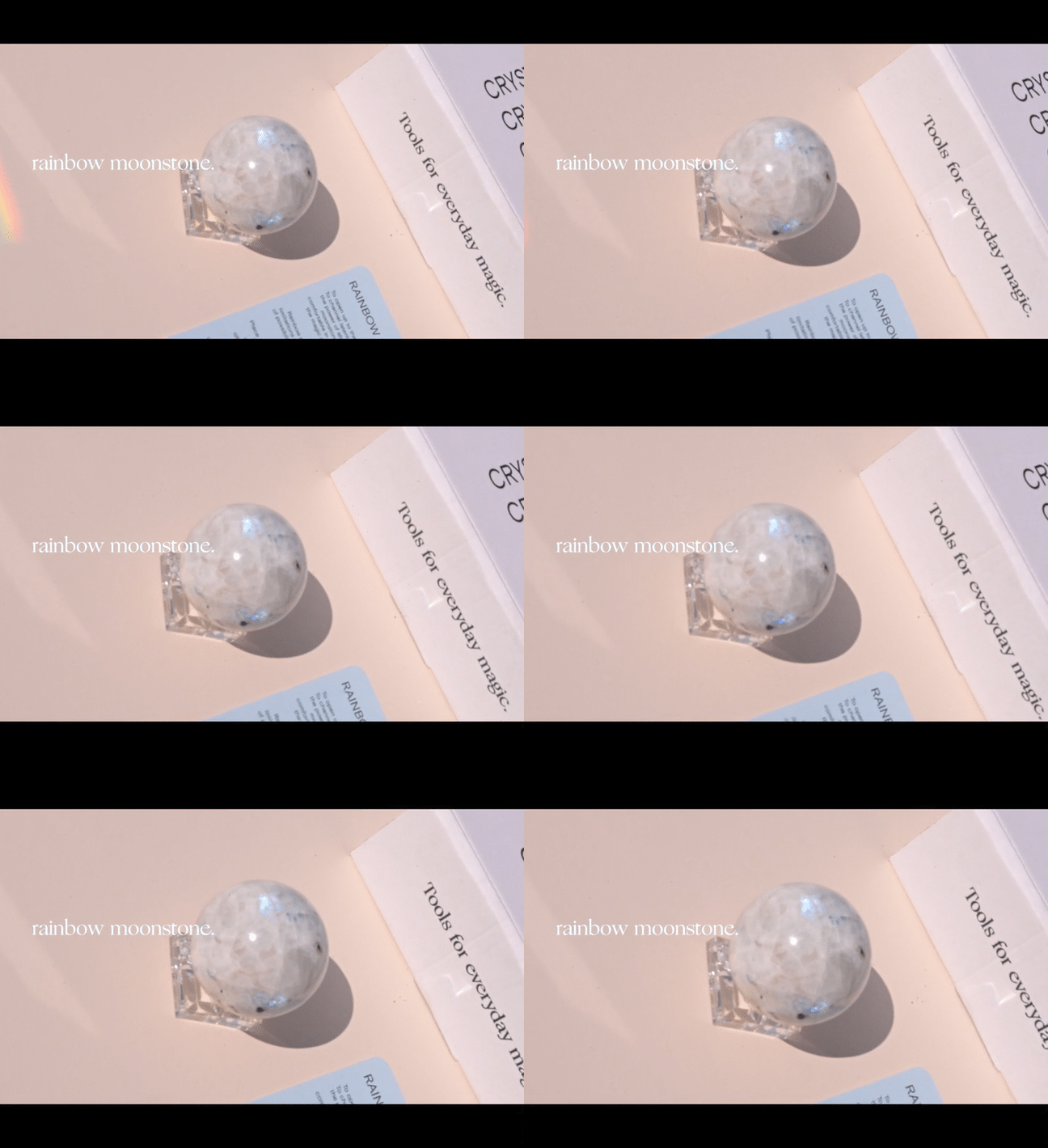
Rainbow moonstone flashes blue, white moonstone is softer and creamier. Every piece here is photographed on its own, so you choose the exact stone.
Adularescence is the soft, glowing light that appears to float beneath the surface of moonstone. It is caused by light scattering between alternating microscopic layers of two feldspar minerals (orthoclase and albite) within the stone.
Technically, most rainbow moonstone is a variety of labradorite (plagioclase feldspar) rather than true adularia moonstone (orthoclase feldspar). The trade name is well-established, the optical phenomenon is genuine, and the material is natural and untreated.
With care. Moonstone sits at Mohs 6 to 6.5 and has two cleavage planes. It works well in earrings and pendants for daily wear. For rings and bracelets, remove before heavy physical activity or swimming.
Both are feldspars but from different branches. Traditional moonstone is orthoclase feldspar showing adularescence (soft white or blue glow). Labradorite is plagioclase feldspar showing labradorescence (vivid spectral flashes). Rainbow moonstone is actually a transparent variety of labradorite.
Store separately from harder minerals. Clean with a soft dry cloth. Avoid ultrasonic cleaners, steamers, and prolonged water. Remove moonstone jewelry before bathing, swimming, or applying lotions.
Moonstone is believed to enhance intuition, balance emotions, and support new beginnings. It is often used for meditation, jewelry, and emotional healing.
Moonstone is a feldspar mineral formed deep within the earth's crust. Its signature glow comes from alternating layers of orthoclase and albite feldspar, which scatter light and create the iridescent effect known as adularescence.
Real moonstone has a natural shimmer known as adularescence, a glowing light that moves across the surface as you tilt the stone. Unlike glass or imitation stones, genuine moonstone often has slight natural inclusions or fine layering. Always buy from trusted sources to ensure authenticity.
Moonstone is sourced mainly from India, Sri Lanka, and Madagascar, the regions known for producing the finest quality stones.
Moonstone is especially aligned with Cancer, Libra, and Scorpio, but is often recommended for anyone seeking emotional clarity and intuition.
To activate moonstone, cleanse it with moonlight, water, or incense, then set your intentions by holding the stone and focusing on your goal.
Yes. Moonstone jewelry is durable enough for daily wear and is thought to keep its energy strong when close to the body.
Looking for a specific moonstone? Rainbow flash, peach, or black — we can source it. Submit a sourcing request →
Moonstone is defined by adularescence — a soft, luminous glow that moves across the surface as light shifts. This optical phenomenon is caused by alternating layers of orthoclase and albite feldspar scattering light internally. The effect is unique to every piece, making each specimen one-of-a-kind. Moonstone sits at Mohs 6–6.5, softer than quartz varieties like amethyst or citrine, so it rewards a bit more care in handling and display.
Rainbow Moonstone displays blue, violet, and sometimes multicolor flash across a translucent white body. Sourced primarily from India and Sri Lanka, rainbow moonstone is available here as palm stones, spheres, obelisks, and freeforms. It is the most popular variety for both collectors and moonstone jewelry.
Peach Moonstone carries a warm, apricot-toned glow with a softer flash. Ours are hand-selected for color saturation and available as hearts and gallets — perfect display pieces for a nightstand or vanity.
Black Moonstone is the least common of the three. It features silver or copper flash against a dark gray to black body, with pieces sourced from Madagascar and India. Available as gallets, freeforms, and hearts. Pairs beautifully with obsidian and labradorite in darker-toned mineral displays.
Flash quality. The defining characteristic. Look for strong, well-defined adularescence that moves fluidly across the surface as you tilt the piece. Blue flash is the most prized in rainbow moonstone. The best pieces show flash visible from multiple angles, not just one sweet spot.
Transparency. Higher transparency generally indicates finer layering of the feldspar lamellae, which produces a more vivid optical effect. The most collectible rainbow moonstones are near-transparent with strong blue flash.
Form. Palm stones are ideal for feeling the stone's warmth and weight. Spheres display flash from every angle. Hearts and freeforms make distinctive display pieces. For wearable moonstone, browse our crystal jewelry and moonstone bracelets.
Care note. Moonstone has two cleavage planes and sits at Mohs 6–6.5. It should not be worn during heavy physical activity, stored loose with harder minerals, or exposed to prolonged water. A beautiful stone that rewards mindful handling.
This collection includes 27+ hand-selected moonstone pieces across multiple forms: palm stones, hearts, towers, spheres, freeforms, and moonstone bracelets. Every piece is photographed individually — what you see is what you receive. Prices start at $16. Shopping for someone else? Our crystal gifts guide is a good starting point. Free shipping on orders $150+.
Every specimen personally chosen
On orders over $150
Direct from trusted miners
Adularescence is the soft, glowing light that appears to float beneath the surface of moonstone. It is caused by light scattering between alternating microscopic layers of two feldspar minerals (orthoclase and albite) within the stone. The effect is unique to moonstone and is what gives it that signature ethereal quality.
Technically, most "rainbow moonstone" in the market is a variety of labradorite (a plagioclase feldspar) rather than true adularia moonstone (an orthoclase feldspar). However, the trade name is well-established, the optical phenomenon is genuine, and the material is a natural, untreated mineral. We use the standard trade name and the stones are exactly as described.
With care. Moonstone sits at Mohs 6–6.5 and has two cleavage planes, making it softer and more prone to chipping than quartz-family stones (Mohs 7+). It works well in earrings and pendants for daily wear. For rings and bracelets, remove before heavy physical activity, cleaning, or swimming.
Store moonstone separately from harder minerals to prevent scratching. Clean with a soft, dry cloth or slightly damp cloth — avoid ultrasonic cleaners, steamers, and prolonged water exposure. Remove moonstone jewelry before bathing, swimming, or applying lotions.
Both are feldspars, but they belong to different branches. Traditional moonstone is orthoclase feldspar showing adularescence (a soft white or blue glow). Labradorite is plagioclase feldspar showing labradorescence (vivid spectral flashes of blue, green, gold, or copper). Rainbow moonstone is actually a transparent variety of labradorite, which is why it shows more colorful flash than classical moonstone.
Know your crystal
Moonstone's glow — adularescence — comes from light scattering between microscopically thin, alternating layers of two feldspar minerals inside the stone.
I love shopping here! Everything I’ve purchased has been great quality, and the customer service is top notch!
I am very happy with the white sage bundle! It is a very good quality and burns really nicely!
I love this bracelet! I love the adjustable cord, and the stones are really, really pretty! I highly recommen
5 stars
Great
Great
A beautiful piece..the photo's did not do it justice. The delivery was timely and arrived in perfect condition. Thank you..this specimen is a must for any collector.
Crystals Individually wrapped
Shipped with care, excellent packaging. Great products
Very nice, one of a kind sphere. The piece matched the quality in the photos. Packaging was above average, with no damage during shipping. Tracking was easy. Everything was a positive experience.
Was expecting a bright shade of yellow, but the amber shade is just as beautiful.
Loved how it glimmers
Loved the packaging
Each Crystal came out beautifully
Will definitely find myself a frequent customer ☺️
Perfect. I love my crystals!
Beautiful! Exactly what I was hoping for/expecting!
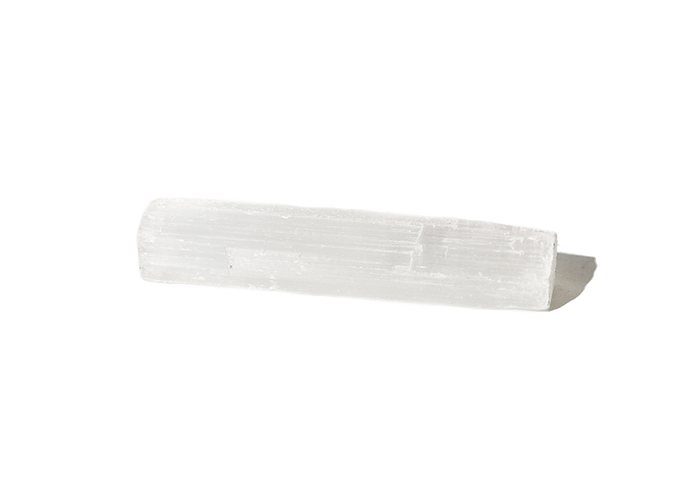
 Selenite CrystalThe two glow-in-low-light stones — satin white beside blue flash.Shop the pairing →
Can't choose?
Tell it what you need. It picks one piece for you, in stock right now.
Sorry, looks like we don't have enough of this product.

Buy It With
$10.00 USD