Grape Agate Crystal: Its Meaning, Formation, and Properties
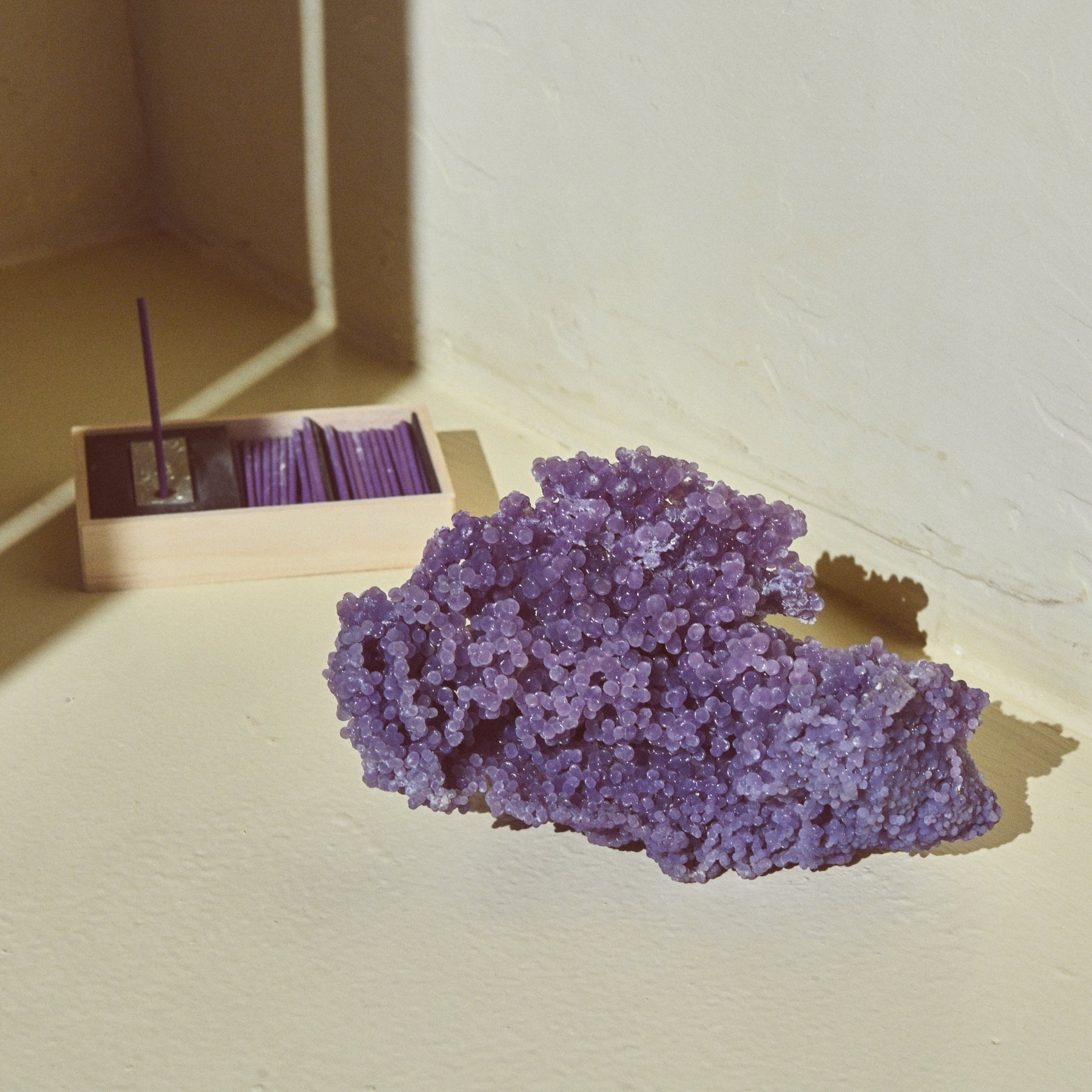
Grape agate is one of the most visually distinctive crystals in the mineral world. Named for its remarkable resemblance to clusters of grapes, this botryoidal (grape-like) formation of purple chalcedony features rounded, spherical structures that grow in tight clusters, creating specimens that look almost organic — as if they were grown on a vine rather than formed in volcanic rock. The color ranges from pale lavender to deep purple, with some specimens showing beautiful gradients from white to violet within a single cluster.
Mineralogically, grape agate is a variety of chalcedony, which itself is a microcrystalline form of quartz (silicon dioxide). The botryoidal formation occurs when silica-rich fluids deposit thin layers of chalcedony in concentric shells around nucleation points, building up the characteristic spherical shapes over time. The purple color comes from trace amounts of iron and manganese within the silica structure. Some specimens also exhibit a subtle druzy surface — a coating of tiny, sparkling crystal points over the smooth botryoidal spheres — adding an additional layer of visual complexity.

Where Grape Agate Comes From
Grape agate was first brought to widespread attention in the crystal market around 2016, when specimens from the Mamuju area of West Sulawesi, Indonesia began appearing at mineral shows. Indonesia remains the primary source for high-quality grape agate, though similar botryoidal chalcedony formations have been found in smaller quantities in other volcanic regions worldwide.
The geological conditions that produce grape agate are specific: volcanic host rock with cavities (vesicles) created by trapped gas, through which mineral-rich hydrothermal fluids can flow and deposit silica over extended periods. The botryoidal habit — those characteristic rounded shapes — requires consistent fluid flow and gradual, undisturbed deposition. When conditions change (temperature fluctuations, fluid chemistry shifts, or seismic disturbance), the formation process is interrupted, which is why truly well-formed grape agate with uniform, tightly packed spheres is relatively uncommon and prized by collectors.
Grape Agate Properties and Significance
In crystal practice, grape agate is associated with the third eye and crown chakras due to its purple coloring. It is valued for promoting intuitive development, inner stability, and a sense of calm security. The stone's energy is often described as nurturing and protective — it creates a safe space for inner exploration without the intensity of more activating third eye stones like moldavite or labradorite.
Grape agate is particularly valued for dream work. Placing a specimen on the nightstand or under the pillow is said to promote vivid, meaningful dreams and improve dream recall. The stone's connection to the third eye supports the kind of subtle, intuitive perception that dreams represent — the processing of subconscious information into symbolic imagery that the conscious mind can interpret upon waking.
As a form of chalcedony, grape agate shares the general properties attributed to the chalcedony family: emotional balance, communication, and a gentle, non-aggressive energy that works well for people who are sensitive to the stronger vibrations of stones like amethyst or obsidian. This makes grape agate an excellent choice for crystal beginners or for people who want a calming, meditative presence in their space without the intensity of more powerful stones.

How to Identify Quality Grape Agate
When evaluating grape agate specimens, collectors look for several quality indicators. The most prized pieces display tightly packed, uniformly sized spheres with deep, saturated purple coloring throughout. Specimens with good color gradients — transitioning smoothly from dark purple at the base to lighter lavender at the tips — are particularly sought after. The overall cluster shape should be aesthetically pleasing, with a natural, balanced form that displays well from multiple angles.
Color saturation: Deep, consistent purple commands the highest collector value. Pale or washed-out specimens are less desirable unless they display exceptional formation quality.
Sphere formation: Well-defined, individual spheres that are clearly distinguishable from one another indicate slow, undisturbed formation — a sign of geological quality.
Druzy coating: Some grape agate features tiny sparkling crystals on the surface of the spheres. This druzy coating adds visual complexity and is considered a premium feature.
Matrix: The host rock (matrix) that the grape agate grows on should be clean and unobtrusive. Specimens where the grape agate formations stand out clearly against the matrix are more visually striking than those where the two blend together.
Size and cluster completeness: Larger clusters with intact formations (no broken or chipped spheres) are more valuable. Damage to the delicate spherical structures significantly reduces a specimen's collector appeal.
How to Use Grape Agate in Your Practice
Grape agate is a versatile stone that can be incorporated into your crystal practice in several ways. For meditation, hold a small piece in your hand or place a cluster in front of you at eye level. Focus on the rounded, organic forms and allow the visual complexity of the specimen to draw your attention inward. The stone's calming energy naturally slows the breath and quiets mental chatter, making it an effective meditation aid even for people who struggle with traditional stillness practices.
For home display, grape agate makes an exceptional decorative piece. Its unusual formation is an immediate conversation starter, and its purple coloring complements both warm and cool interior palettes. Display grape agate on a shelf, desk, or nightstand where you can appreciate its texture and color throughout the day. The stone looks particularly beautiful when lit from the side, which emphasizes the three-dimensional quality of the botryoidal formations and creates interesting shadow patterns.

Grape Agate vs. Similar Minerals
Grape agate is sometimes confused with other botryoidal minerals, so understanding the differences helps both collectors and buyers make informed choices. Botryoidal amethyst can resemble grape agate in color but is typically more glassy and transparent, with individual crystal terminations visible on the sphere surfaces. Botryoidal hematite (kidney ore) has a similar grape-like formation but is metallic gray-black rather than purple. Smithsonite also forms botryoidal clusters in various colors including blue and pink, but it is softer (Mohs 4 to 4.5) and has a different crystal structure entirely.
True grape agate is specifically botryoidal chalcedony from the Mamuju region of Indonesia. While similar-looking botryoidal chalcedony occurs in other locations, the Indonesian material is distinguished by its particularly well-formed spheres, consistent purple coloring, and the specific volcanic host rock it forms within. When purchasing grape agate, look for specimens that clearly display the characteristic tight, grape-like cluster formation rather than loosely aggregated nodules, which may be a different variety of botryoidal chalcedony.
Best Crystals to Pair with Grape Agate
Grape agate pairs beautifully with other calming, intuitive stones. Selenite amplifies grape agate's peaceful energy while adding its own clearing properties. Labradorite enhances the intuitive and dreamwork aspects, making the combination ideal for people developing their psychic perception. Rose quartz adds heart-centered warmth to grape agate's third-eye focus, creating a blend of emotional and intuitive intelligence. For grounding, pair grape agate with smoky quartz to ensure that intuitive insights remain practical and actionable rather than abstract.

Caring for Grape Agate
As a variety of chalcedony, grape agate is relatively durable with a Mohs hardness of approximately 6.5 to 7. It can be gently rinsed with lukewarm water and dried with a soft cloth. Avoid harsh chemicals and ultrasonic cleaners. The botryoidal spheres can trap dust between them, so a soft brush (like a clean makeup brush) is helpful for reaching into the crevices between formations. Store grape agate separately from harder stones to prevent surface scratching, and handle specimens carefully — while the individual spheres are hard, the points where they connect to the matrix can be fragile.
Grape agate is generally safe in indirect sunlight, but prolonged direct UV exposure over months or years may slightly lighten the purple color in some specimens. If you display grape agate in a sun-drenched window, consider rotating it to a shadier location periodically. For energetic cleansing, grape agate responds well to moonlight charging, sound cleansing with a singing bowl, or resting on a selenite plate overnight. Avoid salt water, as prolonged exposure to salt solutions can damage the surface texture of the botryoidal formations over time.
Grape agate has quickly established itself as both a serious collector's mineral and a beloved addition to crystal practices worldwide. Its unique formation, accessible energy, and striking visual appeal make it one of the most interesting discoveries in the crystal market in recent years. Whether you are drawn to grape agate for its geological rarity, its meditative properties, or simply its extraordinary beauty, it is a crystal that rewards close attention — the more you look at it, the more detail and nuance you discover within its clustered purple spheres.
Explore Purple Crystals
Discover our collection of purple crystals including amethyst, fluorite, and more — each piece hand-selected for quality and beauty.
Shop Purple CrystalsDiscover Your Crystal Match
Select your sign and get personalized crystal recommendations delivered to your inbox.