Sandalwood has been one of humanity's most sacred and valuable aromatic materials for over 4,000 years — a slow-growing tropical wood prized for its rich, warm, woody fragrance that deepens with age rather than fading. From ancient Indian temples to modern meditation practices, sandalwood bridges the material and spiritual worlds like few other substances on Earth. Its calming, grounding scent has been scientifically shown to reduce anxiety, lower blood pressure, and facilitate meditative states — validating what practitioners have known for millennia.
True sandalwood (Santalum album) is native to southern India and is now one of the most expensive woods in the world, valued at thousands of dollars per kilogram. This extreme value reflects both its spiritual importance and its ecological scarcity — decades of overharvesting have made wild sandalwood trees critically endangered. Today, sustainable plantation-grown sandalwood from Australia, Hawaii, and managed Indian forests provides an ethical alternative for modern practitioners.
History and Sacred Significance
Sandalwood's spiritual resume spans virtually every major tradition:
- Hinduism: Used in temple rituals for thousands of years. Sandalwood paste (chandan) is applied to the forehead as a sacred mark. The wood is burned in funeral pyres to help the soul's transition. Hindu scriptures call it "one of the substances of the divine."
- Buddhism: One of the most important incense materials in Buddhist practice. Burned during meditation and offerings. The sandalwood mala (prayer beads) is considered among the most sacred types for mantra repetition.
- Jainism: Sandalwood paste is offered to sacred images. The wood is considered the most auspicious of all materials for religious carvings.
- Islam: Traditional attar (essential oil) used in perfumery and religious observance. Mentioned in various hadith as a fragrance of paradise.
- Ancient Egypt: Imported sandalwood was used in embalming rituals and temple incense. Considered a bridge between the world of the living and the dead.
- Traditional Chinese Medicine: Used for digestive ailments, anxiety, and as a meditation aid for over 2,000 years.

Sandalwood and Crystal Practice
Sandalwood and crystals complement each other powerfully in spiritual practice. The wood's grounding, calming frequency creates an ideal energetic environment for crystal work:
Cleansing Crystals with Sandalwood Smoke
Burning sandalwood incense or chips is one of the gentlest and most effective ways to cleanse crystals energetically. Unlike sage (which has a sharp, clearing energy), sandalwood smoke doesn't strip energy from crystals but rather harmonizes and elevates whatever energy is present. This makes it ideal for cleansing programmed crystals when you want to refresh them without clearing your intentions.
To cleanse: light sandalwood incense or a chip on charcoal. Pass your crystals through the rising smoke three times, stating your intention (e.g., "I cleanse this stone of all that does not serve its highest purpose"). The warm, sweet smoke both purifies and blesses simultaneously.
Meditation Enhancement
Burning sandalwood during crystal meditation deepens your practice measurably. The scent naturally calms the "monkey mind" — that constant mental chatter that interrupts concentration. Scientific research confirms this: alpha brainwave activity (associated with relaxed focus) increases significantly in the presence of sandalwood aroma. Combined with a crystal held in meditation, the sandalwood creates a multi-sensory anchor that pulls you deeper into stillness.
Best crystal pairings for sandalwood meditation:
- Amethyst (Amethyst Geode) + sandalwood: Third eye activation and spiritual vision
- Clear quartz + sandalwood: Amplified clarity and intention-setting
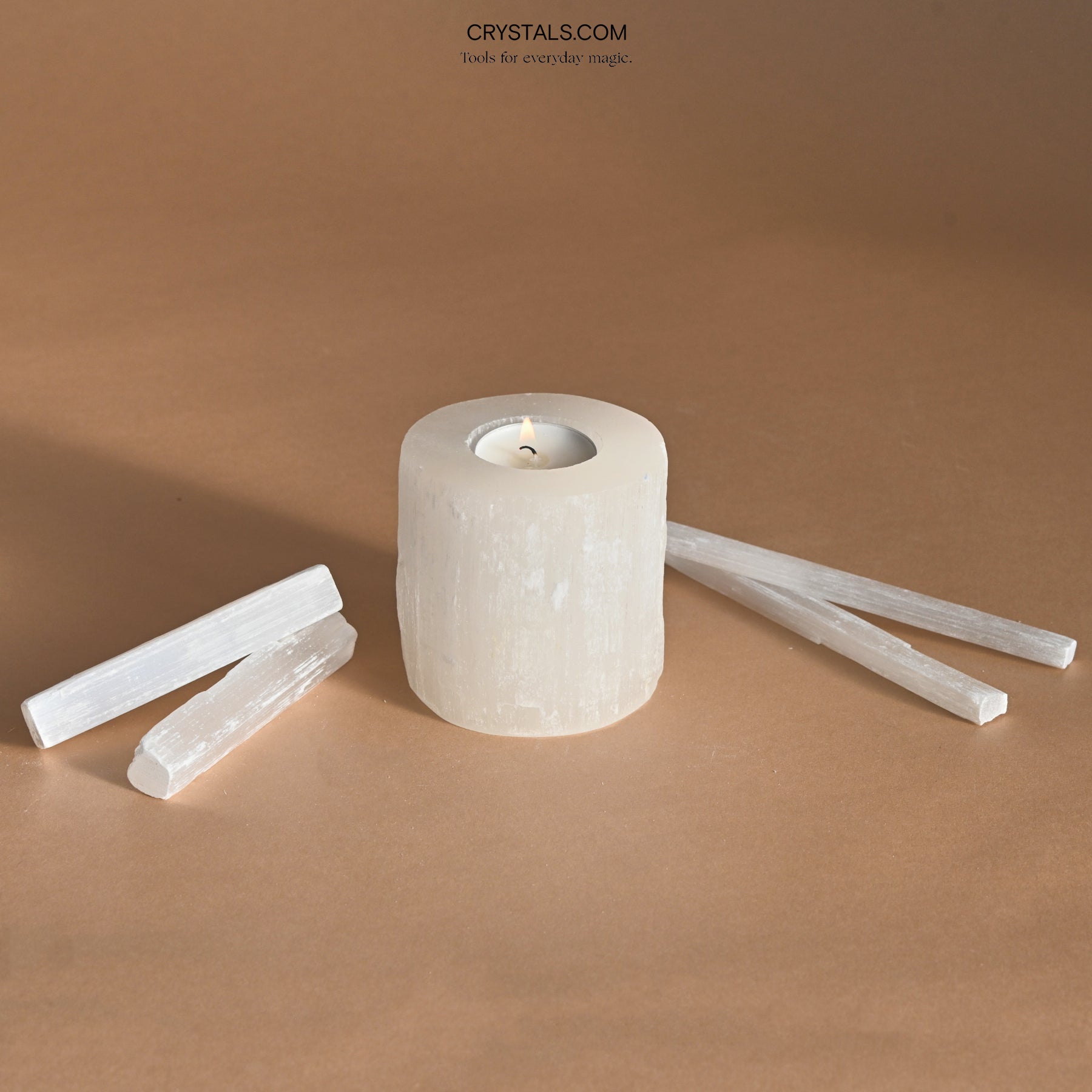
- Selenite (Selenite Cleansing Wand) + sandalwood: Angelic connection and divine downloads
- Smoky quartz (Smoky Quartz Palm Stone) + sandalwood: Deep grounding with spiritual awareness
- Labradorite + sandalwood: Psychic development and intuitive expansion
Sacred Space Creation
Sandalwood establishes sacred space more quickly and effectively than almost any other incense material. Before crystal grids, healing sessions, or energy work, burn sandalwood to elevate the vibration of your room from "everyday" to "sacred." The molecules of sandalwood actually cling to surfaces and fabrics, meaning your meditation space accumulates a deeper and deeper resonance over time.

Forms of Sandalwood for Practice
Sandalwood Incense Sticks
The most convenient form for daily practice. Look for sticks made with real sandalwood powder or essential oil rather than synthetic fragrance. Japanese-style sandalwood incense (like Nippon Kodo) tends to be higher quality than mass-produced varieties, with more authentic scent and cleaner burn.
Sandalwood Chips and Powder
Burned on charcoal discs, raw sandalwood chips produce the purest, richest smoke. This is the traditional temple method and provides the strongest energetic effect. Powder can be used in loose-incense blends or sprinkled on charcoal for quick bursts of fragrance.
Sandalwood Essential Oil
True Santalum album essential oil is expensive but extraordinarily long-lasting. A single drop on your wrists before meditation creates hours of subtle aromatic support. Can also be diffused in the room or applied to crystal pouches. Note: only genuine sandalwood oil has therapeutic benefits — synthetic versions smell similar but lack the active compounds.
Sandalwood Mala Beads
Prayer beads carved from sandalwood develop a deeper fragrance over time as the oils in your hands interact with the wood. The scent released during mantra repetition creates a powerful sensory anchor for your practice. Traditional malas have 108 beads and are used for counting mantras or affirmations.
Benefits Beyond Spiritual Practice
Modern research supports sandalwood's traditional uses:
- Anxiety reduction: The compound santalol has demonstrated anxiolytic effects comparable to mild pharmaceutical interventions in clinical studies.
- Sleep improvement: Inhaling sandalwood aroma before bed increases total sleep time and reduces nighttime waking.
- Blood pressure: Studies show modest blood pressure reduction during sandalwood aromatherapy.
- Mental clarity: Unlike many relaxing scents that induce drowsiness, sandalwood promotes alert relaxation — calm focus rather than sleepiness.
- Skin health: Sandalwood oil has proven anti-inflammatory and antibacterial properties when used topically (properly diluted).
Ethical Sourcing
When purchasing sandalwood products, seek sustainably sourced options. Wild Indian sandalwood (Santalum album) is endangered and heavily regulated. Ethical alternatives include Australian sandalwood (Santalum spicatum), which has a similar scent profile and is grown on sustainable plantations. Hawaiian sandalwood (Santalum paniculatum) is another plantation-grown option with exceptional quality.
Join Our Crystal Community
Weekly crystal insights, new arrivals, and exclusive guides delivered to your inbox.
This content is for educational and spiritual enrichment purposes. Essential oils should be properly diluted before topical use. Consult a healthcare provider for medical concerns.
Shop Crystals for This Energy
Free shipping on orders over $150