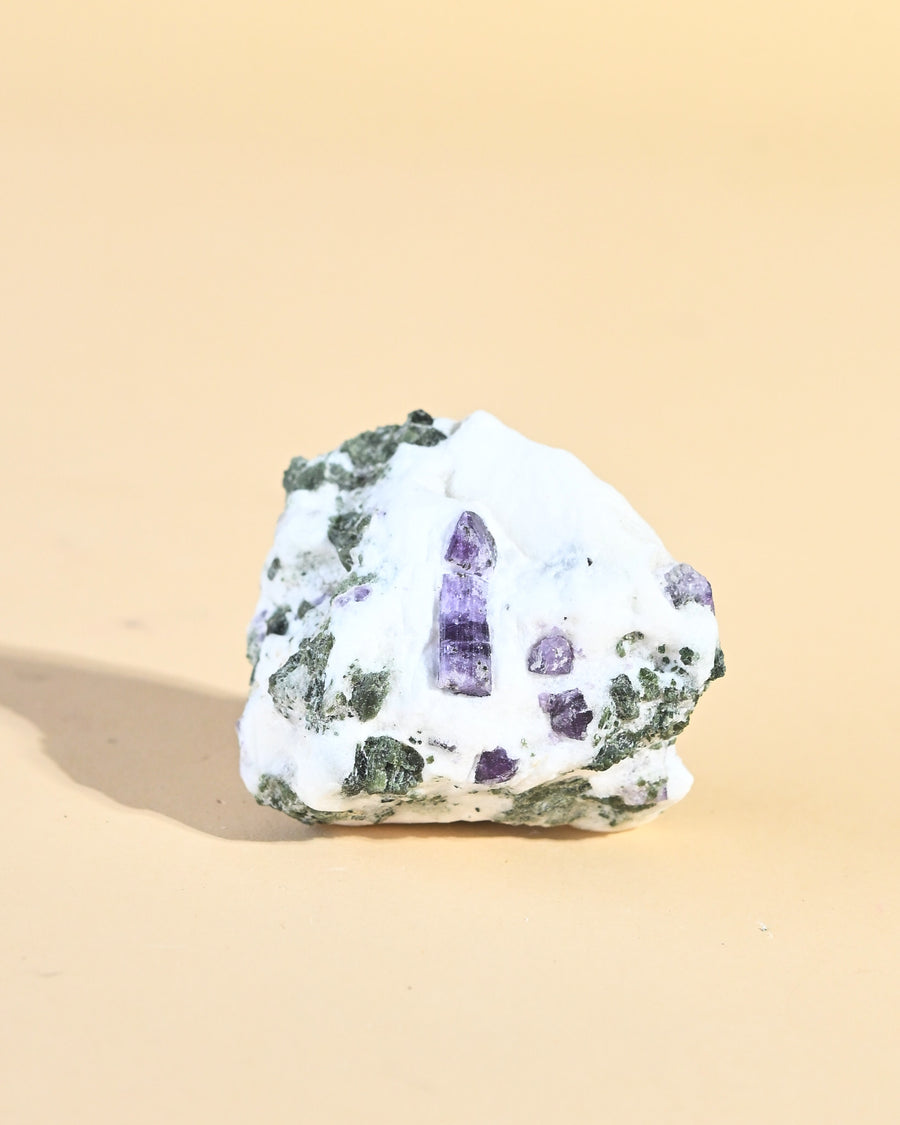

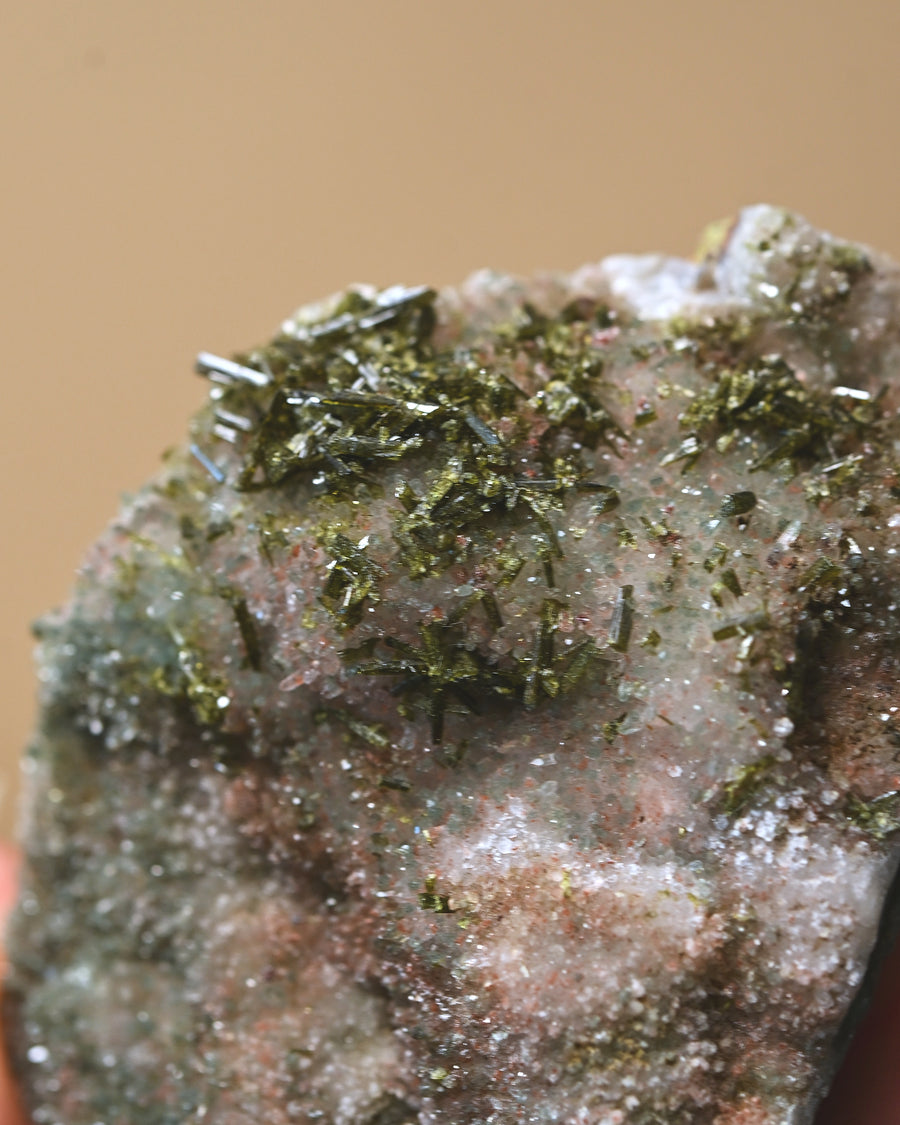
Scapolite Cluster w Calcite + Epidote 141g No. 50
$98
Crystals.com
The finest epidote specimens come from Alpine-type fissures in metamorphic rocks — the Austrian Alps (Knappenwand in the Untersulzbachtal is the classic locality), Pakistan's Balochistan province, and Peru's Pampa Blanca district all produce world-class...
5 pieces
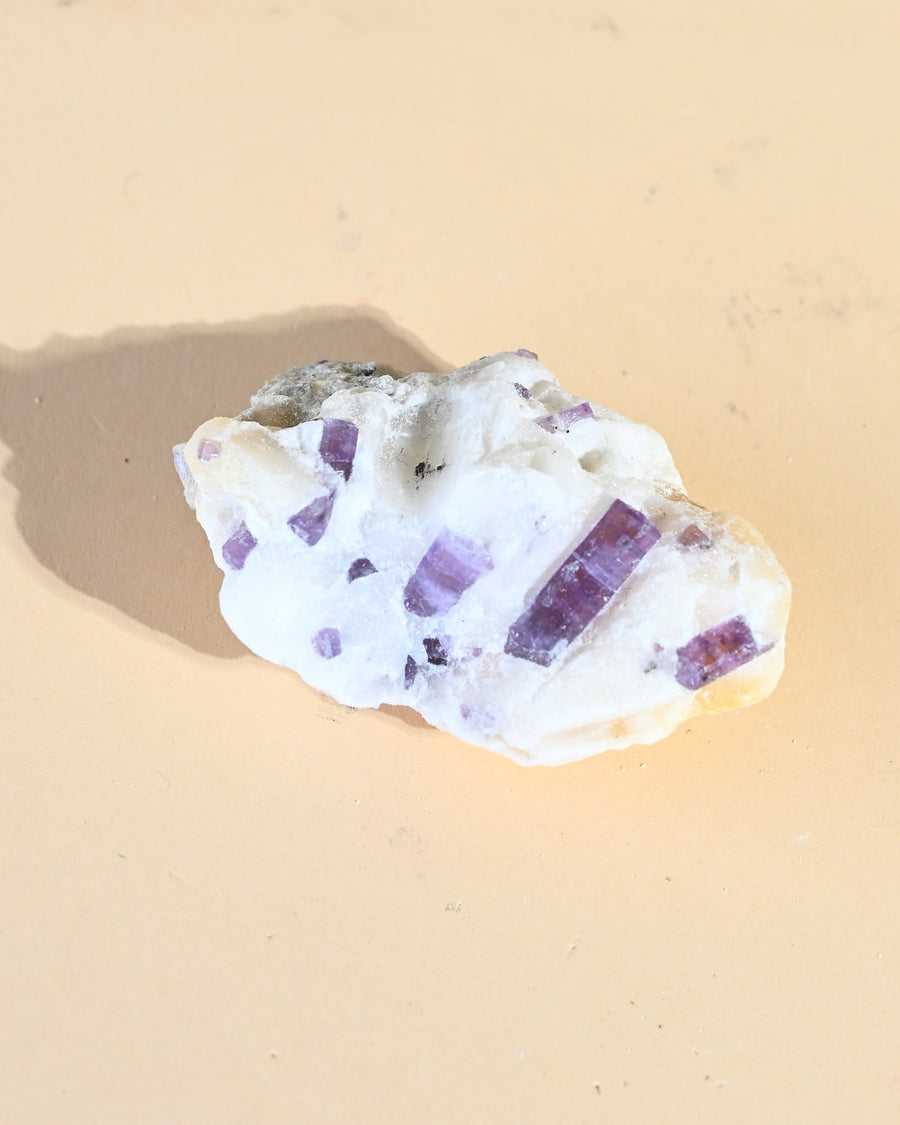

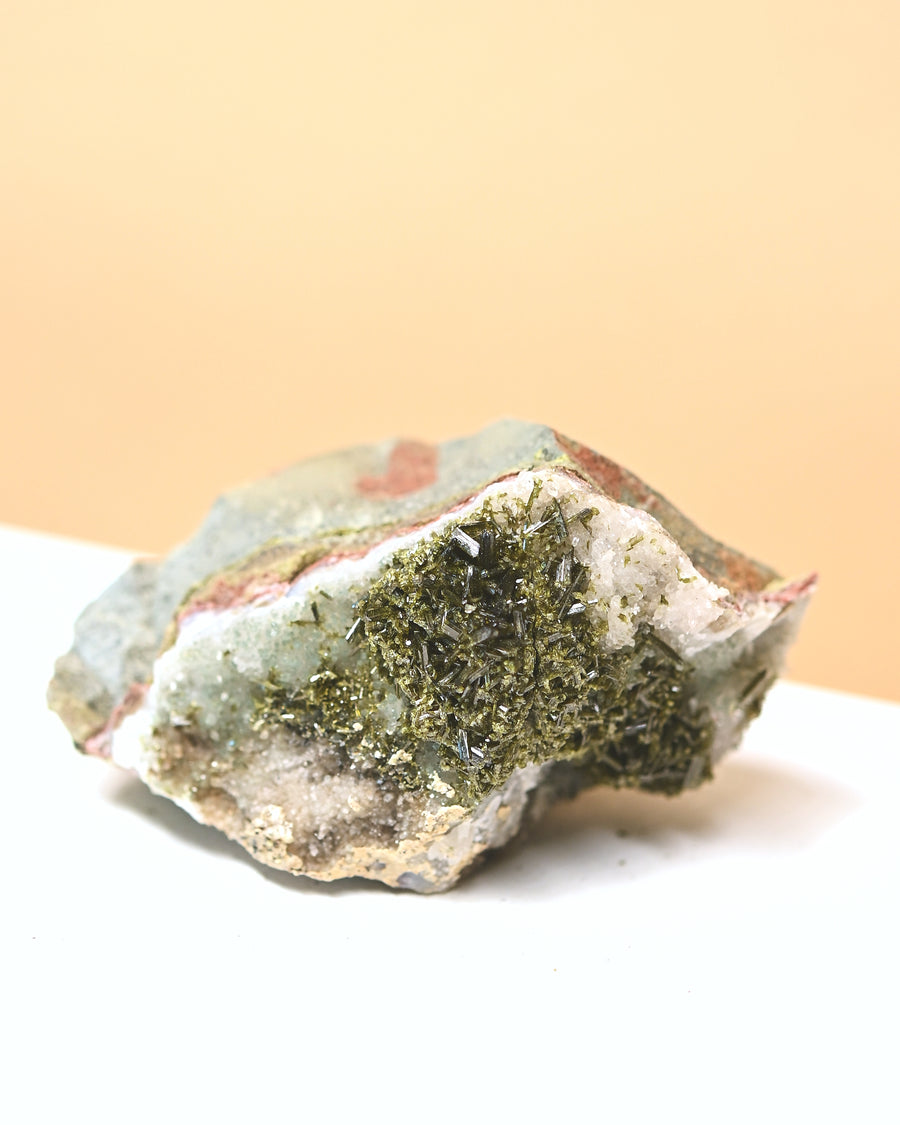

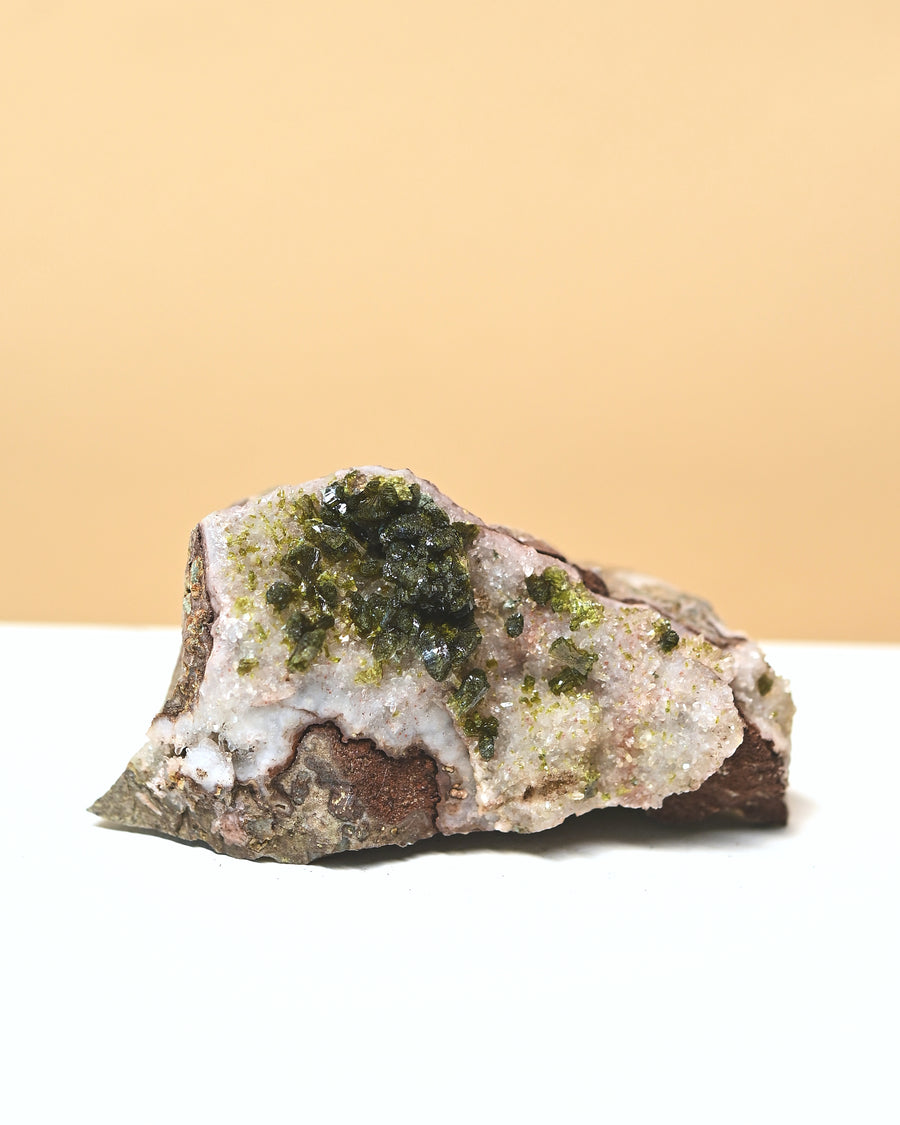


Chosen piece by piece, mostly direct from mines and suppliers I have worked with for years.
I shoot every piece myself, so a one of a kind piece is the exact piece you receive.
Packed by hand here and out in 1 to 3 business days.
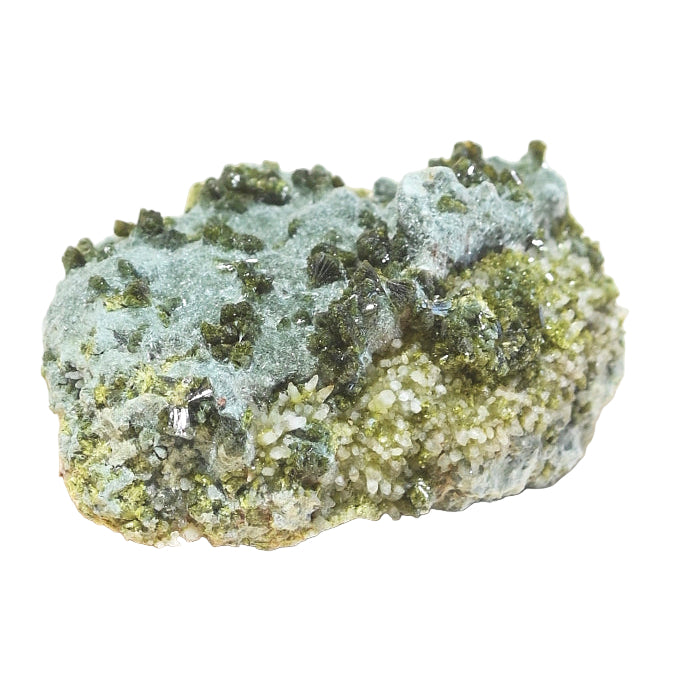
Epidote is a calcium aluminum iron sorosilicate mineral with the formula {Ca₂}{Al₂Fe³⁺}[O|OH|SiO₄|Si₂O₇]. Its distinctive pistachio to forest green color comes from iron (Fe³⁺) in the crystal structure — the more iron, the darker the green. The name comes from the Greek "epidosis" meaning "addition," referring to one side of the crystal being longer than the other. Epidote is a common rock-forming mineral found worldwide, but well-crystallized cabinet specimens are far rarer than the mineral itself.
The finest epidote specimens come from Alpine-type fissures in metamorphic rocks — the Austrian Alps (Knappenwand in the Untersulzbachtal is the classic locality), Pakistan's Balochistan province, and Peru's Pampa Blanca district all produce world-class prismatic crystals. Epidote also occurs in contact metamorphic zones, in skarns, and in altered volcanic rocks. Crystals are typically elongated and striated along their length, with a vitreous to resinous luster and a Mohs hardness of 6–7. The pistachio-green color is so characteristic that geologists use the term "epidote green" as a color reference in the field.
Browse related green minerals in our green crystals collection, or explore prehnite — another collector-favorite green silicate. For display-quality mineral specimens, see our crystal clusters and Collector's Edition pieces. Take the crystal quiz for a personalized recommendation. Free US shipping on orders over $150.
Epidote is a calcium aluminum iron silicate mineral that belongs to the sorosilicate group. It forms prismatic, elongated crystals with deep pistachio to forest green color caused by iron content. It is a common rock-forming mineral in metamorphic terranes but well-crystallized specimens suitable for collections are relatively uncommon.
Epidote is found worldwide, but the finest collector specimens come from the Austrian Alps (especially the Knappenwand locality), Pakistan, Peru, and Mali. It forms in metamorphic rocks — particularly in Alpine-type fissure veins, contact metamorphic zones, and altered volcanic formations. The geological conditions must provide calcium, aluminum, iron, and silica under moderate temperature and pressure.
Epidote has a Mohs hardness of 6–7, making it similar in hardness to quartz. It is durable enough for display and handling but should be stored separately from softer minerals to avoid scratching them. Its one perfect cleavage direction means it can chip if dropped on a hard surface.
Epidote is relatively sturdy for display. Dust with a soft brush and clean with lukewarm water and a gentle soap if needed — avoid ultrasonic cleaners due to the cleavage plane. Store away from direct sunlight for extended periods (some specimens may darken or shift color slightly). Keep separate from harder minerals like corundum or topaz.
Unakite is a rock — a combination of pink orthoclase feldspar, green epidote, and quartz. So epidote is actually a component of unakite. Pure epidote specimens show distinct prismatic crystal faces and a glassy pistachio-green color, while unakite is a mottled pink-and-green stone used primarily in jewelry and lapidary.
A beautiful piece..the photo's did not do it justice. The delivery was timely and arrived in perfect condition. Thank you..this specimen is a must for any collector.
Crystals Individually wrapped
Shipped with care, excellent packaging. Great products
Very nice, one of a kind sphere. The piece matched the quality in the photos. Packaging was above average, with no damage during shipping. Tracking was easy. Everything was a positive experience.
Was expecting a bright shade of yellow, but the amber shade is just as beautiful.
Loved how it glimmers
Loved the packaging
Each Crystal came out beautifully
Will definitely find myself a frequent customer ☺️
Perfect. I love my crystals!
Beautiful! Exactly what I was hoping for/expecting!
Delivered when promised. Packaged very nicely!
Beautiful! The purple is so vibrant!
Stunning! Exceeded my expectations and arrived so quickly 💜
Web site is working like a dream, beautifully.
Amazing smoky quartz that you dug up yourself in Tennessee. It shines in my entryway & it is so special. Thank you, it is one of my most important treasures. By the way, your web site works beautifully!
Very beautiful!
Can't choose?
Tell it what you need. It picks one piece for you, in stock right now.
Sorry, looks like we don't have enough of this product.

Buy It With
$10.00 USD


