Crystals.com
Kyanite
Authentic natural minerals, thoughtfully sourced and individually photographed.

Kyanite Crystals
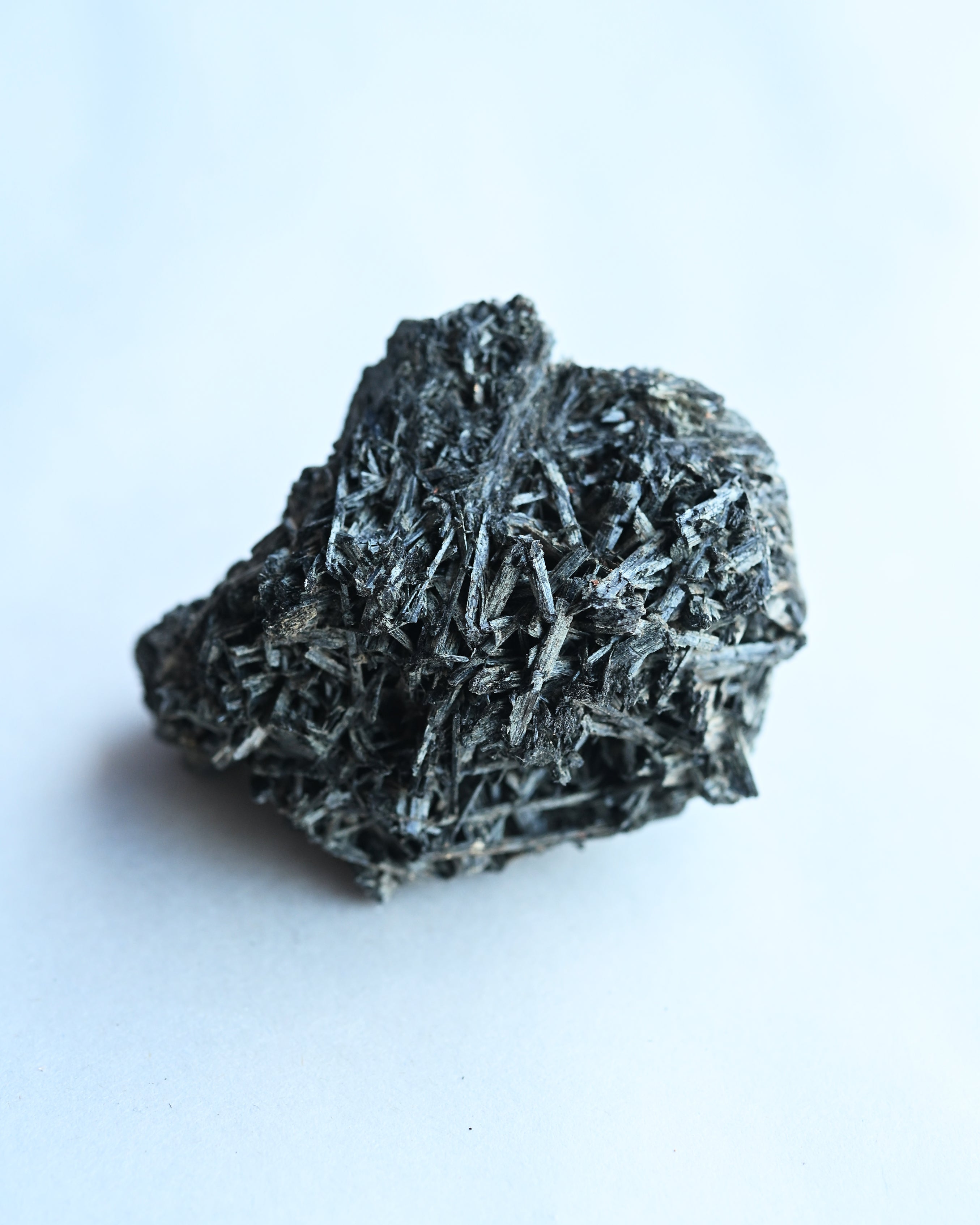
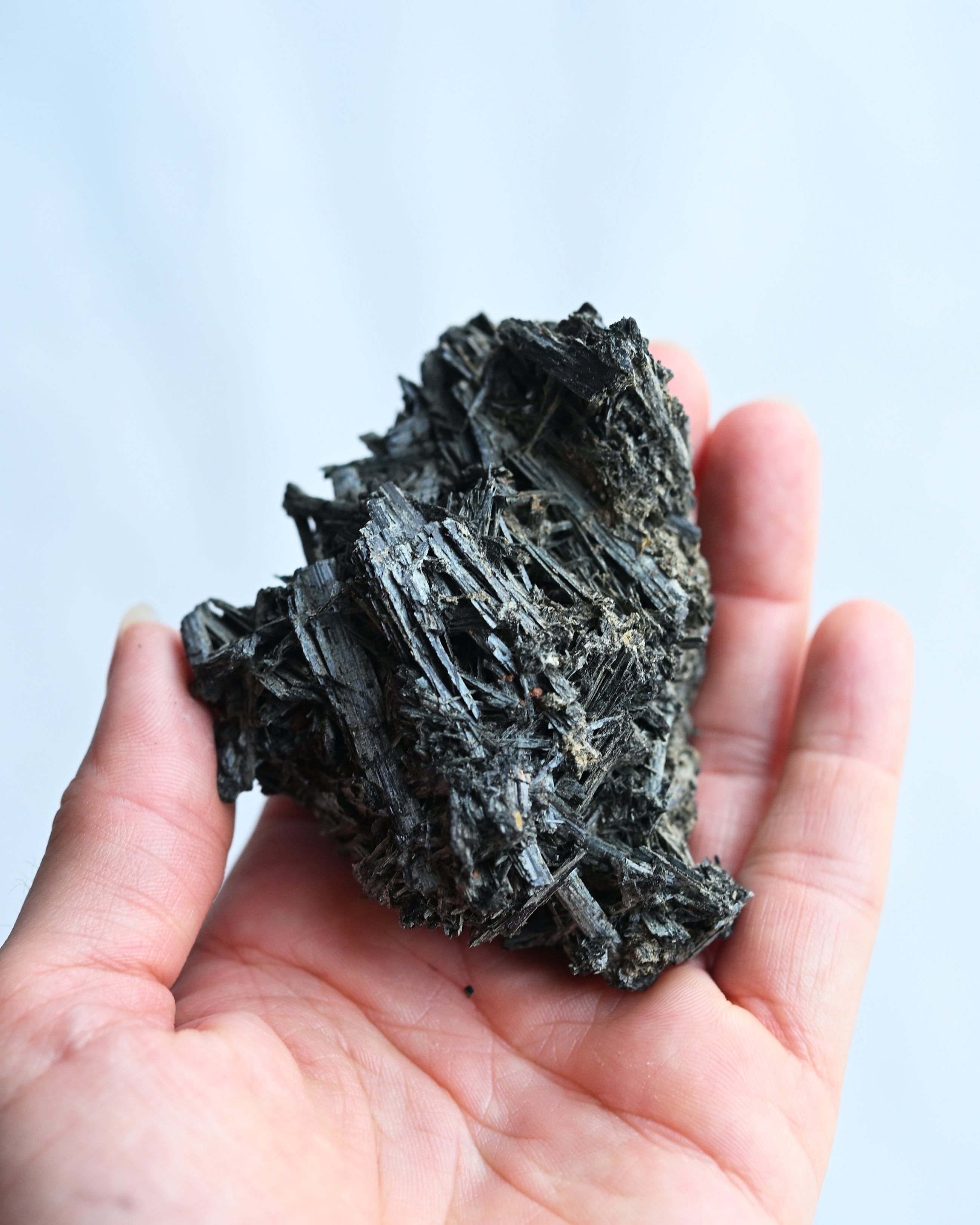
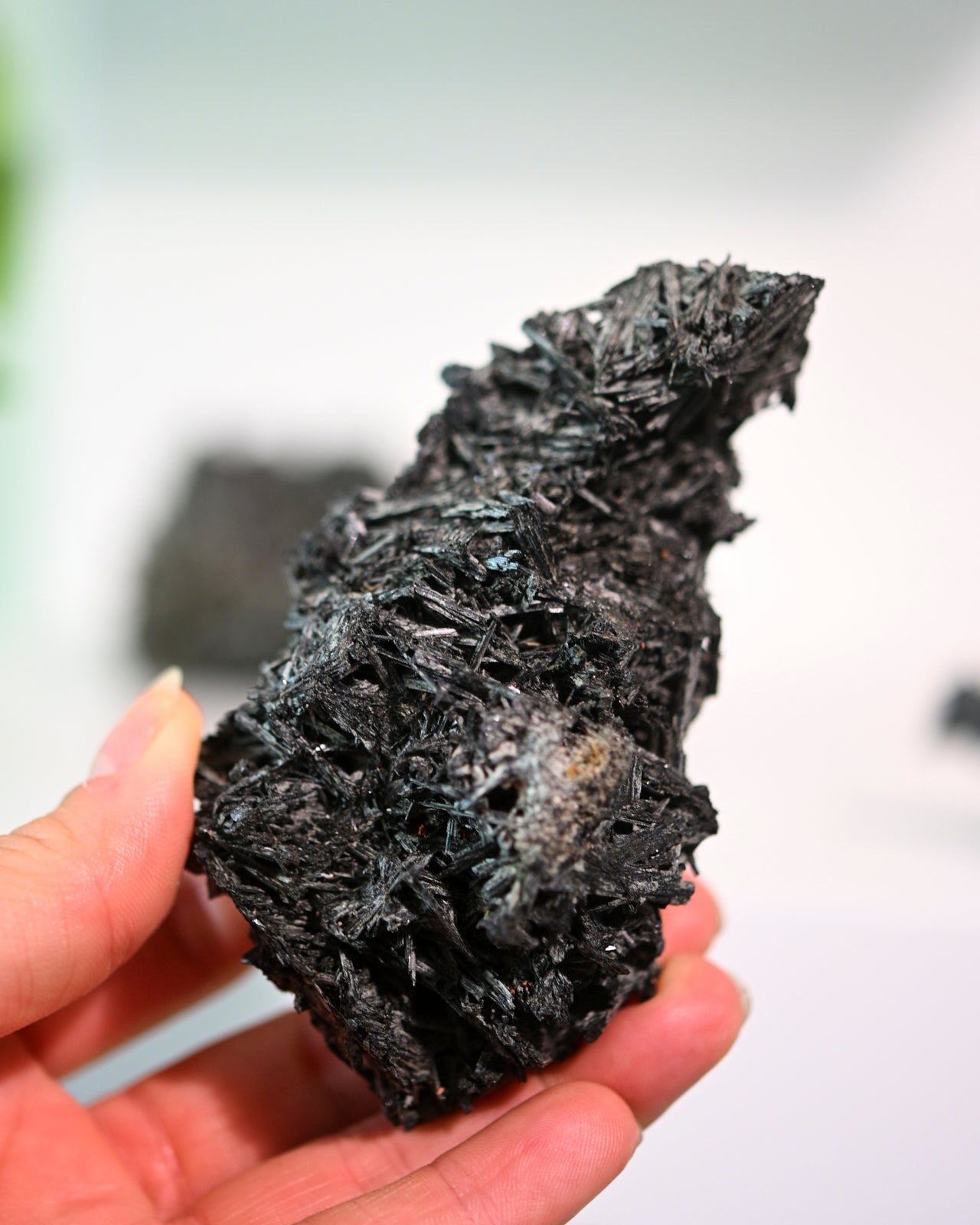
Kyanite is an aluminum silicate mineral (Al₂SiO₅) crystallizing in the triclinic system. What makes kyanite remarkable is its anisotropic hardness — it measures 4.5 along the length of its blade-like crystals but 6.5–7 across the width, one of the most dramatic directional hardness variations in mineralogy. Its name comes from the Greek kyanos, meaning "deep blue." Major sources include Brazil, Nepal, Kenya, India, and the United States.
Kyanite is a polymorph of both andalusite and sillimanite — all three share the same chemical composition but different crystal structures, each forming under distinct pressure and temperature conditions. For collectors, blue kyanite blades from Nepal and Brazil are particularly valued for vivid sapphire-blue color and sharp, elongated crystal habit. Orange kyanite from Tanzania is a more recent discovery and highly sought after for its rarity.
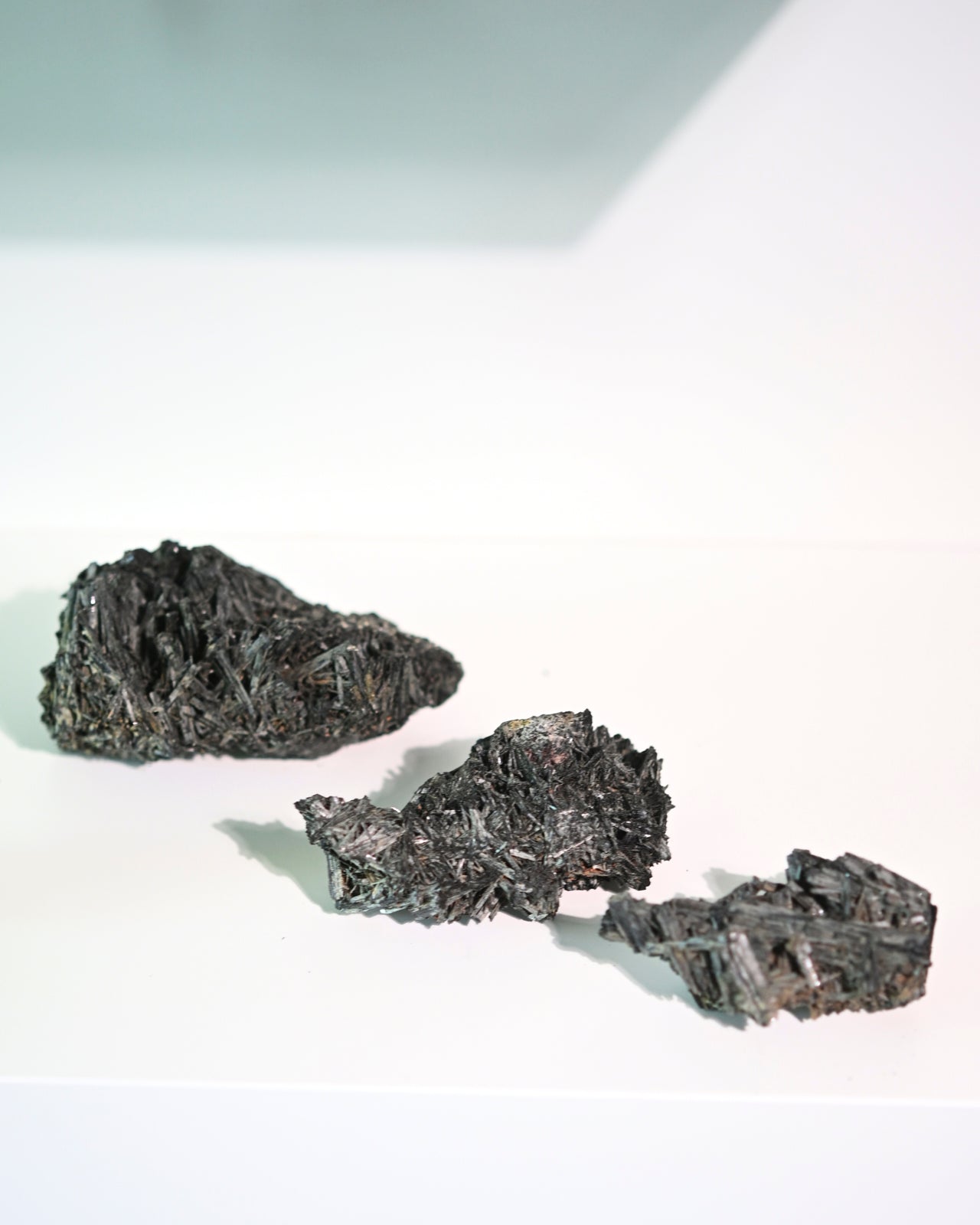
Available forms include raw blade specimens and clusters, tumbled stones, palm stones, bracelets, and polished freeforms. For other blue minerals, see our lapis lazuli, sodalite, and labradorite collections. Browse crystal jewelry for kyanite pendants. Free shipping on orders $150+.
Frequently Asked Questions
What is kyanite?
Kyanite is an aluminum silicate mineral (Al₂SiO₅) that forms blade-like crystals in metamorphic rocks. It is notable for having two different hardness values depending on direction — 4.5 along the crystal length and 6.5–7 across the width. Blue is the most common color, but kyanite also occurs in green, orange, and black.
Why does kyanite have two different hardness values?
Kyanite's anisotropic hardness is caused by its crystal structure — the bonds between atoms are weaker along the c-axis (length of the blade) and stronger perpendicular to it. This means you can scratch kyanite with a steel knife along its length but not across its width. Very few minerals show this degree of directional hardness variation.
Where does kyanite come from?
Nepal and Brazil produce the finest blue kyanite specimens. Kenya and Tanzania are sources of green and orange kyanite. India produces large quantities of industrial kyanite. The United States has deposits in Connecticut, Virginia, and North Carolina.
Is kyanite suitable for jewelry?
Kyanite can be used in jewelry but requires careful setting. Because of its directional hardness and perfect cleavage along the length, kyanite is best suited for pendants and earrings rather than rings. Protective bezel settings are recommended. Blue kyanite cabochons are popular for their vivid color.
What is orange kyanite?
Orange kyanite is a rare variety found primarily in Tanzania. Its color comes from manganese impurities. It was first recognized as a gem variety in the early 2000s and has become highly sought after by collectors due to its scarcity and unusual color for the species. Most kyanite on the market is blue; orange specimens command significant premiums.


Let customers speak for us
As advertised, the pieces are amazing and beautiful. The first place I go to shop for crystals and stones online.
Another amazing piece. It's beautifully balancing and intuitive.

This necklace is amazing and just the right piece for healing and transformation.

Shopping was easy to navigate. I received my shipment in a reasonable time.
A beautiful bracelet to add to my loving collection.

Not only is this necklace beautiful, I feel calmer when I wear it. LOVE IT
Stunning piece of rock!

Incredible specimen! Lovely for the collection

Beautiful crystals!The quality is excellent, with gorgeous color and natural details. Very happy with my purchase and would definitely recommend!

Beautiful crystals! The quality is excellent, with gorgeous color and natural details. Very happy with my purchase and would definitely recommend!

I have ordered a lot of pieces from here and they are beautiful and always arrive as described and packed and shipped fast. Always very satisfied with my purchases and appreciate buying from Brittany and her business.
Beautiful piece! Incredible quality and shipped perfectly!

Great quality and I loved the information cards.
Great quality and I loved the information card it came with.

I have purchased several pieces from Crystals.com and keep coming back for more. :) This is my second amethyst piece. The color of the amethyst is a deep purple. Great craftsmanship!!

A Sanctuary of Natural Beauty
Every crystal here was discovered by hand, selected with intuition, and photographed in its true light.
One-of-a-Kind. Forever Pieces.
Let the Universe Decide


