
Crystals.com
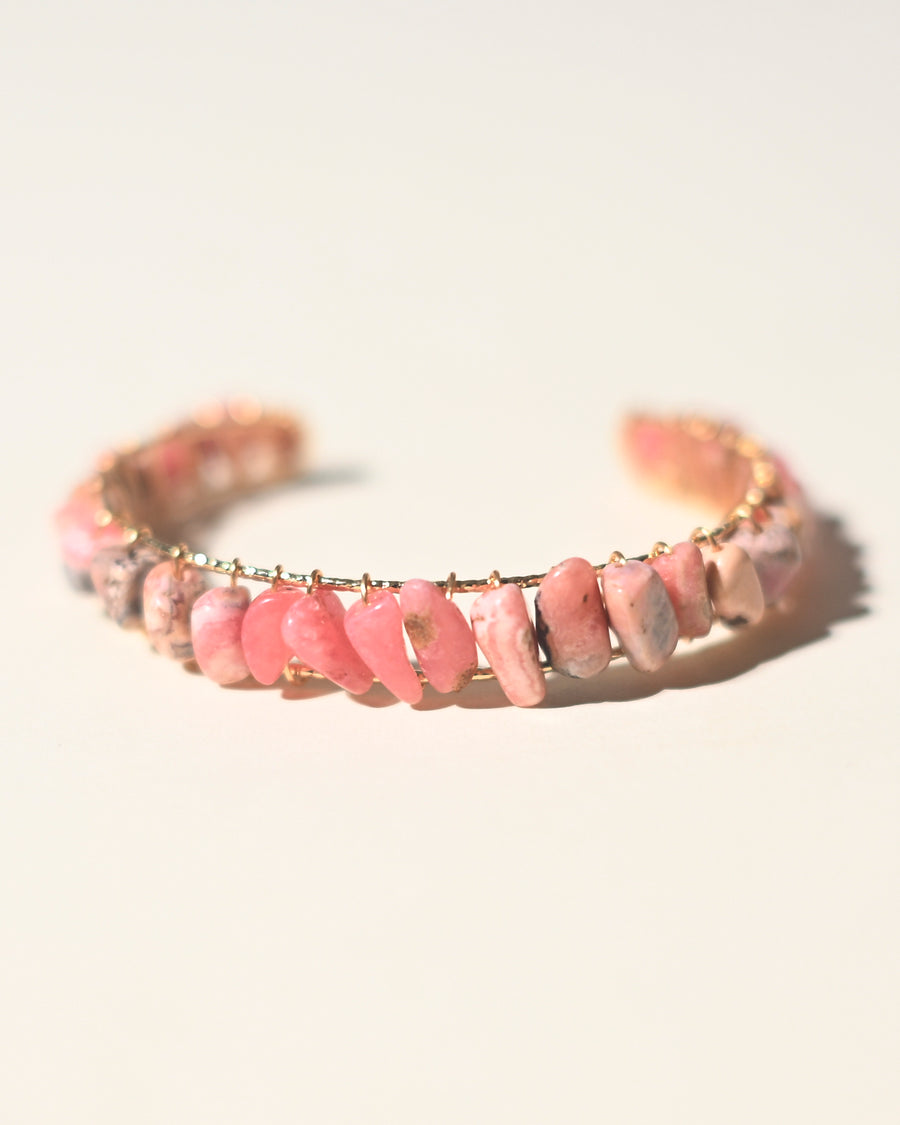
Rhodochrosite is a manganese carbonate mineral (MnCO₃) that crystallizes in the trigonal system. Its name comes from Greek rhodon (rose) and chros (color), and it lives up to it — rhodochrosite displays some of...
3 pieces


Chosen piece by piece, mostly direct from mines and suppliers I have worked with for years.
I shoot every piece myself, so a one of a kind piece is the exact piece you receive.
Packed by hand here and out in 1 to 3 business days.
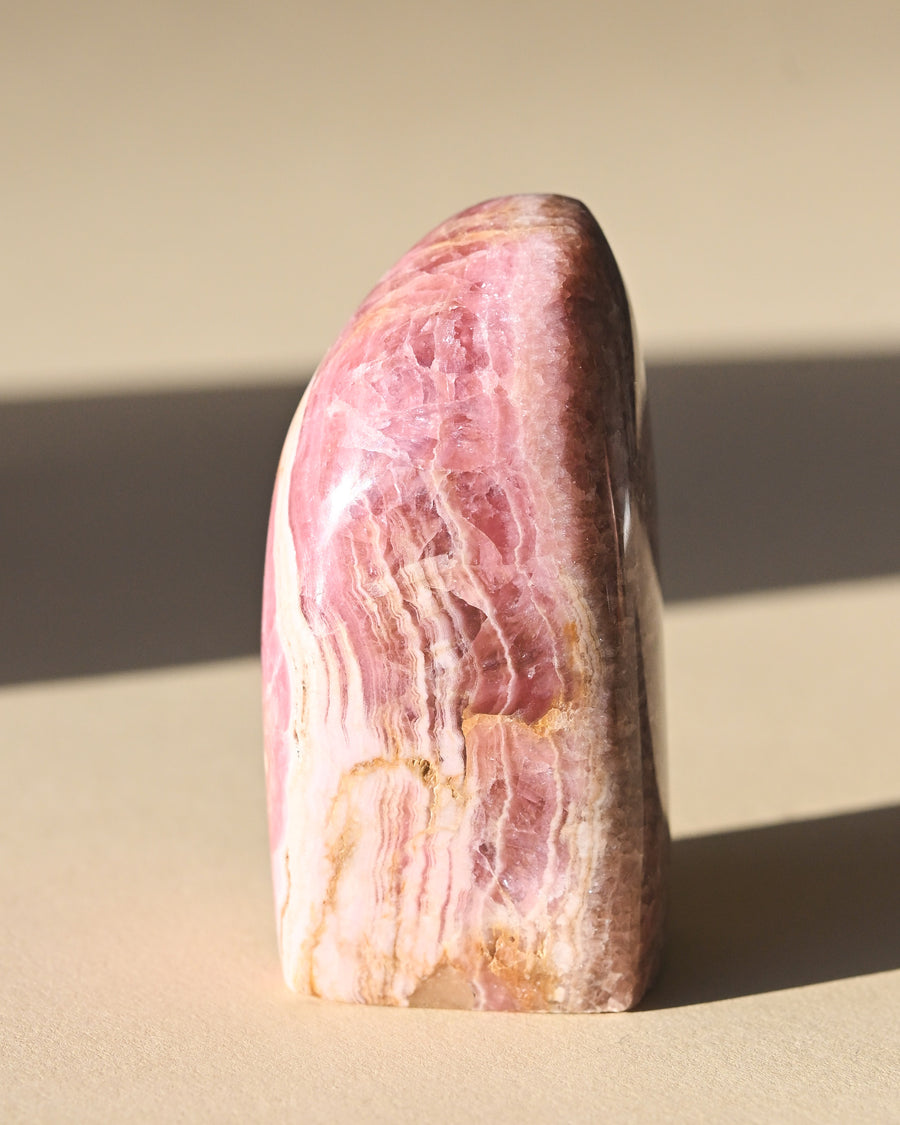
Rhodochrosite is a manganese carbonate mineral (MnCO₃) that crystallizes in the trigonal system. Its name comes from Greek rhodon (rose) and chros (color), and it lives up to it — rhodochrosite displays some of the most vivid pinks in the mineral kingdom, from soft raspberry to intense magenta. It rates 3.5–4 on the Mohs hardness scale with a vitreous to pearly luster.
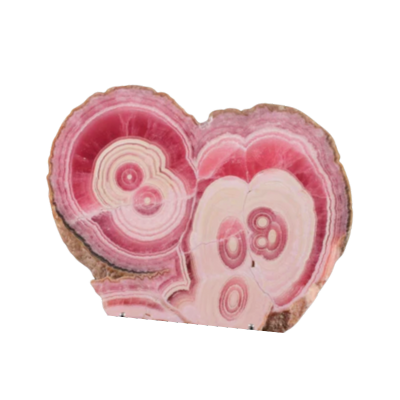
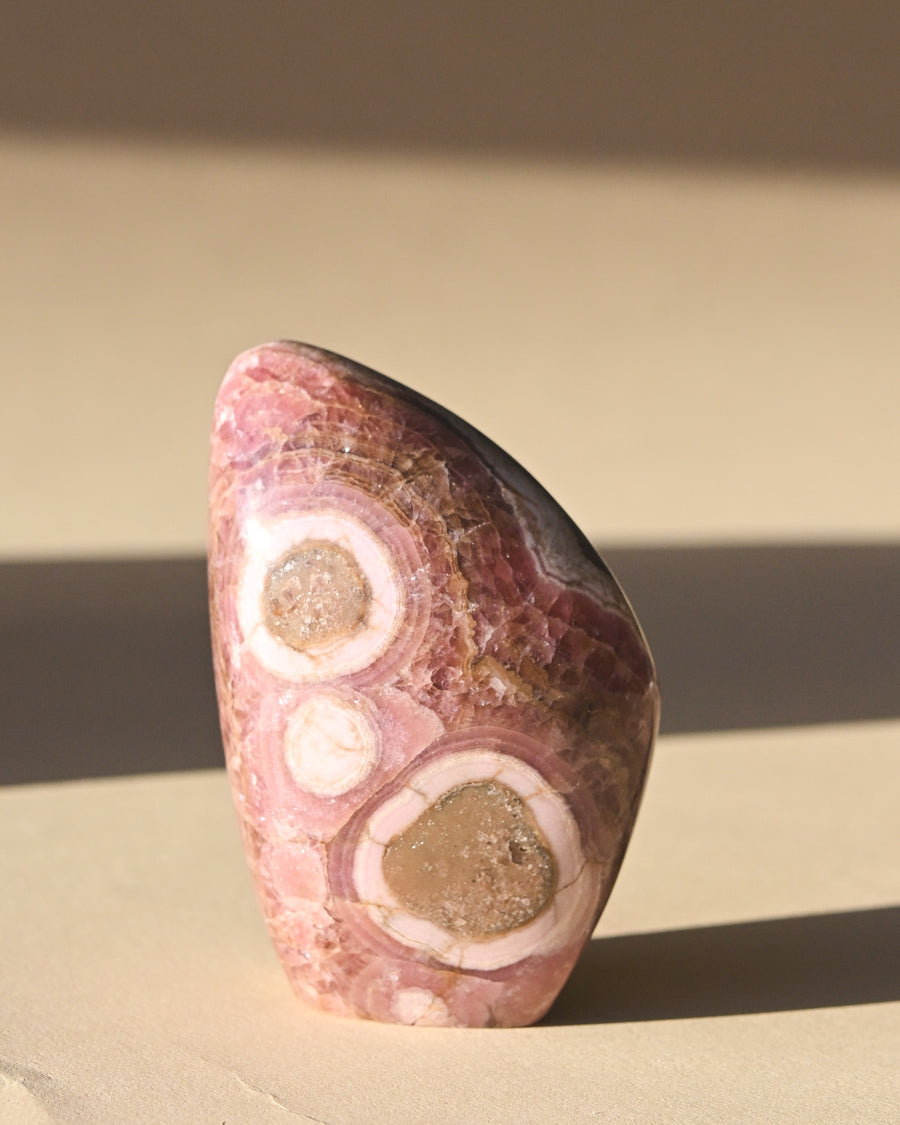
The most iconic rhodochrosite comes from Argentina's Capillitas mine, where stalactites form with concentric pink and white banding — cross-sections reveal bulls-eye patterns that are unmistakable. Argentina designated rhodochrosite its national gemstone. The Sweet Home Mine in Colorado produces some of the finest crystallized rhodochrosite in the world — transparent red rhombohedral crystals on matrix that command museum-grade prices. Peru produces excellent banded material, and South Africa's N'Chwaning Mine yields deep red transparent crystals.
Browse related pink minerals in our Pink Crystals collection, or compare with Rose Quartz and Pink Opal. For other collector-grade specimens, see One-of-a-Kind Crystals and Collector's Edition. Free shipping on orders over $150.
Rhodochrosite is a manganese carbonate mineral (MnCO₃) known for its vivid pink color. It occurs in both banded massive form (stalactites with pink and white rings) and transparent crystallized form (rhombohedral crystals). It rates 3.5–4 on the Mohs scale.
Argentina produces the iconic banded stalactites (Capillitas mine). Colorado's Sweet Home Mine yields museum-grade transparent red crystals. Peru and South Africa (N'Chwaning Mine) are also important sources. Argentina named rhodochrosite its national gemstone.
Both are pink manganese minerals, but they are chemically distinct. Rhodochrosite is manganese carbonate (MnCO₃, Mohs 3.5–4) with concentric banding. Rhodonite is manganese silicate (MnSiO₃, Mohs 5.5–6.5) with black manganese oxide veining. Rhodonite is harder and more durable for jewelry.
Yes, but with care. At Mohs 3.5–4, rhodochrosite is too soft for rings but works well in pendants, earrings, and brooches with protective settings. Banded cabochons are the most common jewelry form. Avoid water, chemicals, and ultrasonic cleaners.
Transparent red rhodochrosite forms as well-defined rhombohedral crystals in hydrothermal veins. This is the rarest and most valuable form, with top specimens from Colorado's Sweet Home Mine selling for thousands of dollars. Most rhodochrosite on the market is the more common banded massive form.
A beautiful piece..the photo's did not do it justice. The delivery was timely and arrived in perfect condition. Thank you..this specimen is a must for any collector.
Crystals Individually wrapped
Shipped with care, excellent packaging. Great products
Very nice, one of a kind sphere. The piece matched the quality in the photos. Packaging was above average, with no damage during shipping. Tracking was easy. Everything was a positive experience.
Was expecting a bright shade of yellow, but the amber shade is just as beautiful.
Loved how it glimmers
Loved the packaging
Each Crystal came out beautifully
Will definitely find myself a frequent customer ☺️
Perfect. I love my crystals!
Beautiful! Exactly what I was hoping for/expecting!
Delivered when promised. Packaged very nicely!
Beautiful! The purple is so vibrant!
Stunning! Exceeded my expectations and arrived so quickly 💜
Web site is working like a dream, beautifully.
Amazing smoky quartz that you dug up yourself in Tennessee. It shines in my entryway & it is so special. Thank you, it is one of my most important treasures. By the way, your web site works beautifully!
Very beautiful!
Can't choose?
Tell it what you need. It picks one piece for you, in stock right now.
Sorry, looks like we don't have enough of this product.

Buy It With
$10.00 USD


