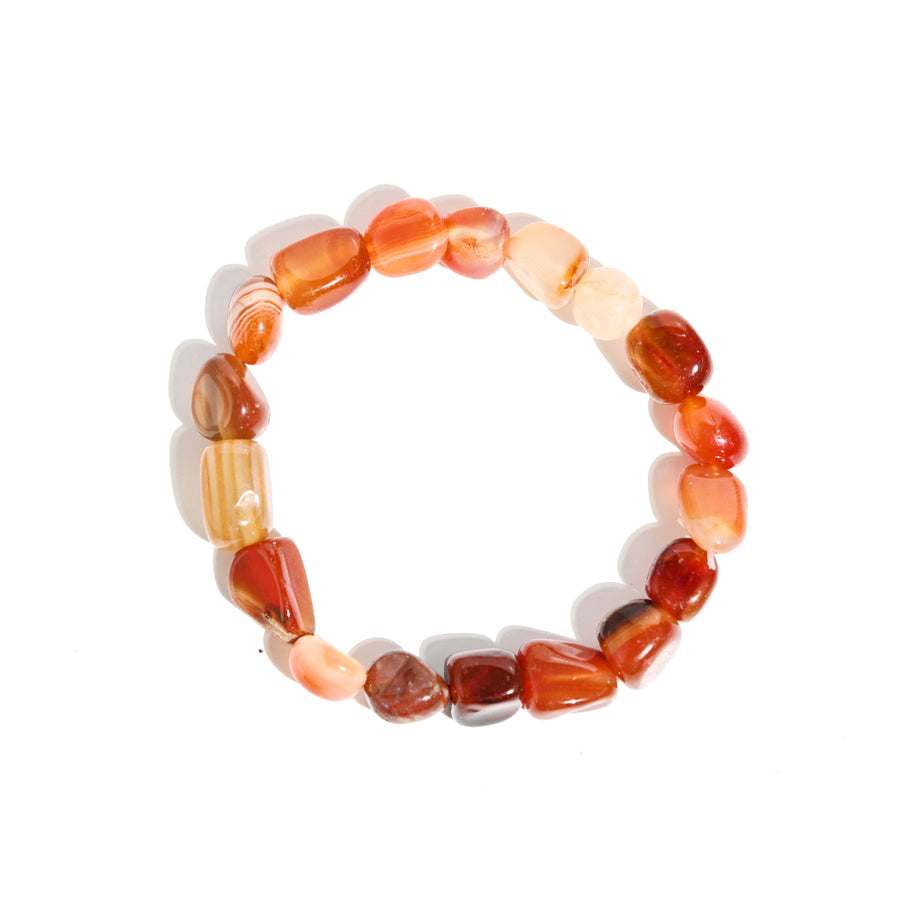

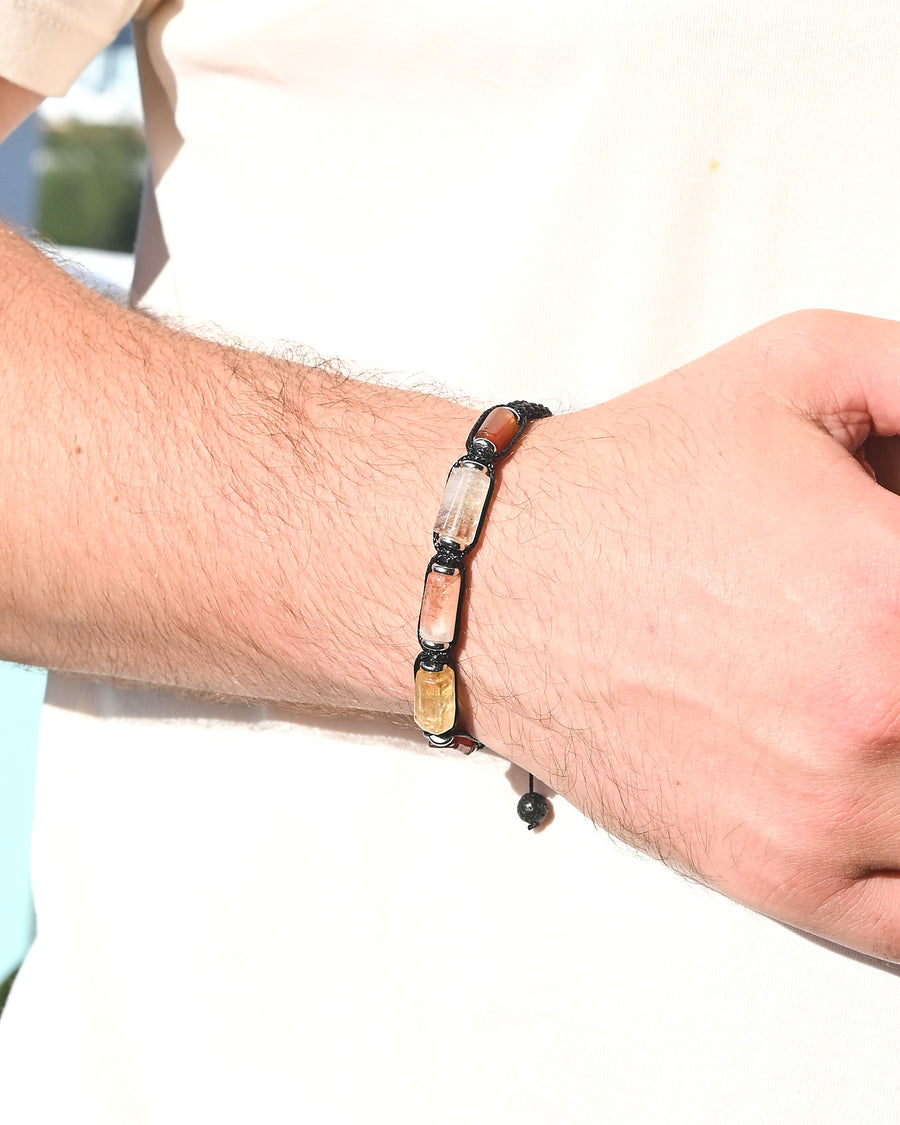
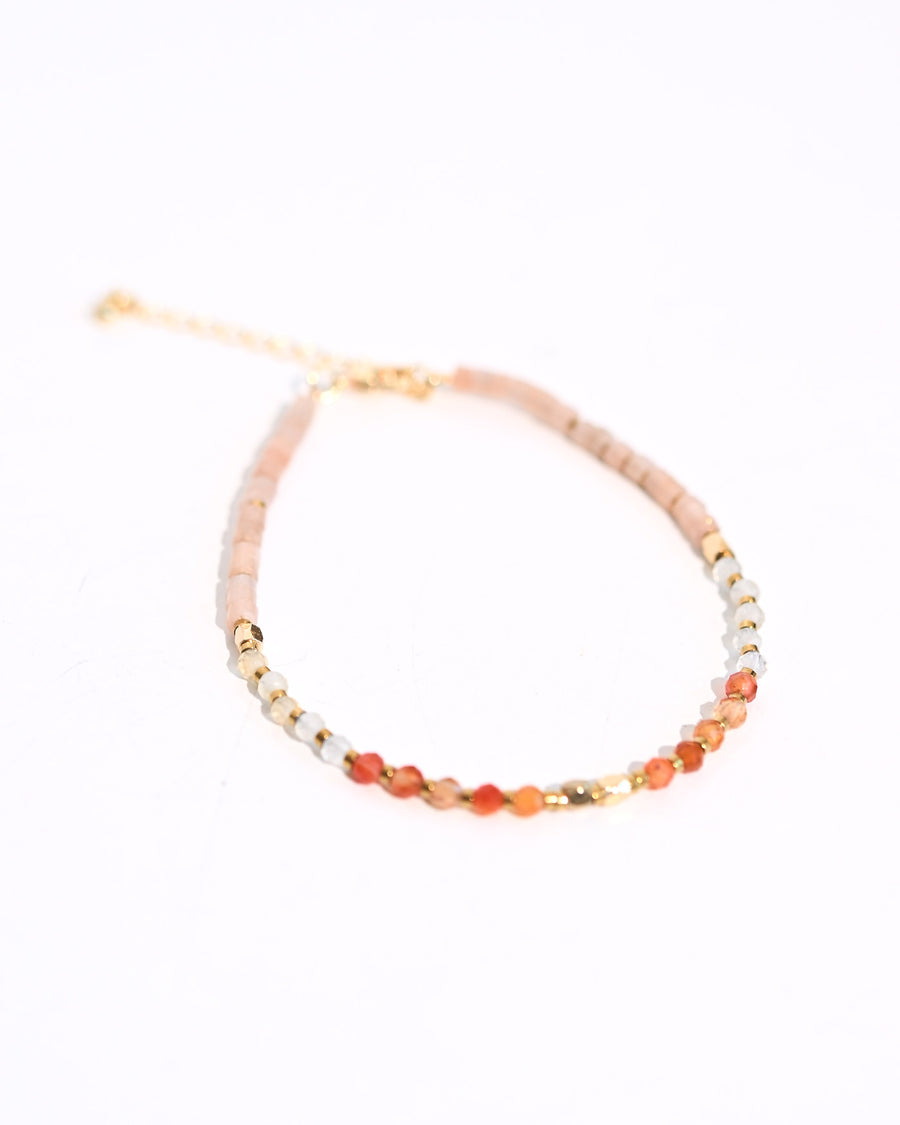
Carnelian Bracelet - PASSION
From $34Choose options
Confidence and creative spark
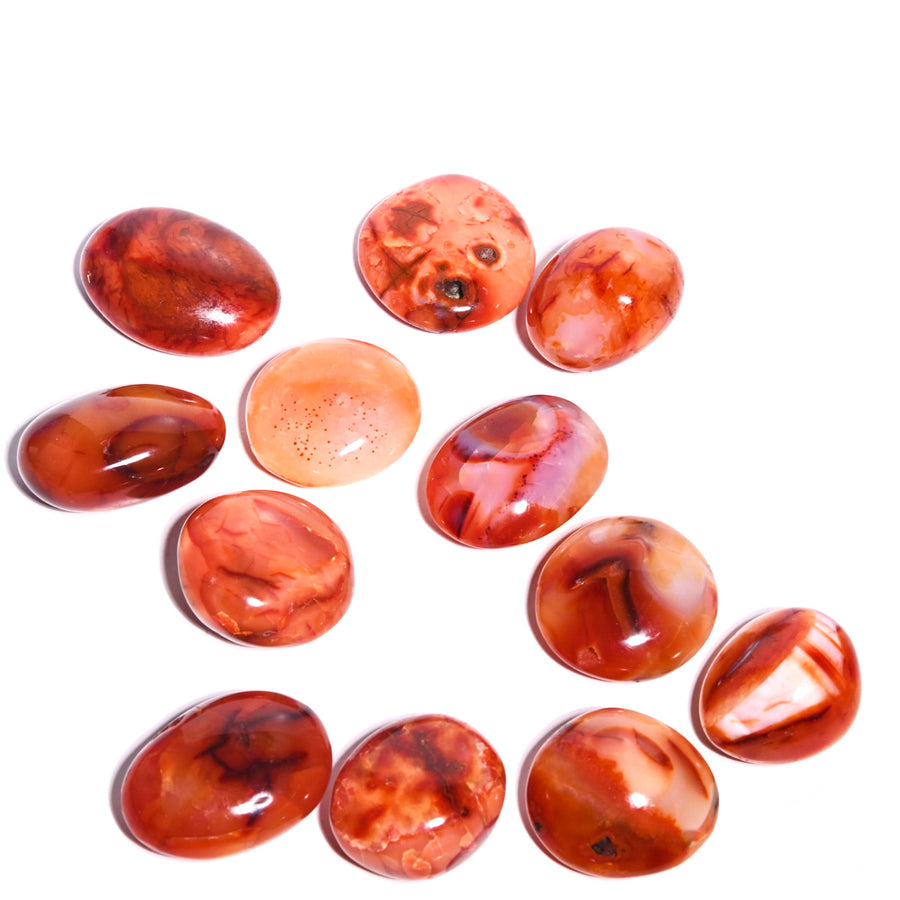
Orange through deep reddish-brown, translucent to opaque. Sourced from Brazil, Madagascar and India, and chosen for saturation.
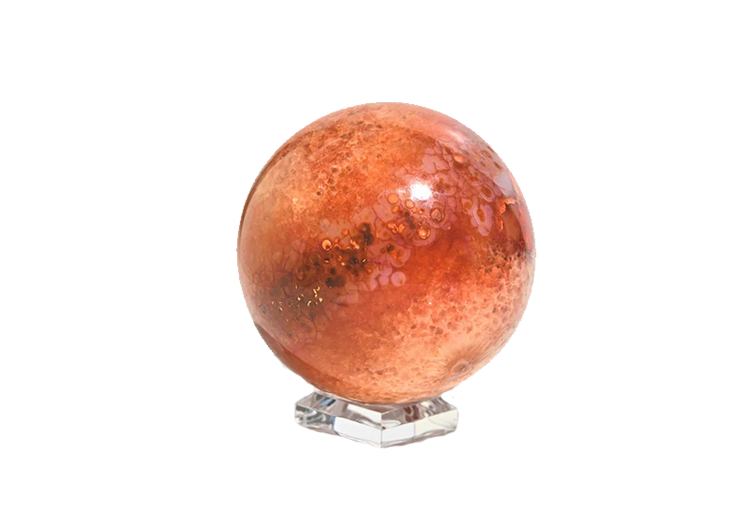
7 pieces


 Sold
 Sold
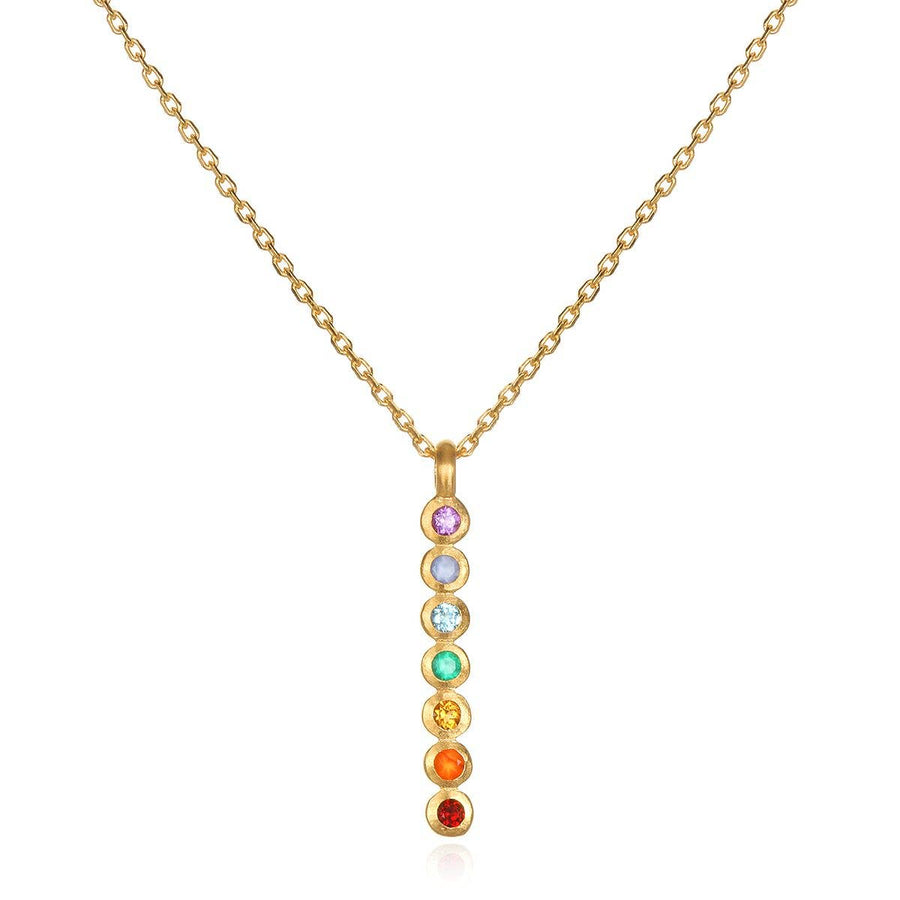

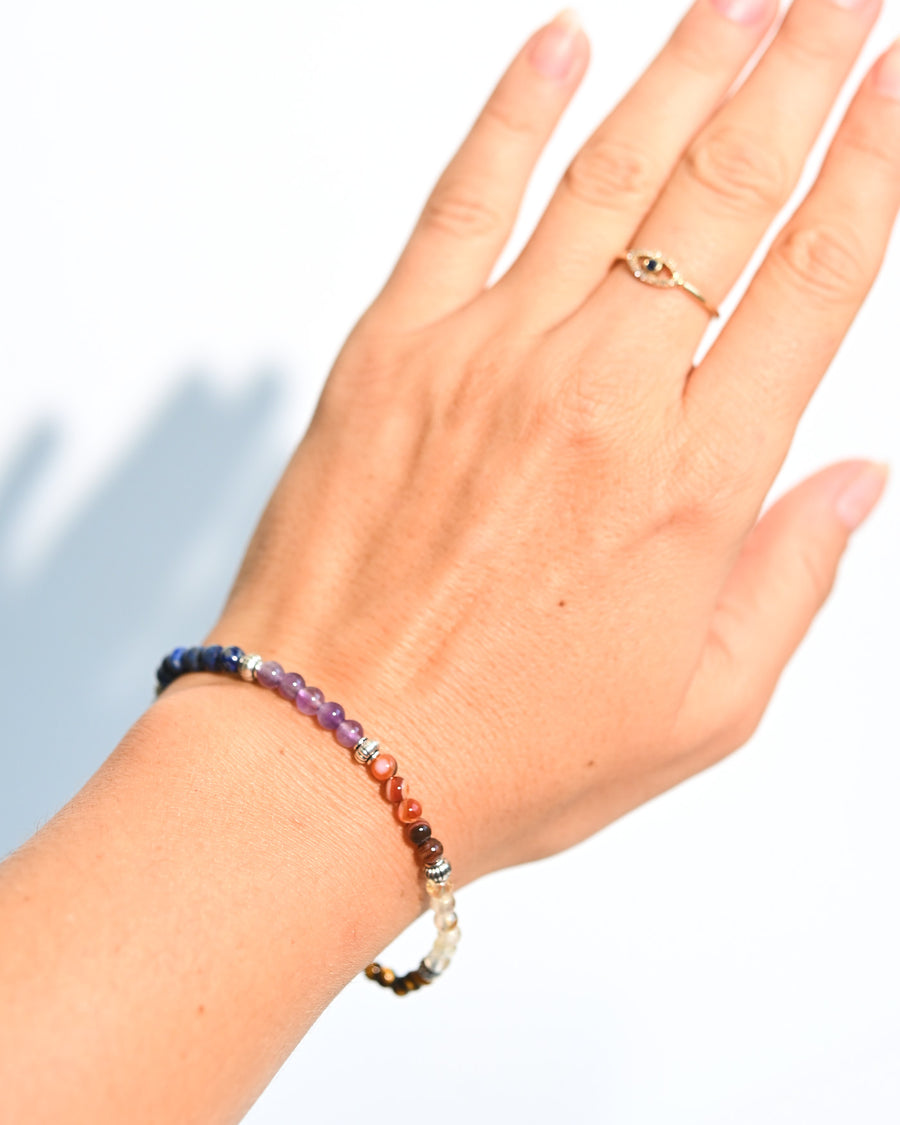

The orange comes from iron oxide in the stone. Deeper reddish-brown pieces simply carry more of it; none of it is dye.
At 6.5 to 7 on the Mohs scale carnelian handles short contact with water. Avoid soaking it.
Carnelian is tied to the sacral chakra, for creativity and emotional balance, and grounds into the root.
Carnelian is a translucent variety of chalcedony, which is a microcrystalline form of quartz (SiO2). Its warm orange to reddish-brown color comes from iron oxide impurities. It sits at 6.5–7 on the Mohs hardness scale and takes an excellent polish, making it one of the most durable and versatile semi-precious stones.
The best carnelian comes from Madagascar, Brazil, India, and Uruguay. Indian carnelian has been traded for thousands of years — ancient Egyptians, Greeks, and Romans all used it for seals, jewelry, and amulets. Each source produces slightly different color tones depending on local iron content.
Genuine carnelian is translucent when held to light and shows natural color variation and banding. Dyed agate (a common substitute) often shows unnaturally uniform color or dye concentrated in surface cracks. Real carnelian also feels cool to the touch initially and warms slowly in the hand. All carnelian at Crystals.com is verified genuine.
Yes. At Mohs 6.5–7, carnelian is harder than most jewelry metals and very resistant to scratching. It has no cleavage planes, making it tough and unlikely to chip. Carnelian bracelets, pendants, and rings can be worn daily without special precautions.
Both are varieties of chalcedony (microcrystalline quartz), but carnelian is specifically colored by iron oxide and is typically translucent. Red agate is usually banded, more opaque, and may be naturally colored or dyed. In the trade, the distinction comes down to translucency and the specific warm orange-to-red hue that defines carnelian.
It is best known for courage, creative spark, emotional balance, and abundance.
Most of our carnelian is sourced from Brazil, Madagascar, and India.
Yes. It ranks 6.5 to 7 on the Mohs scale, so short-term contact is fine, but avoid soaking.
It ranges from soft orange to deep reddish-brown, with translucent to opaque finishes.
Carnelian is primarily connected to the sacral chakra, supporting creativity, sexuality, and emotional balance. It also helps ground and stabilise the root chakra.
Place it in sunlight, moonlight, or on a clear quartz cluster to recharge.
Carnelian is a translucent variety of chalcedony — a microcrystalline form of quartz (SiO₂) — colored by iron oxide impurities. Its palette runs from pale orange and warm amber to deep reddish-brown, depending on iron concentration and heat exposure during formation. Carnelian sits at 6.5–7 on the Mohs scale and takes an excellent polish, making it one of the most durable colored stones for both display and jewelry.
Orange carnelian is the most common form, prized for its warm, saturated tone. Deep red-brown carnelian grades toward sard and is typically darker, denser, and more opaque. The best material comes from Madagascar, Brazil, and India, where it forms in volcanic and sedimentary host rocks. Carnelian has been used in jewelry and seals since at least 4500 BCE — ancient Egyptians, Greeks, and Romans carved it into intaglios and signet rings.
Available forms include palm stones, tumbled pieces, spheres, pyramids, freeforms, and mini points. For other warm-toned stones, see our citrine and sunstone collections. Browse crystal bracelets for carnelian beaded pieces. Every piece is photographed individually — what you see is what you receive. Free shipping on orders $150+.
Carnelian is a translucent variety of chalcedony (microcrystalline quartz) colored by iron oxide. It ranges from pale orange to deep reddish-brown and rates 6.5–7 on the Mohs hardness scale. It is one of the oldest known gemstones, used in jewelry for over 6,500 years.
The finest carnelian comes from Madagascar, Brazil, and India. It forms in volcanic and sedimentary rocks where silica-rich fluids deposit chalcedony with iron oxide inclusions. Indian carnelian has been traded along the Silk Road for thousands of years.
Natural carnelian shows subtle color variations and banding when held to light. Dyed agate (a common substitute) tends to show concentrated color along fracture lines. Genuine carnelian is translucent at thin edges, rates 6.5–7 on the Mohs scale (scratches glass), and feels cool to the touch.
Both are varieties of chalcedony, but carnelian is uniformly translucent with iron oxide coloring, while agate displays distinct banding patterns. In practice, the boundary is gradual — heavily banded orange chalcedony is called agate, while uniformly colored translucent material is carnelian.
Yes. At Mohs 6.5–7 with no cleavage, carnelian is excellent for all jewelry types including rings. It resists scratching, takes a high polish, and is stable under normal light and temperature. Clean with warm soapy water.
Know your crystal
Carnelian's colour comes from iron oxide inside the chalcedony. The deeper reddish-brown pieces simply carry more of it, which is why the range runs from soft orange to almost brown within one stone type.
Styling notes
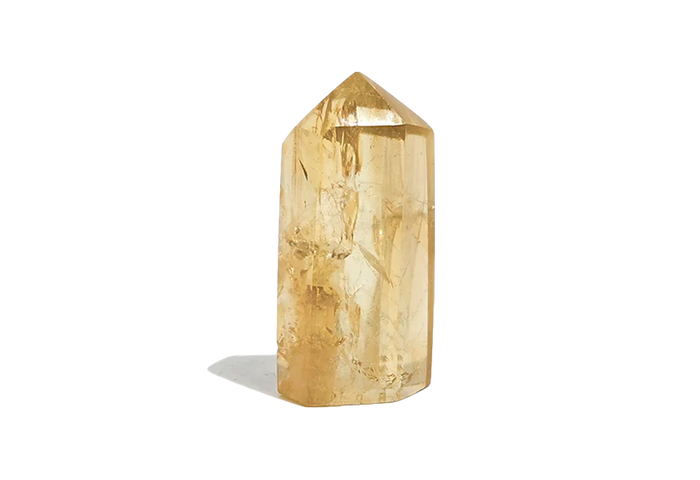
Citrine Crystals
Orange beside gold. The two warm stones, and they sit well together on a desk.
Shop the pairing →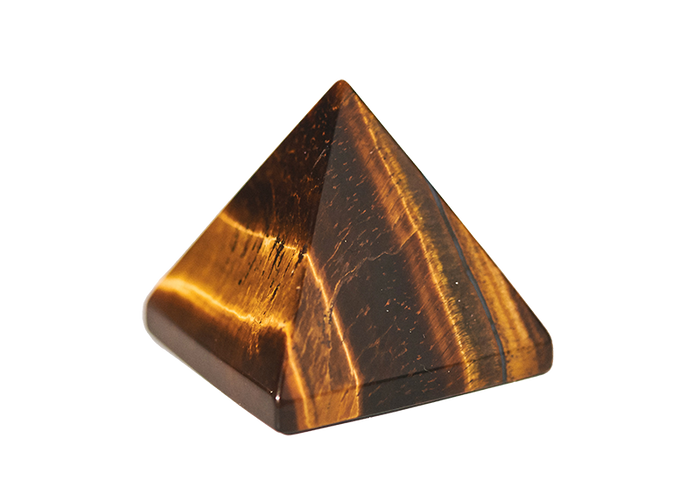
Tiger’s Eye Crystals
Banded brown against flat orange. Both earthy, neither quiet.
Shop the pairing →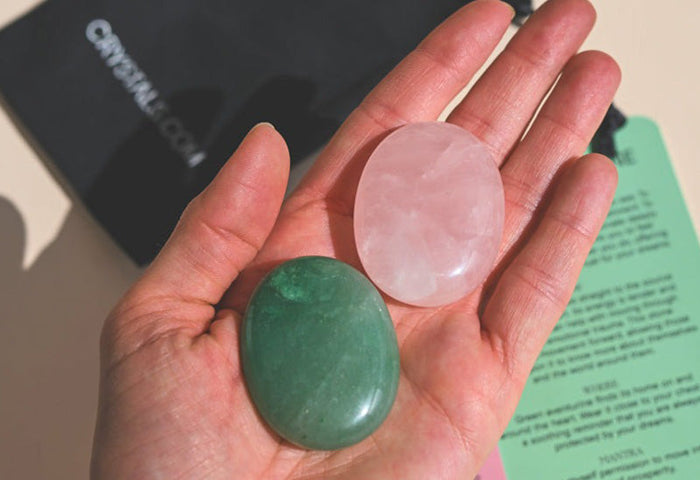
PALM STONE CRYSTALS
Carnelian is one of the best stones to carry rather than display.
Shop the pairing →I love shopping here! Everything I’ve purchased has been great quality, and the customer service is top notch!
I am very happy with the white sage bundle! It is a very good quality and burns really nicely!
I love this bracelet! I love the adjustable cord, and the stones are really, really pretty! I highly recommen
5 stars
Great
Great
A beautiful piece..the photo's did not do it justice. The delivery was timely and arrived in perfect condition. Thank you..this specimen is a must for any collector.
Crystals Individually wrapped
Shipped with care, excellent packaging. Great products
Very nice, one of a kind sphere. The piece matched the quality in the photos. Packaging was above average, with no damage during shipping. Tracking was easy. Everything was a positive experience.
Was expecting a bright shade of yellow, but the amber shade is just as beautiful.
Loved how it glimmers
Loved the packaging
Each Crystal came out beautifully
Will definitely find myself a frequent customer ☺️
Perfect. I love my crystals!
Beautiful! Exactly what I was hoping for/expecting!
 Citrine CrystalsOrange beside gold. The two warm stones, and they sit well together on a desk.Shop the pairing →
Can't choose?
Tell it what you need. It picks one piece for you, in stock right now.
Sorry, looks like we don't have enough of this product.

Buy It With
$10.00 USD


