Shop Crystals for This Energy
Free shipping on orders over $150
Long before crystals appeared on Instagram shelves, minerals were collected as natural sculptures — objects shaped by geological time and admired for their structural beauty. Ancient Romans displayed amethyst and malachite in their villas. The Medici family commissioned mineral cabinets as status objects. Even the great Modernist interiors of the twentieth century found space for the occasional raw specimen — a geode on a travertine shelf, a quartz point beside a Noguchi lamp.
What has changed is not the appeal of crystals for interior design, but our literacy around them. Today's collectors and designers are choosing minerals with the same discernment they apply to furniture and art: looking at scale, form, color, mineral composition, and provenance. The result is interiors that feel grounded, alive, and quietly extraordinary.
This guide offers a considered approach to bringing crystals into the home — not as trend, but as enduring objects worthy of serious attention.

Statement Amethyst Cathedral, 22.2lbs — Shop this piece
Why Minerals Belong in the Designed Interior
There is a reason collectors and architects have always been drawn to mineral specimens. Unlike manufactured objects, crystals are the product of geological process — formed over thousands to millions of years through heat, pressure, and chemical transformation. That irreducible history gives them a presence that no designed object can fully replicate.
In the context of interior design, crystals for home decor function as natural counterweights to the controlled lines of modern architecture. A cluster of smoky quartz (Smoky Quartz Palm Stone) on a marble console introduces depth, texture, and a point of contemplative focus — with a rawness that is entirely its own.
For interior designers, minerals offer something practical as well: they are conversation objects. One-of-a-kind specimens carry a story — where they were found, how they were formed, what makes their particular color or crystal structure unusual. That narrative quality elevates them from decoration to collection.
Explore our one-of-a-kind crystals collection — every piece hand-selected at source.
Choosing the Right Crystal for Each Space
Not all minerals are suited to every room. Successful crystal styling begins with understanding the visual qualities of each specimen and matching them to the architectural context.
Living Rooms — Scale and Presence
The living room rewards boldness. This is the space where large crystal specimens can be treated as sculptural focal points — placed on a plinth, a low table, or directly on the floor. Amethyst cathedrals, large calcite formations, and oversized quartz clusters all work well here. The key is to treat the crystal as you would a piece of art: give it breathing room, consider its relationship to the light source, and resist the impulse to over-style around it.

44lb Double-Terminated Quartz Point on Custom Stand — Shop this piece
Browse our crystal home décor collection for statement pieces suited to every scale of space.
Dining Rooms — Refined Elegance
In a dining setting, crystals should feel considered rather than overpowering. A pair of small tourmaline clusters, a single piece of fluorite, or a low calcite form on a sideboard introduces mineral texture without competing with the table setting. Candlelight and mineral surfaces are natural complements — the way light catches crystal formations in the evening adds a quality that no other object can replicate.
Home Offices and Studies — Clarity and Form
The desk or study is an excellent location for smaller, well-formed specimens. Collectors often favor clear quartz points, black tourmaline, and smoky quartz in work environments — for purely aesthetic reasons. The structural precision of these minerals resonates with the purpose of a workspace.
Bedrooms — Quiet Beauty
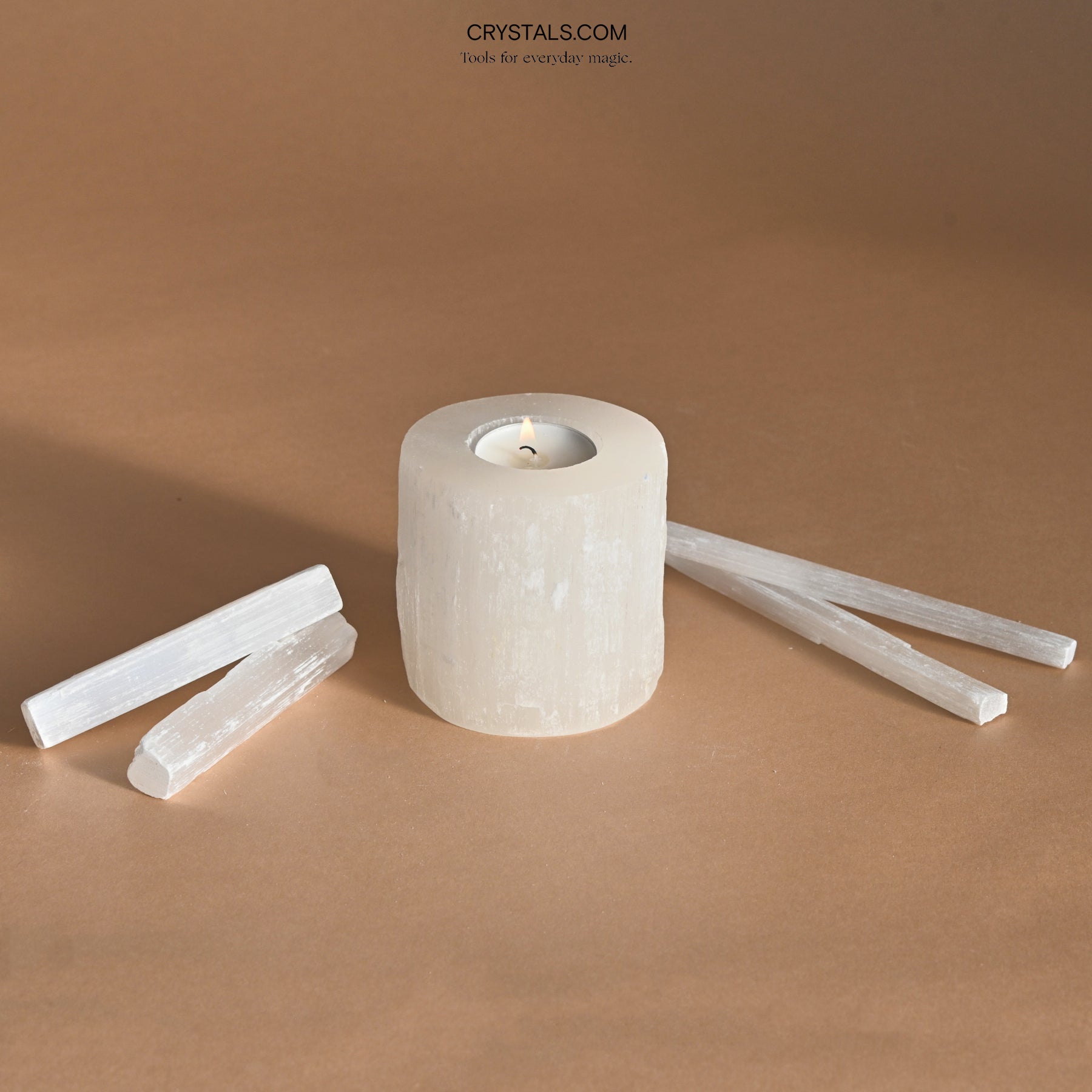
Bedroom crystal styling calls for restraint. Soft-hued specimens — rose quartz (Rose Quartz Tower), selenite (Selenite Cleansing Wand), pale amethyst — complement the calm palette most bedrooms require. A single well-chosen piece on a nightstand or dresser is sufficient. The goal is to add organic texture without visual noise.

Bahia Phantom Amethyst Tower — Shop this piece
Understanding Scale — The Most Common Mistake in Crystal Interior Design
The most frequent error in crystal styling is thinking too small. A single mineral specimen that fits in the palm of your hand will disappear in a generously proportioned room. Scale matters.
Interior designers working with crystals for interior design for the first time often underestimate the size required to create visual impact. As a guide: for a room over 400 square feet, consider specimens no smaller than 30cm in height or width. For statement placements — a primary focal point in a living room or entryway — pieces between 60cm and 120cm command the authority the space deserves.
At Crystals.com, our large-format specimens are sourced specifically for their suitability as interior objects. Each piece is assessed not only for its mineral quality but for its architectural presence.

Rare Blue Smoke Colombian Lemurian Cluster — Shop this piece
View our collectors edition — museum-grade specimens sourced from the world's finest mineral localities.
Pairing Crystals with Interior Styles
Minimalist and Brutalist Interiors
Raw minerals — particularly those with strong geometric formations like pyrite suns, tourmaline columns, or angular calcite — are extraordinarily well suited to minimalist environments. The contrast between clean architectural surfaces and the irregular beauty of a mineral specimen creates productive visual tension.

Illinois Pyrite Sun, Sparta — Shop this piece
Warm Contemporary and Organic Modern
This is perhaps the most natural pairing. Interiors in warm tones — linen, travertine, plaster, oak — welcome the earth colors of minerals: amber calcite, desert rose selenite, terracotta jasper, and honey citrine. The palette coheres, and the organic forms of natural crystals reinforce the biophilic character of the space.
Traditional and Maximalist Spaces
In richly layered interiors, crystals function as anchoring objects — their geological permanence providing calm counterpoint to pattern and color. Malachite, with its deep greens and swirling surface, has a long history in maximalist decorating. Amethyst clusters, particularly in deep purple, complement jewel-tone palettes beautifully.
Explore our full amethyst collection — from cathedrals to towers to raw clusters.
How to Display Crystals for Interior Design
On a plinth or pedestal: A simple plinth in marble, concrete, or raw oak raises a specimen to the status of sculpture. Recommended for large-format pieces in living rooms, entryways, and studios.
On a console or shelf: Crystals work well in still-life arrangements alongside books, vessels, and botanical objects. Odd numbers — one or three pieces — tend to read better than even groupings.
On the floor: For the largest specimens — geodes, cathedral formations, oversized clusters — the floor is often the most appropriate location. Give them space and ensure the lighting is intentional.
Built into joinery: Forward-thinking interior designers have begun incorporating mineral specimens into custom joinery — recessed niches lit from above, glass-fronted cabinets, integrated shelving. This approach treats crystals as permanent elements of the architecture.

Smoky Quartz Cluster, Brazil 6in — Shop this piece
Caring for Crystal Specimens
Light sensitivity: Amethyst, rose quartz, and other colored minerals can fade with prolonged direct sunlight. Position these specimens in ambient rather than direct light, or rotate them periodically.
Dust: Crystals with complex surface formations collect dust in their recesses. A soft brush or compressed air will clean them safely without risk of damage.
Moisture: Most specimens are stable in normal interior humidity. However, selenite and halite are water-soluble and should never be placed in humid environments or cleaned with water.
Handling: Many collector-grade specimens are best handled minimally, and ideally with clean hands or cotton gloves. Surface oils can dull the natural luster of certain minerals over time.
Frequently Asked Questions
Which crystals are best for interior design?
The best crystals for interior design are those with strong sculptural presence: large amethyst geodes, quartz clusters, selenite towers, calcite formations, and pyrite specimens. The right choice depends on the scale of your space and existing palette. Browse our crystal home décor collection for curated options.
Where should crystals be placed in a home?
Crystals work in any room, but the living room, entryway, and home office are most popular. Position them as you would a sculpture — where they receive appropriate light and have adequate visual breathing room.
How big should a crystal be for a living room?
For meaningful visual impact, a crystal should be no smaller than 30cm. For primary focal placements in a living room or entryway, specimens between 60cm and 120cm command the authority the space deserves.
Are crystals considered natural sculptures?
Yes. Many collectors and interior designers treat mineral specimens as natural sculptures — objects shaped entirely by geological process that carry the same visual authority as handmade art objects.
Can crystals be used in minimalist interiors?
Absolutely. Raw minerals with geometric formations — pyrite suns, tourmaline columns, bismuth — complement minimalist environments particularly well. The contrast between precise architecture and geological form creates productive visual tension.
What is the difference between a crystal and a mineral specimen?
All crystals are minerals, but not all minerals form distinct crystal structures. "Crystal" typically refers to minerals with a defined geometric lattice — quartz, amethyst, pyrite. "Mineral specimen" is the broader collector term for any naturally occurring geological sample.
How do I care for crystals in my home?
Avoid prolonged direct sunlight for colored minerals. Dust with a soft brush. Keep selenite away from moisture. Handle collector-grade pieces minimally to preserve their natural luster.
Where can I buy the best crystals for interior design?
Crystals.com hand-selects every specimen at source — from gem shows, mines, and specialist collectors worldwide. Each piece is chosen for its mineral quality, rarity, and architectural presence. Shop our one-of-a-kind collection here.
Discover Your Human Design
Crystals amplify energy — but do you know your unique energy type? Human Design reveals how you're wired to make decisions, work, and rest. It's the owner's manual you were born with.
Explore Human DesignConclusion: Crystals for Interior Design
Crystals for interior design represent one of the more quietly profound choices a homeowner or designer can make. Unlike most decorative objects, minerals carry actual geological history — formed over timescales that make the concept of "trend" almost irrelevant. A well-chosen specimen will outlast every paint color, every upholstery fabric, every decorating moment.
For collectors and designers alike, crystals offer something rare: objects shaped entirely by nature yet capable of transforming a space with their presence, texture, and light. The practice of bringing minerals into the interior is, ultimately, an act of attention — a decision to share your space with something genuinely extraordinary.
Explore the full Crystals.com collection →
Explore our full Crystal Encyclopedia — meanings, healing properties, and chakra connections for 280+ crystals.
Not Sure Which Crystal Is Right for You?
Take our 60-second crystal quiz and get a personalized recommendation based on what you need right now.
Take the Crystal QuizGet 10% Off Your First Order
Plus early access to new arrivals, collector drops, and crystal guides. Join 15,000+ crystal lovers.