Rose quartz is the pink variety of quartz, composed of silicon dioxide and prized for its gentle blush color and smooth, waxy luster. It is one of the most widely collected minerals in the world and one of the most enduring. Known for centuries as the Stone of Unconditional Love, rose quartz carries cultural weight across ancient Egypt, Rome, and countless traditions in between. This guide covers everything you need to know: its geological origins, historical use, physical properties, and practical ways to work with it.
Geological Origins
Rose quartz forms primarily in pegmatite veins — the coarse-grained igneous rock formations that develop during the final stages of magma crystallization. These pegmatites provide the slow-cooling, mineral-rich environment needed for the distinctive pink color to develop. The color itself comes from microscopic inclusions of a fibrous mineral called dumortierite, as well as titanium, iron, and manganese ions substituting within the crystal lattice. Unlike many colored gemstones, the pink in most rose quartz is not due to a single trace element but a combination of structural and chemical factors.
Unusually, rose quartz rarely forms the well-terminated six-sided crystals that most people associate with quartz. Instead, it typically occurs as massive formations — large, anhedral chunks of pink mineral intergrown with other silicates. True faceted rose quartz crystals with visible terminations are considerably rarer than the massive variety and are prized by collectors.
The world's most significant rose quartz deposits are found in Brazil (particularly Minas Gerais), Madagascar, the Black Hills of South Dakota, India, and Sri Lanka. Brazilian material tends toward deeper, more saturated pink tones; Madagascan rose quartz is often recognized for its clarity and consistent color distribution.

History & Cultural Significance
Rose quartz has been worked by human hands for thousands of years. Archaeological evidence from the ancient Near East documents rose quartz beads dating to around 7000 BC in what is now Iraq. In ancient Egypt, rose quartz was used in beauty preparations — carved into face rollers and cosmetic tools believed to maintain complexion. Facial masks made of rose quartz have been found in Egyptian tombs, indicating its value extended well beyond simple adornment.
In ancient Rome, rose quartz was a common material for signet rings and carved cameos, and it served as a token of love and agreement between individuals. Roman mythology linked the stone to Cupid and to Venus, the goddess of love and beauty — an association that persists in contemporary astrology, where rose quartz is considered the stone of Venus.
In Greek mythology, the pink color of rose quartz is explained through the legend of Aphrodite and Adonis. When Adonis was wounded by Ares in the form of a boar, Aphrodite rushed to him and cut herself on a briar bush. Their mingled blood stained a white quartz stone pink, and Zeus — moved by their love — granted Adonis eternal life. The stone was thereafter associated with eternal love.
Across Asian traditions, rose quartz has been carved into sculptures, figurines, and decorative objects for centuries. In China, rose quartz is associated with the energy of love and the heart, and carved figurines of Kuan Yin — the goddess of compassion — in rose quartz remain sought-after objects in traditional practice.
During the Middle Ages in Europe, rose quartz was included in love potions and worn as a talisman to attract and maintain romantic partnerships. By the Victorian era, rose quartz was widely incorporated into mourning jewelry and sentimental pieces, reinforcing its enduring connection to matters of the heart across cultures.
Physical Properties
At a Mohs hardness of 7, rose quartz is a durable mineral suitable for daily wear in jewelry. It can be scratched by materials harder than quartz — such as topaz, corundum, or diamond — but will resist everyday abrasion from most surfaces. The same hardness means rose quartz will scratch glass and most softer stones without difficulty.
Its luster is vitreous (glass-like) on fresh fractures, but polished rose quartz typically takes on a smooth, waxy quality that enhances its gentle appearance. Transparency ranges widely: some specimens are nearly transparent and can be faceted into gemstones, while most commercial rose quartz is translucent to opaque. The color is generally stable in normal indoor light, though prolonged exposure to direct sunlight can cause gradual fading over time.
A select variety called star rose quartz displays asterism — a six-rayed star — when cut as a cabochon. This optical effect is caused by the same fine fibrous inclusions responsible for the pink color, and it appears most vividly under a single direct light source. Star rose quartz is primarily sourced from Sri Lanka and commands significant collector interest.
Rose quartz's Mohs 7 rating makes it water-safe for brief contact, but prolonged soaking is not recommended, as it can penetrate micro-fractures and degrade the stone over time. Cleaning with a damp cloth is always the safest approach.

Rose Quartz by Intention
Rose quartz is most widely collected and used in the context of emotional life — specifically around love, compassion, and inner calm. Below is a practical breakdown of how collectors commonly work with it by intention. These are cultural and personal frameworks, not medical guidance.
Rose quartz is particularly popular among first-time collectors because of its gentle nature and universal appeal. It pairs naturally with other heart-centered stones and is one of the foundational pieces in any crystal collection.
How to Work with Rose Quartz
Wear It
Rose quartz bracelets are among the most popular forms of daily crystal wear. Worn on the left wrist — traditionally considered the receiving side of the body in many cultural traditions — they keep the stone in continuous contact with the skin. A rose quartz bracelet also works beautifully as a tactile reminder to slow down and practice patience with yourself. Browse our full crystal bracelet collection for pairing options.
Place It
Rose quartz is one of the most versatile placement stones. Common positions include the bedroom (on a nightstand or under the bed for relationship intentions), a work desk for a calming visual anchor, or a bathroom shelf as part of a skincare ritual — continuing the ancient Egyptian tradition of using rose quartz in beauty practice. Palm stones are particularly suited to intentional placement because their smooth, hand-fitting shape makes them easy to hold and position.
Meditate with It
Hold a rose quartz palm stone in both hands during meditation or quiet reflection. The smooth surface and gentle weight make it easy to keep awareness anchored to the present moment. Placing it directly on the center of the chest during a lying-down practice is a common approach for emotional intention-setting.
Carry It
A tumbled rose quartz or palm stone carried in a pocket or bag keeps the stone within reach throughout the day. Many collectors describe the habit of reaching for a smooth stone in a moment of stress as a useful grounding practice — the tactile experience of cool, polished quartz becoming a physical cue for slowing down.
Cleansing & Care
Rose quartz is a durable mineral that requires minimal care. Its hardness of 7 means it resists most everyday scratches, but it should still be stored separately from diamonds, sapphires, and other stones harder than itself. Here are the most commonly used cleansing methods:
Moonlight
Leave rose quartz on a windowsill or outdoors under full moonlight overnight. This is considered one of the most gentle approaches, suitable for all rose quartz forms including those with softer inclusions.
Sound
Use a singing bowl, tuning fork, or other resonant instrument near the stone. Sound cleansing is ideal for stones that are more fragile or heavily carved.
Smoke
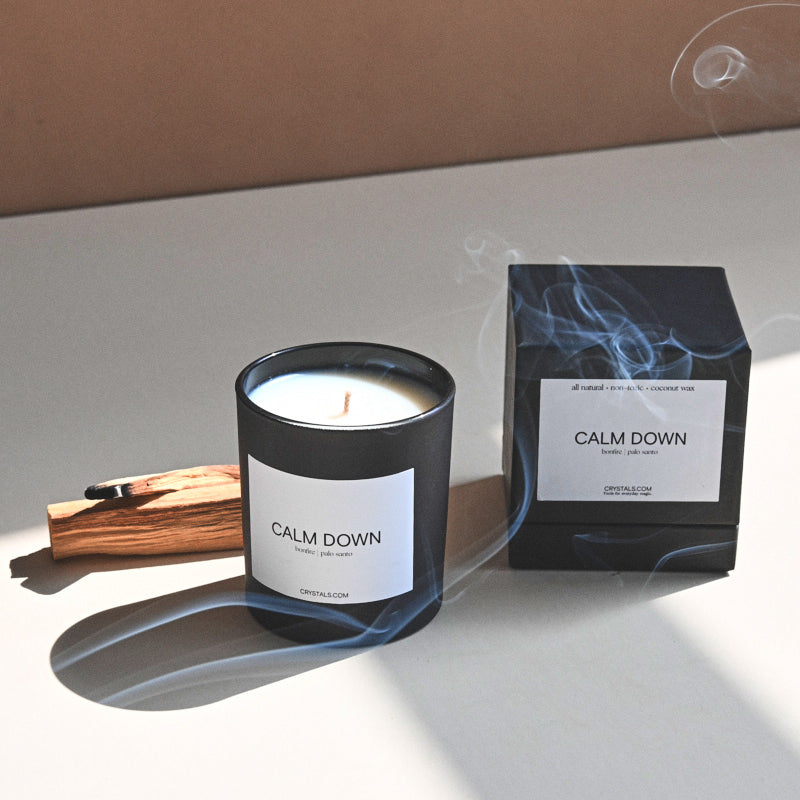
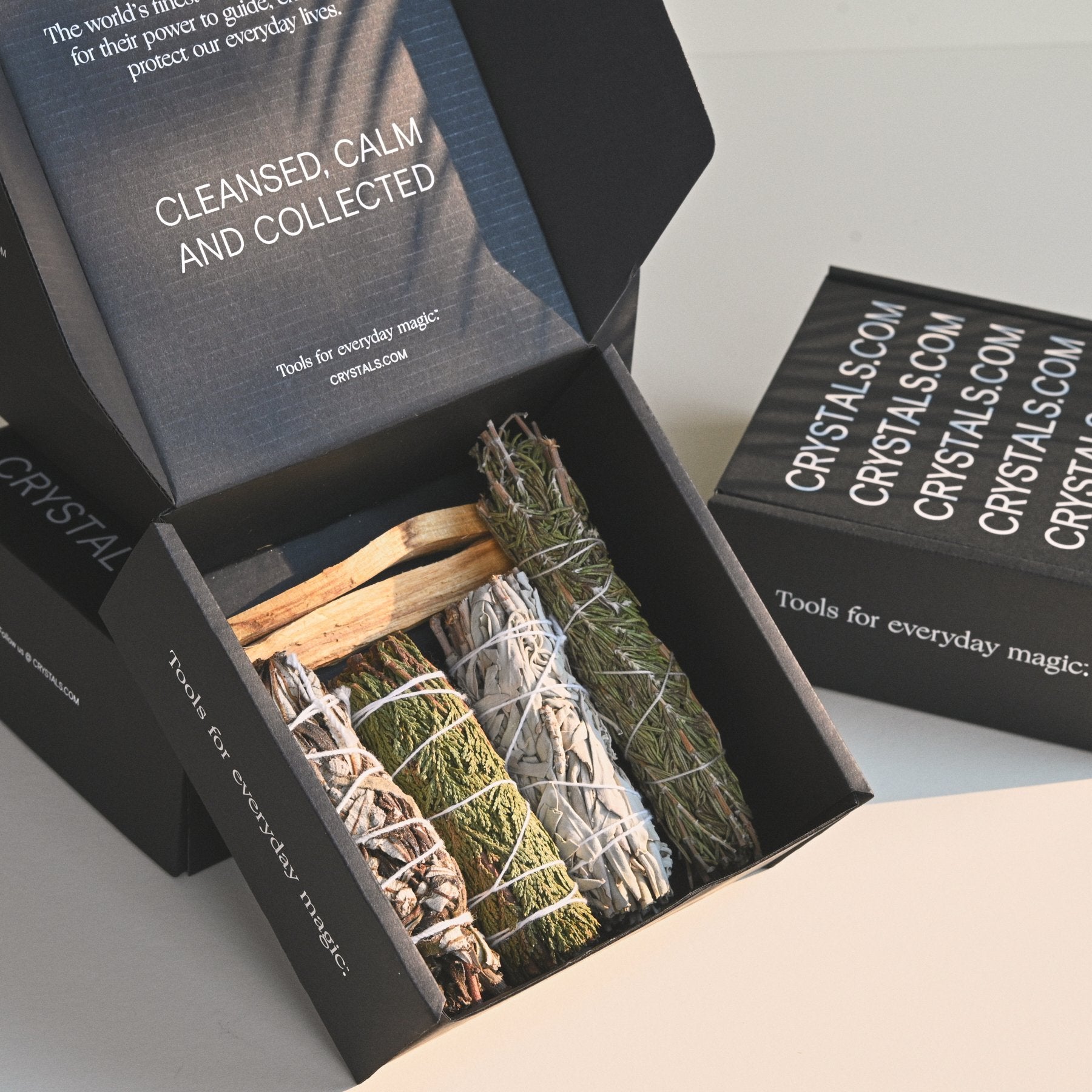
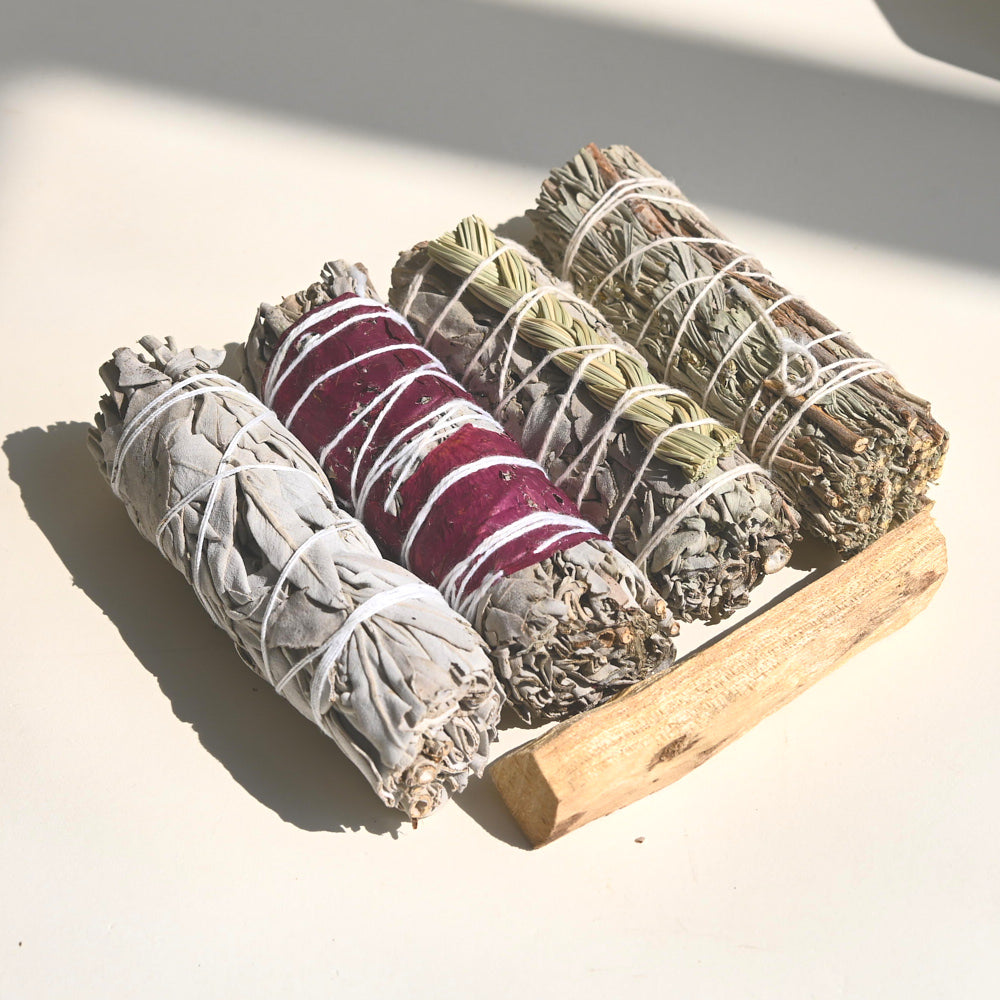
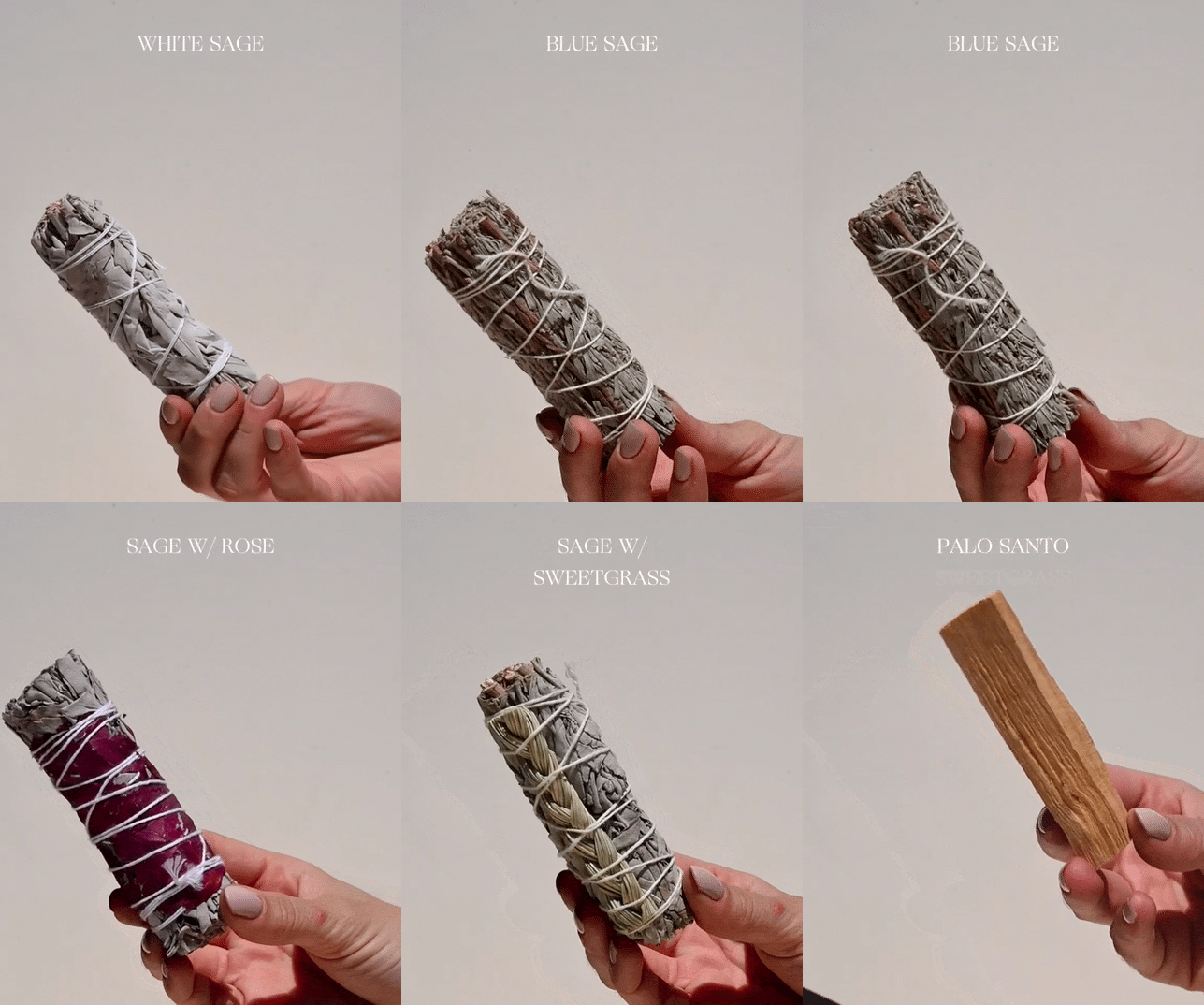
Pass rose quartz briefly through the smoke of incense, palo santo, or dried herbs. Avoid leaving any stone in direct contact with flame or excessive heat.
Water: Rose quartz is rated safe for brief water contact given its Mohs 7 hardness, but prolonged soaking is not recommended — water can penetrate micro-fractures over time. Never use salt water, which is corrosive to many minerals. A quick rinse under cool running water, followed by thorough drying, is generally fine.
Sunlight: Brief exposure to morning light is fine, but prolonged sunlight will gradually fade rose quartz's color over weeks and months. Keep it out of direct window light for extended periods.
For physical cleaning, use a soft cloth lightly dampened with plain water. Avoid commercial jewelry cleaners, ultrasonic cleaners, or steam — all of which can damage the stone's surface or internal structure.

Crystal Pairings
Rose quartz pairs well with several other stones, each adding a different dimension to the combination. These are popular collector pairings — not prescriptive formulas.

Adds stillness and mental clarity. A natural companion for rose quartz in any calming or emotionally grounding context.

Amethyst, rose quartz, and lotus charm combined in a single wearable piece.
Other stones that pair naturally with rose quartz include moonstone (softness and emotional depth), clear quartz (amplification), and green aventurine (abundance and optimism). For love-specific intentions, explore our rose quartz collection and best crystals for love guide.
See how moonstone compares to rose quartz in terms of properties and use, or take our crystal quiz if you are not sure where to start.
New crystals, sourced stories, and collector finds.
Join the list. No noise — just the good stuff.
Explore More Crystal Guides
Shop Rose Quartz
Bracelets, palm stones, and more — each piece sourced with intention.
Explore the Collection