Shop Crystals for This Energy
Free shipping on orders over $150
There is a particular quality of light that only smoky quartz understands — not the blinding refraction of clear quartz, not the milky opacity of rose, but something in between: a mineral darkness that absorbs, filters, and quiets. Found in the granite massifs of Scotland's Cairngorm Mountains and the volcanic pegmatites of Brazil, smoky quartz has been worn as a talisman, cut into mourning jewelry, and placed on mantelpieces by collectors who know that the deepest rooms are often the most beautiful ones. This is the complete guide to one of the mineral world's most underestimated stones.

What Is Smoky Quartz? Geology and Origins
Smoky quartz is a variety of silicon dioxide (SiO₂) — the same mineral family that produces clear quartz, amethyst, citrine, and rose quartz (Rose Quartz Tower). Its distinctive brown-to-black coloration results from natural irradiation: over millions of years, aluminum impurities within the crystal lattice are displaced by gamma radiation from surrounding granite and radioactive minerals, producing free-moving electrons that absorb light in the visible spectrum and create that characteristic smoky hue.
The color range is considerable. Pale, barely-tinted specimens are often called cairngorm after the Scottish mountains that made them famous. Deeper honey-brown stones shade into cognac and caramel tones. The darkest variety — nearly opaque and sometimes confused with obsidian (Black Obsidian Palm Stone) — is known as morion, a name derived from Latin via 16th-century lapidary literature. Morion is considerably rarer than the more common warm-brown smoky quartz and commands correspondingly higher collector interest.
Major sources include Brazil's Minas Gerais state, the Swiss Alps, Madagascar, Colorado's Pike's Peak district, and the Cairngorm Mountains of Scotland. Each origin produces subtly different characteristics — Brazilian material tends toward high clarity and large crystal size, while Swiss specimens are prized for their complex morphologies and associated mineral inclusions. To explore our crystal encyclopedia and learn how smoky quartz compares to other quartz varieties, visit our Crystal Index 101.
The Cairngorm Tradition: Scotland's National Stone
No account of smoky quartz is complete without Scotland. The Cairngorm Mountains — a granite plateau in the Scottish Highlands — have yielded smoky quartz specimens since at least the 18th century, when Highland craftsmen began setting the stone into dirk handles, brooches, kilt pins, and sgian-dubh blades. Known simply as "cairngorm," these stones became an emblem of Highland identity: dark, unyielding, and unmistakably rooted in the land.
Victorian-era mourning culture further elevated cairngorm's profile. Following Prince Albert's death in 1861, Queen Victoria's sustained grief transformed the aesthetics of an entire era. Dark stones — jet, onyx, and cairngorm — became the material vocabulary of loss and memory. Scottish jewelers supplied the mourning market with elaborately set cairngorm brooches that combined sentimental function with regional pride.
Today, cairngorm smoky quartz from the Cairngorm National Park is legally protected — commercial collection is prohibited, making authentic Scottish material a genuine collector's item. The Natural History Museum London holds notable Scottish cairngorm specimens in its mineral collection, and the stone is widely regarded as Scotland's national gemstone.

The Spectrum: From Pale Smoke to Morion
Understanding smoky quartz as a collector means understanding its color gradient — and what drives value within it.
Cairngorm (Pale Smoky)
Light brown to golden-brown, often with visible inclusions or growth phantoms. Historically significant, particularly in Scottish provenance. Best displayed where light can pass through to reveal internal structure.
Classic Smoky Brown
The most commercially available variety — medium brown with good transparency. Brazilian material in this range can achieve extraordinary size, making it ideal for statement interior pieces. Large clusters and cathedral points in this color range are among the most requested specimens for high-end residential interiors.
Cognac and Caramel Tones
A warmer, reddish-brown variety with exceptional visual warmth. These specimens photograph beautifully and pair well with warm-toned interior palettes — aged brass, terracotta, dark oak. Less common than the cooler gray-brown types, cognac smoky quartz commands a premium.
Morion (Near-Black)
The rarest end of the spectrum. True morion is so deeply irradiated that it appears black or near-black, with only edges or thin terminations showing any translucency. Prized by advanced collectors, morion specimens from Colorado and Switzerland are among the most unusual pieces in any serious mineral collection. Explore our collector's edition for rare mineral specimens including dark varieties.
Smoky Quartz and the Root Chakra
Within energy-working traditions, smoky quartz is among the most reliably grounding stones available. Its association with the root chakra (Muladhara) is consistent across multiple traditions: the stone is said to anchor scattered energy, transmute negativity, and create a sense of physical and emotional stability.
Where clear quartz amplifies and projects, smoky quartz absorbs and settles. It is frequently recommended for individuals navigating periods of high stress, environmental overstimulation, or difficulty staying present — states increasingly common in contemporary life. Placed at the base of the spine during meditation, or simply held in the dominant hand, smoky quartz has a quality of weight and density that practitioners describe as immediately centering.
Some traditions also associate smoky quartz with the solar plexus chakra, particularly the warmer, golden-brown varieties — an energetic overlap that gives cognac smoky quartz a dual function as both a grounding and an empowerment stone.
Not sure which crystal is right for your current energy needs? Take our crystal quiz to find your match, or explore your chakra profile for a deeper reading.
Smoky Quartz Forms for Collectors and Interiors
The form of a smoky quartz specimen significantly shapes how it reads in a space. Understanding the options allows for more intentional acquisition.
Natural Clusters
Uncut matrices of multiple terminated crystals growing from a shared base. Clusters have an organic authority that no cut form can replicate — they feel geological, like a fragment of something much larger. Large Brazilian clusters (6 inches and above) make compelling centerpieces in living rooms, on credenzas, and as focal points on open shelving. Browse our selection of rough crystal specimens for naturally formed options.
Points and Towers
A single terminated crystal, either naturally formed or cut and polished to a point. Crystal towers direct energy upward and create strong vertical interest in a display. A smoky quartz tower flanked by pale linen books and a small vessel of dried botanicals is a styling combination that has proven enduringly popular with interior designers.
Freeforms
Hand-polished to an organic, non-geometric shape that highlights the stone's interior color and clarity. Freeforms have a sculptural quality that positions them closer to fine art objects than mineral specimens — appropriate for high-design environments where traditional crystal forms might feel too overtly "mineral."
Scepters
A naturally occurring formation where a secondary crystal grows over the termination of an existing point, creating a scepter-like shape. Smoky quartz scepters are rare formations commanding significant collector attention. They are statement pieces — not background elements, but conversation starters.

Styling Smoky Quartz in the Home
Smoky quartz is one of the more versatile stones for interior use precisely because it does not demand attention. Where amethyst announces itself, smoky quartz participates — it deepens a shelf vignette, adds mineral weight to a stack of art books, provides a counterpoint to lighter elements without overpowering them.
Pairing with Materials
Smoky quartz's earthy, neutral palette aligns naturally with warm metals (aged brass, unlacquered bronze), dark-stained woods, raw linen, and matte ceramics. It reads as effortlessly composed alongside natural history objects — vertebrae, antler fragments, driftwood — in the cabinet-of-curiosities style that continues to define sophisticated residential interiors. It also pairs beautifully with obsidian and black tourmaline for layered protection displays in an entryway.
Scale and Placement
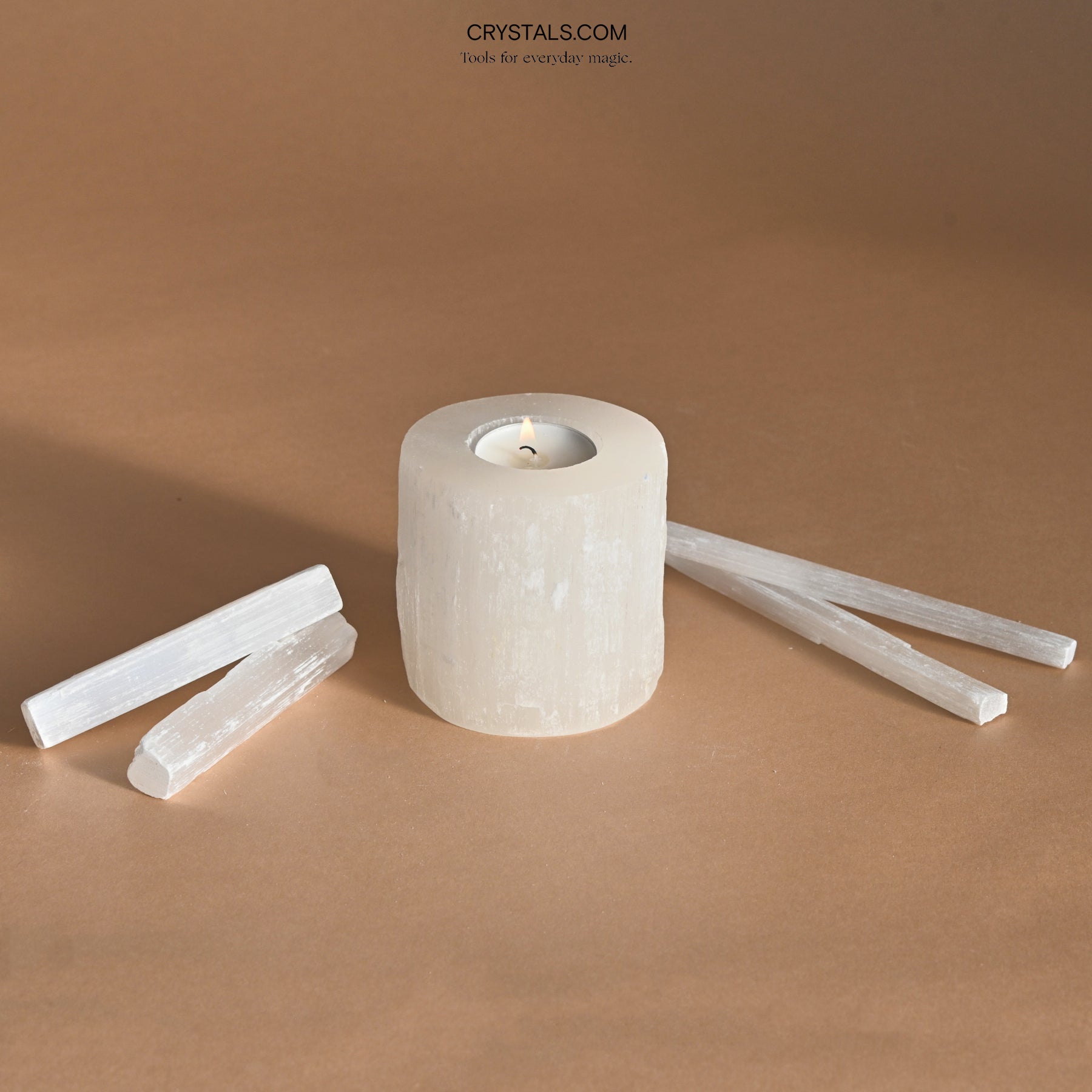
Smoky quartz rewards scale. A small tumbled specimen has decorative value; a large cluster or substantial freeform becomes an object of genuine presence. For living rooms and home offices, aim for pieces that occupy meaningful visual mass — a cluster no smaller than 5 inches, a tower at least 6 inches tall. For bedroom placement, smaller points or polished freeforms positioned near the nightstand work well as sleep-support stones alongside selenite (Selenite Cleansing Wand). Explore our home decor crystal collection for curated options by room type.
Interior Designer Applications
Smoky quartz has seen significant uptake among interior designers working in mountain modern, organic contemporary, and Japandi-adjacent aesthetics — styles that prize materiality, restraint, and natural provenance. Its neutrality makes it one of the rare crystals that functions as a design element rather than an accent. If you are an interior designer sourcing for client projects, explore our trade program for access to larger specimens and volume pricing.

Caring for Your Smoky Quartz
Smoky quartz is relatively hardy (Mohs hardness 7), but the color presents one important caveat: prolonged exposure to direct sunlight will fade it. Unlike amethyst, which fades gradually, smoky quartz can lose significant color depth within weeks of direct sun exposure. Display in indirect light or well away from south-facing windows.
Clean with warm water and a soft cloth. Avoid ultrasonic cleaners for included or fractured material. For energetic maintenance, charging under moonlight or placing on a selenite charging plate are both appropriate; avoid salt burial, which can damage the surface of polished specimens.
According to the Mineralogical Record database, smoky quartz retains its color indefinitely when stored away from UV light sources — making it one of the more stable colored quartz varieties for long-term collection.
Smoky Quartz and Astrology
Smoky quartz is traditionally associated with Scorpio, whose depth, intensity, and comfort with shadow aligns with the stone's character. It is also strongly linked to Capricorn — the builder's sign, concerned with structure, discipline, and long-term persistence. Sagittarius may also find smoky quartz a useful anchor, balancing the archer's expansive fire energy with the grounding quality of deep earth.
For related protective crystals that work well alongside smoky quartz, explore our black tourmaline collection and labradorite for a comprehensive protective display.
Frequently Asked Questions About Smoky Quartz
Is smoky quartz natural or treated?
Natural smoky quartz gets its color from irradiation that occurs over millions of years within granite-rich geological environments. However, some commercially available material — particularly very dark stones — has been artificially irradiated or heat-treated to enhance color. When purchasing, always ask your supplier whether the color is natural or enhanced. At Crystals.com, all specimens are sourced directly and described accurately.
Can smoky quartz fade?
Yes. Prolonged exposure to direct sunlight will cause smoky quartz to lighten over time, sometimes significantly. The fading is permanent — once the color is lost to UV exposure, it cannot be recovered. Store and display away from direct sunlight for long-term color preservation.
What is the difference between smoky quartz and obsidian?
Smoky quartz is a crystalline mineral — it has an organized atomic lattice structure that produces facets, points, and visible crystal form. Obsidian is volcanic glass — it cooled too quickly for crystals to form and therefore has a smooth, conchoidal fracture and no crystalline structure. Both are dark, both are grounding stones, but they are mineralogically quite different. Explore our home decor collection to see both minerals side by side.
What is morion?
Morion is the term for the darkest variety of smoky quartz — nearly opaque, appearing black or very deep brown. It results from more intense natural irradiation than standard smoky quartz. Morion specimens are rarer and typically more expensive than common smoky quartz. True morion shows translucency only at edges or thin terminations when held to a bright light.
Which chakra does smoky quartz work with?
Smoky quartz is primarily a root chakra stone, associated with grounding, stability, and physical presence. Warmer-toned cognac varieties are sometimes also used for solar plexus work — supporting confidence, personal power, and the digestion of difficult experiences. Take our chakra quiz to discover which energy centers you might most benefit from working with.
How do I authenticate a real smoky quartz?
Real smoky quartz is cool to the touch (significantly cooler than glass), has a hardness of 7 (it will scratch glass easily), and shows natural inclusions or growth features under magnification. The color in genuine material is distributed through the entire crystal, not concentrated near the surface. Be cautious of uniformly colored, inclusion-free specimens at very low prices — these may be glass or dyed material. For guidance on authenticating crystals generally, see our related guide on the most powerful crystals and what to look for.
Is smoky quartz good for home protection?
Many traditions use smoky quartz for protective purposes, particularly at entryways and in home offices — spaces where external energy enters the home or where focused work demands energetic clarity. It is frequently paired with black tourmaline for layered protection. Read our detailed guide on crystals for home protection for placement recommendations.
What zodiac signs benefit most from smoky quartz?
Scorpio, Capricorn, and Sagittarius have the strongest traditional affinity with smoky quartz. However, any sign navigating periods of stress, instability, or scattered energy may find it beneficial. Its neutrality as a stone — it neither pushes nor pulls — makes it accessible across the entire zodiac spectrum.
Find Your Smoky Quartz
Smoky quartz rewards those who take the time to choose well. A good specimen — whether a large Brazilian cluster for a living room, a polished freeform for a desk, or a rare morion point for a serious mineral collection — will retain its presence and value indefinitely. The mineral is geologically honest: what you see is what millions of years of irradiation, pressure, and time produced. There is no glamour in that, only quiet authority.
Browse our current smoky quartz arrivals — each piece hand-selected for quality, transparency, and character. Or, if you are new to crystal collecting, take our crystal quiz to discover which stone is right for where you are right now.
✦ Discover Your Human Design
Your spiritual journey goes deeper than numbers. Human Design reveals your unique energetic blueprint — how you're designed to make decisions, interact with others, and move through the world. It combines astrology, the I Ching, Kabbalah, and the chakra system into one powerful framework.
Explore our full Crystal Encyclopedia — meanings, healing properties, and chakra connections for 280+ crystals.
Get 10% Off Your First Order
Plus early access to new arrivals, collector drops, and crystal guides. Join 15,000+ crystal lovers.