The Power of Flower Agate: Properties, Origins, and How to Use It
Flower agate is one of the most visually distinctive crystals to emerge on the collector market in recent years. Named for the delicate, petal-like inclusions that appear frozen within its translucent chalcedony matrix, flower agate looks as though someone pressed botanical specimens into stone millions of years ago. These "flowers" are actually three-dimensional formations of opaque chalcedony and agate that grew within the host stone, creating circular, blossom-like patterns visible throughout the material.
First discovered in Madagascar, flower agate quickly became one of the most sought-after varieties of agate in the crystal community. Its combination of delicate beauty and meaningful symbolism, growth, blossoming, and reaching your potential, resonates with collectors and crystal practitioners alike.

What Is Flower Agate? Mineralogy and Formation
Flower agate is a variety of agate, which itself is a banded form of chalcedony (microcrystalline quartz). Like all agate, it forms in volcanic rock cavities when silica-rich fluids slowly deposit layers of chalcedony over millions of years. What makes flower agate unique is the presence of spherical chalcedony inclusions that create the "flower" patterns. These orbicular formations are sometimes called "plume" inclusions.
Quick Facts: Flower Agate
- Chemical composition: SiO2 (silicon dioxide / chalcedony)
- Crystal system: Trigonal (microcrystalline)
- Hardness: 6.5 to 7 on the Mohs scale
- Color range: White, cream, pink, peach with opaque flower-like inclusions
- Transparency: Translucent to opaque
- Primary source: Madagascar
- Associated chakras: Heart and root
The color palette of flower agate typically ranges from soft white and cream to warm pink and peach tones. The "petals" within the stone can appear as distinct circular formations or as more diffuse, plume-like structures. Some specimens display a remarkable level of detail, with concentric rings around each "flower" that resemble the growth rings of a tree. The most prized specimens combine high translucency with well-defined, abundant floral inclusions.
Flower Agate Properties and Traditional Associations
In the crystal community, flower agate is widely regarded as a stone of growth, manifestation, and personal development. Its symbolism is rooted in its appearance: just as the "flowers" within the stone represent nature's capacity to bloom, practitioners associate flower agate with the process of nurturing goals from seed to fruition.
Common traditional associations include:
- Manifestation: Flower agate is considered a stone that helps bridge the gap between setting intentions and seeing them materialize. Many practitioners work with it during goal-setting rituals and new moon ceremonies.
- Self-growth: The blossoming imagery connects flower agate to personal development, learning new skills, and evolving past old patterns.
- Creative expression: Artists, writers, and makers often keep flower agate in their studios. Its energy is associated with stimulating imagination and allowing ideas to flow without self-censorship.
- Emotional release: As a heart-connected stone, flower agate is used by many practitioners to help process and release stored emotions that may be preventing forward movement.
- Grounding: Despite its ethereal appearance, flower agate retains the grounding properties common to the agate family. It is often used to help people stay connected to practical reality while pursuing creative or spiritual goals.

Can Flower Agate Go in Water?
With a hardness of 6.5 to 7 on the Mohs scale, flower agate is technically water-safe for brief exposure. Quick rinsing under running water is fine and is one of the simplest ways to physically clean your stone. However, prolonged soaking is not recommended for several reasons:
- Agate is porous at the microscopic level, and extended water exposure can eventually penetrate the surface and affect the stone's structural integrity over time.
- Minerals and chemicals in tap water (chlorine, fluoride, dissolved salts) can leave deposits on the surface.
- If the stone has any natural fractures or cracks, water can seep in and cause damage through expansion when it evaporates.
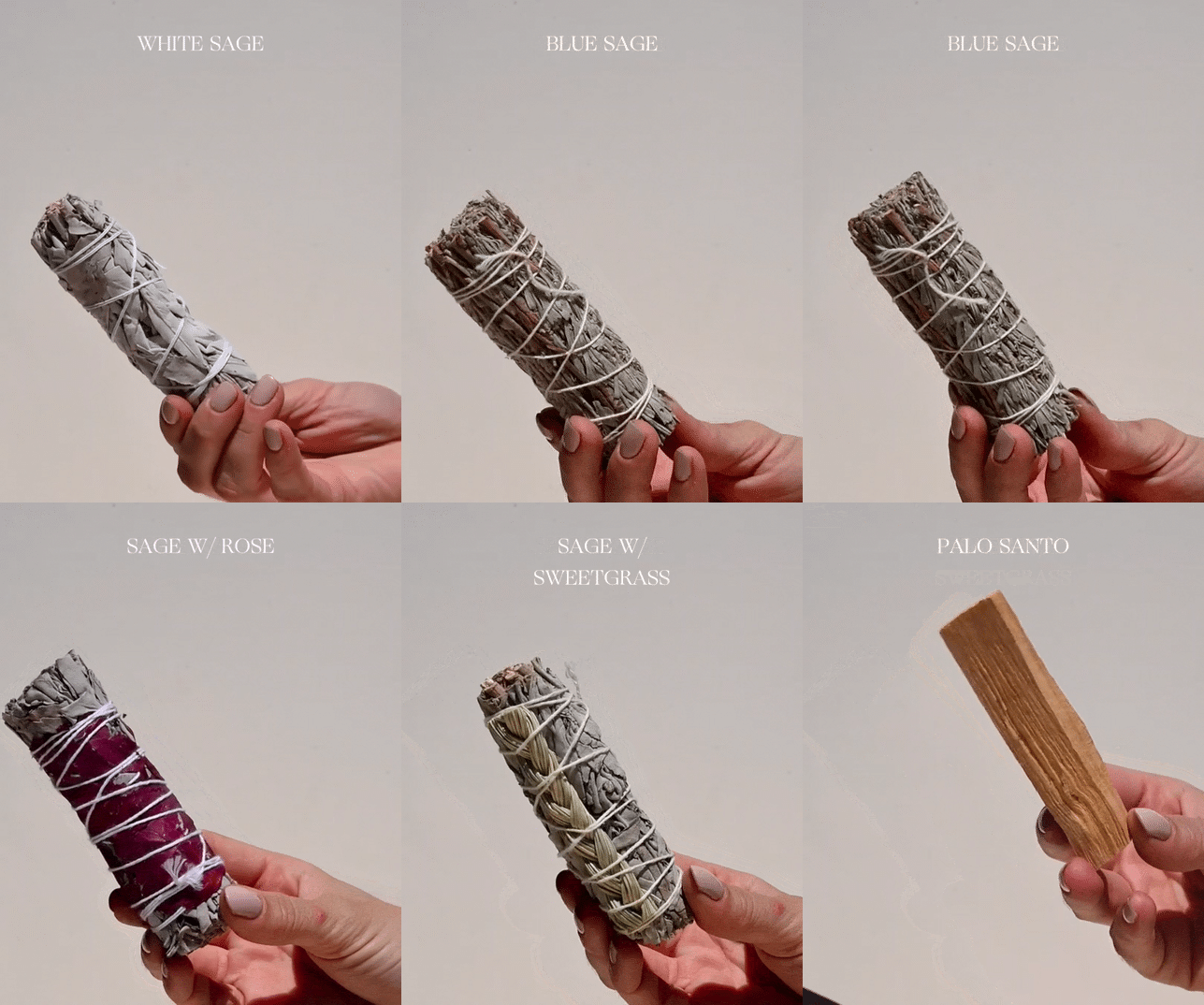
For energetic cleansing, safer alternatives include placing your flower agate on a selenite charging plate, smudging with sage or palo santo, placing it in moonlight, or using sound cleansing with singing bowls.
Is Black Flower Agate Dyed?
Black flower agate is a naturally occurring variation that gets its dark color from inclusions of manganese oxide, not from artificial dye. The contrast between the dark background and the lighter floral inclusions can be particularly striking in these specimens. However, it is worth noting that agate is one of the most commonly dyed and treated minerals in the commercial crystal market. Here are some tips for identifying natural versus treated specimens:
How to Spot Dyed Agate
- Unnaturally vivid colors: Electric blue, bright pink, or neon green agates are almost certainly dyed. Natural agate colors tend to be more muted and earthy.
- Color concentration in cracks: Dye tends to settle into fractures and porous areas, creating visible concentrations of color along natural lines in the stone.
- Color rubs off: If you wipe a damp white cloth across a suspected dyed agate and it picks up color, the stone has been treated.
- Price point: Natural flower agate with well-defined patterns commands a higher price than generic dyed agate slices. If it seems too cheap for its apparent quality, question the treatment.

How to Use Flower Agate
There are many ways to incorporate flower agate into your daily practice. Here are some of the most popular:
- Meditation: Hold a flower agate palm stone during meditation, particularly when focusing on personal goals or creative projects. Visualize the "flowers" within the stone blooming as your intentions take root.
- Home decor: Flower agate towers and freeform pieces make stunning display items. Place them in creative spaces, home offices, or living rooms where their soft, organic beauty can be appreciated daily.
- Crystal grids: Use flower agate as a center stone in manifestation grids, surrounded by clear quartz points to amplify the intention. This combination is popular for new business ventures, creative projects, and personal growth goals.
- Journaling companion: Keep flower agate near you while journaling about goals, dreams, and plans. Many practitioners find that the stone's growth symbolism enhances their clarity during reflective writing.
- Pairing with other crystals: Flower agate pairs well with rose quartz (for heart-centered growth), citrine (for abundance and confidence), and clear quartz (for amplification).
Flower Agate in the Larger Agate Family
Flower agate is just one member of the extraordinarily diverse agate family. Agate has been collected and used by humans for over 3,000 years, and new varieties continue to be discovered and named. Some related varieties you might encounter include:
- Moss agate: Features green, moss-like dendritic inclusions of manganese or iron. Associated with abundance and connection to nature.
- Grape agate: Purple botryoidal chalcedony from Indonesia that forms in grape-like clusters. One of the most collectible agate varieties currently on the market.
- Crazy lace agate: A Mexican variety known for its complex, swirling bands of red, yellow, and white. Sometimes called the "laughter stone."
- Blue lace agate: A pale blue-banded variety from Namibia and South Africa associated with calm communication.
- Dendritic agate: Features tree-like (dendritic) inclusions of manganese oxide. The patterns can look remarkably like miniature forests.

Where to Place Flower Agate in Your Home
Flower agate's soft, neutral color palette makes it one of the most interior-friendly crystals available. Unlike more dramatic specimens that demand attention, flower agate blends seamlessly into virtually any design style while still carrying visual interest for anyone who looks closely.
Best Placements for Flower Agate
- Creative studios and home offices: Place a flower agate tower on your desk or shelf to support creative flow and forward momentum on projects.
- Living rooms: A larger flower agate freeform or tower on a coffee table or mantel serves as a sculptural conversation piece with a warm, organic feel.
- Bedside tables: Flower agate's gentle energy makes it a calming bedside companion, especially for those working through periods of personal growth or transition.
- Meditation spaces: Keep a palm stone within reach for meditation sessions focused on manifestation, growth, or emotional processing.
- Near plants: Many crystal enthusiasts enjoy placing flower agate near houseplants, reinforcing the growth and botanical symbolism of both the crystal and the living greenery.
Caring for Your Flower Agate
Flower agate is relatively durable and low-maintenance. To keep it looking its best:
- Clean gently: Wipe with a soft, damp cloth. For stubborn dust in crevices, use a soft-bristled brush.
- Avoid prolonged sunlight: While agate is relatively sun-stable, prolonged direct sunlight can cause subtle fading over time. Display in indirect light for longevity.
- Store carefully: When not on display, wrap in a soft cloth to prevent scratching from harder stones in your collection.
- Energetic cleansing: Use selenite plates, moonlight, or sound cleansing regularly, especially if you use your flower agate actively in meditation or ritual work.

Ready to Bloom with Flower Agate?
Browse our flower agate towers, palm stones, and points. Each piece is hand-selected and photographed exactly as it will arrive.
Shop Agate CrystalsExplore our full Crystal Encyclopedia — meanings, properties, and chakra connections for 280+ crystals.
Discover Your Human Design
Crystals amplify energy — but do you know your unique energy type? Human Design reveals how you're wired to make decisions, work, and rest.
Explore Human DesignGet 10% Off Your First Order
Plus early access to new arrivals, collector drops, and crystal guides. Join 15,000+ crystal lovers.