Crystals.com
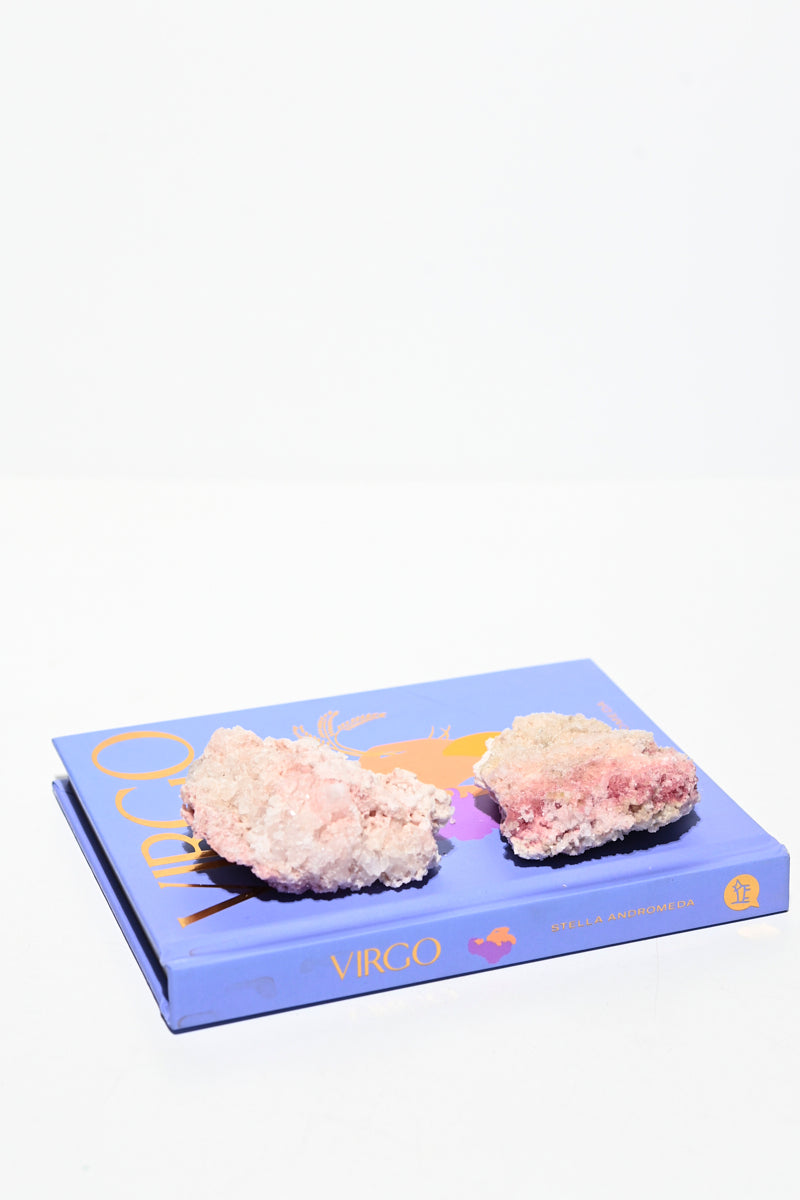
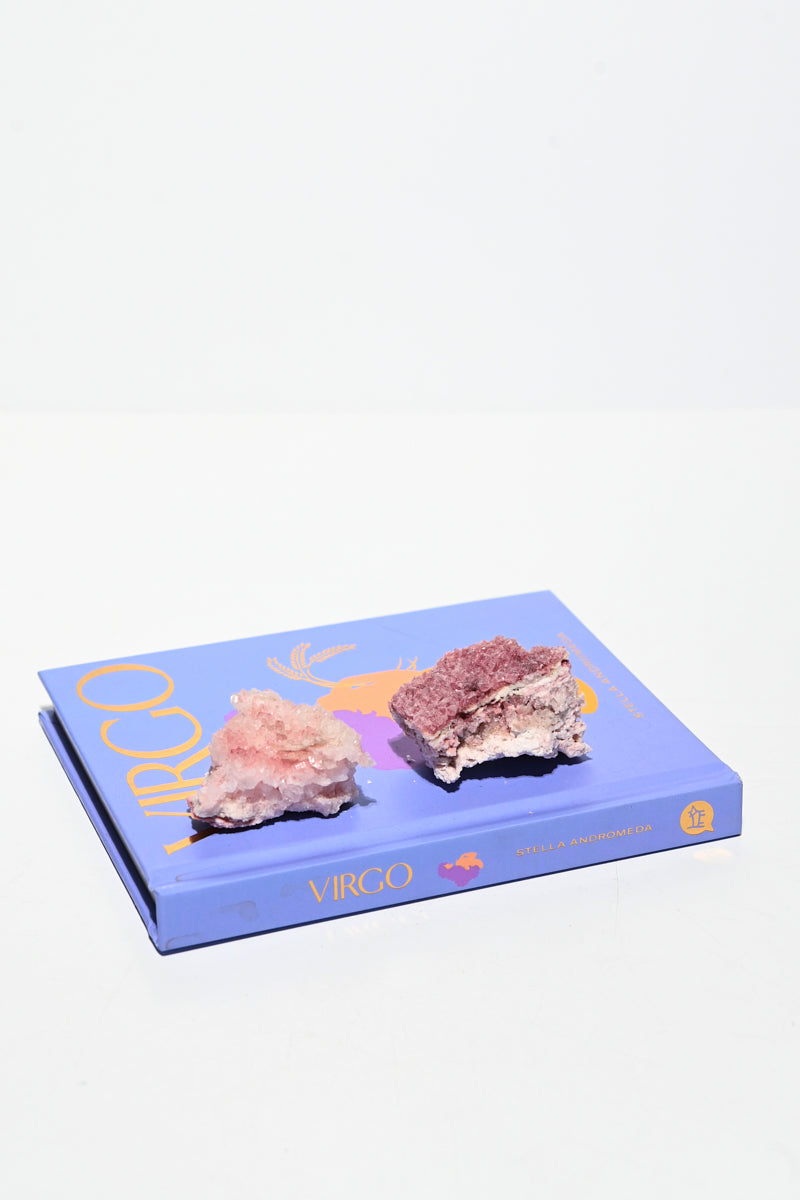
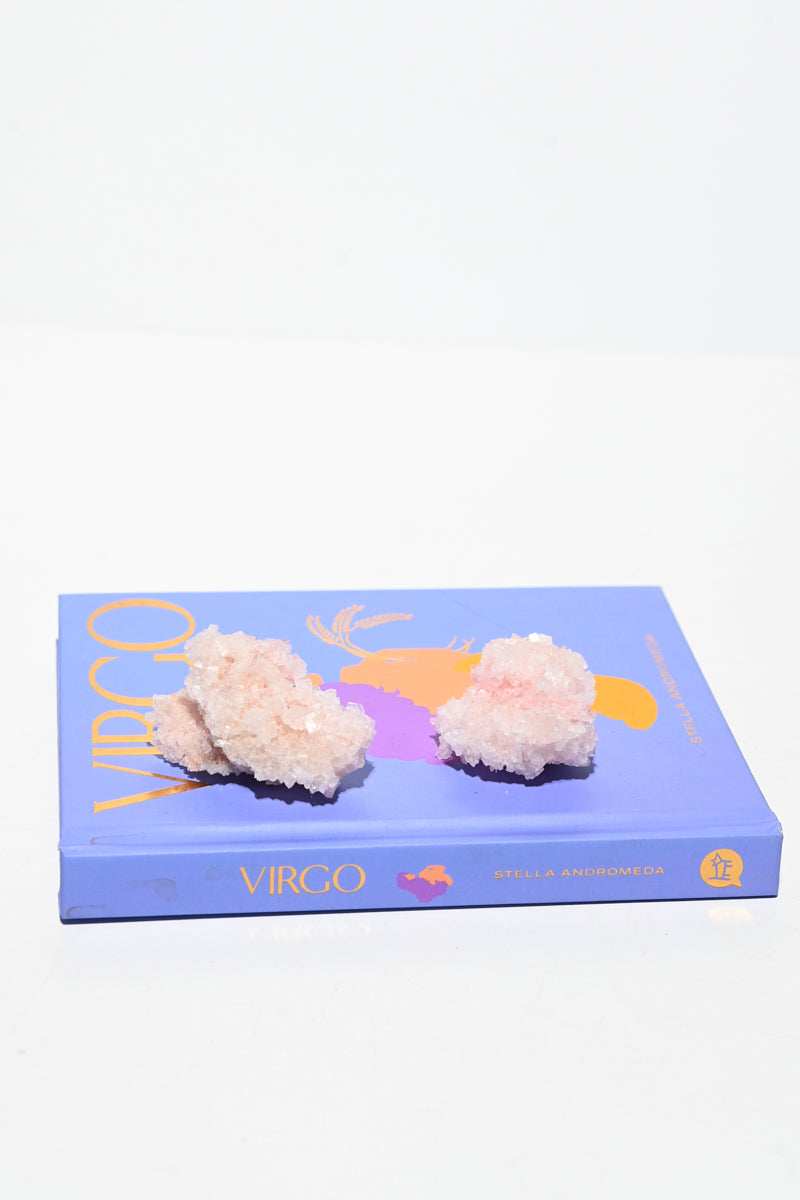
Pink Halite Crystal
Authentic natural minerals, thoughtfully sourced and individually photographed.

Pink Halite Crystal
Pink halite is crystallized sodium chloride (NaCl) — common table salt in mineral form — with a soft pink color caused by trapped bacteria (Halobacterium) that thrived in the hypersaline water during crystal formation. It has a Mohs hardness of just 2-2.5, making it one of the softest and most delicate minerals in any collection. The most prized specimens come from Searles Lake in the Mojave Desert of California, where halite crystals grow in evaporite deposits.
Pink halite specimens are collected, not mined — they form seasonally as lake levels drop and brine concentrates. Each piece is singular, with hopper-growth cubic forms that stack in staircase-like patterns. The pink color ranges from pale blush to deep salmon. These are ephemeral minerals in the truest sense: they dissolve in water, absorb humidity from the air, and must be stored and handled with care.
Pink halite is a pure collector's mineral — prized for its rarity, color, and geological story. Browse our Collector's Edition for more rare specimens, or explore rose quartz and rhodonite for other pink minerals that are more durable. Free shipping on all U.S. orders over $150.
Frequently Asked Questions
What is pink halite?
Pink halite is crystallized sodium chloride (NaCl, Mohs 2-2.5) — salt in mineral form. Its pink color comes from Halobacterium, salt-loving bacteria trapped during crystallization. The most sought-after specimens come from Searles Lake, California.
Can pink halite get wet?
Absolutely not. Pink halite is sodium chloride — it dissolves in water. Even brief contact with water will damage or destroy the crystal. Handle with dry hands. Never clean with water or any liquid. This is one of the most water-sensitive minerals you can own.
How do I store pink halite?
Store in a sealed container or display case in a low-humidity environment. Pink halite is hygroscopic — it absorbs moisture from the air. High humidity can cause the crystal surface to become tacky, cloudy, or begin dissolving. Silica gel packets in the storage container help control moisture. Keep away from bathrooms, kitchens, and humidifiers.
Is pink halite rare?
Yes. Well-formed pink halite crystals with good color saturation are uncommon. Searles Lake specimens are seasonal and limited — they form during specific evaporation cycles and must be carefully collected by hand. Large, deep-pink specimens with intact hopper growth are especially prized by mineral collectors.
Why is pink halite pink?
The pink color is biological, not chemical. Halobacterium — salt-loving bacteria that produce carotenoid pigments — become trapped in the sodium chloride lattice during crystallization. The same bacteria are responsible for the pink color of the Great Salt Lake and other hypersaline bodies of water around the world.
Let customers speak for us
Very reputable online and they did not disappoint!
Absolutely stunning!

Absolutely stunning!

Absolutely stunning!

Absolutely stunning!

Absolutely stunning!

Absolutely stunning!

Absolutely stunning!

A very satisfied customer. Had to wait for it to be shipped, as it was included in a gem and mineral exhibit. Was worth the wait.

Purchased a dozen Tourmaline, loved them. And, each was beautifully wrapped and intentional. It even came with a sweet note. I would definitely buy again.

Very happy with my stone, better than I expected. Beautiful color and good weight. Definitely would buy again. This is my new go to store for stones
Love the bracelet! I’ve been looking for a new jade bracelet for a while now and this one is perfect.

The crystal is a bright deep shade of light green just like the picture. Could not be happier.

Perfect for travel

I gave this bracelet to my spouse as a gift. She has worn it 24/7 since the first day of its arrival. She says it is lovely, and she likes the meaning of the stones. She describes the energy of the stones feeling “a nice, peaceful empowerment.” I thank you for offering such wonderful stones! Both items I have bought have exceeded my expectations.

A Sanctuary of Natural Beauty
Every crystal here was discovered by hand, selected with intuition, and photographed in its true light.
One-of-a-Kind. Forever Pieces.
Let the Universe Decide


