Something is shifting in the luxury world. After years of polished minimalism, the most forward-thinking designers are reaching for raw, uncut minerals — and they're not apologizing for the roughness.
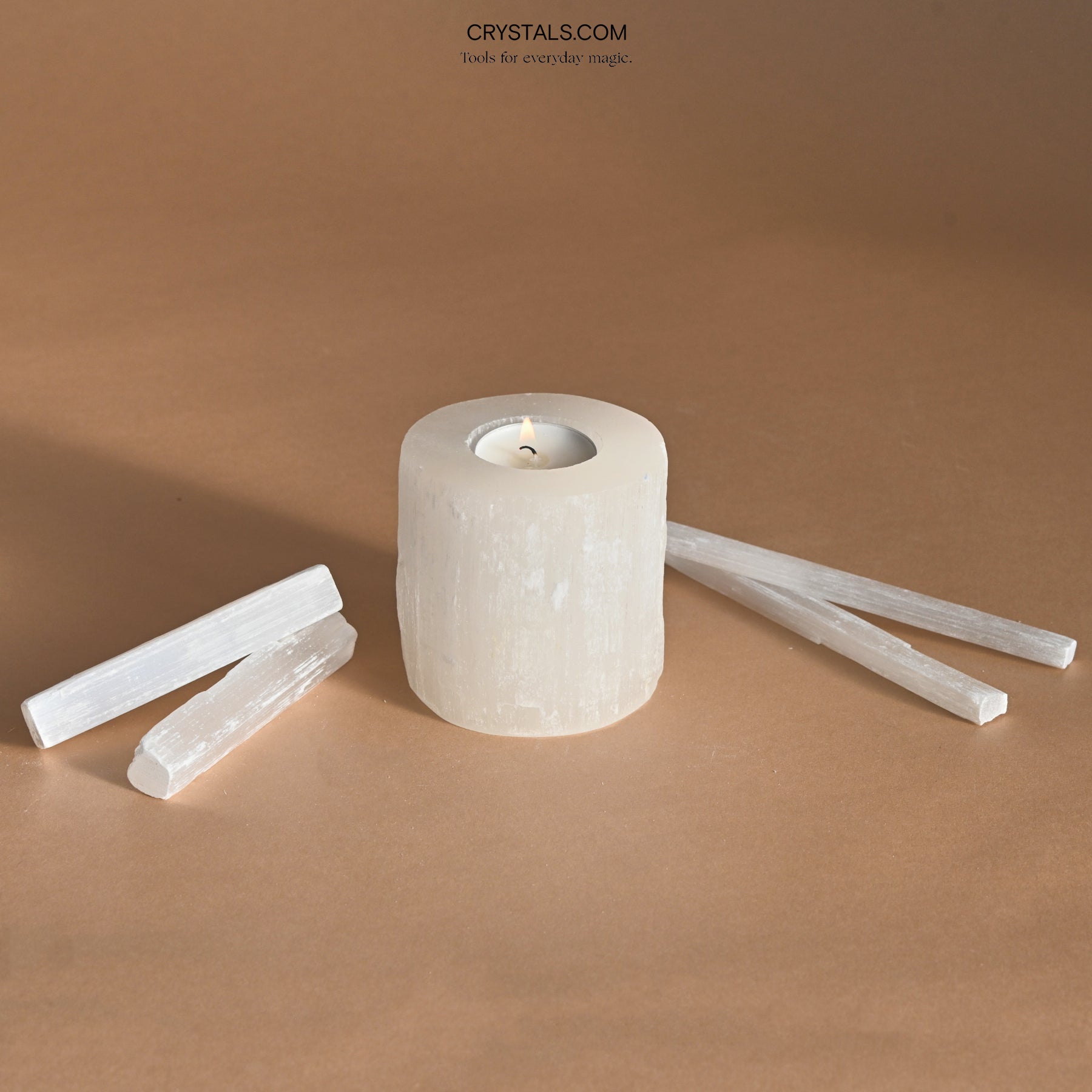
We're calling it mineralogical brutalism: the deliberate use of unrefined, large-scale mineral specimens as statement pieces in fashion editorials, retail environments, and high-end residential design. It's not about pretty crystals on a shelf. It's about 40-pound amethyst geodes (Amethyst Geode) as coffee table centerpieces, raw selenite (Selenite Cleansing Wand) logs as architectural elements, and massive rose quartz (Rose Quartz Tower) slabs as functional surfaces.
Where the Shift Started
The roots are traceable. In 2024, Loewe's Jonathan Anderson placed raw mineral specimens alongside leather goods in flagship stores, treating geological objects with the same reverence as handbags. Dior's Cruise 2025 show featured massive crystal installations as set design. And at Design Miami 2025, multiple galleries showed furniture incorporating rough-hewn mineral slabs.
But the real signal came from residential interiors. Designers like Kelly Wearstler, Clodagh, and Axel Vervoordt have been integrating large mineral specimens into their projects for years. What's changed is the scale and the intent. These aren't accent pieces anymore — they're focal points.
The Aesthetic Logic
Mineralogical brutalism works because it resolves a tension in contemporary design. We've reached a saturation point with digital perfection — 3D-rendered interiors, AI-generated mood boards, algorithmically optimized color palettes. Raw minerals offer something no algorithm can replicate: genuine, geological imperfection.

A natural citrine (Natural Citrine Tower) cluster has taken millions of years to form. Its surface is the product of heat, pressure, chemical composition, and time. No two are alike, and no rendering can capture the way light moves through a real specimen. In a world of digital sameness, that's the ultimate luxury.
The Sourcing Revolution
What's genuinely new in 2026 is the sourcing conversation. High-end buyers are asking questions that would have seemed unusual five years ago:

• Where exactly was this specimen mined?
• What are the labor conditions at the source mine?
• Is this locality still producing, or is this a finite find?
• What's the geological provenance — age, formation conditions, mineral associations?
This is the fashion-world's farm-to-table moment. Provenance is becoming as important as aesthetics, and dealers who can document their supply chain are commanding premium prices.
What Crystals.com Does Differently
Every specimen in our collection is hand-sourced from trusted mining partners. We travel to shows in Tucson, Denver, and Sainte-Marie-aux-Mines to inspect pieces in person. We photograph each item individually — what you see is exactly what you receive.
How to Incorporate Mineralogical Brutalism at Home
Start with Scale
The whole point of this movement is boldness. A single large specimen makes a stronger statement than a collection of small pieces. Look for amethyst cathedrals over 12 inches, selenite logs over 18 inches, or smoky quartz clusters that fill a shelf.

Embrace Contrast
Raw minerals look best against clean, modern surfaces. A rough amethyst geode on a polished concrete console. A chunky rose quartz slab on a sleek walnut credenza. The tension between refined architecture and geological rawness is where the magic happens.
Light Matters
Many minerals are translucent or semi-translucent. Position specimens where natural light can move through them throughout the day. Fluorite, calcite, and selenite are particularly dramatic when backlit.
Let Them Stand Alone
Resist the urge to cluster. Mineralogical brutalism is about singular, commanding presence. Give your statement piece room to breathe. Let it be the only object on its surface.
The Investment Perspective
Unlike most design trends, minerals hold and often increase in value. As mines are depleted, specimens from classic localities become rarer. A museum-quality amethyst cathedral purchased today may be worth significantly more in a decade — making mineralogical brutalism one of the few aesthetic investments that's also a financial one.
![[png]](https://cdn.shopify.com/s/files/1/0252/6845/3410/products/Fluorite-point-small-A61-630.jpg?v=1762525489)
Browse our collection of statement specimens and find your next focal point. Free shipping on orders over $150.
Key Designers Leading the Movement
Interior designers are no longer placing crystals as accent pieces. They are commissioning entire rooms around a single geological specimen. A 200-pound amethyst cathedral becomes the anchor for a living room's color palette, furniture selection, and lighting scheme. The mineral is not decoration. It is architecture.
Kelly Wearstler's work has long incorporated minerals, but her recent projects treat specimens as structural elements. A massive agate slab becomes a console surface. Raw quartz clusters replace traditional bookends in floor-to-ceiling shelving units. Axel Vervoordt's wabi-sabi aesthetic finds a natural partner in raw minerals, emphasizing the beauty of imperfection and the passage of time.
The Science Behind the Aesthetic
What makes mineralogical brutalism work on a neurological level is biophilic design: the human brain's innate attraction to natural forms and materials. Research in the Journal of Environmental Psychology demonstrates that exposure to natural materials reduces cortisol levels and increases cognitive function. Minerals satisfy this biophilic impulse while introducing the unique quality of geological time.
Unlike wood or plants, minerals introduce crystallographic geometry into a space. The hexagonal symmetry of a quartz crystal, the cubic habit of pyrite, the rhombohedral cleavage of calcite bring mathematical order that occurs naturally. These forms register differently in the brain than manufactured geometric objects because they carry slight irregularities that signal authenticity.
Sourcing Ethics and Provenance
The sourcing conversation is where mineralogical brutalism intersects with the broader luxury market's reckoning with supply chain transparency. High-end buyers are not satisfied with vague claims about origin. They want documentation: which mine, which region, what geological formation, and what the labor conditions were at extraction. Read more in our crystal authenticity guide.
This parallels the farm-to-table movement in food and the traceability demands in fashion. Dealers who can provide detailed provenance documentation command premium prices, while anonymous bulk material faces increasing skepticism. At Crystals.com, every specimen is sourced from known mining partners, inspected in person, and photographed individually.
The Investment Dimension
One aspect that separates mineralogical brutalism from other design trends is the investment angle. Most design objects depreciate immediately. A mineral specimen from a depleted locality can appreciate significantly over time. Classic specimens from closed mines have shown consistent value growth over the past two decades. Explore our crystal investment guide for a deeper analysis.
For room-by-room styling ideas incorporating statement minerals, our crystal home decor guide covers everything from entryways to bedrooms.
Sourcing Brutalist Specimens
Finding specimens that embody mineralogical brutalism requires a different eye than shopping for polished display pieces. You are looking for raw, uncompromising forms: pyrite cubes still embedded in matrix, smoky quartz clusters with dramatic natural terminations, galena with sharp cubic cleavage, and hematite with that unmistakable metallic weight.
The best brutalist specimens often come from specific localities known for producing bold formations. Spanish pyrite from Navajun is legendary for its near-perfect cubic crystals emerging from marlstone matrix. Moroccan vanadinite on barite creates striking geometric contrasts. Brazilian tourmaline in matrix offers that raw, embedded aesthetic that defines the movement.
Display and Lighting
Brutalist minerals deserve brutalist presentation. Skip the delicate glass cases. Instead, consider raw concrete pedestals, blackened steel shelves, or simple matte black acrylic bases that let the specimen speak. Lighting matters enormously for metallic minerals. A single focused spotlight creates dramatic shadows that enhance the angular geometry of cubic or orthorhombic crystals.
For metallic specimens like pyrite and hematite, side lighting reveals surface texture and crystal faces far better than overhead illumination. Matte minerals like black tourmaline or raw obsidian (Black Obsidian Palm Stone) absorb light and create negative space, a powerful effect when placed against lighter backgrounds.
Whether you are drawn to brutalism as an aesthetic philosophy or simply appreciate the raw power of unpolished minerals, the key is intentionality. Every specimen in your collection should be chosen for its form, not its commercial appeal. Browse our new arrivals for specimens that challenge conventional crystal aesthetics.
The Investment Angle
Brutalist mineral specimens often appreciate in value precisely because the mainstream market overlooks them. While everyone is competing for picture-perfect amethyst cathedrals, collectors who understand mineralogical brutalism acquire exceptional pyrite, galena, stibnite, and arsenopyrite specimens at a fraction of the price. As the design world increasingly embraces raw, industrial aesthetics, these specimens are finding new audiences. The intersection of mineral collecting and contemporary design is still young, and early collectors in this space are building genuinely distinctive collections. For specimens that push beyond conventional crystal aesthetics, explore our latest arrivals.
Material Pairings in Brutalist Display
Brutalist minerals pair naturally with raw, industrial materials. Concrete, blackened steel, oxidized copper, and unfinished wood create settings that amplify the raw aesthetic. A galena cube on a concrete plinth, a pyrite cluster against a rusted iron plate, or a black tourmaline column on a reclaimed oak block: these combinations tell a story of earth and industry. Avoid polished surfaces, velvet, and ornate stands, which contradict the brutalist philosophy entirely. The display should feel like the specimen was just pulled from the ground and placed directly into your space, intentional but unadorned. For raw, unpolished mineral specimens that embody this aesthetic, browse our new arrivals and full collection.
Discover Your Human Design
Crystals amplify energy — but do you know your unique energy type? Human Design reveals how you're wired to make decisions, work, and rest. It's the owner's manual you were born with.
Explore Human DesignGet 10% Off Your First Order
Plus early access to new arrivals, collector drops, and crystal guides. Join 15,000+ crystal lovers.