Crystals.com
Angelite
Authentic natural minerals, thoughtfully sourced and individually photographed.

Angelite Crystals
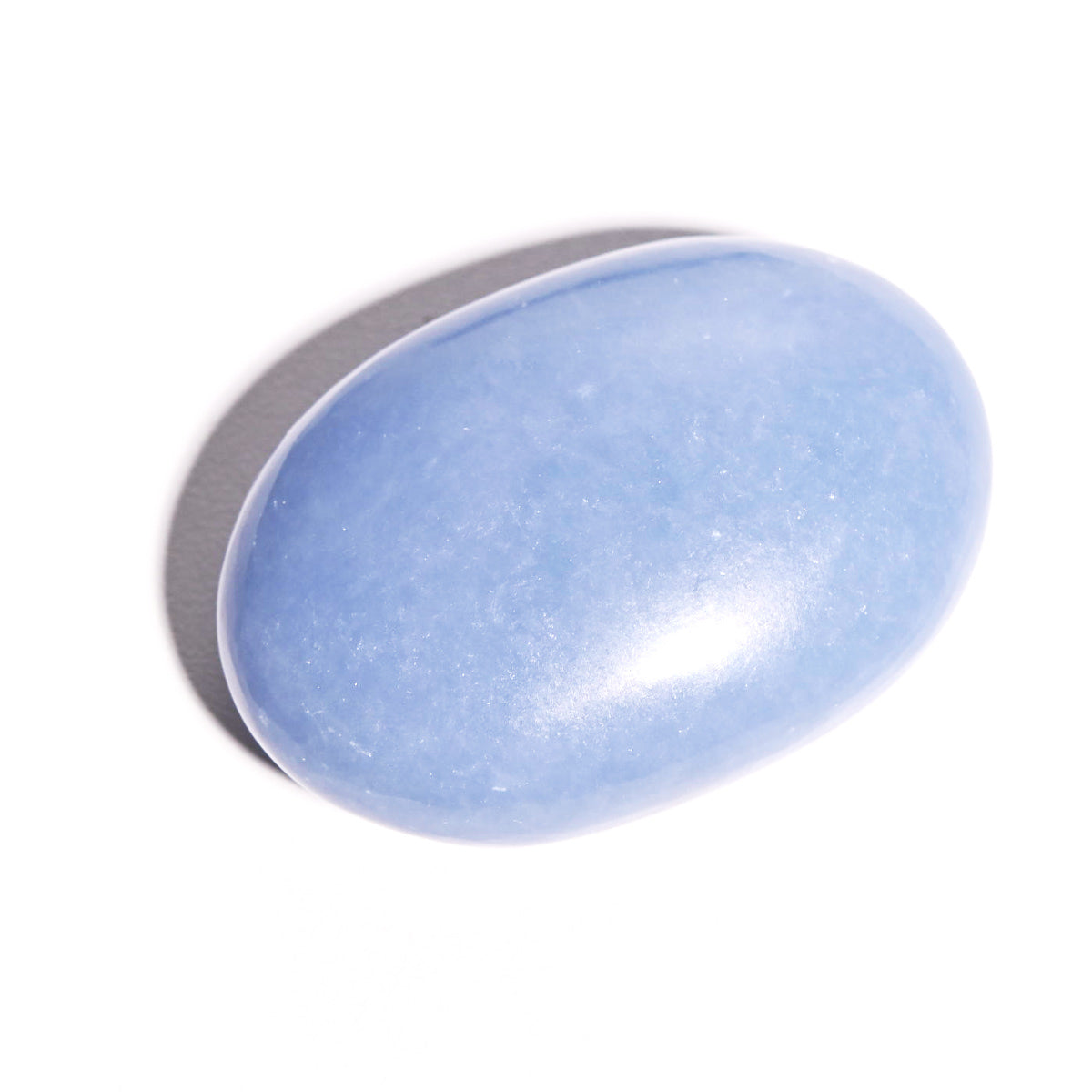
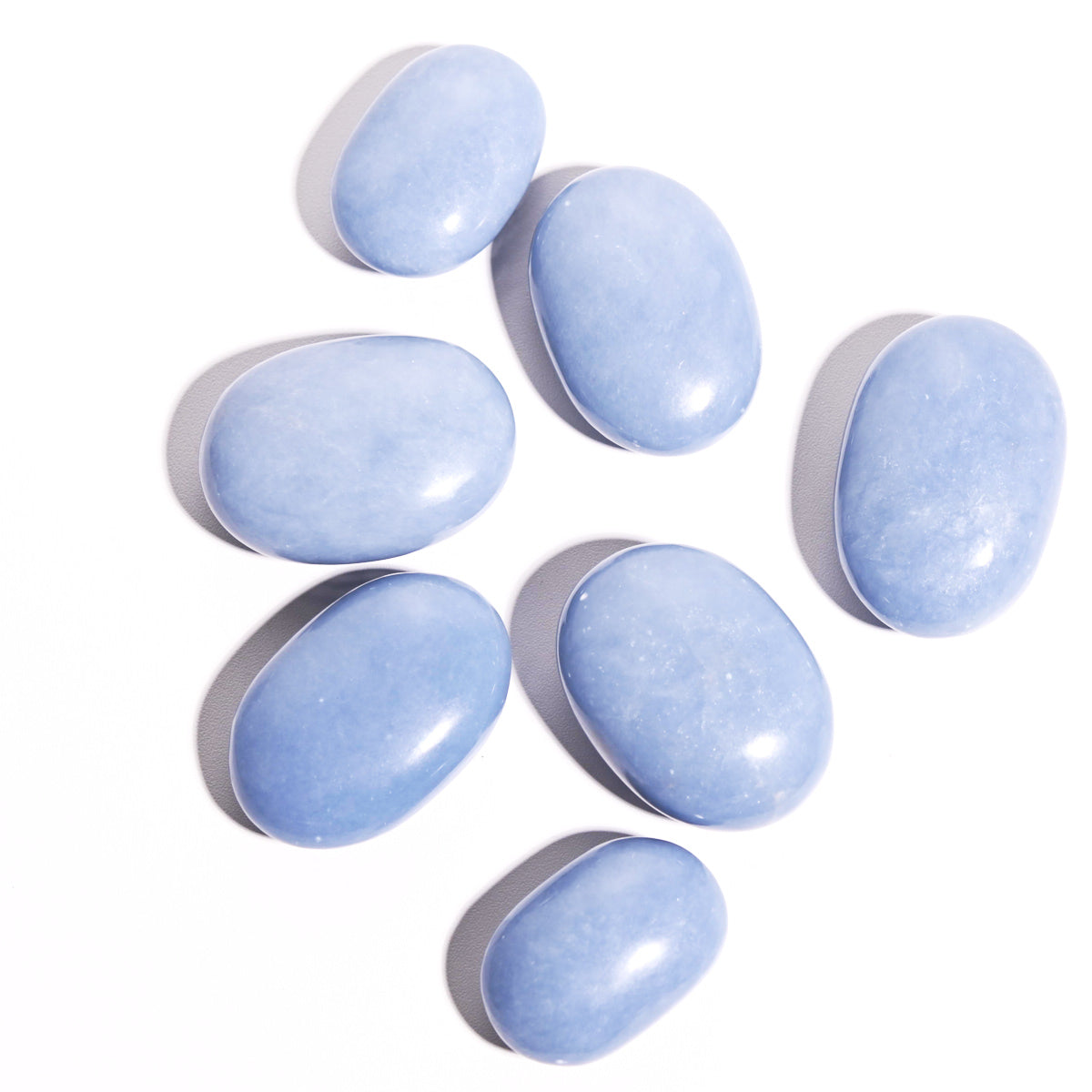
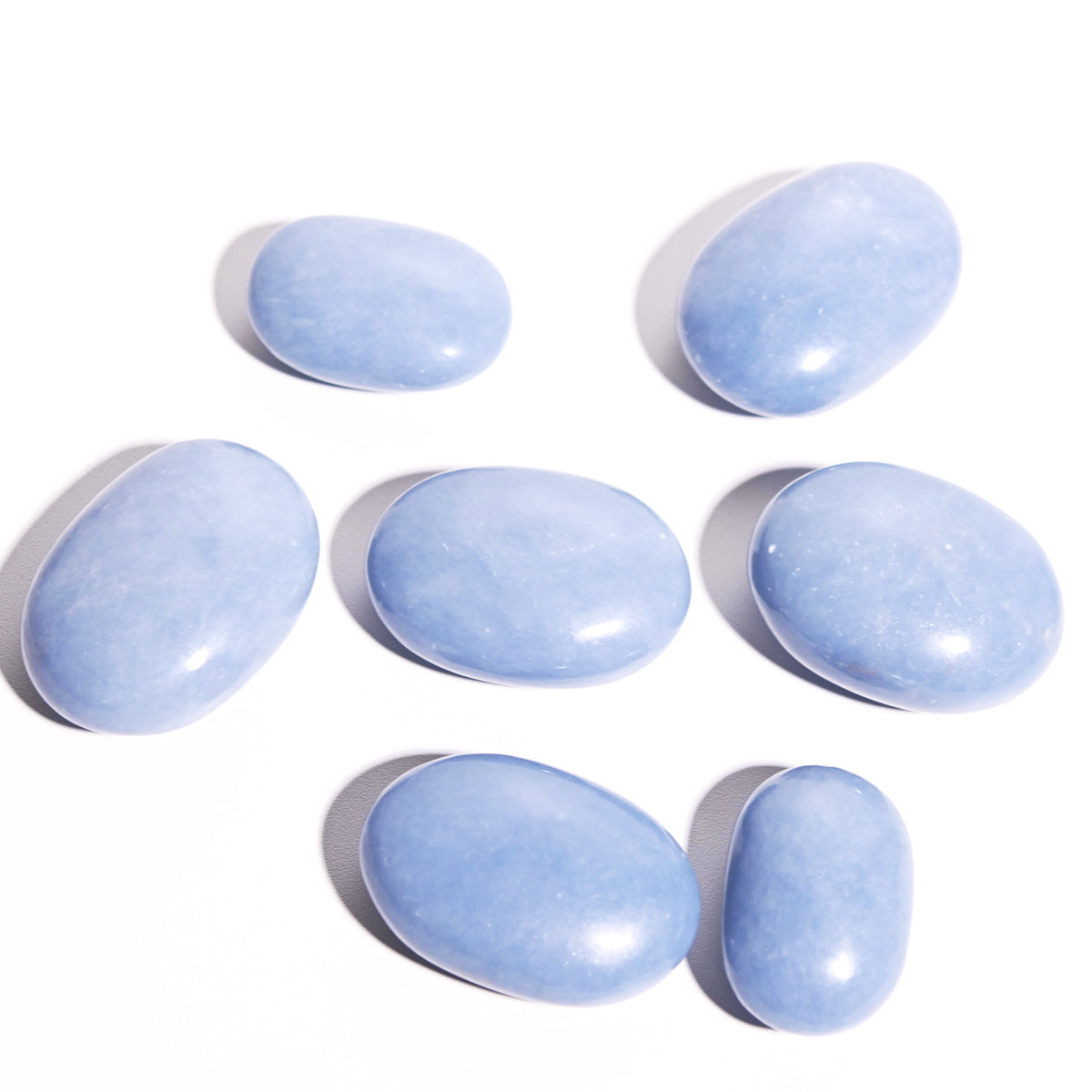
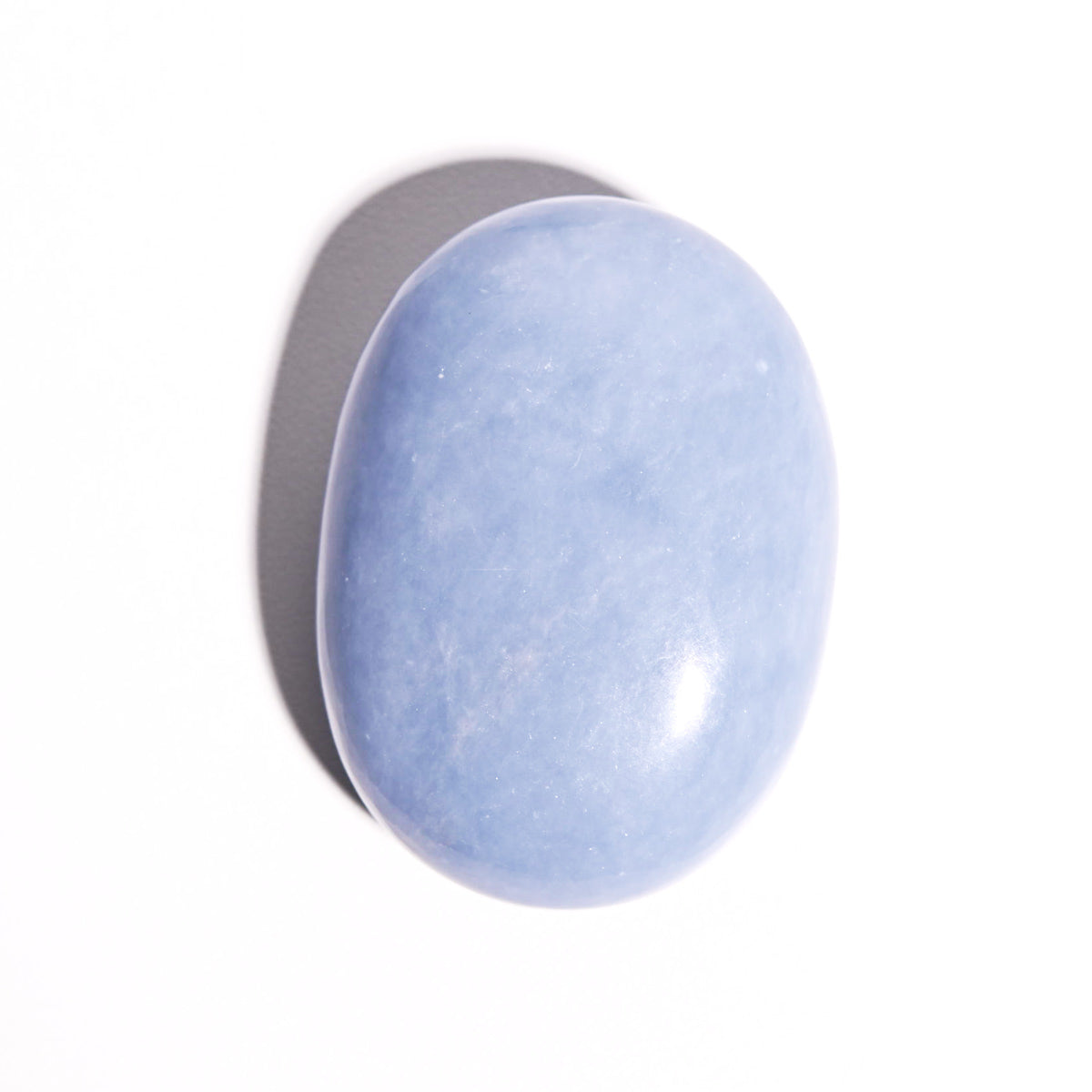
Angelite is the trade name for a pale blue variety of anhydrite, a calcium sulfate mineral (CaSO₄) crystallizing in the orthorhombic system. It registers just 3–3.5 on the Mohs hardness scale, making it a relatively soft stone that requires careful handling. Angelite's glacier-blue color is caused by trace amounts of celestine (strontium sulfate) within its structure. The primary commercial source is Peru, where it was first marketed in the 1980s.
As a variety of anhydrite — literally "without water" — angelite is not water safe. Prolonged moisture exposure causes it to rehydrate and convert back to gypsum, damaging surface and polish. Despite its softness, angelite is valued for its serene, opaque blue that is unlike virtually any other affordable mineral. It takes a smooth, matte-to-waxy polish and is frequently carved into decorative shapes.
Available forms include tumbled stones, palm stones, polished hearts, spheres, and raw specimens. For other blue minerals, see our lapis lazuli, sodalite, and larimar collections. For other soft minerals requiring careful handling, see selenite. Browse crystals for bedroom for calming display pieces. Free shipping on orders $150+.
Frequently Asked Questions
What is angelite?
Angelite is a pale blue variety of anhydrite (calcium sulfate, CaSO₄). It forms when gypsum loses its water content through geological processes over millions of years. It has a Mohs hardness of 3–3.5 and a soft, powdery blue color.
Can angelite get wet?
No. Angelite should not be submerged in water. As anhydrite ("without water"), it can absorb moisture and begin converting back to gypsum, causing the surface to become chalky or lose polish. Clean with a dry soft cloth only.
Where does angelite come from?
The primary source is Peru, which produces the pale blue material most commonly seen in the market. It also occurs in Mexico, Germany, Poland, Libya, and Egypt. Peruvian deposits produce the most consistent color.
What is the difference between angelite and celestite?
Angelite (anhydrite, CaSO₄) and celestite (strontium sulfate, SrSO₄) are chemically different minerals that look similar in pale blue form. Celestite forms pointed crystal clusters; angelite is usually found in massive form that is carved and polished. They are not related despite their visual similarity.
How should I care for angelite?
Angelite is soft at Mohs 3–3.5 — a copper coin can scratch it. Handle carefully, store separately from harder minerals, and keep in a dry environment. Never submerge in water. Clean with a dry soft cloth only.


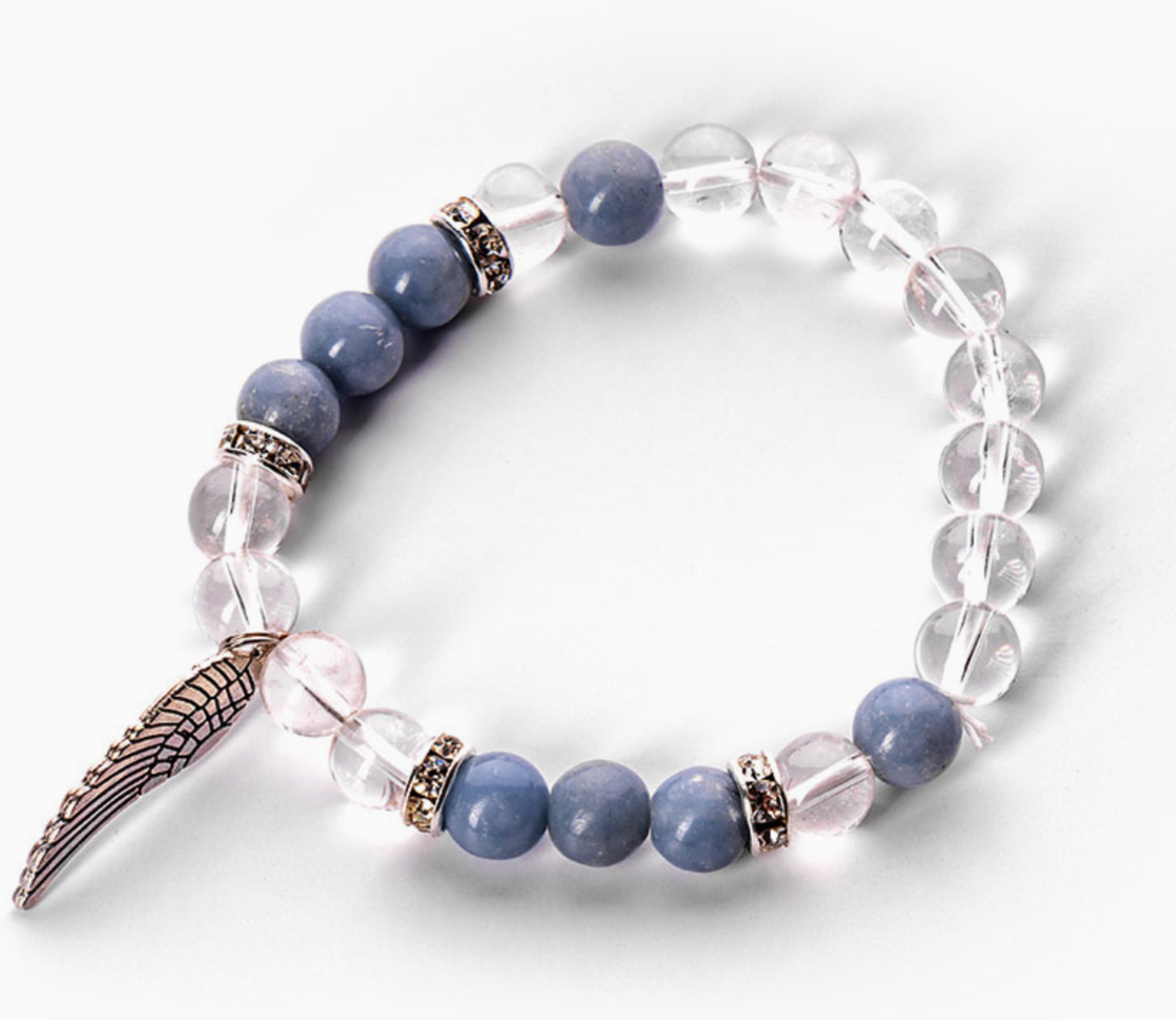
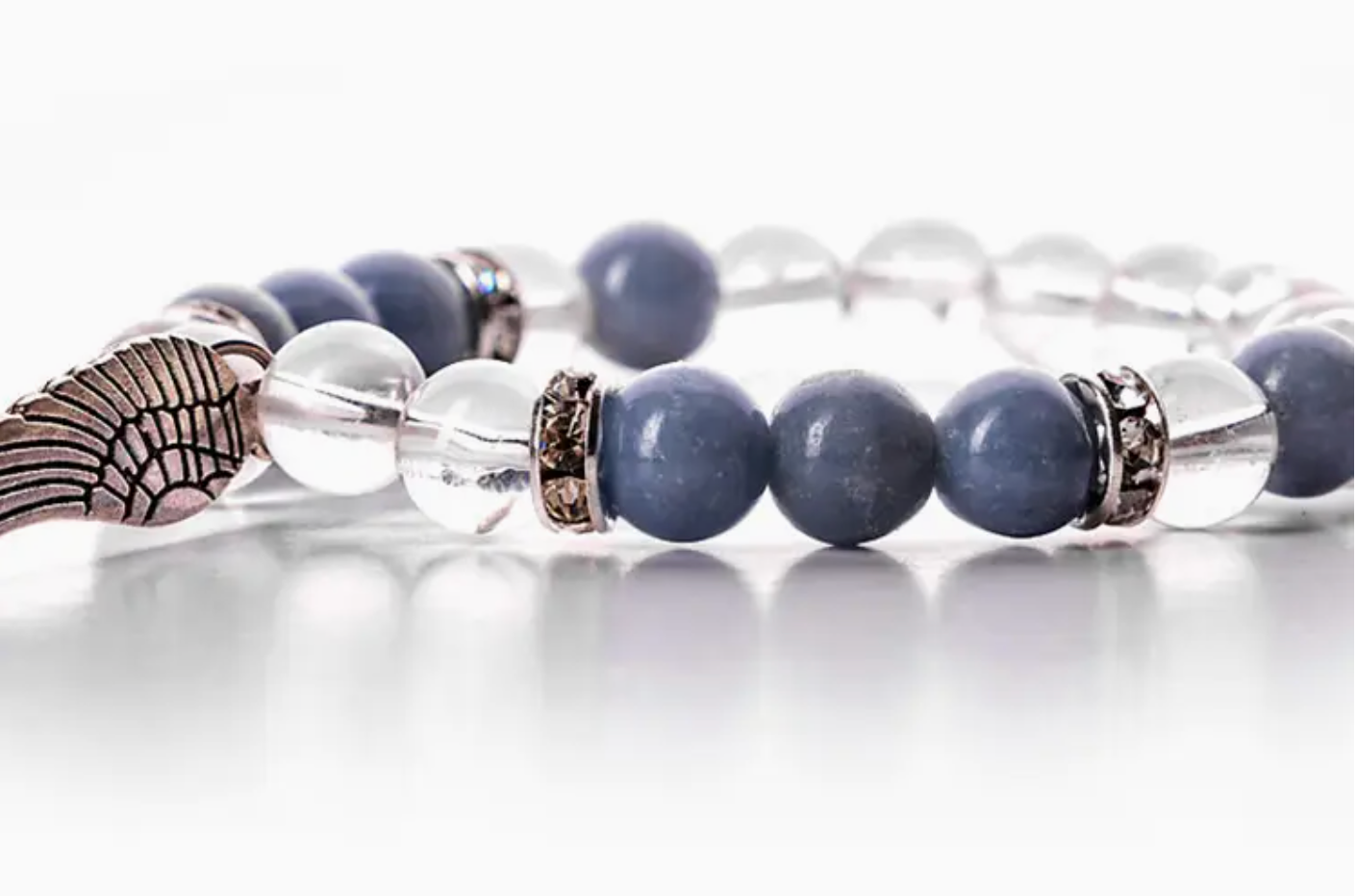
Know your crystal
Angelite
Angelite is the trade name for anhydrite — calcium sulfate that crystallized without water — found in its blue-grey form near Lima, Peru. It's a geological curiosity: given long exposure to moisture it slowly transforms into gypsum, a different mineral entirely. Keep it dry.
Let customers speak for us
Incredible specimen! Lovely for the collection

Beautiful crystals!The quality is excellent, with gorgeous color and natural details. Very happy with my purchase and would definitely recommend!

Beautiful crystals! The quality is excellent, with gorgeous color and natural details. Very happy with my purchase and would definitely recommend!

I have ordered a lot of pieces from here and they are beautiful and always arrive as described and packed and shipped fast. Always very satisfied with my purchases and appreciate buying from Brittany and her business.
Beautiful piece! Incredible quality and shipped perfectly!

Great quality and I loved the information cards.
Great quality and I loved the information card it came with.

I have purchased several pieces from Crystals.com and keep coming back for more. :) This is my second amethyst piece. The color of the amethyst is a deep purple. Great craftsmanship!!

The smaller bead size was even more beautiful!
Really pretty!

Beautiful! The size of each rock is perfect!

Beautiful piece. Just as described

Amazing looks better in person

I love it but it could have been a little bigger

Enjoyed and appreciated by person who received it. The three types of stones look amazing together too!

A Sanctuary of Natural Beauty
Every crystal here was discovered by hand, selected with intuition, and photographed in its true light.
One-of-a-Kind. Forever Pieces.
Let the Universe Decide


