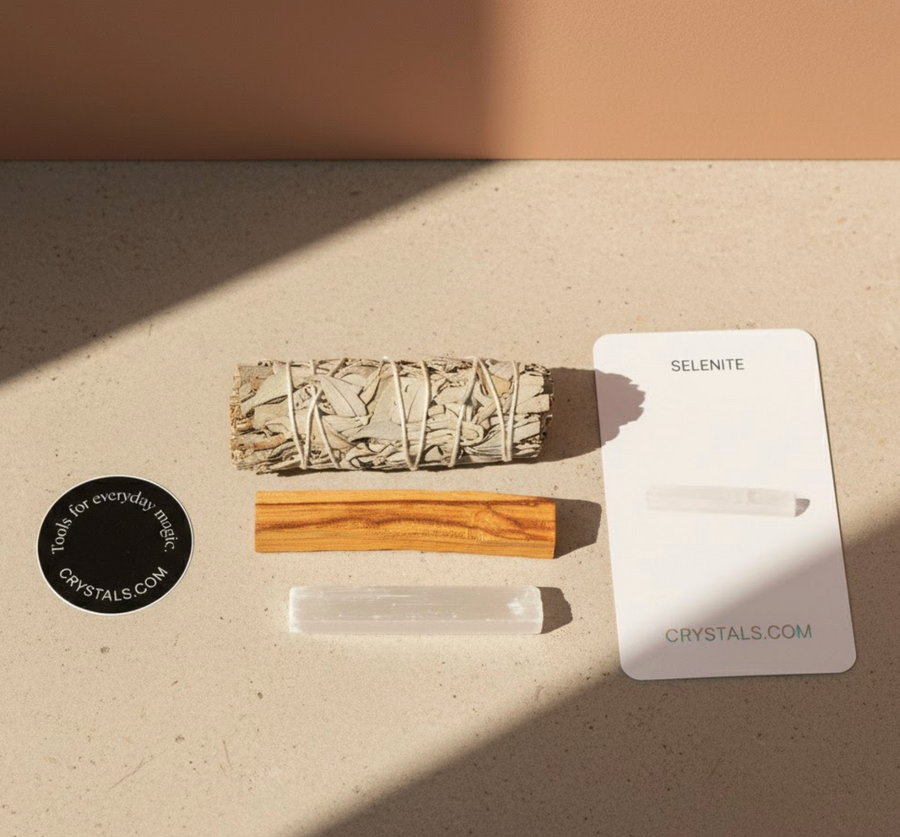

Cleansed Kit - Palo Santo / Sage / Selenite
$22
Clarity and cleansing
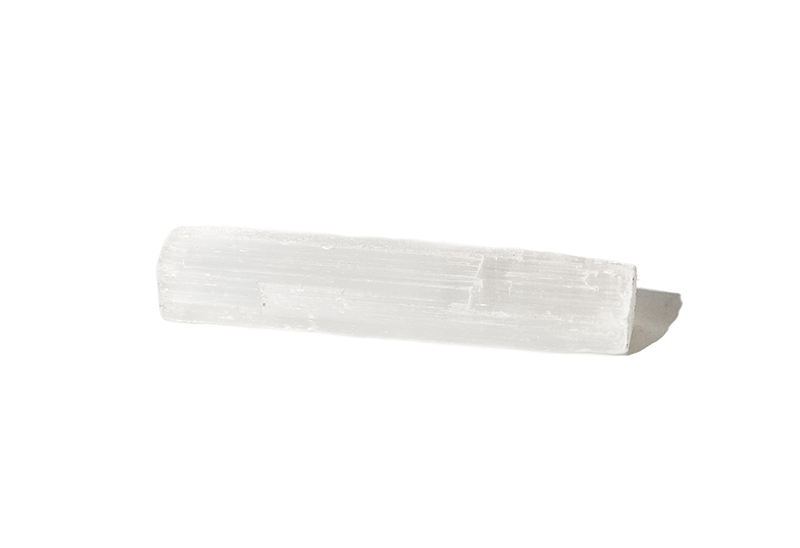
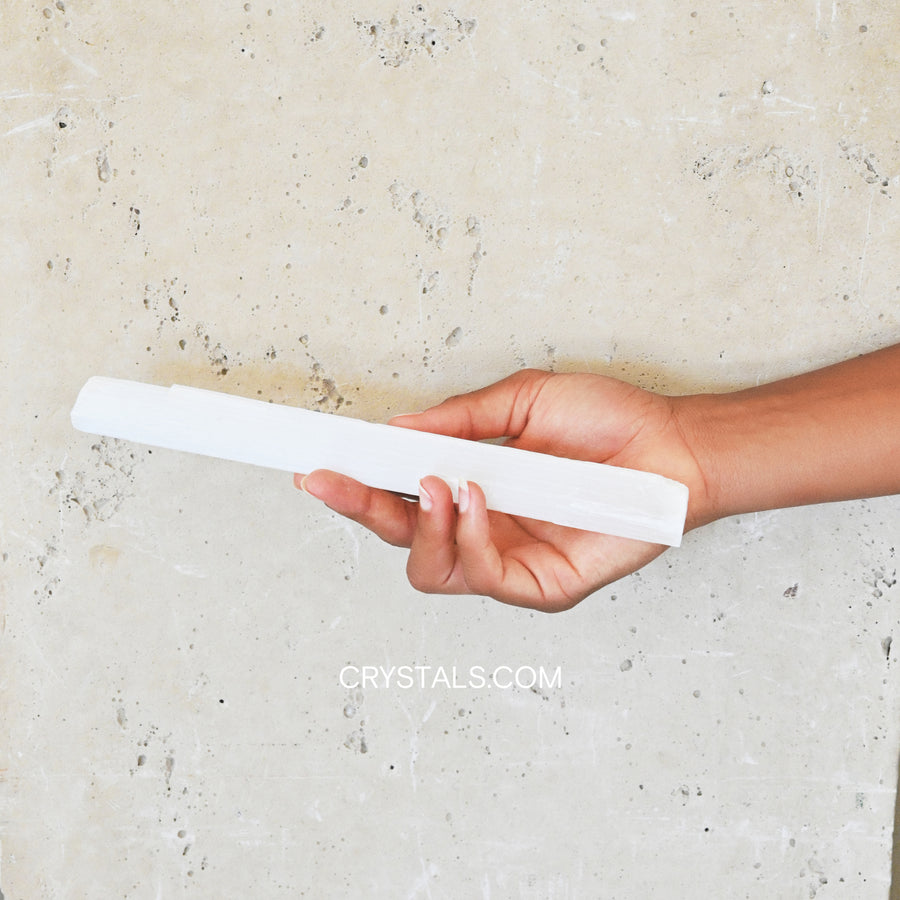
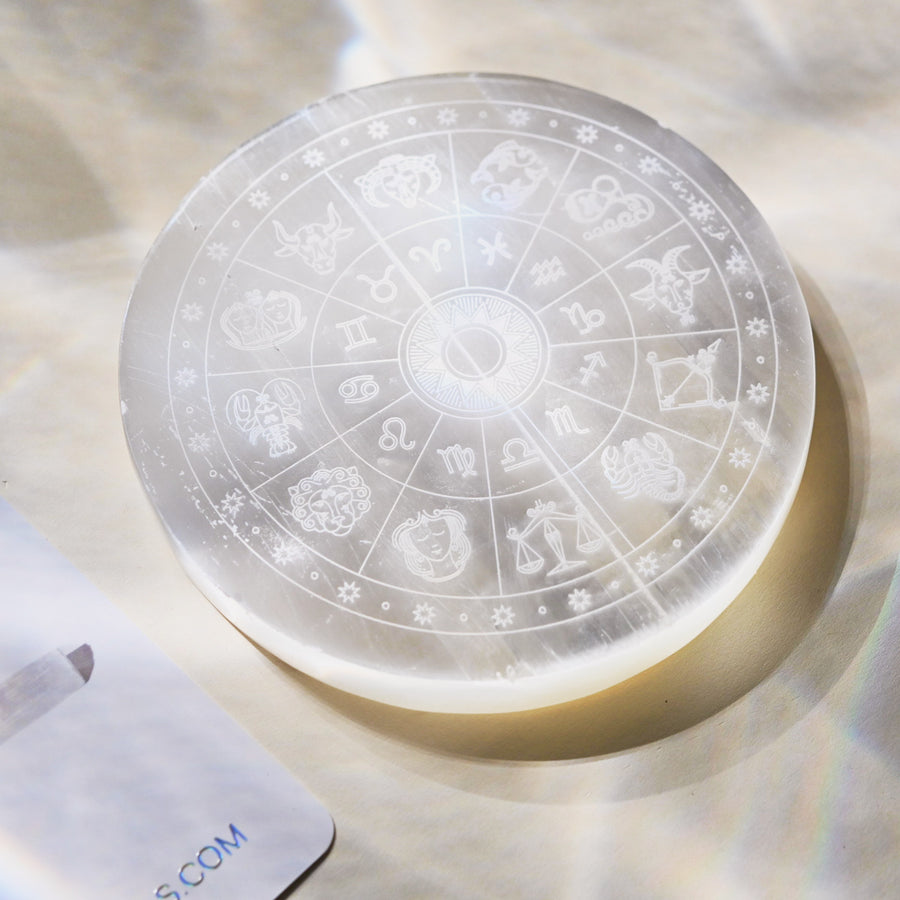
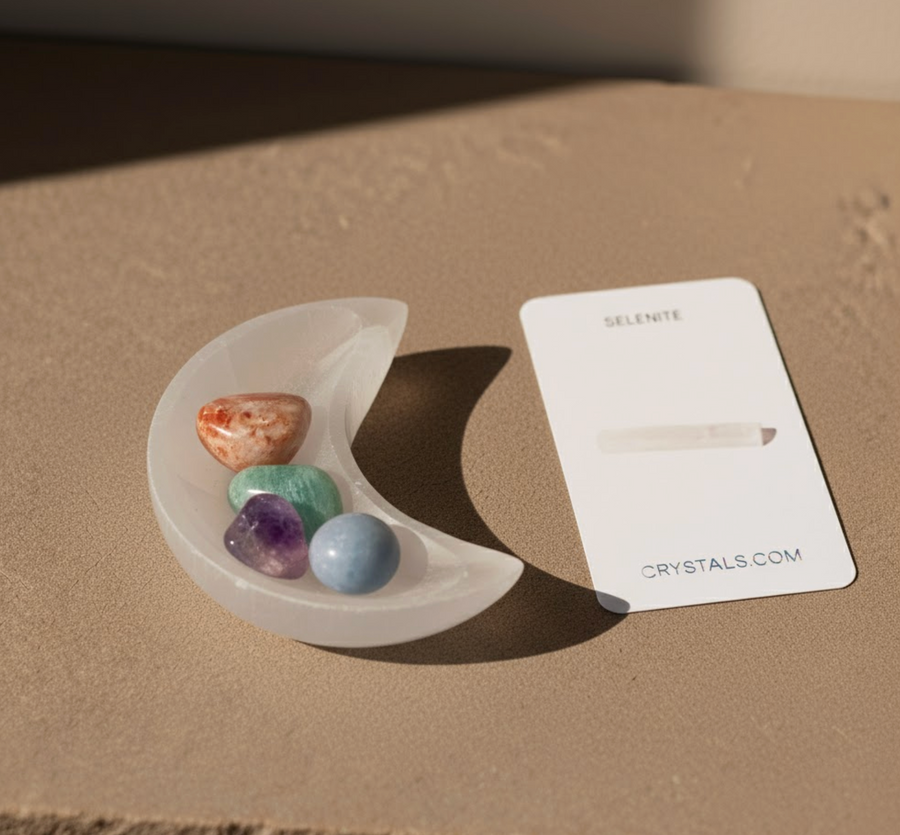
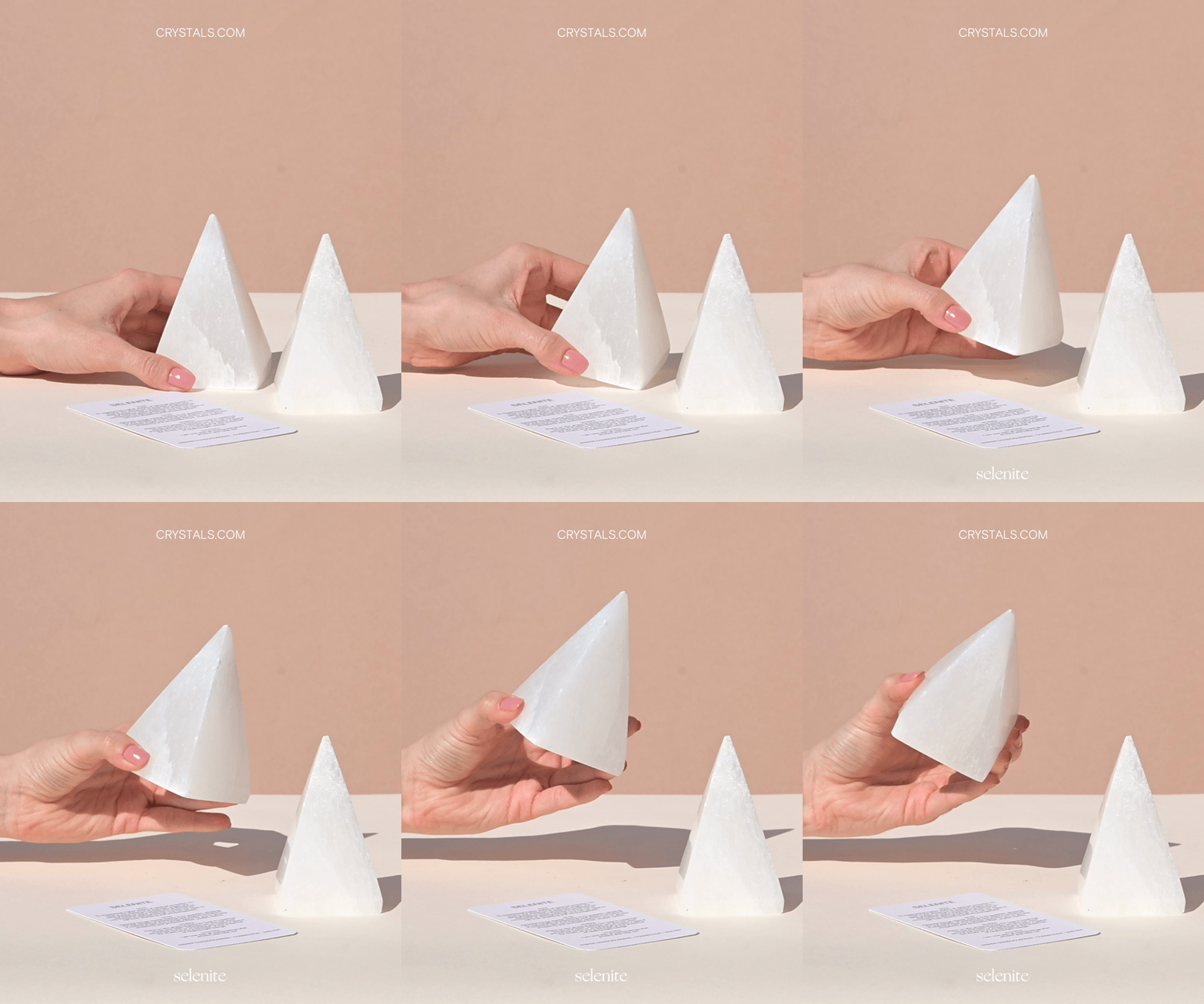
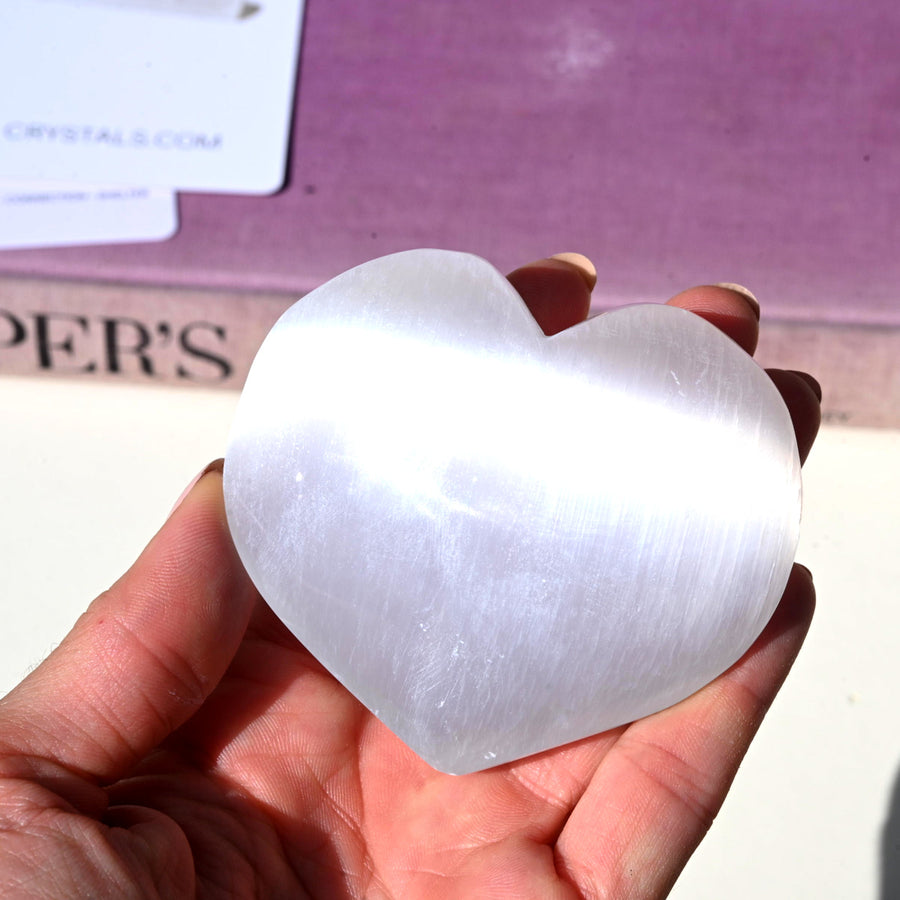
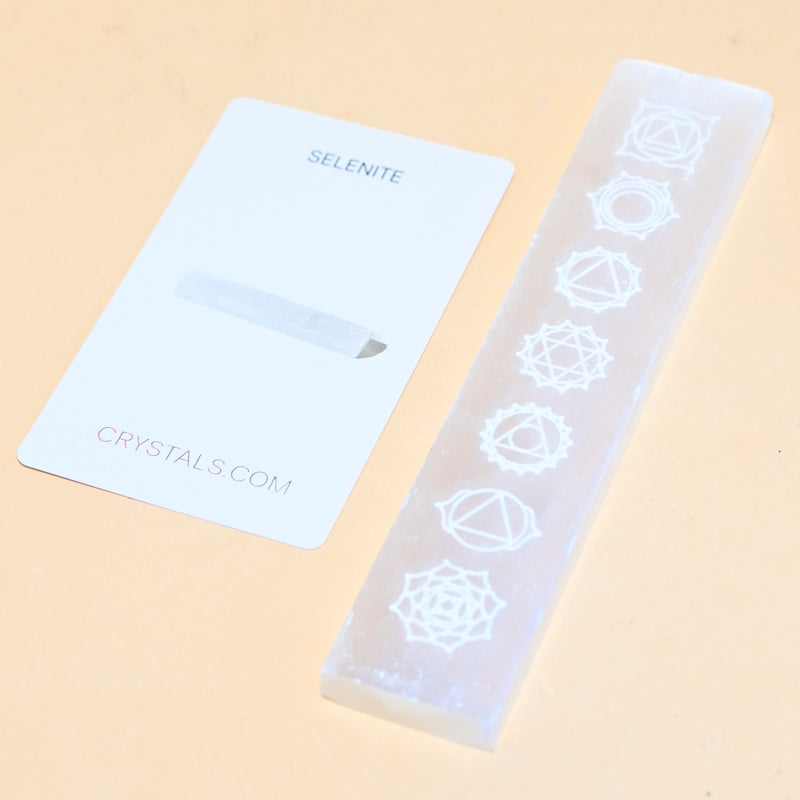
Satin white gypsum that carries light along its fibres. Towers, wands, slabs and bowls, for clearing a room and for the quiet of it.
20 pieces



 Sold


 Sold


 Sold

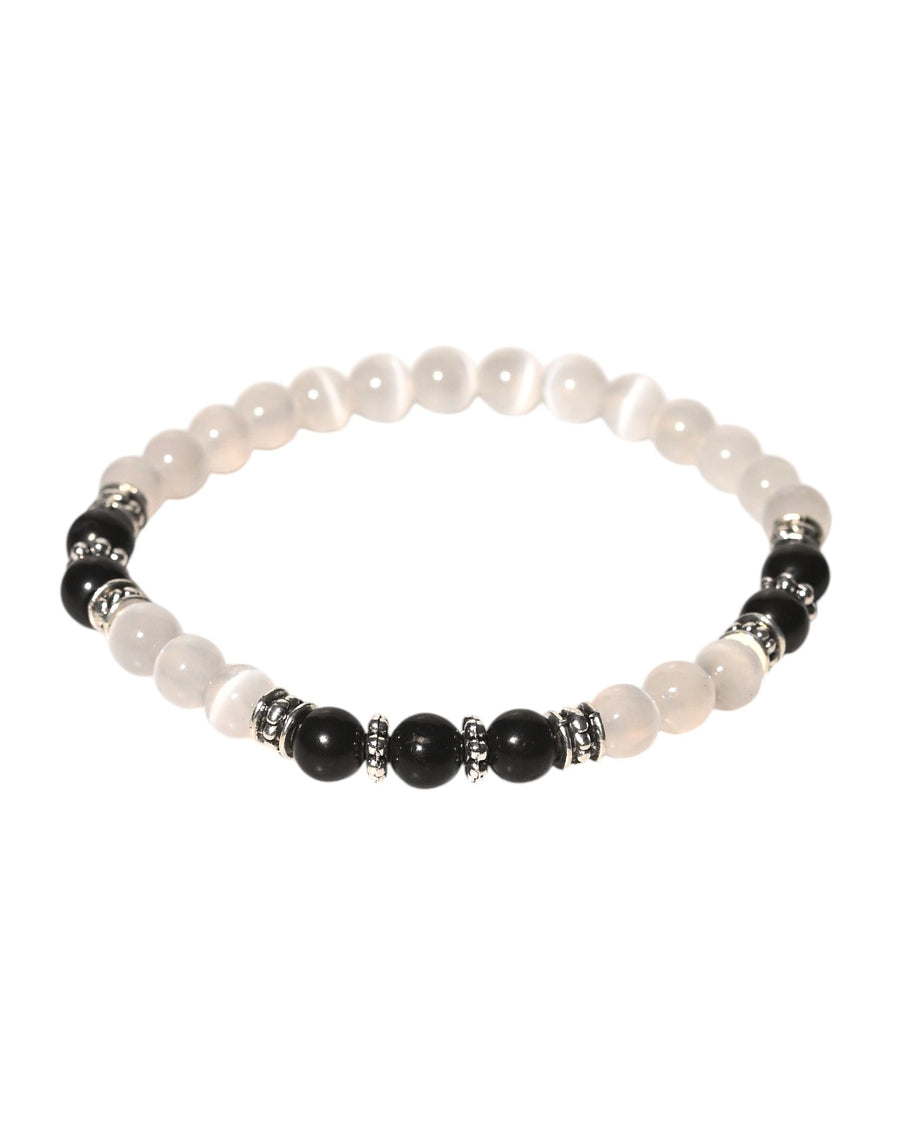

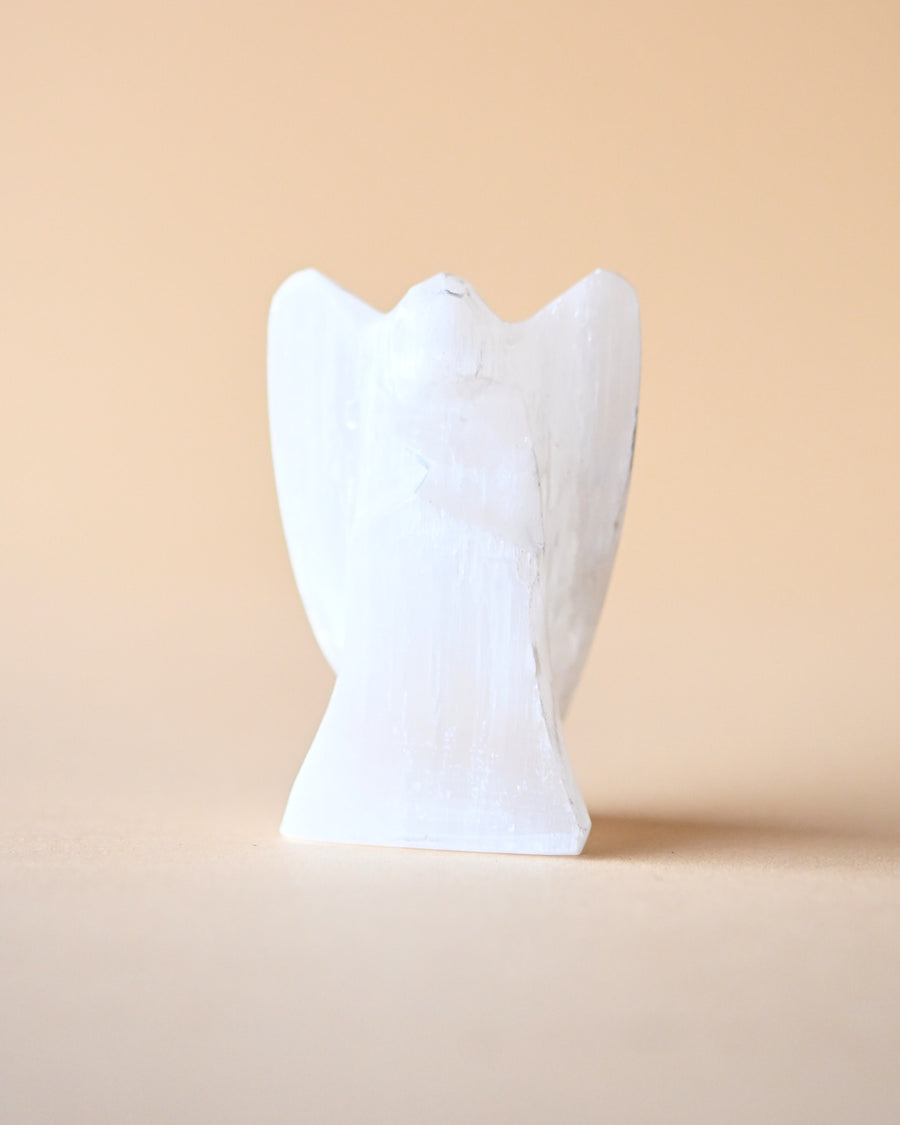

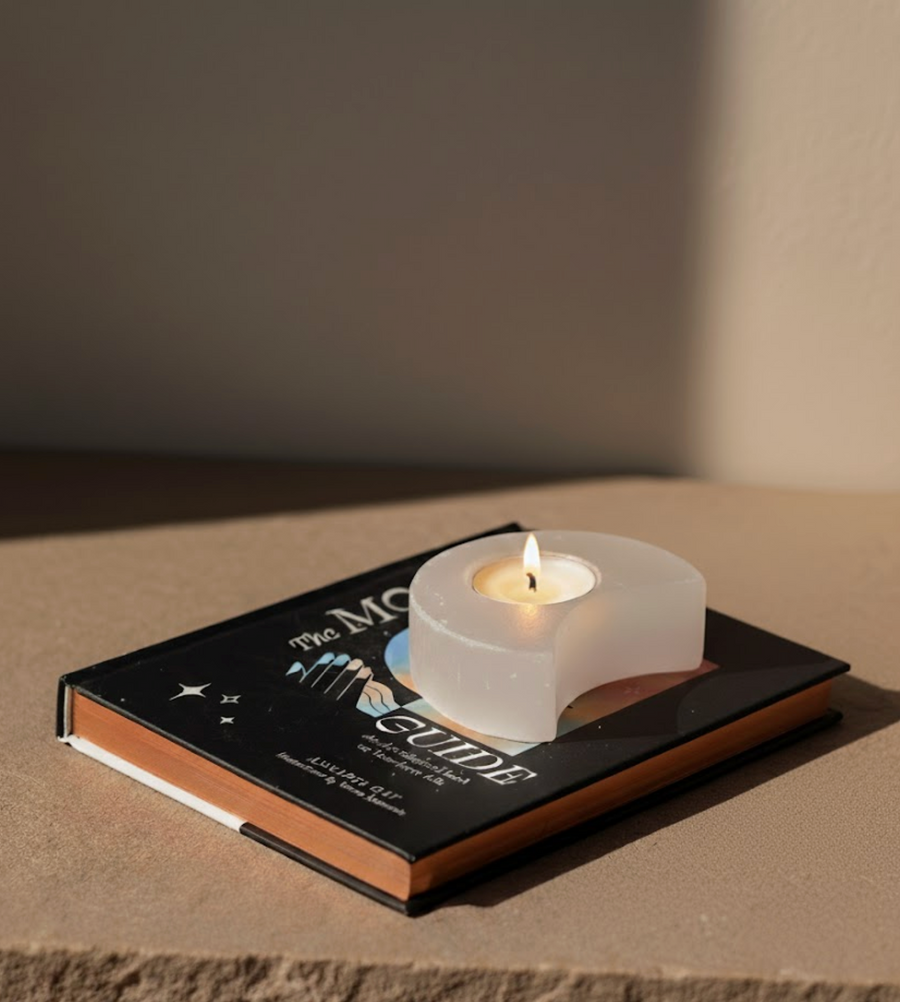

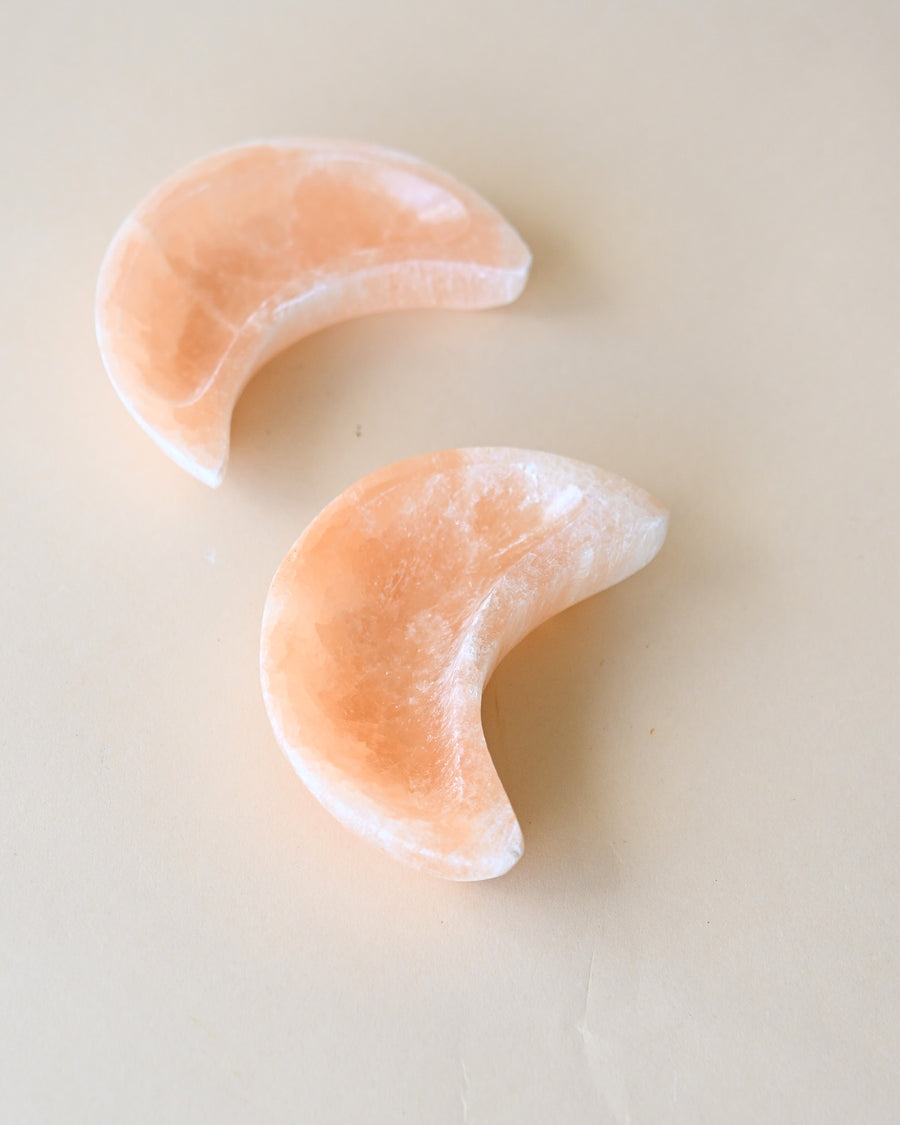

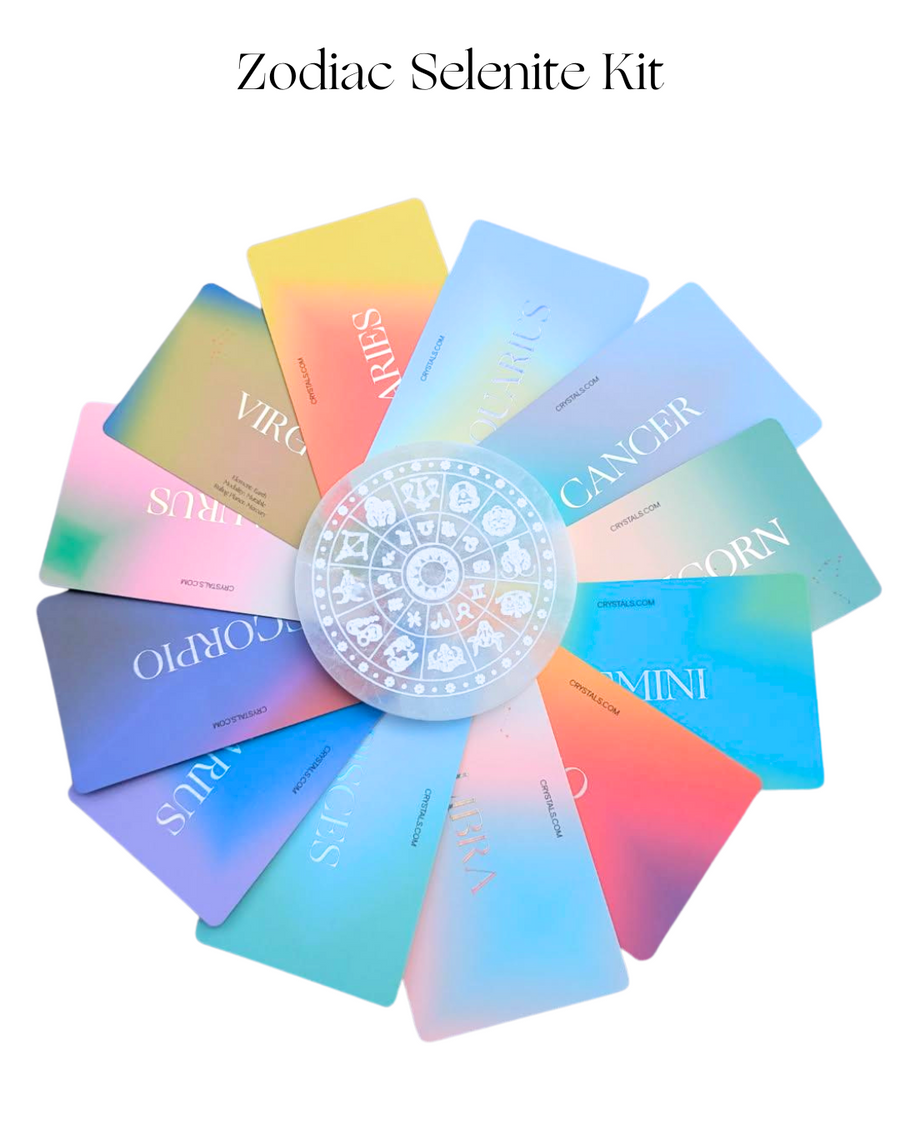

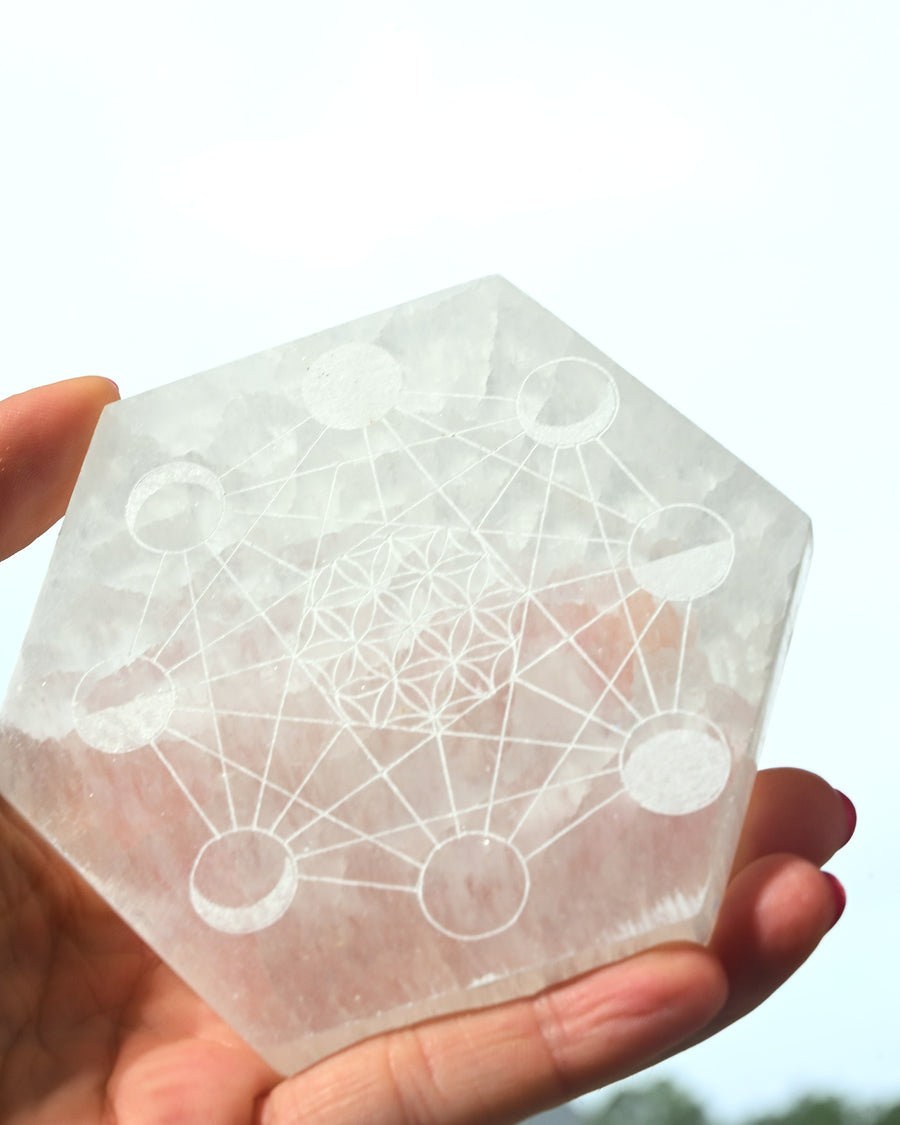

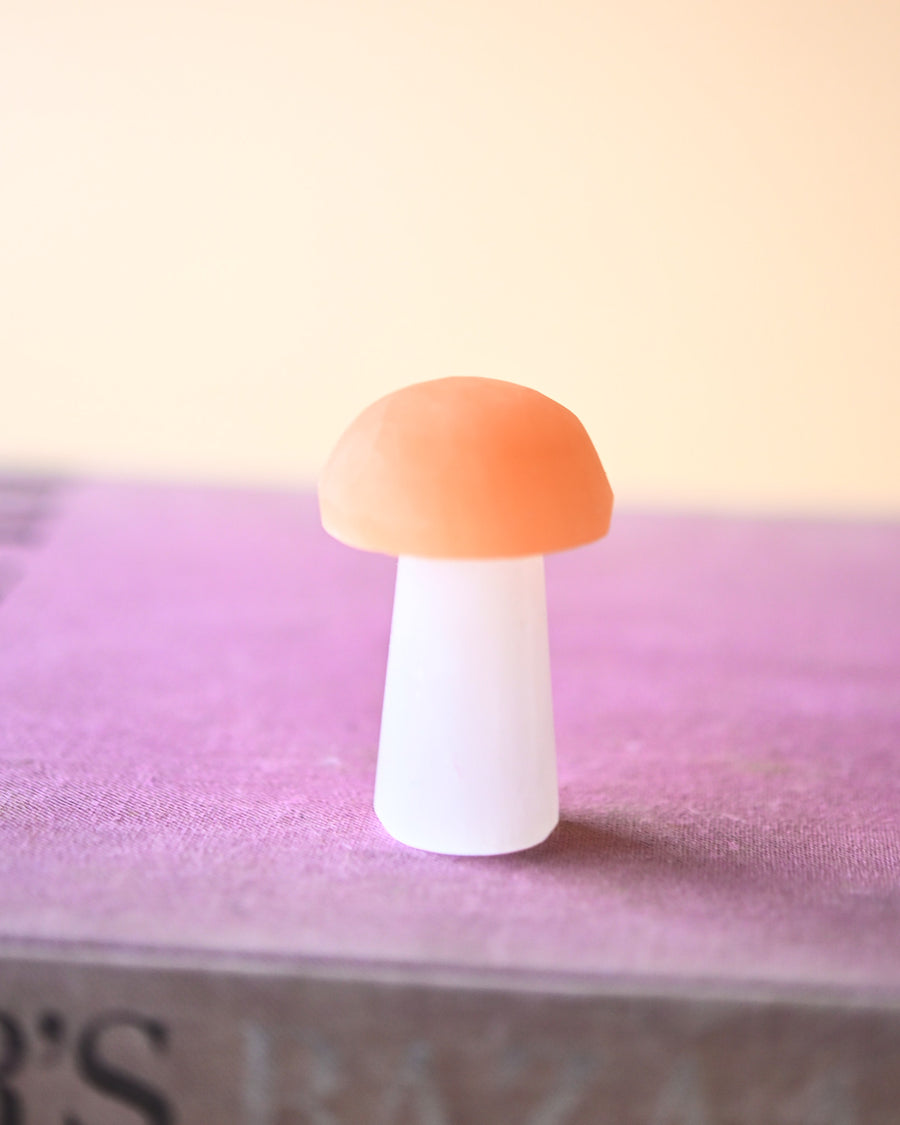

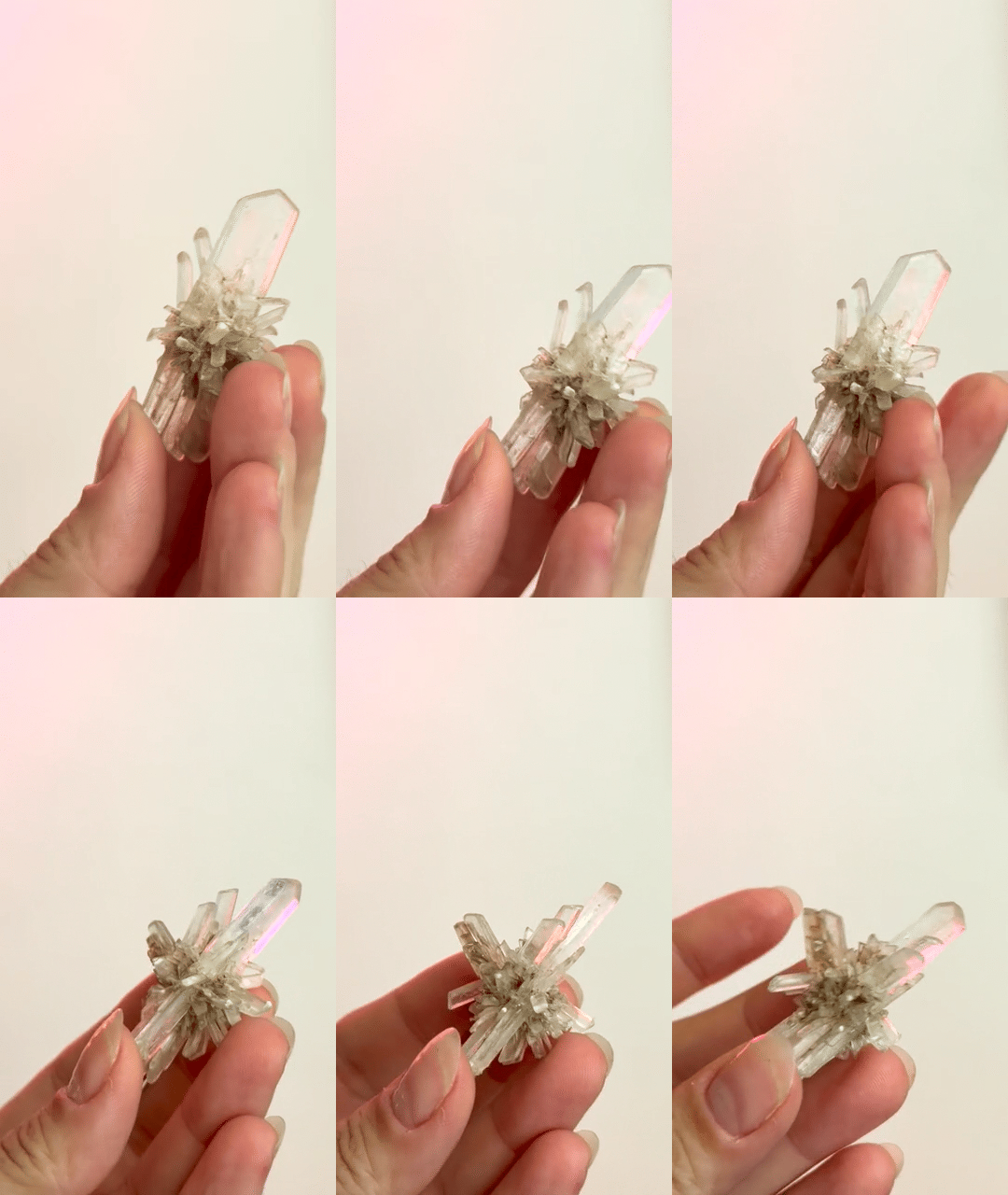

Selenite is water-soluble. It will dissolve. Wipe it with a dry cloth, never rinse it, and keep it off a wet windowsill.
Unlike most stones, selenite needs no charging. It is the plate other crystals get rested on.
At 2 on the Mohs scale a fingernail will mark it. That softness is also how you know it is real.
No. Selenite is water-soluble and can dissolve or become damaged if placed in water. To cleanse it, simply wipe it gently with a dry cloth or place it near other cleansing crystals like clear quartz.
Real selenite has a soft, silky, fibrous texture and can appear in white, translucent, or peach tones. Unlike imitations, it scratches easily with a fingernail, a natural quality of gypsum-based crystals. Every piece here is 100% natural selenite, never dyed, treated, or artificially enhanced.
Selenite is unique because it is naturally self-cleansing and does not require charging like other crystals. To activate yours, simply set a clear intention for how you would like it to support you. You can hold it in your hands, place it in the moonlight, or use it to recharge other stones.
Selenite is most often placed near entryways, windowsills, or in the centre of a room to clear and harmonise energy. Many people keep a selenite tower in the living room, a wand near their workspace for mental clarity, or a slab or bowl in the bedroom to create calm, restful energy.
Selenite is known as a light-bringer crystal. It symbolises purity, higher consciousness, and angelic connection. Many use it to open the crown chakra and enhance intuition, spiritual work, and inner peace.
Selenite is the transparent, crystalline variety of gypsum, a calcium sulfate dihydrate mineral (CaSO4·2H2O) that forms in the monoclinic crystal system. With a Mohs hardness of just 2, it is one of the softer minerals in any collection, which makes its naturally occurring clarity and structure all the more remarkable. Selenite crystals develop in evaporite deposits where shallow saline waters slowly evaporate over geologic time, leaving behind blade-like, tabular crystals with a glassy, almost luminous surface.
Our selenite for sale includes wands, slabs, towers, and raw specimens sourced directly from reputable mineral dealers. Browse our selenite towers if you are looking for freestanding display pieces. Before purchasing, read our selenite properties guide for a full mineralogical overview. One important note: because gypsum is water-soluble, selenite should never be submerged or rinsed. Our guide on which crystals can get wet covers this in detail. Orders over $150 ship free.
Selenite forms in sedimentary basins where mineral-rich brines slowly concentrate and crystallize over millions of years. Some of the world's most extraordinary specimens come from Naica, Mexico, where the Cave of Crystals contains selenite beams measuring up to 12 meters long. Significant deposits are also found in Morocco and in the gypsum caves of Oklahoma, USA. Each locality produces selenite with distinct character: Mexican specimens tend toward massive, gem-clear blades; Moroccan pieces are often more compact; Oklahoma specimens include desert rose formations and translucent slabs. It is worth noting the distinction between selenite and satin spar. Both are gypsum (CaSO4·2H2O), but they grow with different crystal habits. Selenite forms transparent to translucent, tabular or bladed crystals with a vitreous to pearlescent luster. Satin spar grows in fibrous, parallel masses with a silky, almost iridescent sheen. The majority of wands and towers labeled "selenite" in the wider market are technically satin spar. We label our pieces accurately so you know exactly what you are buying.
Because selenite sits at Mohs 2, it scratches with minimal effort. A fingernail, at approximately Mohs 2.5, can mark the surface. Store selenite away from harder minerals and keep pieces from sliding against one another. The more critical rule is water. Gypsum is soluble; even brief exposure to water can cloud a polished surface, erode sharp crystal edges, or leave permanent white residue as dissolved mineral re-deposits on drying. Never submerge selenite, and avoid humid storage environments. To clean, use a dry soft brush or a dry microfiber cloth to remove dust.
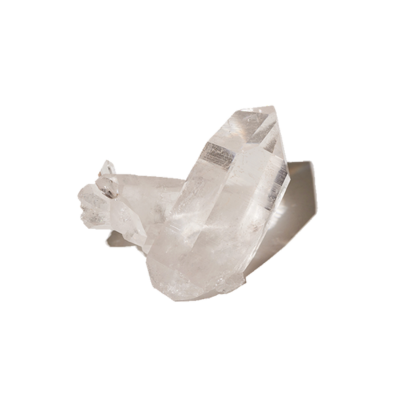
Explore our full selenite properties guide to learn more. If you are new to caring for soft minerals, our crystal and water guide is required reading. Looking to pair selenite with a harder, more durable display piece? Browse our clear quartz collection.
Every specimen personally chosen
On orders over $150
Direct from trusted miners
No. Selenite is gypsum (CaSO4·2H2O), and gypsum dissolves in water. Even a brief rinse can cloud a polished wand or soften the edges of a raw specimen. Clean selenite crystals with a dry soft brush or dry cloth only.
Both are varieties of gypsum, sharing the same chemical formula. The difference is crystal habit. Selenite grows as transparent to translucent, tabular or bladed crystals with a vitreous luster. Satin spar forms in fibrous, opaque masses that produce a silky, chatoyant sheen when polished. Most wands and towers sold online as "selenite" are technically satin spar.
The most famous source is Naica, Chihuahua, Mexico, home to the Cave of Crystals. Morocco is another major producer. Oklahoma, USA has notable deposits as well, including distinctive satin spar and desert rose gypsum formations. Each locality produces pieces with their own visual character.
Many collectors place specimens on selenite slabs or store pieces near selenite as part of their regular care routine. From a mineralogical standpoint, selenite does not chemically interact with other minerals at room temperature. What is accurate is that a selenite slab makes a stable, attractive, and non-scratching display surface for softer specimens.
Know your crystal
Selenite is a form of gypsum, and at 2 on the Mohs scale it is one of the softest minerals people keep in the home. That softness is also the test: a fingernail will mark it, and water will dissolve it.
Styling notes
A beautiful piece..the photo's did not do it justice. The delivery was timely and arrived in perfect condition. Thank you..this specimen is a must for any collector.
Crystals Individually wrapped
Shipped with care, excellent packaging. Great products
Very nice, one of a kind sphere. The piece matched the quality in the photos. Packaging was above average, with no damage during shipping. Tracking was easy. Everything was a positive experience.
Was expecting a bright shade of yellow, but the amber shade is just as beautiful.
Loved how it glimmers
Loved the packaging
Each Crystal came out beautifully
Will definitely find myself a frequent customer ☺️
Perfect. I love my crystals!
Beautiful! Exactly what I was hoping for/expecting!
Delivered when promised. Packaged very nicely!
Beautiful! The purple is so vibrant!
Stunning! Exceeded my expectations and arrived so quickly 💜
Web site is working like a dream, beautifully.
Amazing smoky quartz that you dug up yourself in Tennessee. It shines in my entryway & it is so special. Thank you, it is one of my most important treasures. By the way, your web site works beautifully!
Very beautiful!
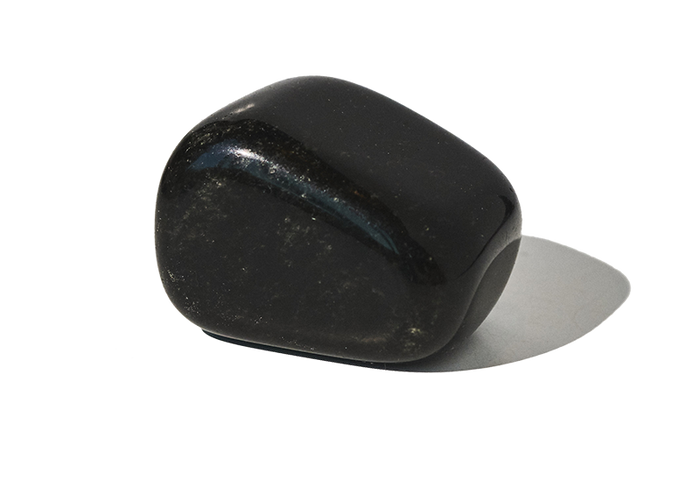
 ObsidianPure white against volcanic black. Opposites that style themselves.Shop the pairing →
Can't choose?
Tell it what you need. It picks one piece for you, in stock right now.
Sorry, looks like we don't have enough of this product.

Buy It With
$10.00 USD