Cobaltoan Calcite: The Pink Mineral That Earns Its Collector Status
Few minerals match cobaltoan calcite for sheer visual impact. That pink is real, it's geological, and it comes with a specific set of handling requirements. Here's everything collectors need to know.

Carnelian Dish -- a warm complement to cobaltoan calcite in a collector's mineral display. Shop Now
The Mineralogy: What Makes the Pink
Cobaltoan calcite is calcium carbonate (CaCO3) -- the same mineral as ordinary calcite, limestone, and marble -- with one critical difference: cobalt ions have substituted for some of the calcium ions within the crystal structure. Cobalt is the chromophore here, meaning it's the element responsible for color. Specifically, the cobalt(II) ion (Co2+) substituting into the calcite lattice absorbs certain wavelengths of visible light and reflects the vivid pink to rose-red that makes this mineral so visually distinctive.
The correct mineralogical name is cobaltoan calcite, sometimes written as cobalt-bearing calcite. It's also marketed as "cobaltocalcite" or, in older literature, as "sphaerocobaltite" -- though that name technically refers to a different mineral (cobalt carbonate, CoCO3, which is a separate species entirely). The distinction matters for serious collectors: true cobaltoan calcite is calcium carbonate colored by cobalt; sphaerocobaltite is a rarer pure cobalt carbonate species. Most material sold in the mineral trade under both names is cobaltoan calcite.
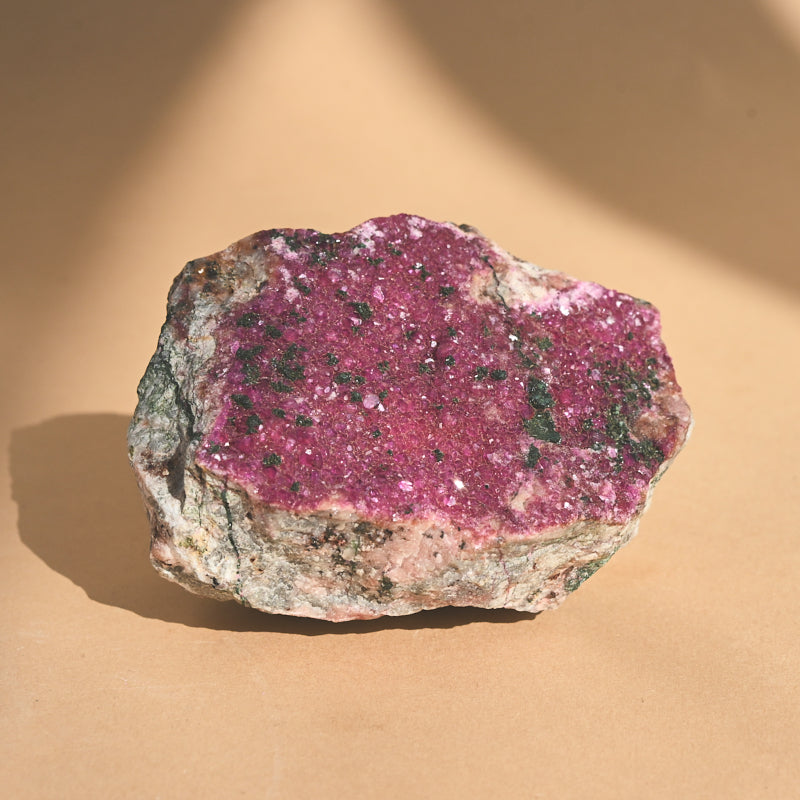
The color range in cobaltoan calcite runs from pale baby pink through vivid magenta to deep rose-red. Color intensity depends on the concentration of cobalt substitution within the structure. The most desirable specimens show a saturated, even, bubblegum-to-magenta pink across the crystal mass, with translucency that allows light to pass through the material and create an internal glow. Specimens with uneven color distribution -- paler in some areas, more saturated in others -- are common and not considered flawed, as this reflects the natural variation in cobalt concentration during crystal growth.
Localities: Democratic Republic of Congo and Morocco
The overwhelming majority of cobaltoan calcite on the collector market comes from the Katanga (Shaba) Province of the Democratic Republic of Congo, particularly from the Kamoto and Musonoi mines. This region is one of the world's most mineralogically extraordinary -- it sits within the Central African Copperbelt, a geological formation containing extraordinary concentrations of copper and cobalt ore. As copper sulfide ore weathers and oxidizes in the upper portions of these deposits, an astonishing diversity of secondary minerals forms, including malachite, azurite, chrysocolla, and cobaltoan calcite.
Congolese cobaltoan calcite typically forms as botryoidal (rounded, grape-cluster) aggregates covering matrix rock, or as radiating crystal groupings with a sparkly druzy surface quality. The characteristic form is a mass of tiny rhombohedral calcite crystals fused together in a botryoidal structure, creating a surface that catches light in multiple directions simultaneously. At its finest, Congolese cobaltoan calcite specimens look almost unreal -- the color and form together produce an effect that resembles confectionery more than geology.
Morocco also produces cobaltoan calcite, primarily from the Bou Azzer mining district in the Anti-Atlas Mountains. Moroccan material sometimes occurs as more distinctly crystallized specimens with visible rhombohedral crystal faces, lending a different aesthetic than the botryoidal Congolese material. Bou Azzer is also famous as a source of various cobalt arsenate minerals (erythrite, roselite, spherocobaltite), and cobaltoan calcite from this locality often occurs in proximity to these related cobalt minerals.
 (Amethyst Geode)
Amethyst Point -- a complementary purple mineral that pairs beautifully with cobaltoan calcite's pink. Shop Now
Understanding Mohs 3: Why This Matters Practically
Calcite sits at Mohs 3 on the hardness scale. To put this in context: a copper penny (Mohs 3.5) will scratch calcite; a fingernail (Mohs ~2.5) barely will not. Steel, glass, most other minerals, and virtually any hard object will scratch calcite easily. This softness has direct practical implications for how you handle and display cobaltoan calcite specimens.
Additionally, calcite has perfect rhombohedral cleavage in three directions. This means that if struck or stressed, the mineral tends to break along these internal planes rather than fracturing randomly. A botryoidal cobaltoan calcite specimen is more resilient than a single crystal (the aggregate structure distributes stress better), but any significant physical impact can still cause cleaving or chipping.
Calcite is also sensitive to acid. Vinegar, lemon juice, many household cleaners, and even perspiration (which is slightly acidic) can etch calcite surfaces over time. This is a significant care consideration.
There's one more vulnerability specific to cobaltoan calcite's color: prolonged UV exposure can potentially affect the cobalt color centers over very long periods. This is less well-documented than the UV sensitivity of, say, amethyst, but keeping high-value cobaltoan calcite specimens in enclosed displays rather than in direct sunlight is prudent general practice for carbonate minerals.
Collector Specimen Status: Why This Mineral Commands Attention
Cobaltoan calcite occupies a particular position in mineral collecting: it's genuinely geologically significant (a specific secondary mineral forming in specific cobalt-rich copper deposit oxidation zones), visually extraordinary (that pink is unlike most other minerals), and accessible enough in smaller sizes that newer collectors can acquire entry-level specimens while museum-quality large pieces remain rare and valuable.
The mineral's photogenic quality has made it extremely popular in the social media era, which has simultaneously increased demand and awareness. This is both good (more people learning about mineralogy through aesthetically engaging specimens) and worth understanding as a market dynamic: popularity has driven prices for premium cobaltoan calcite specimens upward. The finest large Congolese pieces -- bold color, excellent botryoidal form, clean matrix -- now regularly appear at mineral shows at prices that reflect their growing collector desirability.
When assessing quality for purchase:
- Color saturation: Vivid, even pink to magenta is ideal. Pale pink is less desirable; brownish or grayish tones indicate alteration or lower cobalt content.
- Surface integrity: The botryoidal surface should be intact, not flaking, chipped, or showing damaged areas. Surface damage is difficult to repair on these specimens.
- Matrix relationship: Specimens on an interesting matrix -- whether other copper minerals like chrysocolla or malachite, or the dark ore matrix -- often have better display presence than isolated masses.
- Translucency: Better specimens show light passing through thinner sections. Completely opaque material lacks the internal glow that makes the finest pieces exceptional.

Rainbow Moonstone Sphere -- another mineral prized for exceptional optical quality. Shop Now
Display and Care
Cobaltoan calcite deserves and requires thoughtful display. Given its softness and cleavage, the ideal display environment is a glass-fronted cabinet or enclosed case where it cannot be accidentally contacted, where dust accumulation is minimized, and where it's protected from direct sunlight.
Position the specimen on a surface where it cannot roll or tip. Botryoidal masses are often rounded on the underside; a piece of museum putty, a custom acrylic cradle, or a shallow ring of felt can stabilize the specimen without damaging it. Do not use adhesives that contact the mineral surface directly.
Cleaning should be minimal and gentle:
- Use a very soft, clean artist's brush to remove dust
- Never use water unless absolutely necessary -- if you must, use distilled water only, briefly, and dry immediately
- Never use any acid-bearing substance including vinegar, lemon-based cleaners, or commercial surface cleaners
- Handle with clean dry hands or cotton gloves -- never with bare, perspiring hands
- Never use ultrasonic cleaners -- the vibration can cause mechanical damage to the botryoidal surface
For storage, wrap in acid-free tissue and store individually in a padded box. Never store cobaltoan calcite touching other minerals -- the calcite will scratch against harder minerals and will be scratched by them in turn. Individual compartments or wrapped specimens prevent contact damage.
Explore more: Crystal Guides and Collector Resources
Discover Your Human Design
Crystals amplify energy -- but do you know your unique energy type? Human Design reveals how you're wired to make decisions, work, and rest.
Explore Human DesignGet 10% Off Your First Order
Plus early access to new arrivals, collector drops, and crystal guides. Join 15,000+ crystal lovers.
Shop Crystals for This Energy
Free shipping on orders over $150
Related Guides
Discover Your Crystal Match
Select your sign and get personalized crystal recommendations delivered to your inbox.