Crystals.com
Cobaltoan Calcite Crystal
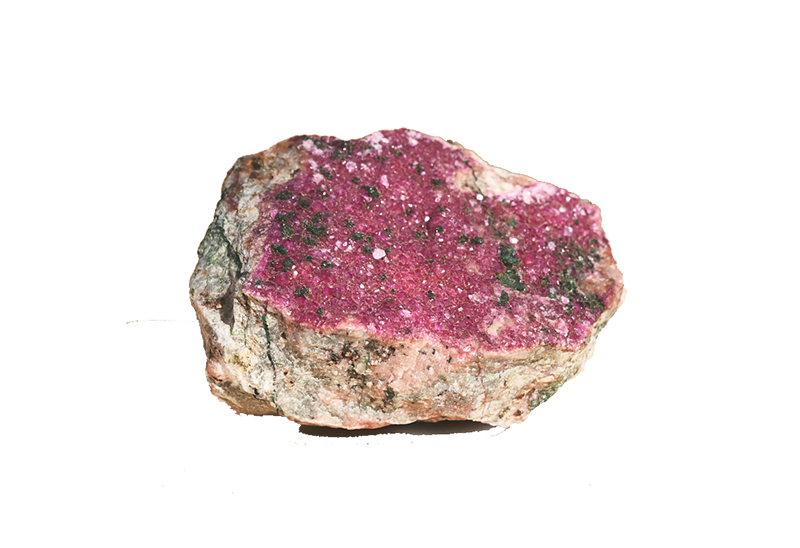
Cobaltoan calcite (also called cobaltocalcite) is a calcium carbonate mineral (CaCO3) with a vivid pink to magenta color caused by cobalt (Co2+) substituting for calcium in the crystal lattice. It is one of the...
- Hand selected
- Photographed in house
- Ships in 1 to 3 business days
Nothing in stock here right now.
See everything
Hand selected
Chosen piece by piece, mostly direct from mines and suppliers I have worked with for years.
Photographed here
I shoot every piece myself, so a one of a kind piece is the exact piece you receive.
Getting it to you
Packed by hand here and out in 1 to 3 business days.
Questions
Is cobalto calcite fluorescent
Yes, Cobalto Calcite, also known as Cobaltian Calcite, is fluorescent and exhibits a vibrant pink to red fluorescence when exposed to ultraviolet (UV) light.
Where is cobalto calcite found
Cobalto Calcite, or Cobaltian Calcite, is primarily found in regions with significant cobalt mineralization, such as the Democratic Republic of Congo, Morocco, and Canada.
Cobaltoan calcite meaning
Cobaltoan Calcite, with its exquisite pink to red hues, embodies meanings of love, compassion, and emotional healing. This gemstone is celebrated for its heart-opening qualities and is believed to enhance one's capacity to give and receive love, making it a cherished addition to crystal collections.
Cobalt calcite properties
Cobalt Calcite, also known as Cobaltoan Calcite, is treasured for its gentle, heart-centered properties that promote love, compassion, and emotional well-being. This crystal is believed to soothe the heart, enhance self-love, and encourage forgiveness and emotional release.
More about this collection
Cobaltoan Calcite Crystal
Cobaltoan calcite (also called cobaltocalcite) is a calcium carbonate mineral (CaCO3) with a vivid pink to magenta color caused by cobalt (Co2+) substituting for calcium in the crystal lattice. It is one of the most intensely colored calcite varieties — the hot pink hue is natural and unfading, unlike dyed stones. Mohs hardness is 3. Primary sources are the copper-cobalt mining districts of the Democratic Republic of Congo and the cobalt deposits of Bou Azzer, Morocco.
Cobaltoan calcite typically occurs as druzy crusts, botryoidal formations, and small prismatic crystals on matrix. Larger, well-crystallized specimens are genuinely rare and command high collector premiums. The mineral is a true collector's stone — too soft for jewelry or heavy handling, but stunningly beautiful behind glass or on a display shelf. Its neon-pink color intensity is unmatched by any other common mineral.
Browse other pink minerals in our crystals for love collection, or explore rhodonite and rose quartz for more durable pink stones. For other rare collector specimens, see our Collector's Edition. Free shipping on all U.S. orders over $150.
Frequently Asked Questions
What is cobaltoan calcite?
Cobaltoan calcite is a calcite variety (CaCO3, Mohs 3) with cobalt ions substituting for calcium in the crystal structure, producing an intense pink to magenta color. It is sometimes called cobaltocalcite. The color is natural and permanent — not dyed or treated.
Where does cobaltoan calcite come from?
The primary sources are the Democratic Republic of Congo (copper-cobalt mining region of Katanga Province) and the Bou Azzer mining district of Morocco. Both areas are rich in cobalt, which is the source of the pink pigmentation. Congolese specimens tend to be druzy crusts; Moroccan specimens sometimes form better-developed crystals.
Is cobaltoan calcite fragile?
Yes. At Mohs 3, cobaltoan calcite is soft and can chip easily. It also has perfect rhombohedral cleavage, meaning it can break cleanly along flat planes. Display behind glass or on a stable shelf. Handle gently and store separately from harder minerals. It is a display-only specimen — not suitable for jewelry or heavy handling.
How do I care for cobaltoan calcite?
Dust carefully with a soft dry brush — never use water or liquid cleaners on druzy specimens, as the tiny crystals can trap moisture. Avoid acids (calcite reacts with acid). Store in a display case or padded box. The color is stable and will not fade in light, which is unusual for pink minerals.
Is the pink color in cobaltoan calcite natural?
Yes. The pink-to-magenta color is caused by cobalt ions (Co2+) incorporated into the calcite crystal structure during formation. It is a natural chromophore — the same element that gives cobalt blue glass its color, but producing pink when substituted into calcium carbonate. The color is permanent and does not require treatment.
Let customers speak for us
I love shopping here! Everything I’ve purchased has been great quality, and the customer service is top notch!
I am very happy with the white sage bundle! It is a very good quality and burns really nicely!

I love this bracelet! I love the adjustable cord, and the stones are really, really pretty! I highly recommen

5 stars
Great

Great

A beautiful piece..the photo's did not do it justice. The delivery was timely and arrived in perfect condition. Thank you..this specimen is a must for any collector.

Crystals Individually wrapped

Shipped with care, excellent packaging. Great products

Very nice, one of a kind sphere. The piece matched the quality in the photos. Packaging was above average, with no damage during shipping. Tracking was easy. Everything was a positive experience.

Was expecting a bright shade of yellow, but the amber shade is just as beautiful.

Loved how it glimmers

Loved the packaging
Each Crystal came out beautifully
Will definitely find myself a frequent customer ☺️

Perfect. I love my crystals!

Beautiful! Exactly what I was hoping for/expecting!


