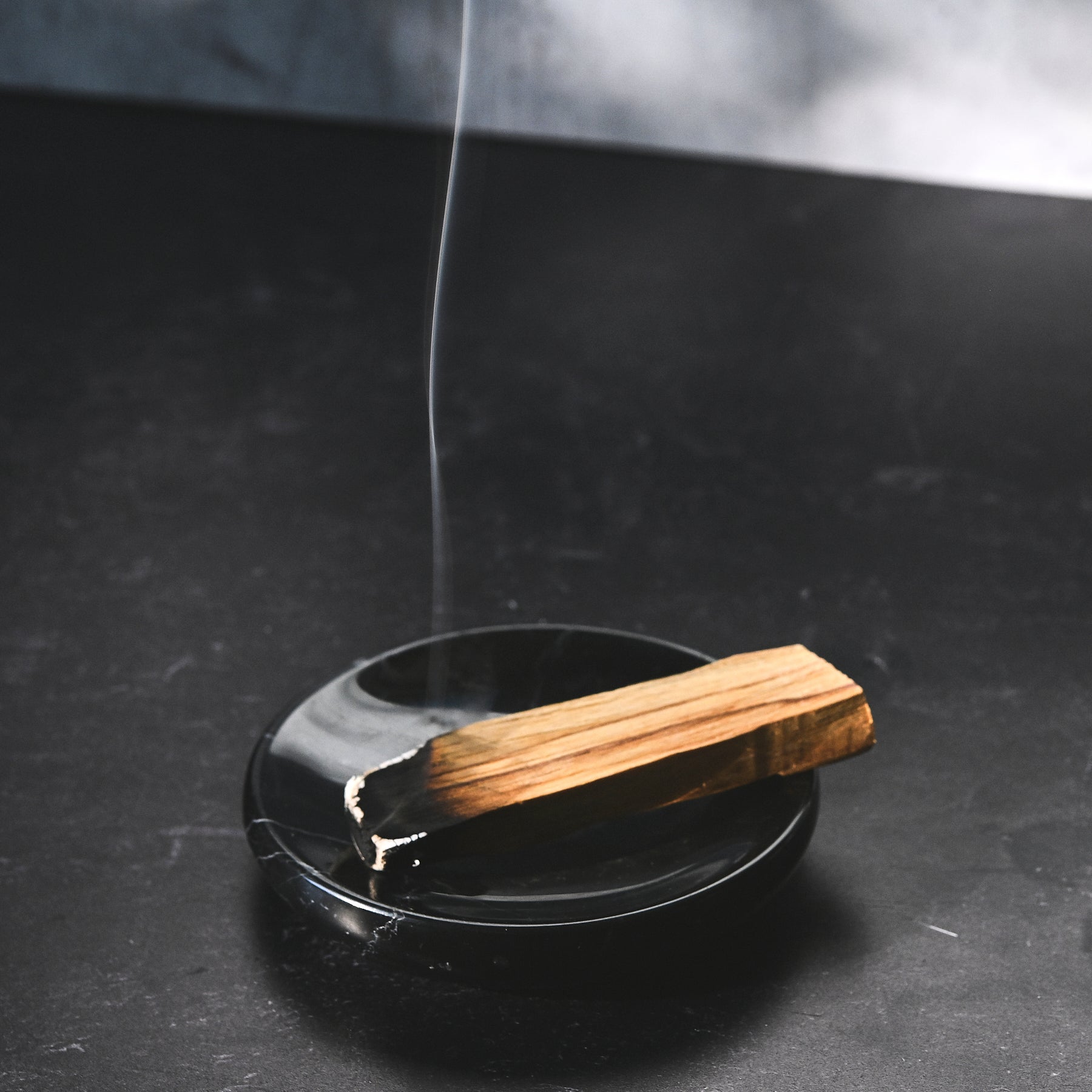
Your crystals absorb energy from every environment they pass through, from the mine to the shipping box to your hands. Regular cleansing and intentional charging keeps them performing at their best, while proper storage protects their physical integrity for years to come.
This guide covers every method worth knowing, which stones need special handling, and how to build a care routine that actually works. Whether you just brought home your first crystal or you have been collecting for decades, consider this your definitive reference.

Selenite Moon Bowl — Shop Selenite
Why Crystal Care Matters
Crystals are minerals formed under extreme geological conditions over thousands to millions of years. Each one has a specific hardness, chemical composition, and structural sensitivity that determines how it should be handled. A selenite plate, for example, is a hydrated calcium sulfate that will dissolve in water. An amethyst cluster is iron-bearing quartz that will lose its purple color under prolonged UV exposure.
Understanding care is not optional. It is the difference between a crystal that lasts a lifetime and one that chips, fades, or crumbles within months.
Beyond the physical, many collectors find that regularly cleansing and charging their crystals creates a grounding ritual and a meaningful connection to their collection. Think of it the same way you would care for any natural object you value.
How to Cleanse Your Crystals
Cleansing removes accumulated dust, oils, and environmental residue from your crystals. There is no single "right" way to do it. The best method depends on your stone's hardness and chemical makeup.
1. Running Water
Hold your crystal under cool running water for 30 to 60 seconds, gently turning it so all surfaces are rinsed. Pat dry with a soft cloth.
Safety first: Not all crystals are water-safe. Stones below 5 on the Mohs hardness scale can dissolve, crack, or release toxic compounds in water. Read our full crystal water safety guide before submerging anything.
Best for: clear quartz, amethyst, rose quartz, smoky quartz, citrine, obsidian, and other quartz-family stones (Mohs 6-7).
Avoid for: selenite, halite, malachite, pyrite, fluorite, lepidolite, and any stone that contains copper, iron sulfide, or is below Mohs 5.
2. Moonlight
Place your crystals on a windowsill, balcony, or outdoor surface where they will receive moonlight overnight. Bring them in by morning to avoid sun exposure. This method works for every crystal regardless of hardness or composition, making it the most universally safe option.
Full moon nights are the most popular time, but any moon phase works. The point is the overnight rest in natural ambient light. If you collect on a schedule, a monthly full moon cleanse is a simple rhythm to maintain.
Best for: Everything. This is the safest universal method.
3. Sage, Palo Santo, or Smoke Cleansing
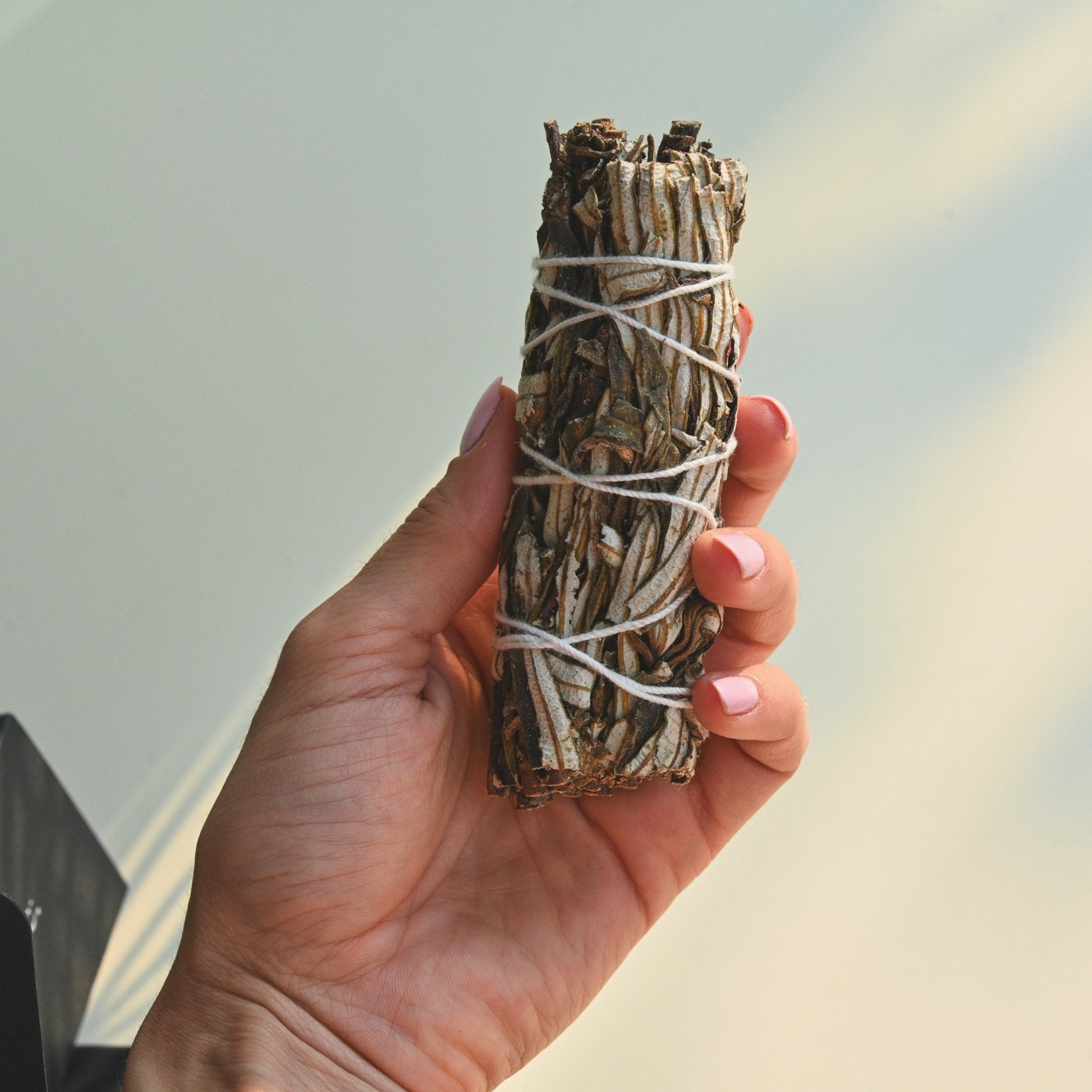
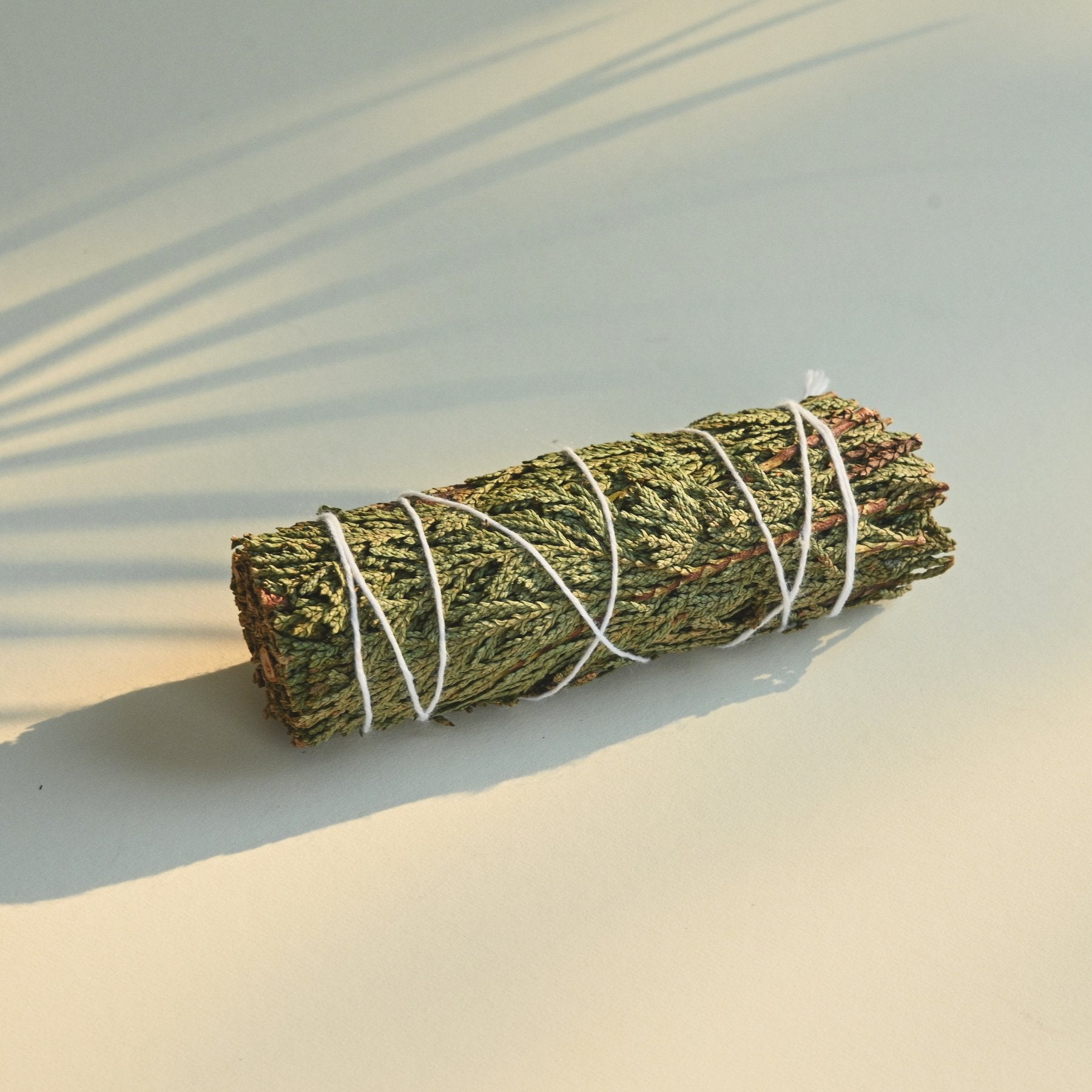
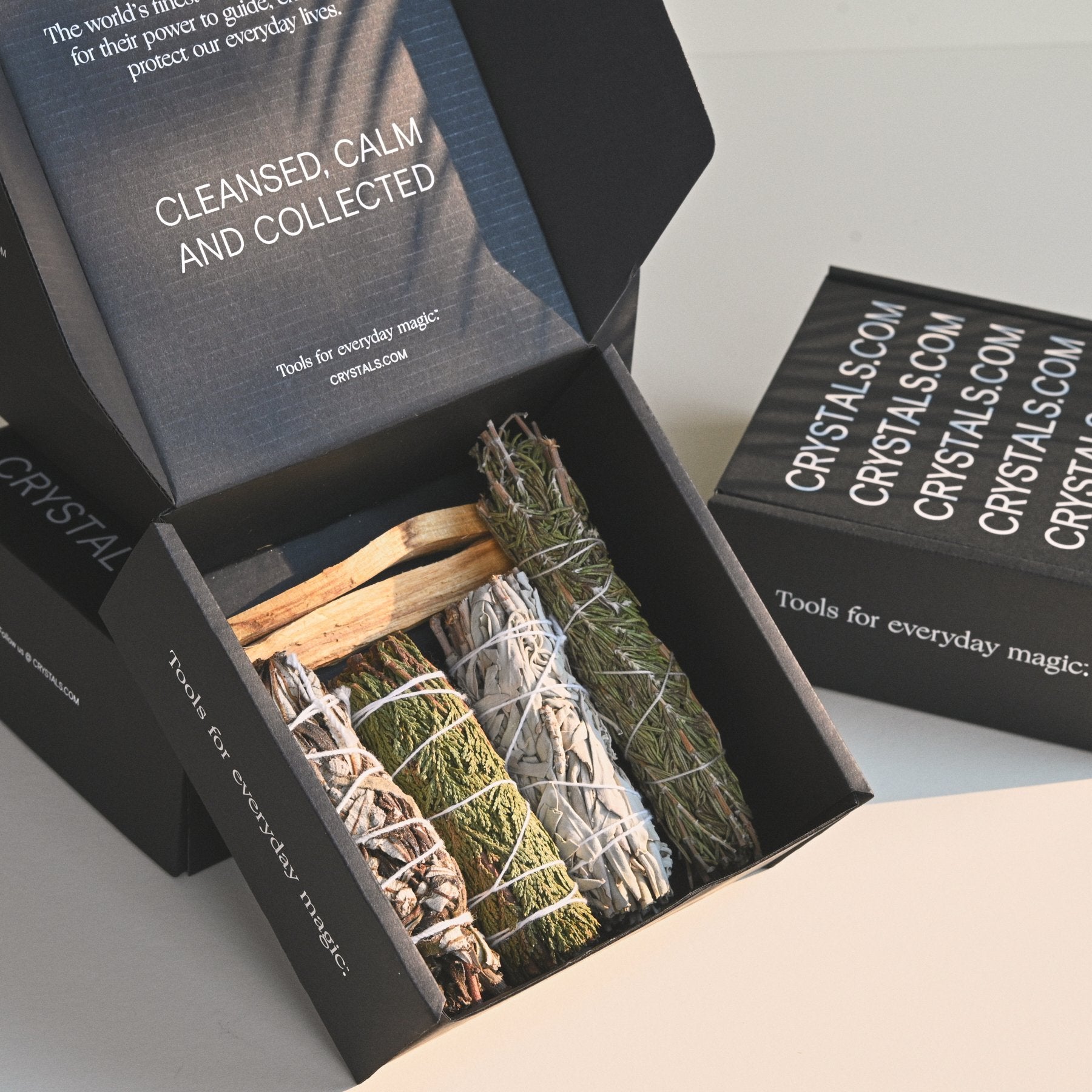
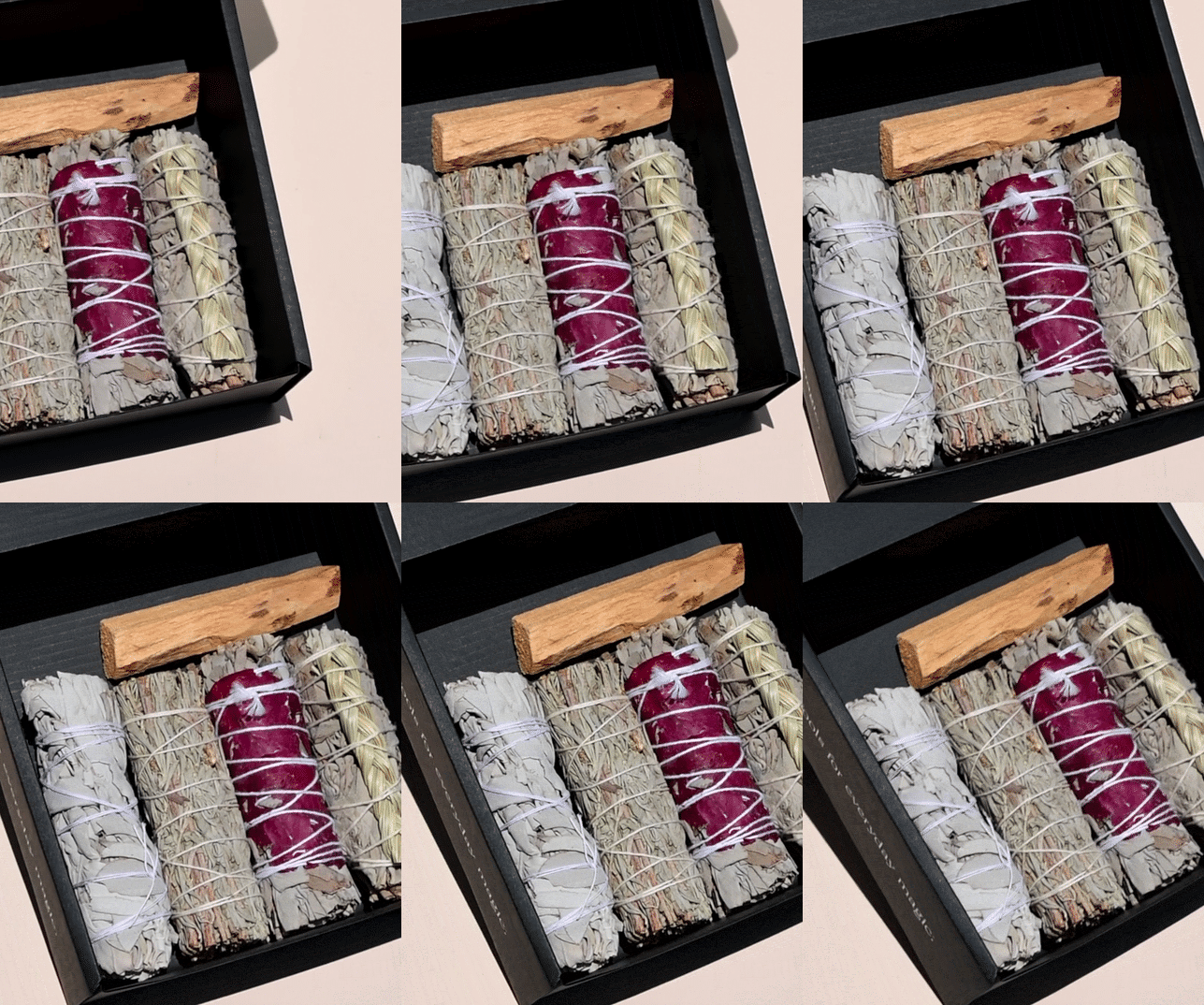
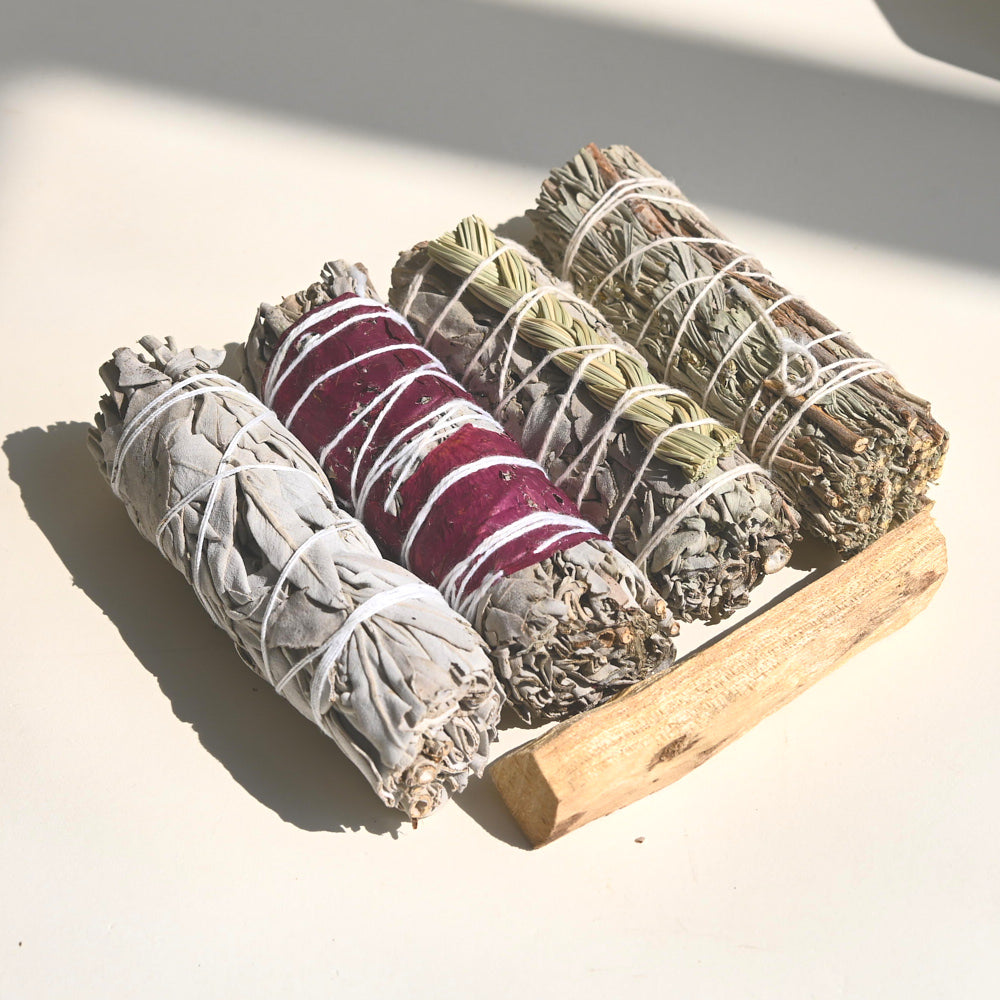
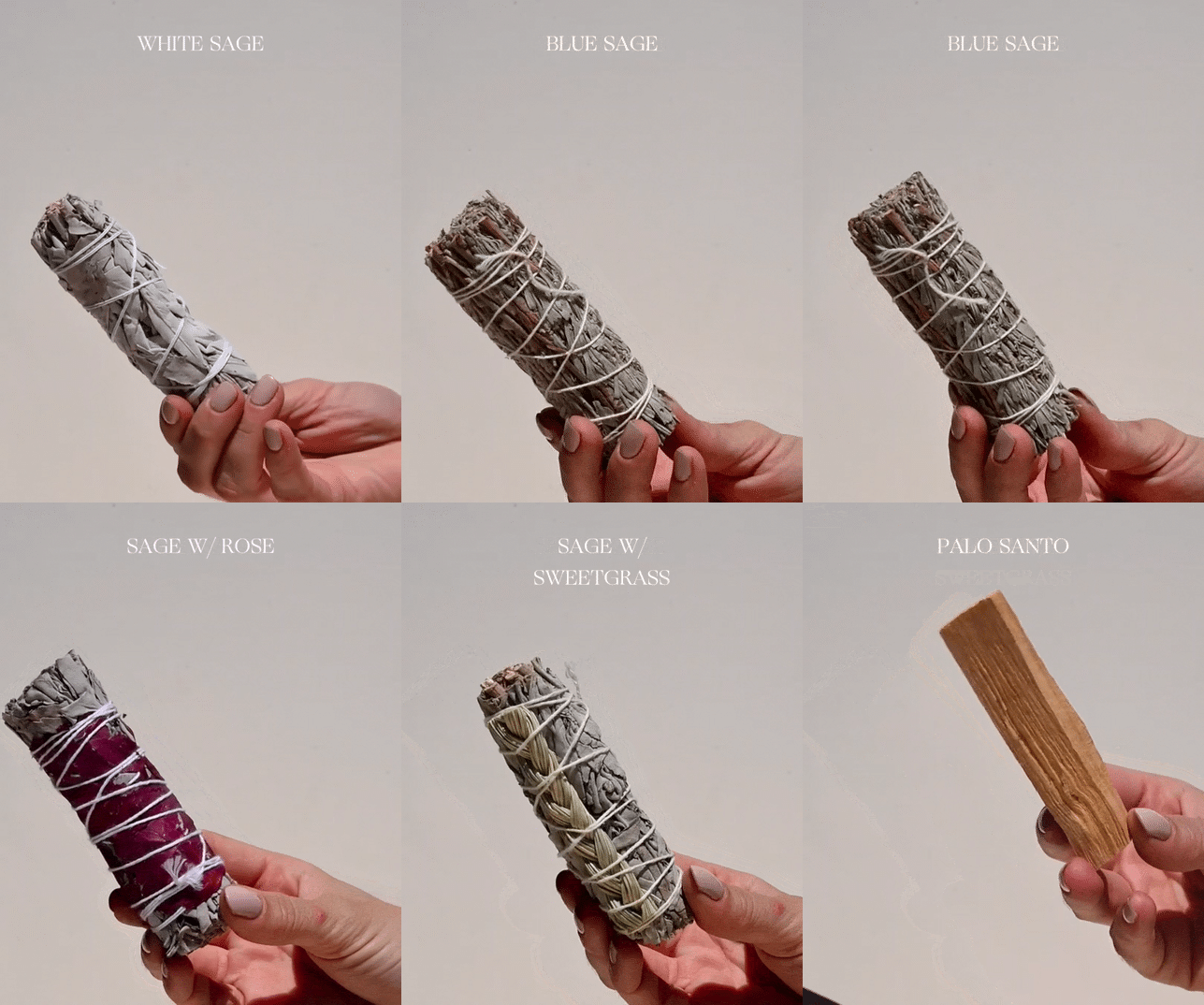
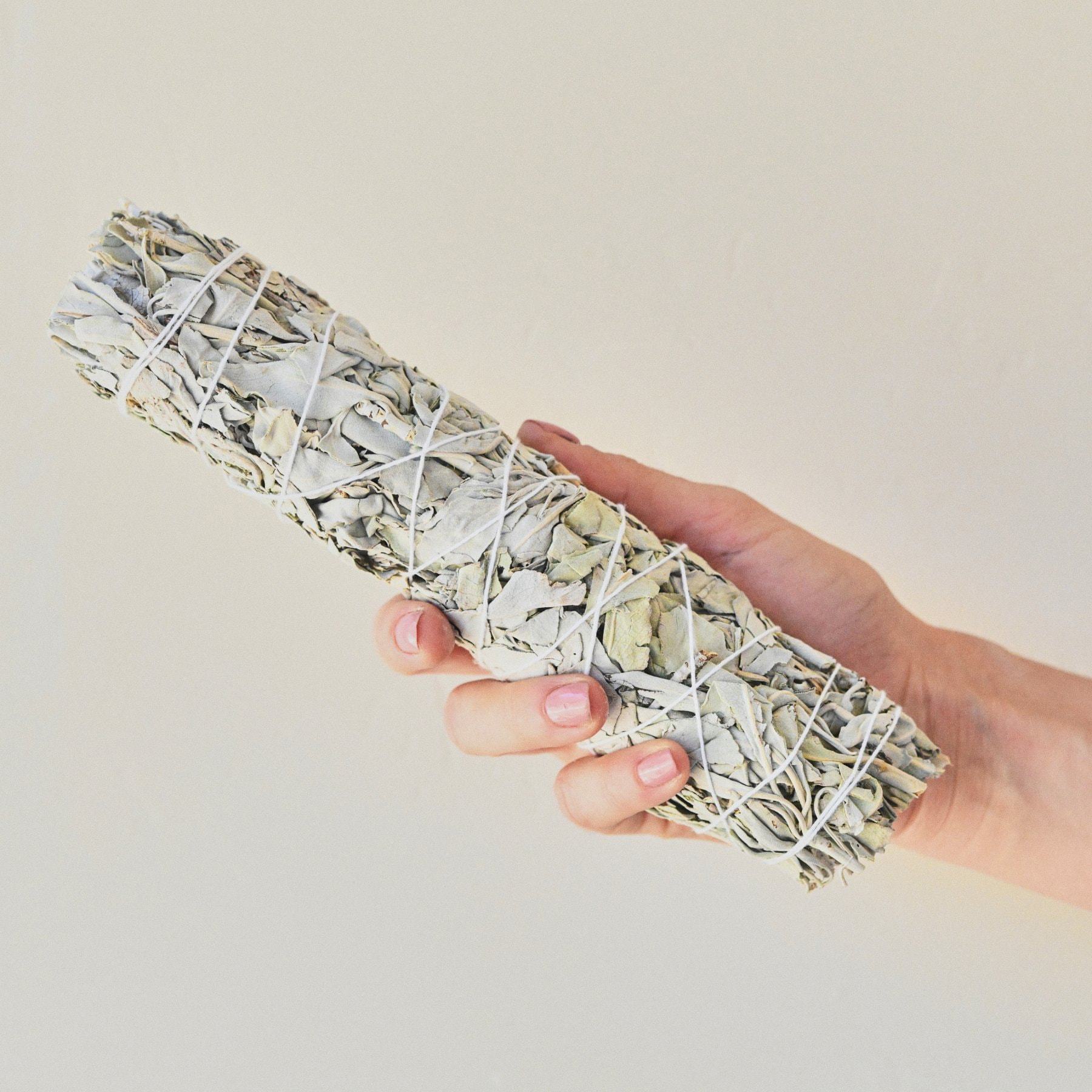
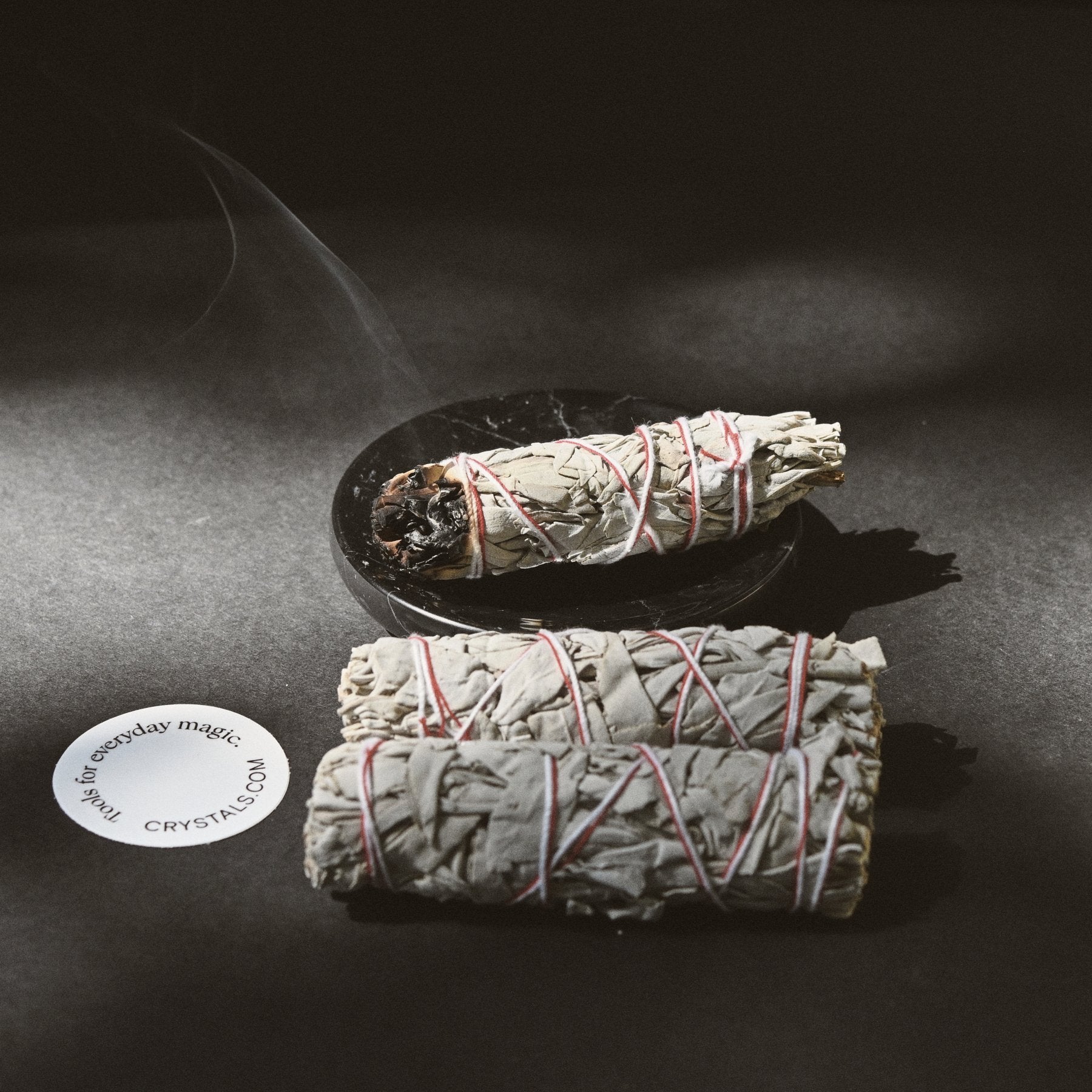
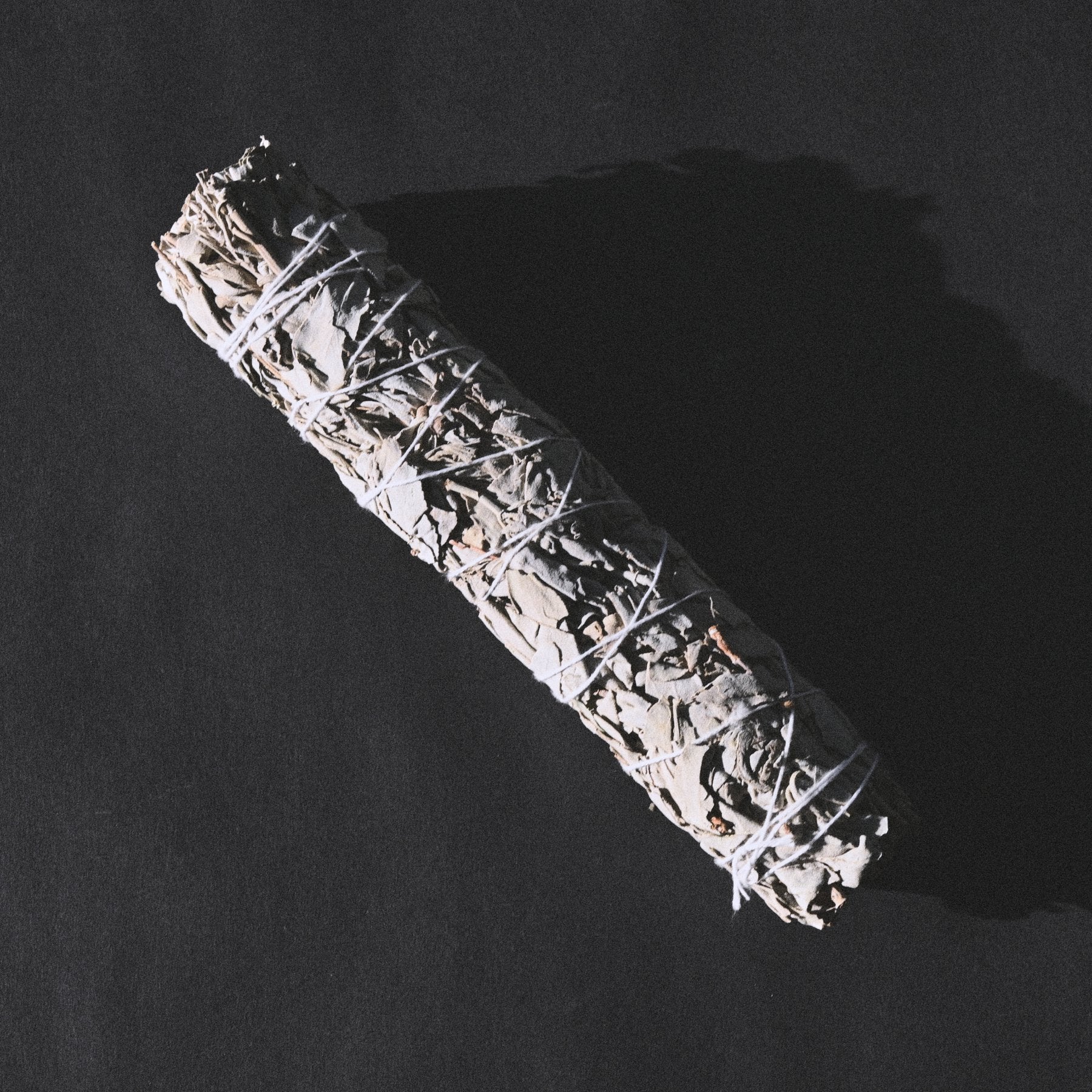
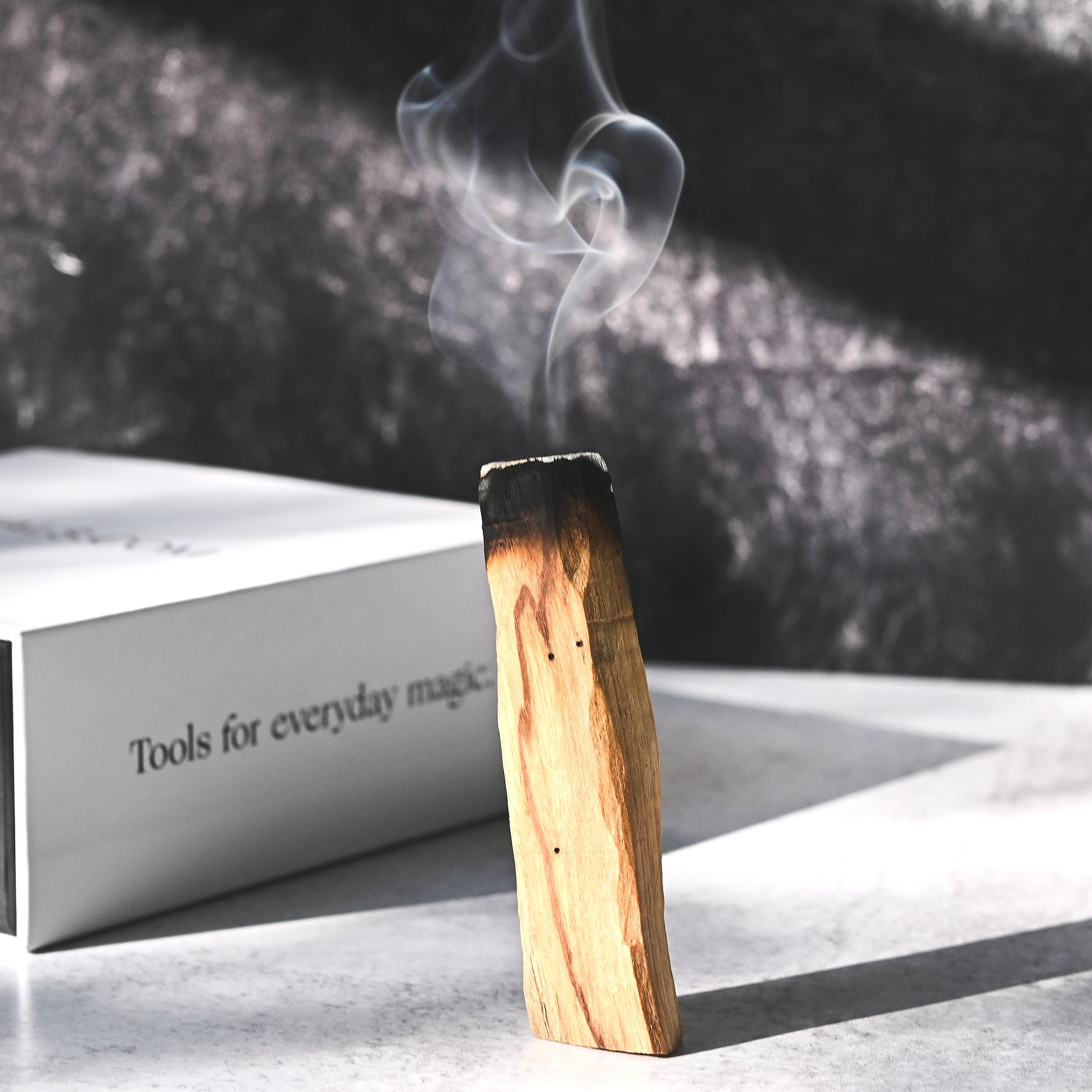
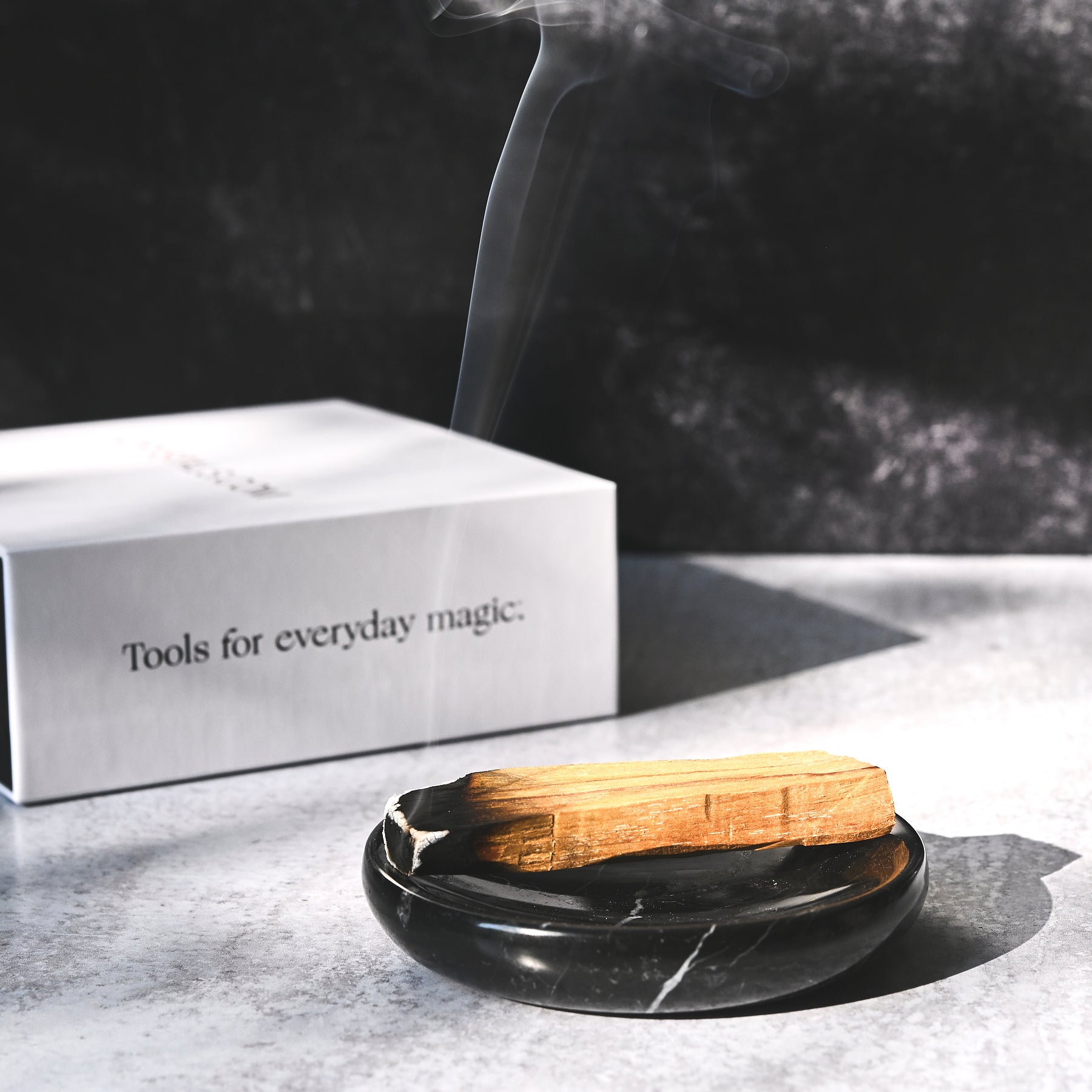
Light a sage bundle or palo santo stick and allow the smoke to drift over and around your crystals for 30 to 60 seconds. You can hold individual pieces in the smoke or set up a group and let the smoke waft through.
Open a window during and after to ventilate. If you are sensitive to smoke, this method may not suit your space.
Best for: All crystals. Especially convenient when you want to cleanse multiple pieces at once without handling each one individually.

Cleansed Kit — Palo Santo, Sage & Selenite — Shop Cleanse Kits
4. Sound
Sound vibrations from singing bowls, tuning forks, bells, or even a simple hand clap can move stagnant air around your crystals. Place your stones nearby and play the instrument for two to three minutes, allowing the resonance to wash over them.
This method is contactless and risk-free for every mineral type. It also covers an entire room of crystals at once, which makes it ideal for large collections.
Best for: Large collections, fragile specimens, and display shelves you do not want to disassemble.
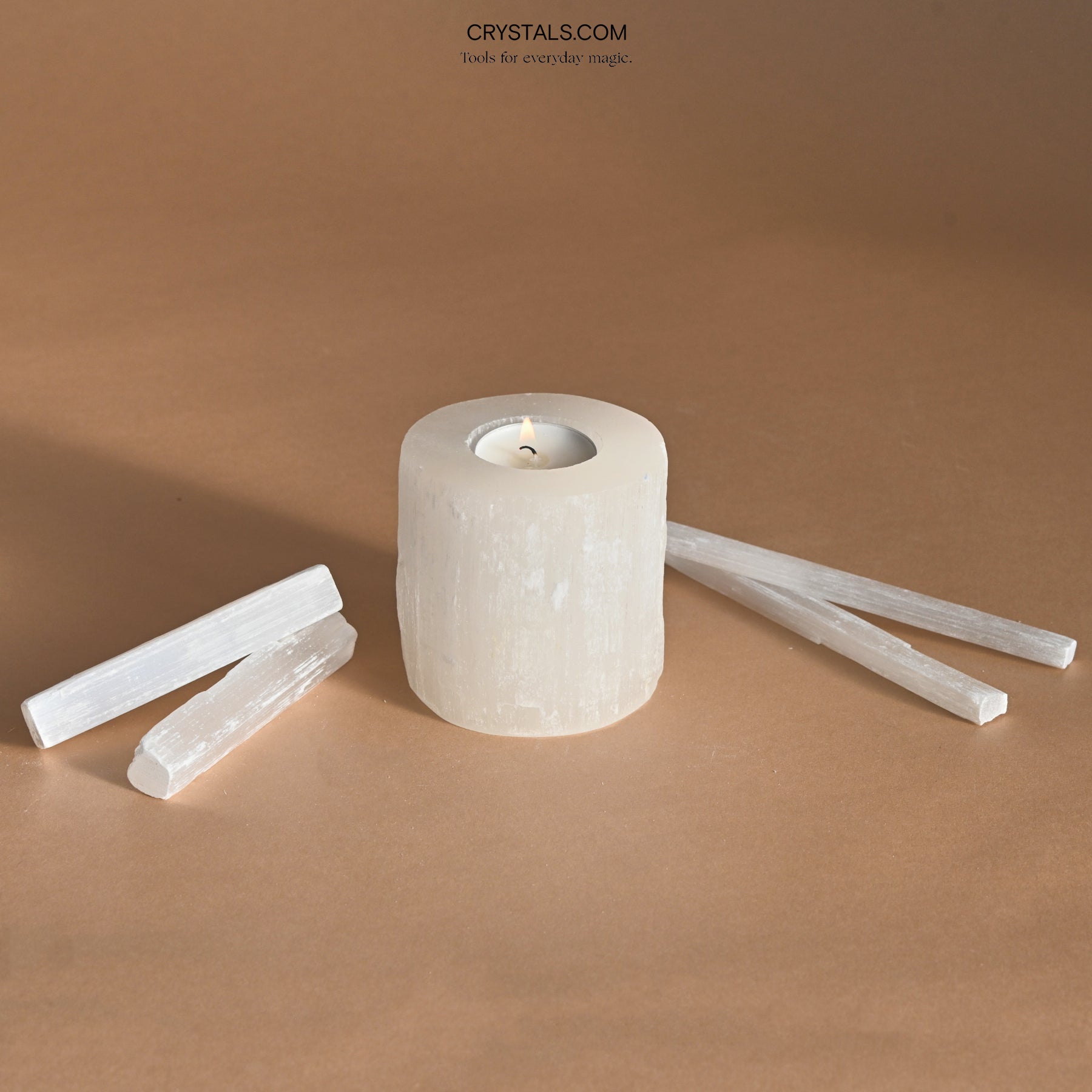
5. Selenite Plate or Bowl
Place your crystals directly on a selenite charging plate or inside a selenite bowl for four or more hours. Selenite is one of the few minerals traditionally considered "self-cleansing" because of its fibrous crystalline structure that does not retain surface oils or debris the way porous stones can.
This is the most hands-off approach. Many collectors keep a selenite plate on their nightstand or desk and rotate pieces onto it.
Pro tip: Selenite itself should never be placed in water. Wipe it with a dry or barely damp cloth if needed.
Best for: Daily rotation of jewelry, tumbled stones, and small specimens.
6. Earth Burial
Bury your crystal in clean soil (a garden bed or a pot of fresh earth) for 24 hours or longer. Rinse and dry it thoroughly when you retrieve it.
This method is most often used when a crystal has been through a particularly intense period of use or when you simply want a hard reset. It is the most time-intensive method, but some collectors swear by it for grounding stones like smoky quartz and obsidian.
Note: Mark the burial spot clearly. Use a pot of soil indoors if you are worried about losing the stone or exposing it to moisture and insects.
Best for: Grounding stones, larger pieces, and periodic deep cleanses.
7. Salt
Dry sea salt can be used as a cleansing bed. Fill a bowl with sea salt and nestle your crystals into it for several hours. Discard the salt afterward.
Warning: Salt is abrasive and hygroscopic (it draws moisture). It will scratch soft stones, damage polished surfaces below Mohs 6, and can corrode any crystal with metallic inclusions. Never use salt on malachite, pyrite, hematite, selenite, opal, or fluorite. If in doubt, skip salt and use moonlight or sound instead.
Best for: Hard, non-metallic stones like quartz family members. Use with caution.
Shop Crystal Care Essentials
How to Charge Your Crystals
Charging is about restoring or amplifying a crystal's natural properties after cleansing. Think of cleansing as clearing and charging as filling back up. Here are the most effective methods.
1. Sunlight
Place your crystals in direct sunlight for 15 to 30 minutes. Shorter is better. The UV and infrared energy in sunlight is intense, and while it works well for brief periods, extended exposure causes real damage to certain minerals.
Sunlight warnings: Amethyst fades to pale gray or yellow. Rose quartz loses its pink color. Citrine (especially heat-treated) can shift color. Fluorite, kunzite, and aquamarine are also UV-sensitive. If your stone is colored by trace elements (iron, manganese, titanium), limit sun time to under 30 minutes or skip this method entirely.
Best for: Clear quartz, obsidian, black tourmaline, carnelian, and other dark or UV-stable stones. Brief morning light (before 10am) is gentlest.
2. Moonlight (Especially Full Moon)
Moonlight charging is gentle enough for every crystal, including UV-sensitive and water-sensitive stones. Place them outside or on a windowsill from sunset through sunrise.
Full moon nights carry the most ambient light, and many collectors plan their charging routine around the lunar cycle. But any clear night works. The consistency of the practice matters more than the phase.
Best for: Every crystal. The universal safe option for both cleansing and charging.
3. Crystal Clusters and Geodes
Place smaller stones on top of or inside a larger amethyst geode or clear quartz cluster for several hours. The base crystal's natural lattice structure creates a stable environment for the pieces resting on it.
This is the method most long-term collectors rely on. A large amethyst geode or quartz cluster becomes a permanent charging station. It also doubles as a beautiful display piece.

Amethyst Cluster — Shop Amethyst
Best for: Tumbled stones, jewelry, and small specimens. Especially useful if you rotate crystals frequently.
4. Intention Setting
Hold your crystal in both hands, close your eyes, and focus on a clear intention for several minutes. This practice is entirely personal and does not depend on any external element. It works for any stone at any time.
Some collectors speak their intention aloud. Others visualize. There is no wrong approach. What matters is taking the time to be deliberate about why you are working with a particular stone.
Best for: All crystals. Pairs well with any other charging method.
5. Earth and Soil
Burying a crystal in soil for 24 hours serves as both a cleanse and a charge. The minerals in natural earth create a grounding environment. Retrieve, rinse (if the stone is water-safe), and dry thoroughly.
Best for: Grounding stones like smoky quartz, obsidian, black tourmaline, and hematite.
6. Pairing with Other Crystals
Selenite and clear quartz are the two most common crystals used to charge others. Selenite plates provide a flat surface ideal for resting jewelry and small pieces. Clear quartz points can be arranged in a grid pattern around a stone you want to charge.
Best for: Crystal bracelets, rings, and other jewelry you wear daily.
How to Store Your Crystals
Proper storage is the most overlooked part of crystal care, and the most important for preserving your collection's physical condition over time.
Separate Soft from Hard
The Mohs scale of hardness is your guide here. A crystal with a higher Mohs number will scratch one with a lower number. If you toss a quartz point (Mohs 7) into a bowl with fluorite (Mohs 4), the fluorite will get scratched.
Rules of thumb:
- Store quartz-family stones (Mohs 6-7) together.
- Keep soft stones like selenite (Mohs 2), malachite (Mohs 3.5-4), and fluorite (Mohs 4) separate from everything harder.
- Wrap individual specimens in soft cloth if they share a drawer or box.
Velvet and Silk Pouches
Individual fabric pouches prevent scratching during storage and travel. Velvet is ideal for most crystals. Silk works for smaller, delicate pieces. Avoid cotton or rough fabrics that can catch on natural crystal terminations.
Display Considerations
If you display crystals on shelves, consider their sun exposure. South-facing and west-facing windows deliver the most UV light. Move UV-sensitive stones like amethyst, rose quartz, and fluorite away from direct window light, or keep them behind UV-filtering glass.
Dust regularly with a soft brush or microfiber cloth. Compressed air (like the kind used for keyboards) works well for intricate clusters.
Travel Tips
- Wrap each crystal individually in fabric or bubble wrap.
- Place wrapped crystals in a hard-sided case rather than a soft bag.
- Pack heavier stones at the bottom with lighter, fragile pieces on top.
- If flying, keep valuable specimens in carry-on luggage. Checked bags get thrown around.
- For crystal bracelets, a small zippered pouch prevents bead-on-bead friction.
Crystal Care by Type: Quick Reference
Quartz Family
| Crystal | Mohs | Water Safe | Sun Safe | Best Cleanse | Best Charge |
|---|---|---|---|---|---|
| Clear Quartz | 7 | Yes | Yes | Water, moonlight, sound | Sunlight, clusters |
| Amethyst | 7 | Yes | No (fades) | Water, moonlight, smoke | Moonlight, clusters |
| Rose Quartz | 7 | Yes | No (fades) | Water, moonlight, selenite | Moonlight, intention |
| Citrine | 7 | Yes | Limited | Water, moonlight, smoke | Brief morning sun, clusters |
| Smoky Quartz | 7 | Yes | Limited | Water, earth, sound | Moonlight, earth burial |

Rose Quartz Palm Stone — Shop Rose Quartz
Soft Stones (Mohs 2-5)
| Crystal | Mohs | Water Safe | Sun Safe | Best Cleanse | Best Charge |
|---|---|---|---|---|---|
| Selenite | 2 | No (dissolves) | Yes | Smoke, sound | Moonlight |
| Malachite | 3.5-4 | No (toxic copper) | No (fades) | Smoke, selenite plate | Moonlight, quartz cluster |
| Fluorite | 4 | Brief rinse only | No (fades) | Smoke, sound, selenite | Moonlight, clear quartz |
| Lepidolite | 2.5-3 | No (flakes) | No (fades) | Smoke, selenite plate | Moonlight |
Metal-Bearing Stones
| Crystal | Mohs | Water Safe | Sun Safe | Best Cleanse | Best Charge |
|---|---|---|---|---|---|
| Pyrite | 6-6.5 | No (iron sulfide oxidizes) | Yes | Smoke, sound, dry brush | Sunlight (brief), clusters |
| Hematite | 5.5-6.5 | No (rusts) | Yes | Smoke, sound | Earth, sunlight (brief) |

Pyrite Sphere — Shop Pyrite
Water-Safe vs. Water-Unsafe Quick List
Water-Safe
- Clear Quartz
- Amethyst
- Rose Quartz
- Citrine
- Smoky Quartz
- Obsidian
- Agate
- Jasper
- Tiger's Eye
- Carnelian
For the full breakdown, including stones that are safe for brief rinses but not soaking, see our detailed guide to crystals and water.
Building a Crystal Care Routine
You do not need to cleanse and charge every crystal every week. Here is a practical framework:
- Crystals you wear daily (bracelets, pendants): Cleanse weekly. A selenite plate on your nightstand makes this effortless. Just set them down before bed.
- Desk and workspace crystals: Cleanse monthly, or whenever you feel drawn to it.
- Display collection: Dust monthly. Full cleanse quarterly or during the full moon.
- New crystals: Always cleanse when they arrive. They have been through mining, cutting, polishing, packaging, and shipping before they reach you.
Frequently Asked Questions
How often should I cleanse my crystals?
It depends on how much you use them. Crystals you carry or wear daily benefit from weekly cleansing. Display pieces that sit undisturbed only need cleansing every one to three months. New crystals should always be cleansed when they first arrive.
Can I cleanse all my crystals at once?
Yes. Smoke cleansing, sound, and moonlight all work for group cleansing. Just avoid methods like water and salt for stones that are sensitive to those elements. Check the reference tables above before batching.
Do crystals need to be in direct moonlight, or does indirect light work?
Indirect moonlight works fine. A windowsill catches enough ambient light. Your crystals do not need to be sitting under a perfectly clear sky to benefit from an overnight moonlight session.
Can sunlight damage my crystals?
Yes. Prolonged UV exposure fades amethyst, rose quartz, fluorite, and other stones colored by trace minerals. Limit direct sun to 30 minutes for these varieties, or skip sunlight entirely and use moonlight instead.
Is it safe to put crystals in water?
Some crystals are perfectly safe in water, while others dissolve, crack, or release harmful compounds. The general rule: if a crystal is below Mohs 5 in hardness, keep it dry. For the complete safety list, read our crystals and water guide.
How do I know when my crystal needs cleansing?
Visually, if a crystal looks dull, has surface oils, or has collected dust, it is time. Beyond the physical, many collectors develop an intuitive sense. When a crystal feels "heavy" or you have been through a stressful period with it nearby, cleansing is a good reset.
Can I use tap water or does it need to be filtered?
Regular tap water is fine for water-safe crystals. Spring water, filtered water, and distilled water all work equally well. The important factor is whether the crystal itself can handle water, not what type of water you use.
What is the best way to store expensive or rare specimens?
Individually wrap in acid-free tissue or soft microfiber. Store in a hard-sided box with dividers. Keep away from direct sunlight and temperature extremes. For museum-grade pieces, consider a display case with UV-filtering glass and stable humidity.
Free shipping on orders over $150. Questions about crystal care? Email us anytime.