Shop Crystals for This Energy
Free shipping on orders over $150
Some crystals announce themselves. Fluorite does something more unsettling — it invites you closer, holds your attention past the point of reason, and refuses to look the same twice. A single fluorite specimen can contain every color in a painter's vocabulary: deep violet at one corner, seafoam green through the center, a wash of amber at the base, threaded through with translucent white. This is not dye or coating. It is geology doing something it does almost nowhere else: color zoning, the slow crystallographic record of shifting mineral chemistry over thousands of years. To own a fine fluorite is to own a frozen moment of the earth thinking out loud.

What Is Fluorite? The Mineral Behind the Color
Fluorite is calcium fluoride (CaF₂), a halide mineral that forms in hydrothermal veins, often alongside quartz, calcite, barite, and metallic ores. It crystallizes in the isometric system, producing the perfect cubes and octahedra that make it one of mineralogy's most geometrically satisfying specimens. Fluorite sits at a hardness of 4 on the Mohs scale — softer than quartz, harder than calcite — which means it polishes beautifully but requires thoughtful handling.
The name itself is origin: fluorite gave us the word fluorescence. Under shortwave UV light, many fluorite specimens glow with an otherworldly blue-violet luminescence — a property first formally described by the physicist George Gabriel Stokes in 1852, who named the phenomenon after the mineral. It also gave its name to the element fluorine, isolated from fluorite in 1886. Few minerals have shaped science's vocabulary as directly.
Fluorite is found on every continent. Significant deposits come from China (which dominates global production), Mexico, South Africa, and historically from Derbyshire in England — where the famous "Blue John" fluorite, a banded purple-and-yellow variety, has been mined and carved since Roman times. For collectors and interior designers, the finest decorative specimens come from Chinese mines, which produce the extraordinary rainbow-banded material that has made fluorite a contemporary design staple.
If you're just beginning to explore the world of minerals, our Crystal Index 101 is the place to start — a comprehensive encyclopedia covering the properties, origins, and uses of the most significant stones in the collector's canon.
The Science of Color Zoning: Why Fluorite Is Never the Same Twice
Color zoning is fluorite's defining characteristic and its greatest gift to collectors. Unlike the uniform coloration of amethyst or citrine, fluorite captures the full history of its formation in visible, layered bands. Each color shift represents a change in the mineral chemistry of the hydrothermal fluid circulating through the host rock — different trace elements, different temperatures, different pressures, all recorded in the crystal's structure as it grew.
The colors themselves are produced by a combination of impurities and radiation damage to the crystal lattice. Purple and violet fluorite — the most common and beloved — gets its color from exposure to natural radiation affecting the calcium fluoride structure. Green fluorite is colored by trace amounts of yttrium or other rare earth elements. Blue fluorite, among the rarest, results from specific lattice defects. Yellow and amber shades reflect iron trace impurities. In a single rainbow fluorite specimen, all of these forces played out sequentially, their records stacked like geological strata in miniature.
For the collector, this means that no two fluorite specimens are ever truly identical. The same Chinese mine, the same pocket, the same mineral suite — and still the color distribution will differ. This irreducible individuality is what makes fluorite compelling not just as a decorative object but as a scientific artifact. You are looking at the earth's chemistry, annotated in color.

Rainbow Fluorite vs. Single-Color Fluorite: Reading a Specimen
The market offers two broad categories of fluorite, and understanding the difference helps you buy with intention.
Rainbow Fluorite
Rainbow fluorite — the multicolored, banded variety that dominates decorative and collector markets — is prized precisely for its color complexity. A strong rainbow fluorite specimen will show clear, distinct zones of color that are visible through the crystal's natural translucency. Look for contrast: specimens where purple, green, and clear zones sit in clean, readable bands are generally more desirable than pieces where the colors muddy together into an indistinct grey-green. The translucency matters too — the more light passes through, the more the color banding comes alive.
Single-Color Fluorite
Single-color fluorite has its own prestige. Deep purple fluorite can rival amethyst in intensity. Pure green fluorite has a cool, jade-like quality that works beautifully in modern interiors. Blue fluorite, rare and quietly spectacular, is primarily a collector's stone. The English Blue John variety — tightly banded purple and amber, found only in Derbyshire — is the most culturally significant regional fluorite, used for centuries in carved ornamental ware and still mined in tiny quantities today.
What to Look For When Buying
In any fluorite specimen, examine the following: clarity and depth of color, quality of any natural faces or crystal form, size and overall mass, and the presence of associated minerals. Fluorite with matrix — still attached to its host rock, often alongside calcite, pyrite, or quartz — is generally more valuable and scientifically interesting than trimmed, polished pieces. That said, polished towers and slabs have their own appeal, particularly for interior use, where the translucency of the material can be used to spectacular effect. Browse our fluorite collection to explore the full range, from raw specimens to refined forms.
Not sure which fluorite form is right for your space or energy? Take our crystal quiz for a personalized recommendation, or explore your chakra profile to understand how fluorite's particular qualities might align with where you are right now.

The Many Forms of Fluorite: Towers, Slabs, Octahedra, and Raw Specimens
Fluorite's workability — it cuts and polishes easily despite its softness — has made it one of the most form-varied minerals in the decorative market. Understanding the available forms helps you match the material to the space and intention.
Natural Octahedra and Cubes
Fluorite's isometric crystal system produces perfect geometric forms naturally — octahedra (eight-faced forms resembling two pyramids joined at the base) and cubes appear without any human intervention. A cluster of natural fluorite octahedra, still on matrix, is among mineralogy's most elegant objects. These are primarily collector pieces.
Towers and Points
Fluorite towers are cut from raw material and polished to a high shine. The vertical form makes them ideal for mantlepieces, bookshelves, or any setting where you want height and visual movement. The translucency of fluorite means that light plays through towers in a way it doesn't in more opaque stones — in a lit display, a fluorite tower becomes architectural. Points and obelisks follow the same logic, but the tapered form adds directionality and a slightly more graphic quality.
Spheres
A fluorite sphere is a commitment piece. The color zoning wraps around the spherical form in ways that are impossible to predict when the sphere is cut — some appear to have a core of one color surrounded by another, others show the banding as equatorial stripes. Because the cutting reveals so much of the interior, spheres offer the best view of the mineral's full color range. Place one near a light source and the effect is luminous.
Slabs and Freeforms
Slabs — flat, polished cross-sections of fluorite — are among the most striking interior objects in the current market. The flat surface maximizes the readable color banding and allows fluorite to function almost as an abstract painting. Freeforms, shaped to suggest natural contours, sit somewhere between sculpture and specimen.
Raw and Rough Fluorite
Raw fluorite shows the natural crystal habits — cleavage planes, matrix attachment, unpolished surfaces — and is often the most scientifically interesting form. The matte, waxy luster of unpolished fluorite reads differently from the glassy shine of polished pieces, and suits spaces where the goal is quiet, natural texture rather than high impact.
Fluorite in the Home: Interior Styling for a Chromatic Stone
Fluorite is one of the most interior-designer-friendly minerals in the crystal world. Its color range is inherently editorial — purples and greens are a classically sophisticated pairing, the same combination found in Art Nouveau botanical prints and contemporary sustainable interiors alike. The translucency adds a lightness that heavier stones like malachite or obsidian (Black Obsidian Palm Stone) cannot offer.
Living Rooms and Shelf Styling
On a bookshelf or console, fluorite towers provide vertical punctuation without visual weight. A group of three towers — different heights, varying color emphasis — creates rhythm and chromatic interest. The translucency means that even in dim spaces, fluorite seems to carry its own light. For home decor applications at this level, our home décor crystal collection offers pieces specifically selected for their decorative impact, and our trade program supports interior designers with preferred access and pricing.
Work Surfaces and Desk Styling
A single fluorite specimen on a work surface — a small raw cluster, a polished point, a diminutive sphere — provides visual relief without distraction. The stone is associated with mental clarity, focused thought, and the reduction of cognitive noise, which aligns it naturally with workspace placement regardless of whether you approach fluorite metaphysically or purely aesthetically.
Collector Displays
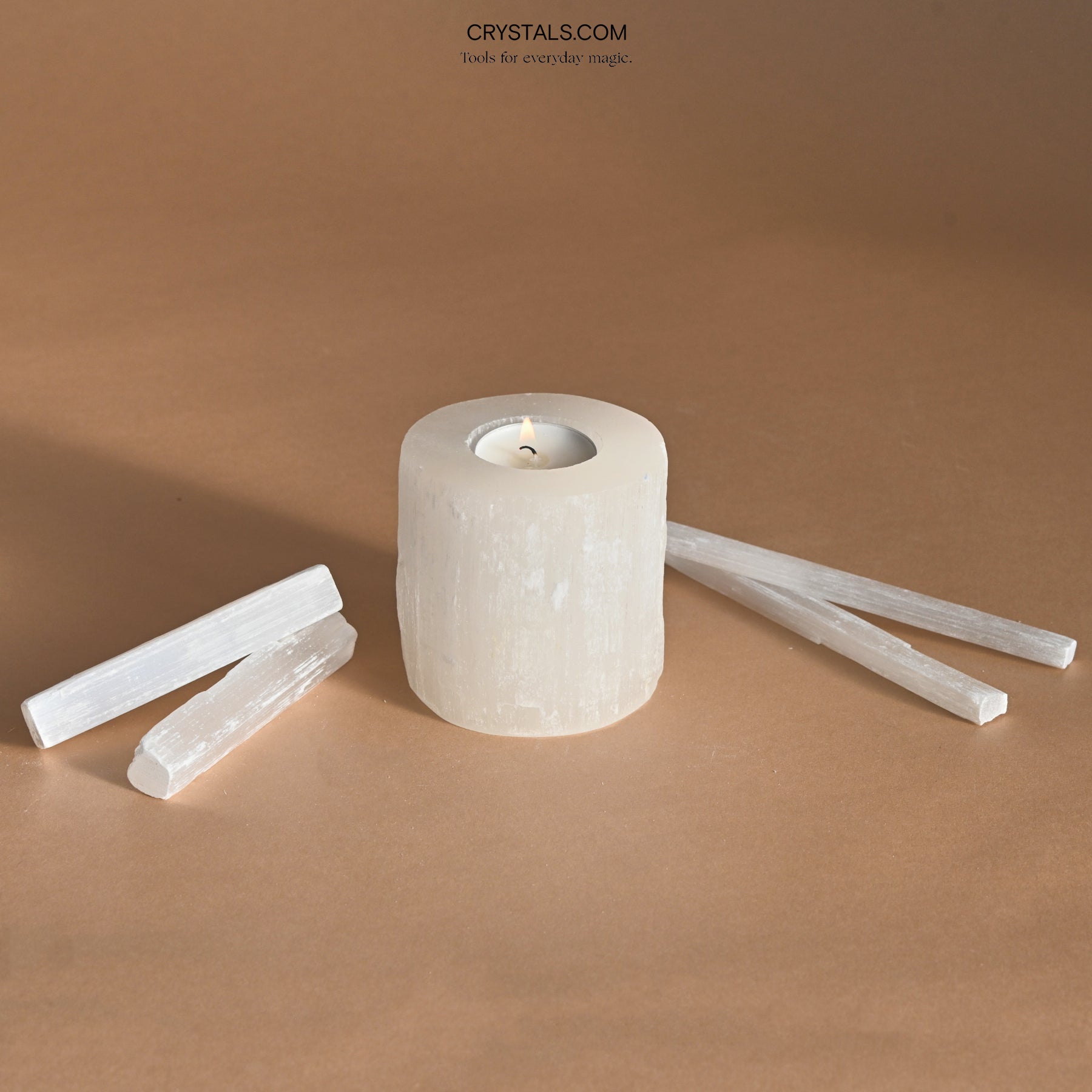
For serious collectors, fluorite groups beautifully with complementary minerals. The purple tones echo amethyst; the greens pair with malachite and aventurine; the clear portions read alongside clear quartz and selenite (Selenite Cleansing Wand). A curated fluorite display alongside these related materials creates a cohesive, visually coherent collection. Explore our collectors edition for museum-quality specimens worth building a display around.

Fluorite as a Collector's Mineral: Building Toward Quality
For those approaching fluorite as a mineralogical pursuit rather than a purely decorative one, quality benchmarks shift significantly. The collector's market for fluorite is deep, globally active, and rewards knowledge.
Locality Matters
Where a fluorite comes from affects its desirability and value in ways that go beyond appearance. Chinese fluorite dominates the decorative market because the quantities and quality of rainbow banding are unmatched. But locality-specific material — Blue John from Derbyshire, deep purple cubic fluorite from the Rogerley Mine in County Durham (also England), apple-green fluorite from Mexico — carries premium value precisely because it is distinctive and documented. A fluorite labeled "China" is not interchangeable with one labeled "Rogerley Mine."
Natural vs. Treated
The fluorite market has a modest problem with color enhancement. Some material is irradiated to deepen or shift colors, a practice that is not always disclosed. Natural color in fluorite is stable and consistent throughout the specimen; irradiated material sometimes shows uneven color distribution or colors that seem superficially vivid in a way that feels different from naturally zoned material. Buying from reputable sources with mineral show provenance — where pieces can be handled and examined in natural light — remains the best protection.
Association Value
Fluorite specimens that include associated minerals — pyrite cubes, calcite scalenohedra, quartz crystals, arsenopyrite, sphalerite — are generally more desirable to serious collectors than solo fluorite crystals. The mineral assemblage tells a richer geological story. A fluorite and pyrite specimen from the same vein system is not simply two minerals; it is documentation of a shared geochemical moment. Look for our collector's edition specimens for pieces with this level of geological complexity.
Chakra and Elemental Associations
Fluorite's metaphysical associations are largely derived from its physical properties — which is not coincidental. The stone's color range spans the spectrum from root to crown; different colors are associated with different energetic centers. Green fluorite is most closely associated with the heart chakra, and is used in practices aimed at emotional clarity and the release of accumulated stress. Purple fluorite aligns with the third eye chakra — thought, intuition, and the capacity to process complex information. Clear or blue fluorite extends toward the crown, connecting with higher understanding and perspective.
Fluorite appears frequently in the practices of those born under Capricorn, Pisces, and Libra — signs associated with discernment, depth of feeling, and the navigation of complexity. Whether you approach this through an astrological lens or simply find that certain stones resonate with certain temperaments, fluorite rewards slow acquaintance.
Caring for Fluorite: What the Hardness of 4 Actually Means
Fluorite requires more care than the harder stones that dominate the crystal market. At Mohs 4, it is harder than your fingernail but significantly softer than quartz (7) or topaz (8). This has practical implications.
Store fluorite away from harder stones — amethyst, citrine, clear quartz, any quartzite material — to prevent surface scratching. If fluorite pieces will be in proximity, use individual pouches or cloth dividers. Avoid placing heavy pieces on top of each other. Polished fluorite surfaces scratch relatively easily; a tumbled piece will show wear if mixed with harder tumbles in a bowl.
Fluorite has perfect octahedral cleavage in four directions, meaning it can cleave (split along flat planes) if dropped or struck. Handle large pieces with two hands and avoid impacts. This cleavage is the same property that makes fluorite useful to mineralogists as a hardness reference standard and makes uncut natural octahedra such perfect forms — they cleave into shape naturally along these planes.
For cleaning, use a soft cloth and, if necessary, room-temperature water with no detergent. Avoid ultrasonic cleaners and steam cleaning, which can cause cleavage fractures. Prolonged direct sunlight does not typically affect fluorite's color (unlike some other crystals), but it is good practice with any fine specimen to minimize unnecessa rative crystal" style="max-width: 100%; height: auto; border-radius: 4px;">
Frequently Asked Questions About Fluorite
What makes fluorite different colors?
Fluorite's color range is produced by trace element impurities and radiation damage to the crystal lattice during formation. Purple and violet fluorite results from natural radiation exposure; green fluorite from rare earth element impurities; blue from specific lattice defects; yellow and amber from iron traces. In rainbow fluorite, these coloring agents were deposited sequentially as the mineral grew, creating the banded color zoning the stone is known for.
Is fluorite the same as fluorescent?
The connection is direct and historical: the phenomenon of fluorescence was named after fluorite, which often glows with a vivid blue-violet color under shortwave UV light. Not all fluorite fluoresces — the fluorescence depends on the specific impurities present in each specimen — but many specimens do, and testing fluorite under UV light is one of the pleasures of the mineral hobby. The element fluorine and the compound fluoride (as in toothpaste) also take their names from fluorite.
Is fluorite a good choice for beginners?
Yes — with caveats about handling. Fluorite's visual accessibility (the color is immediately compelling), relative affordability compared to other high-quality minerals, and wide availability in decorative forms make it an ideal entry point to collecting. The handling caveats — softer than most crystals, perfect cleavage — teach good care habits that serve collectors well with other fine specimens. Take our crystal quiz to find the best fluorite form for your level and intention.
What is Blue John fluorite?
Blue John is a specific variety of fluorite found only in Blue John Cavern and Treak Cliff Cavern in Derbyshire, England. It is characterized by distinctive purple and amber-yellow banding in a pattern unlike any other fluorite worldwide. It has been mined since at least Roman times and used for carved ornamental ware — vases, bowls, inlays — prized for its rarity and the specificity of its source. Today, only a few hundred kilograms of Blue John are extracted annually, making it one of the world's most geographically limited decorative minerals.
Which zodiac signs are associated with fluorite?
Fluorite is most commonly associated with Capricorn, Pisces, and Libra. Capricorn's connection reflects fluorite's associations with focused thought and disciplined clarity; Pisces aligns with the stone's reputation for intuitive understanding; Libra with its balance-seeking, decision-clarifying qualities. That said, fluorite's color range means it resonates across the spectrum, and individuals of any sign may find a particular fluorite color speaks to them more directly.
Can fluorite go in water?
Brief contact with water for cleaning purposes is generally fine. However, prolonged water immersion is not recommended: fluorite is a fluoride mineral, and sustained water contact can affect its surface over time. Crystal-infused water practitioners should note that fluorite should not be used to make crystal elixirs via direct immersion. Use the indirect method (crystal placed beside rather than in the vessel) if you wish to incorporate fluorite into water practices.
What is the difference between a fluorite tower and a fluorite point?
Both are cut and polished forms of fluorite designed for vertical display. A tower (also called an obelisk) has a flat base and four or six flat sides that taper to a flat top or slight point — a machined form. A point is cut to mimic a natural crystal termination, tapering more dramatically to an apex. Points tend to feel more organic; towers have a more architectural quality. Both showcase fluorite's translucency and color zoning effectively.
How do I know if my fluorite is real?
Natural fluorite can be distinguished from glass or synthetic material by several tests: genuine fluorite feels cold to the touch and stays cool longer than glass; it is softer than glass (a steel nail will scratch it); and it shows the characteristic waxy-to-glassy luster of a real mineral rather than the perfectly uniform appearance of molded glass. Color-banded material that appears perfectly regular and symmetrical — too perfect — warrants scrutiny. When in doubt, buy from reputable mineral dealers with a verifiable provenance.
Where to Find Fine Fluorite
Fluorite collecting rewards patience and a willingness to see specimens in person before buying. Gem and mineral shows — Tucson, Denver, Munich's Mineralientage — offer the broadest range of locality-specific material, often directly from miners and preparators. For decorative and mid-range collector pieces, a trusted online source with accurate photography (so the color reads true) is often the most practical option.
Explore our curated fluorite collection, updated regularly with new arrivals. For those building a more serious collection, our collectors edition features museum-quality specimens selected for their geological significance. Browse new-in-stock arrivals to see what's just landed — the best fluorite moves quickly.
Interior designers working with clients on mineral-led interiors are welcome to explore our trade program for preferred access, dedicated support, and pricing. Fluorite's versatility — from small desk pieces to statement slabs — makes it one of the most adaptable minerals in the designer's toolkit.
Still exploring? Our Crystal Index 101 covers the full mineral landscape, and our chakra quiz can help you understand which color and form of fluorite best serves your current energetic picture.
✦ Discover Your Human Design
Your spiritual journey goes deeper than numbers. Human Design reveals your unique energetic blueprint — how you're designed to make decisions, interact with others, and move through the world. It combines astrology, the I Ching, Kabbalah, and the chakra system into one powerful framework.
Explore our full Crystal Encyclopedia — meanings, healing properties, and chakra connections for 280+ crystals.
Shop by Crystal Type
Explore our most popular collections
Get 10% Off Your First Order
Plus early access to new arrivals, collector drops, and crystal guides. Join 15,000+ crystal lovers.