Shop Crystals for This Energy
Free shipping on orders over $150
One of the most common questions crystal buyers face is whether to choose raw or polished specimens. Both forms carry the same mineral energy, but they differ significantly in appearance, energy intensity, care requirements, and how they fit into your space. Understanding the distinction helps you build a collection that aligns with your aesthetic and intention.
What Are Raw Crystals?

Raw crystals — also called rough or natural crystals — are specimens that have not been cut, shaped, or polished after being extracted from the earth. They retain their original formation, including natural points, jagged edges, matrix rock, and mineral inclusions. Raw amethyst clusters, uncut clear quartz points, and natural citrine formations are classic examples of raw specimens.
Many collectors and energy practitioners prefer raw crystals because they believe the stone's energy is strongest in its unaltered state. The natural texture, asymmetry, and organic beauty of raw pieces also appeal to those who favor an earthy, unrefined aesthetic.
What Are Polished Crystals?
Polished crystals have been shaped and smoothed by lapidary artisans. This process reveals the stone's inner beauty — color saturation, translucency, banding patterns, and flash — that may not be visible in the raw form. Common polished forms include spheres, towers, pyramids, tumbled stones, palm stones, and freeform sculptures.
Polished crystals are often preferred for home decor because their refined shapes integrate seamlessly into designed interiors. A polished labradorite freeform on a shelf or a obsidian (Black Obsidian Palm Stone) sphere on a stand creates a gallery-worthy display.
Raw vs Polished: Key Differences
Energy & Vibration
Raw crystals are often described as having a more intense, unfiltered energy. Because the stone has not been altered, its natural vibration remains fully intact. This makes raw specimens popular for energy work, meditation, and crystal grids. Polished crystals emit a gentler, more diffused energy. The smoothing process does not diminish the stone's properties — it simply creates a softer energetic output that many people find more comfortable for daily wear and ambient room energy.
Visual Appeal
Raw crystals showcase geological drama — the way amethyst points grow inside a geode, or how pyrite forms perfect cubic structures. These natural formations tell a visual story of millions of years of geological activity. Polished crystals reveal what lies beneath the surface. The iridescent flash of labradorite, the deep green banding of malachite, and the warm translucency of rose quartz (Rose Quartz Tower) are all dramatically enhanced through polishing.
Durability & Care
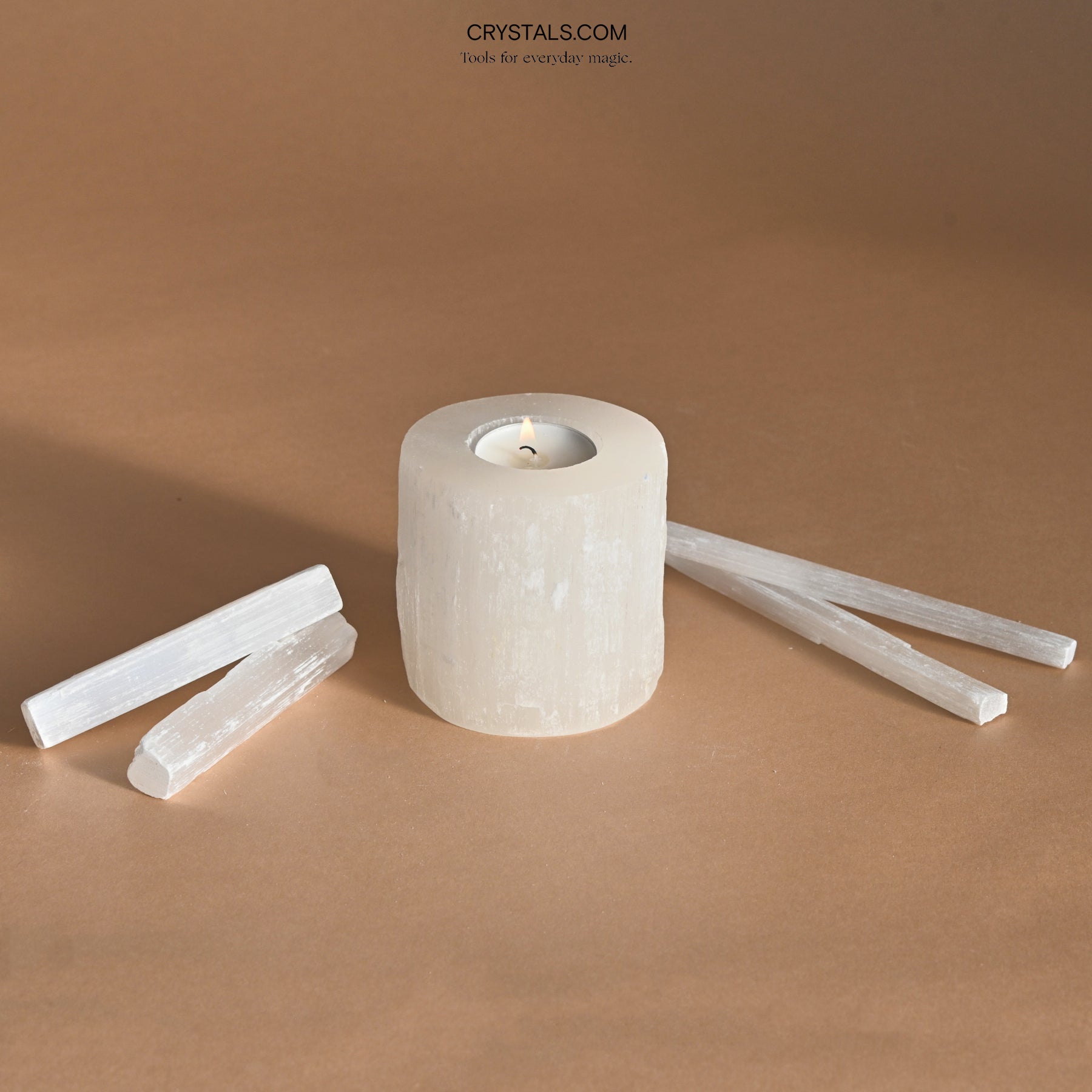
Raw crystals can be more fragile due to exposed points and natural fracture lines. They may also collect dust in their crevices and require careful cleaning. Selenite (Selenite Cleansing Wand) in its raw form, for example, is water-soluble and should never be submerged. Polished crystals are generally more durable and easier to clean. A soft cloth is usually sufficient to maintain their luster. This makes them more practical for high-traffic areas and for households with children or pets.
Interior Design Integration
From a design perspective, raw crystals bring organic texture and visual contrast. They pair beautifully with natural materials — wood, linen, ceramic — and work well in bohemian, rustic, or eclectic interiors. Polished crystals suit modern, minimalist, and luxury spaces. A polished fluorite tower on a marble surface or a smoky quartz sphere on an acrylic stand creates a clean, sophisticated display.
Best Crystals to Buy Raw
Amethyst — The natural point formations and deep purple color in raw clusters are iconic and highly collectible.

Clear Quartz — Natural terminated points are prized for energy work and crystal grids.
Pyrite — The naturally occurring cubic formations are a geological marvel best appreciated in raw form.
Celestite — The delicate blue crystal clusters found inside geodes are stunning in their natural state.
Crystal Clusters — Any multi-pointed formation is best appreciated raw, where each natural termination adds to the visual impact.
Best Crystals to Buy Polished
Labradorite — Polishing reveals the signature spectral flash that makes this stone extraordinary.
Malachite — The concentric green banding pattern only fully appears after polishing.
Tiger's Eye — The chatoyant golden flash is dramatically enhanced in polished form.
Obsidian — Polished obsidian achieves a mirror-like surface that is both protective and visually striking.
Agate — Slicing and polishing reveals intricate banding and translucent layers hidden within the rough exterior.
Can You Have Both?
Absolutely — and most serious collectors do. A well-curated crystal collection includes both raw and polished pieces. The contrast between a raw amethyst cluster and a polished rose quartz sphere creates visual depth and energetic balance in any display. Many designers intentionally mix forms to create layered, textured arrangements.
Whether you are drawn to the untouched beauty of raw formations or the refined elegance of polished specimens, every crystal at Crystals.com is hand-selected for exceptional quality and authenticity. Explore our collections to find the perfect pieces for your style and intention.
Explore our full Crystal Encyclopedia — meanings, healing properties, and chakra connections for 280+ crystals.
Not Sure Which Crystal Is Right for You?
Take our 60-second crystal quiz and get a personalized recommendation based on what you need right now.
Take the Crystal QuizDiscover Your Human Design
Crystals amplify energy — but do you know your unique energy type? Human Design reveals how you're wired to make decisions, work, and rest. It's the owner's manual you were born with.
Explore Human DesignGet 10% Off Your First Order
Plus early access to new arrivals, collector drops, and crystal guides. Join 15,000+ crystal lovers.