Crystals.com
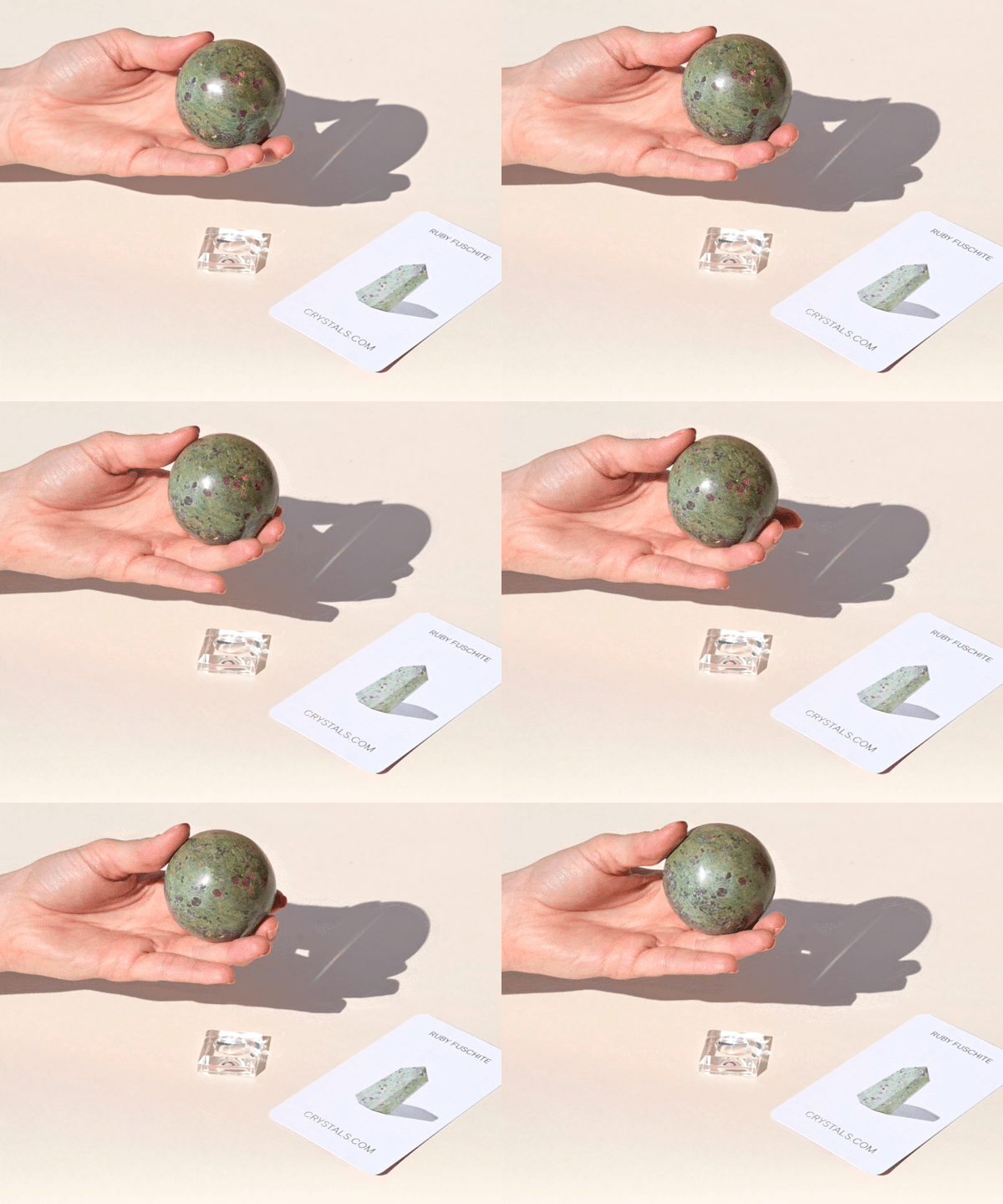
Ruby Fuchsite Crystal
Authentic natural minerals, thoughtfully sourced and individually photographed.

Ruby Fuchsite Crystal
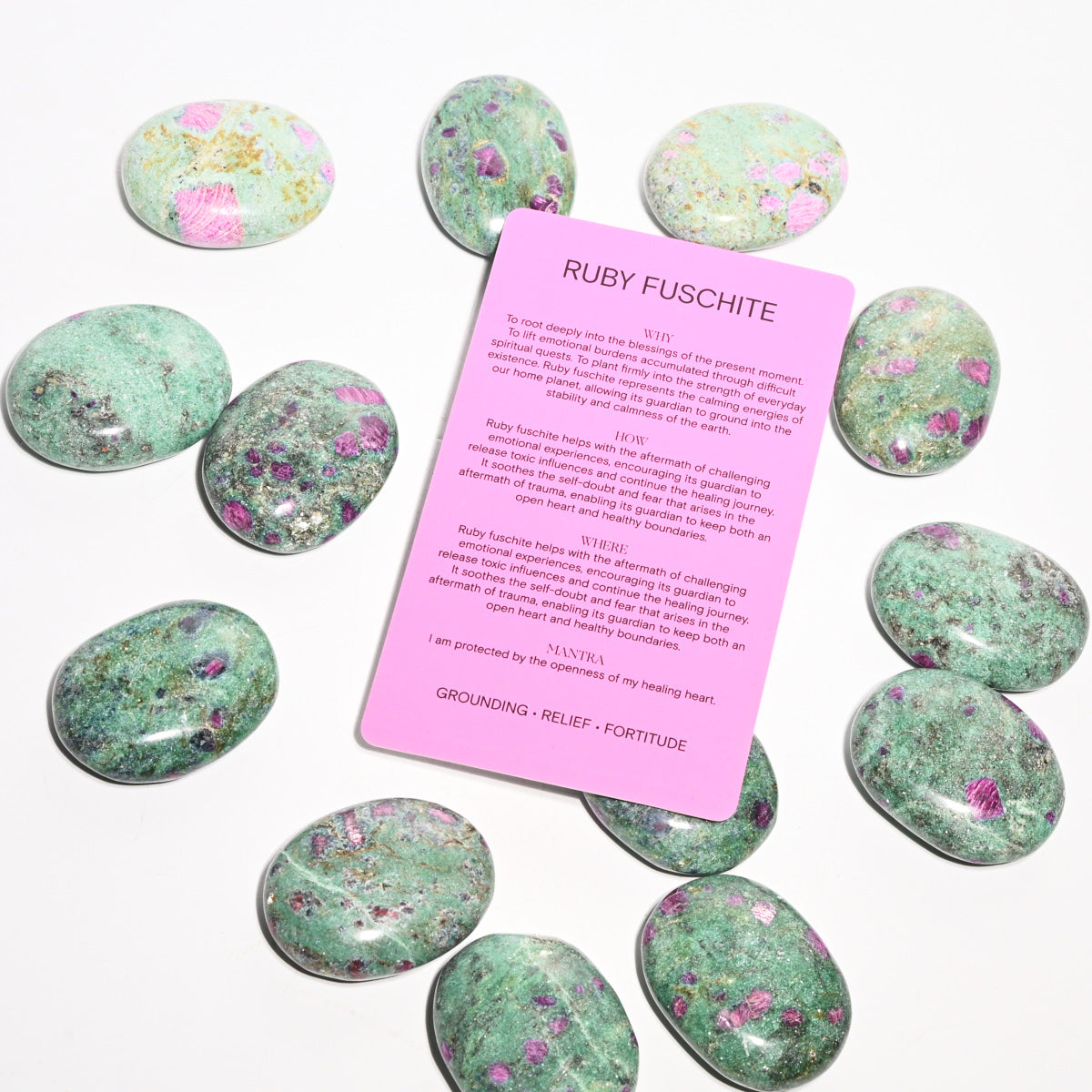
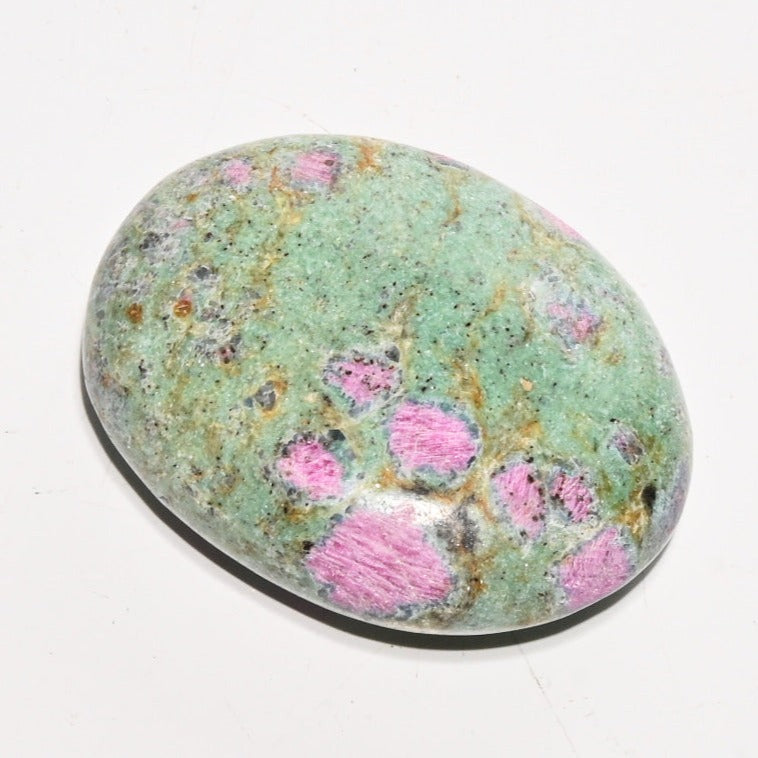
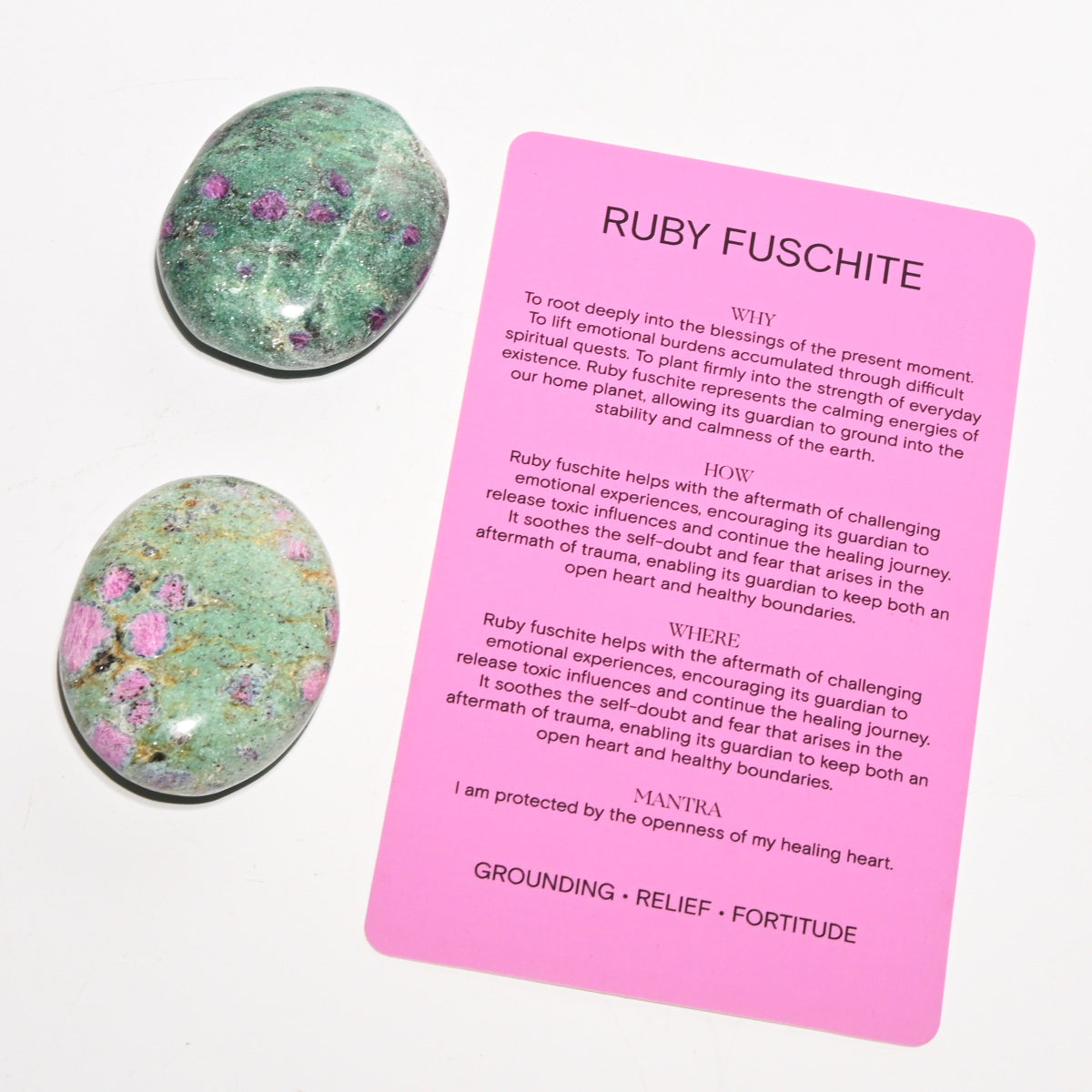
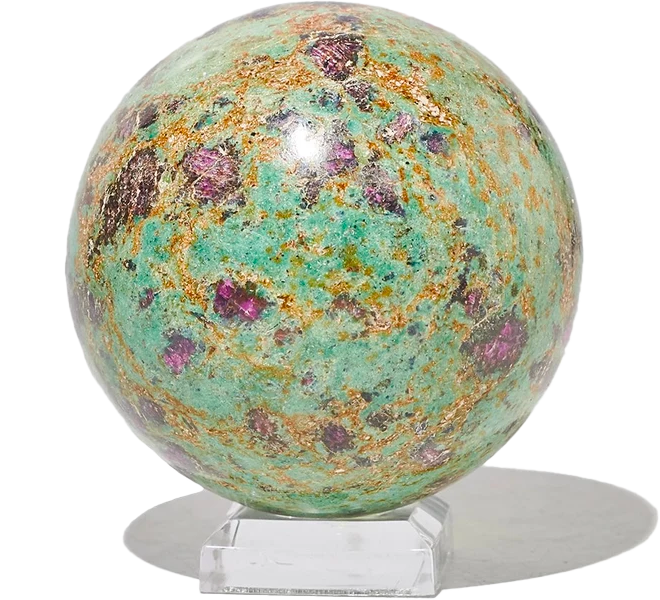
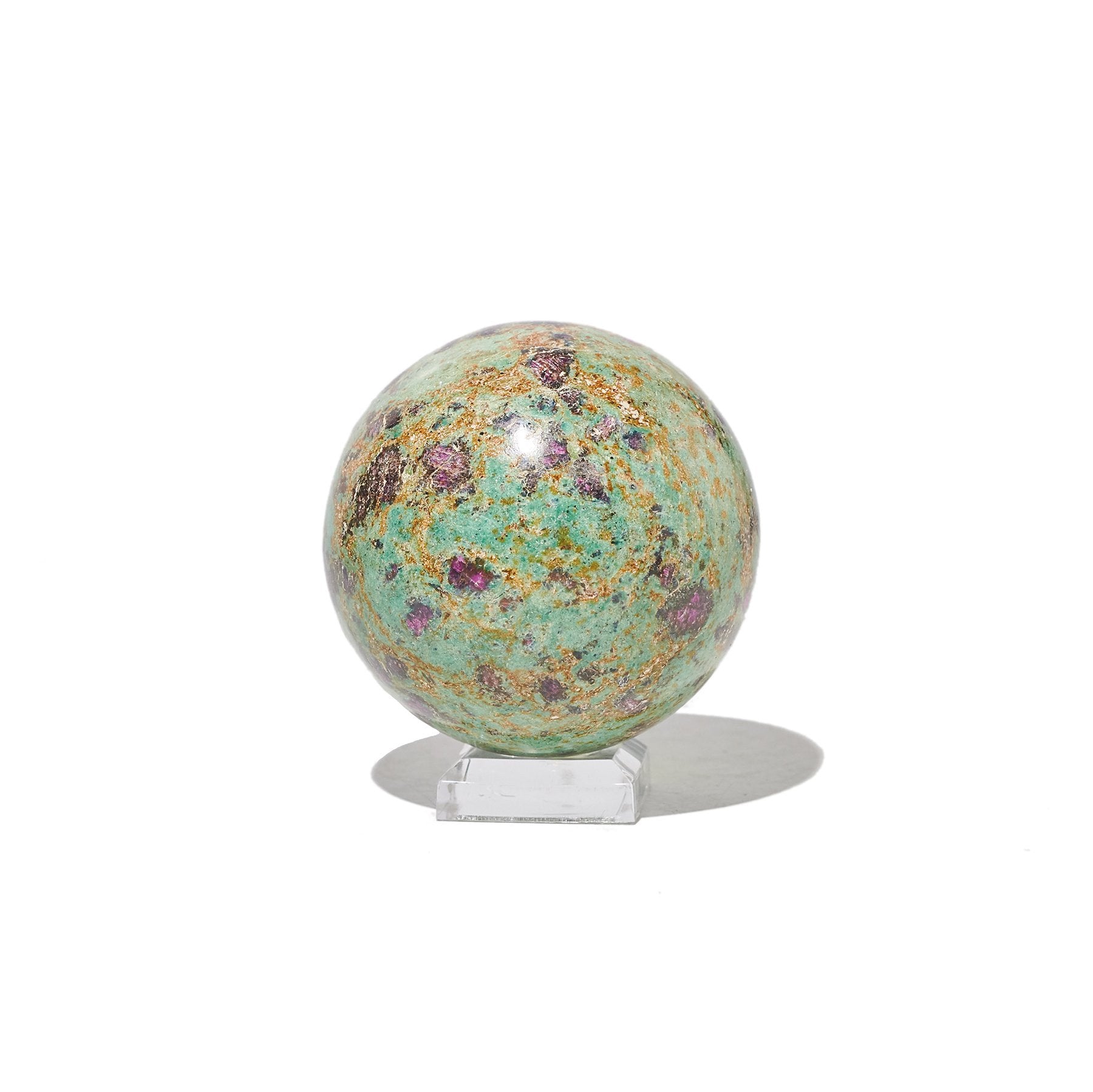
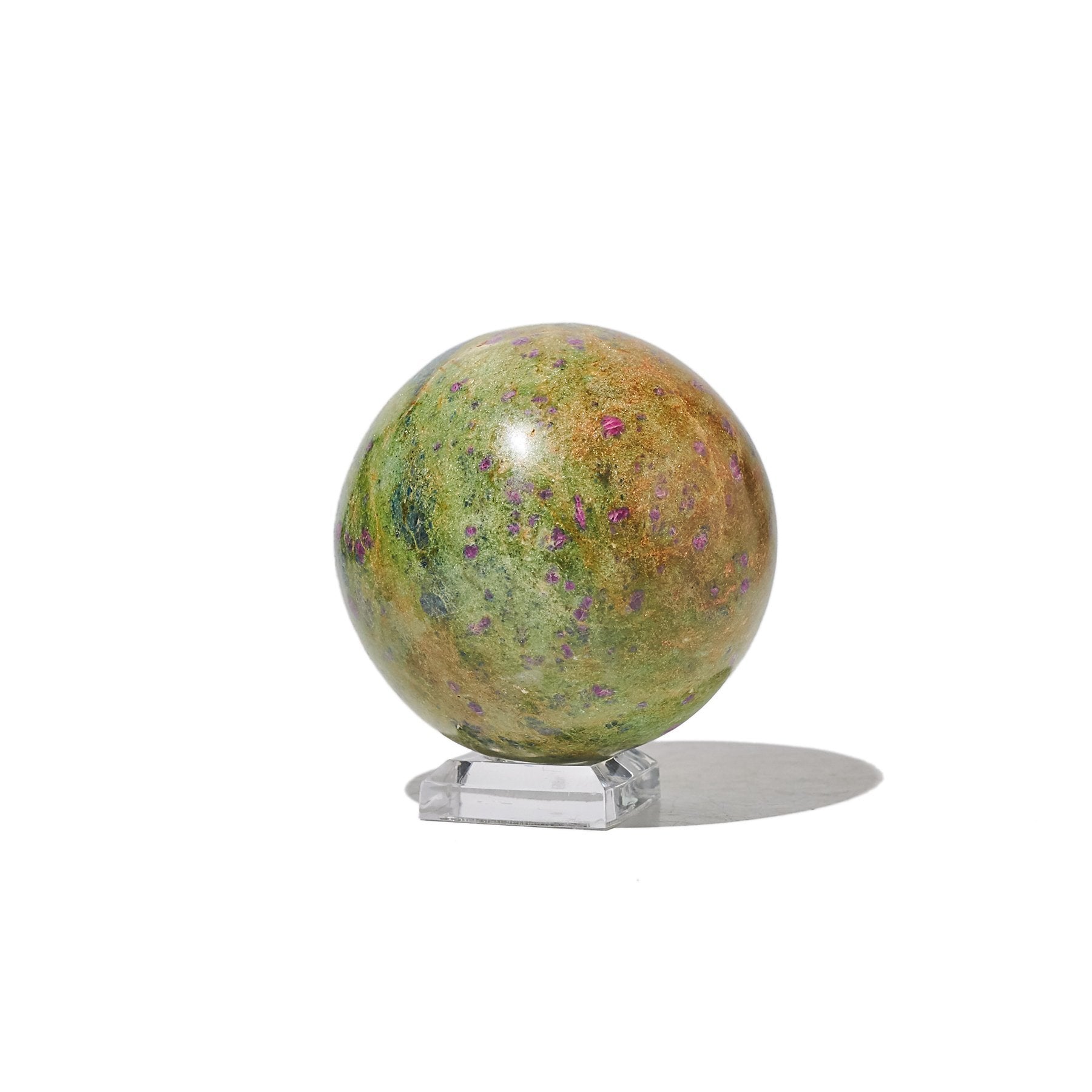
Ruby fuchsite is a naturally occurring combination of two distinct minerals: ruby (a red variety of corundum, Al2O3) embedded in a matrix of fuchsite (a chromium-rich variety of muscovite mica). The result is a vivid green stone studded with opaque-to-translucent red ruby crystals, creating a striking color contrast found in few other minerals. Ruby portions reach Mohs 9; the fuchsite matrix is softer at 2-3. Primary sources include India, Brazil, and parts of East Africa.
Fuchsite gets its rich green color from chromium substituting for aluminum in the mica structure — the same element responsible for the green in emeralds. The rubies are typically opaque and not gem-grade, but their presence in a contrasting green host makes ruby fuchsite a collector favorite. It is sometimes confused with ruby in zoisite (anyolite), but fuchsite has a distinctly more micaceous, sparkly texture.
This collection features polished freeforms, palm stones, tumbled stones, raw specimens, spheres, and hearts. Ruby fuchsite pairs well with other colorful minerals like malachite, rhodonite, and garnet. Free shipping on all U.S. orders over $150.
Frequently Asked Questions
What is ruby fuchsite?
Ruby fuchsite is a natural mineral combination of red corundum (ruby) crystals embedded in green chromium-rich mica (fuchsite). The two minerals form together in metamorphic environments, creating a vivid red-and-green stone. It is sometimes called "ruby in fuchsite" to emphasize the two distinct minerals present.
Is the ruby in ruby fuchsite real?
Yes. The red crystals are genuine corundum (Al2O3), the same mineral species as gem-quality ruby and sapphire. However, the rubies in ruby fuchsite are typically opaque and heavily included — they are not gem-grade. Their value is in the visual contrast with the green fuchsite matrix, not as individual gemstones.
What is the difference between ruby fuchsite and ruby zoisite?
Both contain ruby, but the matrix minerals are different. Ruby fuchsite has a mica matrix (fuchsite) with a sparkly, micaceous texture. Ruby zoisite (anyolite) has a dense, opaque zoisite matrix. Ruby zoisite is harder overall and often contains black hornblende inclusions. Both are prized for their red-green contrast, but they feel and look quite different in hand.
How do I care for ruby fuchsite?
Handle with care — the fuchsite matrix is soft (Mohs 2-3) even though the ruby portions are very hard (Mohs 9). The mica can flake if the stone is bumped or dropped. Clean with a soft dry cloth. Avoid water on raw specimens, as mica absorbs moisture. Polished pieces are more durable but should still be stored separately from harder minerals.
Where does ruby fuchsite come from?
The most prolific sources are India (where most commercial ruby fuchsite is mined), Brazil, and East Africa (Tanzania, Kenya). Indian ruby fuchsite tends to have the most vivid green fuchsite with well-distributed ruby crystals. Brazilian specimens can have larger individual ruby crystals in a lighter green matrix.



Let customers speak for us
This Garnet necklace is full of surprises! Rich in color and sparkle, Garnet also is rich in power to motivate. Its superpower is supporting your long haul goal. This stone will aid you to move past stagnation and find within the persistence, energy, and commitment to reach your goal.

Just as a necklace, this is a stunning piece. Malachite has an intense power against negativity. I feel it every time I wear it. It has the power to draw out blockages, that's its superpower, that's how it heals. This is a necklace of purpose, be ready for its power.

I'm new to collecting Stones and Crystals but have long known their powers. I found that when i'm ready for their gifts, the right stone makes itself known. I am ready for transformation, protection, assistance in meditation and focus on my path. Conscious Items has wonderful stones and crystals and provides excellent information on how to best use them. They also protect your items well when they ship them! Good People!
This necklace is Perfect in every way. The healing power of Malachite is softened with Rose Quartz and amplified by Clear Quartz. This is a necklace with undeniable purpose. I felt the powerful energy as soon as I put it on.

This was my first order with this company. My crystals arrived quickly. I was very impressed with the packaging. They are GORGEOUS!!
Perfect size at a great price!

Even more beautiful than I expected! Very impressed with the packaging.

I love them 🌹

Beautiful crystal!

Both the product and the customer service were excellent. The packaging and handwritten note, the bracelets themselves and the warm, genuine correspondence prior to receiving the product, once received and in the subsequent days. Not too pushy with follow up emails trying to solicit more business. Overall I made this first time purchase to cultivate positive energy in my life and so far this is an example of it. Thank you!

Beautiful piece and a nice size! Love it!

Great
Nice sparkle, and I always very much appreciate that crystals.com stud earrings have notches on the post to keep the backing from sliding off.

Beautiful stone, love the color, shape, and size. If I can, I might remove it from the earring wire and put a stud earring from crystals.com thru it to create my own custom earring, because the angle isn't right for my ear for the stone to show.

Super pretty stone - color, shape, and size. Pairs beautifully with other necklaces I've purchased from crystals.com.

A Sanctuary of Natural Beauty
Every crystal here was discovered by hand, selected with intuition, and photographed in its true light.
One-of-a-Kind. Forever Pieces.
Let the Universe Decide


