Shop Crystals for This Energy
Free shipping on orders over $150
There are very few materials on earth that can claim an unbroken lineage quite like the obsidian crystal — from Neolithic arrowheads to Aztec ritual mirrors to the polished spheres gracing the coffee tables of design-forward interiors today. Formed when silica-rich lava meets cold air and cools faster than crystals can form, obsidian is not a mineral at all but a naturally occurring volcanic glass. It is dense, lustrous, and conchoidally fractured — which means it breaks in smooth curves that, when worked with care, can produce an edge sharper than surgical steel. That history lives in every piece you hold. Explore our full obsidian crystal collection to find the form that speaks to you.

What Is Obsidian? The Science of Volcanic Glass
Obsidian forms primarily from rhyolitic lava — magma high in silica — that erupts and cools so rapidly that its molecules cannot organize into a crystal lattice. The result is an amorphous solid: technically a supercooled liquid frozen in geological time. According to the USGS Volcano Hazards Program, obsidian is a dense, glassy volcanic rock that fractures conchoidally and typically occurs in black, though its color varies according to trace minerals and inclusions.
The iron and magnesium content of the parent lava largely determines the color of the resulting glass. Pure black obsidian forms when iron oxide is uniformly distributed and abundant. Tiny gas bubbles trapped during cooling create the silver or gold sheens that define sheen obsidian. Microscopic inclusions of magnetite nanoparticles create the iridescent rainbow effect that makes rainbow obsidian one of the most visually spectacular minerals available to collectors at any price point — rivaled in its shifting iridescence only by labradorite and moonstone.
Notable obsidian deposits exist across the American West — Oregon's Newberry Volcano, Yellowstone's Obsidian Cliff, California's Glass Mountain — as well as Mexico, Japan, Iceland, and East Africa. Each source produces volcanic glass with a subtly distinct composition. Obsidian provenance studies using trace element fingerprinting have been used by archaeologists to map ancient trade routes stretching hundreds of miles from their source.
The Ancient Mirror: Obsidian Through History
No material has served human civilization longer than obsidian. Its history as a cutting tool predates recorded writing by hundreds of thousands of years. Before bronze or iron, obsidian blades were the sharpest instruments on earth — and some surgeons still argue for their surgical use today, because a perfect obsidian edge can be thinner than the finest stainless steel scalpel.
But obsidian's role as a mirror is its most culturally resonant legacy. The British Museum holds Aztec obsidian mirrors among its most significant pre-Columbian objects — polished discs of volcanic glass used not for vanity but for divination. These tezcatl mirrors were associated with Tezcatlipoca, the Aztec god of night and sorcery, whose name translates literally as "smoking mirror." The polish achievable by patient hand-working of volcanic glass is extraordinary — these pieces, made without modern abrasives, rival anything produced today.
Obsidian mirrors traveled far from their origins. The Elizabethan astrologer John Dee is said to have used a polished obsidian mirror — also in the British Museum's collection — for scrying. The stone arrived in England via Spanish conquistadors who brought Aztec objects back from Mesoamerica. Its ritual reputation, already thousands of years old, only deepened in European hands. It is no coincidence that obsidian remains central to ritual practice to this day.

The Many Varieties of Obsidian Crystal
Obsidian is not a single material but a family of related volcanic glasses, each formed under slightly different conditions and carrying its own distinct visual character. Browse the full obsidian collection to compare varieties side by side.
Black Obsidian
The most commonly encountered form. Pure black obsidian has a glass-smooth texture and a vitreous luster that borders on mirror-like when polished. It is dense, cold to the touch, and extraordinarily deep in color — not the flat black of painted stone but something more like the interior of a sealed room at midnight. Black obsidian is the form most commonly used in feng shui, grounding practices, and high-end interior design. It works particularly powerfully as a polished sphere or as palm stone.
Rainbow Obsidian
One of the most spectacular mineral specimens available at any price point. Rainbow obsidian appears entirely black until light strikes it at the correct angle — at which point bands of iridescent color bloom across the surface: greens, blues, purples, and golds, shifting as you move. Mexico's Jalisco state produces the world's finest examples, with layering so complex and vivid that a single freeform piece can stop a room. It shares this quality of hidden depth with labradorite — both are dark stones that reveal an inner world only when properly illuminated.
Snowflake Obsidian
Formed when the volcanic glass begins to partially devitrify over geological time — tiny cristobalite crystals forming within the glass — creating white or grey snowflake-shaped patterns against a black ground. The contrast is graphic and striking, with a quality more textile than stone. It is particularly beautiful as a tumbled piece or tower.
Apache Tears
Small, rounded nodules of obsidian, often translucent when held to light. They form when volcanic droplets cool in mid-air or within perlite host rock. The name derives from an Apache legend; their rounded form makes them particularly tactile as pocket pieces or palm stones — among the most approachable entries into healing crystals for beginners.
Mahogany Obsidian
A combination of black and rust-brown volcanic glass, the warmer tones created by iron and hematite within the lava flow. Mahogany obsidian sits naturally in interiors that lean toward terracotta, ochre, natural wood, and warm neutrals. It pairs beautifully with citrine, tiger's eye, and other warm-spectrum stones in a curated display.

Obsidian Crystal Meaning and Metaphysical Properties
Within metaphysical traditions, obsidian crystal is consistently associated with protection, truth, and shadow work — the practice of examining unconscious patterns and psychological blind spots. Its volcanic origin connects it to transformation through intensity; obsidian formed in seconds at the threshold of earth and air, liquid and solid. That liminal quality is central to how it is understood energetically. For a broader look at how crystals support protection and home energy, see our guide to crystals for home protection and energy cleansing.
Black obsidian in particular is believed to create a protective energetic shield, absorbing and deflecting negative energy before it reaches its keeper. It is commonly recommended for people in professions that involve absorbing others' emotional states — therapists, teachers, healers — as well as for placement at the thresholds of a home where it can intercept incoming energy before it settles into a space. Paired with black tourmaline or shungite, it forms what many practitioners consider the most complete protection trio available in the mineral kingdom.
Rainbow obsidian tends to be associated with gentler work — particularly protection of the heart, and with bringing hidden emotions gently to the surface rather than forcing a confrontation. Its visual display mirrors this quality exactly: what appears opaque reveals extraordinary depth when properly illuminated. For those newer to working with healing crystals, rainbow obsidian is one of the most accessible entry points into shadow work.
Obsidian Crystal in Feng Shui: Placement That Works
In traditional feng shui, obsidian crystal is classified as a Water element stone — associated with wisdom, depth, and the flow of life force. Its black color corresponds to the North sector of any space, the area governing career and life path, making it a particularly intentional choice for a home office or study. It resonates strongly with the root chakra — the energy center governing stability, safety, and groundedness — and placing it near the base of a room (on floor-level shelves, in corners, near the front door) amplifies this quality.
An obsidian sphere placed on a desk or in the north-facing corner of a room is considered an activator for clarity of mind and professional momentum. An obsidian ba gua mirror — a convex obsidian disc — is a classical feng shui protective tool placed above entryways to deflect sha qi (disharmonious energy) away from the home's interior. For a complete guide to crystals for specific rooms, see our roundup of crystals for the living room.
Black obsidian towers work well flanking doorways, placed at either side of the threshold as energetic sentinels. In feng shui practice, pairs have a balancing quality; two obsidian towers at an entry create what practitioners describe as a protective gateway — a pre-filter for everything entering the space. See our full range of crystal towers for options across every price ground" style="max-width: 100%; height: auto; border-radius: 4px;">
Styling Obsidian in Interior Design
Obsidian is one of the few minerals that crosses cleanly from the collector's cabinet into pure interior design, because its appeal is as much visual and material as it is metaphysical. A large rainbow obsidian freeform catches and throws light the way a piece of lacquered furniture does — but with the irreproducible variation of natural geology. No two pieces are identical, and the best examples have a complexity that rewards sustained attention. For more on styling crystals in a designed space, see our editorial guide to luxury crystals for home decor.
Against neutral palettes — white plaster, linen, bleached oak — black obsidian creates the kind of visual weight that anchors a room without color. It functions like a dark wood table or a matte black lamp: grounding, decisive, resolved. But with the additional dimension of geological authenticity that no manufactured object can replicate. Interior designers working on high-end residential projects regularly source obsidian through our designer trade program — it is one of the most-requested stones for statement interiors.
For living rooms and console tables, a polished obsidian sphere at four to five inches is the collector's standard: large enough to read across a room, small enough to hold and feel. On bookshelves, raw freeforms in varying sizes create rhythm and depth. In dedicated crystal displays, obsidian provides the dark tones that make lighter specimens — citrine, rose quartz (Rose Quartz Tower), selenite (Selenite Cleansing Wand) — come alive by contrast. See our guide to styling crystals for your living room for layout ideas.
Browse our current Collectors Edition for exhibition-quality obsidian pieces sourced directly from Mexico and the American Pacific Northwest — each one documented and hand-selected for c h polished volcanic glass showing deep black color and reflective surface" style="max-width: 100%; height: auto; border-radius: 4px;">
Obsidian and the Zodiac: Which Signs Connect Most Deeply
Obsidian has the deepest resonance with the water and earth signs, particularly those ruled by planets associated with transformation and power. Scorpio — the sign of the underworld, hidden depth, and radical truth — is the zodiac sign most consistently paired with obsidian crystal across Western astrology traditions. Scorpio's ruler Pluto governs transformation, death and rebirth, and the surfacing of what is hidden: all qualities that obsidian embodies materially. A black obsidian sphere or mirror is perhaps the most Scorpionic object in the mineral world.
Capricorn also has a strong connection, particularly to black obsidian's grounding and ambition-clarifying properties. Capricorn energy is about building with intention and stripping away illusion — obsidian's ability to reveal rather than conceal makes it a natural ally. Sagittarius, the sign of truth-seeking and philosophical inquiry, finds in obsidian a material that mirrors their instinct to pursue what is real over what is comfortable. For crystal pairings by every sign, explore our full healing crystals range or take the crystal quiz to find your match.
How to Source and Authenticate Obsidian
Obsidian is not easily faked. The volcanic glass is so distinctive in its cold weight, vitreous luster, and conchoidal fracture pattern that even beginning collectors can identify it quickly. What requires more care is distinguishing between varieties, grades, and treated pieces that may be misrepresented.
Rainbow obsidian should display its iridescence naturally, without surface coatings or enhancement. The rainbow effect should shift subtly as the angle of light changes — it should not be a static, uniform shimmer that looks identical from every direction. When purchasing, ask sellers to confirm pieces are uncoated and untreated, and look for the characteristic shift of color as you rotate the piece.
For collector-grade obsidian — large spheres, substantial freeforms, exhibition-quality specimens — provenance matters. Mexican obsidian from Jalisco for rainbow varieties, and volcanic glass from Oregon or Yellowstone for black varieties, represents the quality standard serious collectors seek. Browse the Collectors Edition for obsidian and other rare minerals sourced with full traceability. For an introduction to what separates decorative from investment-grade pieces, see our overview of the most powerful crystals in the collector market.
Caring for Your Obsidian Crystal Collection
Obsidian is volcanic glass, which means it responds to the same care as any fine glass object. It is not fragile under normal display conditions, but it will chip or crack if dropped onto a hard surface or struck sharply. Thermal shock is also a consideration: moving a cold piece of obsidian rapidly into a hot environment — near a heat vent, radiator, or fireplace — can stress the glass over time.
Cleaning is straightforward. A damp cloth, mild soap, and immediate thorough drying. Unlike malachite, pyrite, halite, or selenite, obsidian is completely water-safe and chemically inert. It will not fade with light exposure. It will not dissolve, degrade, or alter in any way under normal household conditions. It is, in most practical respects, an exceptionally low-maintenance material for a well-designed space.
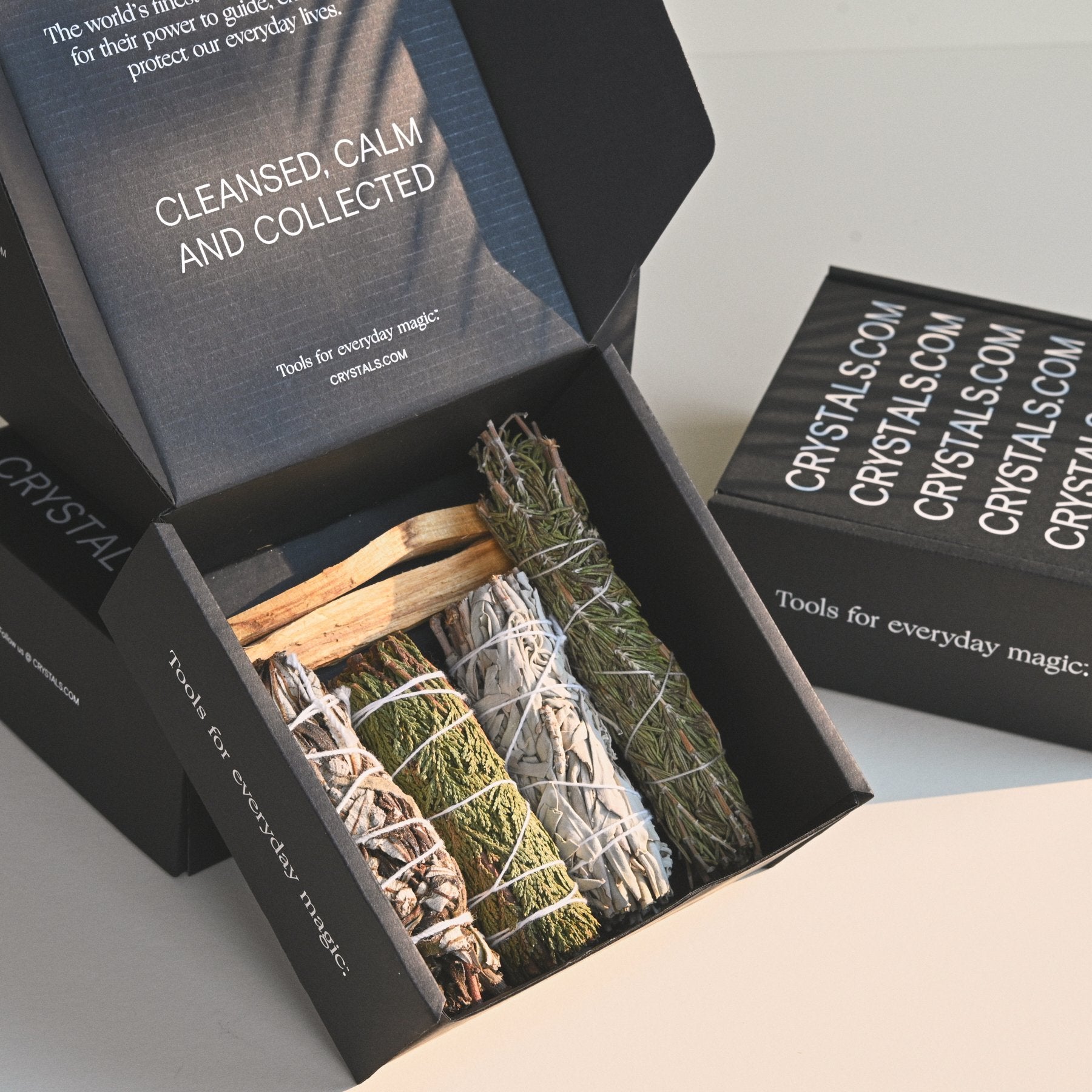
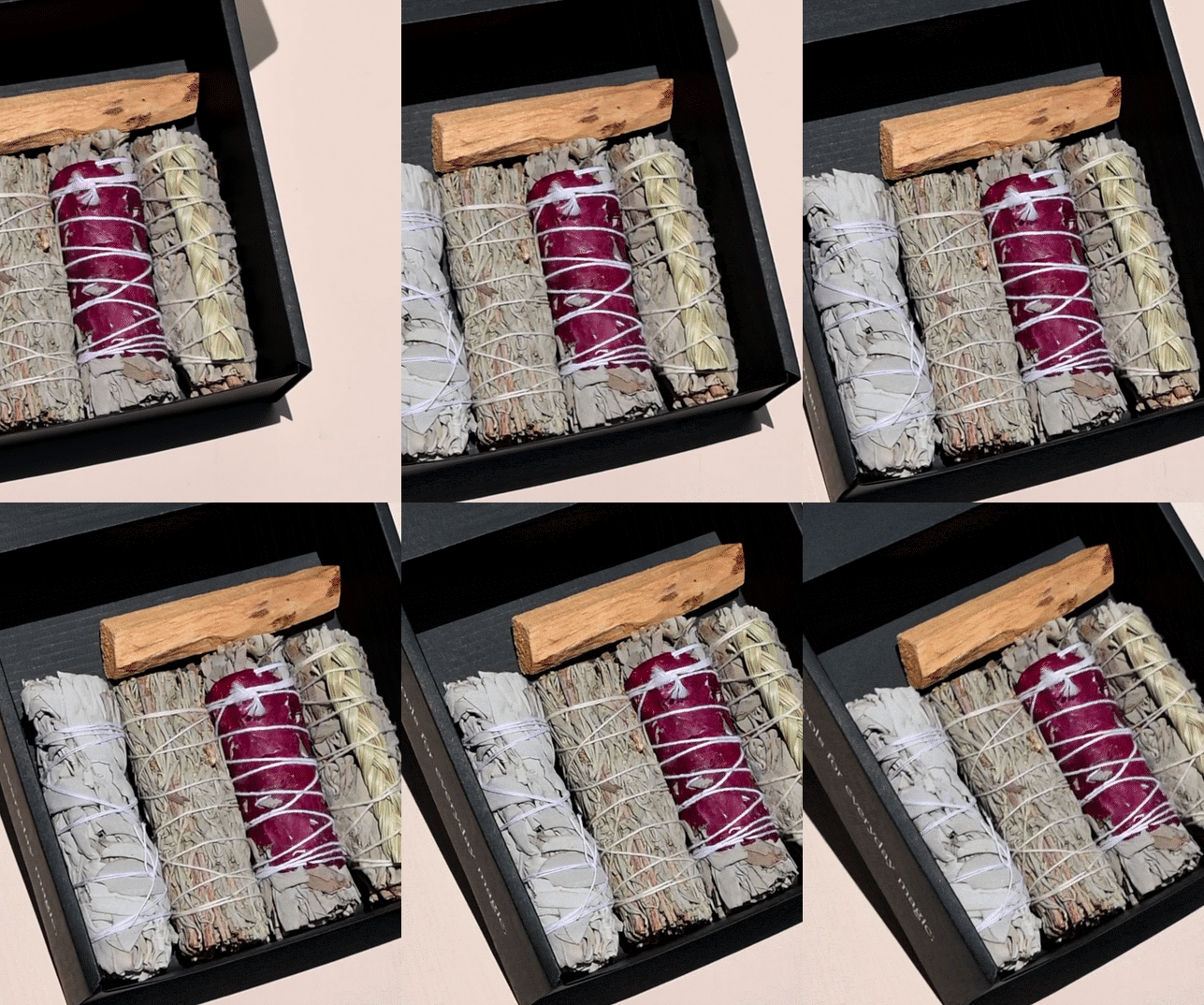
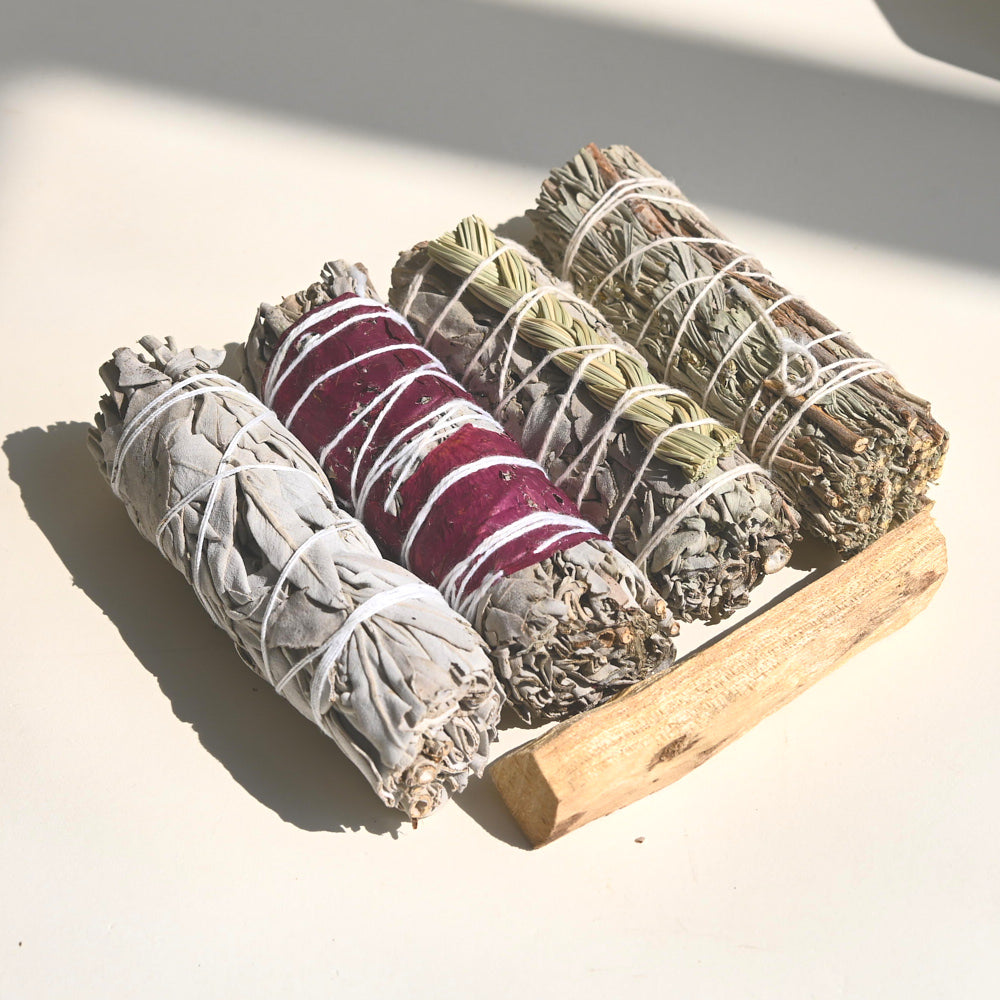
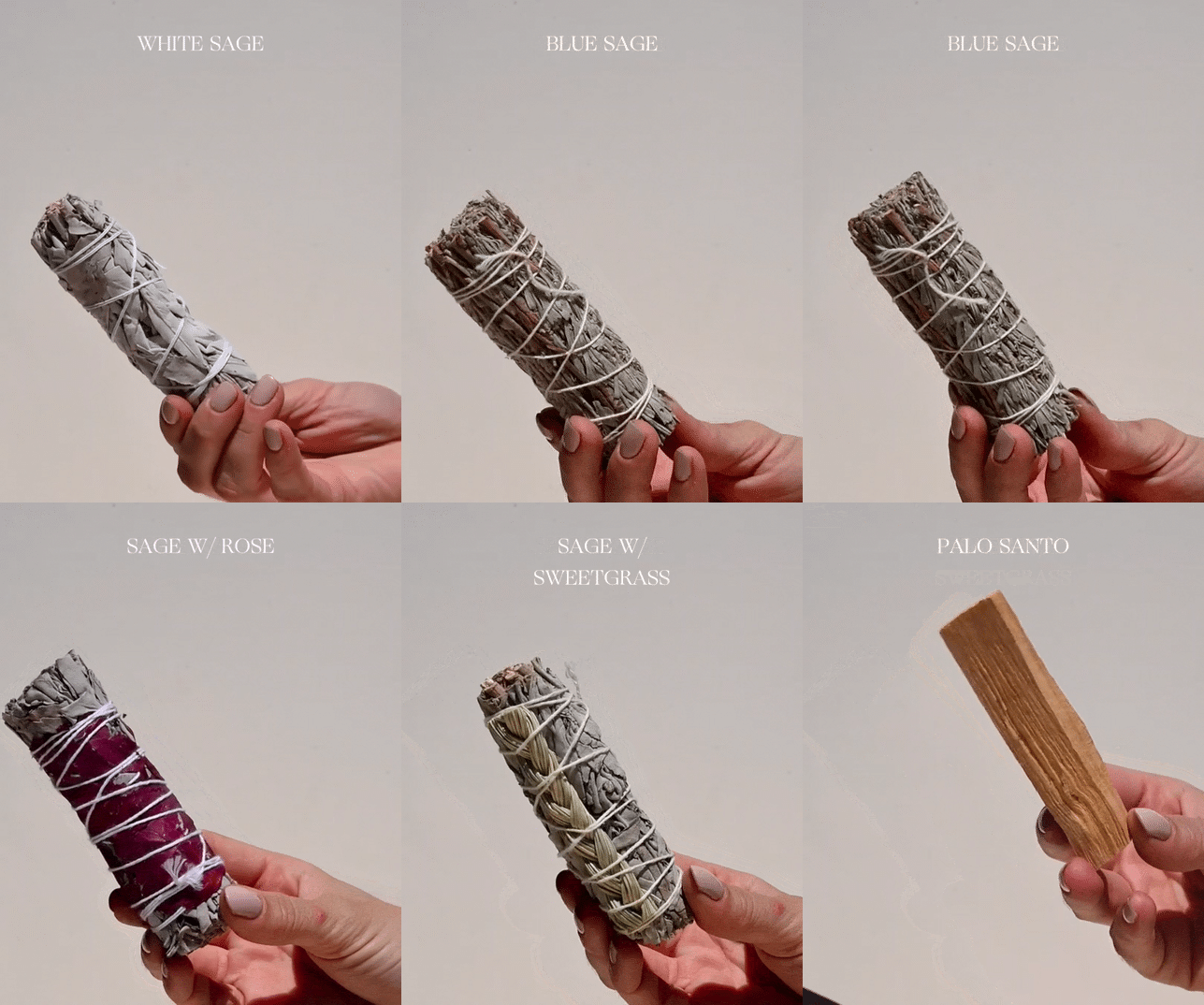
For energetic cleansing — for those who work with obsidian intentionally — most practitioners recommend smoke cleansing with sage or palo santo, or overnight placement in moonlight. Because obsidian is understood to absorb and hold energy, periodic cleansing is standard practice, particularly for pieces used in therapeutic, protective, or meditative contexts. Browse the ritual collection for smoke cleansing tools and accessories to complement your obsidian practice.
Frequently Asked Questions About Obsidian Crystal
Is obsidian actually a crystal?
Technically, no. A true crystal requires an ordered atomic lattice structure, and obsidian's molecules are frozen in an amorphous, disordered arrangement — making it a glass, not a crystal. However, in the broader world of crystal collecting, healing, and interior design, "obsidian crystal" is standard usage and simply refers to the material in a collector or metaphysical context. The distinction matters to mineralogists; in practice it rarely matters to collectors.
Where does the best obsidian come from?
For rainbow obsidian, the Jalisco region of Mexico produces the world's finest examples — the iridescent layering in the best specimens is unmatched by any other source. For black obsidian, Oregon's Newberry Volcano, Yellowstone's Obsidian Cliff, and California's Glass Mountain all produce excellent material. Iceland and Ethiopia also produce high-quality black volcanic glass. Browse our full obsidian collection for sourced pieces across both varieties.
What makes rainbow obsidian iridescent?
The phenomenon is caused by microscopic layers of magnetite nanoparticles within the glass that diffract light into spectral colors — a process similar to what creates the iridescence in labradorite. The colors shift as the angle of light changes, which is the diagnostic test for genuine rainbow obsidian versus any surface treatment.
How do I use obsidian crystal in feng shui?
Place obsidian in the North sector of a room (career and life path), near entryways for protection, or in a home office for clarity and professional momentum. Obsidian resonates with the root chakra — grounding, safety, foundation. Pairs of obsidian towers at doorways create protective energetic gateways. The classical feng shui obsidian ba gua mirror, placed above a front door, is one of the most enduring protective tools in this tradition.
Is obsidian safe to use in water?
Yes. Unlike many crystals — malachite, pyrite, halite, selenite — obsidian is completely water-safe. It is chemically inert volcanic glass and can be cleaned with water and soap without risk of dissolution, discoloration, or structural damage. It is one of the most practically resilient materials in any healing crystal collection.
How do I tell genuine obsidian from glass or imitation?
Genuine obsidian has a characteristic cold, dense weight — heavier than plastic or resin imitations. Along unpolished edges, real obsidian shows conchoidal fracture lines — small curved ridges that are the geological signature of volcanic glass. Black manmade glass can look similar but tends to be lighter and more uniformly perfect, without the subtle natural inclusions and microscopic variations of volcanic material. Buy from reputable dealers who can confirm origin and, for collector pieces, provide documentation. Our Collectors Edition includes provenance information for every piece.
What zodiac signs are obsidian crystal for?
Obsidian crystal has the strongest resonance with Scorpio — the sign of transformation, hidden truth, and depth — whose planetary ruler Pluto governs the same shadow-revealing qualities that obsidian embodies. Capricorn connects deeply to obsidian's grounding and ambition-clarifying properties. Sagittarius responds to its truth-seeking quality. Not sure which stone is your match? Take our crystal quiz.
What's the difference between obsidian and black tourmaline for protection?
Both are widely used for protective purposes, but with different energetic emphases. Obsidian is associated with active absorption and truth-revealing — it draws hidden things to the surface and forces clarity. Black tourmaline is considered more of a deflecting shield — repelling rather than absorbing. Shungite adds a third dimension: grounding and EMF neutralization. In practice, many collectors use all three: tourmaline at physical thresholds, shungite near electronics, and obsidian in workspaces and meditation areas. See our overview of crystals for home protection for a full comparison.
Begin Your Obsidian Collection
Obsidian's story begins deep inside a volcano and ends on your shelf — where it does exactly what it has done for 10,000 years of human history: catches light, holds weight, and tells you something true about the world that made it. Whether you are drawn to the mirror-black depth of a polished sphere, the spectral rainbow of a Mexican freeform, the graphic geometry of snowflake obsidian, or the tactile warmth of an Apache tear palm stone, the best pieces are those that stop you on first sight and don't let go. Explore our latest obsidian arrivals — each piece hand-selected, one of a kind, and sourced from the world's most storied volcanic glass deposits. Interior designers can access exclusive pricing and priority sourcing through our trade program.
✦ Discover Your Human Design
Your spiritual journey goes deeper than numbers. Human Design reveals your unique energetic blueprint — how you're designed to make decisions, interact with others, and move through the world. It combines astrology, the I Ching, Kabbalah, and the chakra system into one powerful framework.
Explore our full Crystal Encyclopedia — meanings, healing properties, and chakra connections for 280+ crystals.
Shop by Crystal Type
Explore our most popular collections
Get 10% Off Your First Order
Plus early access to new arrivals, collector drops, and crystal guides. Join 15,000+ crystal lovers.