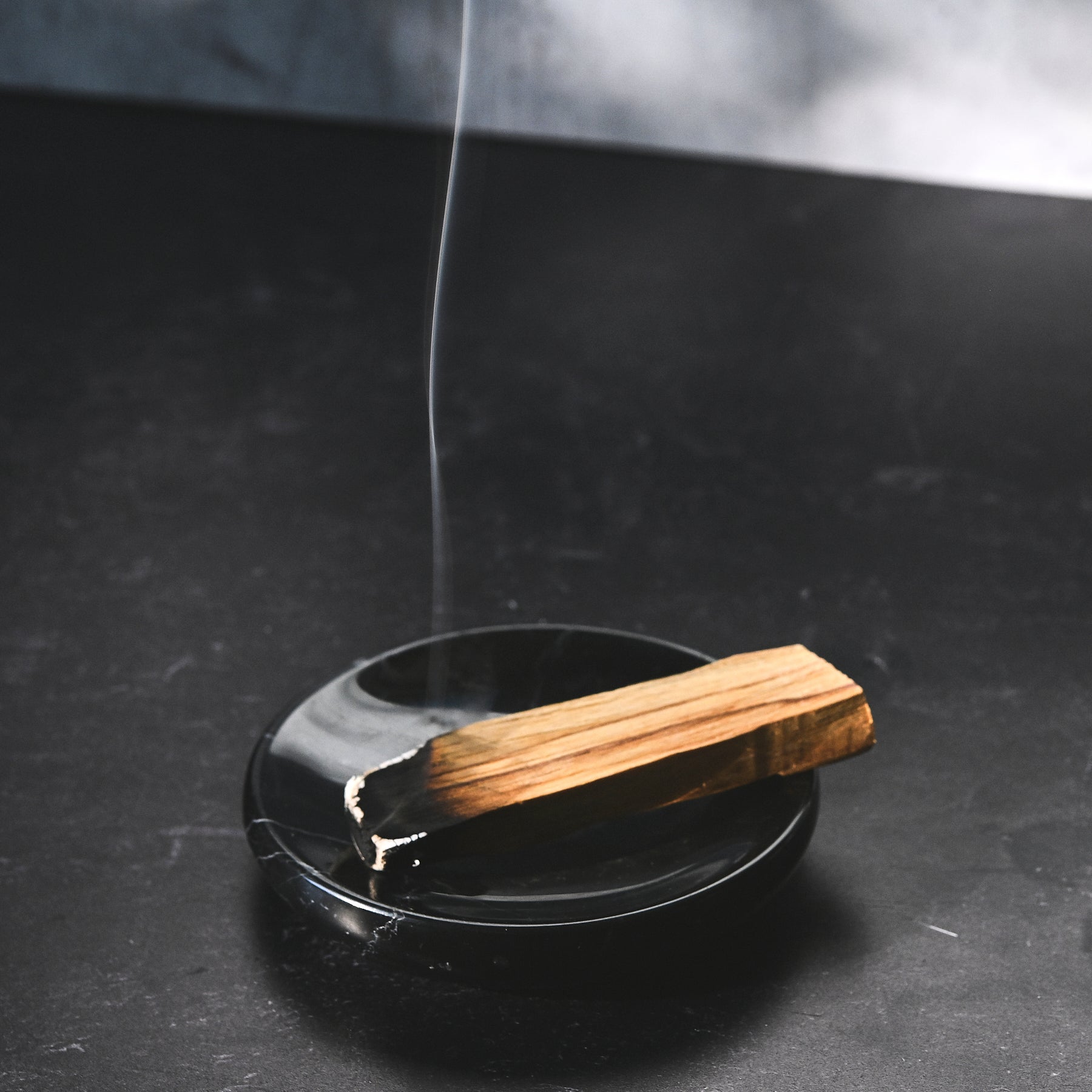
A crystal zen garden brings together two ancient traditions — the Japanese art of meditative garden design and the geological beauty of natural minerals — into a single, desktop-scale practice of intentional calm.
Traditional Japanese rock gardens (karesansui) use carefully raked sand or gravel and placed stones to represent natural landscapes in miniature. Adding crystals to this practice introduces color, translucency, and geological story to what is already one of the world's most refined design traditions.
The Foundation: Choosing Your Container and Sand
Start with a shallow, rectangular container — wood, ceramic, or stone. Avoid plastic; the material of your container matters because this is an object you'll interact with daily. A wooden tray with clean lines works beautifully. Size depends on your space, but 12" x 8" is ideal for a desk or side table.
For the sand, use fine-grain white or cream sand. Play sand from a hardware store works well, but for a more refined look, seek out white marble dust or crushed quartz sand. The key quality is that it holds rake lines cleanly without collapsing.
Selecting Crystals for Your Garden
The crystals you choose should vary in height, texture, and color. Here's a curated selection that works together:

Clear Quartz Points
One or two small clear quartz points serve as your garden's "mountain peaks." Their transparency catches light and changes character throughout the day. Position them off-center, following the Japanese principle of asymmetric composition (fukinsei).
Black Tourmaline Raw Pieces
Dark, striated black tourmaline provides grounding visual weight. Place a rough piece as your largest "rock" element. Its deep black color creates dramatic contrast against white sand.
Amethyst (Amethyst Geode) Clusters
A small amethyst cluster adds purple tones and crystalline texture. Position it as a secondary element, creating a visual triangle with your quartz and tourmaline.
Rose Quartz (Rose Quartz Tower) Tumbled Stones
Two or three small tumbled rose quartz stones serve as "stepping stones" or "islands" in your sand landscape. Their smooth, soft pink surfaces contrast beautifully with the raw textures of your larger specimens.
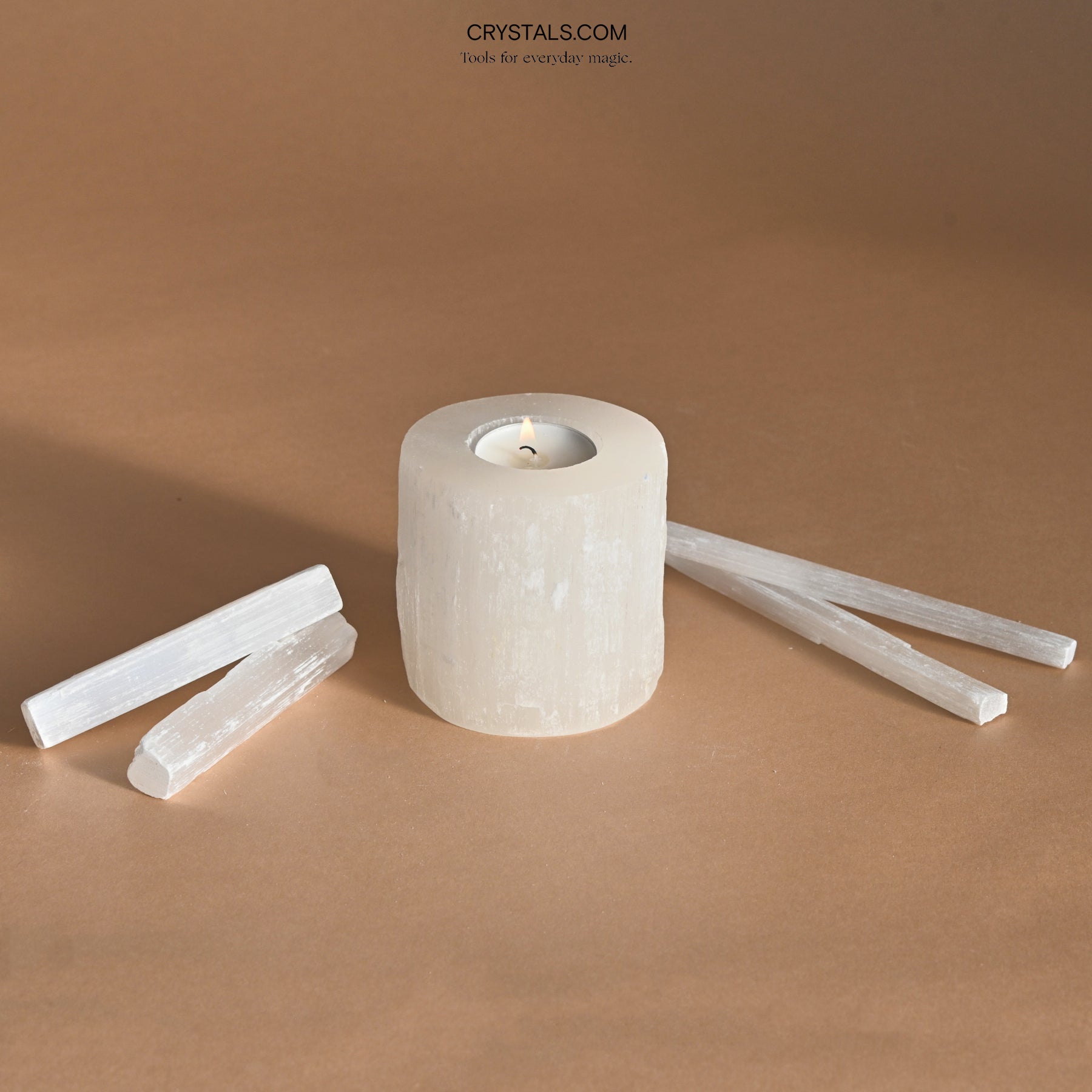
Selenite (Selenite Cleansing Wand) Wands
A small selenite wand can serve as your garden's "bridge" element. Its white, satiny surface blends with the sand while adding height and linear structure.
Design Principles
• Odd numbers: Always use an odd number of major elements (3, 5, or 7). Even numbers create static symmetry; odd numbers create natural-feeling movement.
• Asymmetry: Never center your largest crystal. Place it at roughly the 1/3 point of your container.
• Negative space: Leave at least 40% of your sand surface empty. The blank space is as important as the placed elements.
• Height variation: Your tallest element should be roughly 3x the height of your shortest.
The Raking Practice
The rake is where meditation meets motor skill. Using a small wooden rake or fork, create patterns in the sand around your crystal placements:

Concentric circles around individual crystals represent ripples in water — the way a single stone influences its surroundings.
Parallel lines across open areas represent flowing water or the passage of time. These should curve gently, never ruler-straight.
Wave patterns around the garden's edge create a sense of containment and boundary.
The physical act of raking is the practice itself. It requires just enough concentration to quiet mental chatter without demanding intense focus. Five minutes of raking in the morning or after a stressful meeting can be genuinely restorative — and the result is a beautiful, ever-changing desktop landscape.
Seasonal Refreshes
Swap crystals with the seasons to keep your garden feeling alive:

• Spring: Add green stones — green aventurine or jade — for renewal and growth
• Summer: Warm tones — citrine (Natural Citrine Tower), carnelian — for energy and vitality
• Autumn: Earth tones — smoky quartz (Smoky Quartz Palm Stone), tiger's eye — for grounding
• Winter: Cool tones — labradorite, moonstone — for reflection
Build your crystal zen garden with specimens from our curated collections. Free shipping on orders over $150.
The History of Japanese Rock Gardens
The karesansui tradition dates to the Muromachi period (1336-1573) in Japan, where Zen Buddhist monks created minimalist gardens as meditation aids. The most famous example is Ryoan-ji in Kyoto, featuring fifteen stones arranged on raked white gravel. The garden is designed so that from any viewing angle, at least one stone is hidden, a deliberate metaphor for the incompleteness of human perception.
Bringing this tradition into a desktop format with natural crystals adds color, translucency, and geological narrative. For more ways to integrate crystals into your living space, explore our crystal interior design guide.
Advanced Crystal Selections
Fluorite Octahedra
Natural fluorite forms perfect octahedral crystals that look like miniature geometric sculptures. A small fluorite octahedron introduces mathematical precision into the natural landscape. Green, purple, or clear fluorite all work beautifully against white sand. Fluorite is relatively soft (Mohs 4), so handle gently when repositioning.
Pyrite Cubes
Spanish pyrite cubes are naturally occurring geometric forms that look almost artificial in their perfection. A single pyrite cube creates a striking metallic accent against the organic forms of quartz and amethyst, echoing the architectural precision of traditional Japanese design.
Placement and Feng Shui Considerations
Where you position your crystal zen garden matters. In feng shui, the northeast sector of a room relates to knowledge and self-cultivation, making it ideal for a meditation-focused garden. The southeast relates to abundance and growth. For a comprehensive room-by-room placement guide, see our crystal feng shui guide.
Keep your garden away from direct sunlight if it contains amethyst, as prolonged UV exposure can fade its purple color. A north-facing window or interior shelf provides ideal light.
Maintenance and Mindful Practice
Replace the sand every few months as it accumulates dust. Use a fine-mesh strainer to remove debris between full replacements. The crystals need only occasional dusting with a soft brush. If you use selenite, keep it strictly dry, as selenite is water-soluble.
Most importantly, use your garden daily. Even two minutes of mindful raking resets your mental state between tasks. The combination of tactile engagement, visual beauty, and deliberate pattern-making creates genuine micro-meditation. Browse our full crystal collection to find specimens for your garden.
Choosing the Right Container
The vessel for your crystal zen garden is as important as its contents. Traditional zen gardens use shallow wooden or stone containers, but any flat-bottomed vessel with low sides will work. Unglazed ceramic in earth tones complements natural crystals without competing visually. The container should be large enough to create distinct zones for sand, stones, and crystals, but small enough to fit comfortably on a desk or shelf.
For desktop gardens, a container roughly 12 by 8 inches provides enough space for meaningful arrangement without dominating your workspace. For floor or table installations, consider trays up to 24 by 18 inches that allow for more elaborate stone placement and sand patterns.
Sand and Raking Patterns
Fine white sand is traditional, but crushed granite, black volcanic sand, or even fine river pebbles create different moods entirely. The act of raking patterns into the sand is meditative by design. Straight parallel lines suggest calm water. Concentric circles around a crystal represent ripples of energy emanating from a central point. Wavy lines evoke flowing water or wind.
For the raking tool, a simple wooden fork or a set of bamboo skewers bundled together works perfectly. The patterns you create are meant to be temporary and remade regularly, which is part of the practice.
Crystal Placement Philosophy
In Japanese garden design, odd numbers create visual harmony. Three or five crystals arranged asymmetrically feel more natural than even, symmetrical groupings. Consider a tall clear quartz point as a mountain element, a flat agate slice as an island, and a tumbled amethyst as an accent stone. The negative space between crystals is as important as the crystals themselves.
Seasonal rotation keeps your garden fresh. Swap in citrine and carnelian for autumn warmth, moonstone and selenite for winter clarity, green aventurine and rose quartz for spring renewal, and lapis lazuli with sodalite for summer depth. For more ideas on incorporating crystals into living spaces, explore our crystal display guide.
Maintenance and Longevity
A crystal zen garden requires minimal maintenance but benefits from regular attention. Replace or refresh the sand every few months as it accumulates dust and loses its texture. Wipe your crystals with a soft dry cloth monthly. If you use tumbled stones, they can be rinsed under running water periodically. Avoid placing your zen garden in direct sunlight if it contains amethyst or rose quartz, as UV exposure fades these varieties over time. The beauty of a crystal zen garden is its impermanence. Rearrange it whenever you feel the need for change, add new crystals as your collection grows, and let the garden evolve with you.
Discover Your Human Design
Crystals amplify energy — but do you know your unique energy type? Human Design reveals how you're wired to make decisions, work, and rest. It's the owner's manual you were born with.
Explore Human DesignGet 10% Off Your First Order
Plus early access to new arrivals, collector drops, and crystal guides. Join 15,000+ crystal lovers.